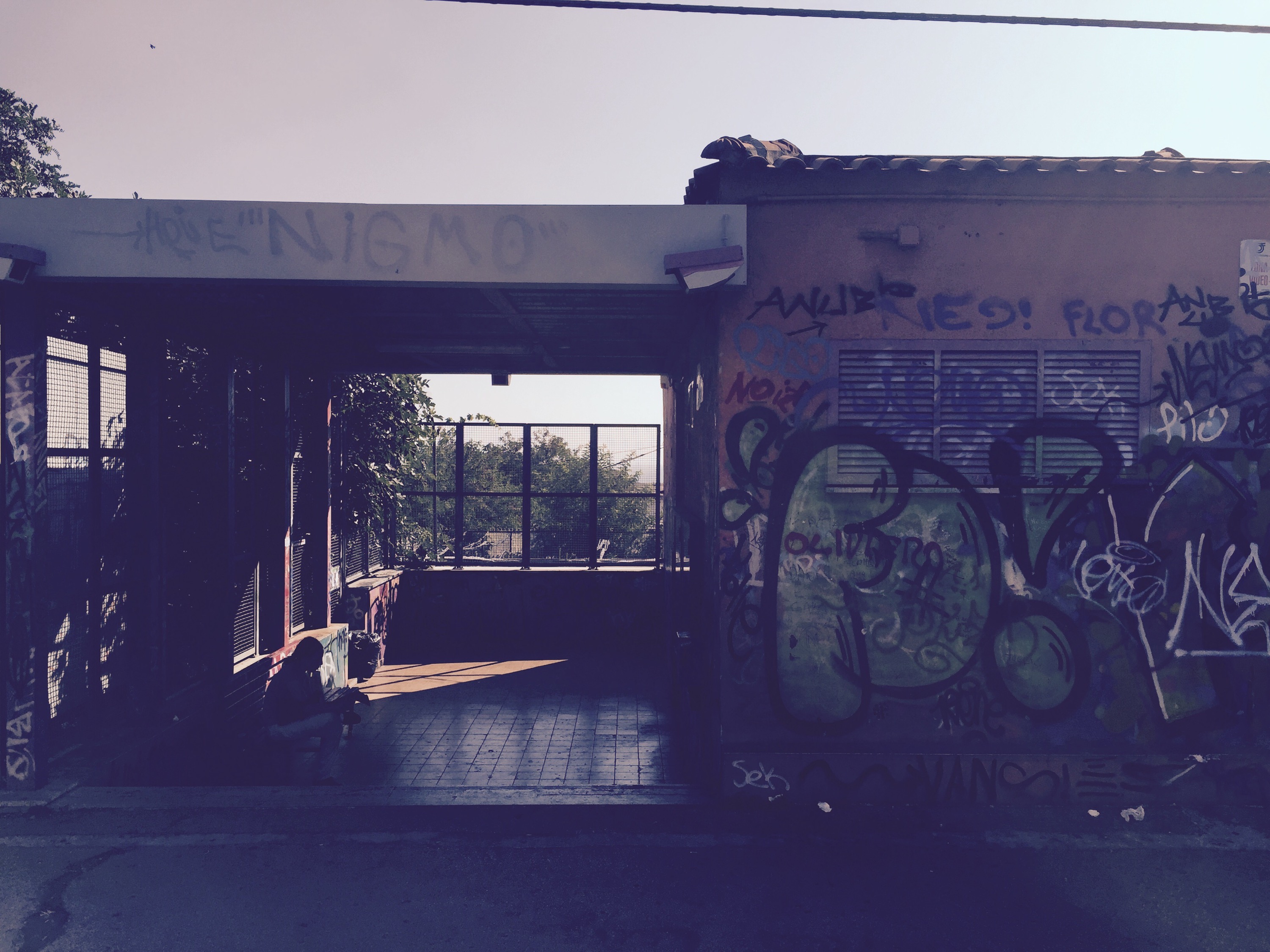
Photos of Oplontis    


Posted in Uncategorized | Leave a comment

Circumvesuviana: Garibaldi to Pompei Scavi

Mid-July in Naples is lush and beautiful and humid and brutal. Some scenes from the local train connecting the city to points south.


The female faces here are wonderful–the woman in pearls in back kept up a steady complaint about the heat, while the closer one (“Sweet Love”) suffered in Stoic silence.


Posted in Uncategorized | Leave a comment

High Hosey

The other day I asked my wife whether she had ever used the expression “high hosey,” as in “High hosey the front seat.” It means, in essence, to reserve or “call dibs on” something. Although she grew up in a suburb only twenty miles from my neighborhood, the saying was foreign to her. “It must be a Boston thing,” she said.

In fact, it is a Boston thing, one dating back at least to the 1890’s, according to the Dictionary of Regional American English:

1941 AN&Q 2.120/2 eMA, The child’s word “hosey” (“hozey” or “hozy”) . . has persisted in some parts of the country for more than fifty years, transmitted orally, without “literary” recognition. It is used in the sense of “demand,” “claim,” “choose”—as in “I hosey such-and-such an object.” The child who gets the phrase out first claims and receives the thing in question. . . It was in use in and around Boston half a century ago, and is still current in New England.

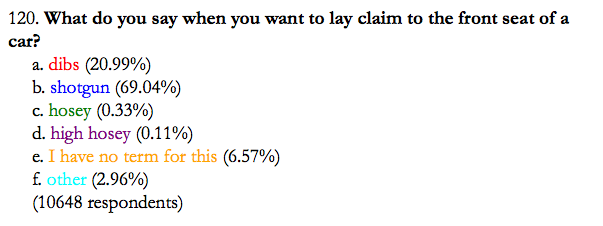
While “hosey” has wider application, “high hosey” seems narrowly located within the city of Boston itself, according to a recent regional dialect survey.

Screen Shot 2015-07-13 at 1.26.25 PM

Screen Shot 2015-07-13 at 1.27.49 PM

BsiPanLCQAA_WzUThe OED has no entry, but American Heritage suggests the following etymological hypotheses: “[Perhaps from French (je) choisis, (I) choose, first person sing. present of choisir, to choose (from Old French; see CHOICE) or from colloquial English holdsies, word called out to stake a claim (probably from holds, plural of HOLD1 + -IE).].”  The French Canadian derivation is possible but, to my mind, unlikely, as it seems to me that most of that immigrant group is located in the non-high-hoseying north and central Massachusetts areas, not Boston. I’m more inclined toward a variant of “holdsie.”

My recollection is that, if you had said, “High hosey the front seat,” and someone else took it nonetheless, you would say, “Get out! I hoseyed it!” and they would have to acknowledge that you had done so but they didn’t care, or they would leave. Shoving and possibly punching would ensue in the first instance, gloating in the second. High hoseying was not to be messed with. My friend Liz, who’s from Brighton, concurs with all of this on Facebook, where I poste a query. “Once [high hosey] was out there, it was game on. It could not be ignored. A possible response would be ‘you’re not the boss of me.'” 

My cousin Mary, who still lives in the area, says kids are still using the expression. She also wonders whether high hoseying was more frequently found among larger families. “Could it be that everyone who commented didn’t have a lot of siblings so they didn’t need share?” Liz agreed with that, and suggested that it was also a matter of affluence. Families with more money, lacking a scarcity-mindedness, perhaps did not give rise to such winner-takes-all competitive strategies as high hoseying.  So often these expressions are studied from a strictly geographical perspective–it would be interesting to look at some of them from a class point of view as well.

Posted in Boston, England, Family, Language & Etymology | 7 Comments

Interview with Chrigel Glanzmann of Eluveitie

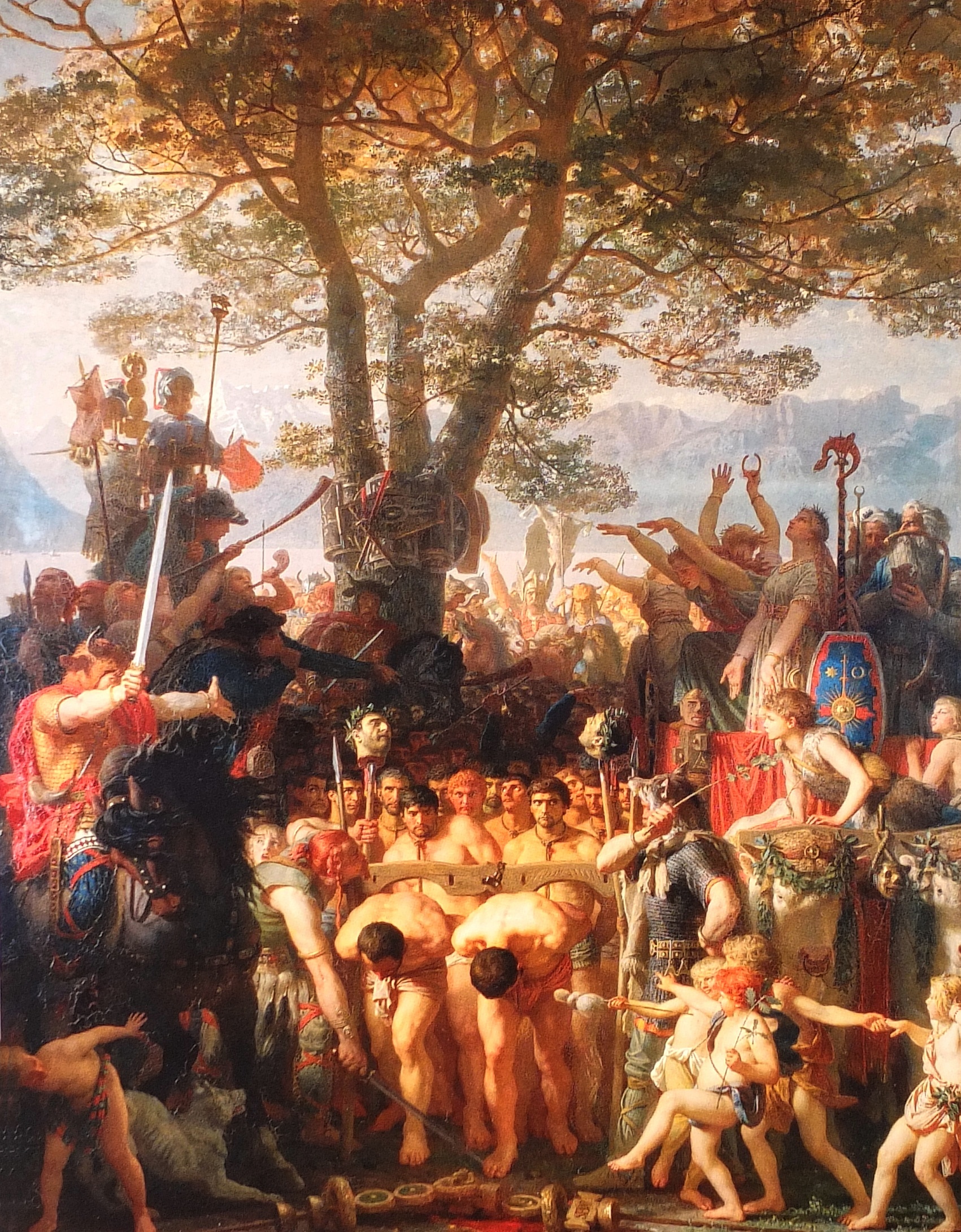
Below is an exchange I had recently with Chrigel Glanzmann, the lead singer of Eluveitie, the Swiss folk metal band on whose work I’m writing I’ve written an essay (comparing it to Charles Gleyre’s “The Romans Going Under the Yoke”). 

Hey ….Chrigel from Eluveitie here. Thanks for your message. What an awesome undertaking! I’m really curious about the essay.

Yes of course I know Gleyre’s painting, it’s one of my favorites. smile emoticon
Even though it’s quite romanticizing probably. It was created not too long after the epoch of the Helvetic Republic (1798–1803), where the Helvetians were idealized and romanisiert (Divico got conventionalized as “national hero”, ect).
Nevertheless, really awesome painting.

Don’t hesitate to write if you’d like to discuss the topic. smile emoticon

Cheers
Chrigel

***
Hey Chris

Nice to talk to you! 🙂 It’s really interesting.

My answers below:

I can’t thank you enough for getting back to me about Charles Gleyre. As I mentioned, I’m writing an essay on Eluveitie and Gleyre. There are some important connections I think. If you’re OK with my asking a few questions, I’d love to hear your thoughts.
So, it seems to me that “Divico” pays at least some homage to the painting.  When you (as Divico) say, “Like the ancient oak/ standing enthroned/ This old man I have become,” I can’t help but think of the large oak in Les Romains. It’s interesting, because Caesar talks about him as an old man– but it was he who defeated the Romans 50 years earlier, as depicted in the painting.
Yeah, true. When I wrote that lyrics, it’s basically poetic licenese. But I did let myself lead & inspire by 2 things:
– my own imagination, my empathy (having in mind what I learned about Divico, the Helvetians, the Celts in general, their culture, their time, ect. I tried to imagine what he probably could have thought, ect.

– the way the Helvetians portrayed themselves (according to ancient historians), ect.: They seem to have been open-minded, yet still stubborn, they seem very proud… and bravery seems to have been something quite important to them.

Honestly, I don’t think that Caesar’s informations given in de bello gallico are correct that much. These writings are political propaganda in most parts. It’s even scientifically unclear if it was Divico who led the Helvetians…. as you correctly state: He defeated the Romans 50 years earlier; so that would make him a really old leader for an untertaking like this! I think it’s more likely that Caesar named Divicos name simply due to the fact that it was a well-known and much feared/hated name to his readership (which we had to win over and get the senate’s blessing for his private war)…

Anyway: Actually it’s not possible to tell concrete and accurate things on this topic… we just don’t know after all.

Be this as it may:
At the time of the Roman invasion Divico must have been an elderly man indeed. And for sure he was a proud, dignified man, honoured by his people.
 
Of course, that happens after the slaughter at the Saône, which is the subject of “Meet the Enemy.”  Such a great song, so full of fury–and justifiably so. It’s an atrocity how many people died there at Caesar’s hands. A question: what have you read on this, specifically? Did you read Caesar in school? Or maybe there was a favorite teacher who introduced you to it? There aren’t that many songs with ludus latrunculorum mentioned in them!
I’ve read de bello gallico. At home though, not in school. 😉
Besides I’ve read (am constantly reading) scientifical secondary literature.
If it comes to our album “Helvetios” and thus “Meet the enemy”: I discussed a lot with a scientist of Vienna university (dep. celtic studies) about all the details of the story… we analysed a lot, read between (Caesar’s) lines, compared, ect. and thus tried to paint a picture as accurate as possible.
Haha, ludus latrunculorum; yeah maybe you’re right. 🙂 A board game… that’s (sadly) a good way to describe Caesar’s acts in the gallic wars. He moved men like figures on a board. Why ludus latrunculorum… it’s something I always do in my lyrics when a song is written from a “gallic” point of view (=like written from a person who lived back then): I try to find metaphors, phrases, ect. as they could have been used back then.
And yes, it was an atrocity, especially facing the fact how many of them were civilians… women, children, elderly.
I guess my real question is this– why do you channel the ancient Helvetians in your music?
why not? 😉 😛
Joking aside: The Celtic culture just always was kind of a topic in my life. When I formed Eluveitie it was clear from the start that it will be a Celtic-focused project, all dealing with Celtic history and culture.
Why the Helvetians – well, our music deals with the Celts in general, but true, a lot of songs deal with helvetic topics in particular (especially since the album tries to portray the gallic wars from a helvetic point of view). But anyway – since we’re from Switzerland having a name like Eluveitie kinda makes perfect sense, doesn’t it? 🙂 The Helvetians lived on “our” ground are partly our forefathers and left a lot of heritage until to the present in Switzerland; so we’re facing their legacies anyway. But yeah, after all Eluveitie is about the Celtic culture and history in gereal, actually.
 
In one interview, you said about Helvetios, “It’s sometimes quite shocking to realize how little we learned in the past 2,000 years, because it’s the same crazy things going on, over and over again. So I wouldn’t say the things we’re singing about don’t have anything to do with our everyday lives; I think they actually do.”  What crazy things do you mean?
wars and especially wars like the gallic wars (invasions for economic reasons), political propaganda (the controlling of the populations minds for particular – often selfish, destructive, career-obsessed – reasons), ect.
…just to name a few. 
OK, here’s a really nerdy last question. In “Divico,” the Celtic tune in the background is “Haughs o’ Cromdale.” Any particular reason? I have this theory …
haha, a theory? 🙂 sounds intresting!
But well, it was basically for musical reasongs. The tune just fitted well. But yeah… it’s original lyrics actually fit quite well too. 😉 
I’m sorry to ask so many questions!

It was a pleasure and honor to talk to you!

Yours
Chrigel
Romains_passant_sous_le_joug_Charles_Gleyre
Posted in Classics, Education, Ireland, Italy, Language & Etymology, Military, Music, Rome, Trees & Flowers | Leave a comment

A Scandal in Bohemia

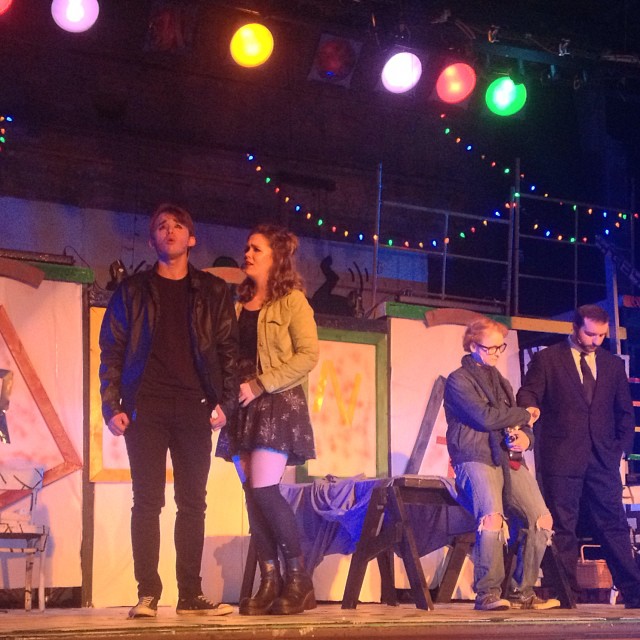
Postscript, July 11.  So we went to the opening of Rent in Tullahoma last night. It was a big and exuberant show, with some very strong performances, especially the female leads. Afterwards, there were tears and hugs afterward, all very moving. I didn’t see any protests, unless the two old guys with an American flag sitting out front were protesting somehow, though I think there had been a prayer vigil earlier in front of the theater. What we did see on our way to Tullahoma down 41 A through Decherd and Estill Springs were lots and lots of pick-up trucks flying Confederate flags, including a motorcade of eight or so with a sign that said, “It’s a Southern thang!”–an apparent protest against yesterday’s permanent lowering of the Confederate flag at the state house in South Carolina.

I will say that Rent has “mature” themes, inappropriate for children perhaps but more than appropriate for teens for whom the issues are far engaging than those of Peter Pan or Oliver. We had to sign our children in, and show our own IDs. In any event,  I realize now that I had never seen a same-sex kiss on stage ever before. There was a talk-back afterward, but, it being close to 11 pm at that point, we hit the road and had a great conversation with the boys in the car on the way back.

Rent is a more serious show than La Boheme, which it follows closely in fact, and a surprisingly more touching one. Puccini was not engaging with any issues in his opera, and the bohemian atmosphere was meant to be little more than exotic and risqué. Rent asks us to look at people whose lifestyles are different than our own, or perhaps not so different, and consider them in their humanity nevertheless. I’m sorry some local pastors failed to see this as an opportunity for conversation rather than confrontation. But I understand it’s been a mind-boggling summer, and with the election season coming on us, I imagine the country will be reeling until next summer. Five hundred twenty five thousand six hundred minutes, How do you measure, measure a year?

11146657_774175374628_6197374936243796158_n 11059856_774203852558_3681091616259141207_n

photo-38

Older posts on this topic:

July 3. A friend of mine who teaches high school in Tullahoma sent some of us the following note a few days ago: “Hey folks! The big city of Tullahoma has quite a controversy at the moment, with Rent about to open at The Community Playhouse. Apparently, one of the local Baptist ministers has decided to start a campaign, asking people to boycott the show because of its “low morals.” I have several former students in the cast, and they could use some support if any of you feel like a night of entertainment in a couple of weeks.” The show opens on Friday, July 10 at 8:00 pm at the South Jackson Civic Center in Tullahoma, Tennessee. I have not seen the play, a modernized version of Puccini’s La Boheme (which I will be seeing in a few weeks in Rome), but after I saw the photo of the notice from the local church, I instantly went on-line and bought four front-row tickets for opening night.
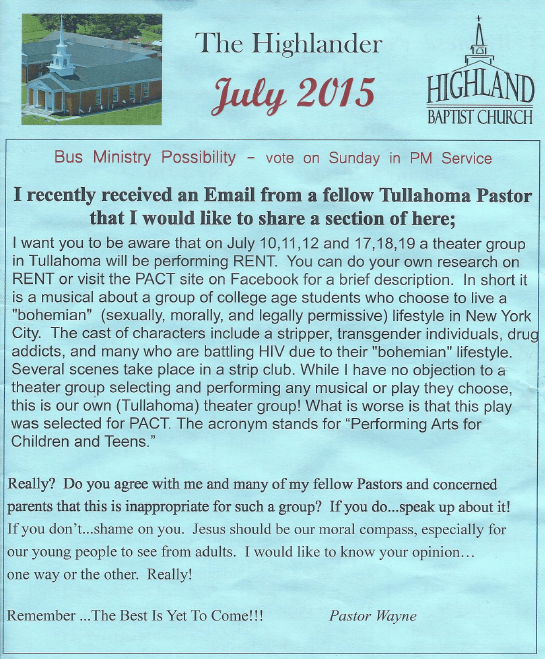
Screen-Shot-2015-07-03-at-12.27.32-PMI have to say, I’m glad I did get my tickets, because the production and the protests are starting to become news. Donna posted a notice from Howard Sherman, an arts administator and theatre advocate based in New York, entitled “Preparing For Anti-“Rent” Messages From Tennessee Pulpits.” Sherman reproduces some of his e-mail communication with local pastors and concludes with the following spirited defense, “Rent may have, to some, a squalid setting, but is about struggle, friendship, community, equality, love, sacrifice, life and death, and even redemption. Those seem like themes worth exploring and embracing in every city and town, every day, in places of worship, in theatres and beyond.” It’s hard not to see the animosity to the show as a sort of proxy battle about the recent Supreme Court ruling allowing gay marriages, of course.  Reaction all over the South has been hostile to the ruling–the entire staff of the clerk’s office in Decatur County in west Tennessee resigned over it. “Clerk Gwen Pope and employees Sharon Bell and Mickey Butler all said their resignations was due to the Supreme Court’s decision to allow same-sex marriages,”  WTVC reported yesterday. According to the Jackson Sun:  “It’s kind of sort of like you don’t want to draw attention to yourself for any reason,” Pope said. “That’s not why we’re doing this. Not doing it in any way to draw attention to us. It’s for the glory of God. He’s going to get all the glory.” Drew Baker, area representative for the Tennessee Equality Project thought it was unfortuntate. “That’s also against the law.” he said.  “They’re opening themselves up to litigation. However, I admire them for the strength of their convictions.” The other day, I likened Bree Newsome–the woman who climbed the pole in Columbia, SC, to remove the Confederate flag–to Antigone for invoking religion in her act of defiance; the same comparison must be made for the former Decatur County clerks. Where the ruckus goes from here, over Rent and the Confederate flag and gay marriage, will be interesting to watch. As I say, I have a front-row seat for some of it.

Postscript, July 6th.  HuffPo is now on the Tullahoma “Rent” controversy, with this fine story: “RENT in Twain: Division in a Small Town”.  Among many worthwhile insights:

“We fought for this to be a PACT production for a reason. You know, people have come to us with some concerns about the show, and it’s always couched in a ‘concern for children and teens.’ I will say that I don’t think this play is for children, but I can look at the cast and see character counterparts.” Allen points to imaginary people standing around him, “There’s our Collins, there’s our desperately in love person, there’s our abused person, our person struggling with an eating disorder, our transgendered person, our person struggling with sexuality. So, for people to say, ‘your life is so disgusting and immoral that it shouldn’t exist onstage,’ is a huge slap in the face to them. These teens need their lives validated.”

And some comments from cast members:

“I’ve lost contact with three family members because of the Supreme Court ruling and their stance on gay marriage.” “My people disowned me because I’m gay–right as I started the RENT process.” “I was called a bitch because of believing in what I’ m doing. I was completely shocked to get that message from someone I rarely even talked to.” “I lived for six months in my car. I went to work, and I lived in my car.” A glance at the show’s director reveals him nodding and making eye contact in a way that seems to say, “See? I told you, These kids need this show. They’ve already lived it.”

Posted in Bible, Drama, Education, Family, Italy, Music, Rome, Sewanee, Tennessee, The South | 1 Comment

Sight and Sounds of the Monteagle Flea Market, late June 2015

The man selling homemade pork rinds is telling a customer, “Oh yeah, Obama’s got this country all screwed up. It’s gonna be World War Three.” I assume he’s talking about the Supreme a Court’s recent ruling on gay marriage, but who knows? Bluegrass is playing in the background, near a penful of rabbits. At a nearby stand, a woman has a large Confederate flag displayed– she’s selling Southern-themed bric-a-brac, including a Scarlett O’Hara Barbie still in the packaging, as well as a Confederate Ken doll that’s alongside a Harley Davidson Ken doll. “Looks like it should be called Village People Ken doll,” says my wife to me. There are a lot of good- looking tomatoes to be had this morning, and lots of second-hand rifles, too. “Wonder what sort of background check they do?” I ask to nobody in particular. This is the place to come for poultry– one guy has chickens, ducks, and even a turkey in cages attached to a flatbed truck. Here and there are blankets laid out with stuff– it’s like being in a Booth cartoon. Knives of every sort, tools I don’t the names of, a mounted deer head for $125, posters with guns on them and an edited version of the Second Amendment beneath which is written “what part of “shall not” do you not understand?” One guy has a slot machine for sale, an object of fascination to a boy of about eight. ” how does the money get in?” he asks, and is told, “Suckers put it in there!” This same stand has quite a few wrestling championship belts on the table, and a Troll doll with purple-red hair. “There was a time these were the most popular toy,” he observes. “Yes, sometimes I rub it’s belly for good luck.” “I hope he doesn’t rub back,” I say. Another homemade pork rind stand, but we have our tomatoes and squash and peaches and blackberry. “Let’s go home and make a pie,” says Kelly.
Posted in Animals, Birds, Cartoons, Emblems, Family, Language & Etymology, Military, Music, Race, The South | Leave a comment

Sewanee Crite prints

A few weeks ago, I made mention of some intaglio prints made by the African-American artist, Allan Crite, that depicted scenes from the Creed as imagined around Sewanee.

In that post, I asked:

I wonder, too, whether Crite’s original prints of the Sewanee Stations of the Cross might not be procured and displayed somewhere prominently?

Well, I’ve come to discover that, in fact, the originals are owned by Sewanee and on display at the School of Theology! I rode my bike over to have a look.

20150628-113812.jpg

20150628-113832.jpg

20150628-113852.jpg

Inside Hamilton Hall, by the entrance to Hargrove Auditorium, the Crite prints can be seen in a large wooden, fairly recent frame. A surprise: in addition to the three I had posted in May was a fourth one, “Born of the Virgin Mary,” set by St. Luke’s and the old water-tower. In addition was the masthead of something called The Theo-log, published on May 1, 1953, with a prayer in Gothic lettering beneath it. I looked on the back of the frame, and saw it had been done in Mississippi, though when and at whose expense, I couldn’t say.

20150628-115029.jpg

20150628-115048.jpg

20150628-115506.jpg

Posted in Bible, Cartoons, Race, Saints, Sewanee | Leave a comment

Protected: Antigone in Columbia

This content is password-protected. To view it, please enter the password below.

Posted in Bible, Boston, Classics, Drama, Emblems, Mythology, Poetry, Race, Saints, Slavery, The South, Uncategorized | Enter your password to view comments.

Rebel’s Rest Archeological Site

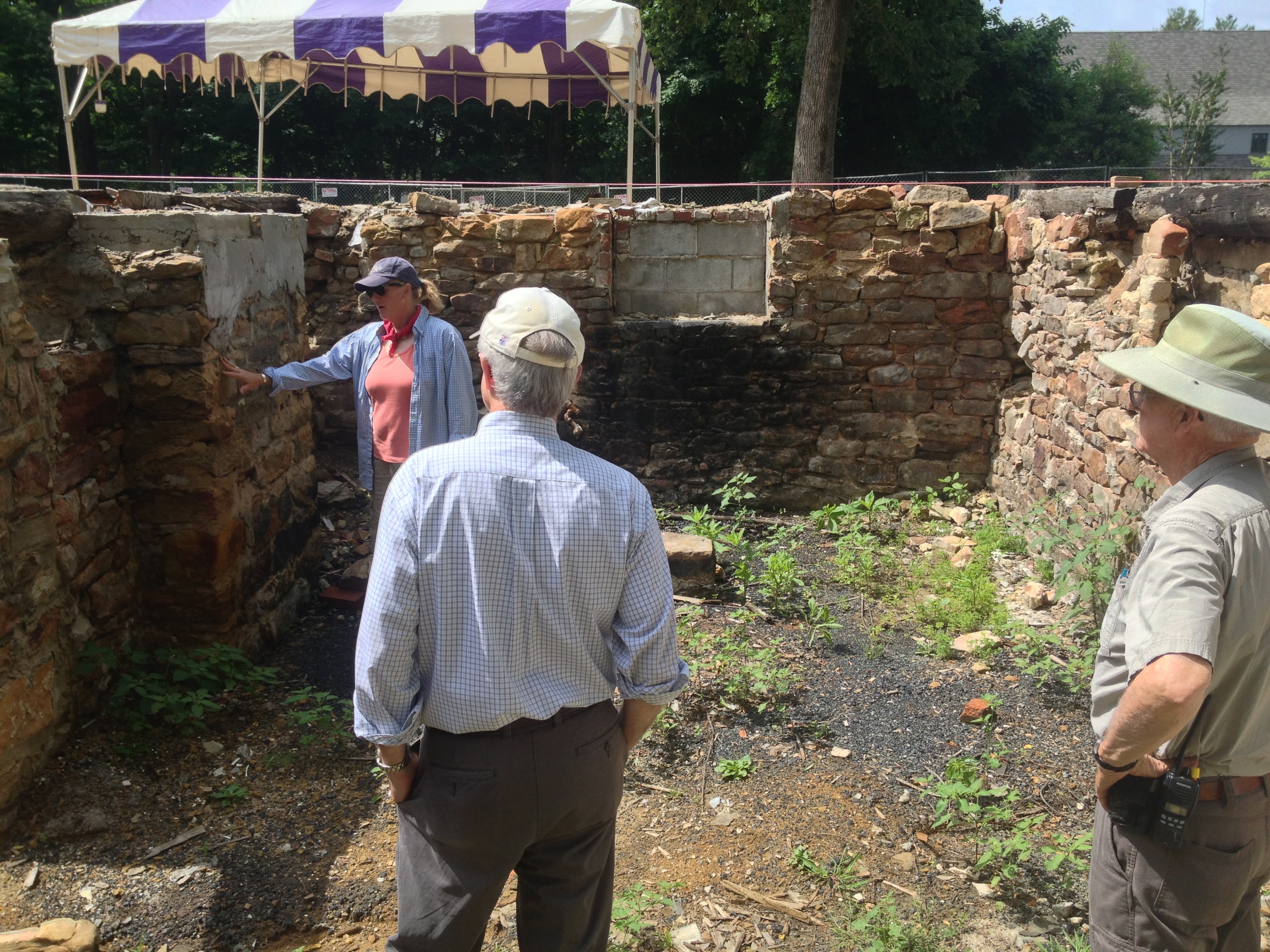
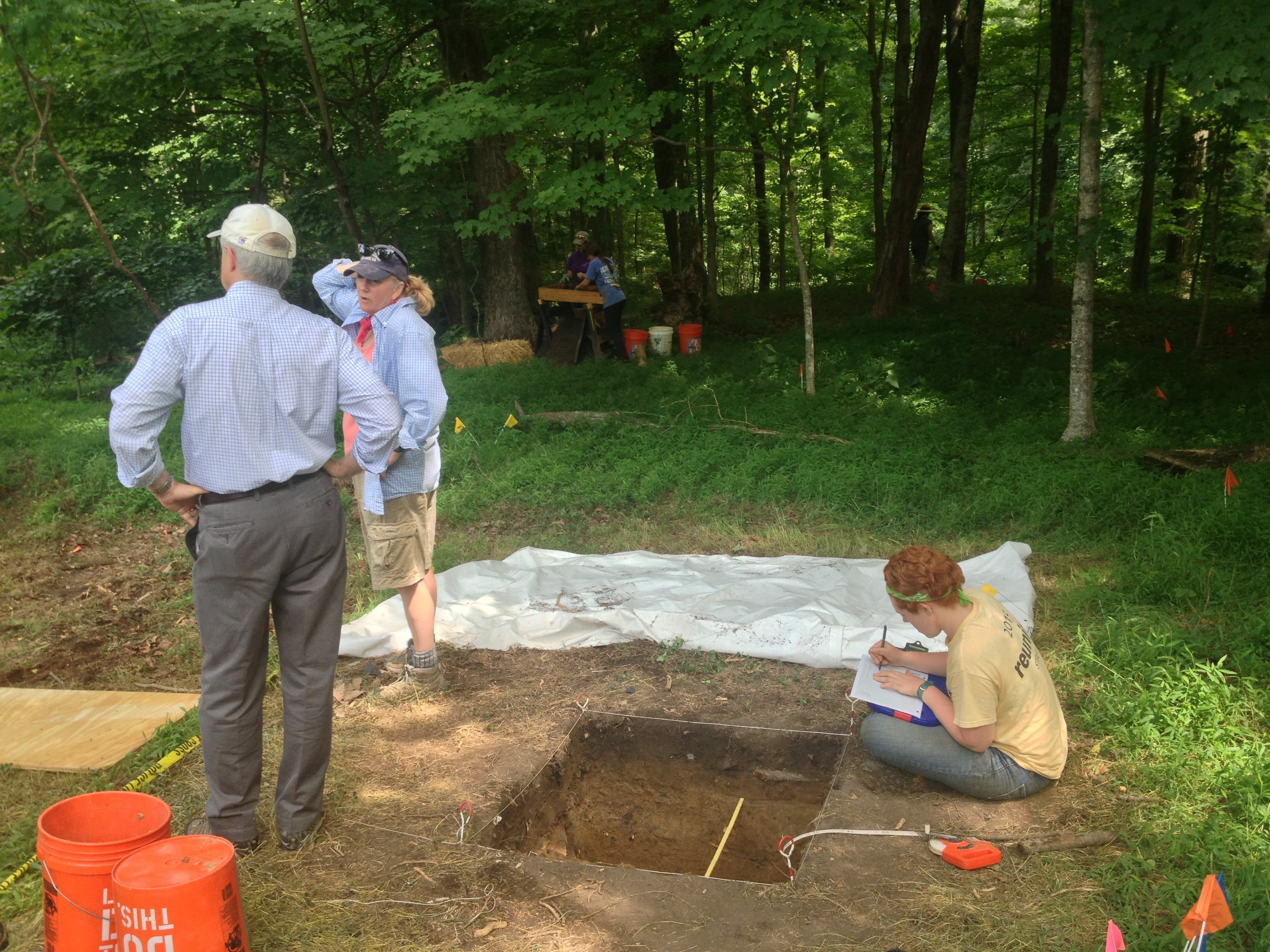
Last week, Jerry Smith had to cut our meeting short at Stirling’s, as he was due to give the VC a tour of the Rebel’s Rest site. “OK if I tag along?” I asked. He assented and we hopped into his truck.

The first thing he showed we was a neat stack of bricks taken from the various fireplaces. Smith had spent done time tracking down the stamps. “They’re not all from the same company, which is curious.” No doubt there was some reuse over time.

20150620-195357.jpg

20150620-195507.jpg

20150620-195557.jpg
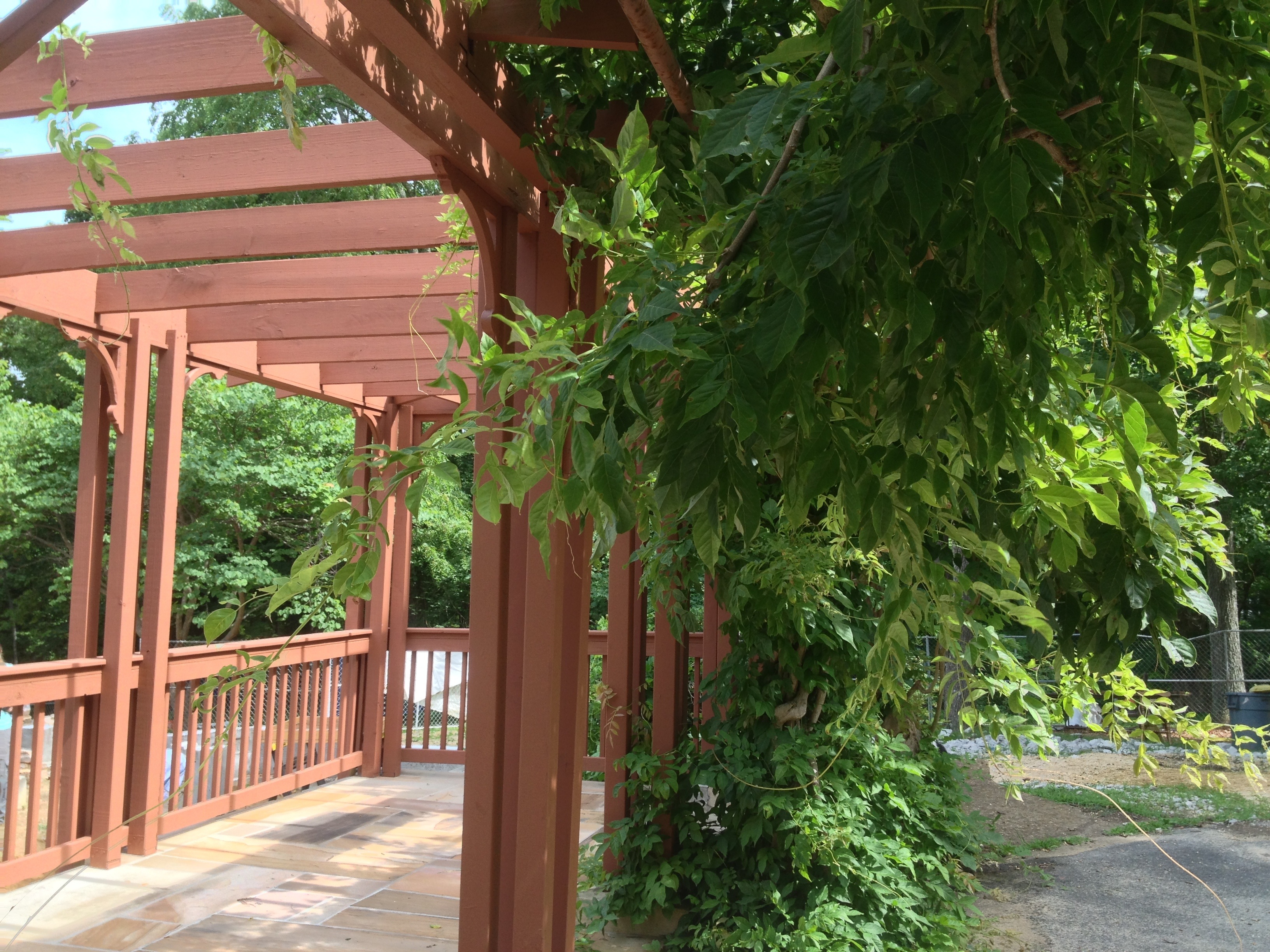
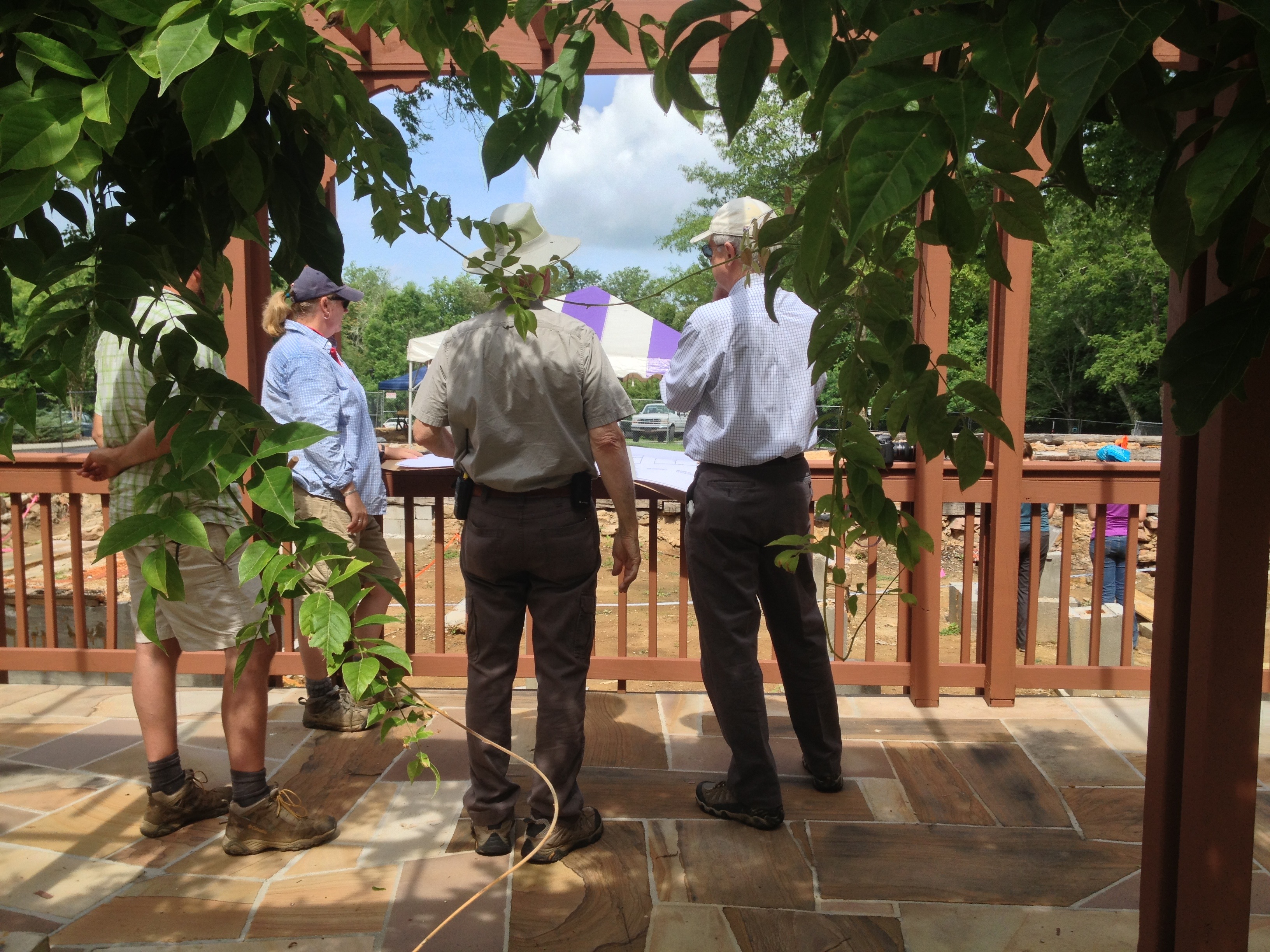
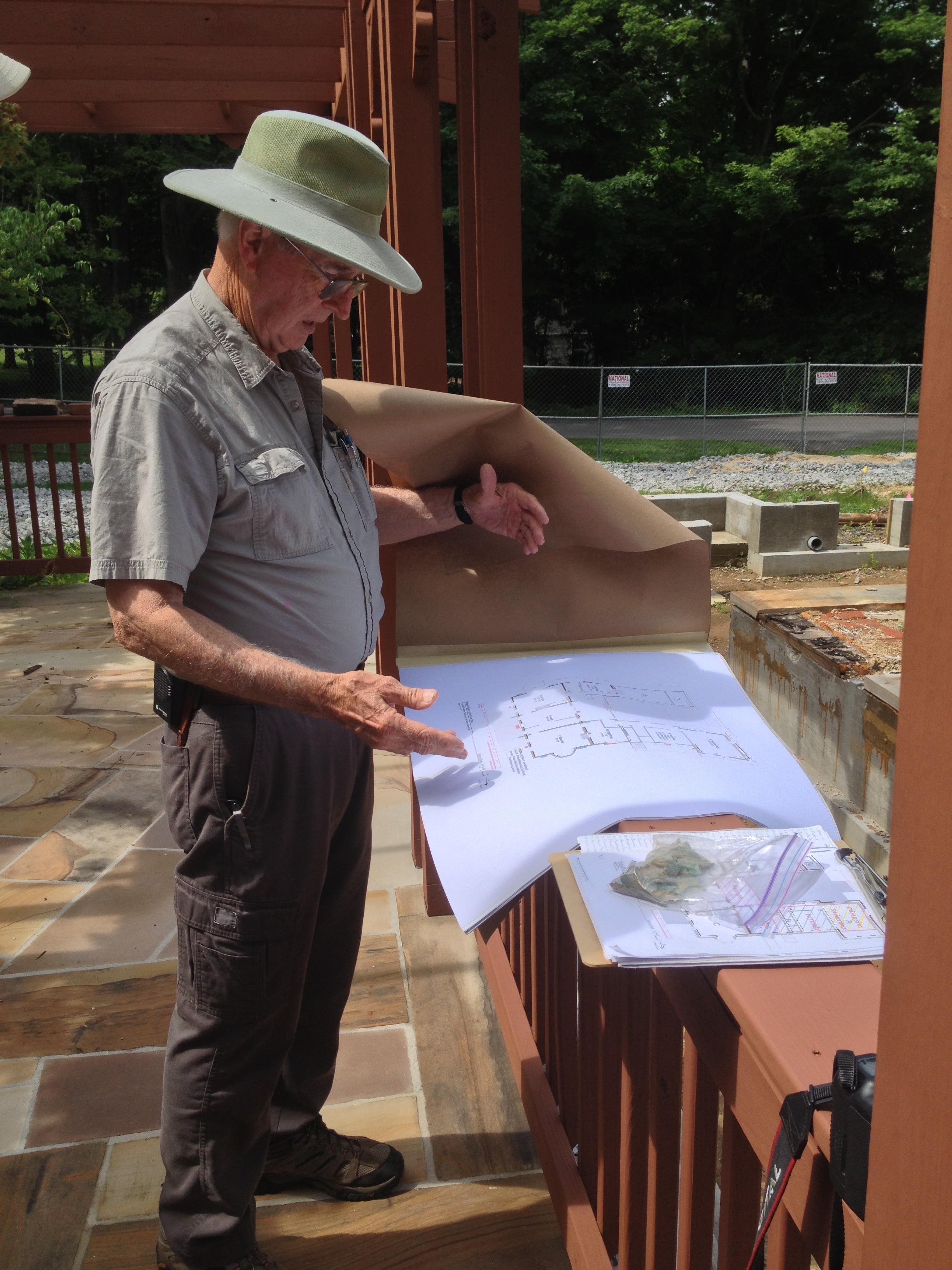
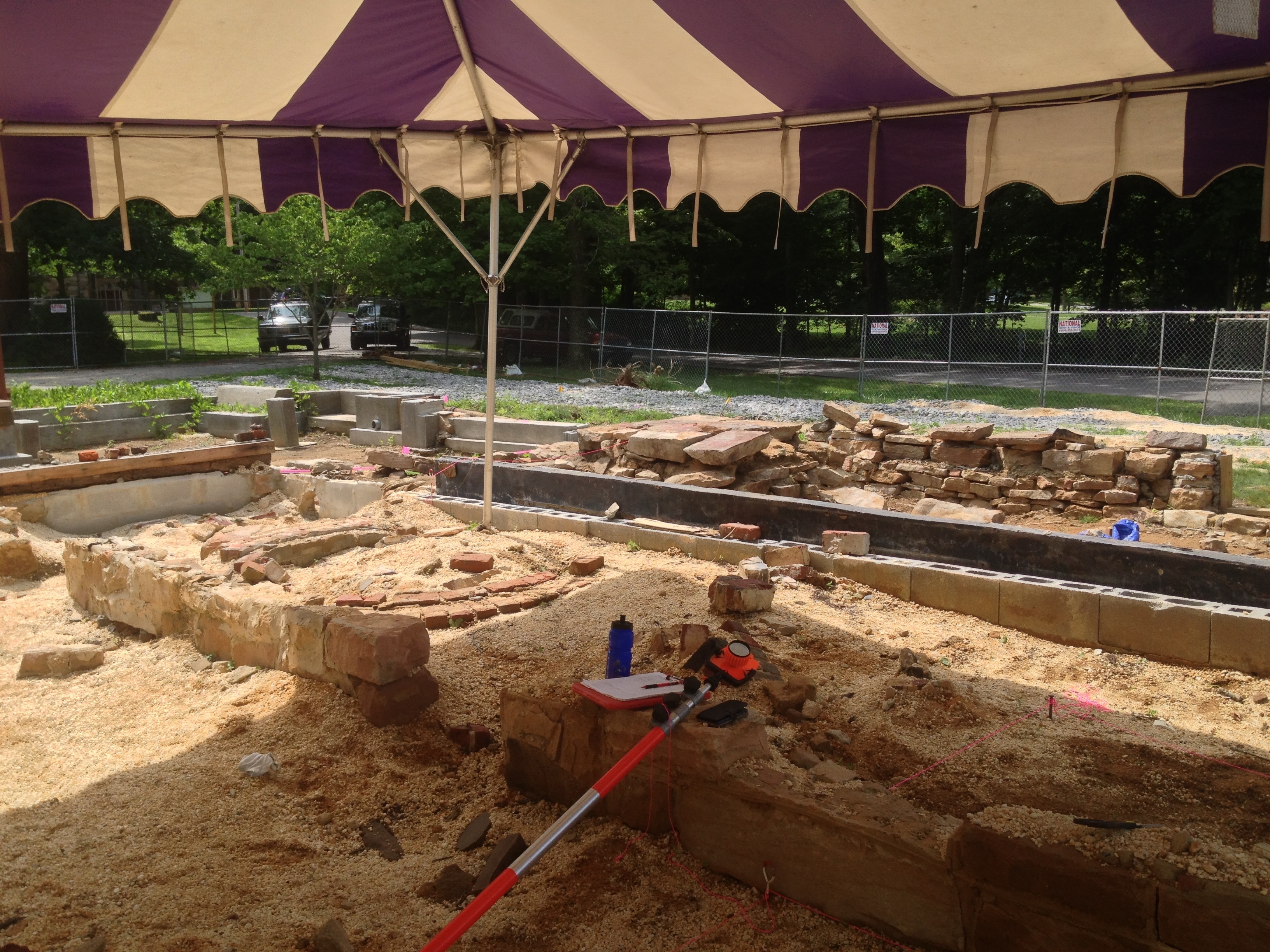
I was poring over the bricks when the Vice Chancellor showed up. Smith pulled some plans out of his truck, and a baggy full of what? I couldn’t tell. Over we walked to the covered stand where the Rebel’s Rest porch had stood. “The wisteria is coming back strong,” said John. University archeologist Sarah Sherwood had joined us. “It’s already had to be cut back,” she laughed. In the meantime, Smith pulled out his plans.

20150620-200027.jpg

20150620-200353.jpg

20150620-200450.jpg

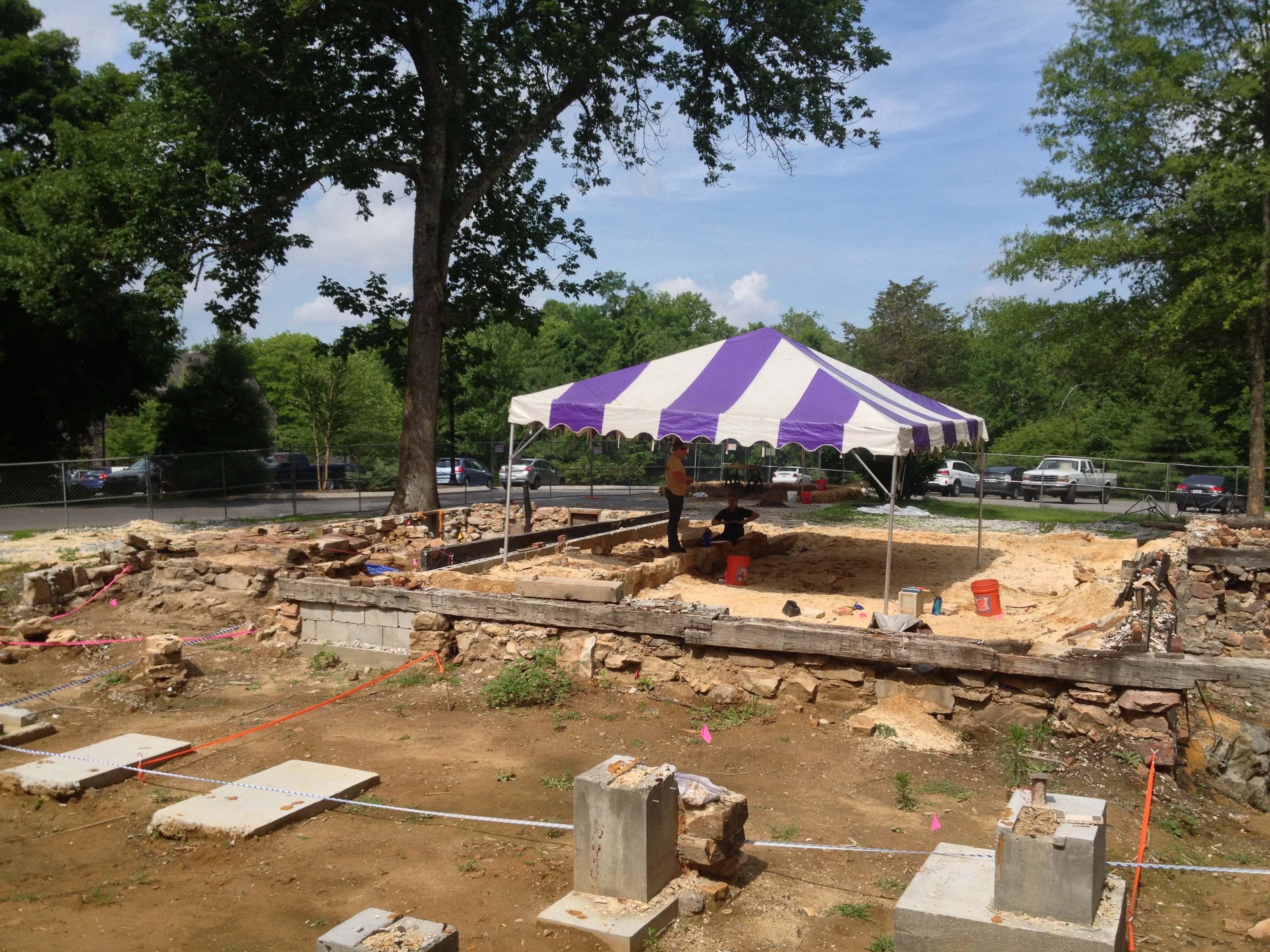
“When Fairbanks built Rebel’s Rest, he used logs that had been sawn,” Smith said. He pointed to a long log set horizontally on top of a foundation right in front of us– it was clearly not dawn but hewn. “All in front of that,” he continued, emptying out the baggy, “was this.” Little bits of glass spilled out. Melted glass, he noted. Probably from the fire that burned down the Polk residence that occupied the site before the war.

20150620-205034.jpg

20150620-205129.jpg
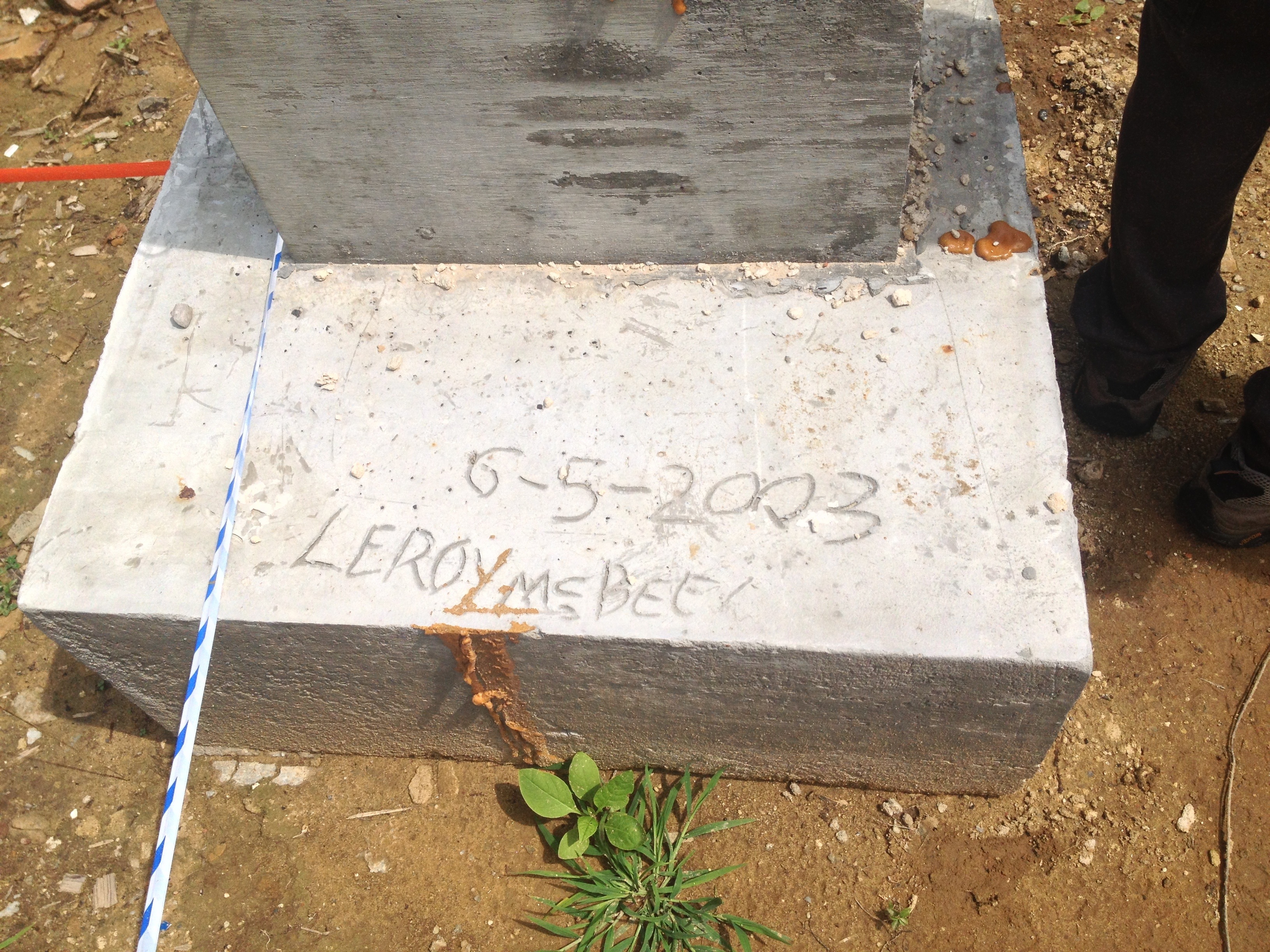
In the area in front of the hewn Polk log there are modern pillars of poured cement, dating to 2002-3, when PPS workers had to crawl under Rebel’s Rest to set up supports and run wires and vents and such. Some are “signed.”

20150620-210037.jpg

20150620-210105.jpg

20150620-210125.jpg
I suppose my favorite modern item is a time capsule the guys put under the porch. Who knew that every time we crossed the threshold into Rebel’s Rest in the past decade, we were walking over it?

20150620-210341.jpg
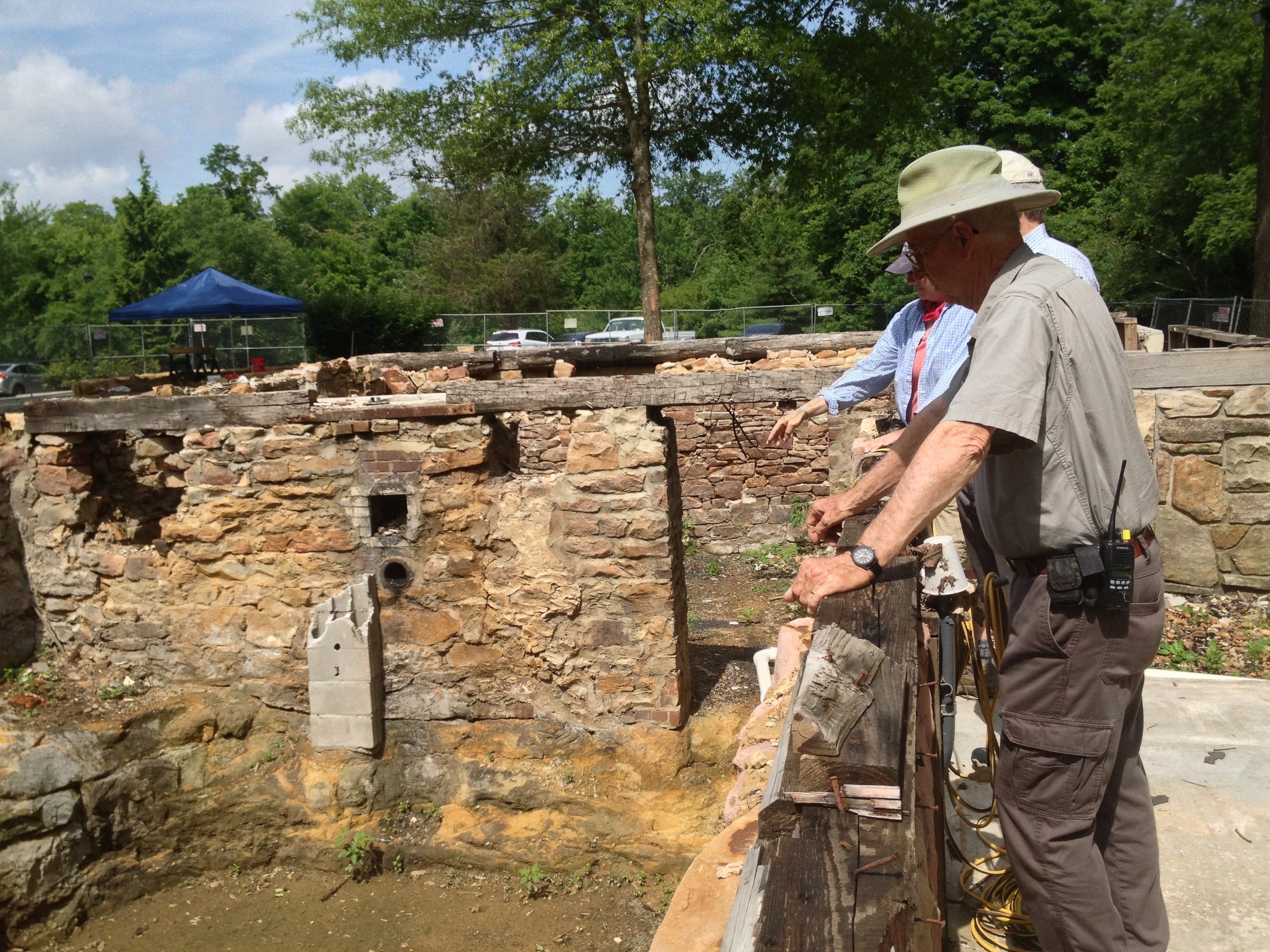
On the right hand side, below where the kitchen had been, are the remains of a size able room, “Is that a natural outcrop down there?” asked the VC. Indeed, a large rock with a still running spring coming out from under it. “We even found the sump pump down there,” said Sarah, “still in functioning condition.” I wish I had asked to see it. The stone walls of this room showed evidence of burning on the wall. Not from the recent fire, Smith noted, or the 1860s one. A mystery.

20150620-211138.jpg

20150620-211224.jpg

20150620-211205.jpg
There are lots of mysteries, in fact. For instance, right beside the spring, on a higher level, a carefully excavated square revealed what first seemed to be a staircase… which then ended in a perfect cement wall. Why? “How old is cement, anyway?” I asked. “Roman,” replied Smith. (Note to self: don’t ask stupid questions in front of the VC)

20150620-211906.jpg
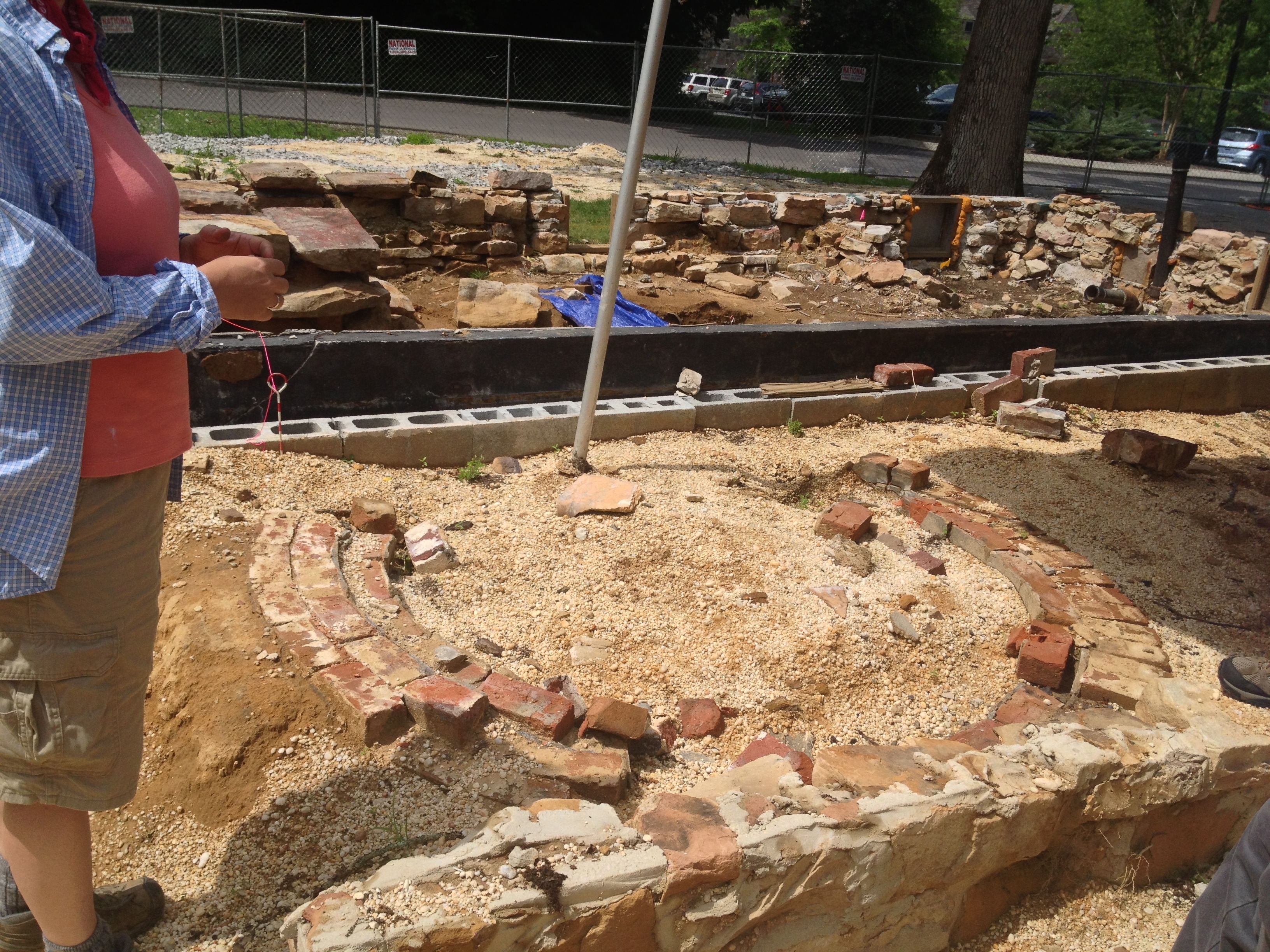
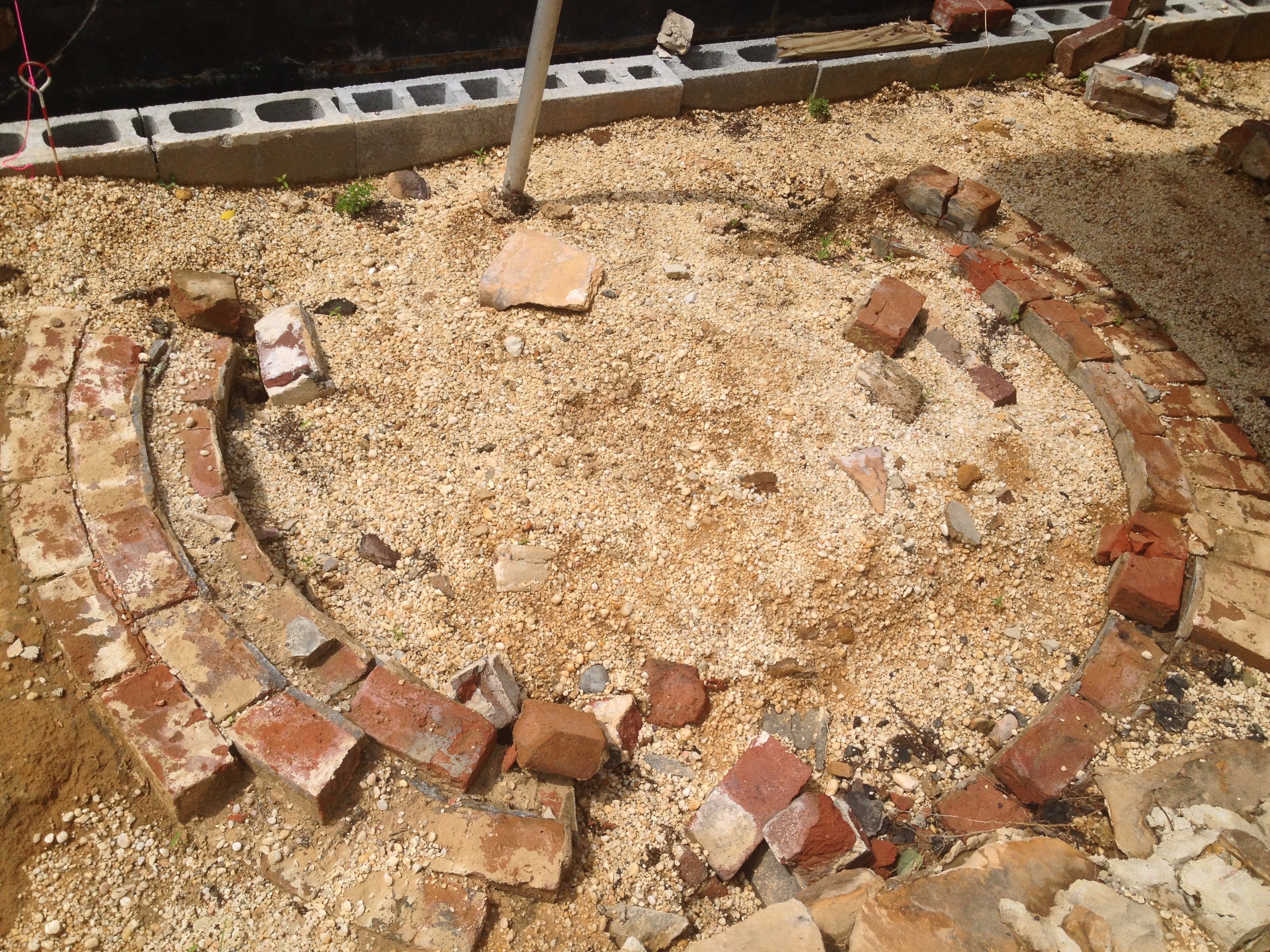
Closer to the parlor, where the old staircase had been, was this circular pattern of brick. What was it? “We have a lot more to excavate in this area,” said Sarah, “so we can’t just dig this up, much as we’d love to.” It’s interesting how part if the brickwork runs one edgy, and the other side goes another way. “Right now,” she goes on,”my pet theory is that it’s a spiral staircase to a Yankee speakeasy.” They’re saving this excavation for last–“dessert,” says Smith.

20150620-212425.jpg

20150620-212439.jpg
There are quite a few other items of interest in the vicinity, just beyond the housestead. What seems clear is that Fairbanks built on the old Polk home, which was probably not a humble one. All around us evidence, too, of livestock and poultry. There’s more in the woods toward Fulford, but I declined to go. The grass was tall and certainly full of chiggers, after all, and I hadn’t exactly been planning for a walk in the woods.

The Messenger reports this week that the archeology team is looking for volunteers– from what I’ve seen, there’s a lot to be uncovered still! Below are a few more pictures from my stroll around the site.

20150620-213357.jpg

20150620-213419.jpg

20150620-213441.jpg

Posted in Sewanee | 4 Comments

Sounds and sweet airs, that give delight and hurt not

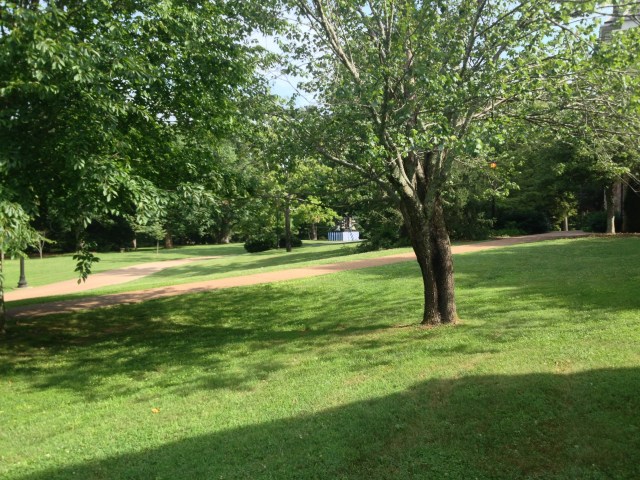
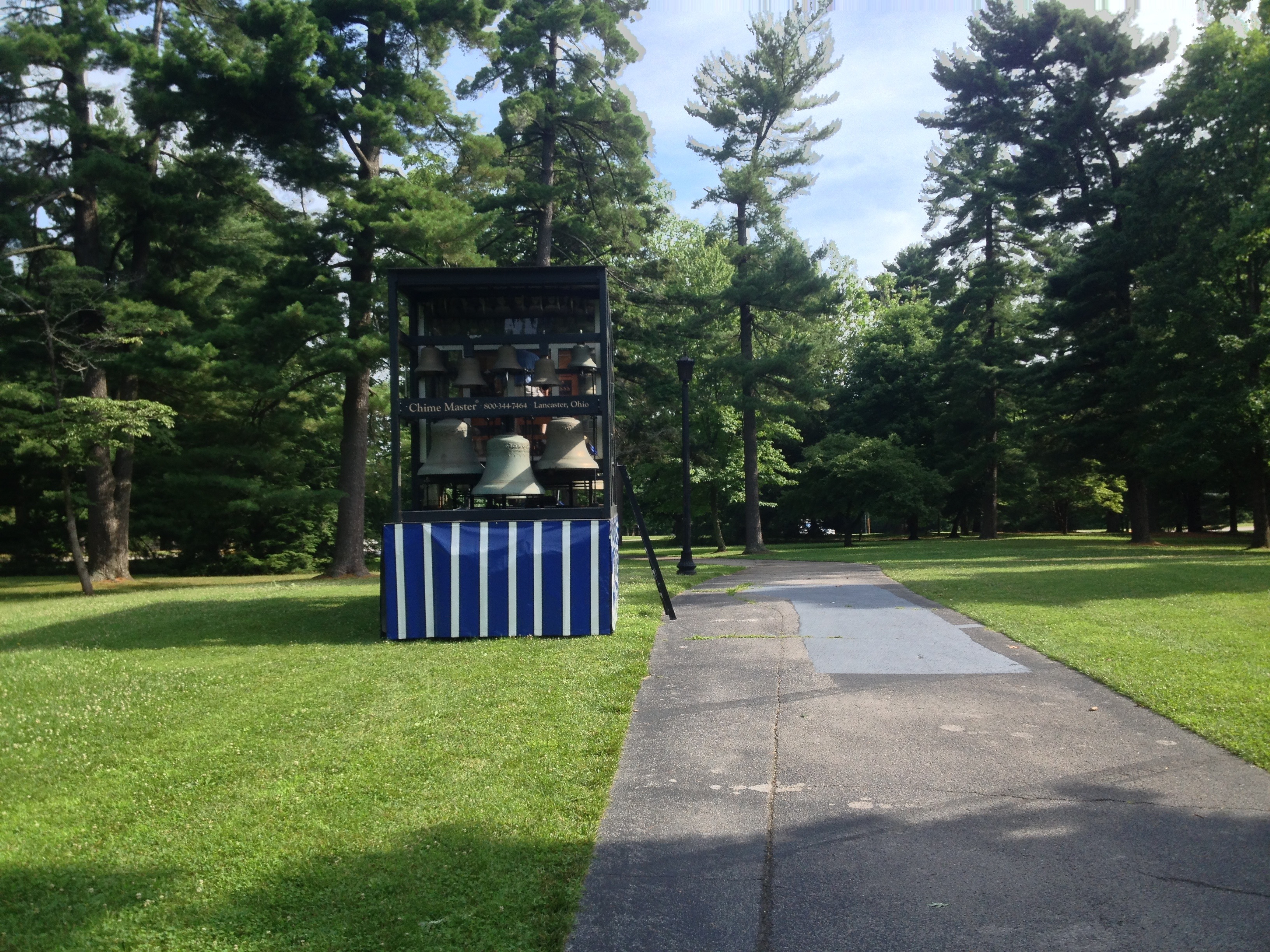
I was toodling down Georgia Ave this morning on by bike when I heard bells suddenly starting to peel. Nothing unusual in that around Sewanee–to my right was the Breslin Tower, and beyond that the Shapard Tower of All Saints Chapel. But these bells were coming from my left. I looked over toward the front of St. Luke’s Hall to see this sight:

<20150618-125716.jpg

20150618-125917.jpg

20150618-130023.jpg

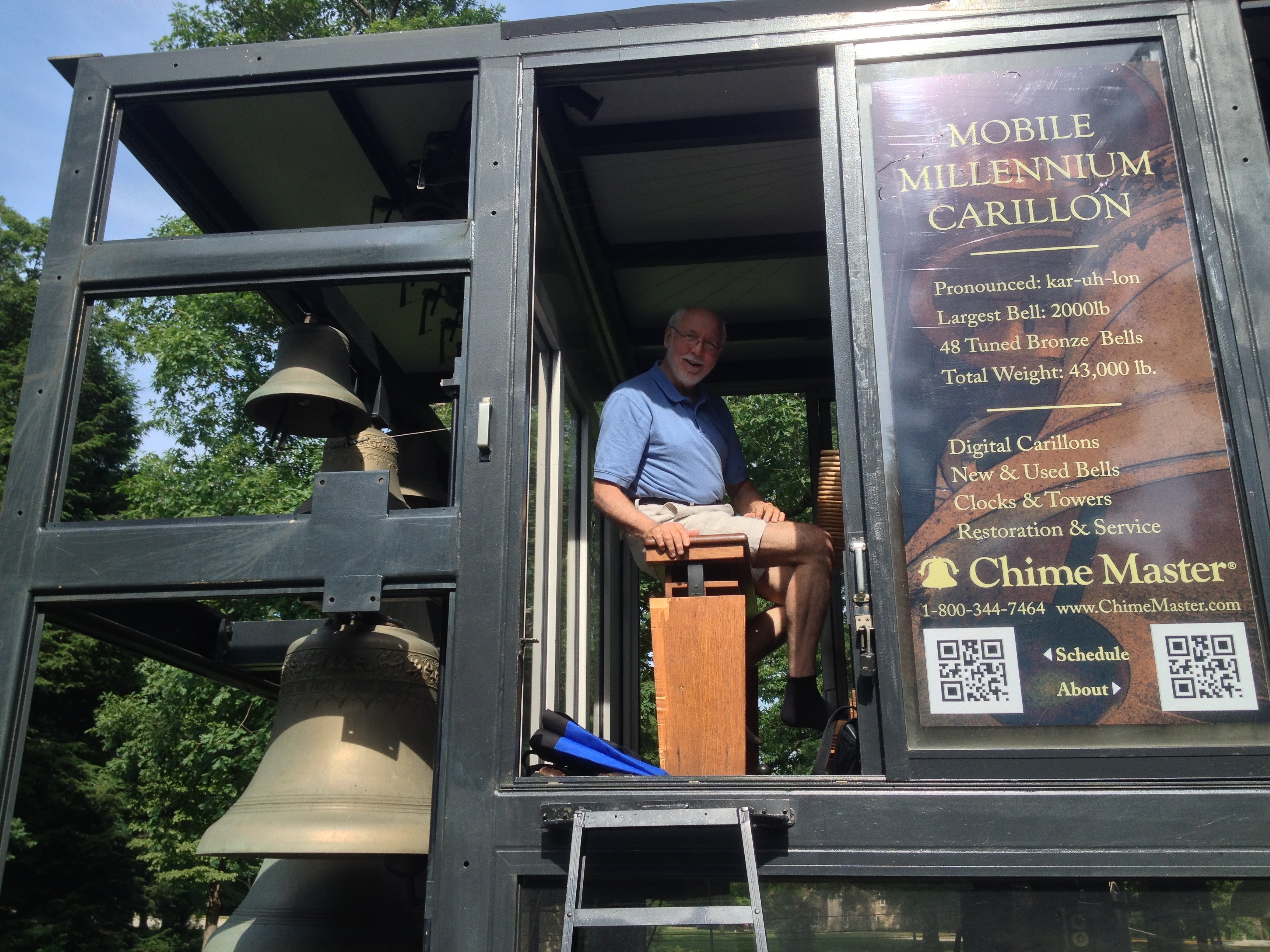
For some reason, there was a Mobile Carillon set up on the path. Inside, playing away was Ray Gotko, who ordinarily plays the carillon at All Saints. “This,” he said, “is the original definition of a contraption.” He didn’t have much a of sense of why it was there. “It’s annoyng,” he said. “Everything’s in the wrong place.” I shot some video of him playing but my phone ran out of storage space. I’ll try to go over in the next few days to catch Ray again. “It’s here all month,” he told me.

20150618-130538.jpg

Be not afeard; the isle is full of noises,
Sounds and sweet airs, that give delight and hurt not.
Sometimes a thousand twangling instruments
Will hum about mine ears, and sometime voices
That, if I then had waked after long sleep,
Will make me sleep again: and then, in dreaming,
The clouds methought would open and show riches
Ready to drop upon me that, when I waked,
I cried to dream again.

Posted in Music, Sewanee | 1 Comment