Semel et Semper

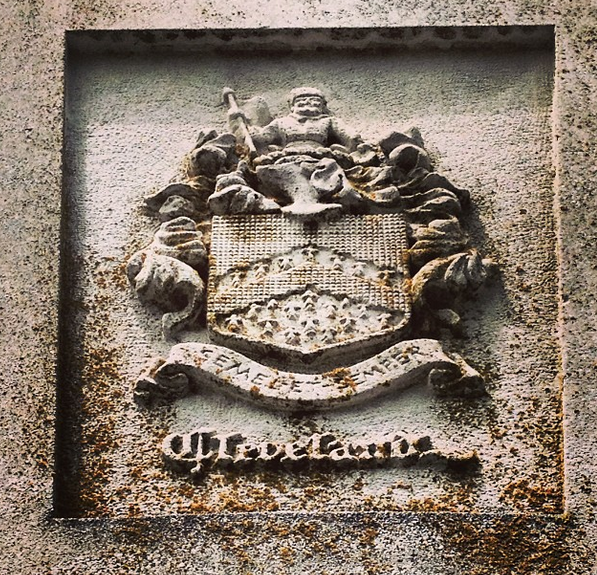
Above the door of Cleveland Hall in Sewanee is the following heraldic device:

Screen Shot 2015-06-02 at 8.06.25 AM

According to A General Armory of England, Scotland, and Ireland by John Burke and John Bernard Burke of London (as cited here), the Cleveland coat-of-arms is described as “Per chevron sable and ermine, a chevron engrailed counterchanged. Crest–A demi old man proper, habited azure, having on a cap gules turned up with a hair front holding in the dexter hand a spear, headed argent, on the top of which is fixed a line proper, passing behind him, and coiled up in the sinister hand.” Beneath the shield is the Latin motto, SEMEL ET SEMPER, “Once and Always.”

The motto is a nice once–alliterative and pithy. I really don’t get why there is a “demi old man” as a crest. Every time I look it up on Google, all I get are hits about Demi Moore, who has nothing to do with heraldry. (Actually, I do get that “demi” means that we only see his head and torso in the crest.) still, this requires more looking into!

Postscript. OK, according to the Encyclopedia Americana (1919), p. 549:

“The name Cleveland is, in truth, not the name of this great American family, but rather the designation of the immense estate they once possessed in England, where these folks were known as “De Cleveland of Durham, England. This French nobiliary predicate “de” formed a part of this family name up to the 13th century, some genealogists claiming their ancestry French and hence the French word “of” prefacing the name. The Clevelands have an armorial bearing which dates back to the remote period of the 12th century and the crest, which represents a spearman, is in token of Sir Guy de Cleveland, who commanded the spearman at the famous battle of PoiclienPoitiers of 19 Sept. 1356.”

I gotta say, this explanation seems retrofitted to the iconography rather than real. Why does the spear have an attached line? The old man looks more like a harpooner or spear-fisherman to me than a medieval warrior, especially in other renderings of the crest.


Posted in Emblems, England, Sewanee, Uncategorized | Leave a comment

“Talking, Talking, Talking”: Sewanee Senior Banquet Remarks 2015

If you are like me, and you find yourself stuck at a large banquet with some after-dinner speaker about to offer grandiose “Remarks,” you probably console yourself with the thought that, Well, the sooner he begins speaking, the sooner he’ll be finished. With any luck, that is true, though I have to say, you are not as lucky as last year’s seniors, whom I had the honor of being asked to address at this same banquet—a tornado warning that occurred at the very last minute granted them reprieve. (It’s true. At 6:27 last year, the Senior Banquet was cancelled, and the police made everybody move to the basement. You might recall that the Sewanee Children’s Center was located there at the time, so there were all of last year’s seniors with glasses of wine sitting at these little tables on little chairs) Alas, you all will not be spared the whirlwind of words. Let me start that whirlwind off, though, with an expression of sincere gratitude for the invitation to be with you here tonight as we recognize those who have shown such leadership on behalf of the Senior Class Gift Campaign, and, while it may be a bit premature, let me also offer an anticipatory congratulations to the Class of 2015.

What a year you have had as seniors, I can’t help but think. So many things have happened, globally and locally, and there has been so much for all of us to talk about. You came back late last summer to begin your final year here to a campus that looked markedly different than the one you had left behind in the spring. Over by Stirling’s and Humphries Hall, for instance, some old army barracks were replaced with brand-new townhouses as well as with something called a Social Lodge, a place that has already become a locus for constructive interaction. Likewise, many of you probably had not had a chance to see anything of it when you left last May except the exterior of the new Sewanee Inn; inside, as I’m sure you’ve heard, it has become an important part of social life on the Domain. Certainly I have had many a good conversation in it already, at a wedding last June for a new graduate, for instance, or over breakfasts and drinks with job candidates throughout the year (some of whom will be joining us this fall). Even just this weekend, a recent alum and I met at the Inn. “This place leaves me speechless,” he declared, and then he began to tell me about his post-graduate life for a few hours.

These happy changes did not come without competing sorrows. I am sure all of you were saddened when you came back for your senior year to see that a fire had left Rebel’s Rest a burnt and water-logged wreck. The absence of Rebels’ Rest on University Avenue is a palpable one for many of us, especially those on the faculty and staff who spent our first nights in Sewanee in one of its guestrooms. Though the wisteria that covered its porch can still be seen to bloom, the building is gone, no unlike that time of my life when I myself was a younger job candidate. The place exists only as a memory now, and discussions are just getting underway about what should be done with the location where it sat. Rebel’s Rest, after all, was built in a day long before there were electric lights; by contrast, its successor will have to be building that is not only WiFi-ready, but ready for whatever it is that will eventually and inevitably come after WiFi. The discussions that take place concerning this site at the heart of campus will have to be careful. They will have to balance issues of symbolism and pragmatism, to weigh the wistful against the useful, to negotiate commitments to the past as well as designs for the future. Something will be built there, no doubt, something we will all be proud of. But before we build, we have to talk.

That makes sense, of course, because dialogue is at the very heart of the university’s identity. What makes the liberal arts the liberal arts, and more importantly what Sewanee Sewanee, is the way we make a point of speaking with each other about things that matter. This past fall, you will recall, the film “The Obvious Child” was postponed to after the elections, an act that was called censorship by both the Sewanee Purple and the Chattanooga Times-Free Press. When it was eventually screened, it was the probably the campus’ most talked-about film of the year, as a rom-com about abortion probably should be. After Eric Metaxas’ convocation address in January, there was a loud back and forth discussion on campus and on-line about what he had said—while at times it seemed that more heat than light was generated, still I was happy to see positions staked out, questioned, defended, and seriously debated. Not everything that is said is meaningful, of course. Sometimes silences can be eloquent, too, as those of you may have participated in Friday’s Day of Silence can attest. But at times, we must speak up, speak out, and speak to one another, as you did–much to your collective credit–earlier this month, in a forum the IFC hosted, prompted by hateful remarks made at a fraternity in Oklahoma. My hope, and I’m sure you share this, is that with these efforts we are beginning to build a stronger community. As I say, we have to talk before we can build.

In a famous chapter from his 1941 memoir, Lanterns on the Levee, William Alexander Percy writes about his college days here that people who live in Sewanee [quote] “seem always to be leaning from the top of their tower, busy with idle things; watching the leaves shake in the sunlight, the clouds tumble their soundless bales of purple down the long slopes, the seasons eternally up to tricks of beauty, laughing at things that only distance and height reveal humor in, and talking, talking, talking— the enchanting unstained silver of their voices spilling over the bright branches down into the still and happy coves.” [endquote] Percy’s memories are drenched in nostalgia, of course, but he’s right about the talking. Still it’s worth saying something a little more about why we need to talk so much. Because it’s important to say that a place like Sewanee is not a place for empty chatter, but a place ultimately for contemplation and discernment. When we talk, we do so to get our thoughts straight, to put into words what we think and feel and most deeply believe, and we listen as others do the same thing. In our conversations in classrooms, in dorm rooms, over caffeinated drinks and other kinds, we are most happy when we sense that the sparks fly, the neurons fire, the complacency shakes off, and the light now and again breaks through.

Isn’t that the reason all of us wanted to be in Sewanee, after all, to take part in discussions that were worth having, to be involved in things that were worth being involved in? Over the past several years, I have had many Facebook chats with friends from Sewanee, but two recent conversations stand out. In each instance, the alum was angry over events taking place at Sewanee. One declared not give any money in response to the Cliteracy exhibit, the other said something similar about the appearance of former Attorney General, Alberto Gonzalez. Both spoke in the anger of the moment, but I think neither of them will make good on their threats –to take their bat and ball and go home is neither one’s inclination about this place. YSR runs a little too deep in their blood, as does their devotion to their alma mater. Distance and height will reveal the humor in things, and they will not remember having said such things next time we meet here on the mountain, trust me.

For some here tonight, it may be quite some time before you’re back to the mountain after graduation. When you return, some old buildings will be gone that you are bitterly going to miss, some new ones will be built that your generosity will have had some part in constructing. In a similar fashion, the students who come after you will have conversations of their own, subjects they will feel the need to debate, speakers and exhibits they will want to host or protest. Some of what happens you may not like. But they will be young, as you are now, and as you are now, they will be intelligent and intense. And at some point they too will grow up and become alumni of the University, as you are bound to be in just three Mondays from today, when the Vice-Chancellor will have bid you farewell in Latin as Iuvenes dilecti et nunc exornati. All I ask is that you “chosen and now honored youths” have some patience with the whipper-snappers that follow you. Let them talk, in fact encourage them to do so, and listen with forbearance to them too. And let us continue to talk as well, in the few weeks that are left to you as students, and in the many years to follow when life will take you God only knows where as alumni. Be sure to stay in touch, because your alma mater will miss you. And that is all I have to say.

Monday, April 20, 2015, Cravens Hall, University of the South, Sewanee, TN

21717_10152881584268226_3735492996125829269_n

Posted in Education, Sewanee, Time | 1 Comment

Protected: The Belle on the Bill

This content is password-protected. To view it, please enter the password below.

Posted in Animals, Birds, Emblems, England, Family, Ireland, Nautical, Numismatics, Poetry, The South | Enter your password to view comments.

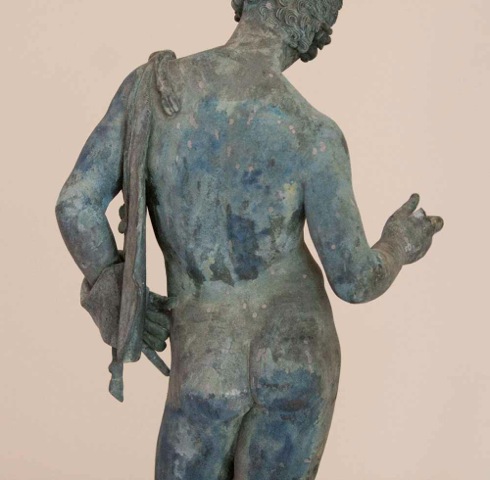
Rear-View

Dr. Christopher M.  McDonough,

At the request of the PROVINCETOWN ARTS magazine I have been asked to  write a review of the recent biography of Tennessee Williams by John Lahr, TENNESSEE WILLIAMS, Mad Pilgrimage of the Flesh,
For this review, I ask your permission to reproduce a rear- view photo of Williams copper statue, “Testa dell’Efebo” [attached]
PROVINCETOWN ARTS IS A NONPROFIT PRESS FOR ARTISTS AND POETS,
Provincetown MA 02657
Respectfully,
Leona Rust Egan, Theater historian
author, PROVINCETOWN AS A STAGE
Postscript. In fact, the article in Provincetown Arts Journal is now out! A PDF of ” Tennessee Williams: His Long Farewell” by Leona Egan is here.
-1
Posted in Boston, Classics, Sewanee, Statues & Monuments, Tennessee | 2 Comments

At Armfield’s Grave

This morning I went to the Beersheba Springs Assembly for the Posse Retreat, which had as its focus “Crime and Punishment.”  This was a great event, with many good conversations, impressive facilitating, lots to laugh and think about.  After lunch, I made my way home (though vowing that next year I’d attend the entire weekend ), but first stopped off at the Armfield Cemetery, just down the road from Assembly.

IMG_7781

IMG_7783 IMG_7782

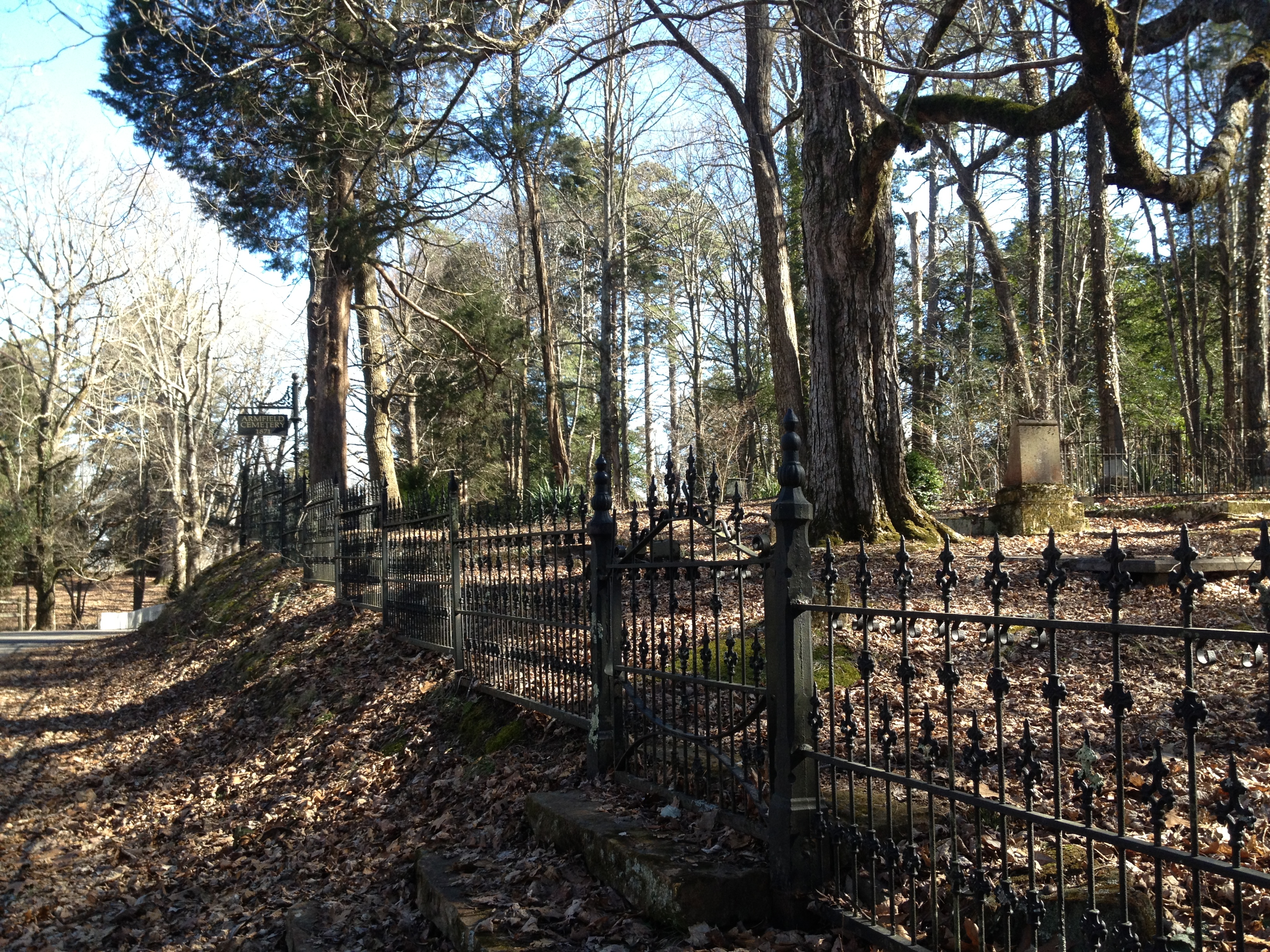
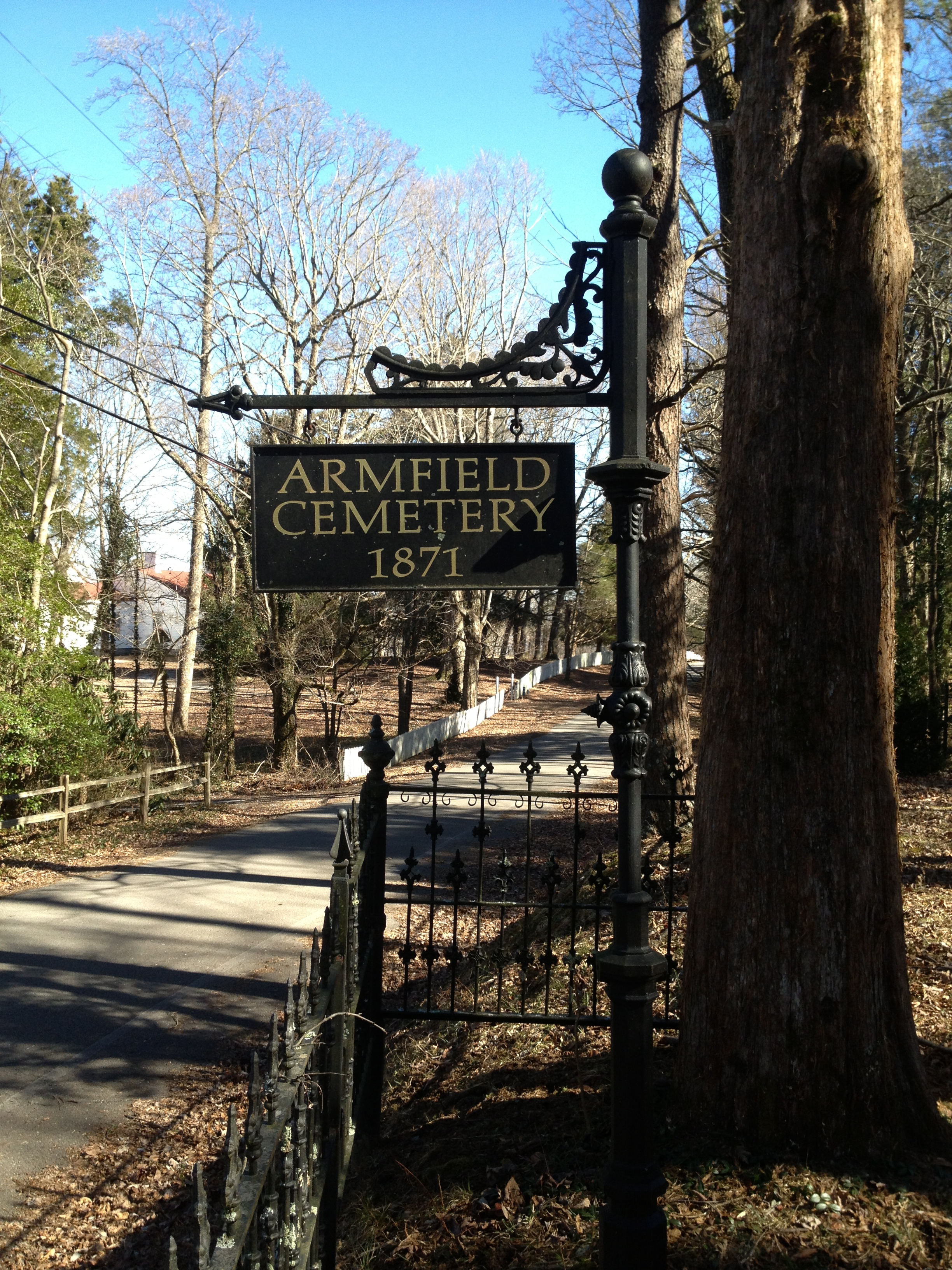
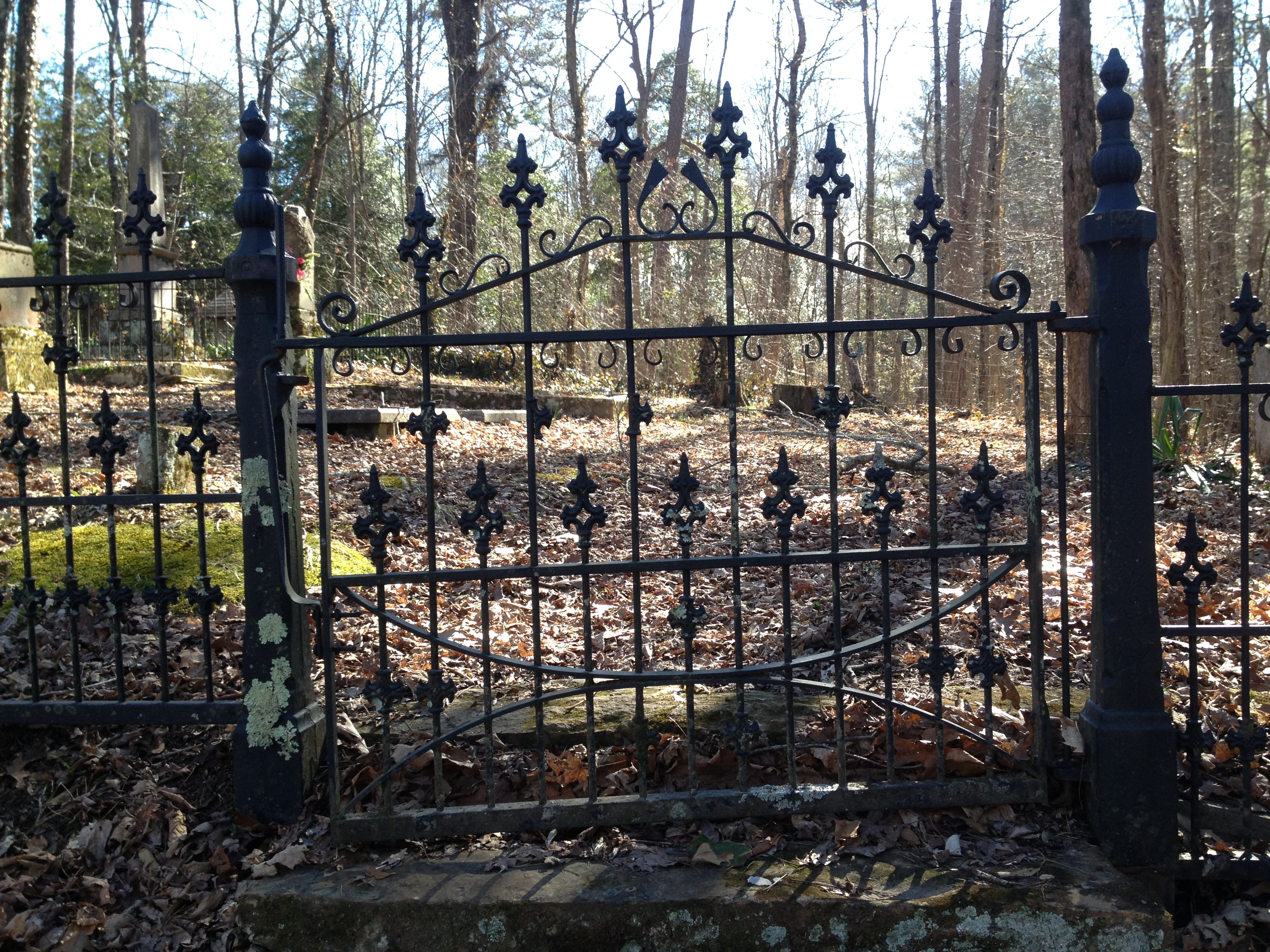
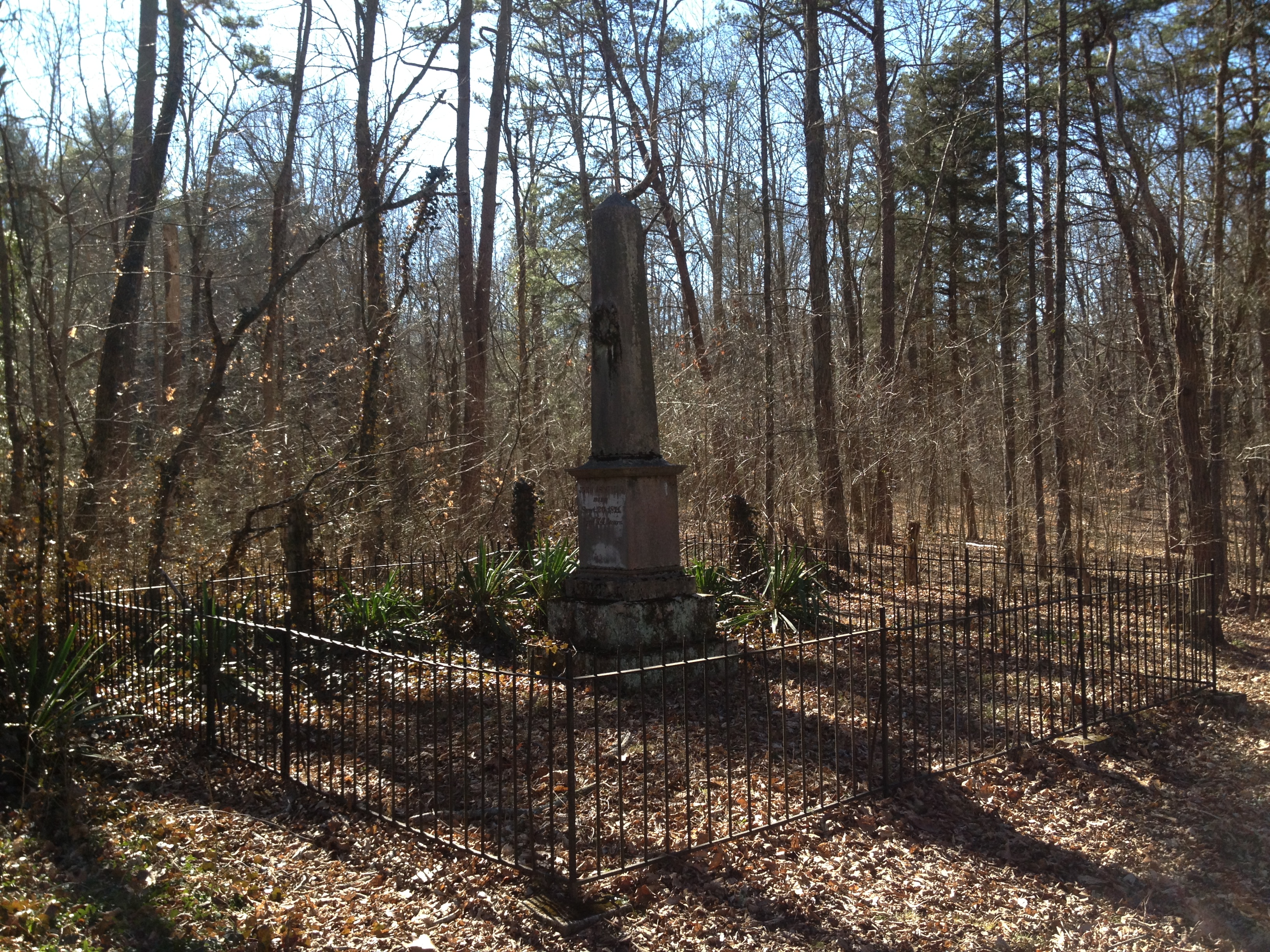
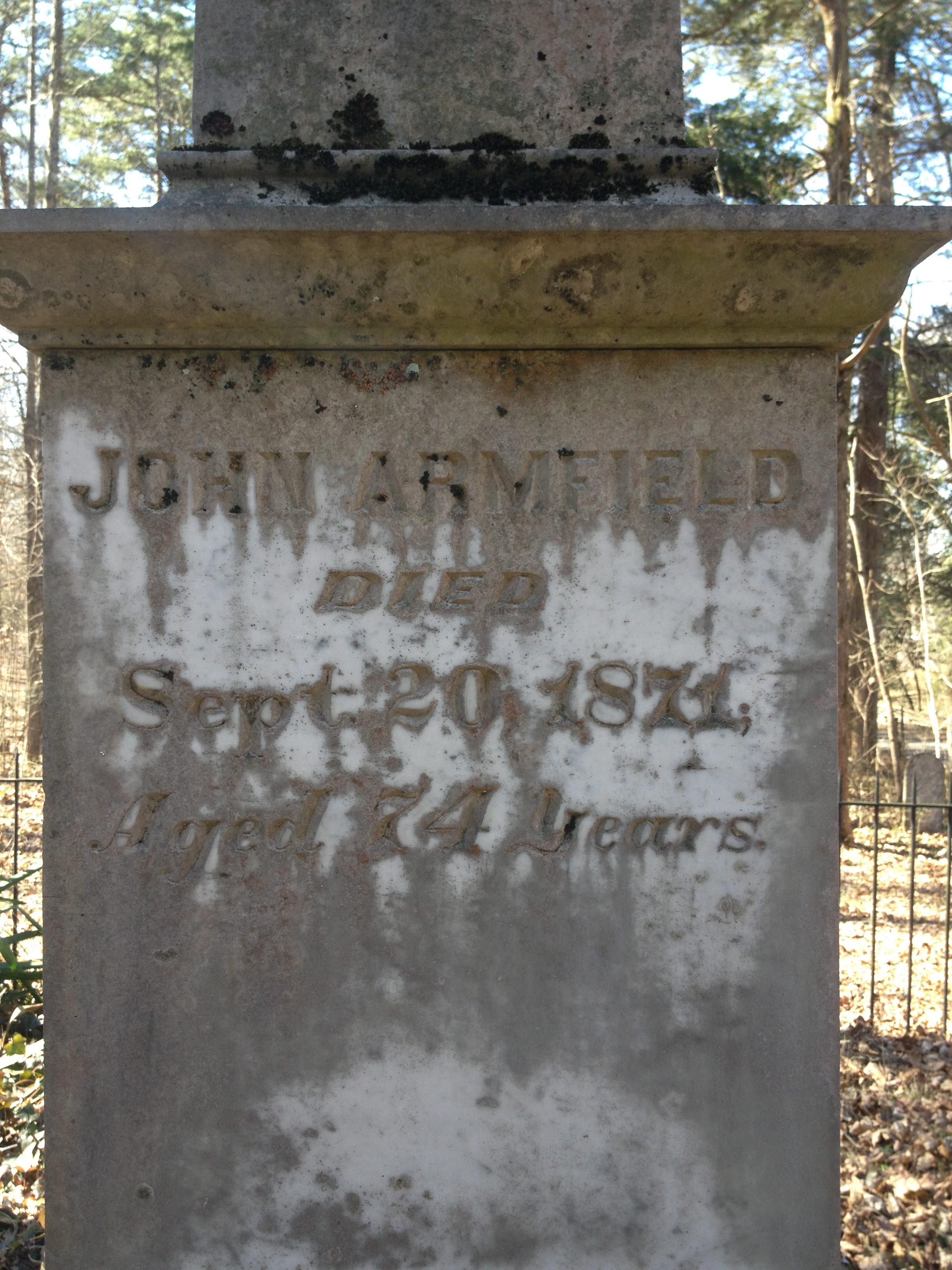
The graveyard dates to 1871 and, on a sunny February afternoon, the old trees, leaf litter, and ironwork gates give the place a certain Victorian Gothic charm.  Across the street are modest, old-fashioned homes which, being built on the bluff, have a commanding view off the plateau into the Savage Gulf State Park. The most prominent monument in the cemetery is that for John Armfield, below.

IMG_7785

IMG_7786I have a profound antipathy for Armfield who, with Isaac Franklin, ran a successful slave-trading operation. “With headquarters in Alexandria, Virginia, Franklin and Armfield conducted gangs of chained and shackled slaves down the Natchez Trace and sold them in the slave pen on the edge of that Mississippi town,” writes Herschel Gower in the Tennessee Encyclopedia of History and Culture.  “The arduous journey took seven or eight weeks, but wealthy cotton planters paid Franklin and Armfield well for their traffic in African flesh. Armfield’s biographer, Isabel Howell, estimated that the pair averaged sales of twelve hundred slaves per year for every year from 1828 to 1835.”

Screen Shot 2015-02-07 at 6.21.40 PMIn the 1850s, Armfield– now rich from slave-trading and enjoying his retirement– began buying up property in Beersheba Springs.  Many of the cottages he built at that time are still to be seen in the town.  He was close with Bishops Otey and Polk, who owned summer homes in Beersheba, and helped to convince them to build the University of the South on the Cumberland Plateau. In this same period, as James L. Nicholson writes in his Tennessee County History Series: Grundy County, “to show his endorsement and in a typical display of  his munificence, [Armfield] pledged $25,000 a year during his lifetime  to the university.” As Tanner Potts has discovered in his well-researched slideshow on this topic for Sewanee’s Roberson Project, Armfield’s gift to the University was not exactly $25K:

On January 4, 1859, John Armfield pledged 25 installments of $1,000 per year for the construction and upkeep of the first buildings of the University of the South. Armfield’s subscription, pictured below, stipulates that the college must be built near Beersheba Springs and must be of the “first class institutions of learning in the United States.” Armfield’s gift was erroneously reported by the Republican Banner and Nashville Whig as $25,000 per year for the duration of his life. While the actual gift fell short of its myth, the pledge launched the construction of the university shortly after its incorporation.

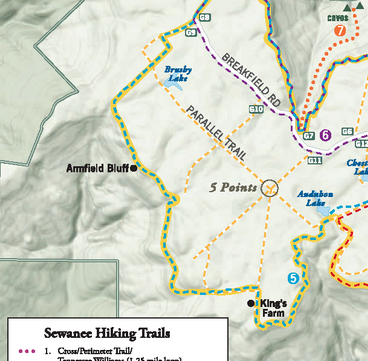
Whatever the cash value of his support, his name survives on the University’s Domain today as Armfield Bluff.

At lunchtime at the retreat, I had spoken with one of my former students, Gabby, who knows all about the biography of Armfield and Beersheba’s early history.  It’s ironic, we agreed, that the retreat, where so much great work is done to confront ingrained issues of institutional racism, should be held here. “But it makes sense, too,” she said. “It’s a sort of re-claiming.”

She’s right, of course, though I wonder if it’s entirely true. As I drove back to Sewanee, it happened that I was listening to a podcast from Radio Diaries on George Wallace’s famous segregation speech (re-broadcast from 2012 in connection with the release of “Selma”).  In later years, Wallace would be deeply regretful of his position, and he even went on an “apology tour” of Alabama.  Among the people he apologized to was John Lewis, one of the Selma marchers who is now a well-known Congressman from Georgia:

“And I remember the occasion so well,” Lewis says. “It was like someone confessing to their priest or to a minister. He wanted people to forgive him. He said to me, ‘I never hated anybody; I never hated any black people.’

“He said, ‘Mr. Lewis, I’m sorry.’ And I said, ‘Well, governor, I accept your apology.’ ”    . . .

“Does it hurt me? No,” Lewis says. “In the end, I think George Wallace was one of the signs on this long journey towards the creation of a better America, toward the creation of a more perfect union. It was just one of the stumbling blocks along the way.”

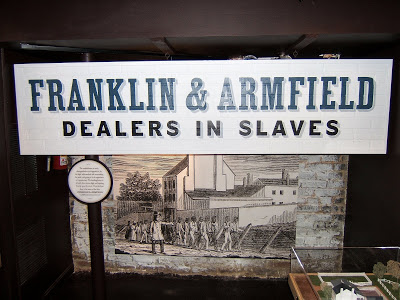
 Postscript, Feb. 7. My friend, David Haskell, sends along a link to a blog called “US Slave” which has images of Franklin and Armfield’s slave-trading business:

3Franklin+and+Armfield+Display+2


Posted in Cemeteries & Funerals, Education, Sewanee, Slavery, Statues & Monuments, The South | 1 Comment

An Ancient Source for the Winking Pizza Chef

According to a piece on pizza box art on the CBS News website today, “The caricature of a smiling mustachioed chef has been a popular feature of pizza boxes for decades. Sources say it dates back to the 1950s, to a hand-painted sign on the roof of Schaller’s Drive-In in Rochester, N.Y., though some claim it dates back even before World War II.” CBS calls this image “The Winking Chef” although, in the example they give online, both of the chef’s eyes are open so that he is not actually winking.

In fact, the gesture he is employing is an ancient Italian one.  There is a famous description of the extremely beautiful Psyche found in Apuleius’ Golden Ass, from second-century AD which bears a striking resemblance to what the Winking Chef is doing.  As Apuleius writes, “Many of the citizens and plenty of visitors whom the rumor of an outstanding spectacle had gathered with crowded curiosity, would be stupefied in admiration of her unapproachable beauty.  Moving a right hand to their mouths with the forefinger resting on an outstretched thumb, they revered her as though she were Venus herself in religious adoration.”  Multi denique civium et advenae copiosi, quos eximii spectaculi rumor studiosa celebritate congregabat, inaccessae formositatis admiratione stupidi et admoventes oribus suis dexteram primore digito in erectum pollicem residente ut ipsam prorsus deam Venerem religiosis <venerabantur> adorationibus. (Golden Ass, 4.28)

It doesn’t go so well for Psyche, being compared to Venus. The goddess sets her son Cupid on the beautiful by hapless girl, but he ends up falling in love with her.  Adventures ensue, jealous sister are involved, an obligatory trip to the Underworld. It all works out in the end for Cupid and Psyche. I have to think that, with his knowing look, Winking Chef understands it all.

Posted in Cartoons, Classics, Italy | Leave a comment

The Butt-Millet Fountain, A Memorial Hidden in Plain Sight

IMG_7754

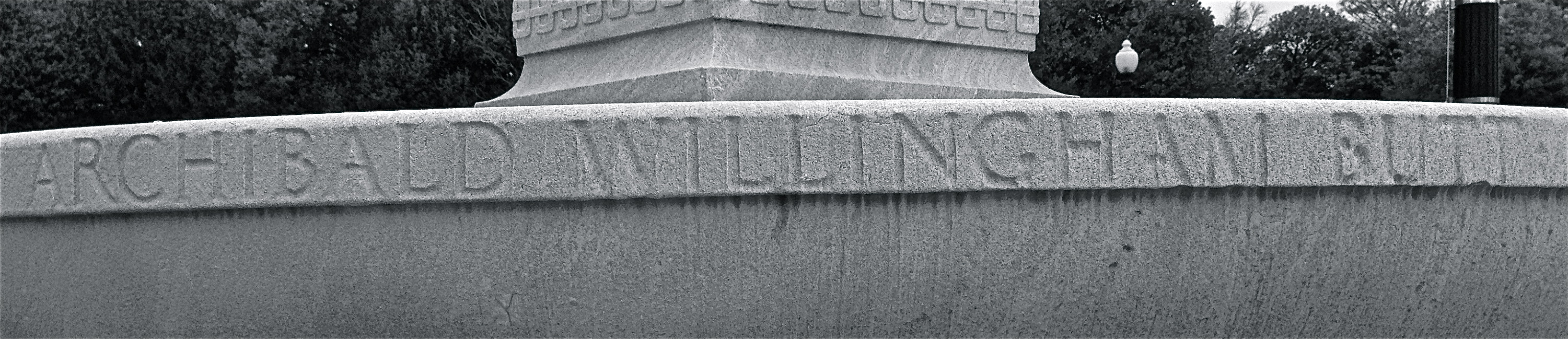
Major Archibald But, All Saints Chapel, Sewanee, TNI have written before about Major Archibald Butt, a notable alumnus of Sewanee who died heroically aboard the Titanic.  That’s him to the right, together with President Taft, from a stained glass window in All Saints’ Chapel which commemorates the presidential visit to Sewanee a year before Butt’s death. His traveling companion on that fateful voyage was the artist, Francis Davis Millet, who shared a house with Butt in Washington where they hosted large social gatherings.  As it happens, the Butt-Millet Memorial Fountain erected by their powerful and well-connected friends was only  few blocks from the hotel I was stayed at last weekend in our nation’s capitol, so I took a morning to go over and visit.

Screen Shot 2015-01-31 at 3.50.52 PMThe fountain could not be have been more prestigiously located, as befits two men so well-loved in their day. “Taft In Tears As He Lauds Major Butt,” reads the headline of the New York Times (May 6, 1912, p. 4).  It only makes sense that the memorial to a man whom the President loved as a son would be placed close to the White House, close to the very top of the Ellipse.  And I suppose it only makes sense that, as the years pass–indeed over a hundred of them–the depth of such feelings for a brave and noble man would subside into oblivion.  Today, the monument is hard to find, hidden behind the iron fencing and Jersey barriers that ring the White House. One has to pass by the monument to Butt and Millet, but given all the visual noise along the Ellipse Road and E Street, as well as the yelling Capitol police, it’s easy to overlook the eight foot stone fountain.

IMG_7759

The fountain base is made of Tennessee marble, appropriate for Butt, whose connection to the South was a fundamental part of his identity.  Above the base on the granite slab is, n one side, a symbolic representation of Valor, fitting for Butt as a military man. Just behind the trees is the White House.

IMG_7755

On the other side one sees a representation in Millet’s honor of the Arts. In the distance you can see the Washington Monument.

IMG_7756

It has been reasonably suggested Butt and Millet were lovers and if so, there is something poignant about the fact that this memorial stands in so prominent location, a place where tourist go by in droves and droves, and yet somehow seems to go unseen, to be somehow hidden in plain sight.


Posted in Cemeteries & Funerals, Military, Nautical, Sewanee, Statues & Monuments, Tennessee | 6 Comments

Protected: Ave atque Vale, Treebeard

This content is password-protected. To view it, please enter the password below.

Posted in Oxford, Poetry, Sewanee, Trees & Flowers | Enter your password to view comments.

Protected: Inde Ira et Lacrimae

This content is password-protected. To view it, please enter the password below.

Posted in Cartoons, Classics, Poetry, Rome | Enter your password to view comments.

Orwell against mistreatment of prisoners

My last post concernted St. George as an avenger for justice, and in this month, as we process the Senate’s release of the Torture Report, another English George with similar convictions comes to mind. From an unpublished letter of George Orwell to The Times, October 12, 1942:

By chaining up German prisoners in response to similar action by the Germans, we descend, at any rate in the eyes of the ordinary observer, to the level of our enemies. It is unquestionable when one thinks of the history of the past ten years that there is a deep moral difference between democracy and Fascism, but if we go on the principle of an eye for an eye and a tooth for a tooth we simply cause that difference to be forgotten. …
It seems to me that the civilized answer to the German action would be something like this: “You proclaim that you are putting thousands of British prisoners in chains because some half-dozen Germans or thereabouts were temporarily tied up during the Dieppe raid. This is disgusting hypocrisy . . .  At this moment we cannot stop you maltreating our prisoners, though we shall probably remember it at the peace settlement, but don’t fear that we shall retaliate in kind. You are Nazis, we are civilized men. This latest act of yours simply demonstrates the difference.”

The whole text can be found in Volume 2 of the Collected Essays, My Country Right or Left, 1940-1943, pp. 243-44.

This is the Orwellian sentiment that has come to my mind these past few weeks, the unpublished protest against inhumane conditions rather than the grimly satirical statements from the Ministry of Truth or the all-too-realistic portrait of Room 101.

Posted in England, Military | Leave a comment