“My Friend George”

Lou Reed, I read in the Times, will be inducted into the Rock and Roll Hall of Fame next April. Various questions arise, of course, chief among which are, Isn’t he already in there? (yes, as a member of the Velvet Underground, so I guess this will be a separate entry) and Shouldn’t it be spelled Rock ‘n’ Roll with a “‘n'” rather than an “and”? (there’s actually a lively debate over this issue, but I guess when you’re naming a Hall of Fame, it won’t do to have an “‘n'” in it: the Victoria ‘n’ Albert Museum, for instance, would just sound silly and might lead people not to go in gawk at all the antique tchotchkes, and perhaps the slangy “‘n'” would turn away customers who would otherwise pay good money to gaze upon Ramones memoribilia.  It’s about dignity, people! But perhaps I digress).

Anyway, I remember the first Lou Reed record I bought, actually as a cassette, back in 1984 called New Sensations.  This is not one of Lou’s greatest works, though I liked it pretty well and used to listen to it on my Walkman a lot.  Everybody and his brother already knew “Walk on the Wild Side” and “Sweet Jane,” but New Sensations was hailed for its brighter, boppier sound. “I Love You, Suzanne” had a happy guitar lick and not a single reference to drug addiction so far as I could tell.

The song I liked best on the album, though, was a darker one called “My Friend George”– I’ve appended the lyrics below, as well as a Youtube clip– and I am pleased to see that, in an interview with Jonathan Cott in Rolling Stone from 1989, Lou claimed that he liked it best, too. In his review of the album, Kurt Loder called the song a “lovely, loping” lament for “the hard times of a violent (and possibly psychotic) old pal,” which is sort of right– the song begins, Read in the paper ’bout a man killed with a sword/ and that made my think of my friend George / People said the man was five foot six / sounds like George with his killing stick.  Lou said a little more about it in the Rolling Stone interview that’s worth noting:

That’s my favorite song on that album. I remember that when we were recording it, the engineer turned to me and said, “Do you have a friend named George?” And I said, “Of course not.” One of the nice things about being a writer is that you can have a friend named George.

As the singer indicates, George is not a real person but a symbol, a kind of heroic figure, and it was as such that I liked him so much. My favorite part of the song is when the narrator meets up with his friend at a local bar, after having heard that he’s “got this stick.” George “was wired up,” the lyrics go, and then the following occurs:

Avenge yourself he says to me
avenge yourself for humanity
Avenge yourself for the weak and the poor
stick it to these guys right through their heads

Well, the fight is my music, the stick is my sword
and you know that I love you, so please don’t say a word
Can’t you hear the music playing, the anthem, it’s my call
and the last I seen of George was him
running through the door

It’s the “stick it to these guys right through their heads” that really gets me, that expression of a visceral hatred of injustice demanding immediate, violent response which breaks the rhyme and meter of the song, the audio equivalent of “him running through the door.”

The sentiments of the song sound just as fresh now– in these days of protest over the deaths of Michael Brown and Eric Garner and so many others, not to mention the simmering anger at the utter failure of any criminal proceedings to be brought against the Wall Street bankers who wrecked the economy in 2008–as they did when I first was listening to Lou on my primitive headphones back in the day.

As it happens, I was a student in London in 1984, and the sense of class resentment at the time was at a complete boil.  Margaret Thatcher was utterly at war with the National Union of Miners led by Arthur Scargill in what was probably the last great labor movement of the twentieth century; the miners’ strike would last until the following spring and eventually end with the complete destruction of the union, but not before thousands lost their livelihoods and were forced onto welfare. Coal Not Dole read the buttons one saw everywhere.  “We had to fight the enemy without in the Falklands,” Thatcher said at the time of the strike. “We always have to be aware of the enemy within, which is much more difficult to fight and more dangerous to liberty.”  The rhetoric was more than matched by action, with police forces in riot gear battling strikers in widely-reported confrontations.  The anger on the streets was palpable, not just in the run-down parts of North London but even the fashionable districts near the Victoria ‘n’ Albert Museum.  At the age of twenty, it all seemed so wrong to me, and Lou’s friend George seemed so right.

02124477-f2a4-4518-a246-a64f67fcaf24During this turbulent period, I can remember one time riding on the top floor of a double-decker bus through the affluent neighborhood of St. John’s Wood, not far from Lord’s Cricket Ground and the Abbey Road studio. The bus careened alongside the roundabout, in the center of which stood a life-size bronze statue of a mounted St. George killing a dragon on a high plinth.  I’d passed by it numerous times, admiring the way the medieval legend of England’s patron saint had been re-purposed as a memorial to both world wars.  On this particular morning, however, it happened that I was listening to New Sensations as we drove on by the monument.  There was Charles L. Hartwell’s saint driving his lance through the monster’s neck while Lou sang, “Stick it to these guys right through their heads.”  Everywhere else in St. John’s Wood, well-heeled business men and women made their way, copies of the Telegraph tucked under their arms, untroubled by the miners’ misery. I gasped at the sudden epiphany.

By some chance, could Lou be referring to St. George in this song, I wondered.  Could the killing stick be the saint’s lance, could the bastards he’s fighting be any number of gold-hoarding dragons?  Lou was Jewish, of course, but was more than willing to employ Christian symbolism when it suited him. When he died in 2013, in fact, Cardinal Gianfranco Ravasi tweeted, Oh, it’s such a perfect day I’m glad I spend it with you Oh, such a perfect day You just keep me hanging on (Lou Reed).  While he was ridiculed by some in the media for it (“it’s about heroin, dummy!”), I suspect the cardinal could detect in “Perfect Day” the sound of a human yearning after happiness .

And I suppose what I hear in “My Friend George” is a yearning after justice, and three decades later, that sound is undiminished.  This coming March will mark the thirtieth anniversary of the end of the Miners’ Strike, and what it continues to mean for England remains unclear. Just a few weeks later, on April 18th, the late Lou Reed will be inducted into the Hall of Fame in Cleveland, a city now embroiled in protests over the killing of Tamir Rice.  Less than a week later, on  April 23, it will Saint George’s Day. Hey bro, what’s the word? Talkin’ ’bout my friend George, You talkin’ ’bout my friend George.


Read in the paper ’bout a man killed with a sword
and that made my think of my friend George
People said the man was five foot six
sounds like George with his killing stick

Hey bro, what’s the word
talkin’ ’bout my friend George
Hey bro, what’s the word
talkin’ ’bout my friend George
You talkin’ ’bout my friend George

I knew George since he’s eight
I always thought that he was great
And anything that George would do
you know that I would do it too

George liked music and George liked to fight
he worked out in a downtown gym every night
I’d spar with him when work was done
we split lips but it was all in fun

Hey bro, what’s the word
you talkin’ ’bout my friend George
Hey bro, what’s the word
talkin’ ’bout my friend George
Talkin’ ’bout my friend George

Next thing I hear George’s got this stick
he’s using it for more than kicks
I seen him down at Smalley’s bar
he was wired up, I tried to calm him down

Avenge yourself he says to me
avenge yourself for humanity
Avenge yourself for the weak and the poor
stick it to these guys right through their heads

Well, the fight is my music, the stick is my sword
and you know that I love you, so please don’t say a word
Can’t you hear the music playing, the anthem, it’s my call
and the last I seen of George was him
running through the door, I says –

Hey bro, what’s the word
talkin’ ’bout my friend George
Hey bro, what’s the word
you talkin’ ’bout my friend George
Talkin’ ’bout my friend George

Hey bro, what’s the word
you talkin’ ’bout my friend George
Hey bro, what’s the word
what me saying ’bout my friend George
Hey bro, what’s the word
hear you talkin’ ’bout my friend George
Hey bro, what’s the word
I hear talkin’ ’bout my friend George

Posted in England, Music | 5 Comments

The Eroticism of the Gettysburg Address

The androgyne of Aristophanes’ speech in Plato’s Republic is a deeply comic myth on the nature of eros, one that has been put to music in Hedwig and the Angry Inch (see below). I have long wondered whether the strange male birth imagery in the Gettysburg Address ought to be understood as a Platonic ideas about eros, and now am glad to see this idea in a scholarly book. (By the way, I have no opinion on suggestions about Lincoln’s own sexuality!)

From Kerry T. Burch, Democratic Transformations: Eight Conflicts in the Negotiation of American Identity (Bloomsbury Publishing 2012) p. 20:

Eros, the ancient Greek term that describes a form of love, is a symbol uniquely endowed to help us grasp the deeper layers of meaning of the Gettysburg Address. While popular conceptions typically reduce eros to the realm of sexuality, let us recall that Plato wrote the Symposium to articulate the powerful educational dimensions of the concept. In his classic treatment on love, Plato has Aristophanes define eros as “the desire for wholeness,” a theme in symmetry with Lincoln’s identification of the “unfinished work” facing the nation. The life-enhancing energies of eros have long been recognized as vital to the process of self-knowledge and to the development of community. Rollo May tells us that “eros is a state of being” an ardent desire which provides the condition of possibility for an individual to be “magnetized” toward the vision of an imagined good, for oneself or for one’s larger community. One of the defining strands of eros therefore consists of a passion for changing things for the better, individually and civically.

With this broad understanding of eros in mind, it is easier to recognize how Lincoln’s consistent use of birth imagery—“brought forth,” “conceived,” “created,” and “new birth of freedom” –affirms the erotic character underlying the Gettysburg Address. Not only are these erotic signifiers woven into the fabric of the speech but they also emerge from a background of contradiction and are presented as resolutions to that contradiction.

Indeed, it is precisely a heightened awareness of this contradiction that prompts Lincoln the teacher to ask Americans to reconnect to their democratic tradition as a way out of their collective predicament. The desire to move toward and connect to something better, whether to a person, to an object of knowledge, or to a sense of national wholeness, is not only an erotic energy but is also educable. Similarly, Lincoln wanted Americans to reinvent themselves in light of what was “truly good,” holding that such goodness would be impossible to bring forth without a prior grounding in the values and principles enshrined in the Declaration. That Lincoln’s civic pedagogy has an erotic character is also evidenced by his ability to fashion Gettysburg as an aesthetic event in which the teacher, representing beautiful ideas, succeeds in stimulating a desire among citizens to reinvent the nation on the basis of a common good of equality and opportunity, that is, on the basis of a philosophical idea.


Posted in Classics, Education, Military, Music, The South | Leave a comment

Sherwood, the Limestone Landscape

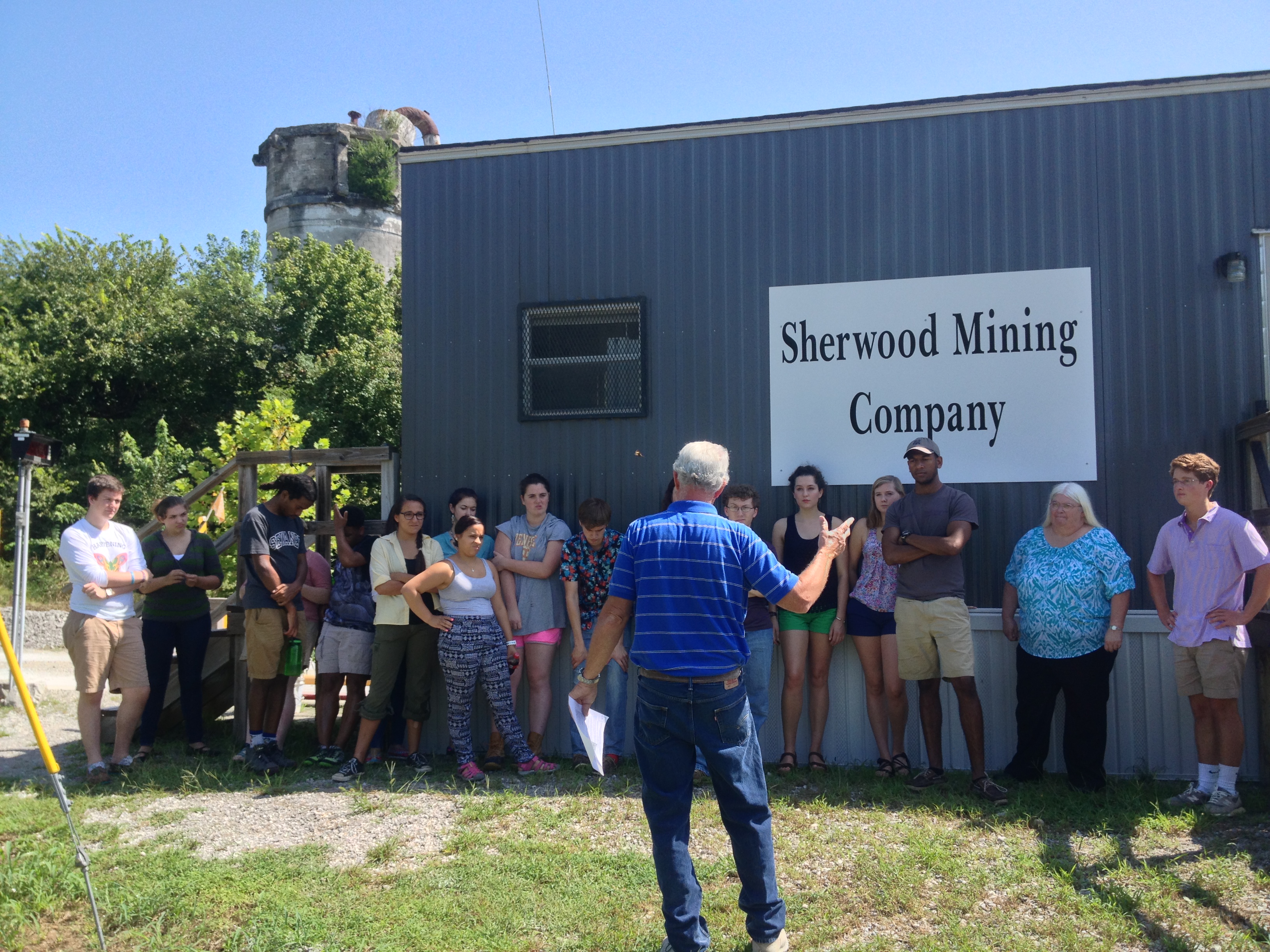
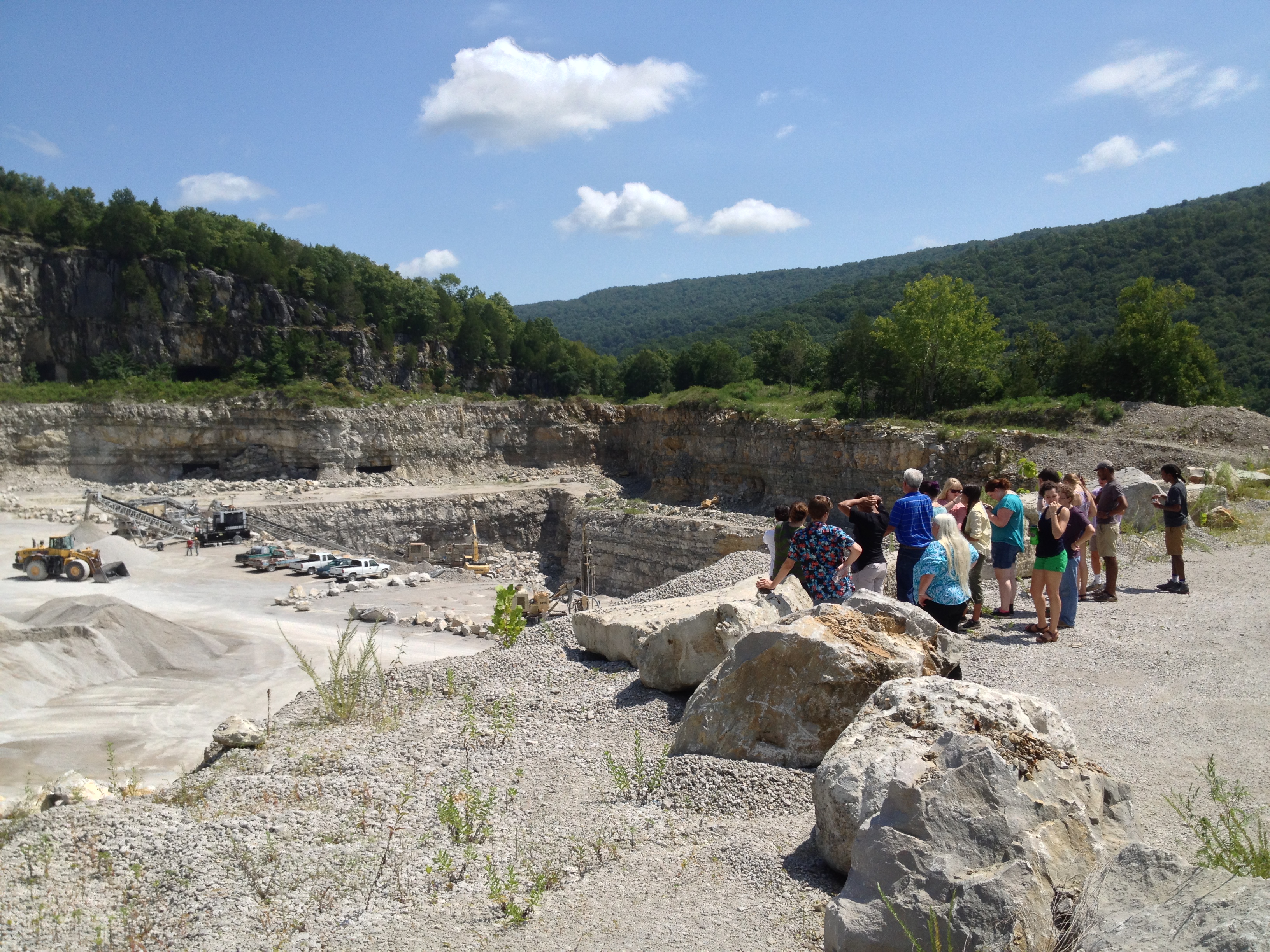
Last August, as part of Sewanee’s Finding Your Place program, I took my students down the mountain to Sherwood to visit the quarry and the Epiphany Mission church. The community is a proud and lively one and the experience of the place is rich and deep. Everywhere you go in Sherwood, there is the chalky gray color of limestone coupled with a slight smell of sulphur.

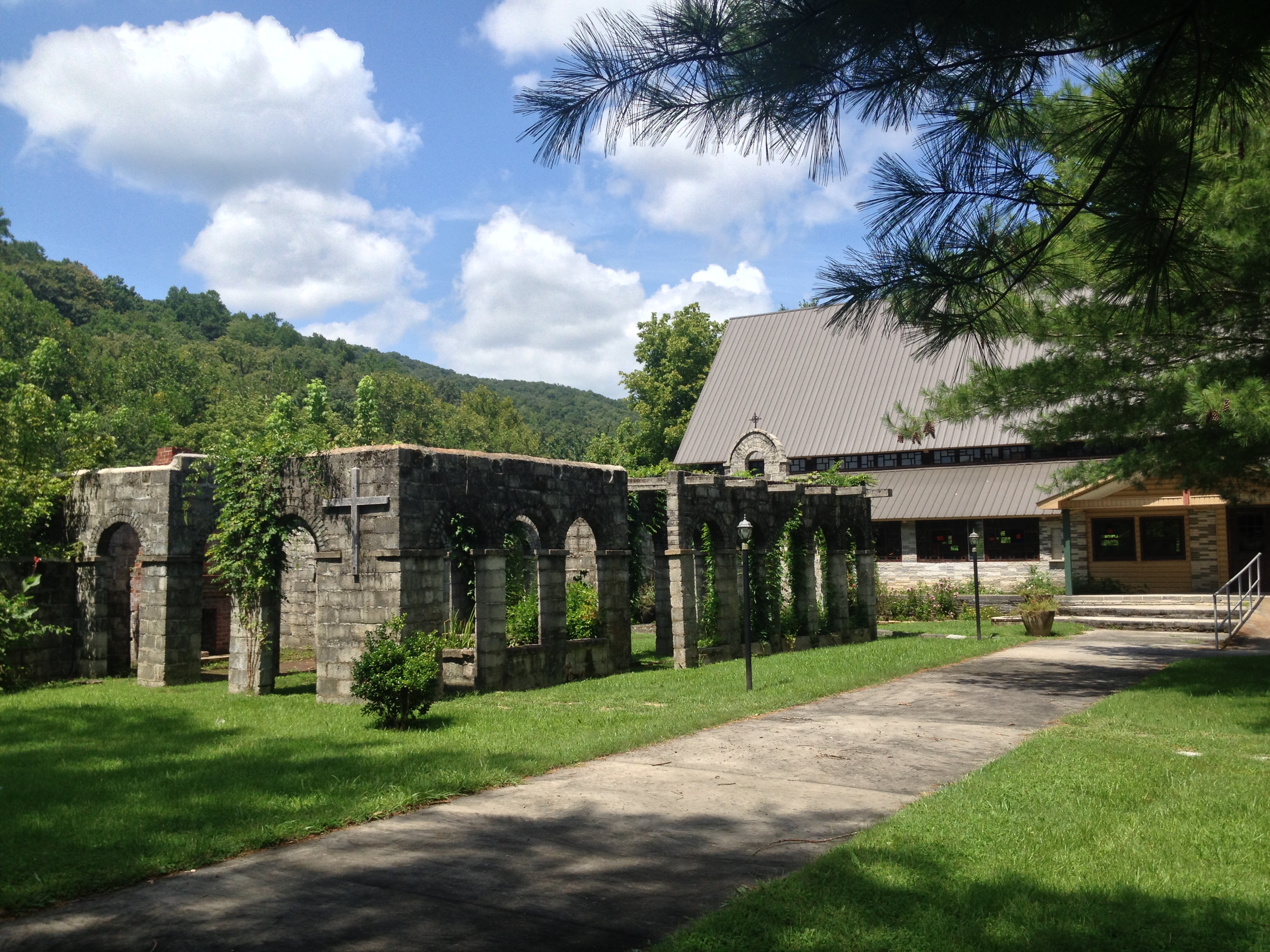
Surrounding Epiphany Mission are the remains of a prayer garden, made of limestone blocks that the priests paid local boys a dime a day to make during the Depression.  The impression one gets is of a grotto, the Holy Mother safely enveloped within, or of ruins the sort one might see in Greece or Rome.

IMG_7300IMG_7302IMG_7303IMG_7304The quarry from which all this limestone comes is across the highway, and we had the good fortune to be led on tour by owner (and former Franklin County mayor) Monty Adams.  At one time 80 years ago, the old Gager Lime Manufacturing Company employed almost 500 people. The pride felt in the enterprise was expressed architecturally  in the company’s plant, aptly described by the Tennessee Preservation Trust thus:

Unlike most late nineteenth century industrial sites, which typically exhibit little or no reference to contemporary architectural styles, the Gager Lime Manufacturing Company is unique–displaying elements of the Egyptian Revival and Gothic Revival styles. Crenellated parapet walls ornament several storage silos, making the complex appear castle-like. Other buildings feature stylized “papyriform” pilasters surrounding the window bays-another nod to ancient Egypt.

Today, only a handful of people work at the Sherwood Mining Company, but they still manage to move out hundreds of tons of limestone a month.  Trucks rumble past the old Gager Mining ruins.

IMG_7271IMG_7269IMG_7284IMG_7282All of Sherwood puts me in mind of W.H. Auden’s great post-war poem,  “In Praise of Limestone,” which begins,

If it form the one landscape that we, the inconstant ones,
Are consistently homesick for, this is chiefly
Because it dissolves in water. Mark these rounded slopes
With their surface fragrance of thyme and, beneath,
A secret system of caves and conduits; hear the springs
That spurt out everywhere with a chuckle,
Each filling a private pool for its fish and carving
Its own little ravine whose cliffs entertain
The butterfly and the lizard; examine this region
Of short distances and definite places.

Indeed, behind Epiphany Mission runs a stream fed by impressive nearby springs, where water tumbles over hollowed-out rocks and the whole is surrounded by large hickory trees.

IMG_7268

The concluding lines of Auden’s poem are a rumination on the physicality of limestone, its capacity to be rendered artful as art and “solely for pleasure.”

                                                                         But if
Sins can be forgiven, if bodies rise from the dead,
These modifications of matter into
Innocent athletes and gesticulating fountains,
Made solely for pleasure, make a further point:
The blessed will not care what angle they are regarded from,
Having nothing to hide. Dear, I know nothing of
Either, but when I try to imagine a faultless love
Or the life to come, what I hear is the murmur
Of underground streams, what I see is a limestone landscape.

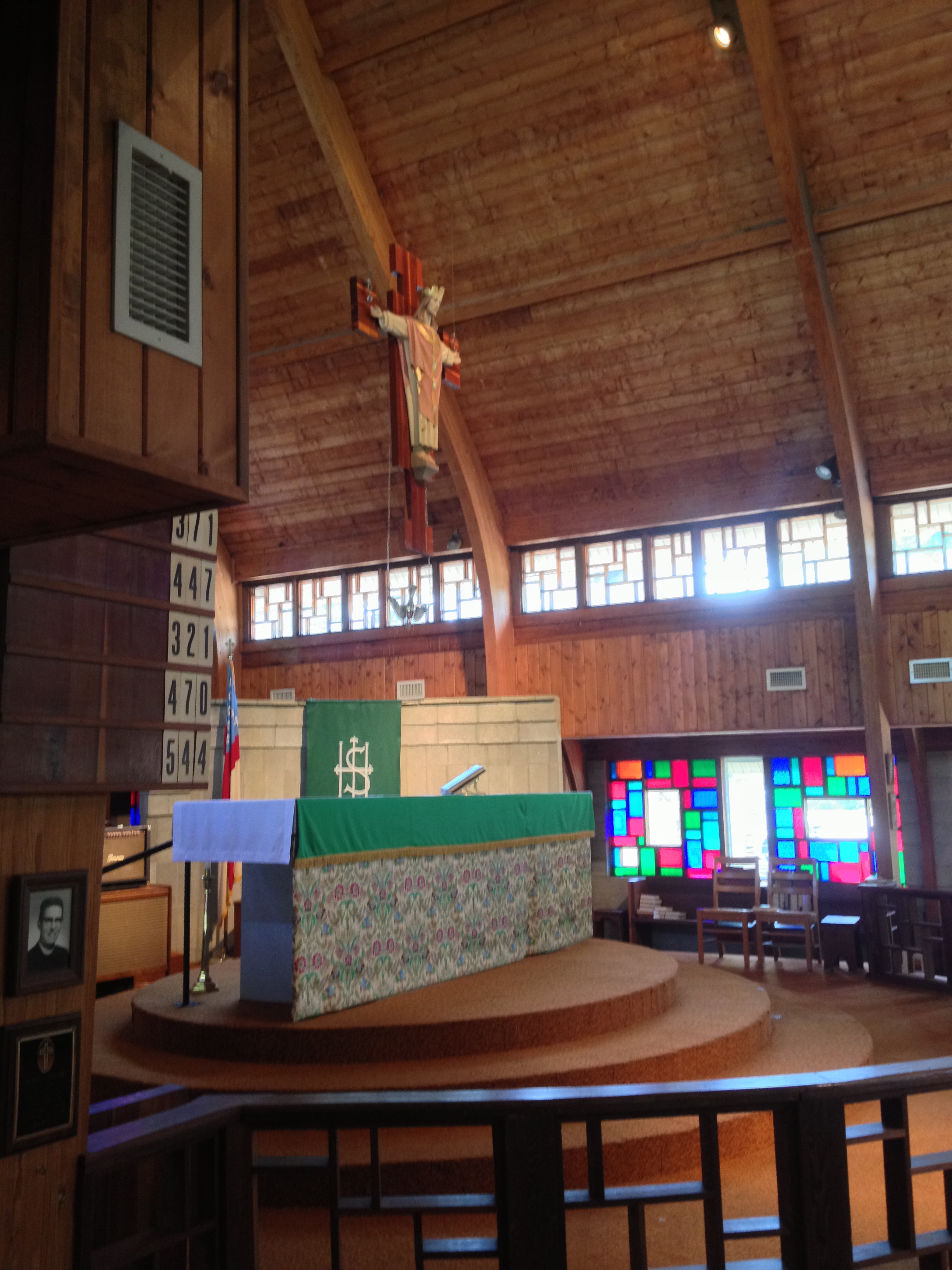
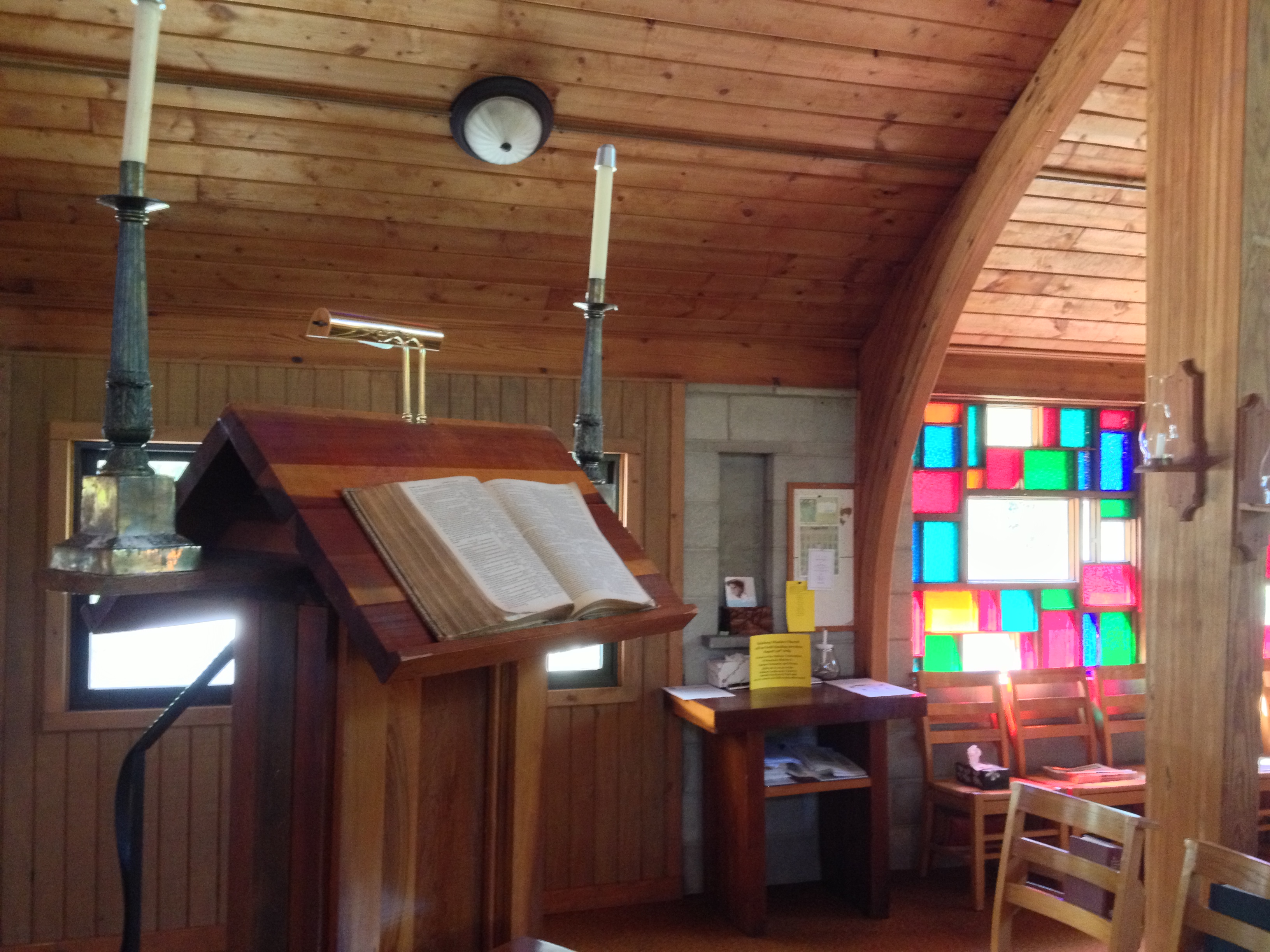
These thoughts are in my mind as I enter the Epiphany Mission Church, built in 1964 like a phoenix on the ruins of an older sandstone church.  Limestone and wood predominate, and Auden’s description of the stone as having an “older colder voice, the oceanic whisper” is palpable throughout.

IMG_7298

IMG_7257   IMG_7255 IMG_7258IMG_7310

IMG_7252 We return to Sewanee later in the day, back to a world of sandstone buildings, rich in yellows and browns supplied by the iron deposits the stone contains.  Travelling up the mountain, we pass through hundreds of millions of years of geological development. we leave behind the ancient sea-floor and its insistent, reassuring, inevitable gray.

IMG_7250

Posted in Bible, Italy, Poetry, Sewanee, Tennessee, Time | Leave a comment

Mine 21 documentary maybe?

A letter I sent off for funding a documentary.  Something I have no training for whatsoever. We shall see …

Prof. Linda Mayes & Prof. Karen Yu
Directors, Collaborative for Southern
Appalachian and Place-Based Studies

December 4, 2014

Dear Linda and Karen,

Many thanks for your recent e-mail invitation to apply for funding for course development and scholarly projects through the Collaborative for Southern Appalachian and Place-Based Studies. You indicate that, for projects to be undertaken in the summer of 2015, you would like to see an optional one-page project proposal on December 5th. This is really more of a whisper of a project proposal, the merest soupçon of an idea, but I would like to go ahead and forward it to you in the hopes that you can tell me whether it is the sort of thing you envision funding and whether the project seems to fit within the scope of the Collaborative.

As part of my rushed and haphazard prepping to teach in the University’s First Year Program, “Finding Your Place,” I began to explore the region for locations to take students to and projects they might be interested in. As a classicist, I was hoping to draw connections between mythological ideas and local history and folklore, and to some degree, this was successful. But when I began to stop forcing matters in the hopes of finding some thematic, “teachable” coherence, I think my preparation for the course really began to improve.

One of the more remarkable stories I came across came to me quite by chance. I had been out to visit the little house museum of local Grundy historian, William Ray Turner, who was very generous with his time. As it happened, the air conditioning unit at our house ceased operating and needed to be replaced—for many years, our local handyman has been the University’s head of HVAC, Tony Gilliam. He and I got to talking about Mr. Turner, his museum, the history of Grundy County, etc. By and by, Tony said, “Did he mention Mine 21?” I looked at him blankly. “No, what is that?”

On December 8, 1981, Mine 21, one of several underground coal-mines operated by Grundy Mining Company in the unincorporated area between Palmer and Whitwell, Tennessee, exploded and killed thirteen miners. While not on the same scale as the disasters in Fraterville (May 19, 1902, in which 216 miners were killed) or Cross Mountain (December 9, 1911, in which 84 died), Mine 21 was the worst mining disaster in Tennessee since the introduction of modern safety precautions. The Department of Labor would eventually rule that “a cigarette lighter taken into a coal mine in violation of Federal regulations touched off a methane explosion,” but “accused the Grundy County Mining Company, the mine’s operator, of failure to evacuate workers from a methane-laden shaft, to adequately ventilate the shaft and to enforce a Federal regulation prohibiting smoking materials in a mine” (New York Times, May 5, 1982). The next year, Grundy Mining agreed to pay 10 widows and their children $10 million in damages, a fraction of the $60 the families had originally sought (New York Times, February 19, 1983).

Tony told me this story as he was flushing out coolant from my AC unit. A former coal miner himself, he had worked in 21 many a day, as had his brother. “Probably everyone who works on the staff at the University lost a loved one that day,” he said. Later on, I had a chance to talk to Scotty Parson, a plumber for PPS. Scotty is younger than Tony, and never worked the mines, though his brother was killed that day in 21. “I remember the last time I saw him,” he told me. “He had been working all day and was covered in coal dust, just as black as night. We laughed, because he had come over in a hurry out of the mine and hadn’t had a chance to wash up.”

I am certain most of my colleagues on the faculty and administration have never heard of Mine 21, and there will be many who are unaware that there was ever any coal mining carried out in the region. To some degree, that is understandable. In 1997, Tennessee Consolidated Coal closed the mines in Grundy, and with that, the only real venue for work in the region. Many of those former coal miners came to work in maintenance or buildings and grounds for the University of the South. The disaster of Mine 21, a local version of all the mining disasters that have taken place across the country for over a century, is an event that binds many who work at Sewanee together in a way that is utterly invisible to many others who work at the same institution.

A few weeks ago, after we had talked about it many times, Tony took me and a few others over to Palmer to see what could be seen of Mine 21. We drove to the location where 21 had been—closed since 1997, the mine had been “faced,” or closed completely over. At one time, 40-50 men worked day-long shifts at this mine, while trucks carried out hundreds of tons of coal. But where all this activity had once taken place, there were only the remains of a dirt road. The rest was overgrown. “It’s almost as if Nature just wants to swallow up this place,” my friend Lizzie said, “to complete the process of amnesia.”

We drove back to Sewanee afterward, and I began to think about what she said, and there and then, it occurred to me that I wanted to make a documentary film about Mine 21. Now, I have no experience whatsoever with film-making, though I have been encouraged by Greg Pond to forge ahead. “I had breakfast with Lizzie today,” he wrote me. “I think that you should partner with or teaching an upper division class for some of out more experienced students and make a documentary about the coal mines.”

I want to do this, because I think it will do a lot to help faculty and administrators understand the situation of some of the people they work with. I want to do this to encourage people in our community to talk and listen to others in their communtity. I want to do this, because stories like this deserve not to be forgotten.

I am happy to talk with your further about this, although at this point, what I’ve written above is all I have to say. It may well be that this project does not fall within the scope of what you imagine with Collaborative funding. In any event, many thanks for reading this far. I hope your Thanksgivings were peaceful, and that the busy season ahead will be happy and productive.

Yours,
Chris

Postscript, December 21, 2016. An e-mail I received in response to this post.

Dr. McDonough,

Hi I know we have never met, but name is Kelsey Arbuckle and I am a sophomore at Sewanee. My grandfather, Charles Myers, was one of the coal miners killed in mine no. 21 back in 1981. There was a recent newspaper article that rekindled a fire inside me. I have felt the need to know about just what happened since the day I asked why I never met Charlie.  I know very little about it, though not from a lack of asking questions (most people I ask will not talk about it). This led me to you. I stumbled upon your blog and Mine 21 documentary maybe? I know it is Christmas time and grades are due; however I was hoping maybe when things were not so busy we could chat. Maybe you have the answers to some questions or maybe we could work together.  I look forward to hearing from you. Happy Holidays.

Best,
Kelsey Arbuckle

Posted in Classics, Sewanee, The South, Trees & Flowers | Leave a comment

Protected: Radical Visions of Hector?

This content is password-protected. To view it, please enter the password below.

Posted in Classics, Military, Music, Mythology, Poetry | Enter your password to view comments.

Protected: Carolina On My Mind

This content is password-protected. To view it, please enter the password below.

Posted in Classics, Education, Emblems, Family, Language & Etymology, Music, Sports & Games, The South | Enter your password to view comments.

Twilight of the Demigods: Review of “Percy Jackson & the Olympians: The Lightning Thief”

This review originally appeared in the Classical Association of the Middle West and S oth (CAMWS) Newsletter, Spring 2010; I’m re-posting it in light of Rebecca Mead’s recent New Yorker article, “The Percy Jackson Problem,” of October 22, 2014

It was a blustery February day, but we were all a-buzz as we drove to theRegal Cinema 8 in Tullahoma (TN) to see the premiere of “Percy Jackson & the Olympians: The Lightning Thief.” My boys are huge fans of Rick Riordan’s Percy Jackson books and, judging from how full the theater was for an afternoon screening, so were many of the kids in the region. In fact, gradeschoolers all over the country love Percy Jackson, and the series has now been on the New York Times Bestseller List for Children’s Literature for 147 weeks.I had been reading the books aloud to my sons since Thanksgiving, and neverhad I come to the end of a chapter without their begging me to go on. So it was with high expectations that we made our way to the theater to see “The Lightning Thief,” the movie version of the first book of the series.

percy1The plot of “The Lightning Thief” begins with the premise that the Greek gods are real and still alive today, living in their headquarters, which has moved from Mt. Olympus to the 500th floor of the Empire State Building. The story does not center on the gods, though, but on their semi-divine children, of whom Percy, i.e., Perseus, Jackson is our unwitting protagonist. The series is not without its flaws, of course: perhaps most obviously, it’s pretty closely patterned after Harry Potter, complete with supernatural adventure, bosom buddies, budding romance, and of course the eponymous misfit messiah. “Percy Jackson” hovers somewhere between homage and rip-off, though this can hardly be a fatal criticism for classicists who remember Virgil’s statement, facilius esse Herculi clavam quam Homero versum subripere. And truthfully, there’s more of Homer and Hercules than of Harry in Riordan’s books.

Like other “half-bloods,” Percy is troubled. He has never met his divine parent and has been bounced from one school to another due to ADHD-related problems, although, as it’s explained to him later when he arrives to Camp Half-Blood, his impulsiveness is connected to “his battlefield reflexes,” and his dyslexia comes from the fact that his “mind is hard-wired for ancient Greek.” It’s eventually revealed to him that he is the child of Poseidon, that his friend Grover is a satyr and that another, Annabeth, is Athena’s daughter, that his teacher is none other than Chiron, that Zeus’ lightning bolt has been stolen, that Percy himself is the prime suspect, that the theft is in fact a cover-up for a much larger plot to unseat the gods and place Kronos in charge of the universe again, and that, of course, it’s all up to Percy to stop it. Along the way, Percy and his friends encounter the Minotaur, the Laestrygonians, Furies, Cerberus, etc., as well as three old ladies who (as one of the chapters is entitled) “knit the socks of death.”

imagesMy bald summary hardly does justice to the genuinely engaging, witty, and even learned tone of the series, and alas, neither does Chris Columbus’ film. Not that “The Lightning Thief” is without its charms. For those of us in middle Tennessee, there was the frisson of local interest in seeing the Nashville Parthenon used as set (a few cheers went up in the Tullahoma Regal), although the decision to replace Alan Lequire’s enormous painted Athena Parthenos with a more “traditional” white statue rankled at least one classicist in the audience. To my mind, however, the movie’s true highlight was seeing Uma Thurman as the Medusa. (And why not Uma? Hadn’t Ovid praised Medusa’s clarissima forma, Met. 4.794?) As I watched Uma as Medusa (Umedusa?) I couldn’t help thinking of her in Terry Gilliam’s “The Adventures of Baron Munchausen,” where she played Venus to Oliver Reed’s Vulcan; her dea ex machina arrival, via an enormous ascending clamshell, still strikes me as one of the finest entrances in film. In this update of the legend, Umedusa runs a garden gnome emporium that sells amazingly life-like yard statuary, and she is undone in a suitably 21st century manner, with Percy looking not into a mirrored shield but rather the silvery flipside of his Ipod.

But, all in all, the movie was a disappointment, and my 7-year old son Daniel grumbled throughout it. “Her hair’s supposed to be blonde,” he complained of Annabeth. “Where’s his scar?” he objected of another character, not so sotto voce. And with deep frustration he groaned when Percy’s mother instead of his best friend Grover was left behind in the Underworld. “That’s not what happened in the book,” he kept saying. Yeah, I wanted to reply, now you know how I felt when Briseis killed Agamemnon in Wolfgang Pedersen’s “Troy.” But I held my tongue. It’s a wearisome fact of life that even good movies stray from the books on which they’re based, and the frustration is worst when it happens with books we love.

What’s frustrating about this movie is that, where it follows the book, it’s very good. So, for instance, the movie’s depiction of the Lotus Casino (a clever adaptation of the Homeric way-station) is deftly handled: Percy is deep into an absorbing video game when he realizes that the hippie-ish guy beside him is at a very retro-looking pinball machine. “What year is it?” he asks him, and the response–“1974”–jolts Percy out of his stupor. It’s a pleasing visual sequence, as is the sight of Grover, Percy’s satyr friend, stomping away on the dance-floor to Lady Gaga’s “Poker Face.” So, so far so good. But where in the book Annabeth had spent her time at the Lotus engrossed in “this huge 3-D sim game where you build your own city and you could actually see the holographic buildings rise on the display board,” in the movie she is simply playing the same old video game everybody else is, hardly a fitting activity for the daughter of Athena.

It’s this flattening of the characters, ultimately, that is what’s wrong with “The Lightning Thief.” To begin with, the actors are all just a little too old for the parts, and they seem to have been cast less for how they might portray Riordan’s characters than how they might look in Tiger Beat magazine. Again and again, the tendency is to pitch the film not to the books’ grade-school fans, who want swashbuckling heroes, but rather to a teen and ‘tween’ audience, who seem to prefer emo vampires. As a friend joked on the drive home from Tullahoma, “Lightning Thief” perhaps should have been called “Twilight of the Gods.” But still more fundamentally, the movie utterly fails with Percy. Riordan’s books, it must be pointed out, are all told in the first person, by Percy. He is not just a hero, but also a twelve-year old boy, one who has grown up without a father, who is just coming to some self-awareness and finds himself giving voice to complicated interests that he barely understands, especially when he is the object of them. It is not too much to say that the demons he is fighting throughout the books are not those just drawn from Greek mythology, but none of this is really captured in the film.

So, the summer is now upon us, and if you are looking for some beach reading, you could do worse than to pick up a few of the Percy Jackson books. Better still, read them aloud to your kids, grandkids, nieces, nephews, or neighbors of elementary school age. They will have many questions about the mythology which readers of the CAMWS newsletter are uniquely qualified to answer. You may find yourself breaking out images of monsters and heroes from classical vases, and working through the complexities of mythological genealogies. But be forewarned: if you later decide to show these kids the movie (the DVD will be released June 29th [2010]), be prepared for the muttering.

Posted in Classics, Family, Mythology, Statues & Monuments, Tennessee | 2 Comments

A few Hrothgar stories

My brother posted this about your blog post: When I sang in the choir at Sewanee the procession — even on weekdays — went like this: Hrothgar; the Crucifer; the Choir; the Clergy; the Other Sewanee Dogs. I promise. When Hrothgar had waddled to the chancel steps and labored to the top, he would collapse. The Crucifer stepped around him and continued. The choir bowed (to the altar? to already-sleeping Hrothgar? It was hard to tell.), parted, and went into the stalls. On Sundays Hrothgar had more time to settle into a really deep sleep and his snoring, as Bulldogs cannot help doing, sometimes made it difficult to hear the sermon. The snoring was often more interesting than the sermon.

Here’s my brother’s telling of the dogs in the chapel: There’s another Hrothgar story that has a chance of being apocryphal or at least a little embroidered, but there’s no reason to doubt that the kernel of this story is true. Once upon a time the Bishop of Somewhere-or-Other was preaching a Sunday sermon in All Saints Chapel. That morning Hrothgar had decided to have his long nap using the altar as a backrest, far out of sight of the pulpit but not, of course, of the congregation. As the bishop was preaching and Hrothgar was snoozing, a bitch in heat happened to wake from her own nap, stretched, and then strolled across the chancel floor directly in front of the altar and hence of Hrothgar. The beguiling scent of this lovely piece of canine flesh not only roused Hrothgar, it pitched him into a state of frenzy that he didn’t ordinarily experience. The young lady in question was ready to have babies, and Hrothgar was ready to be their father. And so it happened, right there on the epistle side of the altar. Hundreds of college boys, as well as adult members of the congregation, collapsed in hysterical laughter to the confusion and annoyance of the Right Reverend Preacher.

Posted in Dogs, Sewanee, Uncategorized | Leave a comment

Hunters, 5 a.m.

For no good reason, I’m up before dawn and go into the living room to look out the window. Through the clouds the stars can be made out here and there. My dogs stir but I don’t let them out. In the sky, Sirius is visible and, a second later, most of Canis Major. Orion higher up is brandishing a weapon that fades into the night. In the woods, meanwhile, hunters are making their way with small flashlights that twinkle in the dark.

Posted in Animals, Astronomical, Dogs, Mythology, Sewanee, Sports & Games, Tennessee, Trees & Flowers | Leave a comment

Hrothgar’s Grave

Go behind Bairnwick, toward a small stand of oaks and the swamp leading to Stirling’s, and you will see the gravestone of Hrothgar.

IMG_7410 IMG_7411 IMG_7412 IMG_7413 IMG_7414 IMG_7417IMG_7415

Who was Hrothgar, you ask?  He was an English bulldog, much beloved in Sewanee over half a century ago, named for the Danish king in Beowulf.  That Hrothgar–the builder of the great mead-hall, Heorot–was described by the poet as sé þe his wordes geweald      wíde hæfde / hé béot ne áléh      béagas daélde / sinc æt symle, “he whose words had weight everywhere, who did not lie when he boasted, who dealt out rings, and treasures at banquet.”  In Boston I had a neighbor with a bulldog named Beowulf, and a cat named Grendel, but neither was commemorated with a monument.  I have seen Hrothgar’s picture–and collar–in the archives, and perhaps will post them sometime soon.  A fine piece in the Sewanee Purple (March 2, 1960) about Hrothgar’s funeral is posted below.

Screen Shot 2014-10-01 at 4.20.36 PM

Hrothgar Park Is Site Of Hrothgar Funeral By ALEX SHIPLEY

Funeral services for Hrothgar were held Monday, February 22. Hrothgar, the big English bulldog, had been an adopted member of the Dr. George B. Myers family for eight years. Every student at Sewanee dur-ing that period grew to know the “King of the Mountain.”

Hrothgar majored in DOGmatic the-ology under Dr. Myers and Dr. Robert Petry gave him “A’s” in physics be-cause “. . . he never gave a stupid an- swer.”

Clad in his own cap and gown (made for him by Mrs. Myers) Hrothgar marched in academic processions. He faithfully attended chapel services and his snores, which habitually ended in a low moan, were very disconcerting to the clergy.

At All Saints’ Chapel, where Hrothgar preferred the chancel steps, the procession would part and walk around him. In hot weather the marble step in front of the lectern seemed a cool resting place. Rather than ask the English gentleman to move, Chaplain Collins straddled him on occasions in order to read the lessons.

A Dog of Dogs
Hrothgar was wonderful with chil-dren and with people in general, but he demanded respect from other dogs. In his younger days he fought many a bloody battle to prove his point. The funeral held in Hrothgar Park at Bairnwick, the home of Dr. and Mrs. Myers, was attended by approximately thirty students, matrons, and faculty members.

Dr. Myers, presiding at the service, paid the following tribute to Hroth-gar: “He had a pedigree longer than mine. He was gentle and friendly, particularly with children, and nobody loved this Mountain more than he. We shall miss him, and commend him to
a faithful Creator.”

The Interment
After this eulogy the “Benedicite, omnia opera Domini” (“. . . O all ye Beasts and Cattle, bless ye the Lord, . . .”) and the Prayer for Animals (”. . . help us to find in caring for them [animals] a deeper understanding of thy love for all creation. . . .”) were read. The service was ended with the Grace.

Hrothgar’s casket was draped with a pall of Sewanee purple. Death notices of Hrothgar appeared in several Southern newspapers. Mr. Myers said that she and her husband had received letters of sympathy from all over the South. Mrs. Jo Conn Guild of Lookout Mt. Tennessee, the owner of the kennels in which Hrothgar was born, wrote a letter to Mrs. Myers expressing her sympathy.

“Beloved Dog”
“The loss of a beloved dog leaves such a vacancy in one’s life and heart. Mr. Guild and I have followed Hroth-gar’s academic career with interest and delight . . . Indeed his life must have been a glorious one. . . .

“Bulldogs are an amazing combina-tion of dignity and clownishness. I think their physical build is so typical of their nature—that great great clumsy front and frisky debonair rear.”
Dr. Myers has announced plans to erect a headstone bearing the inscription:“HROTHGAR MYERS, NOBLE ANIMAL, KING OF THE MOUNTAIN.” Hrothgar’s collar is to be framed and, with a picture of the animal, hung in the Thompson Union beside other mementos of notable Sewaneeans.

Posted on October 4th, Feast Day of Saint Francis.
Laudato sie, mi Signore, cum tucte le Tue creature

Posted in Animals, Boston, Dogs, England, Mythology, Poetry, Sewanee, Trees & Flowers | 3 Comments