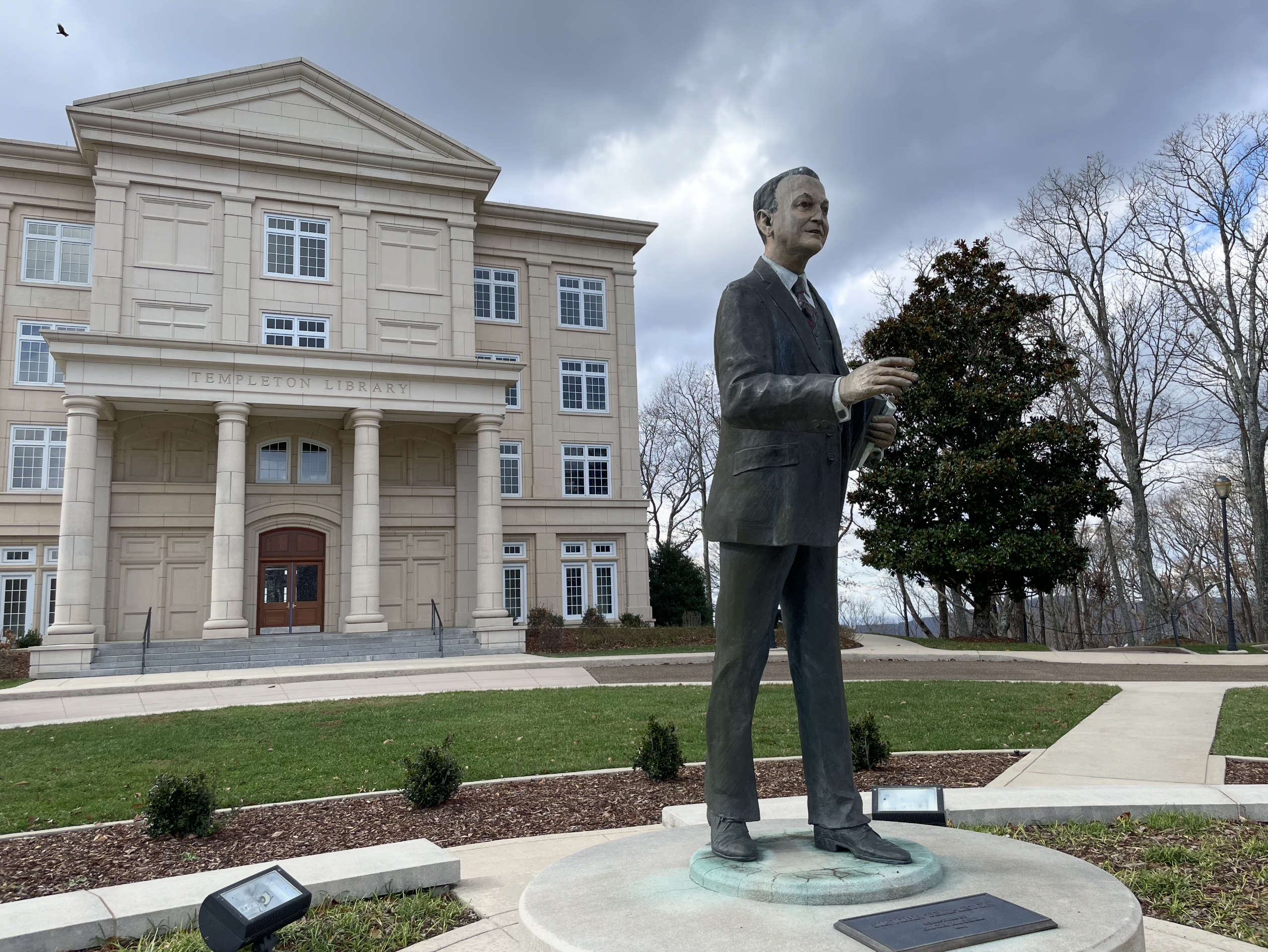
Concerning the statue of Sir John Templeton

It is not a particularly unique opinion to think poorly of the statue of Sir John Templeton at the Templeton Library at the far edge of Sewanee, Tennessee. Atlas Obscura calls it “eerily lifelike.” I suspect you could find people who would call it weird, creepy, or bizarre– opinions I myself hold, although, in recent years, I’ve (sort of) revised my opinion. The fact that classical statues were polychrome, originally difficult to accept, has grown more familiar with each passing year, and the informative on-line exhibition, The Gods in Color, has made it easier to see how the ancients intended their sculpture to look.

In addition, the fully-painted statuary of Elizabethan times has to be kept in mind as we reflect on how much of an Anglophile Templeton was. It strikes us as wrong now that Shakespeare’s colored funerary statue in Avon, for instance, “was painted entirely white in 1793” to look more “classical” to the 18th century eye.
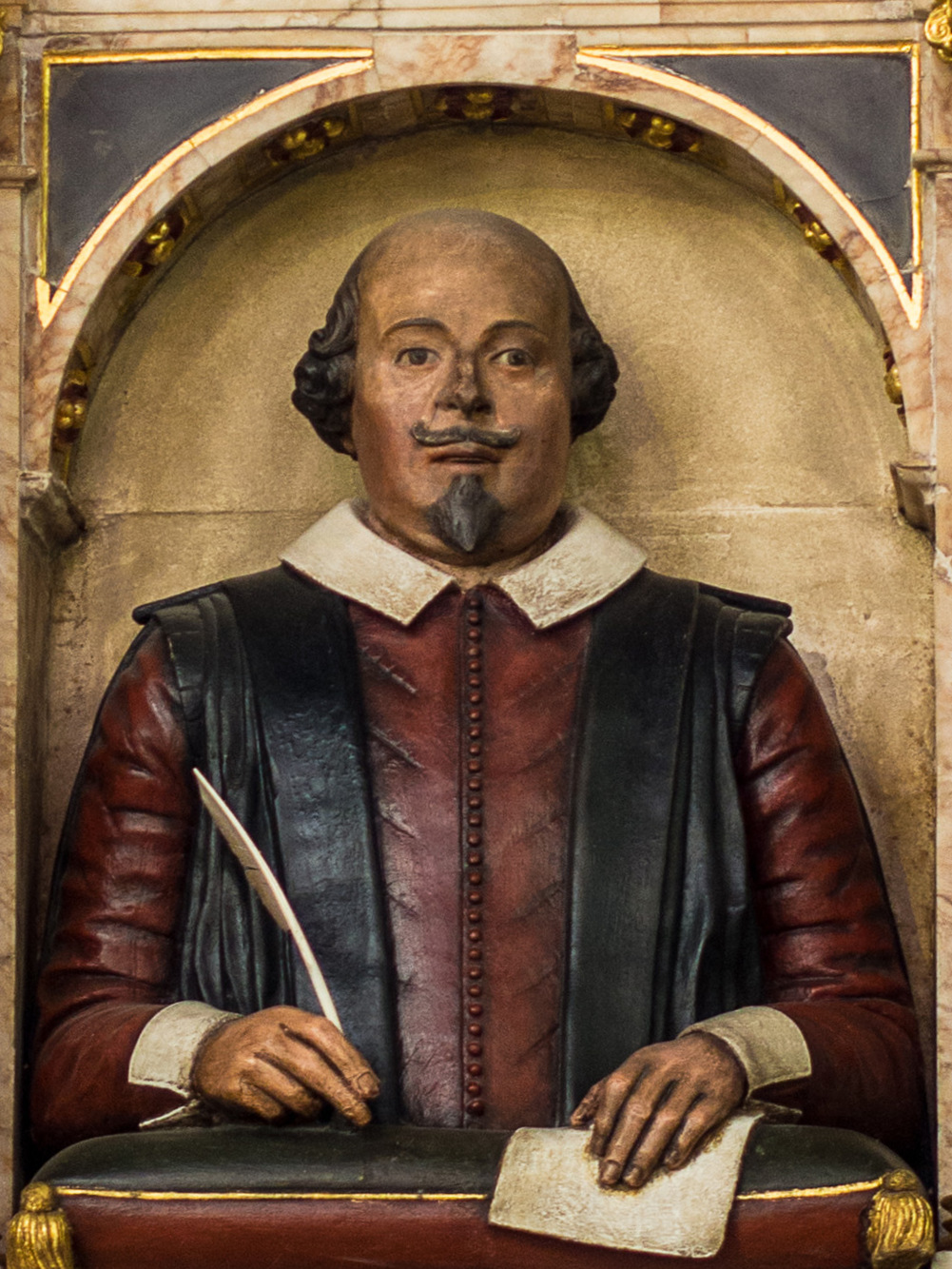
Bust of Shakespeare, Holy Trinity Church, Stratford-upon-Avon, Public domain image from Wikimedia

Templeton himself paid for a goodly amount of the restoration of Henry VII’s Lady Chapel at Westminster Abbey, which would have included the painted effigy of Elizabeth I inside it. The stuning west window of the chapel duly bears his name as benefactor. One appreciates the philanthropy behind the preservation, of course, although I have opined before about Sir John and the tax savings he enjoyed as a result of his renunciation of US citizenship.

Anyway, it only recently occurred to me to ask, Who made this statue? As it happens, the answer was easily found.
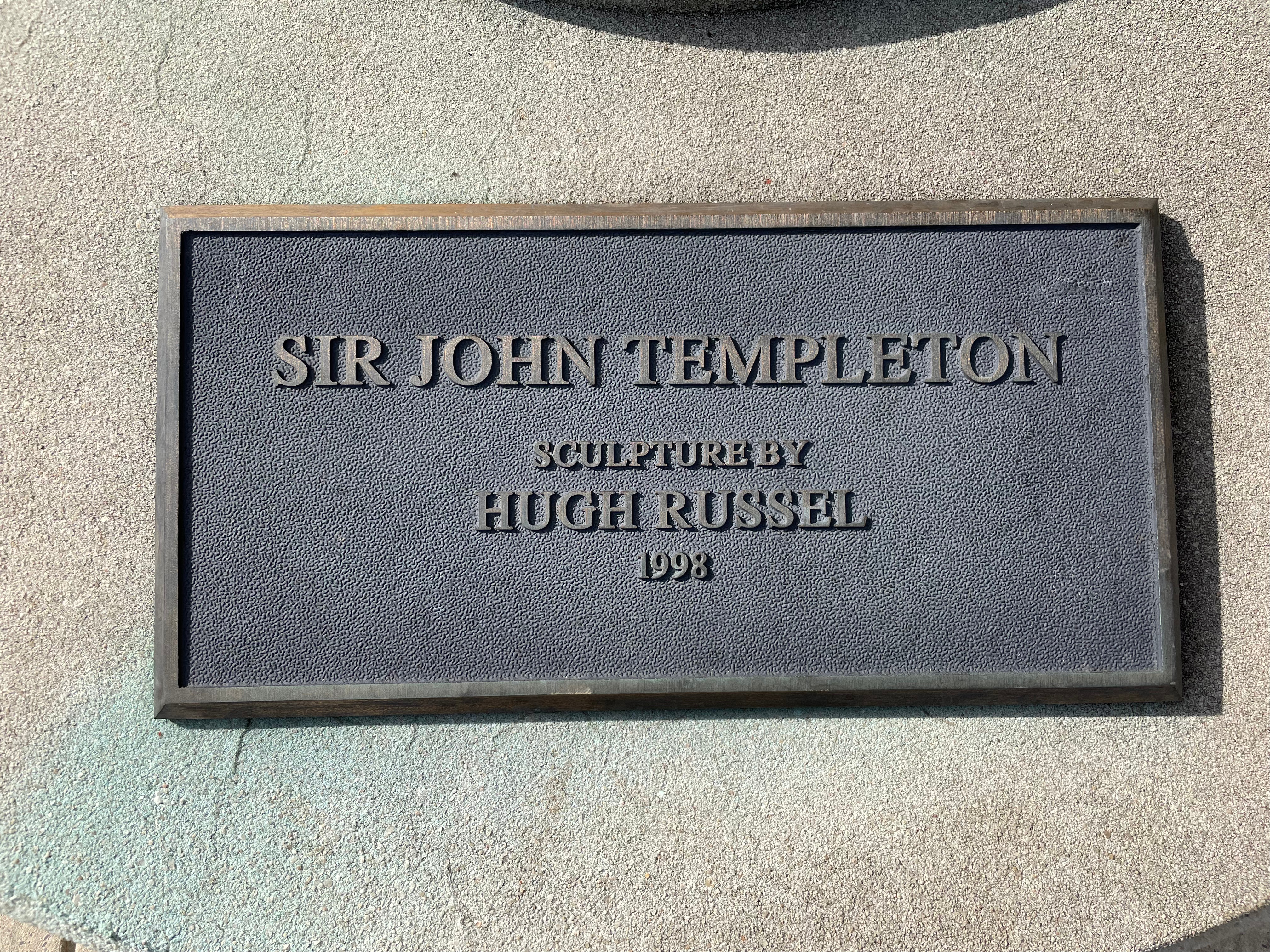
After a little Googling, I found Hugh Russel’s website and wrote him a carefully-worded email to see if I could find out more. His delightful reply came back about an hour later (Nov 22, 2025):

Dear Christopher,

When Sir John called me at 7:30 am to commission this sculpture, he awoke me from a deep sleep. In my delirium I agreed with everything he asked. He did not agree to the  toupeeI suggested. I thought it would look so natural. HAD I REALISED, THAT HE WASN’T KIDDING I TRIED TO BACK OUT OF THE COLOUR. He wouldn’t budge. The architect asked him to rethink the colour, and his son also pleaded with him to reconsider, but he was adamant, it had to be in colour (color). I had hoped that in time the paint would fade and a natural patina would emerge. I have no idea if that has happened yet. I am an old man now, and the thought of revisiting this commission does not interest me in the slightest.

I wanted to do something more expressive, something with a sense of drama and emotion. He wanted what he got, and truthfully I was not happy with it at all. It comes up every so often when I recall some of the silly, embarrassing and tragically funny things I’ve done.

If there is someone down there who wants to sand blast the colour from the surface and let nature take its course, then more power to him. If someone decides to blow it up, remind him that Sir John had nothing to do with anything that might cause the nation any ahamed (sic).  He just made a lot of money and wanted to show off. I have no problem with that.

I smile in your general direction.

Sincerely,

The writer Hugh Russel , formerly known as the sculptor Hugh Russel

Russel, who lives in Ontario, still sculpts. Another 1990s’ piece called by “The Column of Brotherhood” was commissioned by the Sikh Community of Canada and is in the Vatican, while his limited edition bronzework is available online on the Silver Creek Calcedon website. But mostly Russel is an author of espionage novels these days, as well of memorable replies to email inquiries.

Posted in Classics, England, Sewanee, Statues & Monuments, Tennessee, The South | Leave a comment

You Can’t Padlock an Idea

“You can padlock a building,” Myles Horton said of the closing of the Highlander Folk School in 1959. “But you can’t padlock an idea. Highlander is an idea. You can’t kill it and you can’t close it. … It will grow wherever people take it.” (Frank Adams and Myles Horton, Unearthing Seeds of Fire [1975] p. 133, as cited here).

https://wisconsinhistory.org/Records/Image/IM52898

Myles Horton watching as the local sheriff puts a padlock on Highlander Folk School, following a trial in which Highlander was accused of propagating Communism.

And below, remarkably, is a copy of the receipt for the padlocks from Flury’s Store in Tracy City, sent to me by a friend today (Dec 1, 2024).

Posted in Books, Education, Race, Tennessee, The South, Time | 1 Comment

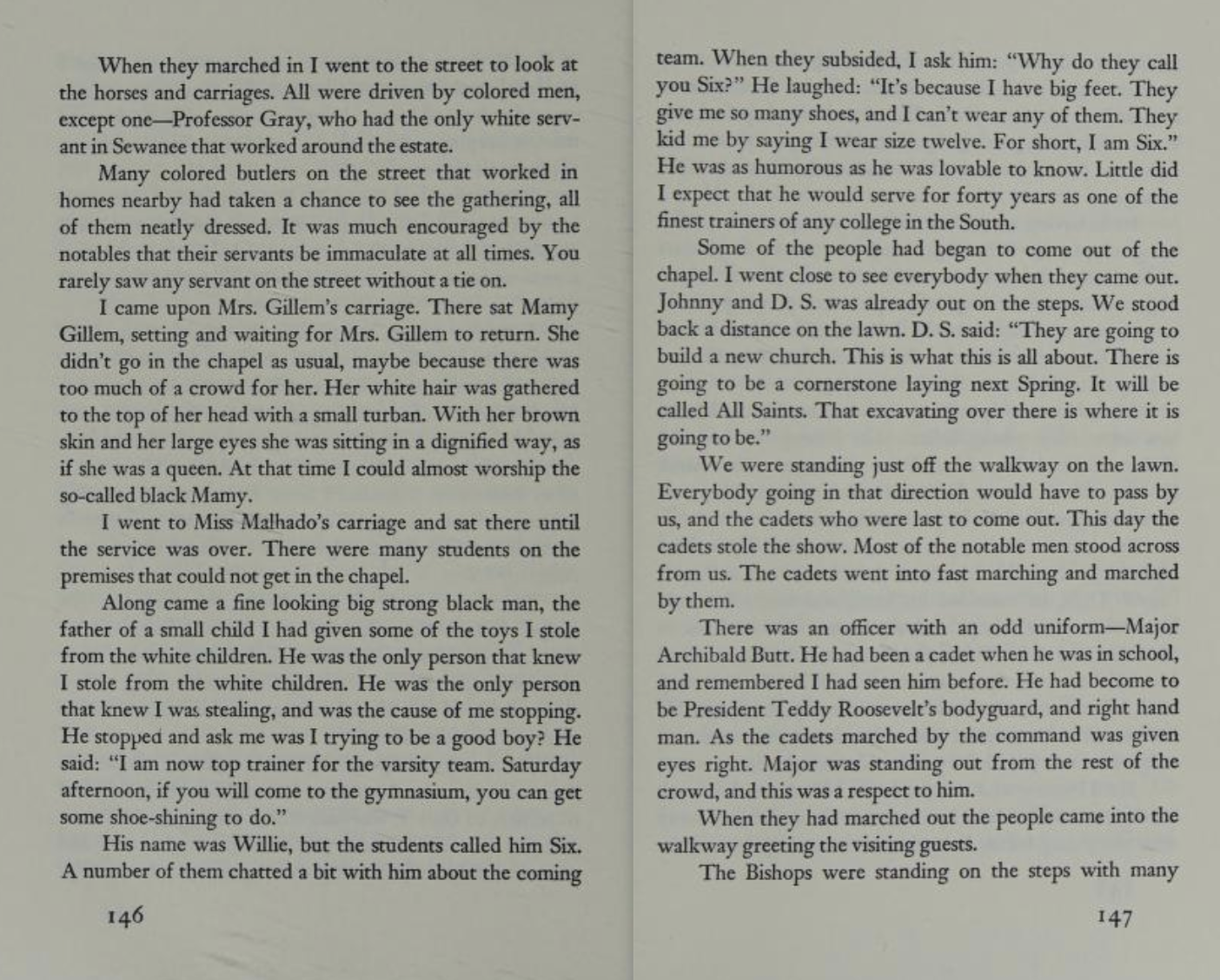
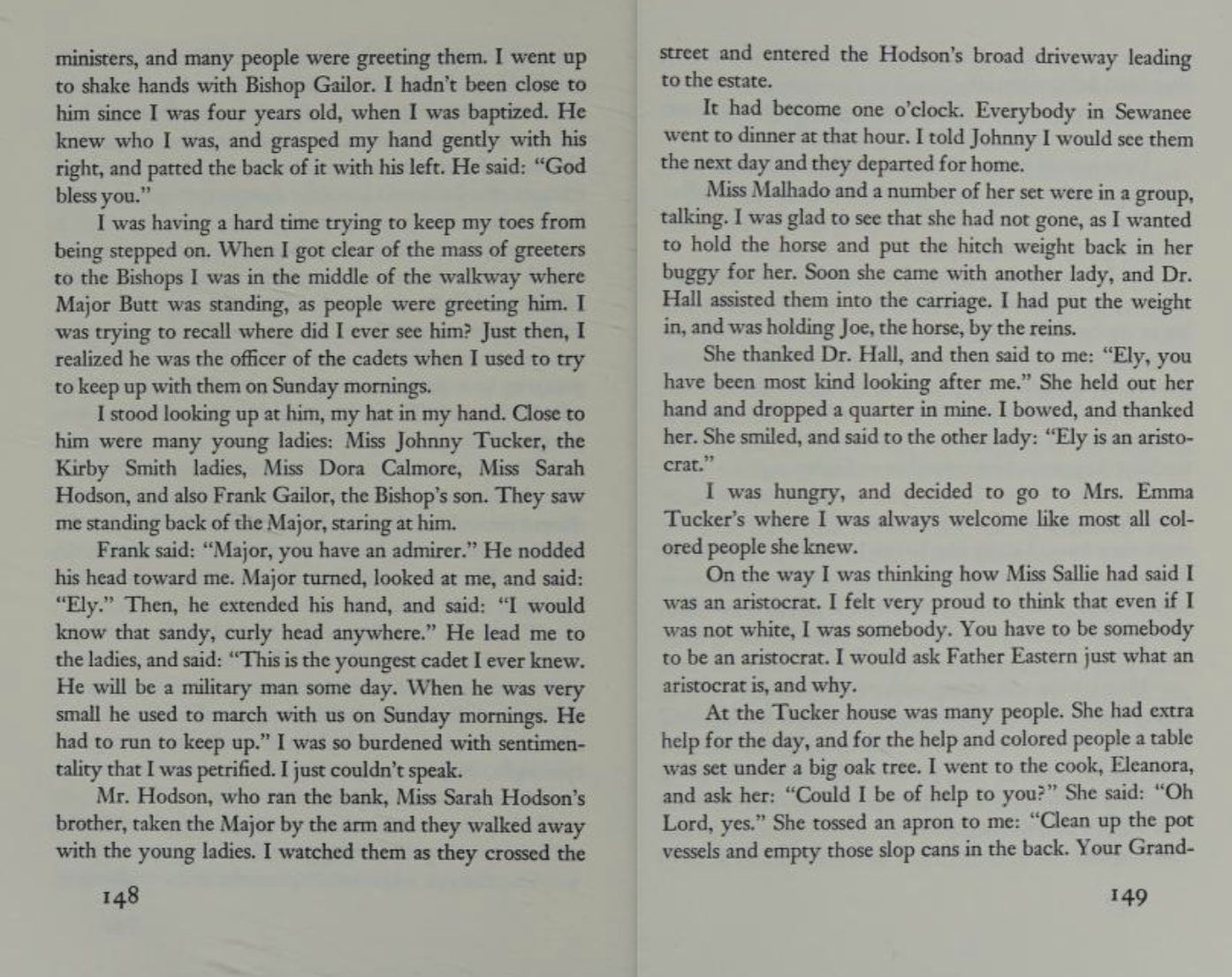
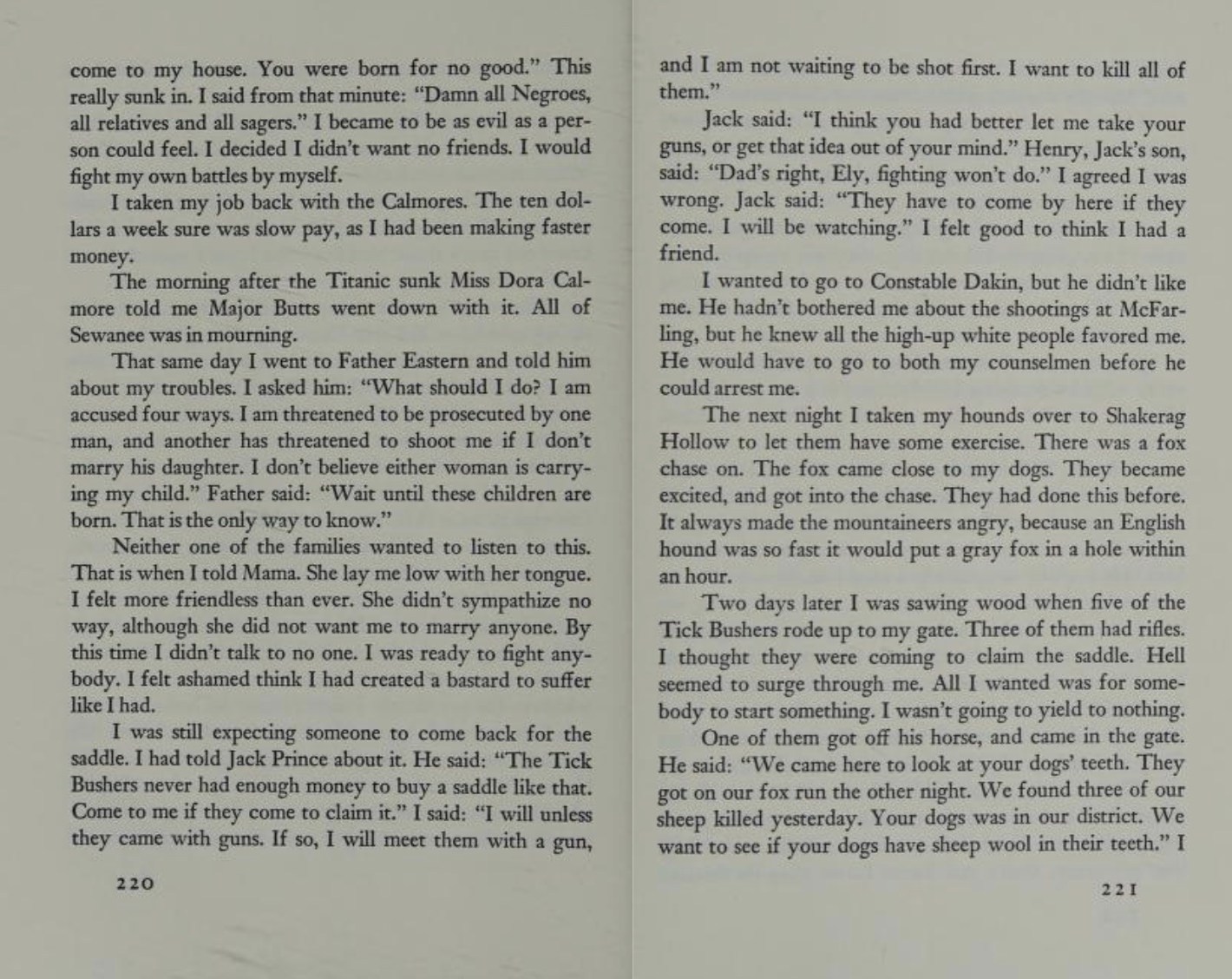
Ely Green on Archibald Butt

Major Archibald Butt, whom I have mentioned a few times before on this blog– here and here— was a famous son of Sewanee, and so it is no surprise that he should be mentioned by another famous son, Ely Green, in his memoir, the long version of which is called Too Black, Too White, and a shorter Sewanee-focused version called Ely: An Autobiography (accessible on internet archive at this link). I have copied the selections where Butt is mentioned below.

Posted in Uncategorized | Leave a comment

The Mall (an exercise in dactylic hexameter)

To introduce my students to dactyls (-uu), I showed them a pair of famous examples in tetrameter:

All the kings’ horses and all the king’s men

Couldn’t put Humpty together again.

Picture yourself in a boat on a river with
tangerine trees and marmalade skies
Somebody calls you, you answer quite slowly, a
Girl with kaleidoscope eyes.

(Well, Lucy in Sky ends with a trimester, but you see the point).

Then, to show them the true classical hexameter, a few lines of (what else?) Longfellow’s Evangeline:

This is the forest primeval. The murmuring pines and the hemlocks,
Bearded with moss, and in garments green, indistinct in the twilight

It’s nice to see the substitution of the long for the two shorts before the caesura there.

But it occurred to me that maybe I could write a stanza of my own, so here it goes. It’s entitled “The Mall”:

Sometimes on weekends it’s boring, and people prefer to go shopping. 

Off to the mall they will trudge then, searching for all kinds of items–

shirts at American Eagle, or stuff from the Build-a-Bear Workshop. 

“Try on some Vans at Foot Locker?” Your friend might ask you and then say, 

“Man, Abercrombie’s expensive. Let’s just go hang at the food court.” 

Slices of pizza from Sbarro, a grande iced latte from Starbucks,

Maybe bump into some others, looking for something to do now.

This is the way of the suburbs, the empty allure of the knick-knacks, 

Capitalism’s repair for the alienation it causes.

Posted in Music, Poetry, Uncategorized | Leave a comment

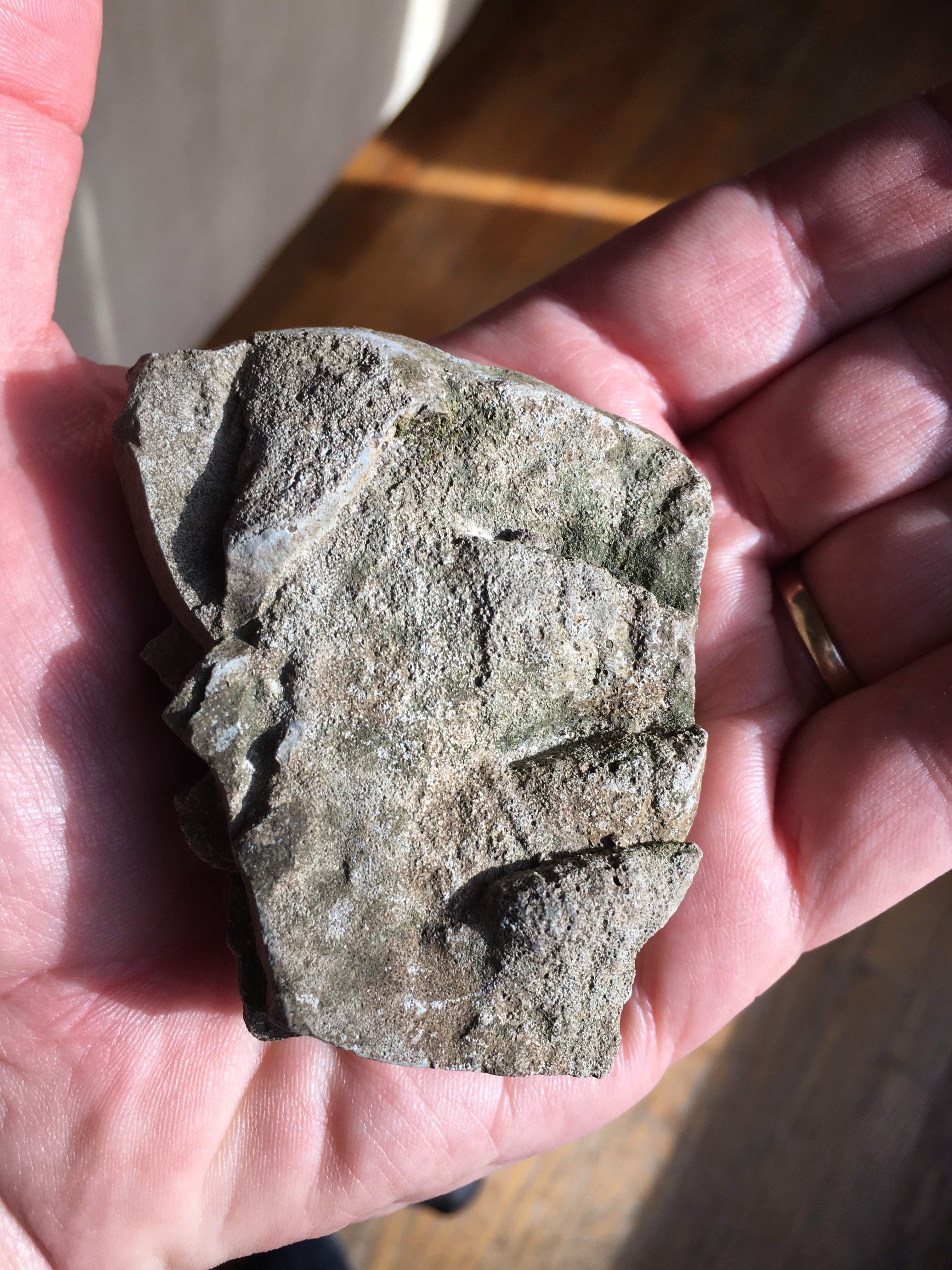
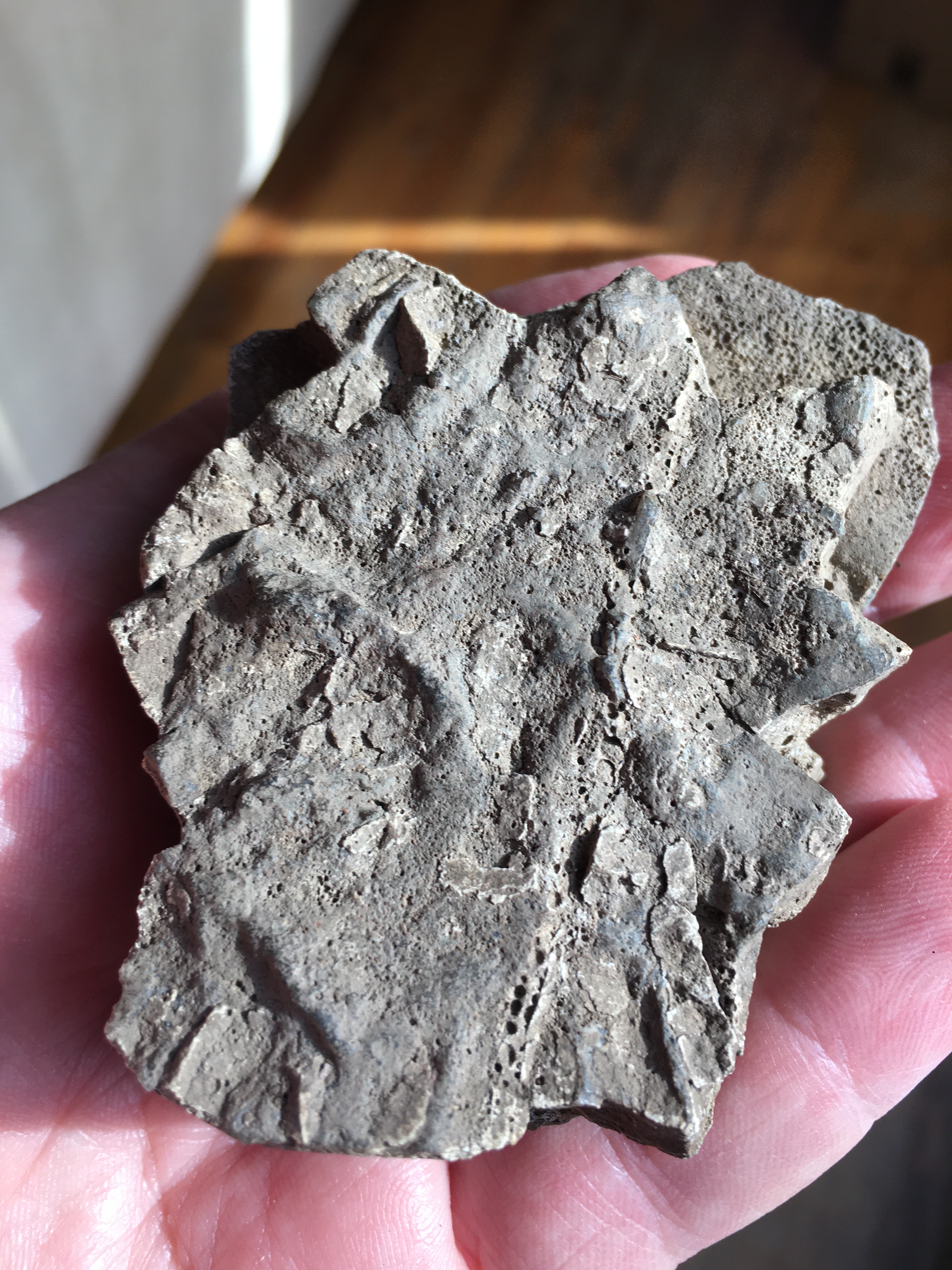
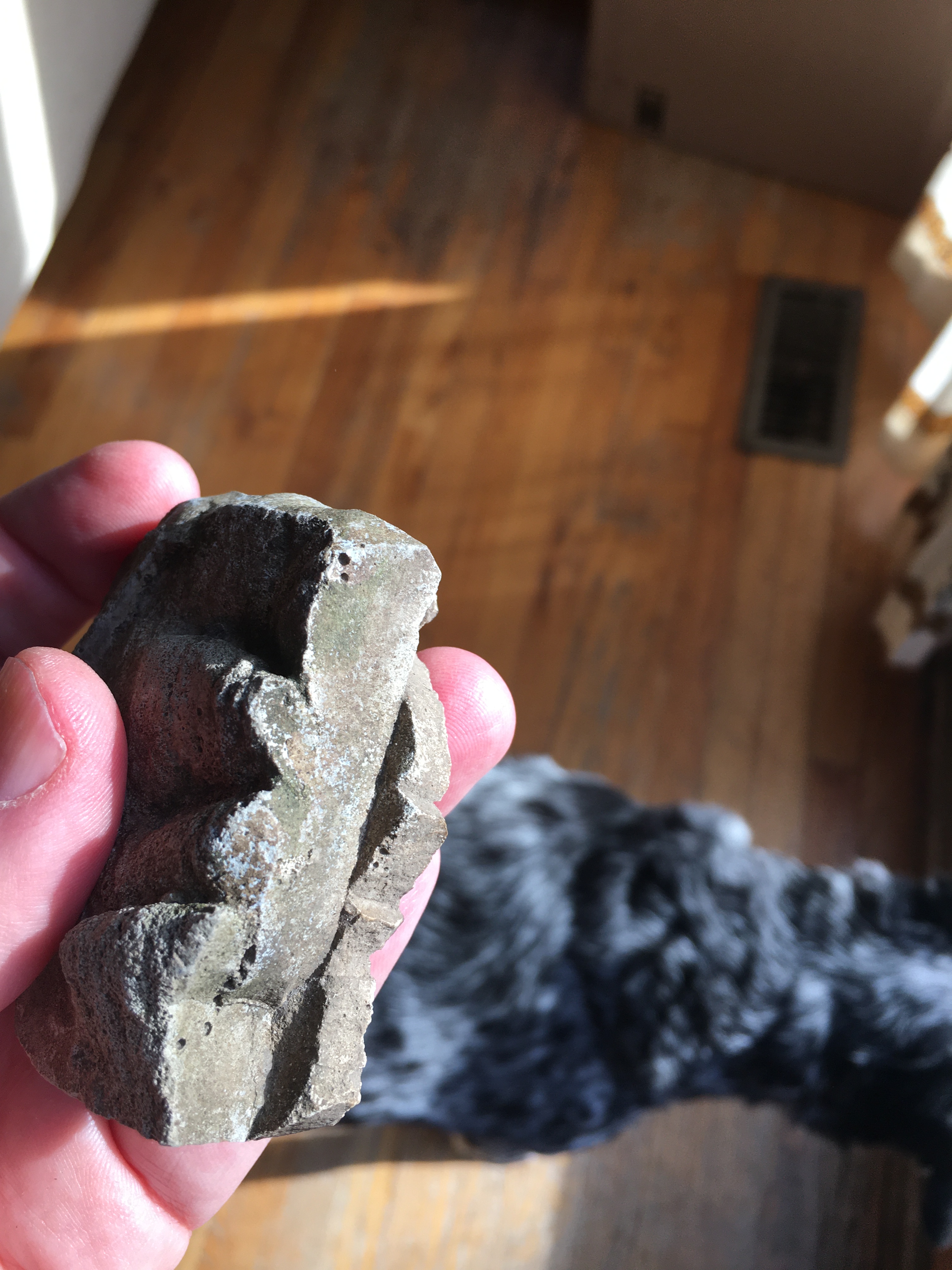
What the heck is this rock? Slag

It’s been icy, snowy, rainy, and all kinds of wet around Sewanee lately, so unsurprisingly, the ground has disgorged a number of unusual items, one of which I came across as I was walking the dogs the other day.

Google was no help– what search terms does one use? “Weird looking stone”? So I wrote my friend Bran Potter, Emeritus Professor of Geology here in Sewanee. His reply below:

    “I think the rock, with those lava-like folds along the surface and the large number of pores, is a piece of slag from the old ironworks in Cowan. If you drive past the Fiesta Grill on that side street and continue towards the limestone quarry, you cross a stream. A walk along the stream  will reveal that the steep slope in the woods is made of many tons of this once – molten waste rock. Sometimes the texture is like coarse glass with holes. Our kids used to scour the field above the woods for artifacts – there were some amazing finds in that area – but sadly they no longer plow the field.       

In the days when the dirt roads of Sewanee often turned into quagmires in the rain, wagon loads of slag were brought up the mountain to spread out on our streets. The slag is reasonably widespread on the Domain but typical pieces are smaller than the one you found. A lot of the slag looks like volcanic cinders.”

Posted in Uncategorized | Leave a comment

Thinking about Place

  • Landscape & Memory
    • Myths
    • History
  • Forgotten Places
    • Abandoned Places
    • Sick Places
    • Ruins
    • Flooded—TVA (Tellico, Tims Ford)
    • Archaelogy
    • Liminal places
  • Private Property
    • Real Estate
    • “Value”
    • Domain
    • Leasehold
    • Lease Committee
  • Built Environment
    • Architecture
    • Sports areas
    • Parks
    • Memorials
    • Memorial benches
    •  
  • Geography
    • Abstraction
    • Mapping
    • Surveying
    • GPS
  • Environment
    • Geology
    • Trees
    • Patterns of Migration
  • Sacred Spaces
    • Church
    • Labyrinth
    • Cave
    • Grove
    • Springs
    • Genius loci
    • American Gods
  • Secret Places
    • Romantic spots
    • Hideaway
  • Displacement
    • Trail of Tear
    • Leaving Home
    • Alienation
    • Entfremdungsgefühl
    • Resident alien
    • Passing through
    • Highway Exits
    • Ungrounded
    • Loneliness
    • Strangers
  • Home
    • Prodigal Son
    • Nostalgia
    • Odysseus
    • Grounded
    • Childhood
    • Community
  • Authenticity
    • Ersatz
    • Levitton
    • Ticky-tacky
    • Development
    • Suburbs
    • Gas consumption
  • Foreign Place
    • Travel
    • Wanderlust
    • Exile
    • Pilgrimage
    • Migration
  • Lines of Communication
    • Phone Lines
    • Roads
    • Railroad
  • Beyond Seeing
    • Local music
    • Sounds of a place
    • Birdsong
    • Smells
    • Flowers
    • Country air
    • Sewanee fog
    • Local food
    • Sea air
    • Crash of waves
    • Sound of insects, esp. at night (thrumming)
Posted in Sewanee | Leave a comment

RIP Stanley Crouch

Stanley Crouch came to speak at Sewanee in the mid-2000s as part of the “How Then Shall We Live?” series. Below is the author picture he sent. When I picked him up at the Nashville airport, he emerged from the terminal with his suitcase– we shook hands and he told me, in that unique gravelly voice of his, “You should know that I have a profound antipathy for everything having to do with the Confederacy.” Okay, I thought, this ought to be an interesting visit.

On the drive to Sewanee, we got into a long and lively discussion about Dante, but at one point I noticed he was squirming in his seat. “I think I’ll pull over at the next rest area,” I said, to which he replied, “NOW.” Pull over, uh, right here? “HERE.” He hopped out the car by the side of the highway and relieved himself. “Sorry about that.” Then it was back to Dante.

I dropped him off at Rebel’s Rest, the university guest house. “Rebel’s Rest. Huh.” Over the next 24 hours I spent a lot of time with Stanley. We met for coffee on the porch of Rebel’s Rest the next morning– the wisteria was in full bloom still. “I don’t want to like this place,” he said, meaning Rebel’s Rest. “I do like this porch, though.” Many in Sewanee remember him opening his talk with a reference to it. “The more rebels resting, the better.” It brought the house down. He started off reading from a chapter about Davy Crockett and then– I’ve never seen a speaker do this before–stopped. “This isn’t any good. Hey, let’s take questions.” People loved it, as he opined freely and fearlessly about anything and everything.

Before he left, Stanley autographed a book for me with a very kind inscription, ending with his characteristic VIA. “Victory is Assured.”

eCROUCHstanley-author-picture.jpg
Posted in Books, Cemeteries & Funerals, Education, Italy, Poetry, Race, Sewanee, Tennessee, The South | Leave a comment

Song to the Seals

Every so often you come across a charming thing quite unintentionally on the internet, and this morning’s entry for me is the great Irish tenor John McCormack singing “Song to the Seals” from 1935.


A sea maid sings on yonder reef
The spell bound seals draw near
A lilt that lures beyond belief
Mortals enchanted hear

Coir an oir an oir an oir o
Coir an oir an oir an eer o
Coir an oir an oir an ee lalyuran
Coir an oir an oir an eer o

The wandering ploughman halts his plough
The maid her milking stays
And sheep on hillside, bird on bough
Pause and listen in amaze

Was it a dream? Were all asleep?
Or did she cease her lay?
For the seals with a splash dive into the deep
And the world goes on again
Yet lingers the refrain

source: https://www.lyricsondemand.com/u/unknownlyrics/songofthesealslyrics.html


Posted in Animals, Ireland, Music, Nautical | Leave a comment

Who’s ready for another marginal mystery?

OK, so my posts–here, here, and here–about the mysterious notations on the flyleaf of an 18th century edition of Cicero’s works have led to discussions with various and sundry folks that have been a great deal of fun.

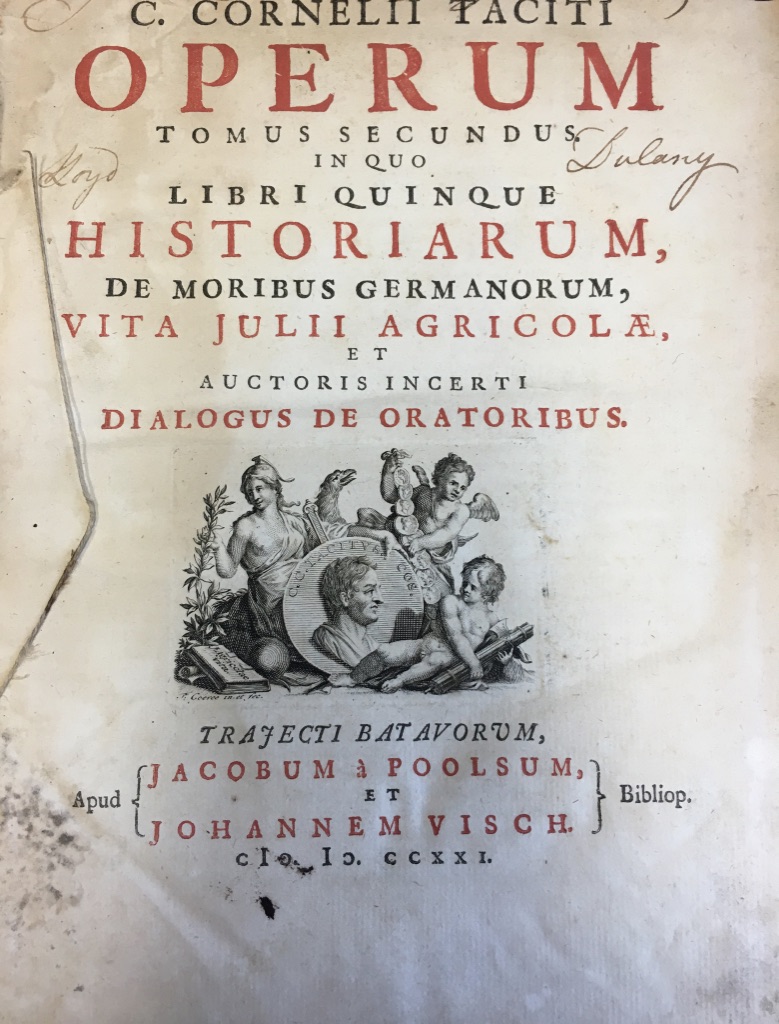
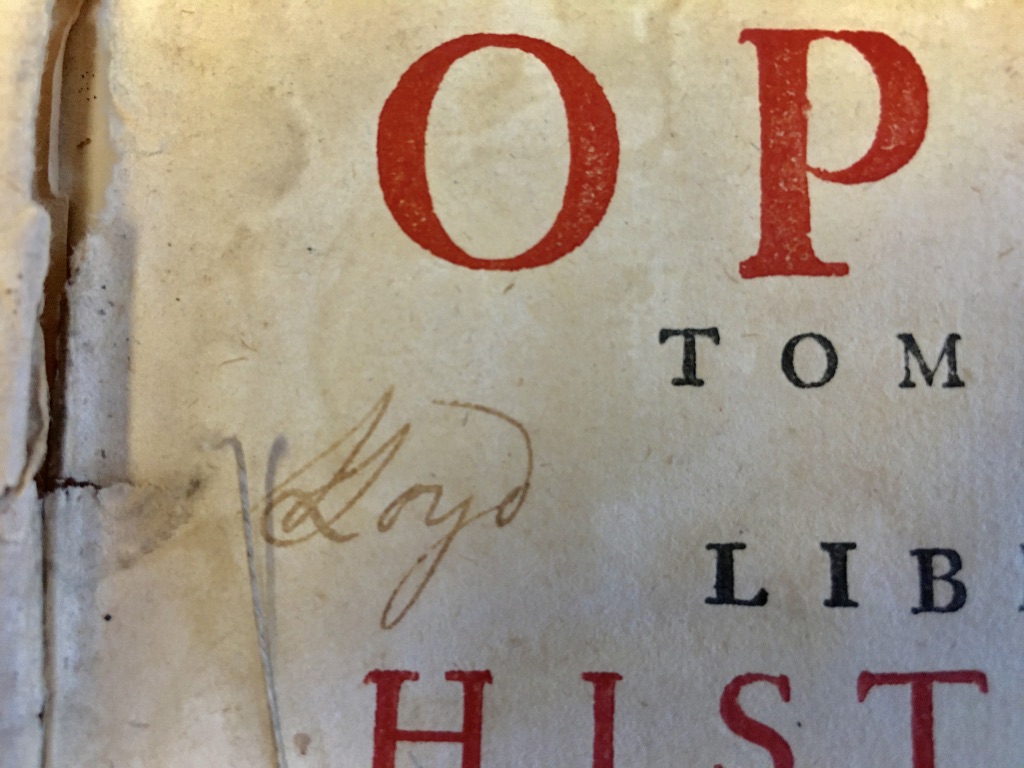
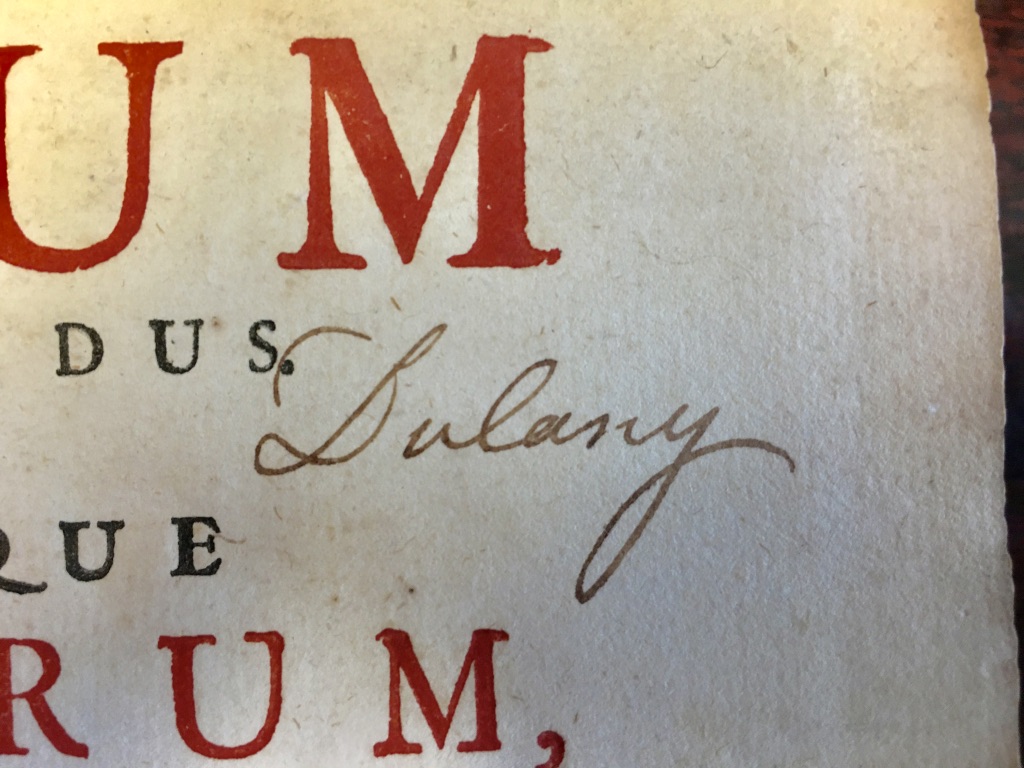
So, here’s another! Here is the title page of another book in my possession, an edition of Tacitus’s Works, published in Trajecti Batavorum (= Utrecht, the Netherlands) by Jacob Poolsom and Johannes Visch. You can see the date is given as C I Ↄ   I Ↄ  C C  X X I = MDCCXXI = 1721.

da6DIhtMQiqiEdcewz+Pnw_thumb_17049.jpg

What’s interesting is the name of the owner, written on either side of TOMUS SECUNDUS, etc., which appears to be “Lloyd Dulany.”

fsgUs6AcTUeXw3m8DQDeDg_thumb_1704aweq6QtBMTcm3yJw5oETHhA_thumb_1704b

So, who is “Lloyd Dulany”? You know me, friends– I just had to know.

Turns out that, if we were living in London or Baltimore in the year of Our Lord Seventeen Hundred and Eight Two, we would be intimately familiar with the name of Lloyd Dulany.

A member of a prominent Loyalist family, Dulany was killed in a duel in London by a certain Bennet Allen, an 18th century Anglican cleric of unsavory reputation (the guy wrote a poem called “Modern Chastity; or the Agreeable Rape” and a pamphlet called “A Modest Apology for Adultery”). The subsequent trial was evidently quite the sensation.

According to the Wikipedia article about Allen, here’s what happened:

In subsequent years Allen contributed largely to the ‘Morning Post’ In an anonymous article, called ‘Characters of Principal Men of the [American] Rebellion,’ which appeared there on 29 June 1779, he vehemently attacked the character of (American rebel) Daniel Dulany, formerly secretary of Maryland and a parishioner at St. Anne’s who had publicly chastised Allen in the street and a series of articles in the ‘Maryland Gazette’ (to which Allen had disingenuously replied as “Bystander”).[4] On 1 July the ‘Morning Post’ withdrew the charges against Dulany, but Lloyd Dulany, a brother of the subject of the alleged libel, publicly challenged its anonymous author in the newspaper. Allen did not appear declare himself the article’s writer immediately, but after a long interval a duel was arranged. On 18 June 1782, Dulany was killed in the duel. Allen and his second, Robert Morris, surrendered themselves on 5 July of the same year, to answer a charge of murder at the Old Bailey sessions. After a trial, which attracted general public attention, Allen, in spite of his plea for benefit of clergy and the evidence as to his character adduced by Lords Bateman, Mountnorris, and many fashionable ladies, was convicted of manslaughter (but Morris acquitted), and sentenced to a fine of one shilling and six months’ imprisonment.[5]

(I don’t think Wikipedia is correct in calling Daniel Dulany a rebel, BTW)

I don’t know how to feel about this. Allen seems like a jerk, so I guess I’m on Dulany’s side? But that’s only because, by some weird twist of fate, I happen to own his copy of Tacitus.

I note that it’s got a bookplate in the front from the Library of the Protestant Episcopal Divinity School in Philadelphia, so it’s from some church connection that it must have come to me. Anyway, that divinity school merged with another in 1974 and is gone now.

Habent sua fata libelli, indeed.

Posted in Books, Classics, England | Leave a comment

Quake and Quarantine

So, last night, in the midst of the COVID-19 quarantine, we had an earthquake.

At 3:33 AM.

And, get this, it was 3.3 on the Richter Scale.

It was only a few miles from our house, down in Lost Cove at 35.141°N  85.892°W.

I myself slept through it, but my wife and son felt it. “I thought it was a jet breaking the sound barrier,” she said. “I thought it was a tornado hitting the house,” he said.

Alright, 2020. We’ve hunkered down for hurricanes, and sheltered in place to flatten the curve, and I guess now we need a little earth rattling to go with it?

Getting a little tired of all this Old Testament living.


Posted in Bible, Sewanee, Uncategorized | 2 Comments