
-
Recent Posts
Recent Comments
Archives
- March 2026
- November 2025
- December 2024
- April 2024
- October 2021
- February 2021
- September 2020
- July 2020
- June 2020
- May 2020
- April 2020
- March 2020
- January 2020
- August 2019
- July 2019
- June 2019
- May 2019
- April 2019
- March 2019
- February 2019
- January 2019
- December 2018
- November 2018
- October 2018
- July 2018
- June 2018
- May 2018
- April 2018
- March 2018
- February 2018
- November 2017
- October 2017
- September 2017
- August 2017
- April 2017
- February 2017
- October 2016
- September 2016
- May 2016
- April 2016
- March 2016
- February 2016
- January 2016
- November 2015
- October 2015
- September 2015
- August 2015
- July 2015
- June 2015
- April 2015
- March 2015
- February 2015
- January 2015
- December 2014
- November 2014
- October 2014
- September 2014
- August 2014
- July 2014
- June 2014
- May 2014
- April 2014
- March 2014
- February 2014
- January 2014
- December 2013
- November 2013
- October 2013
- September 2013
- August 2013
- July 2013
- June 2013
- April 2013
- March 2013
- February 2013
- January 2013
- December 2012
- November 2012
- October 2012
- September 2012
- August 2012
- July 2012
- June 2012
- May 2012
- April 2012
- March 2012
- February 2012
- January 2012
Categories
- AI
- Animals
- Astronomical
- Bible
- Birds
- Books
- Boston
- Cartoons
- Cemeteries & Funerals
- Classics
- Coal
- Dogs
- Drama
- Education
- Emblems
- England
- Family
- Film
- Florence
- Ireland
- Italy
- Language & Etymology
- Military
- Music
- Mythology
- Nautical
- New England
- Numismatics
- Oxford
- Poetry
- Pontius Pilate
- Race
- Rivers
- Rome
- Saints
- Scotland
- Sewanee
- Slavery
- Sports & Games
- Statues & Monuments
- Tennessee
- The South
- Time
- Trees & Flowers
- Uncategorized
Meta
Dido Nix et Trojanus
In an even more spectacular and embarrassing fiasco than the election, Nixon played Aeneas in a reenactment of Virgil’s Aeneid, which the school ambitiously staged on the two thousandth anniversary of the birth of Rome’s greatest poet. Nixon had an ill-fitting costume and was completely unrehearsed apart from his lines, and the love scene with Dido, involving an energetic and prolonged embrace, replete with passionate dialogue, brought down the house with brickbats and catcalls. It was a horrendous experience … (Conrad Black, Richard M. Nixon: A Life in Full [2008] 22-23)
I’m torn about this anecdote.Certainly the easiest reaction is to laugh snidely at Nixon failing miserably as the romantic lead. Har har, serves you right for your future invasion of Cambodia!
Another part of me feels, very deeply, the acute embarrassment of the scene.Being onstage spouting love poetry while your whole school laughs at you? Really, the whole thing’s a Fellini-esque nightmare.
To my mind, there’s something about the story that explains why it is that a man who would win the ’72 election by a 49-state landslide STILL felt the need to bug the Democratic headquarters, as though he felt the stinging derision of that high school play all those years later. Sunt lacrimae rerum et mentem mortalia tangunt.
Posted in Uncategorized
2 Comments
Fulminating at Job
Class assignment for Book of Job: “On Friday, we will spend the class thinking about God’s response from the whirlwind. In fact, I am going to ask you to imagine yourself as God— the all-powerful and all-knowing creator of the heavens and earth—dealing with this whiny pipsqueak. You will bring to class a few verses written from the perspective of God in the style of the Book of Job, and will recite them in a loud and thundering voice.”
Example:
Where were you when I made the wolf, with its ravenous appetite, hunts the deer in packs, or chases down the rabbit to its hole? Where were you when I made the dog, with its abiding loyalty, who chases the squirrel without success and lies on the couch to watch TV with you, a faithful companion to people and fierce to thieves and the Fedex deliveryman?
Student examples:
Explain energy,
tell me how the bear knows to hibernate,
how the blind man can see?
How does your suffering surpass,
the birth of another human being?
Be grateful that I’ve chosen
to spare thee.
For death may have been,
a better choice for you.
Maybe your silence would,
let me re-think your punishment,
that your punishment has gone long enough.
Posted in Uncategorized
1 Comment
Protected: Arabic letters as Rorschach test
Posted in Uncategorized
Enter your password to view comments.
Solinus review
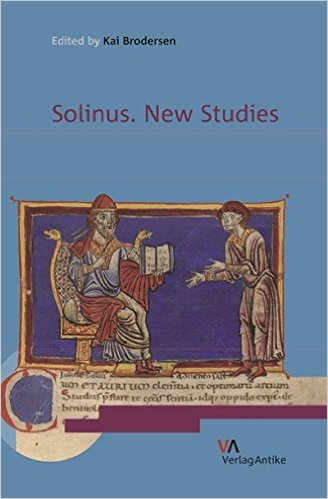
Bryn Mawr Classical Review published my review of Kai Brodersen’s edited collection, Solinus: New Studies. The editor and a few others have been in touch with kind remarks.
http://bmcr.brynmawr.edu/2015/2015-10-04.html
Posted in Uncategorized
Leave a comment
Dead Armadillo
It was easier to see in the morning than it had been last night, when I swerved a little to avoid hitting it, the face-up dead armadillo on the street. The dogs and I walked by early today, and it took all my strength to keep them from the intimate investigation they so badly wanted to do. Car after car drove by, as they do on Saturday mornings in the fall, rushing to get kids to the soccer fields, but each slowed down to go around the dead armadillo. Certainly he is evidence of the armadillo invasion of East Tennessee I’ve read about, and sure, I’m unnecessarily worried about leprosy like everybody else is. But soon the authorities will take his corpse away, and the cars will speed up again, and the dogs will calm down.


Posted in Animals, Dogs, Sewanee, Tennessee, Uncategorized
Leave a comment
Panel on the Destruction of the Ancient City of Palmyra
This past Tuesday, my friend Jeff Thompson in the Art History department put together a panel entitled “Sewanee Responds: A Panel Discussion on the Destruction of the Ancient City of Palmyra.” Panelists included Sara Nimis (Mellon Globalization Fund), Nick Roberts (History), Jacqueline DiBiasie Sammons (Classical Archaeology) and yours truly. I learned a lot from my colleagues about the situation in Palmyra–the sale of antiquities by ISIS, their ideological commitments, the lack of good options for the West, etc.–and was especially impressed by questions from students and others.
In my own remarks, I make reference to three articles:
- Heather Pringle, “ISIS Cashing in on Looted Antiquities to Fuel Iraq Insurgency,” National Geographic, June 27, 2014, who notes: “Listed among ISIS’s key financial transactions were records of illicit antiquity trafficking. In one region of Syria alone, the group reportedly netted up to $36 million from activities that included the smuggling of plundered artifacts.”
- Gary Vikan, “The Case For Buying Antiquities To Save Them” Wall Street Journal, August 19, 2015, who says: “In times of extraordinary risk, we should be open to dealing with bad guys to create a safe harbor for works of art. This is an act of rescue and stewardship—and should be done with the explicit understanding that eventually, when the time is right, the objects will be repatriated to the country of their origin.”
- Leon Wieseltier, “The Rubble of Palmyra,” The Atlantic, September 4, 2015, who writes: “But there are different reasons for admiring ruins. We need not dwell on them only to vindicate ourselves. We can dwell on them also to vindicate a notion of humanity. We preserve them to illustrate not divine purposes but human purposes. They are proof of the astonishing multiplicity of answers to life’s questions that have been created by our tirelessly self-interpreting kind. We restore them and we display them as a cosmopolitan way of regarding particularities, as an expression of our humane respect for the resourcefulness of the spirit over time. We imbue them with meanings that their makers could not have grasped, except perhaps in places such as Palmyra. Where others saw truth, we see beauty—but the beauty is not merely formal. What a spiritual accomplishment it is, to cherish—and in the case of Khaled al-Assad, to die for—the vestiges of a faith in which one does not believe.”
Postscript, September 27. The Sewanee Purple has a write-up and an editorial on the panel.
Posted in Classics, Sewanee
Leave a comment
Protestants and Pyramid
The pyramid of Cestius, built in the first century, is the first thing you see when you get off the bus at Porta San Paolo in Testaccio. Crossing the cobblestone street, you go down the road to the right to the entrance of Rome’s famous Protestant Cemetery, the final resting place since the early 19th century for much of the well-to-do Anglo-American ex-pat community
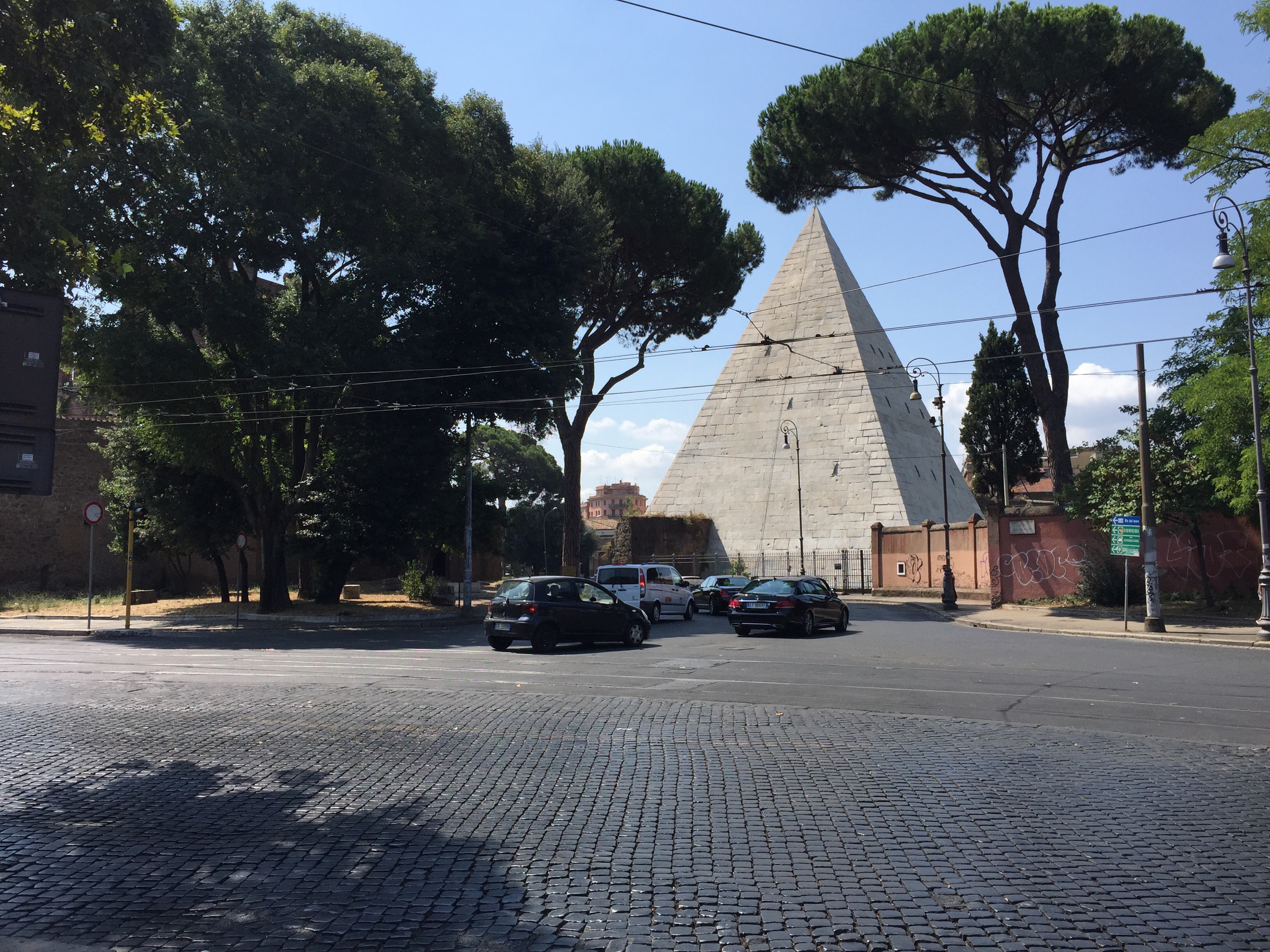
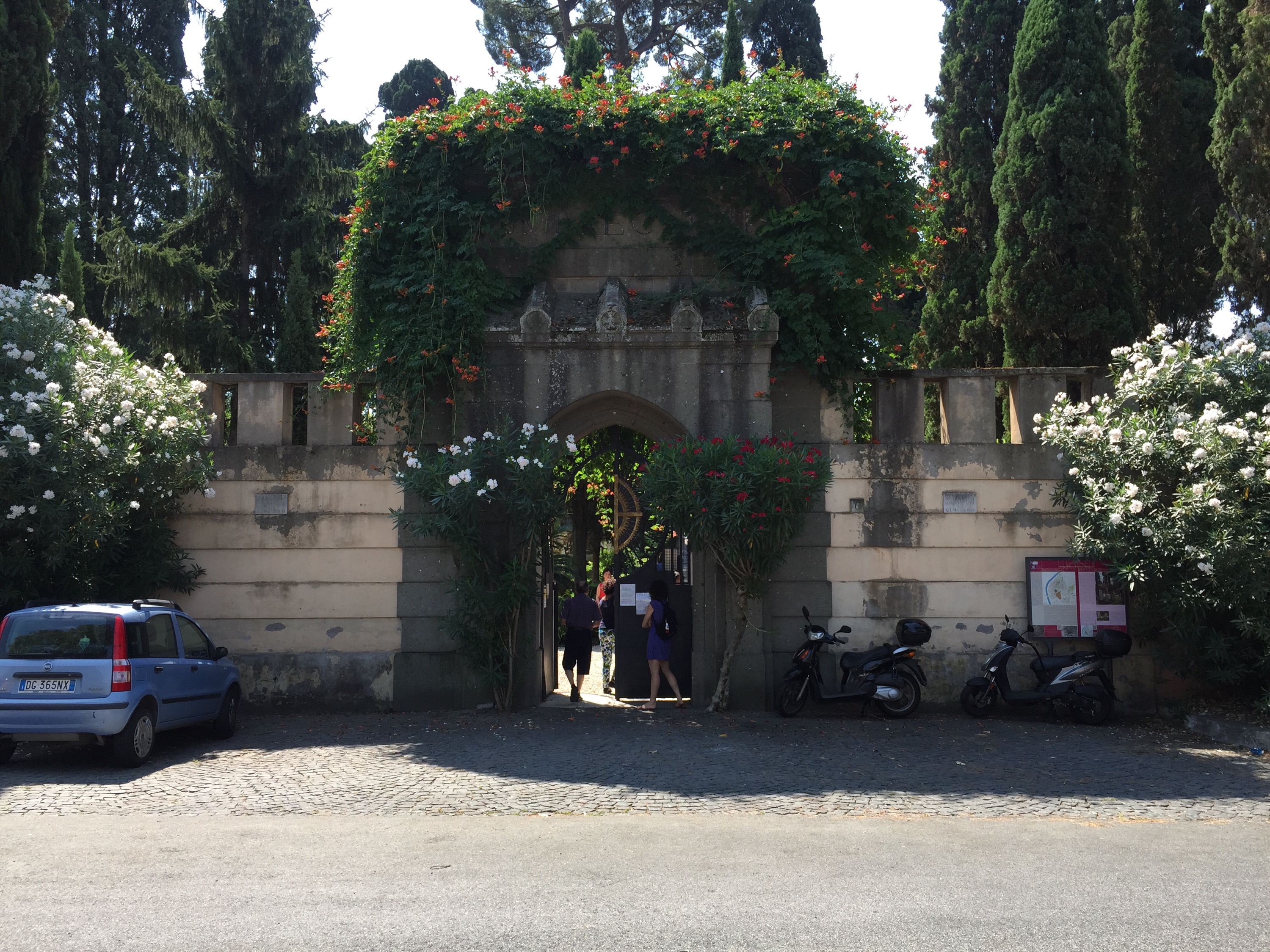
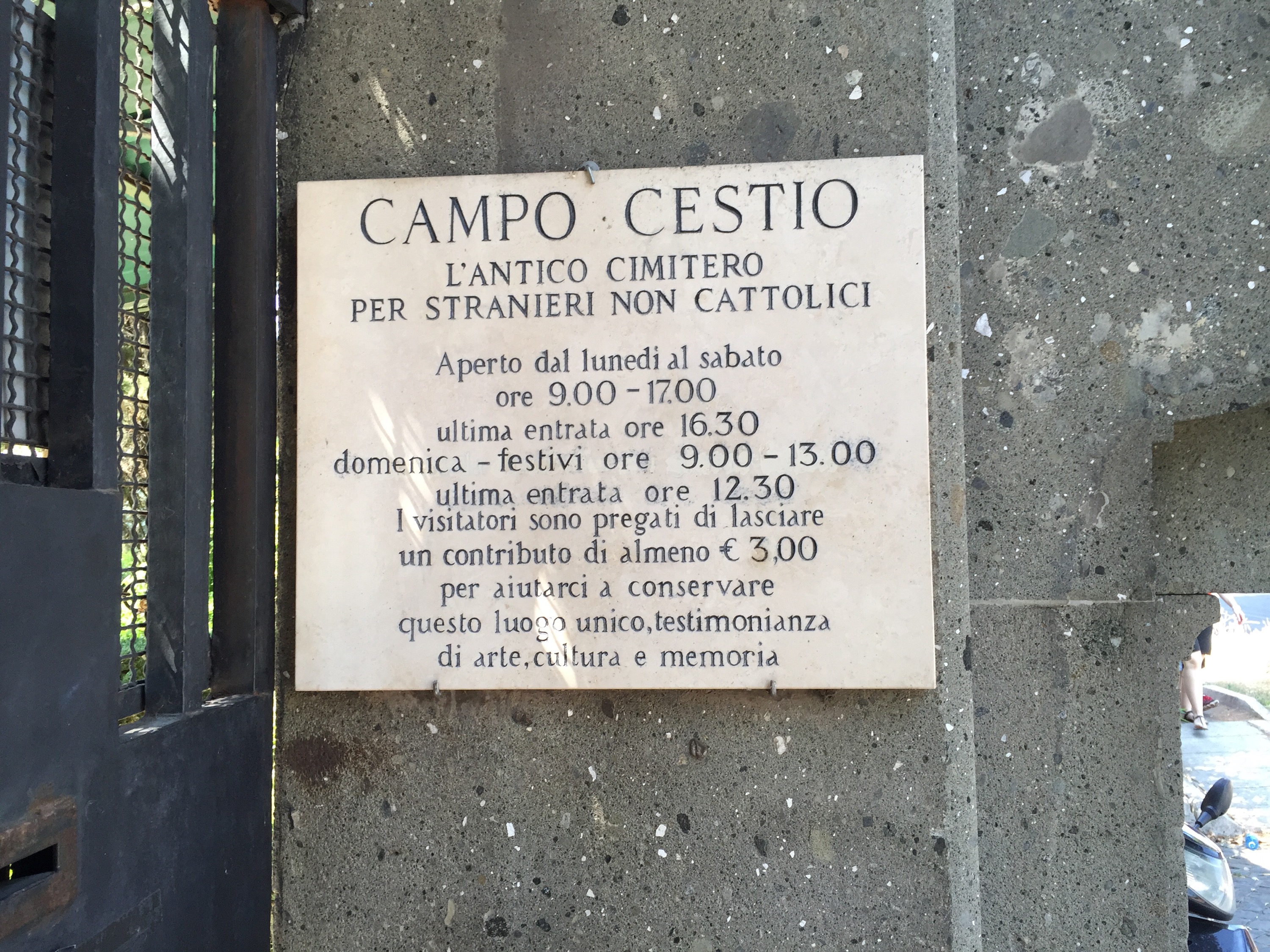
Entering the Campo Cestio is like stepping back in time, though not in the usual way you feel like you’ve stepped back in time in Rome. While it is true that there’s an ancient pyramid lurking to the left throughout your visit to the graveyard, the atmosphere is far more Romantic than Classical. Such a graveyard would not be out of place in England or older parts of the American East Coast–Mt. Auburn in Cambridge, perhaps, or Highgate in London. The sentimentality is thick on the ground here among the maudlin marbles.
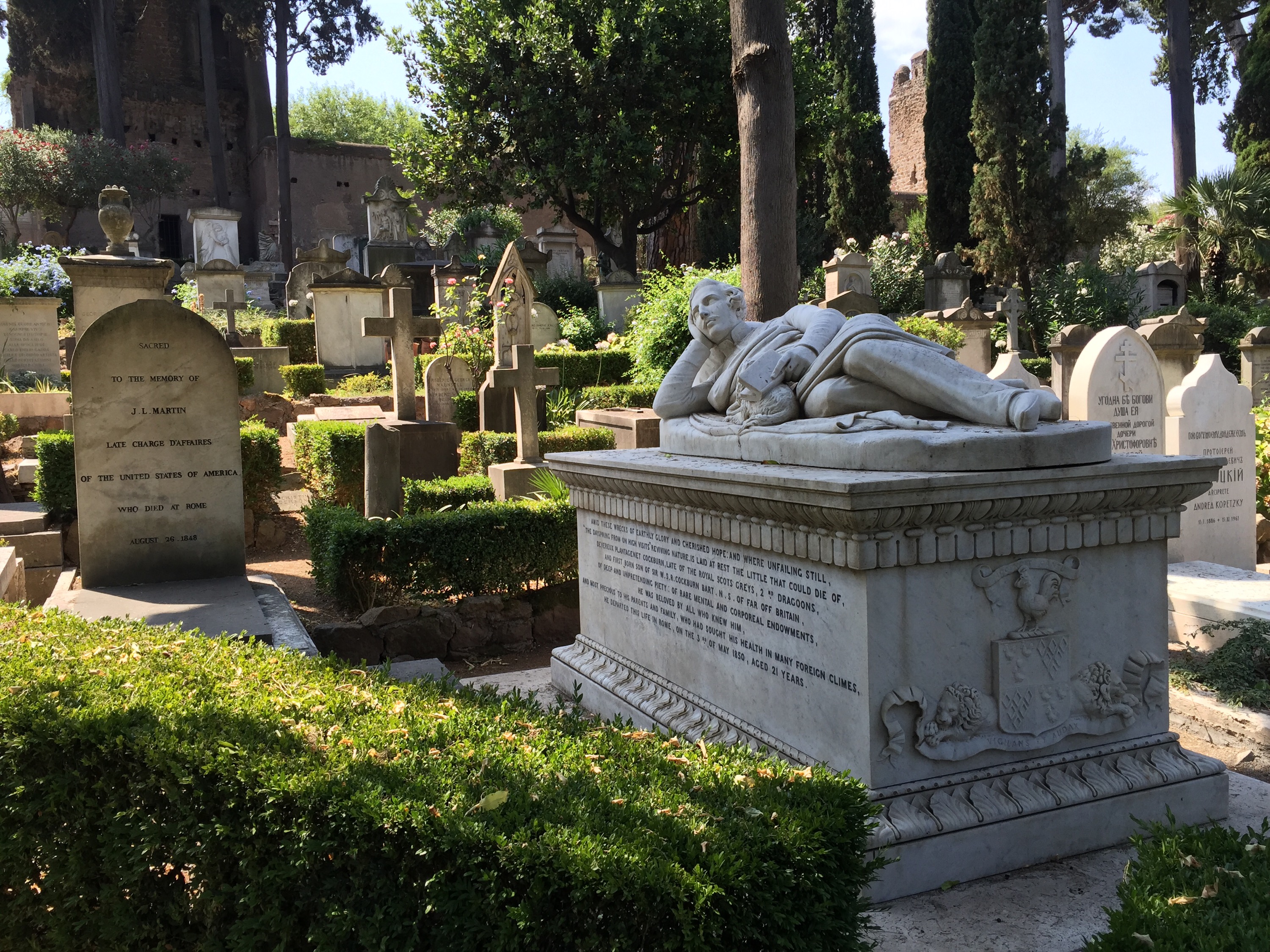
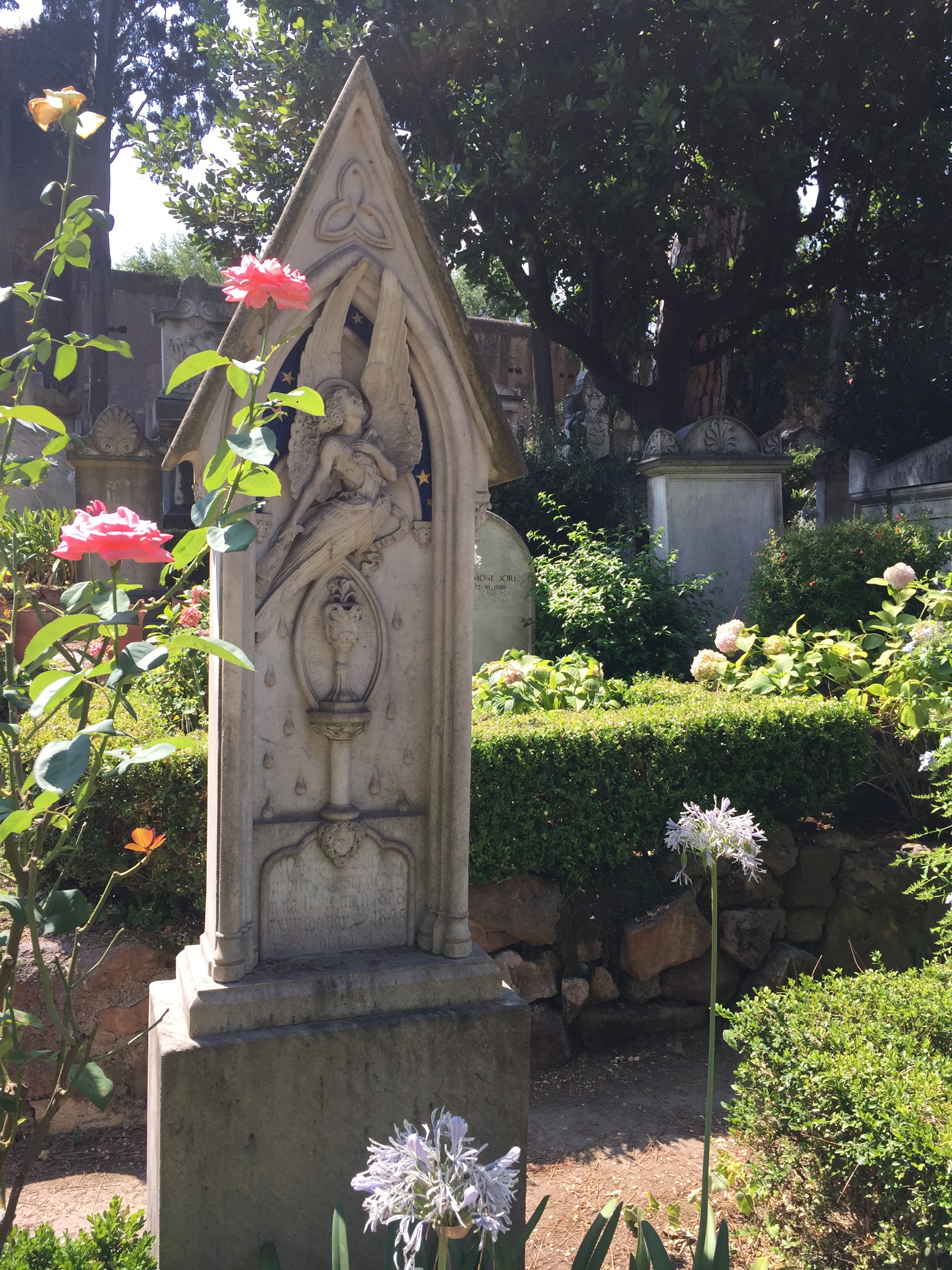
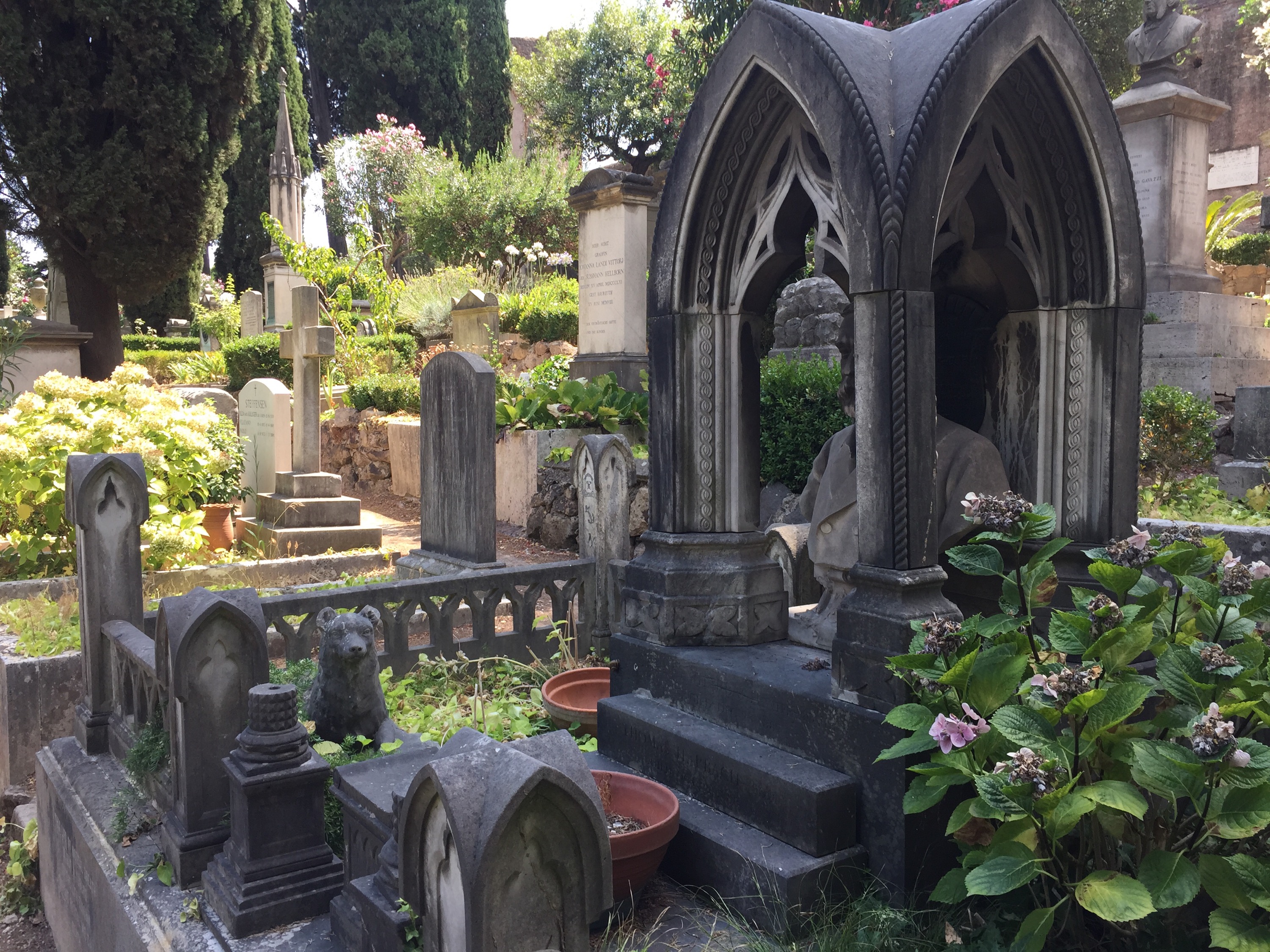
The most famous statue here is Angel of Grief, which the sculptor William Wetmore Story made in 1894 for himself and his wife. It has been much copied in cemeteries since. 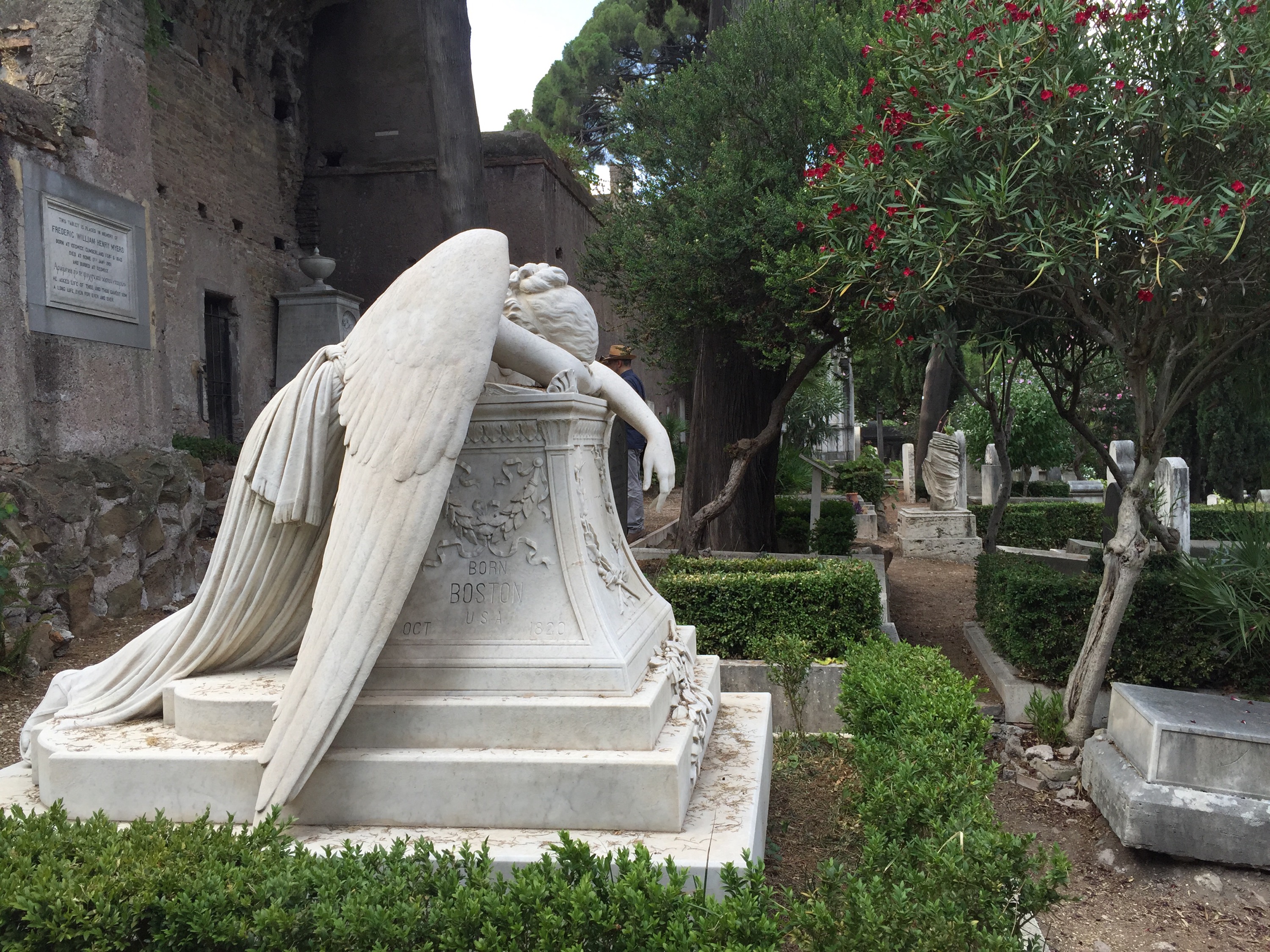
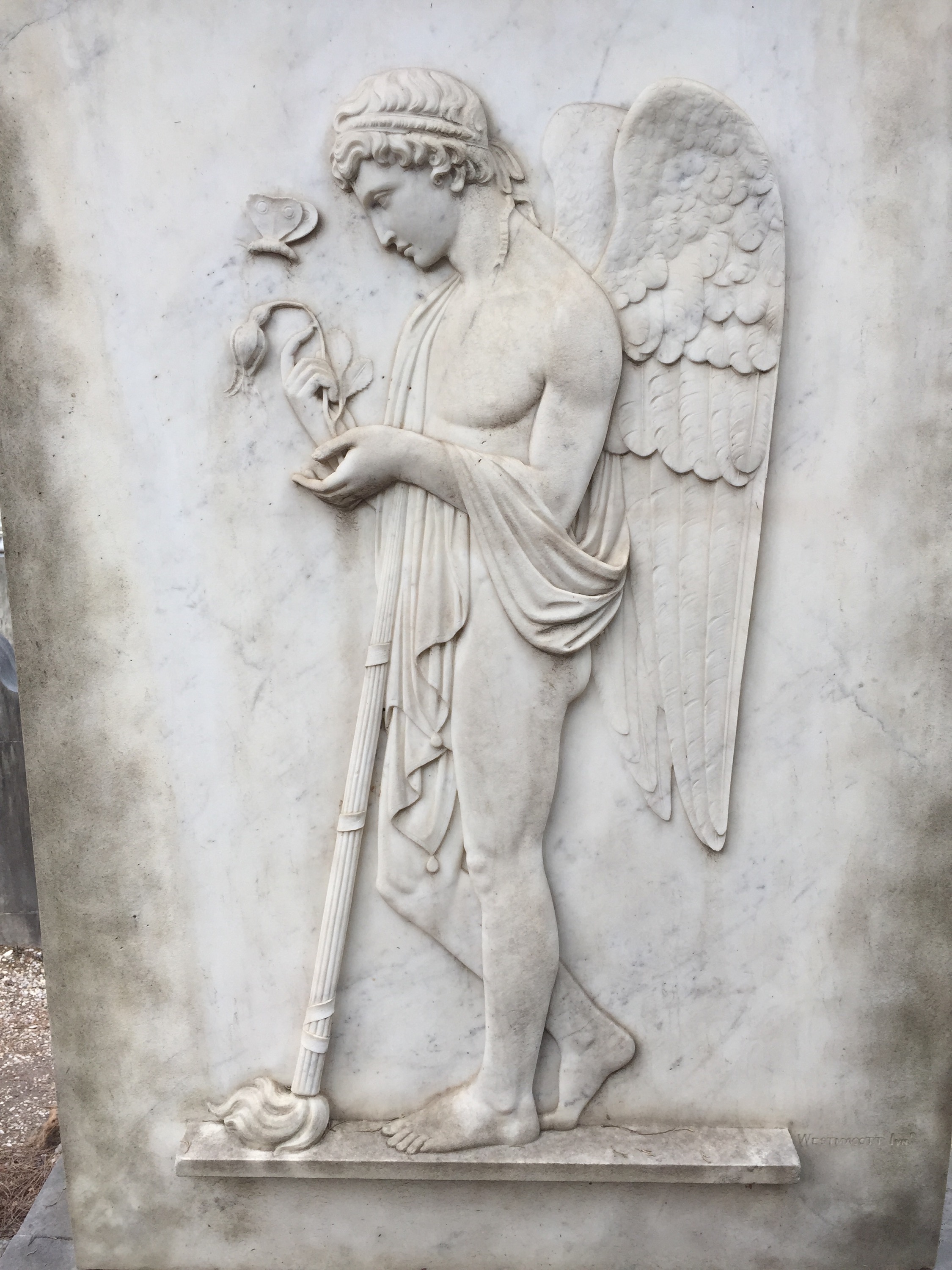
Nearby is the very moving memorial for Rosa Bathurst, who died tragically at the age of 16. She is depicted being received by an angel on one side of the tomb; on the other side, another angel holds an inverted torch and a drooping poppy from which emerges a butterfly, classical images of death and resurrection. 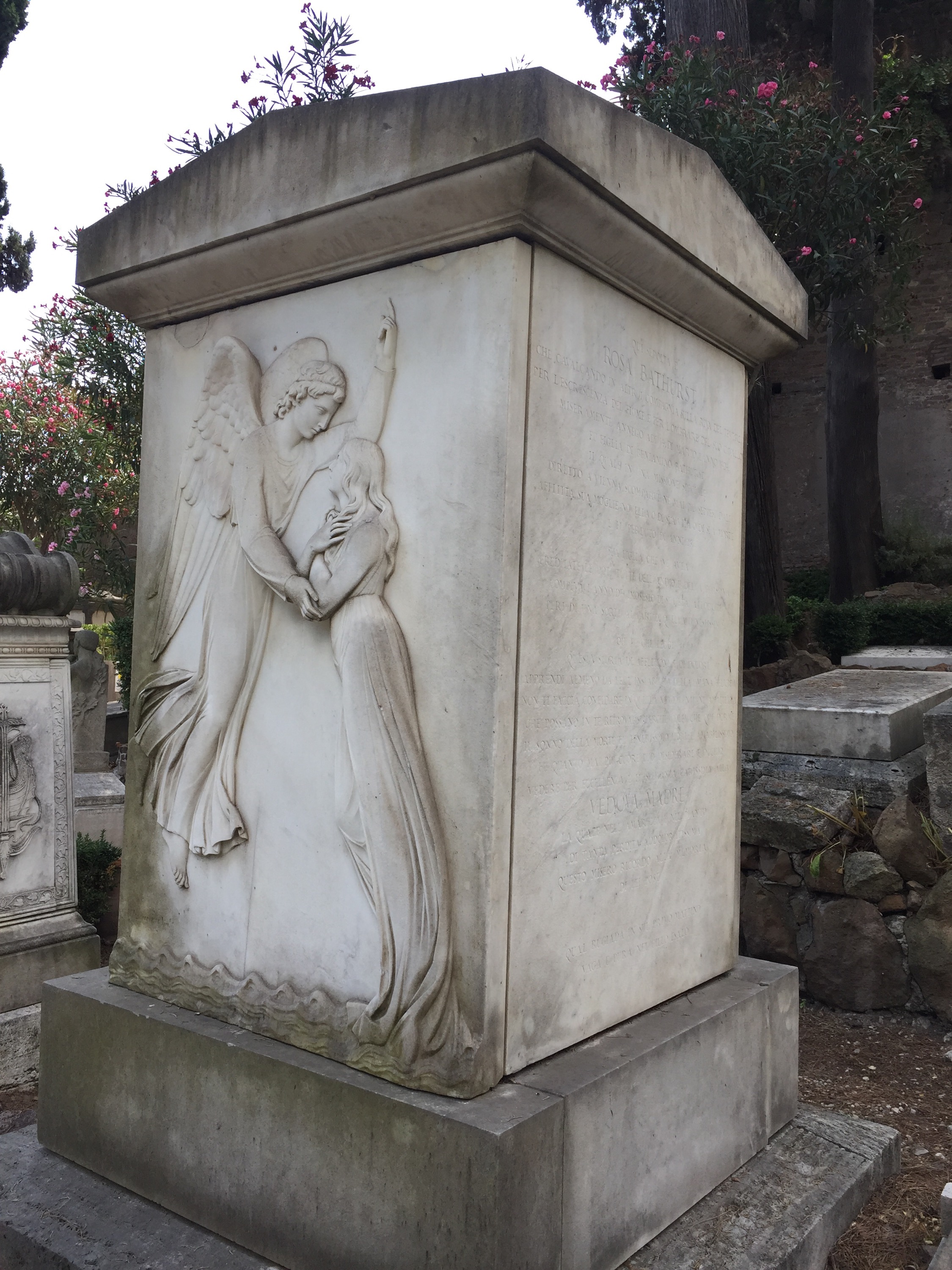
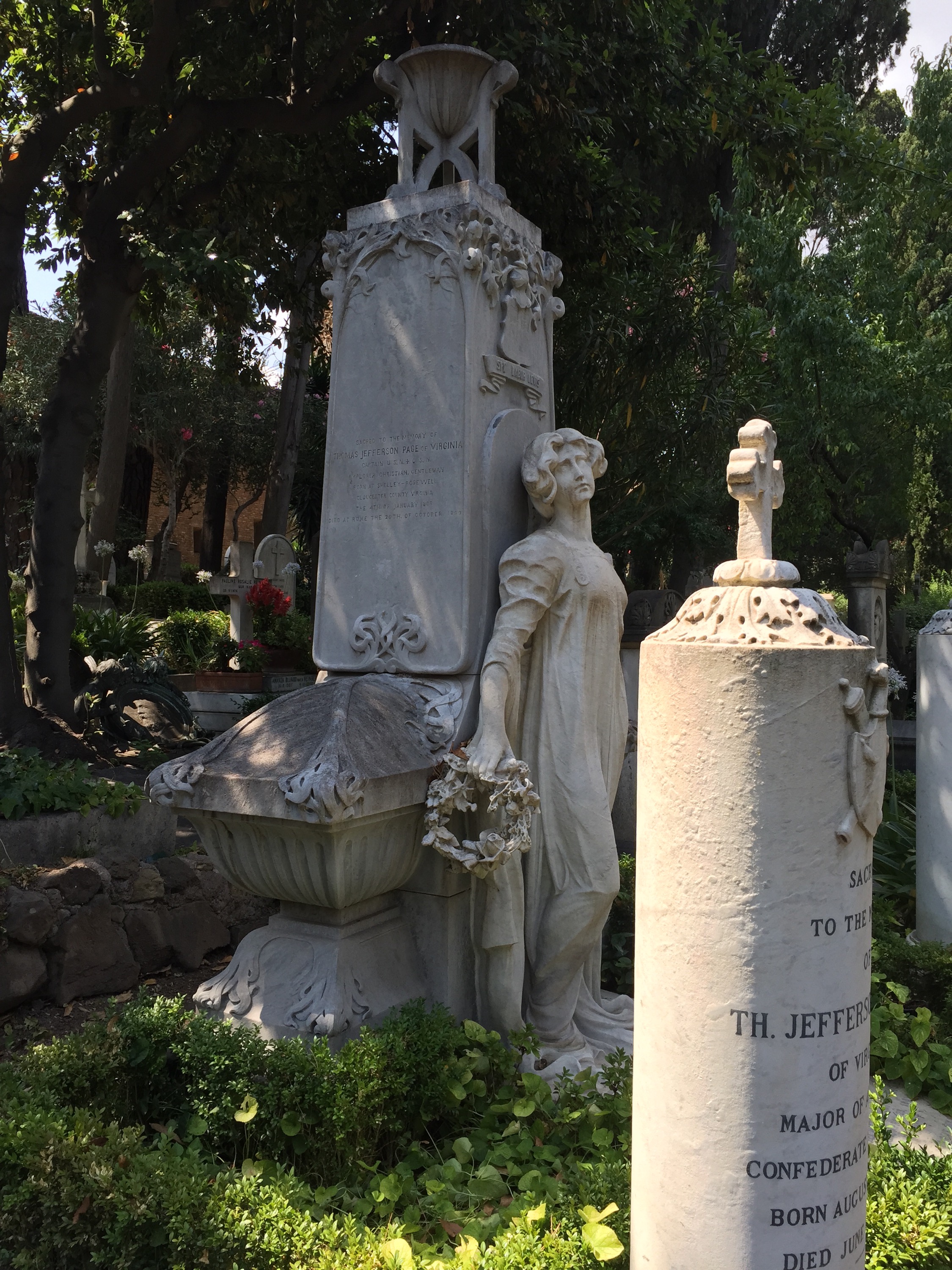
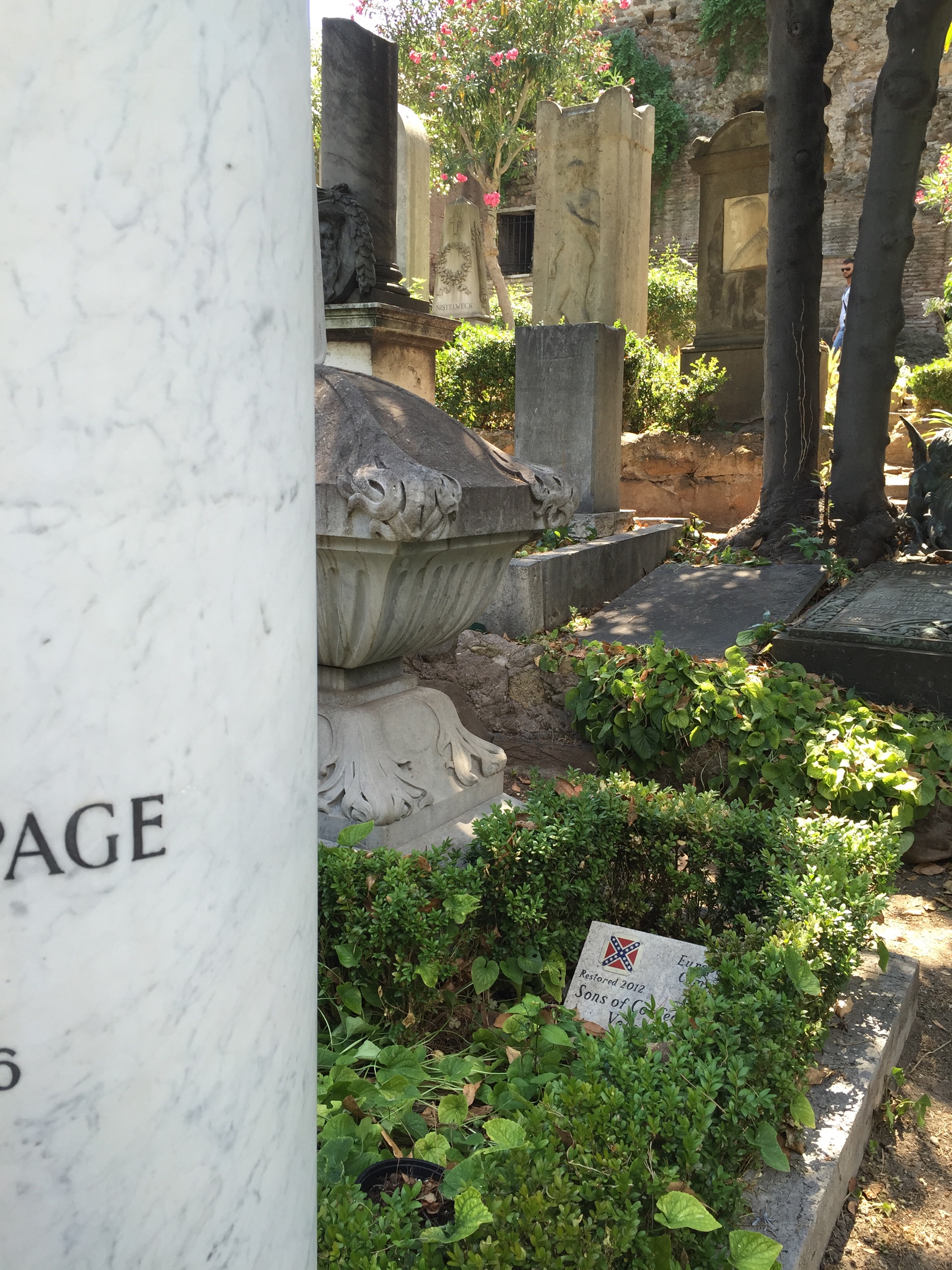
Close to this is the elaborate monument of Thomas Jefferson Page, a Virginian who was, according to his stone, “Captain, U.S.N. and C.S.N., Explorer, Christian Gentleman.” after the Civil War, Page emigrated to Argentina and then to Rome. The sons of Confederate Veterans restored his monument recently, and I sighed a little unhappily at the battle flag they just had to stick there.
Behind these, alongside the ancient Autelian Wall that Mark’s the Cemetery’s border, is the tomb of Shelley.

In another part of the graveyard Keats is buried–easy to pick out for all the tourists around it snapping selfies. On the way over, you pass by the famous cat sanctuary, I Gatti Della Piramide, whose website gives a good overview of the shelter’s activities. There’s something pleasing about seeing all these cats, little living images of Bast and Sekhmet roaming at will at the foot of the Pyramid and occasionally leaping up to lounge on the poets’ lugubrious gravestones. Hail to thee, blithe spirits.
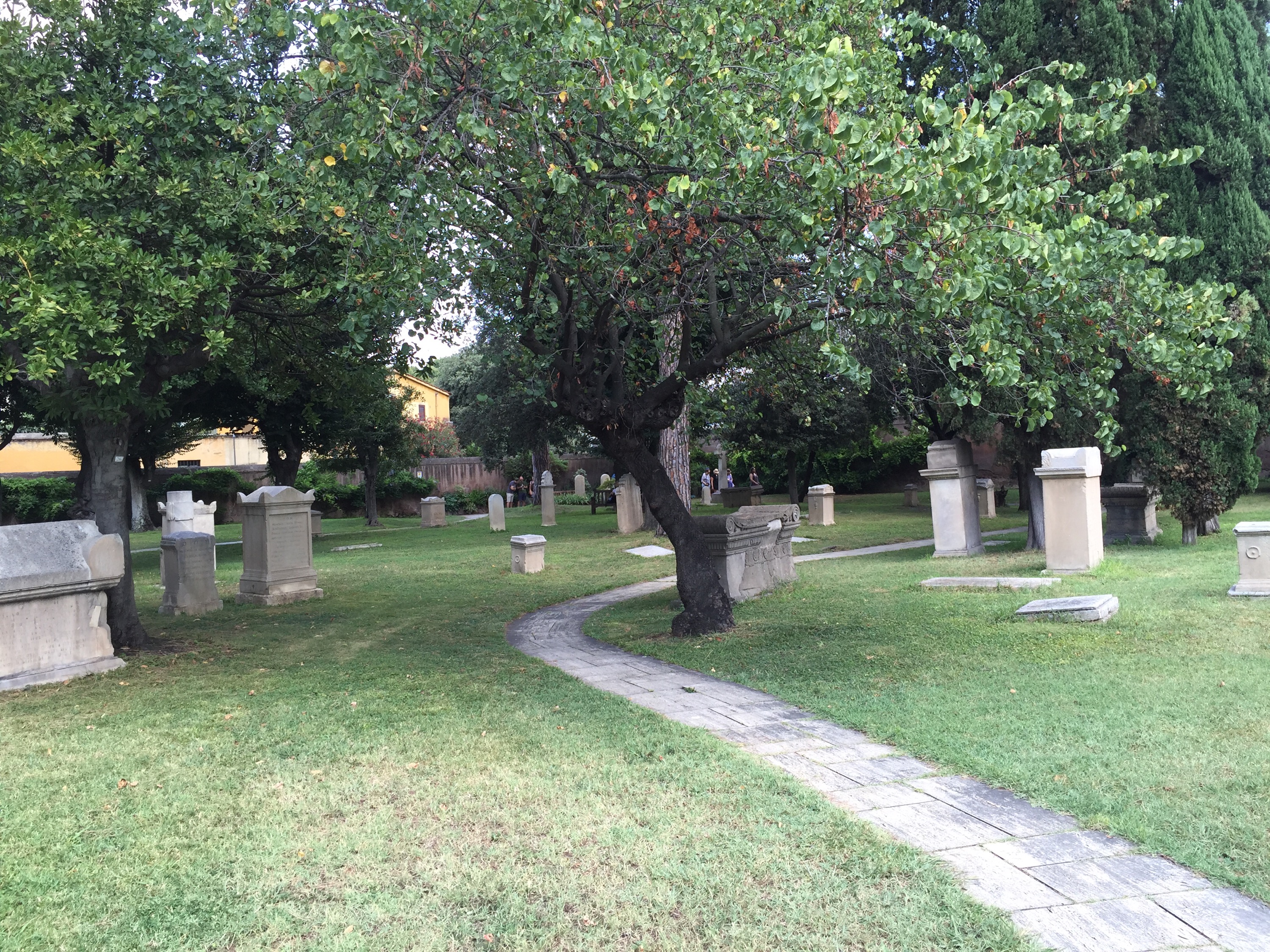
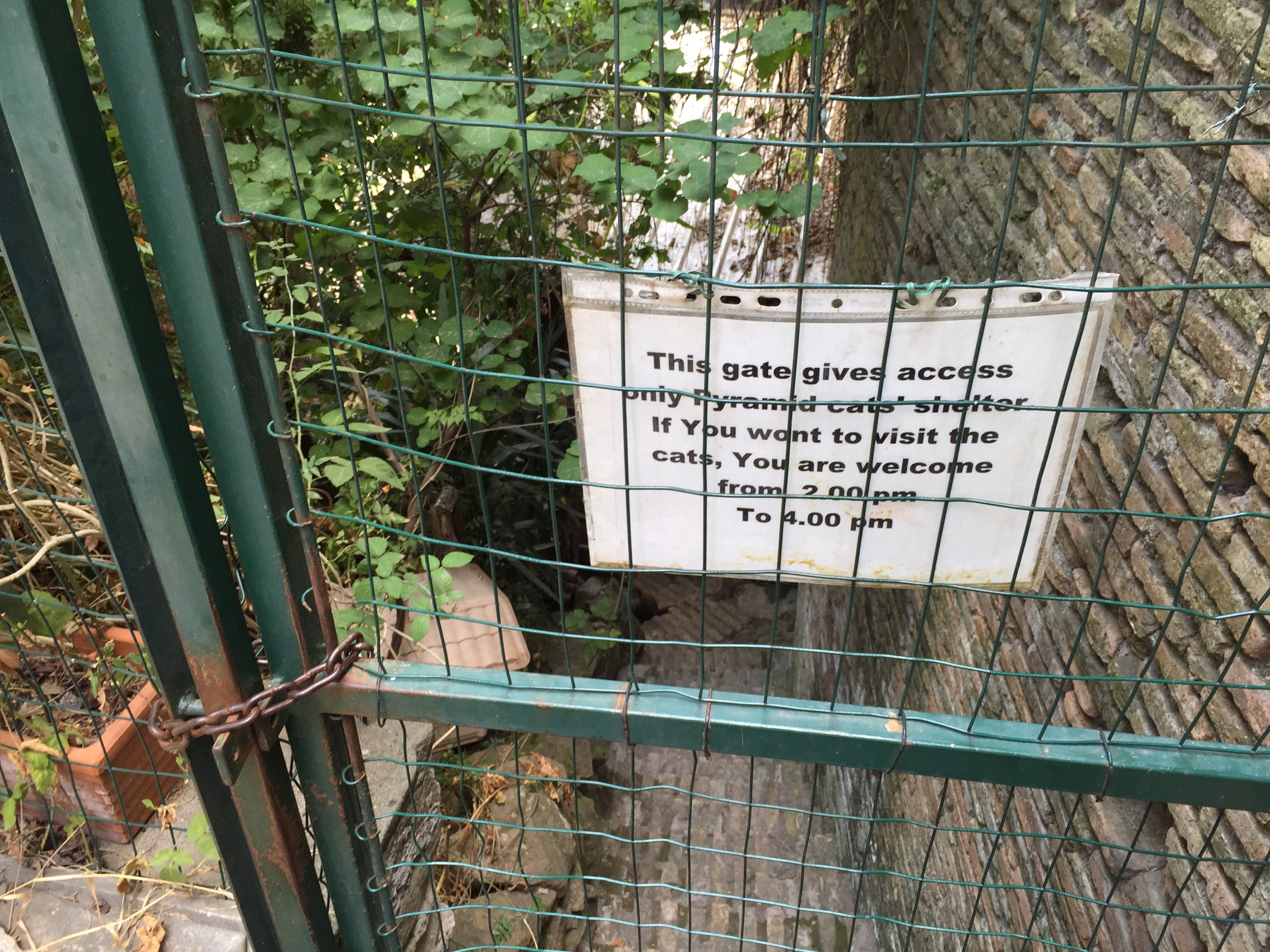
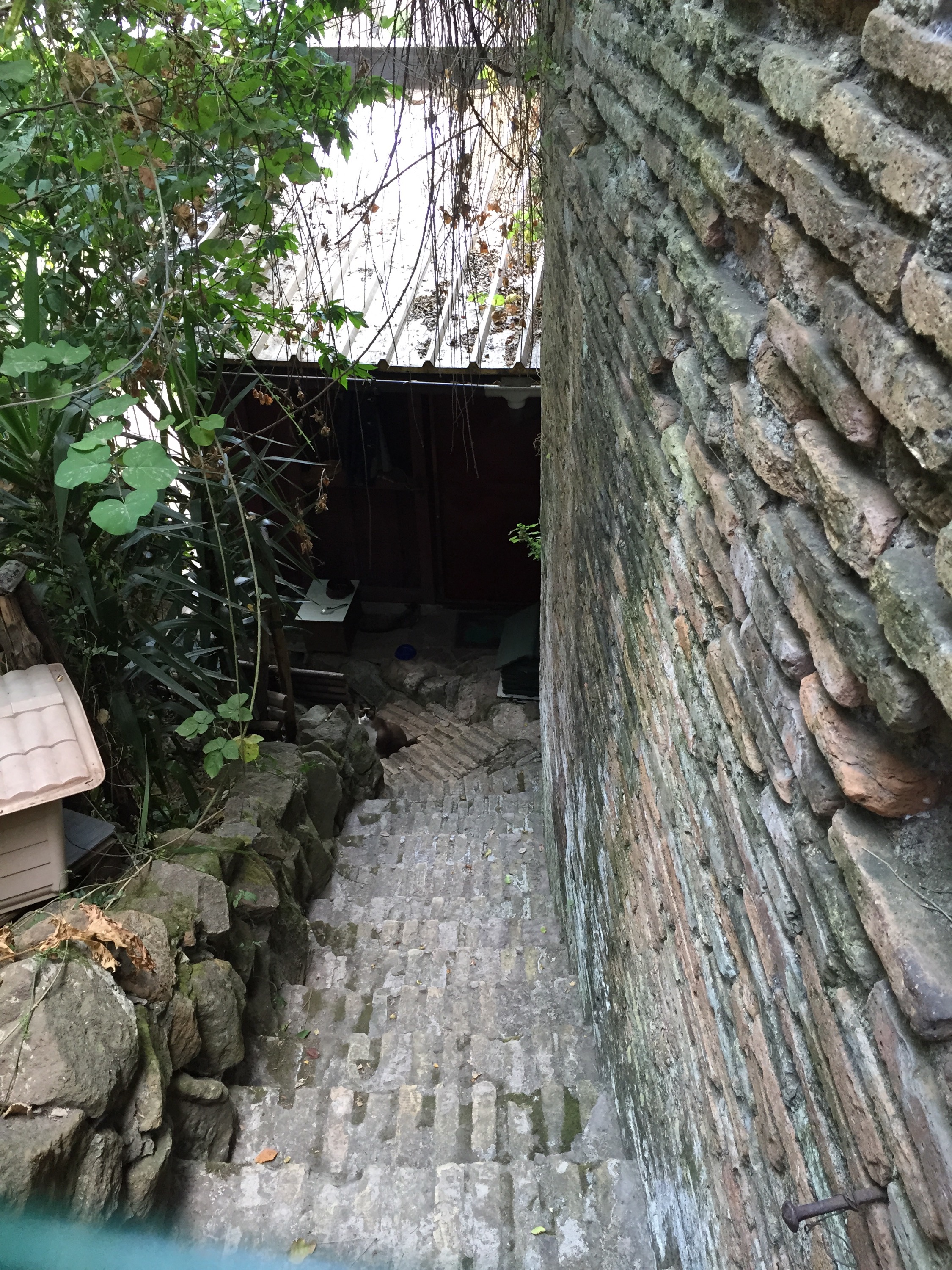
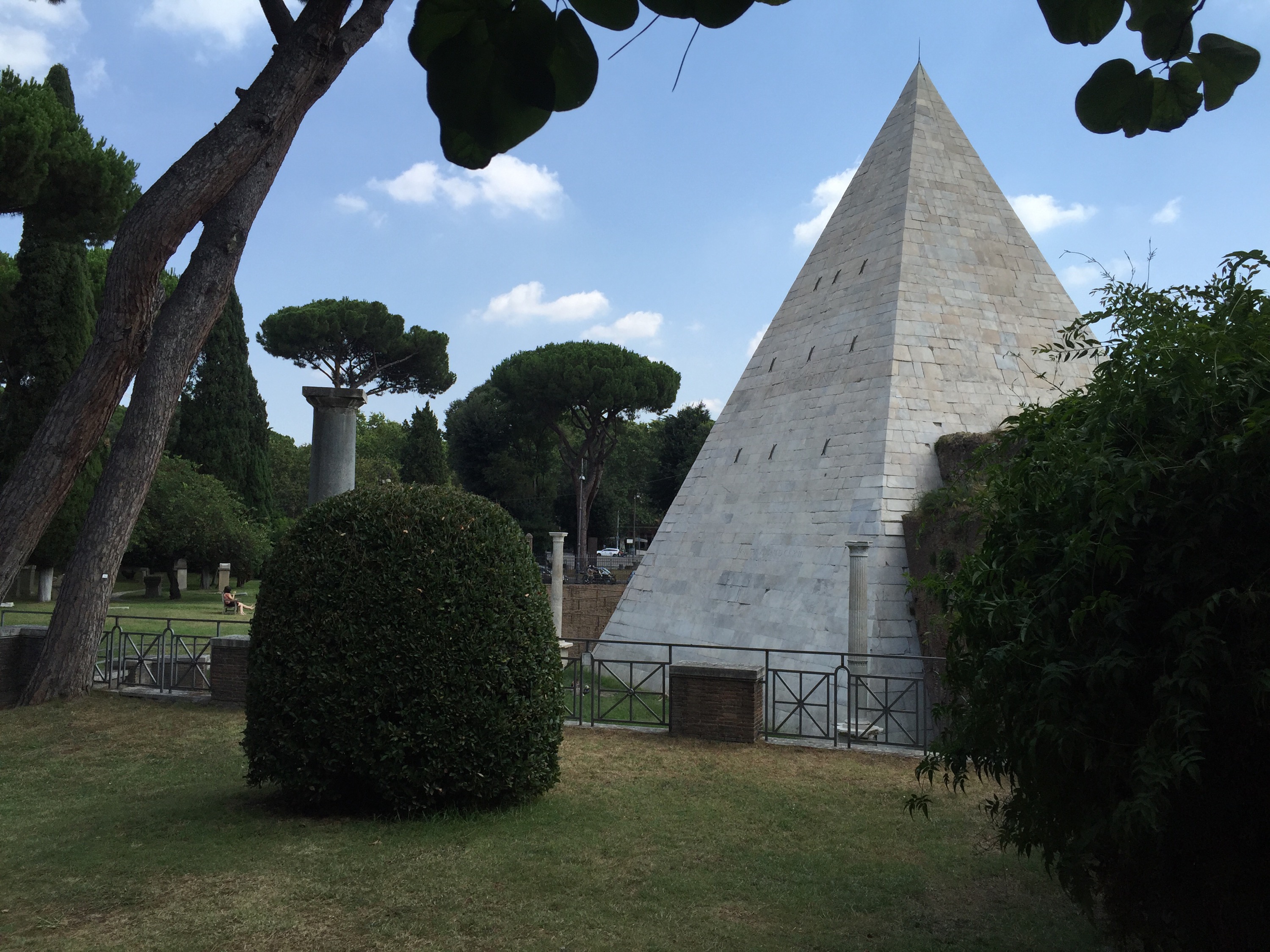
Thomas Hardy, Rome at the Pyramid of Cestius Near the Graves of Shelley and Keats (1887)
Who, then, was Cestius,
And what is he to me? –
Amid thick thoughts and memories multitudinous
One thought alone brings he.
I can recall no word
Of anything he did;
For me he is a man who died and was interred
To leave a pyramid
Whose purpose was exprest
Not with its first design,
Nor till, far down in Time, beside it found their rest
Two countrymen of mine.
Cestius in life, maybe,
Slew, breathed out threatening;
I know not. This I know: in death all silently
He does a kindlier thing,
In beckoning pilgrim feet
With marble finger high
To where, by shadowy wall and history-haunted street,
Those matchless singers lie . . .
–Say, then, he lived and died
That stones which bear his name
Should mark, through Time, where two immortal Shades abide;
It is an ample fame.
Posted in Cemeteries & Funerals, Poetry, Rome, Uncategorized
2 Comments


 uncomelyandbroken