Invisibles Lines, Local Realities

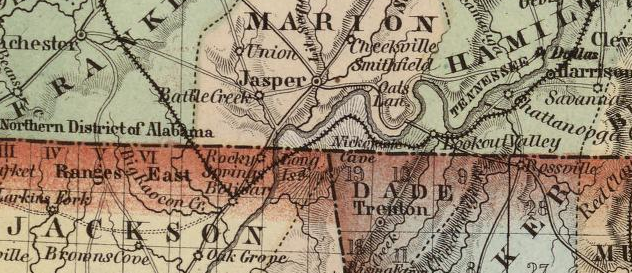
From an 1852 map of northern Alabama and Georgia and southern Tennessee. http://www.davidrumsey.com

From an 1852 map of northern Alabama and Georgia and southern Tennessee. http://www.davidrumsey.com

On a lovely day last month, I was driving home from Chattanooga and decided to take a detour off I-24, to satisfy a simple, geeky desire to stand at the precise point that divides Tennessee from Alabama and Georgia, as well as Eastern from Central Time. “I know I’m not the only one who gets this liminal thrill from standing on borders,” writes Ken Jennings in his 2011 book, Maphead, before going on to note that 200K+ tourists a year visit the Four Corners monument, to see where the states of Utah, Arizona, New Mexico, and Colorado all meet. For some reason, I wanted to gaze upon the spot nearby where geographical abstraction triumphs over topographical realities.

There was another reason I wanted to go there, though, one a little more timely.  At the very place where the three states meet is the point where the state of Georgia is about a hundred feet from Nickajack Lake, the body of water formed by a TVA dam on the Tennessee River.  The border has been much in the news lately, ultimately because of global warming. In the past few years, drought conditions in the South have worsened and state governments have been looking for new sources of water as a result. The large metropolis of Atlanta has a particularly acute problem, water-wise, and so Georgia has turned a thirsty eye to its northern border.  Naturally, Tennessee has no interest in ceding any part of the river to Georgia.

Lines arbitarily drawn on the land that end up unexpectedly significant? Pissed off politicians?  Water rights in dispute?  All of this was just too Chinatown to be missed, so I took exit 161 off I-24 to see what was what.  Besides, there might be a cool little marker I could take a picture of.

BillboardBigDaddyThe Federal Georgia Road south of Lake Nickajack is easy to find–just look for the exit to Big Daddy’s Fireworks (“Best ‘Bang’ For Your Buck”).  It’s an old road, constructed between 1805 and 1808  according to the historical marker by the roadside, in order to connect Tennessee to the Atlantic seaboard.  On the map it’s called TN-156, but the local signs along the way read Old Ladd’s Road and, further on, Shellmound Road.  It’s worth noting that most of this area was in Cherokee hands at the time the Federal Road was constructed, and they had roads of their own running through it.

A few miles on, I’m looking to take a left onto what the GPS is calling Macedonia Road.  Why Macedonia, I wonder?  Surely, at this place of dispute between borders there isn’t a subtle reference to the geographical problems of the former Yugoslavian republic of Macedonia, which the Greeks insist should be called Skopje? But again, local realities clear the matter up. It’s Macedonia Church Road, a reference to the people of Phillippi, whose church was founded by St. Paul after he’d had a dream: “And a vision appeared to Paul in the night; There stood a man of Macedonia, and prayed him, saying, Come over into Macedonia, and help us” (Acts 16:9 KJV). I don’t know how old the Macedonia church here in Shellmound is, but probably it was founded as a mission to the Indians. Interestingly enough, the Pauline vision, together with an Indian, features in the  the oldest American emblem, the state of Massachusetts’ first seal.
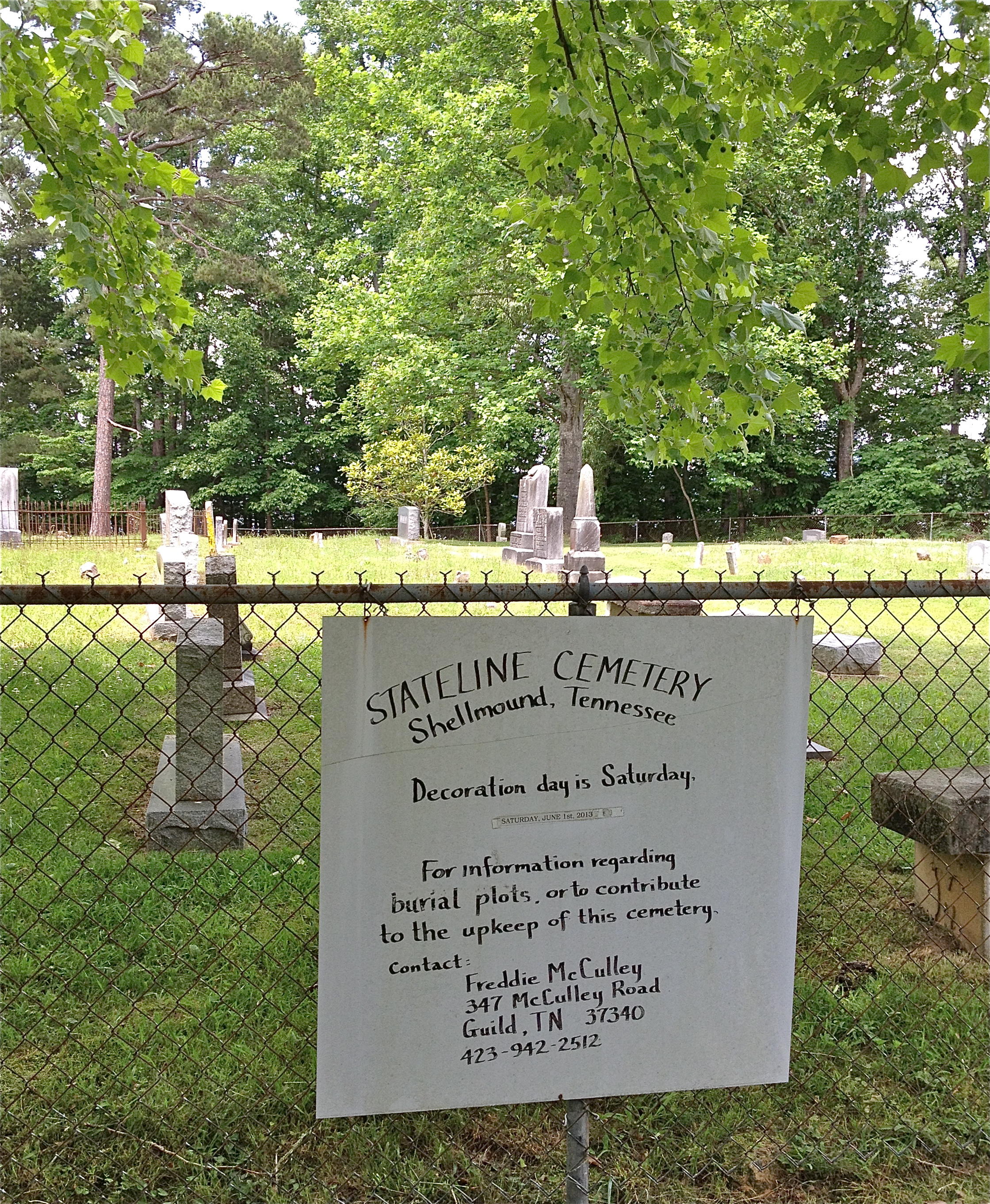
IMG_1942At the end of Macedonia Church Road, it’s a little hard to figure out which way to go, but a sign pointing to State Line cemetery seems like a safe bet. There’s an abandoned school bus in an overgrown lot in the other direction which I’m glad enough to avoid.  I drive down a long straight street, Huckabee Lane, which, as it happens is the line dividing Georgia from Tennessee. On the TN side is the old graveyard, with a sign noting “Decoration Day is Saturday, June 1st, 2013.”  Decoration Day (as opposed to Memorial Day, which takes place on the last weekend in May), is a tradition going back to the commemoration of the Confederate dead right after the Civil War.  It is intriguing to see here the persistence of this local custom, even a century and a half after the war.
IMG_1946

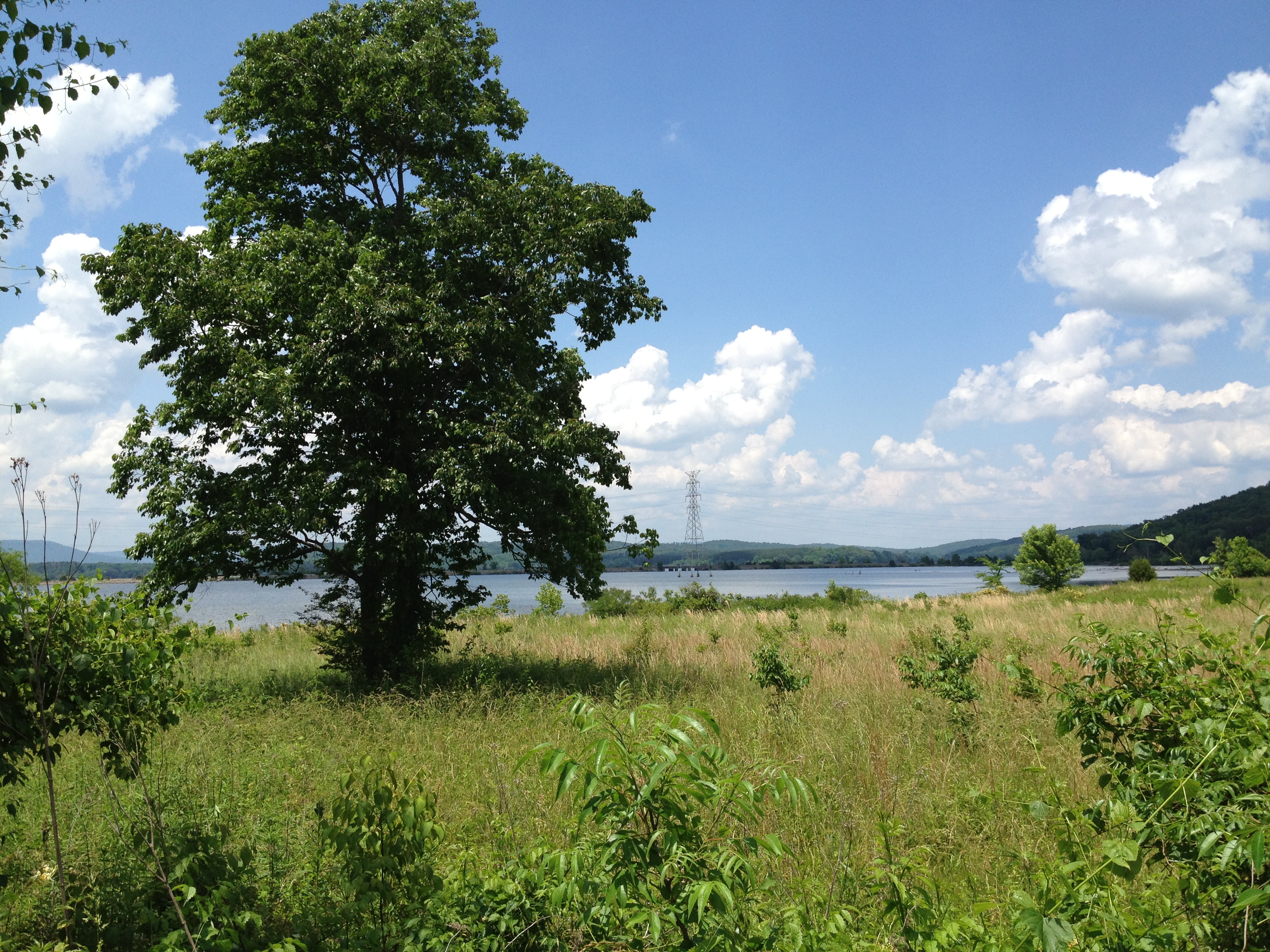
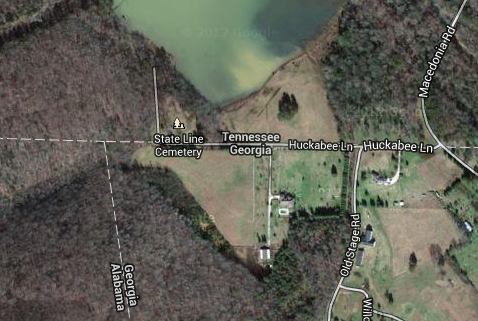
Just before the cemetery is this pretty patch of land, the bone of contention between the states.  The screen-shot from Google Maps below shows what’s at stake–my photo above was taken from the Georgia side of Huckabee Lane, but the tree just a few dozen feet away is in Tennessee. Behind the tree, also in Tennessee, is Lake Nickajack. Look at all that water. Sweet, sweet water that Atlanta would desperately like to get its parched little mitts on.
Screen Shot 2013-06-05 at 3.10.37 PM

As a matter of course, rivers make good borders: Canada is on one side of Rainy River, for instance, while Minnesota is on the other.  Between Texas and Mexico runs the Rio Grande.  The same is true of state boundaries, of which many examples can be given.  The Connecticut River divides Vermont from New Hampshire, while the Ohio River separates Illinois, Indiana, Kentucky, and West Virginia from the state that bears its name. Good fences make good neighbors, Robert Frost reminds us.  On the other hand, though, the sense of competitiveness that exists between those having to share a body of water has given rise to the English word “rival,” from the Latin word rivalis, describing one who lives on a river bank.

At this very point on the map, in the original sense of the world, Georgia and Tennessee are not rivals, because they do NOT in fact share the river. And yet, they should, as Georgia never tires of pointing out.  In 1818, a mathematician named James Camak was hired to survey the boundary line dividing Tennessee from Georgia which, according to the Articles of Agreement and Cession dealing with the dispensation of lands formerly in the Mississippi territory, ought to have been the 35th parallel. Camak did the best he could with the instrument he had at hand, a nautical sextant, but nonetheless ended up drawing the line too far to the south.

And there the boundary has stood ever since.  A bill that has been overwhelmingly passed this year in both chambers of the Georgia legislature demands that the line stipulated by the treaty be respected (the entire resolution, Georgia HR 4 2013-2014, can be viewed here and here), and they are threatening to take the issue to the Supreme Court. It’s doubtful, though, that the court will redraw so long established a border line.
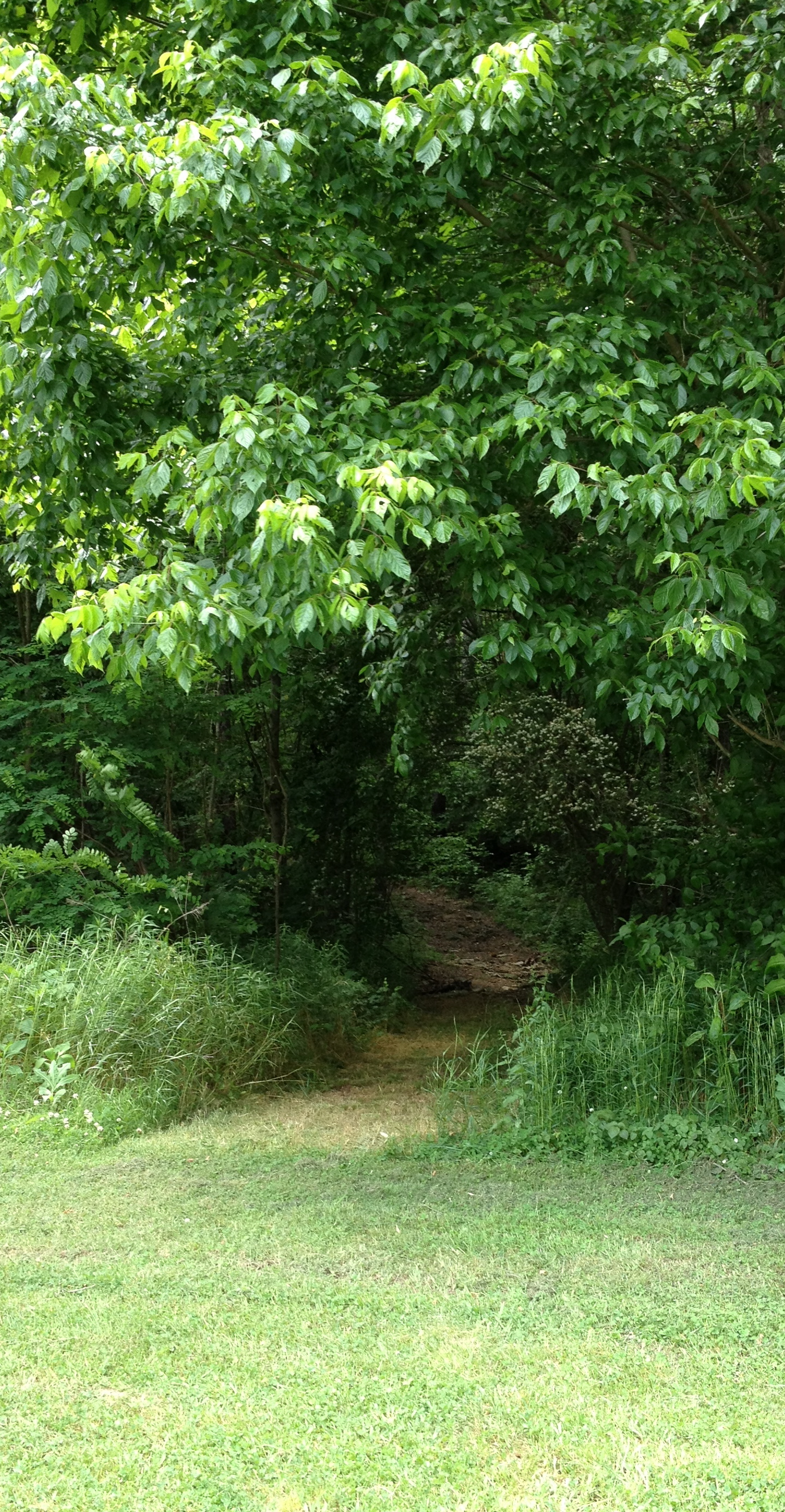
IMG_1940Talking of which, I wanted to see the boundary itself. End of the street.  Up ahead is a path, which looks like it’s just crawling with ticks, chiggers, poison ivy, and snakes. And I think I hear banjos. (Seriously, Deliverance takes place on north Georgia river). On the other hand, it’s clear enough where you’re supposed to go.  There are a few nice houses around with pristine lawns, and not a single dog has come out and growled at me.  I probably won’t be down this way again very soon, so I pick up my iPhone, open the cardoor, and head for the trailhead.

Just a few feet in, it’s clear that in my shorts and sandals, I’m not suitably dressed for this outing.  The path is close and overgrown, with lots of thorny things unavoidably growing on either side. In addition, the path has divided itself into a several smaller paths.  I take out my phone and check Google maps, thinking to myself that James Camak could really have used an iPhone and GPS two centuries ago. But after a little while I realize that the little satellite-derived “you are here” arrow is only getting me so close to where I want to be.  Maybe I would be better off with a sextant, after all.

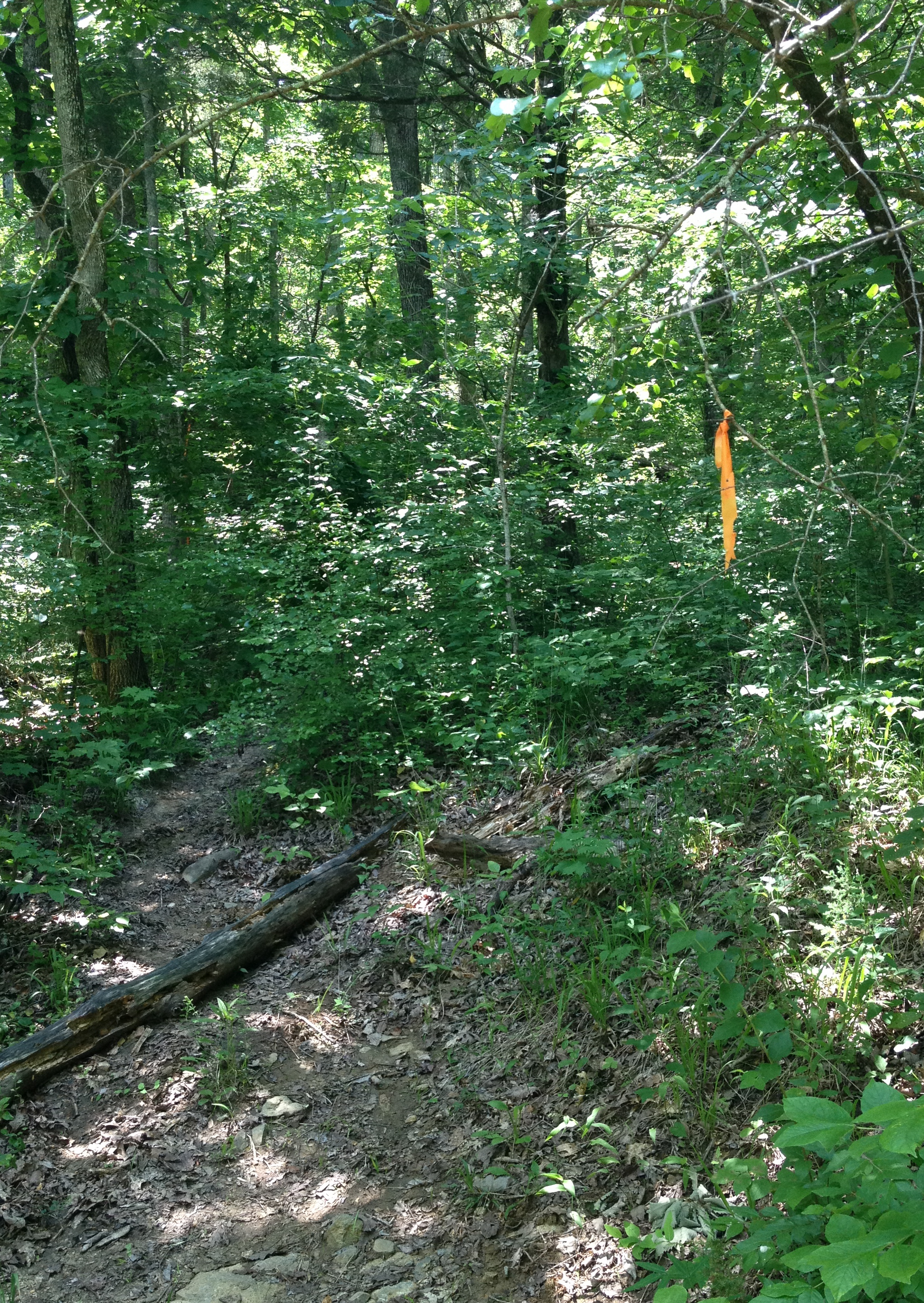
I’m beginning to lose heart when I look up and see a piece of orange cloth tied to a branch.  Well, I think, it’s probably there for a reason.  What Apple cannot manage to do, a simple rag somehow has no problem with: showing me the way.
IMG_1967

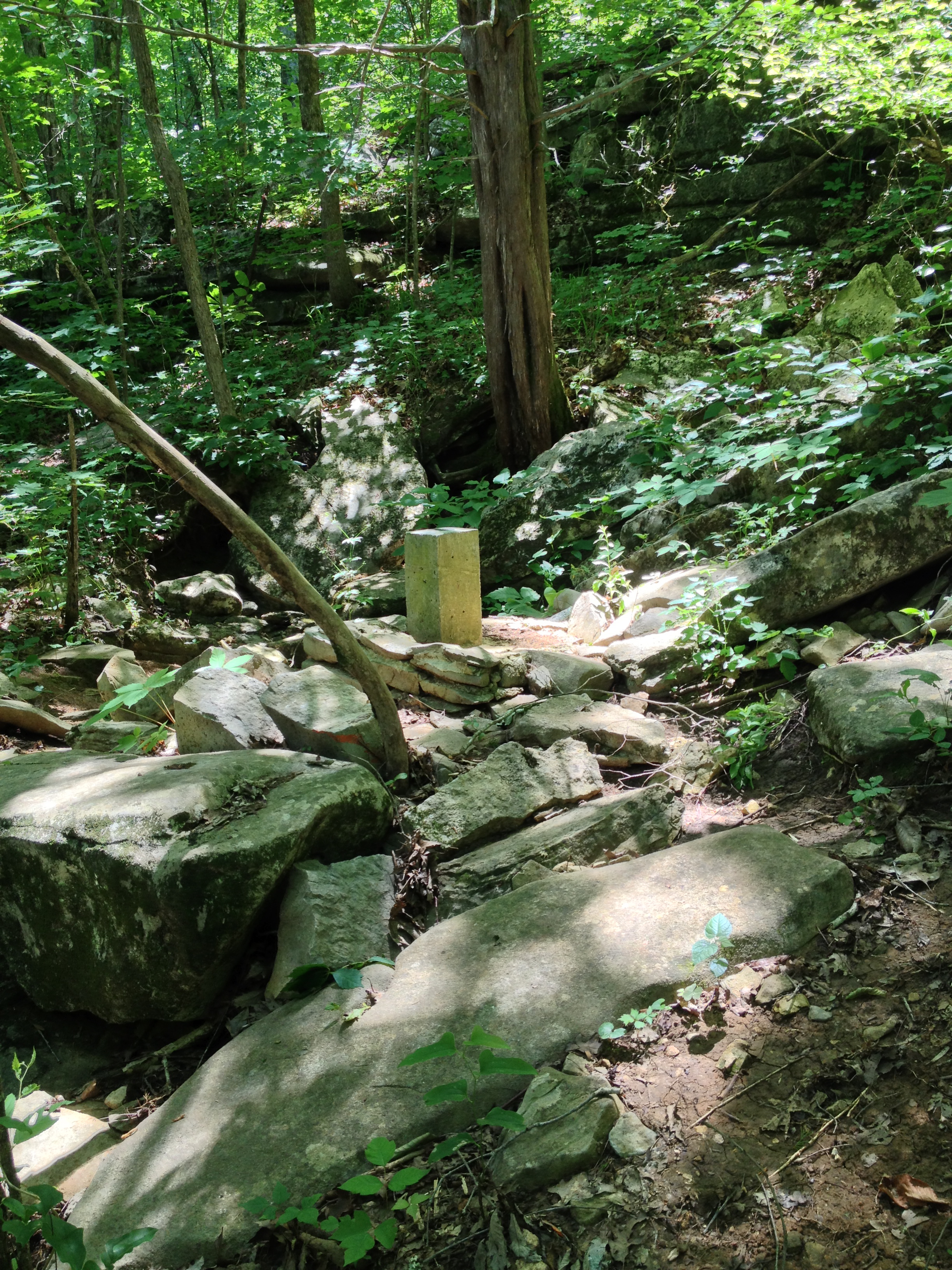
Climbing along a really thick bit of path, I’m feeling something like Indiana Jones, looking for a hidden temple in the middle of an Amazonian jungle.  And then, I spot it …
IMG_1963

IMG_1964

IMG_1966

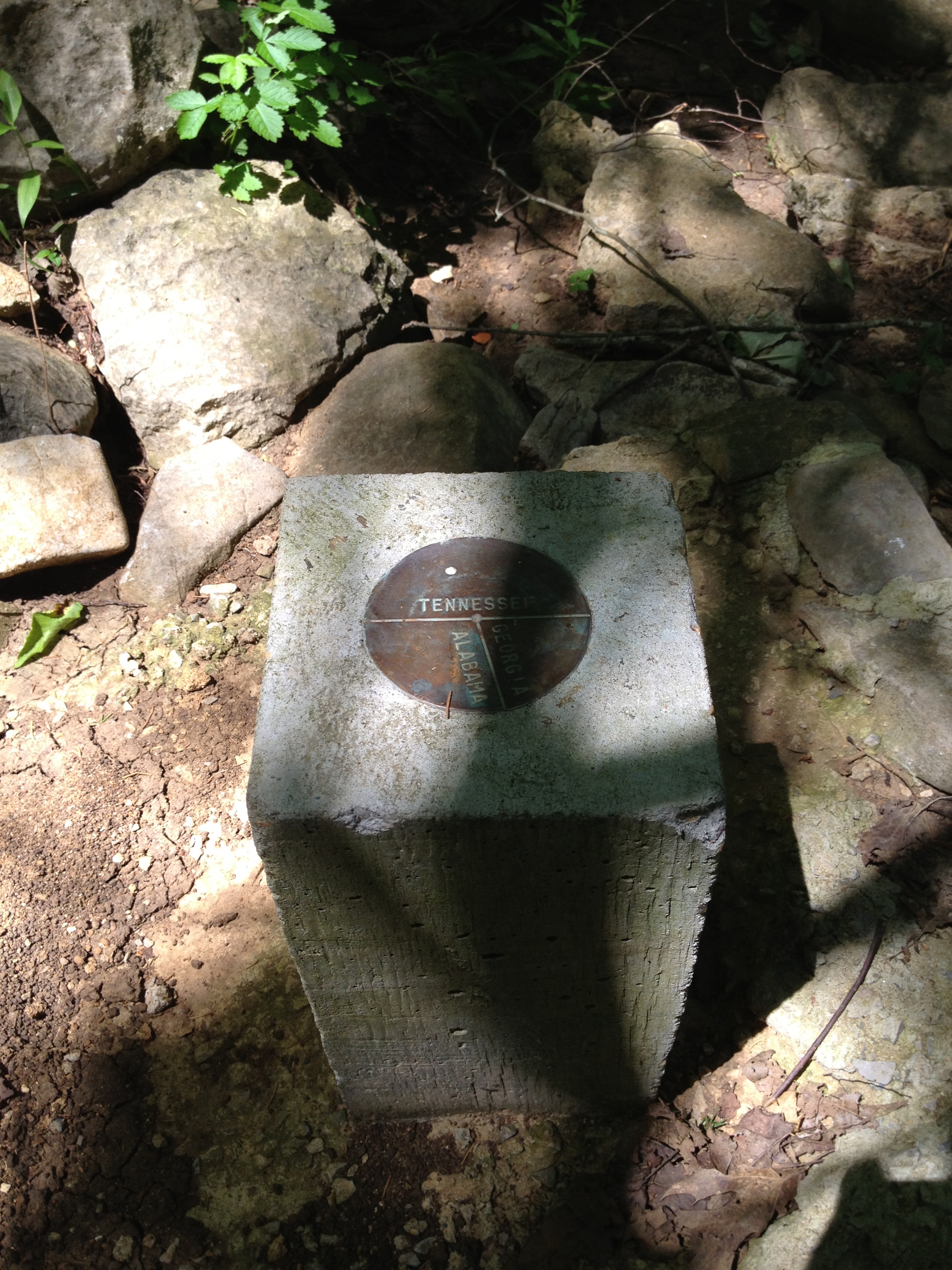
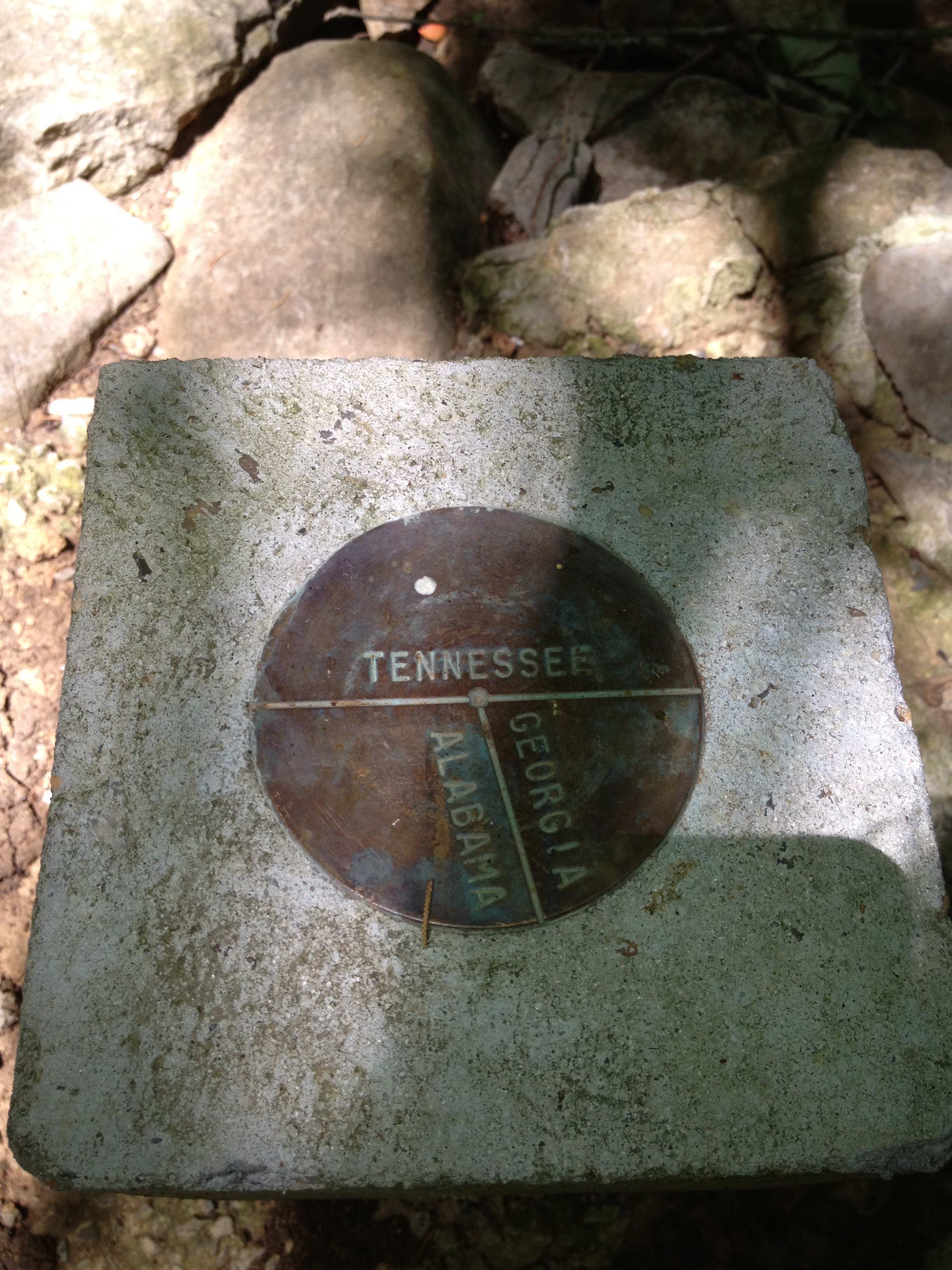
… the cool little marker I’d come all this way to see.  The medallion is only about 4 inches in diameter and buried in the middle of a bunch of poison ivy, but it represents a geographical error two centuries old that has aggravated state politicians ever since. For the South’s largest city, it means a world of water-related trouble that climate change will only exacerbate.

Posted in Astronomical, Bible, Language & Etymology, Nautical, Poetry, Tennessee, The South, Trees & Flowers | 7 Comments

A Dozen Days Later

When I first heard about the explosions at the Boston Marathon, I scoured the internet till I found a live feed and called my wife.  “What!? WHAT?!”  We were both horrified.  “This was part of the reason we moved to rural Tennessee,” she reminded me, “to escape awful things like this.”  We had moved to Sewanee only a few months after 9/11.  Monitoring the scattershot information coming out of Boston that afternoon, it was hard to think much about the wisdom of the move.  It was hard to think of anything, really, except fear.

***

Late that Monday night, my sister reached me.  She’s a nurse at Mass General, not in the ER, but she knows a lot of people who work there. “They were all set up for dehydration, hypothermia, the sort of things marathon runners suffer from,” she told me. “They spent the day removing  ball bearings and re-attaching legs instead.” She began to cry. “It was so bloody.” If she hadn’t been scheduled to work, she probably would have been downtown at the finish line, as she had done in years past.

***

As an eighth-grader, I recall, the first place in downtown I really began to explore on my own was Copley Square. My friend John and I would meet at the Public Library and go on walkabout for hours in the building, marveling at the intricacies of the McKim-Mead-White architecture, and then go off into surrounding areas.  John was from South Boston, and I was from West Roxbury–we knew each other from school.  At the end of the day, we would return to the corner of Boylston and Dartmouth to catch the different trains home.  This corner is where the finish line of the Marathon was set up each April.

***

Like everybody elese in Boston in the 70s, I loathed the Yankees, and would vigorously chant “Reggie sucks” when they played the Sox at Fenway. Much as I hated New York as a boy, though, it came nowhere near the detestation I felt for the Canadiens. When the Bruins were playing in Montreal, there was a different national anthem and nobody spoke English. Most of the fun in watching sports in those days was having clearly-defined enemies.

***

On Marathon Day, there’s nobody to hate.  Wherever you stand to watch the runners, there is a crowd of happy people cheering on everyone who comes by.  Some wear shirts with the names of local colleges on them, and you yell out the name of the school. Others wear their names and, even if you have no idea who Jerry is, at the top of your lungs you yell out, Go Jerry!  On one occasion, I have had the honor of seeing Dick Hoyt pass by, pushing his son Rick in a wheelchair. Rick, who was born with cerebral palsy, told his father that when he pushed him quickly in his chair, he didn’t feel handicapped, and so at the age of 37, Dick took up marathoning.

***

At Boston College, where I used to teach before coming to Sewanee, we used to get an awful lot of the month of April off.  Holy Thursday, Good Friday, and Easter Monday usually fell in April, and were all official university holidays. BC was also closed on Patriots’ Day, as was most of the city, because that was the day of the Marathon, and the course went right alongside campus.

Listen, my children, and you shall hear
Of the midnight ride of Paul Revere,
On the eighteenth of April, in Seventy-Five:
Hardly a man is now alive
Who remembers that famous day and year.

So writes Longfellow. My entire life I have been struck by the irony that, while Paul Revere had gone out of the city to spread the alarm to every Middlesex village and farm, the Boston Marathon actually reversed the direction of the ride. That is, the runners were making their way into the city, the way the redcoats had done in ’75.

***

My brother has been a janitor for the Boston Police Department for over twenty-five years.  He works at headquarters, downtown.  Throughout the week, he told me, “there were cops from everywhere down there, state troopers, FBI, military, the place was a zoo. Pizza boxes all over the place.”  The door closest to the dumpster out back had been locked, and all traffic in and out routed through the front entrance. “By the time I have one bag filled up and dumped, there’s another one that needs to go out.”  On Friday, like everyone else in town, he sheltered in place, and  was glad to hear from his boss that he wouldn’t be docked a sick day for the lock-down. Still, he worried about the state of headquarters when he got back. “It’s gonna be a mess.”

***

After the bombings, the lights were dimmed at Bell Centre in Montreal in commemoration of the victims, and at Yankee Stadium, they played “Sweet Caroline.” On The Daily Show, John Stewart noted of the competition between New York and Boston, It is in situations like this that we realize that it is clearly a sibling rivalry. We are your brothers and sisters in these types of events.”  All of this was moving, to my mind.

***

The legend goes that, after the Greek victory at the Battle of Marathon in 490 BC, the runner Pheidippides ran 26 miles to Athens to announce the victory, and then died.  This is not the story that Herodotus tells.  According to the Histories, Pheidippides was sent by the Athenians to Sparta, 140 miles away, to request aid from their sister city against the invading Persians. He made it in three days. For religious reasons, the Spartans had to delay sending help, so the Athenians faced the Persians, and beat them, on their own.

***

You can decide which ancient story is better. Neither is likely to be true, of course, though the mighty Persian army was in fact defeated by a far smaller force.  If there is a defining moment that sets the West against the East, it would be the Battle of Marathon.  How Pheidippides fits into it is hard to say.

***

It was a week after the bombings and just a few days after the man-hunt, and I was sitting in the coffee shop on campus, where my friend Katherine came up to me. “I’ve been thinking about you,” she said. “More than about the people I know who live in Boston now.”  We talked about the surreal nature of the events, the explosions and an entire city on lock-down. She grew up here in Sewanee, but spent part of her life in Connecticut, in Newtown, in fact.  The massacre there was only a few months ago. “You might be the only person who will understand this,” she tells me, “but do you feel guilty that you weren’t there?”  Until she’s said it out loud, I hadn’t realized that that was precisely how I felt.

***

I was in touch with a student on campus from Boston whom I knew to have relatives in Watertown.  “Is everything OK back home?” I e-mailed him, and it was, more or less. He is involved in the Cinema Guild, and thought it might make sense collect money for relief efforts at a special showing of a film that week.  He was thinking of The Departed, which struck me as way too violent to be appropriate. Good Will Hunting came to my mind, but the fact that Ben Affleck and Matt Damon both went to Cambridge Rindge and Latin, where Dzhokhar Tsarnaev had graduated, bothered me, admittedly for no good reason.

***

A day or so later, I was in the gym, and somebody I don’t know very well asked  if I had any family who’d been affected by the events in Boston. He then went on to use phrases like “mercenaries at the finish line,” “markings on the backpacks don’t match,” “CIA,” “Mossad,” “counter-espionage,” “mainstream media,” “Saudi national was Bin Laden’s son,” and “we’ll never know the real story.” The conversation left me a little rattled.  Interestingly, this guy’s remarks were utterly divorced from contemporary politics. Obama, Bush, nobody was mentioned, no liberal or conservative agenda was blamed. There was a paranoid Illuminati-Protocols of the Elders of Zion-Trilateral Commission aspect to all of it, this idea that there’s a secret cabal at work whose intentions are murky and inscrutable.

***

In the 90s, I published an article while I was still at Boston College on the topic, broadly, of witchcraft in Greco-Roman culture. It contained the following paragraph: “In a traditional society, figures such as witches and demons are not the problem but rather the solution to the still more disturbing problem of chance. Deaths without any apparent cause can readily be explained in terms of witchcraft. …Where visible causes for specific misfortunes are lacking, hidden agents (whether divine or human) are assumed: witchcraft, which operates outside the parameters of normal life, thus provides the rationale for misfortunes that would be otherwise inexplicable.”

***

On the day of the bombings, I wanted to know who had done it. I wanted there to be an enemy who was clearly-defined. I thought of the Minutemen at Concord, and of the Athenians at Marathon.  I thought especially of the playwright Aeschylus, who wrote several masterpieces, and had the following lines engraved on his tombstone:

This memorial hides Aeschylus, the Athenian, son of Euphorion
Who died in wheat-bearing Gela.
The precinct of Marathon and the long-haired Mede,
Who knows it well, may tell of his great valor.

I thought about posting that as my status line on Facebook, but worried it might seem racist–after all, who could say if Medes were involved? After the Oklahoma City bombings, various Iranians were held as suspects for no reason at all but paranoia.  In turns out in Boston not to have been Medes but Caucasians, one of the peoples north of Persia, who set off the bombs in Copley Square. One of them did have long hair, as it happened.

***

Aeschylus was proud to have fought at Marathon, but his greatest works are monuments dedicated to the idea of Justice as opposed to Vengeance. Forty-five years ago this month, Martin Luther King, Jr., was assassinated in Tennessee, and Bobby Kennedy quoted Aeschylus to an upset crowd:

My favorite poet was Aeschylus. He once wrote: “Even in our sleep, pain which cannot forget falls drop by drop upon the heart, until, in our own despair, against our will, comes wisdom through the awful grace of God.”  What we need in the United States is not division; what we need in the United States is not hatred; what we need in the United States is not violence and lawlessness, but is love and wisdom, and compassion toward one another …

***

Herodotus says that, while Pheidippides was running to Sparta from Athens, he encountered the god Pan.  The Athenians built a temple to Pan after the invasion, to commemorate his help in the ensuing battle, since the god had brought a blind fear upon the Persians–panic, named for the god.  At Marathon, the Athenians won as the Persians undid themselves with irrational fear.

Posted in Boston, Classics, England, Family, Language & Etymology, Military, Mythology, Poetry, Sewanee, Sports & Games | 2 Comments

The Color-blind Knight

Photo91719A few miles from my house here in Franklin County, Tennessee, there is a roadside marker I’ve driven by a thousand times and never bothered to look at until recently. Entitled “The Blind Knight,” it reads as follows:

4-½ mi. S.E., near Liberty, Francis Joseph Campbell lived as a boy. Blinded in 1836, when 4 years old, he was educated in the first class of the State School for the Blind, later in Boston and Europe. Settling in England, his success in educating the blind and making them self-reliant earned him knighthood. He died in 1914.

Francis Joseph Campbell is the second person I know of from Franklin County to be knighted; the other is Sir John Templeton.  Campbell’s achievements are worth mentioning more fully–from Tennessee, he went on to teach at the Wisconson School for the Blind, the Perkins Institute outside Boston, where he taught music.  Some years later, Campbell moved to England, where he helped to found the Royal Normal College for the Blind in London (later the Royal National College), which focused on vocational as well as general education, and prided itself on its careful job placement program.  A devout believer in physical education, Campbell was the first blind person to climb Mont Blanc, a feat he considered the crowning achievement of his life.  In recognition of his services to the blind, Campbell was knighted by King Edward VII in 1909.

In addition to his work on behalf of the disabled, this native Southerner was a dedicated anti-slavery advocate.  A letter he wrote in 1899 to Booker T. Washington, whom he had heard lecture in England, contains the following post-script:

I think it will interest you to know that I am a native of Tennessee, and lived there until 1856 when I was driven away, first because I taught coloured people to read, and next because I refused to vote for Buchanan; further, an anti-slavery paper was sent me from Boston, which was seized in the post office. In the first instance, I was to be hanged, but was afterwards ordered to leave and never return.

The “Blind Knight” was, evidently, a color-blind knight as well.  Campbell relates elsewhere that the roots of his abolitionist position lay in a childhood memory pre-dating his loss of sight (from “Light in Darkness,” Good Words 23 [1882] p. 51):

One vivid recollection just before I became quite blind influenced my whole life.  Wheat threshing was going on. I sat playing in the straw. Our old coloured nurse, Aunt Maria, Somehow got into disgrace. I heard the stern order, “Bring the cow hide!” I saw and shall never forget the instrument of torture, and poor aunt Maria kneeling before it, begging for mercy. I have been an abolitionist ever since, thank God!

Postscript, August 2019. An image of Campbell climbing Mont Blanc can be seen here.


Posted in Boston, Education, England, Slavery, Tennessee | 1 Comment

Protected: Game Animals

This content is password-protected. To view it, please enter the password below.

Posted in Animals, Boston, Classics, Emblems, England, Family, Nautical, Sports & Games | Enter your password to view comments.

Protected: Tiresias, Throbbing Between Two Lives

This content is password-protected. To view it, please enter the password below.

Posted in Animals, Bible, Classics, Mythology, Poetry, Sewanee | Enter your password to view comments.

Stations of the Cross

It’s Good Friday, and in Sewanee that means that at noon a large cross will be slowly carried from the School of Theology to All Saints’ Chapel by various members of the university and community.  Following the Way of the Cross will be many people I know and admire, some of whom have provided me with spiritual solace at troubled times in my life.  Sometimes I go out to watch the procession. Other times I cringe at the public display of piety and remain in my office. Once or twice over the years I’ve joined in.

“I don’t believe in God, but I miss Him,” Julian Barnes famously remarked in a 2008 New York Times editorial. This statement might well be called the creed of Christian atheism, a concept I first heard about this summer at Oxford when I happened to be seated for dinner next to Brian Mountford, Vicar of the University Church in Oxford, who had written a recent book on the topic, Christian Atheist: Belonging Without Believing The book explores “the challenges that reason, science, doubt, and modernity throw at orthodox belief,” according to Mountford’s website.

I appreciate the honesty of Mountford’s engagement, and understand implicitly what Barnes means by missing God, the loss of context.  My son goes to a school where there is mandatory chapel, and my other son will join him there next year.  It will be up to them to decide if they believe, but I at least want them to miss God if they do not.  The religious service is simply a part of my son’s schooling, as is athletics.  He talks more about the latter, but I know he is paying attention to the former.

Yesterday , my son’s soccer team was playing an away game, and so I hopped into my car after work to go watch. I didn’t play soccer as a boy, nor did anybody I know, but I love watching him play.  It was an hour’s drive away through the Tennessee country, and my various radio presets had all begun to fade out the further I got from home. A spin around the dial wasn’t turning up much–some Bon Jovi here, a drippy country ballad there, nothing worth listening to.  It’s at times like this that I switch to AM radio.

When I was little, my father listened constantly to AM radio in the car, and the static in the reception was a part of the listening experience. There was always a sports talk-show on, and guys with heavy accents would be complaining about the latest atrocity.  On the weekends, there was Irish music.  Lots of the Irish Rovers, the Clancy Brothers, or Frank Patterson.  It all seems a long time ago, in some distant place.  When I was young, I tell my students sometimes, I never knew a Protestant.  Everybody in Boston, it seemed, was either Irish, Italian, Jewish, or Greek.  Our shared culture was the Red Sox, and we were all very devout about that. But to my students or my children, the local teams, the Irish music, the fuzzy reception–none of it makes much sense.

As I’m driving on the backroads, it’s nothing but static on the AM dial. Static, and preachers. Bible quotes jump out between bursts of surface noise. Crackle crackle so loved the world  crackle crackle the way, the truth and the crackle crackle kingdom of God. It’s Holy Week, and there is a sense of urgency and enthusiasm in the preachers’ voices.  I did not grow up around Evangelicals and the booming confidence of their testimony has always been foreign to me, though I’ve lived in the South for a long time now. Through the white noise, I strain to make out what they’re talking about. I flip around these stations of the cross, but each one sounds the same. I make my way down the road, to bold proclamations of truth, obscured by static. Crackle crackle, Who do you say that I am?

Posted in Bible, Boston, Education, Family, Ireland, Oxford, Sewanee, Sports & Games, Tennessee, The South | 2 Comments

Protected: Sea and Stars

This content is password-protected. To view it, please enter the password below.

Posted in Astronomical, Classics, Nautical | Enter your password to view comments.

Protected: Considering Caesar

This content is password-protected. To view it, please enter the password below.

Posted in Astronomical, Classics, Emblems, Language & Etymology, Numismatics, Poetry | Enter your password to view comments.

Protected: Meh & Mezza Mezza

This content is password-protected. To view it, please enter the password below.

Posted in Cartoons, Family, Language & Etymology, The South, Uncategorized | Enter your password to view comments.

Behind the Times in Sewanee

DSC_2240-001

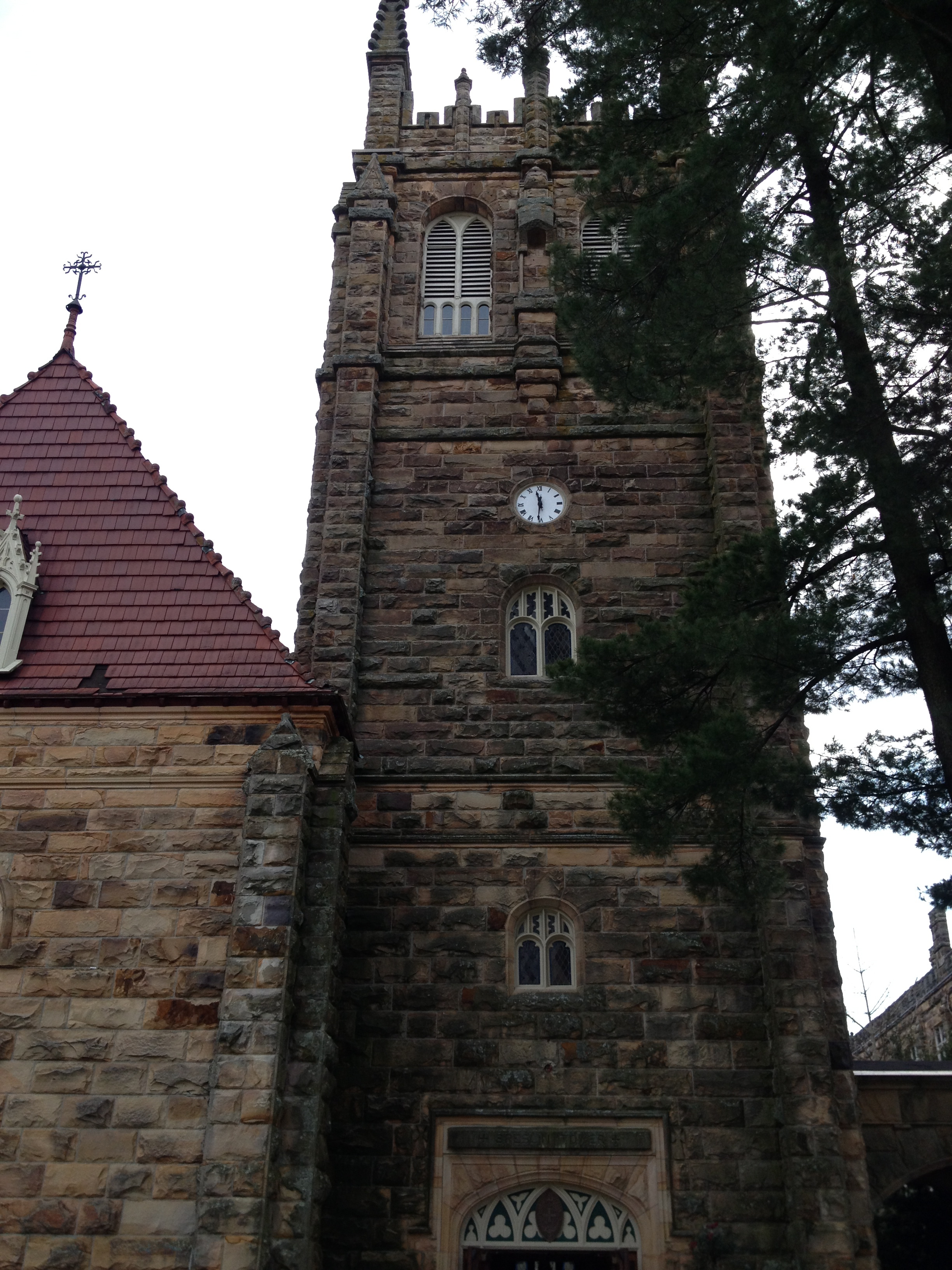
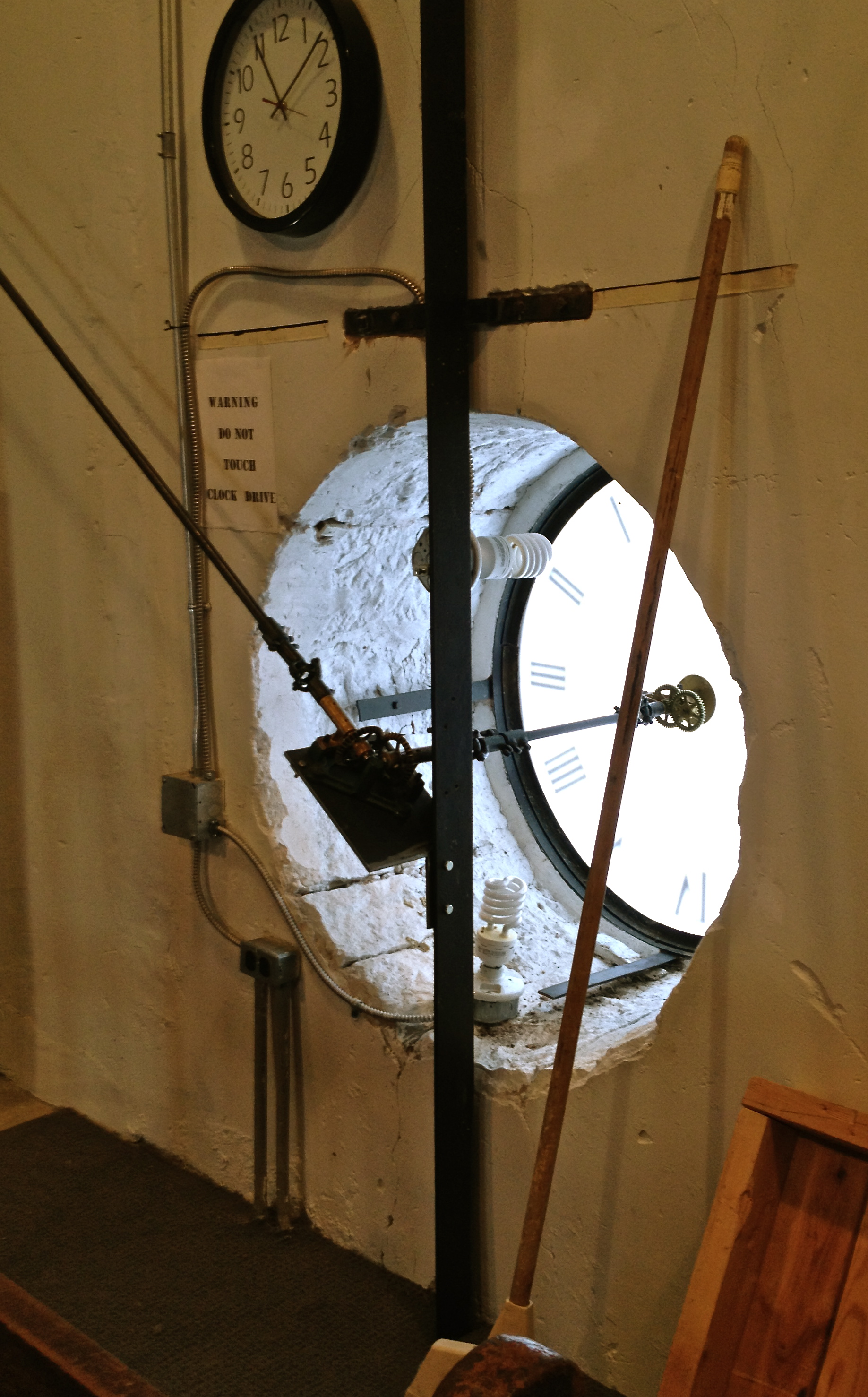
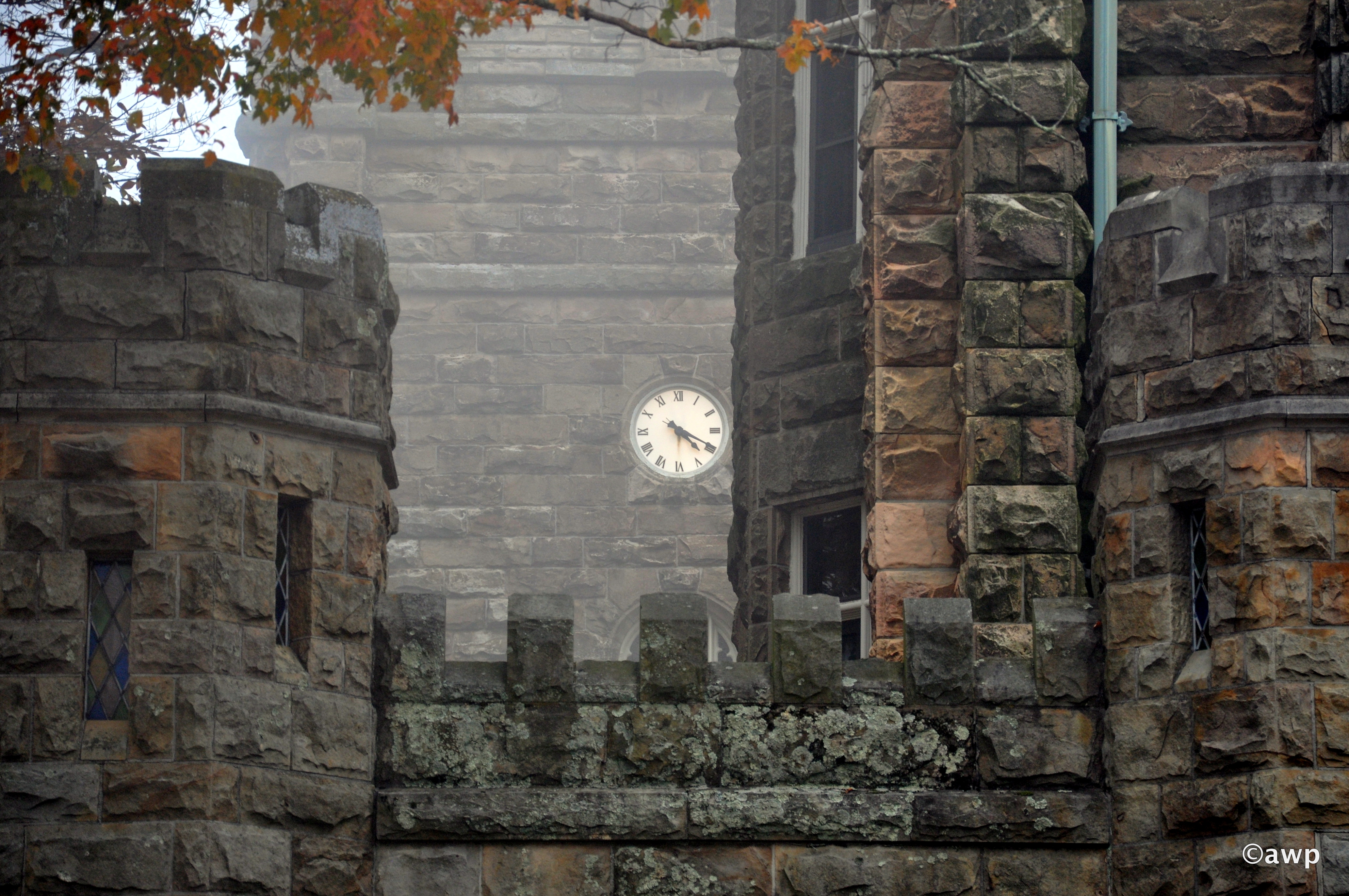
This past Sunday morning, I went up into Breslin Tower here in Sewanee to watch the clock being re-set for Daylight Savings Time. Keith Henley, who has been overseeing the clock for the past two years and seems to know everything about clocks in general, was generous enough to show me around.  Below are some pictures I took, with a few a remarks, and following them, a video of the Breslin Tower bells themselves, ringing out noon.  The beautiful picture above, better than any of mine, is from a blog-post on Wildbloomyonder.com, with a very fine rumination on Sewanee time.

Breslin Tower, which sits beside Convocation Hall at the center of campus, was donated by Thomas and Elizabeth Breslin in memory of their daughter, Lucy, who had died at the age of eight in 1876.

IMG_0832

It was modeled after the tower at Magdalen College in Oxford, which you can see in the background in this photo taken in the Botanical Gardens.

IMG_2651

If you want to go up into the tower, you have to like climbing up really steep stairs.  It’s sixty feet up.  These iron ones at the top are reportedly from a decommissioned naval vessel.

IMG_0890

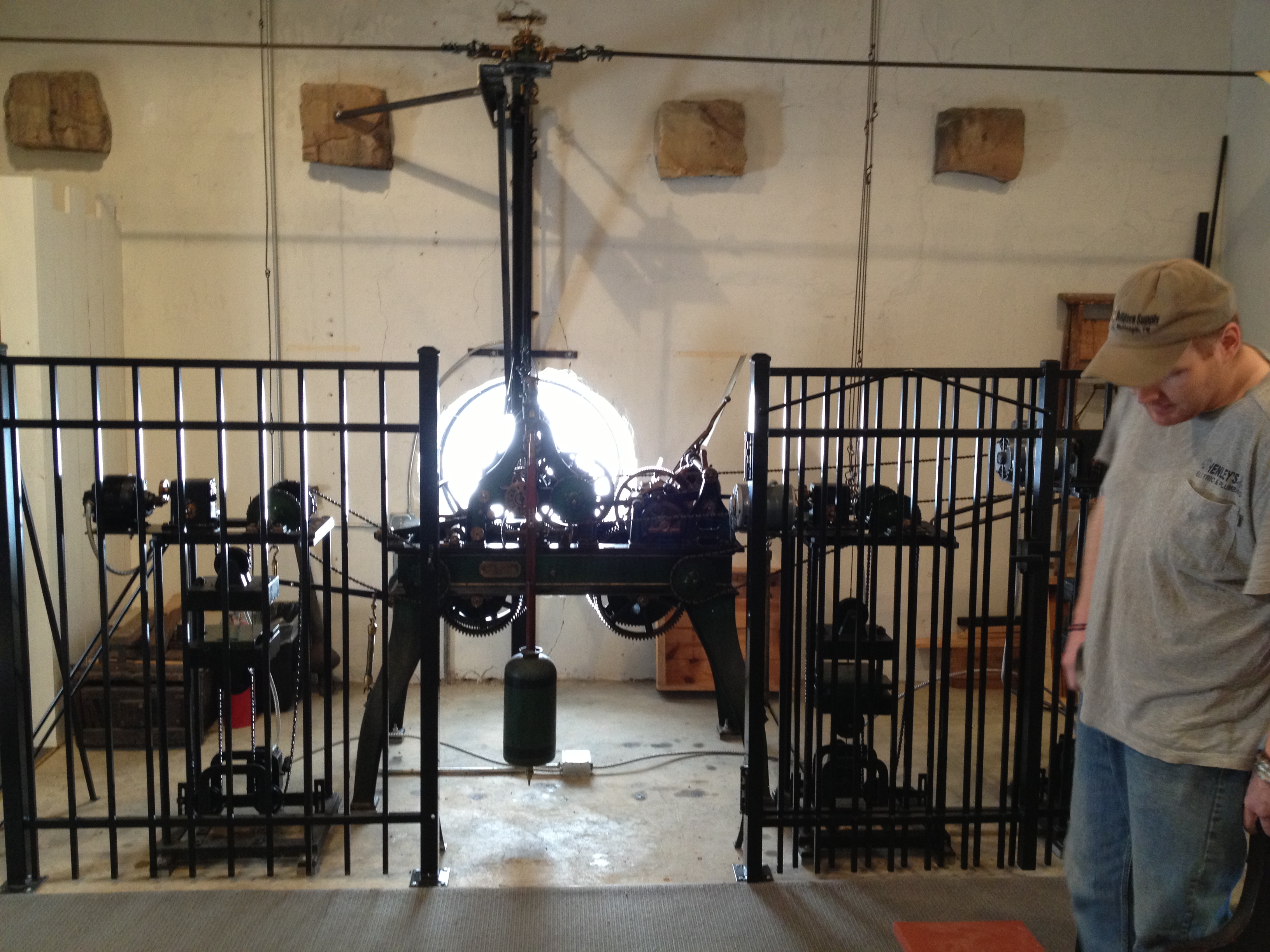
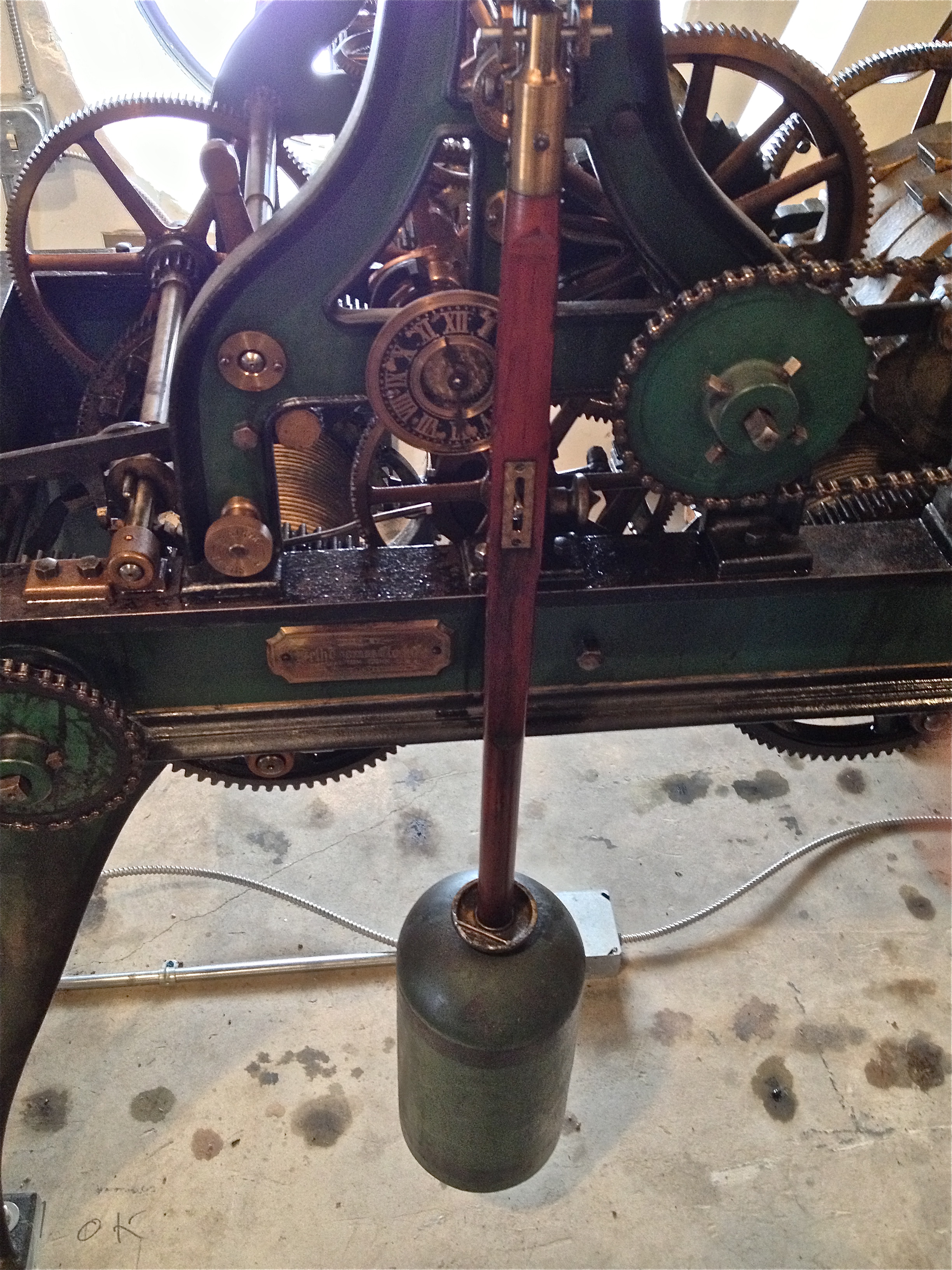
Once you get into the room, with its padded wool carpet, you can see the rather large clock mechanism.

IMG_0909

It was made by the Seth Thomas Clock Company, of Connecticut.  I love the original bronze plaque.

IMG_0926

The idea of being “behind the times” is just too much fun, like being the Great and Powerful Wizard of Oz.IMG_0918

IMG_0939

The gears of the clock are intricate, and fascinating. They also make a very satisfying sound.

IMG_0929

IMG_1012

IMG_0928

Sometimes pennies are put on the pendulum, to help adjust its swing. These particular pennies have been used for over half a century.

IMG_0932

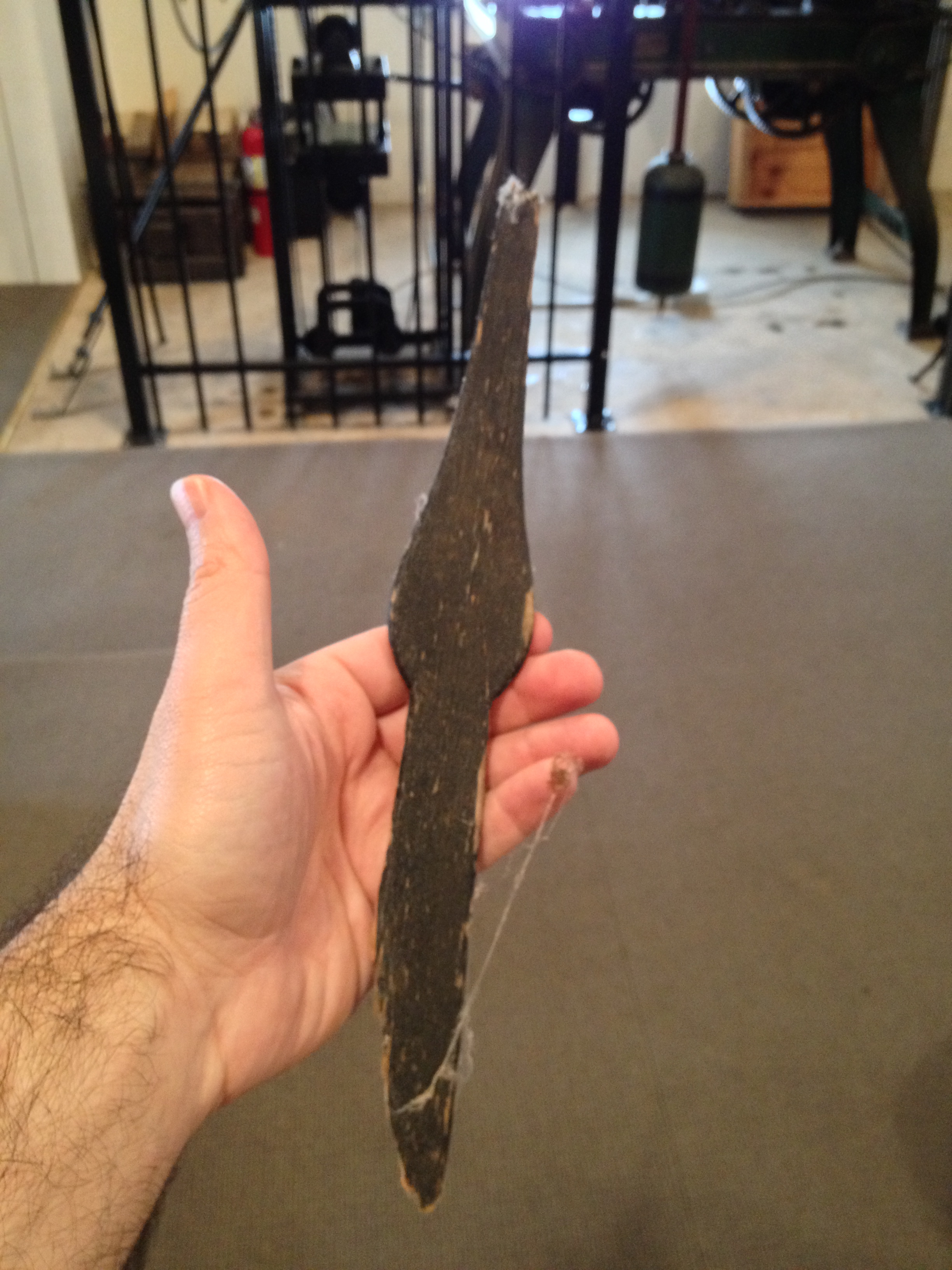
An old hand in my hand–it’s quite light.  “Gotta be light,” I’m told. “Too much weight will throw off the gears.”  We can’t decide if it’s pine or balsa.

IMG_0946

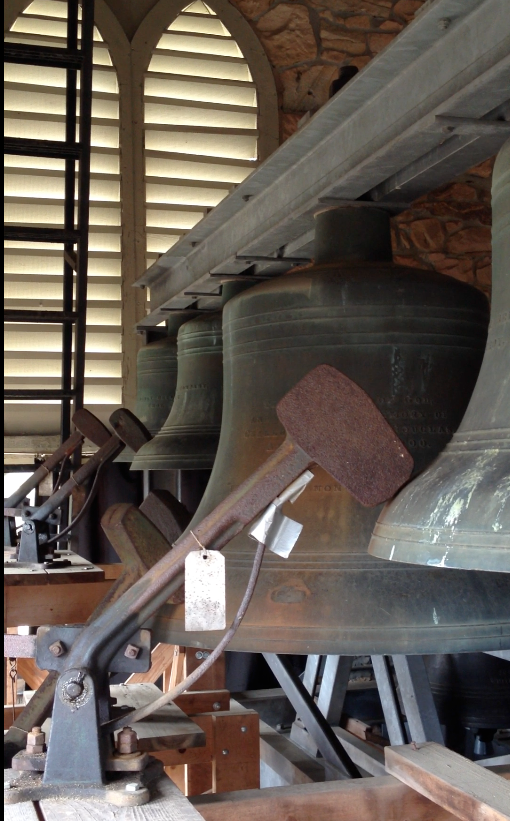
Keith is good enough to take me up to see, and hear, the bells.  The print below is a framed copy from the 1907 Cap and Gown, Sewanee’s yearbook.

IMG_0980

Screen Shot 2013-03-12 at 8.21.28 PM

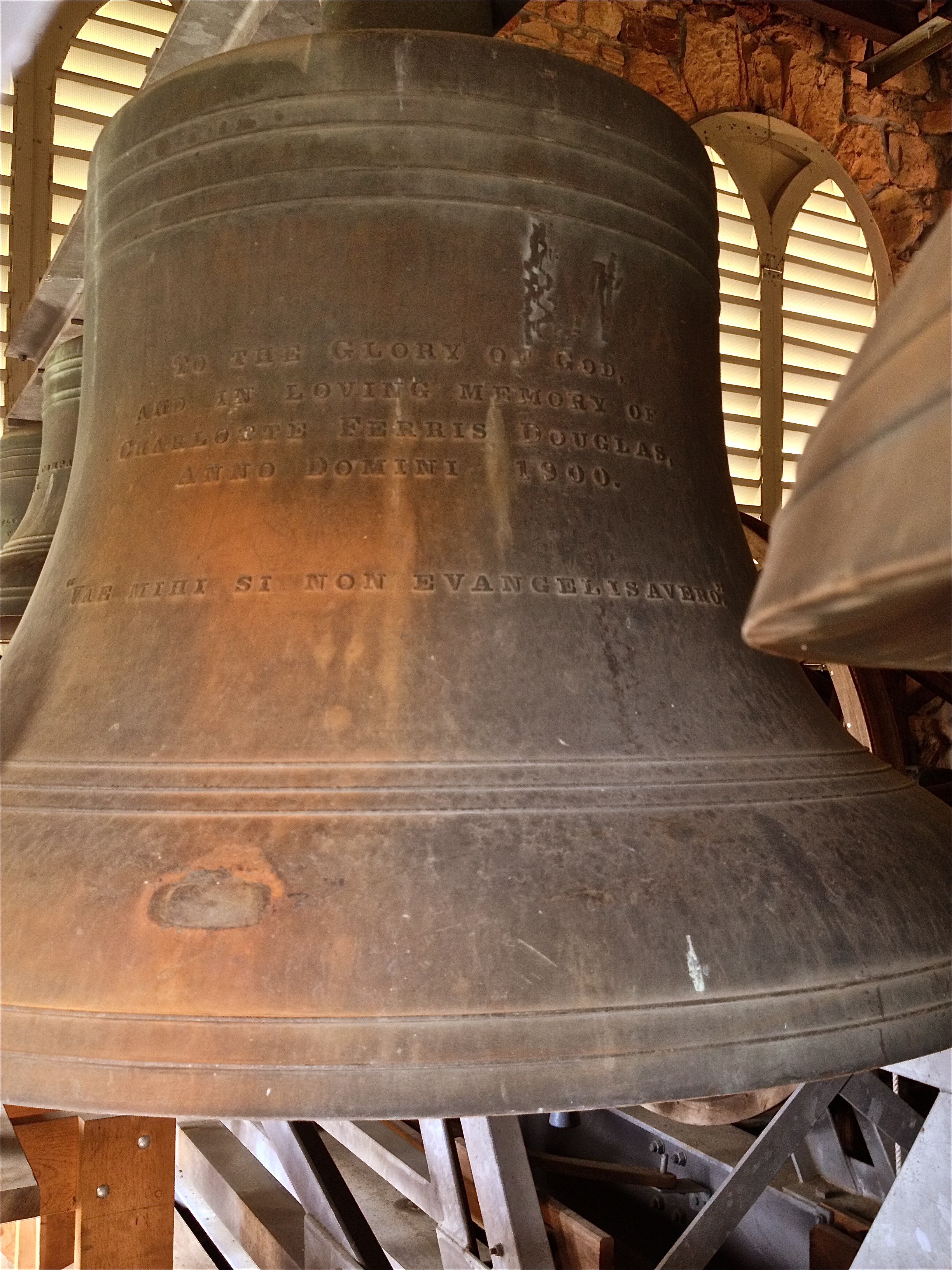
The largest bell weighs 2003 lbs.  The inscription reads, “To the Glory of God and in Loving Memory of Charlotte Ferris Douglas, Anno Domini 1900.  Vae Mihi Si Non Evangelisavero.” The Latin comes from St. Paul: “Woe is unto me, if I preach not the gospel!” (1st Corinthians 9:16, KJV).  The worn spot below is from where the hammer struck the bell for 112 years.  “Seemed like that spot could use a break,” I was told.

IMG_1048

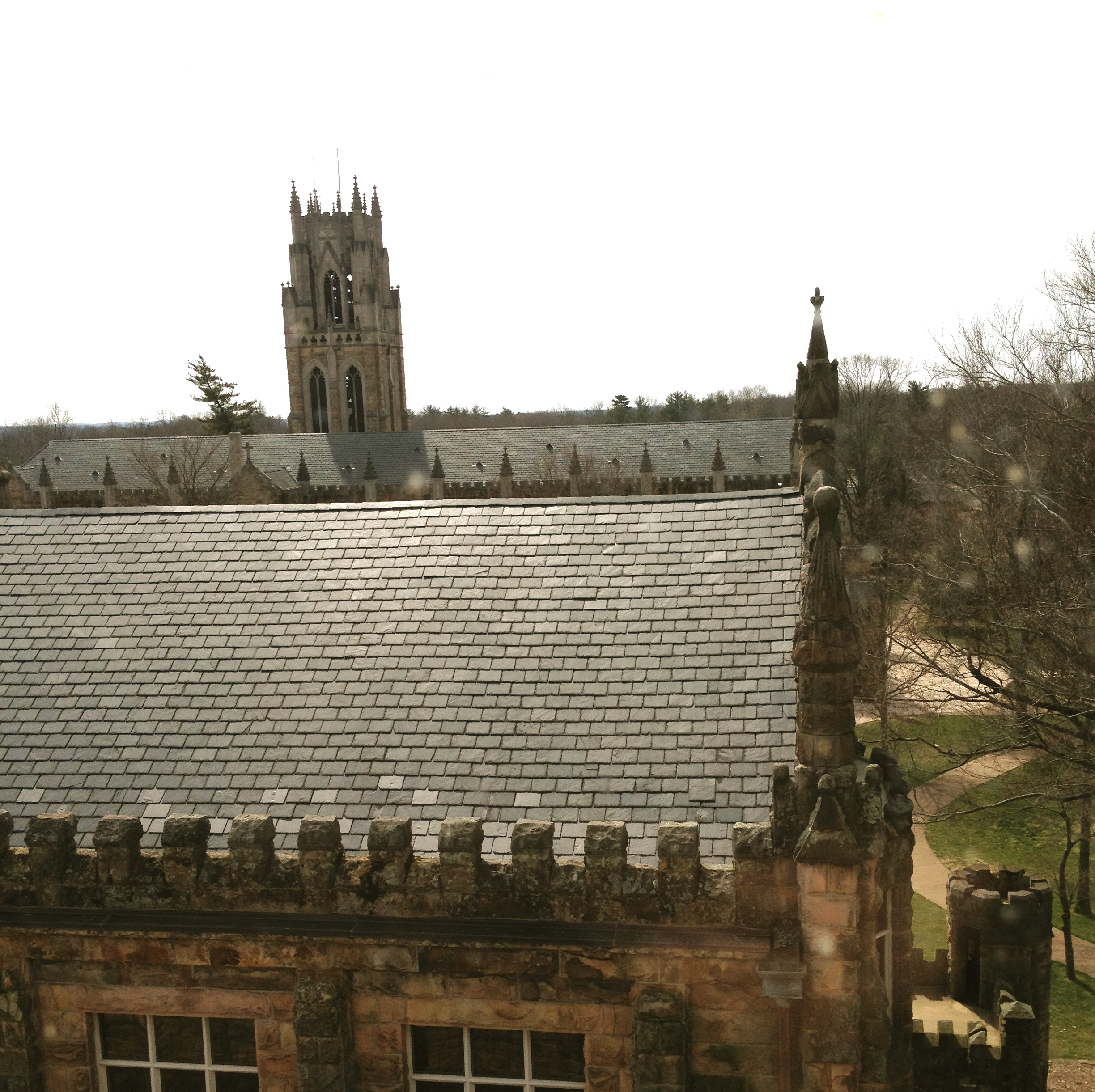
The views from the belfry, into Guerry Garth and across toward All Saints Chapel and Shapard Tower, are especially impressive.

IMG_1061

IMG_1037

But of course what’s best is being able to listen to the chimes up close.

Posted in Family, Nautical, Numismatics, Oxford, Sewanee, Time | 17 Comments