Theodore Parker’s Grave, 2015

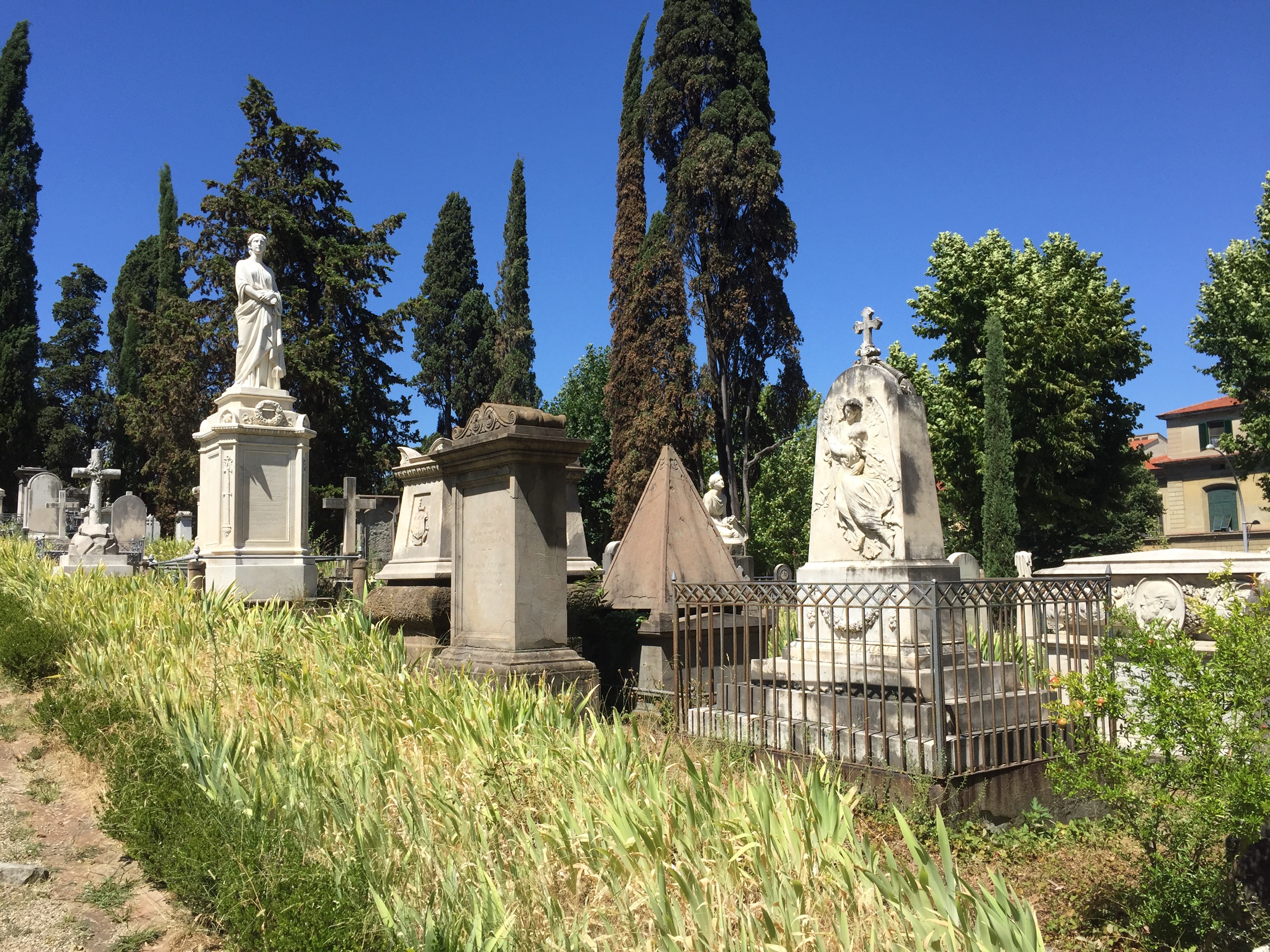
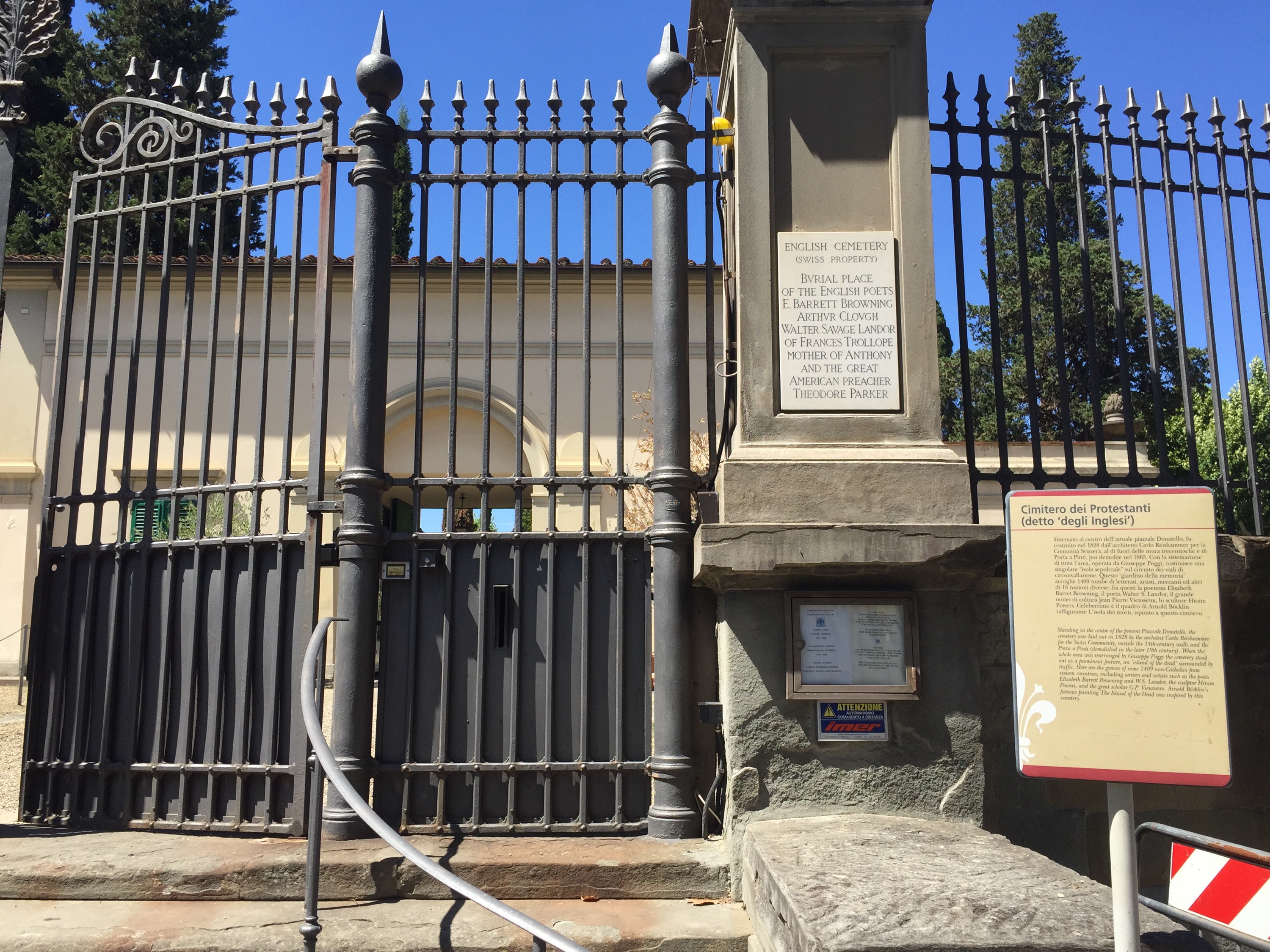
I went up to the English Cemetery on Piazzale Donatello this afternoon to look at the tombstone of Theodore Parker. It’s a bit of a misnomer, Cimitero Inglese, as it’s really a graveyard for Swiss Protestants. But it is the final resting place of numerous Anglo-American ex-pats, like Robert and Elizabeth Barrett Browning, Henry Adams, Margaret Fuller, and the person I was looking for, Theodore Parker.

Although I now live in the South, I grew up in Boston. In fact ,the neighborhood I come from was West Roxbury, where, right in the middle of town, is a statue of Theodore Parker, in front of the Unitarian Church where he preached for many years. He is seated, holding the Bible, and has been looking out on Centre Street since the statue’s erection in 1902. His visage was one I saw nearly every day for my whole youth. There was a bus-stop I got off at right in front of Parker, and my dentist’s office was across from the church.  For most of my youth, the statue was covered in verdigris, but at a certain point it was cleaned up and made presentable. 
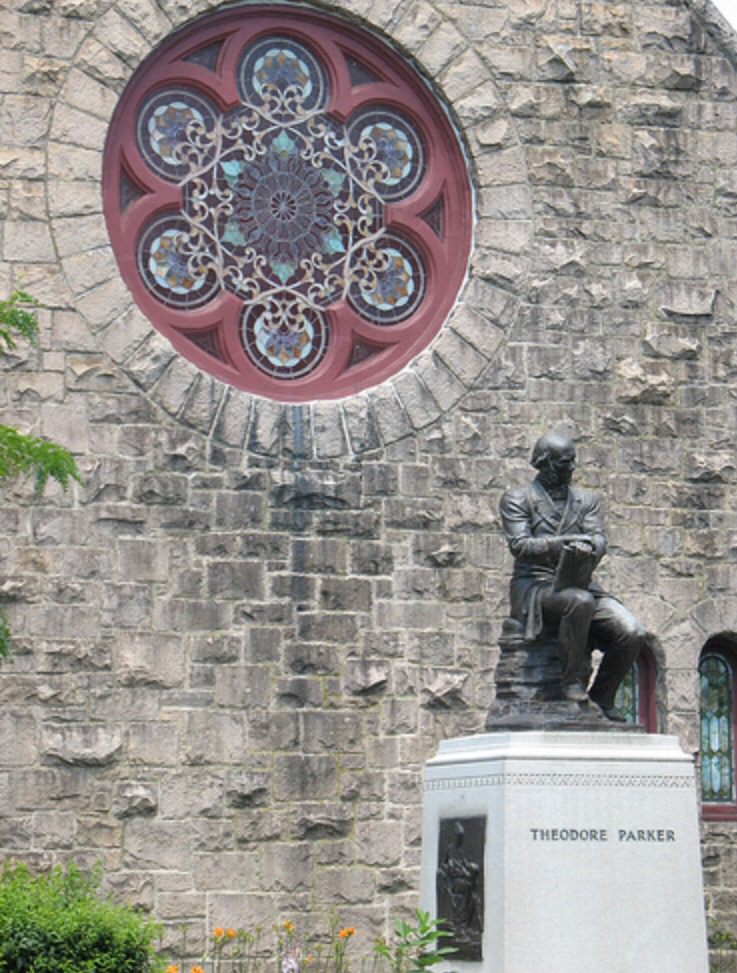
 Among everyone I knew in West Roxbury, Parker was a great unknown. Tha tells you a lot about the characer of the neighborhood, which had become largely Catholic as the 20th century progressed–we knew nothing about the large stone Protestant churches in the vicinity. Still, Parker’s name is not so well known in our time, which is too bad because in his own day, he was a giant.  A forceful opponent of slavery, he preached fiery sermons that electrified the abolitionist movement. Parker’s way with words influenced both the Gettysburg Address (it was Parker who has coined the phrase “of the people, by the people, and for the people”) as well as Martin Luther King, Jr. (again, Parker first said, “I do not pretend to understand the moral universe; the arc is a long one, … And from what I see I am sure it bends towards justice”). 

Parker’s career was a rocky one, given his principles, and his family life was not so placid either. In 1859, he left for Italy to recuperate with his friends, the Brownings, but developed tuberculosis after a short time and died in Florence.  Of his death and burial, New York Times (September 5, 1860) noted that a “simple, but tasteful monument had been put up at the grave,” which would later be replaced with a finer one by William Wetmore Story, one featuring Parker’s profile with a beard–very jarring to me, who knew his clean-shaven face from the West Roxbury statue.

“The first thing Mrs. Douglass and I did, on our arrival in Florence,” writes Frederick Douglasss in his Life and Times, “was to visit the grave of Theodore Parker … The brave stand taken by Theodore Parker during the anti-slavery conflict endeared him to my heart, and naturally enough the spot made sacred by his ashes was the first to draw me to its side. He had a voice for the slave when nearly all the pulpits of the land were dumb. Looking upon the little mound of earth that covered his dust, I felt the pathos of his simple grave. It did not seem well that the remains of the great American preacher should rest thus in foreign soil, far away from the hearts and hands which would gladly linger about it and keep it well adorned with flowers.”

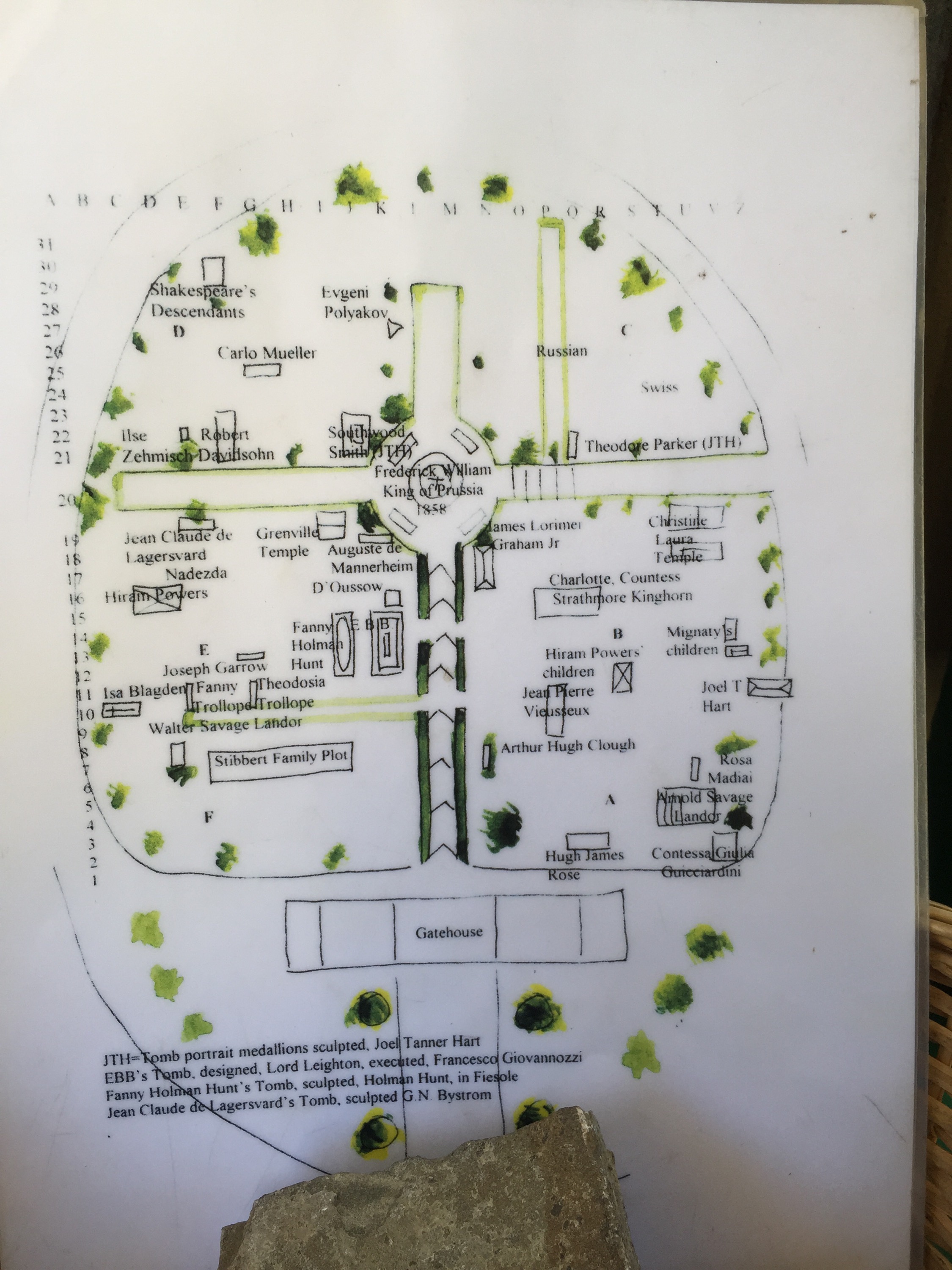
I thought, while I was in Florence, I should go and have a look at his tomb, if only to pay homage to a great man who did so much to make our own age a little more just. So, earlier today, just after spending time at the Museo Archeologico, over to Piazzale Donatello I went. The main-door of the cemetery was slightly ajar, so I let myself in.  In fact, there is a pretty good website kept for the Cimitero Inglese by another Anglo-American ex-pat, Julia Bolton Holloway, so Parker’s grave was not hard to find.  What I found, however, was really quite shocking.


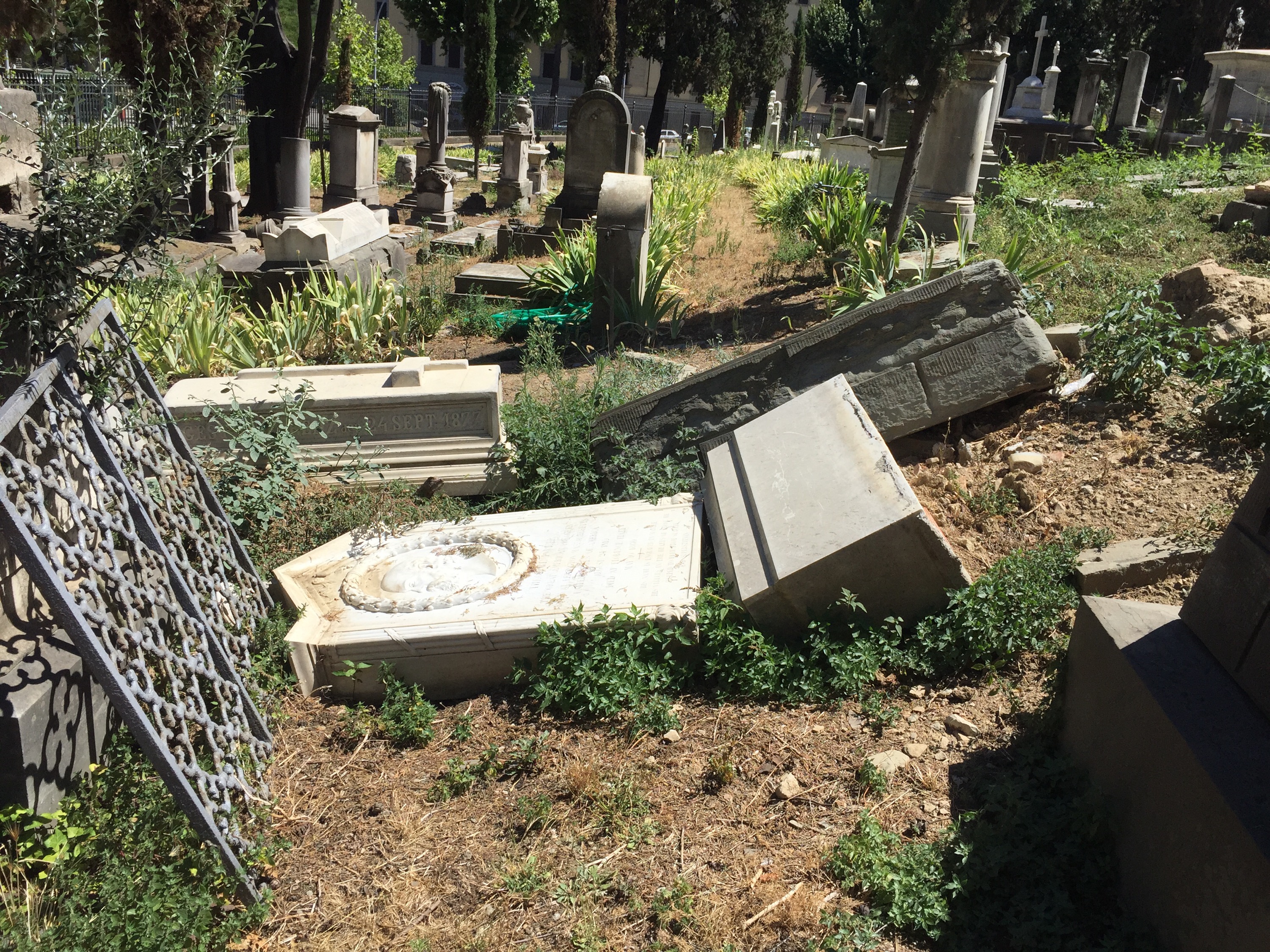
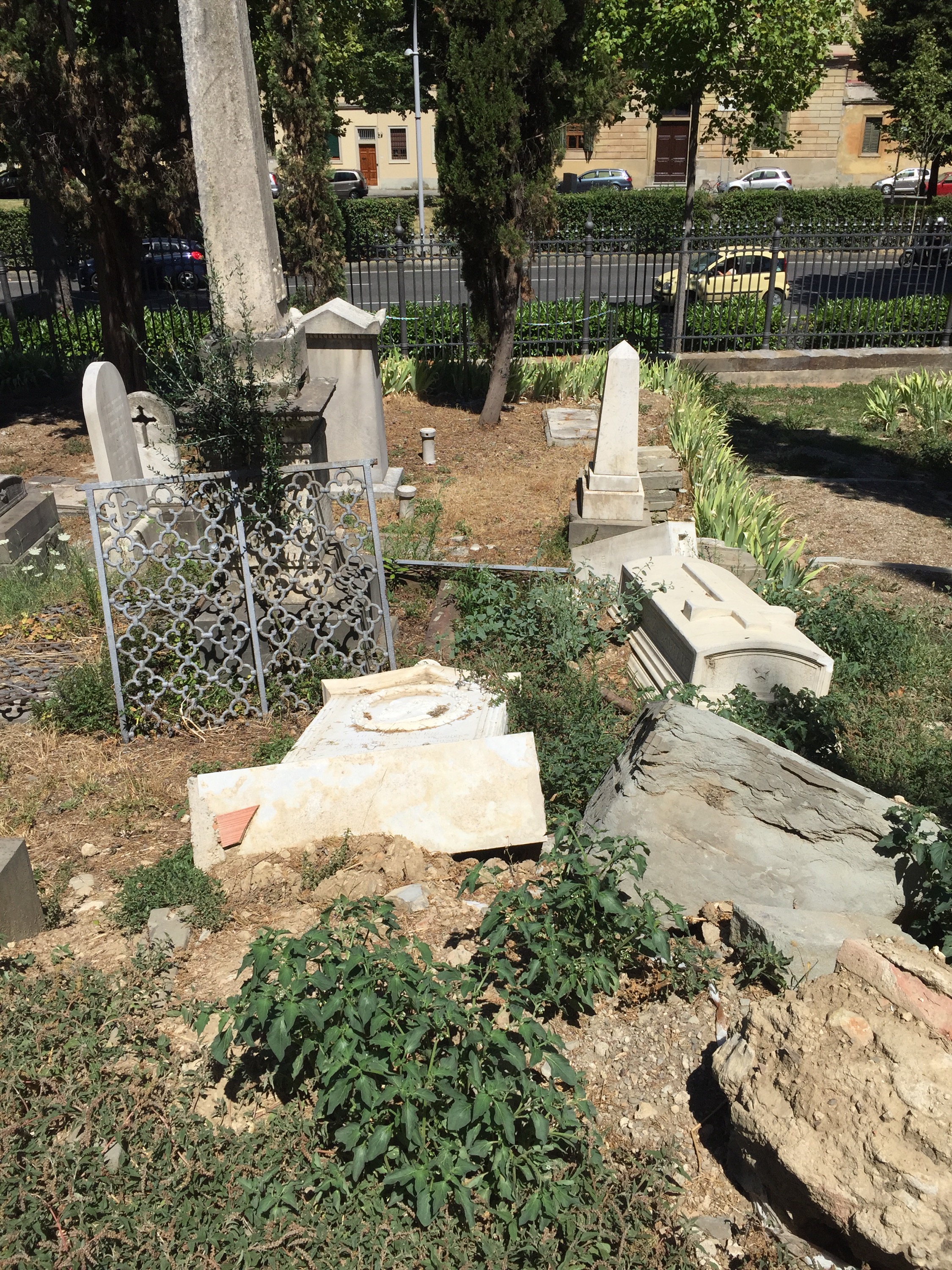
As you can see, Parker’s stone has fallen over and looks to have broken at the base. The area all around it is overgrown and disheveled. I suppose none of this should bother me– didn’t I spend the whole afternoon trolling around among Etruscan sepulchres and grave goods all displaced from their final resting places?– but somehow it does. 

Parker was a great man, a true and unfaltering voice for human liberty. The cemetery is maintained privately, and clearly does not have the funds for maintenance of one of the most important monuments it houses.  I have written to Dr. Holloway, and hope to hear back from her. Perhaps I should contact the Unitarian Church, or the West Roxbury Historical Society.  People i know in Sewanee have restored stones in old graveyards before, and perhaps will have thoughts. I guess I’m just not ready for it to be a ruin.

Posted in Uncategorized | 8 Comments

Notes on Florence

A Room with a View … and Voices

I’ve arrived to the Istituto Gould, where I’m staying in Oltrarno. It is a Waldensian institution, that is, a pre-Reformation Protestant sect that was mercilessly treated by the Church, despite their piety and devotion to Scripture. Indeed, a New Testament is prominently displayed in the room. There’s a courtyard attached to the school, both of which are off-limits to those of us in the guesthouse. Children play in the area below my winodw, and its quite charming. While there are cheaper hostels in the neighborhood (Santa Monaca, for instance, where I am going to hear some opera later tonight), Istituto Gould is private and pretty affordable by American standards. 

Next door, a young American woman is talking with her window open about her love life. Brayingly, she is saying things like, “I am sick of youre bullshit” and “Yeah, well, I slept with someone else too while you were away” and “”Fuck you, you’re not even a good friend” and “I *AM* sharing my feelings, you asshole.”  Is Florence actually Spring Break in Tuscany? #eavesdropping        

I could choose not to set up my blogging operation by the window, I suppose, but this is the view:


Postscript.


My immediate impression of Florence, to which I have not been since I was twenty, is that it’s much less filthy than Naples and Rome, and being smaller, far more crowded with tourists. The food is not as good but it is more expensive. But throughout the city there are these free Wifi points, which would just not be possible further south.

The bells ring at eight AM from a few area churches,  a lovely way to start the morning.

http://youtu.be/2YPLdHQBtN4


A Chapel and a Museum without Pity

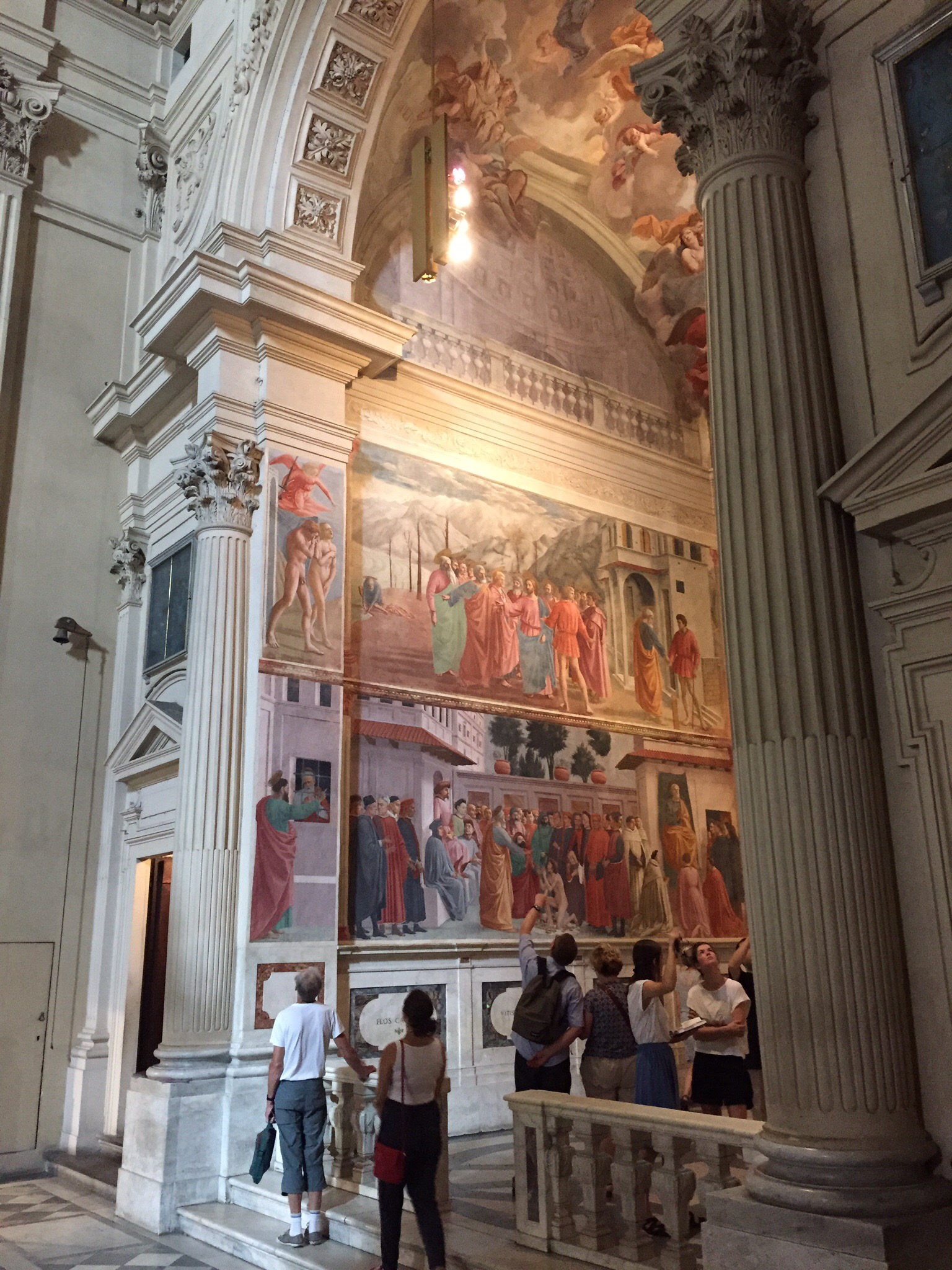
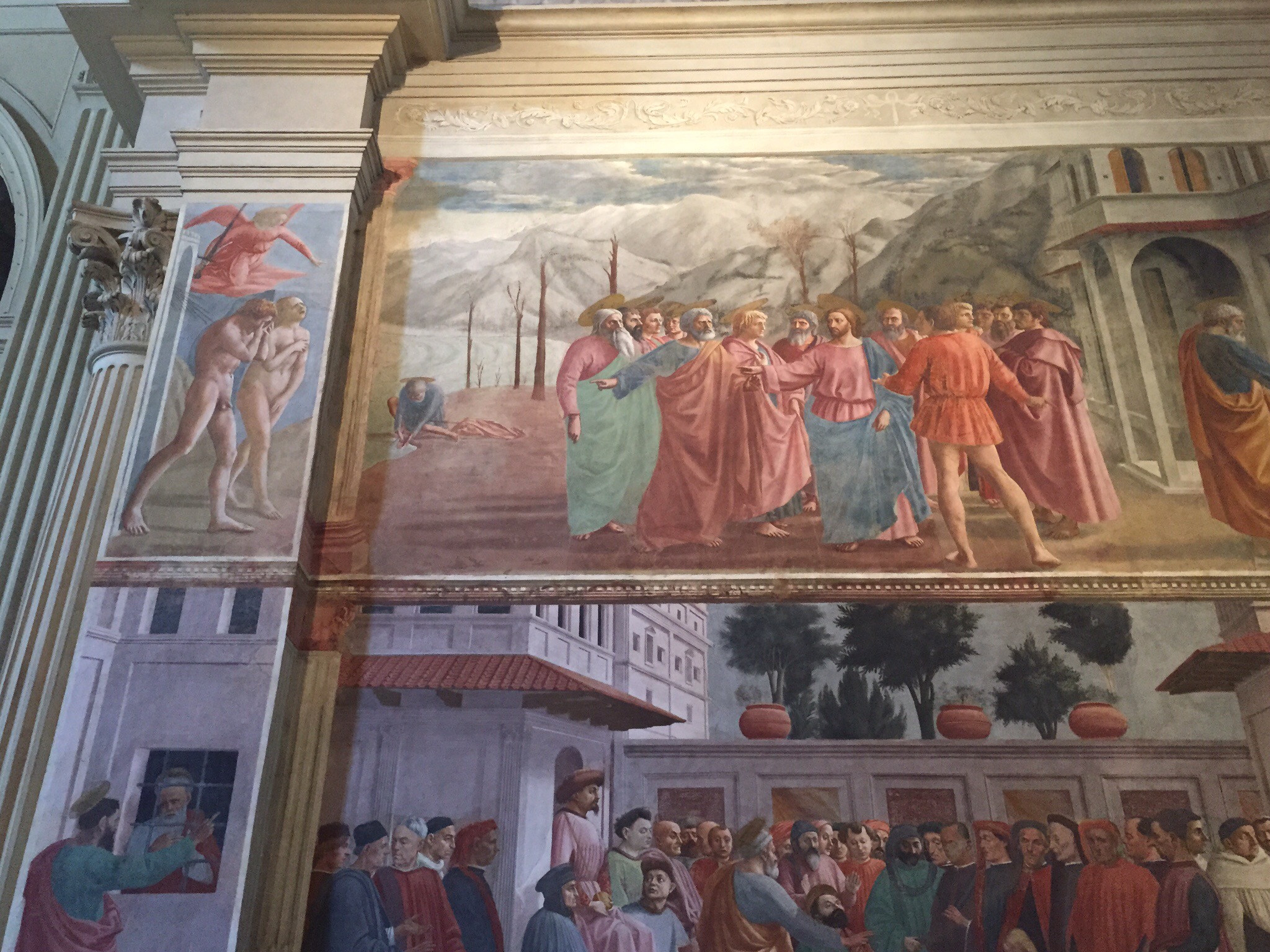
Bright and early, I set out for coffee and a croissant, and then to the number one thing on my list, the Brancacci Chapel. I’m first in line, and rush in to see Massacio’s frescoes, which are bit as wonderful as I thought they’d be. The Expulsion from Eden is powerful, and has done as much to form modern conceptions of the Fall as as any theological work– Genesis doesn’t say that Adam and Eve wept, but here their mourning, and their nakedness, is overwhelming. It is interesting to see it in context, for they are heading toward the altar. Beside the Expulsion is the famous Tribute Money scene, which I’ve posted on before. Its great tose the look of surprise on Peter’s face when he’s told to get the money from a fish. Hey, youre a fisherman, right. I love his groovy gray afro, too. His finger and Christ’s point to the lake, but also across to Adam and Eve, perhaps suggesting that the price for their sin will also be paid for. 
      
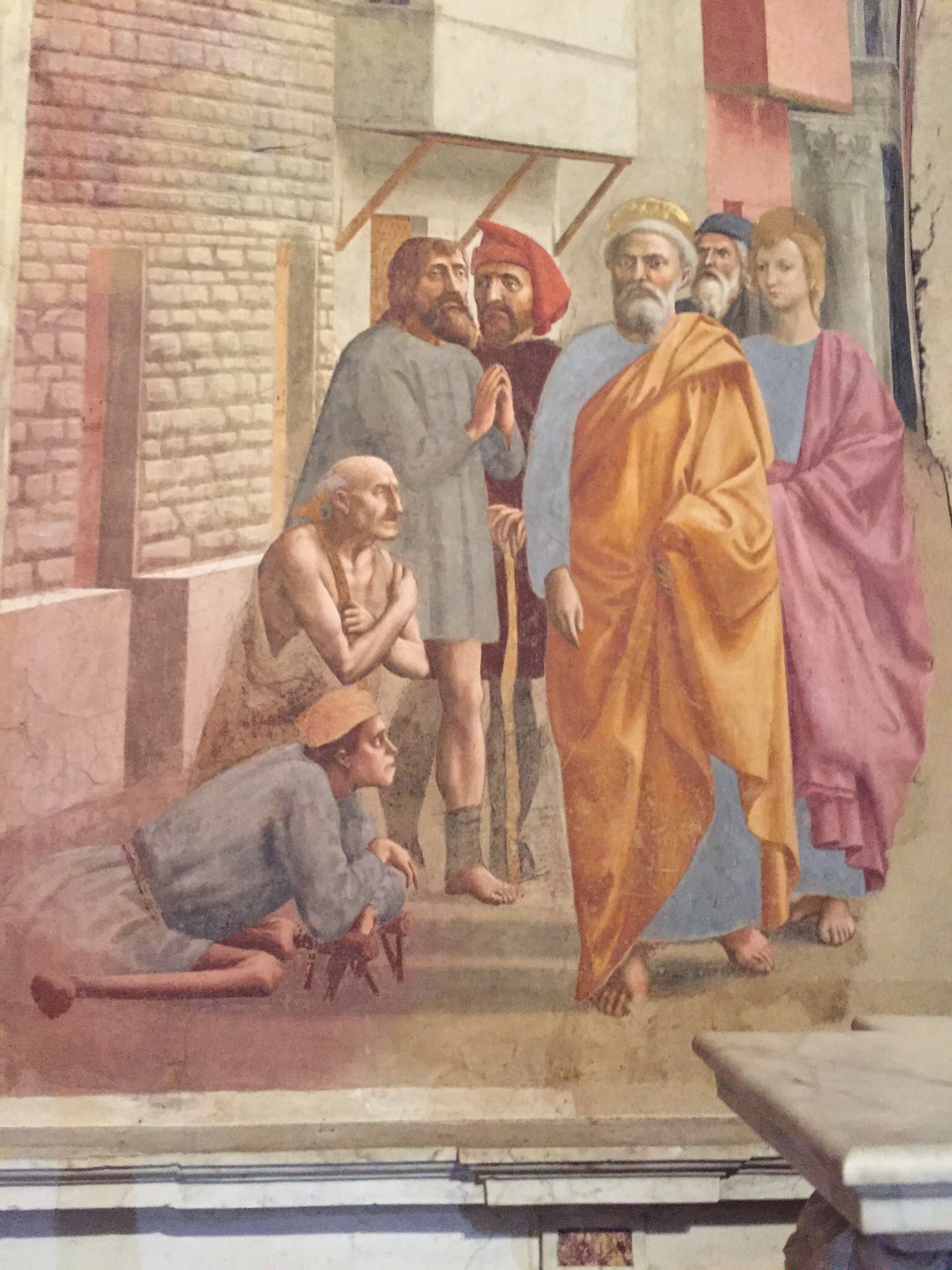
Also in the chapel are scenes of Peter curing a crippled man with his shadow, and healing the emperor’s son.

    
I make my way 

Posted in Uncategorized | Leave a comment

An Altar of Peace

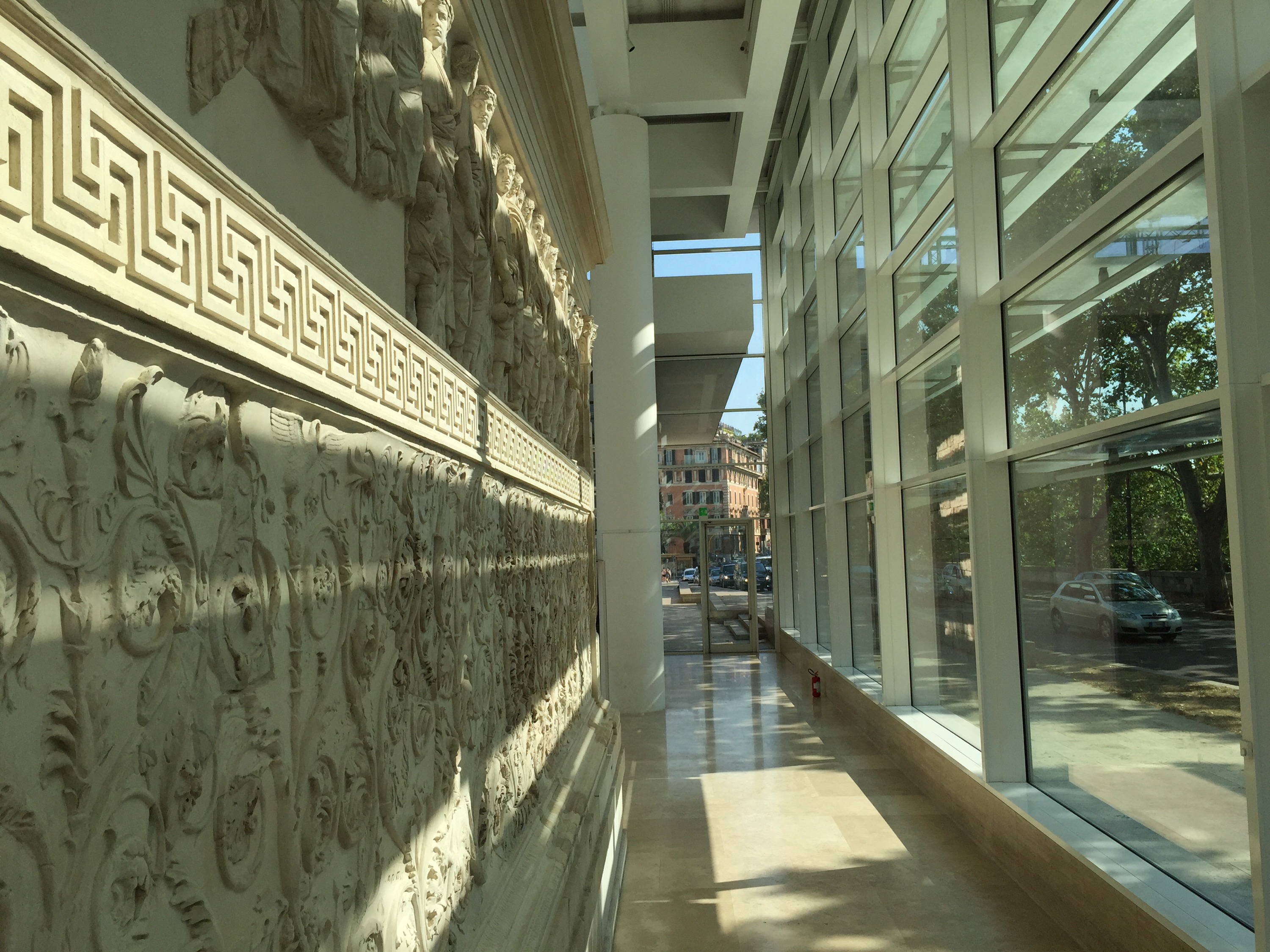
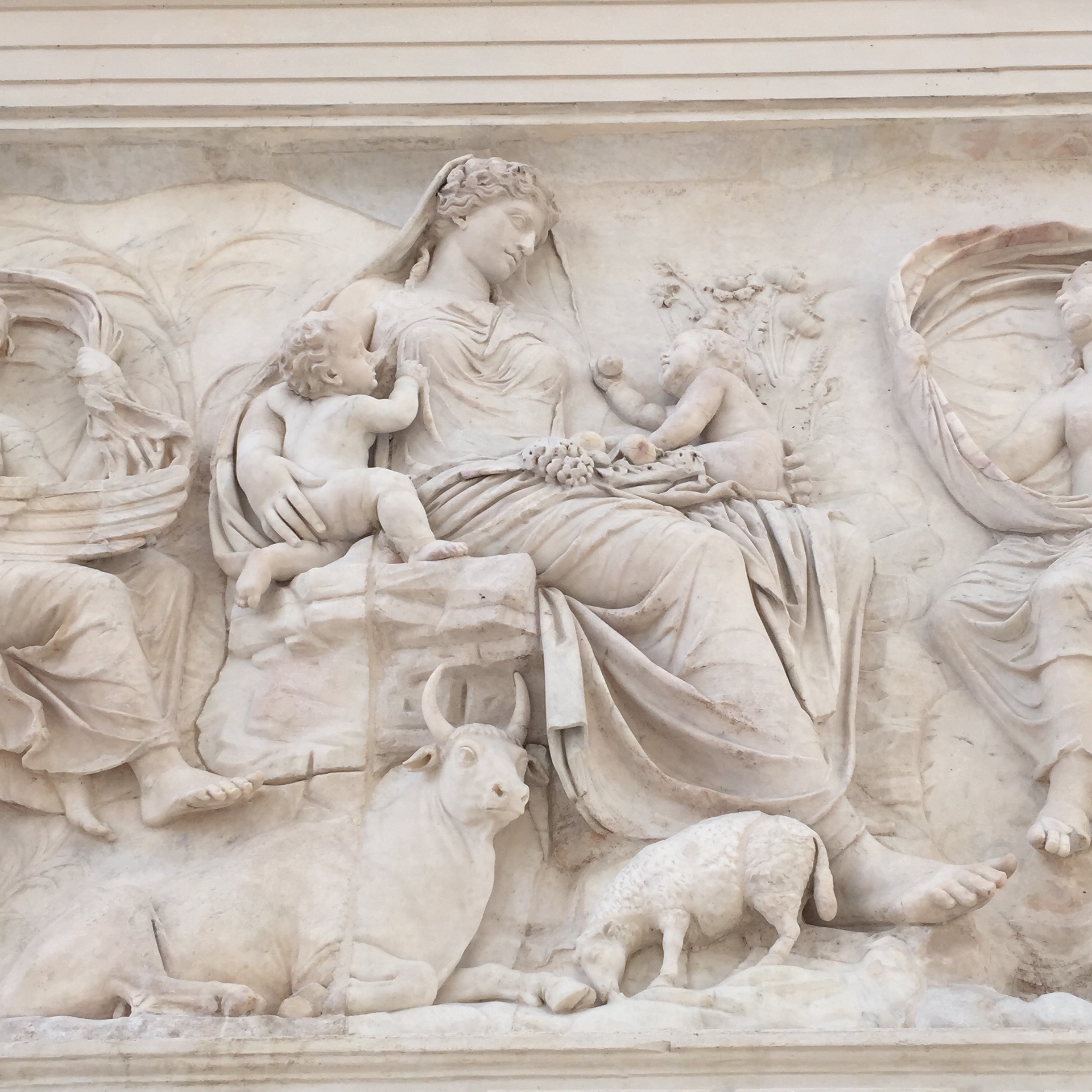
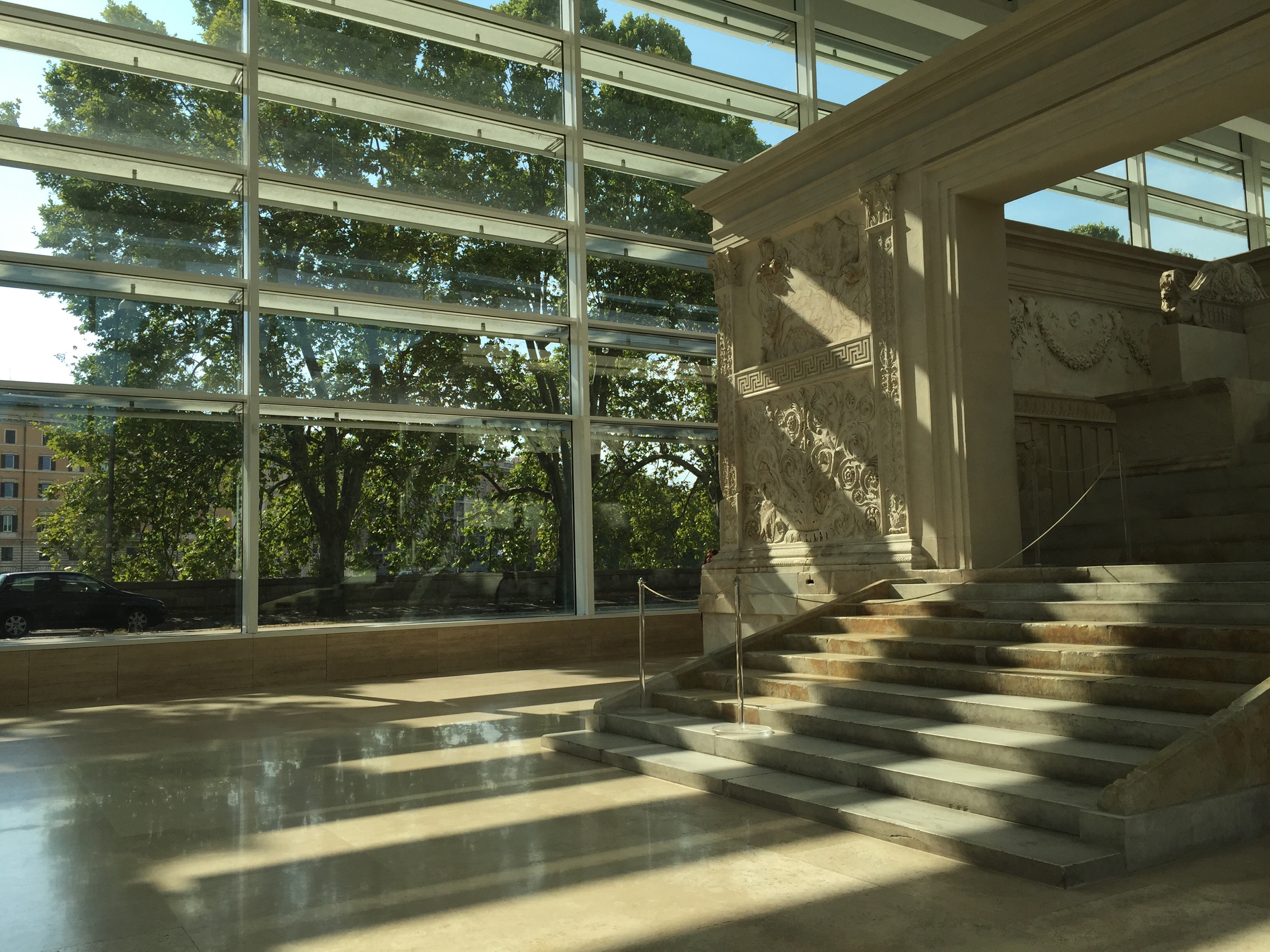
Such a humid day, and the crush of the crowds in central Rome can be so overwhelming, but I made the long walk up to the northern Camp Marzio to see Augustus’ Ara Pacis in Richard Meier’s covering structure. Controversial when it first opened a decade ago, the new building is now a Roman treasure housing perhaps the greatest of Roman artworks. When I first arrived, alas, chiusa–staff meeting from 1-4.  Grrr. I find a bus down to the Synagogue and the Jewish Museum (about which I’ll post later), but when I return, even sweatier than I could have imagined, the Altar was open and I had it mostly to myself. The Mausoleum of Augustus, and beyond it the churches of Saints Carlo and Abrogio are visible the east.  Outside, to the west, the traffic rushes by along the Lungotevere, but the thick windows keep out the noise and let in only the late afternoon sunlight. Oh sure, it’s a monument to imperialism–and the stories of oppression from antiquity to modern times are still in my head from the Museo Ebraico–but here is respite, by an altar of peace. 


Posted in Uncategorized | Leave a comment

A Day at the Museum, A Night at the Opera

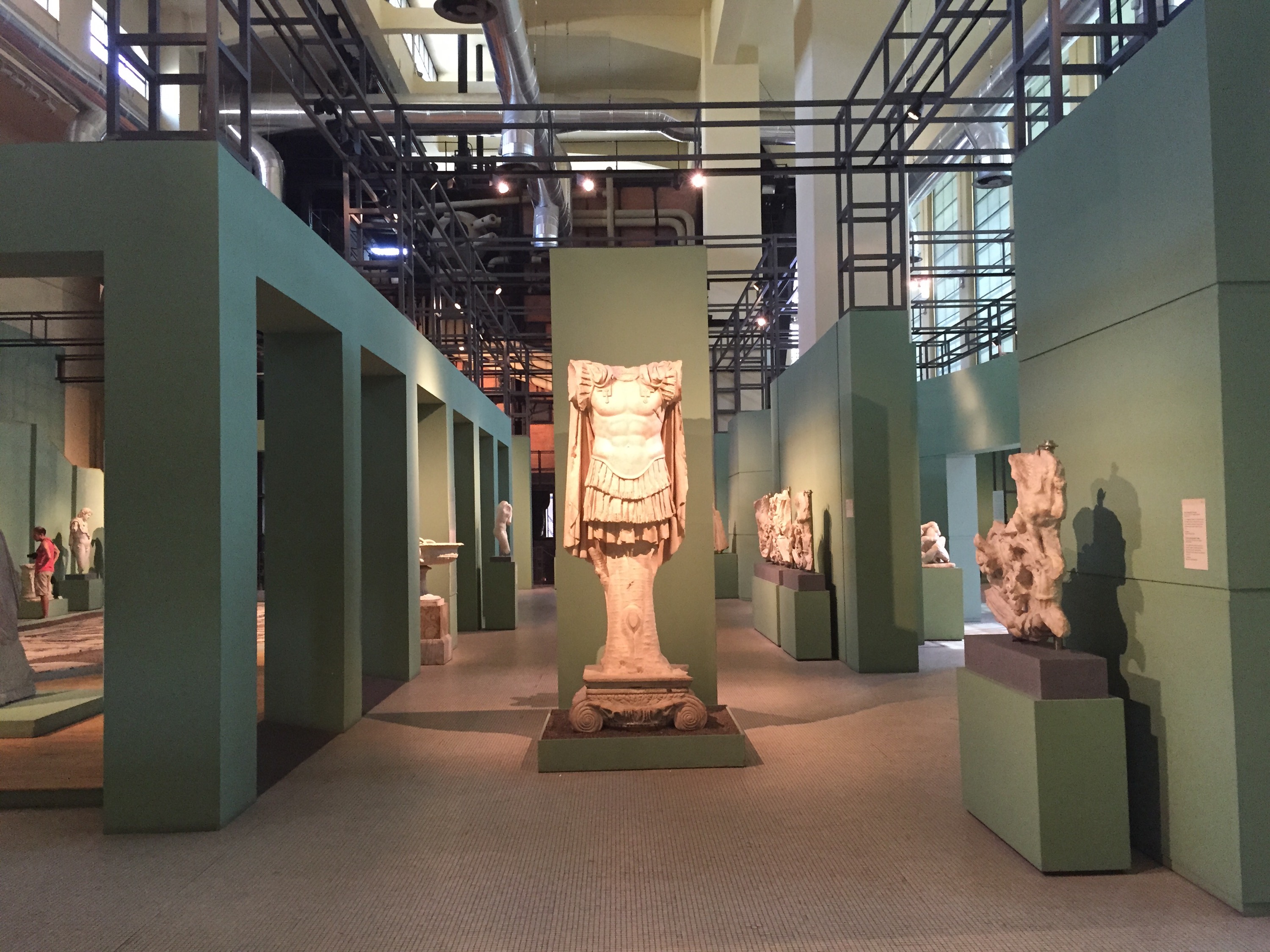
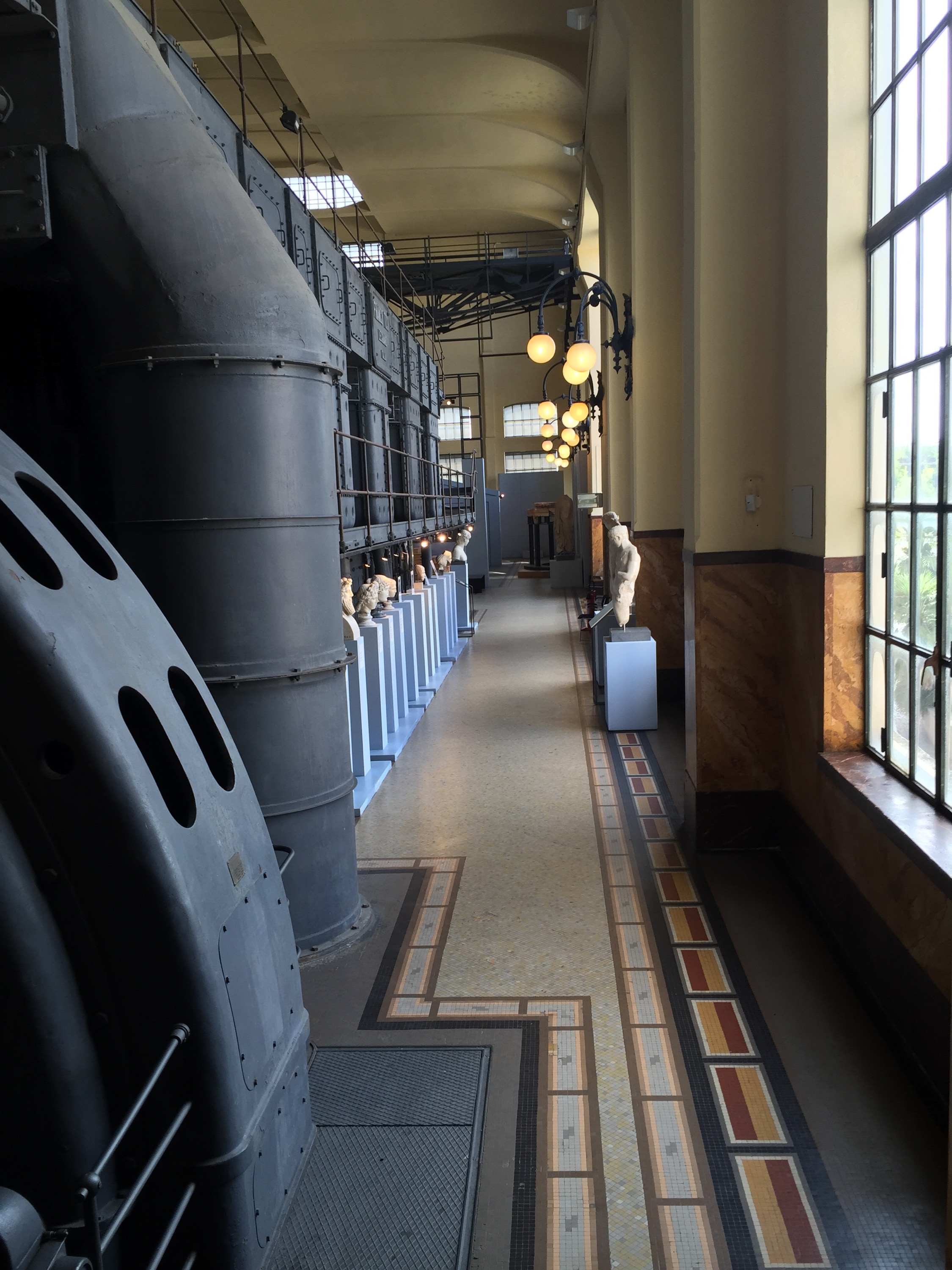
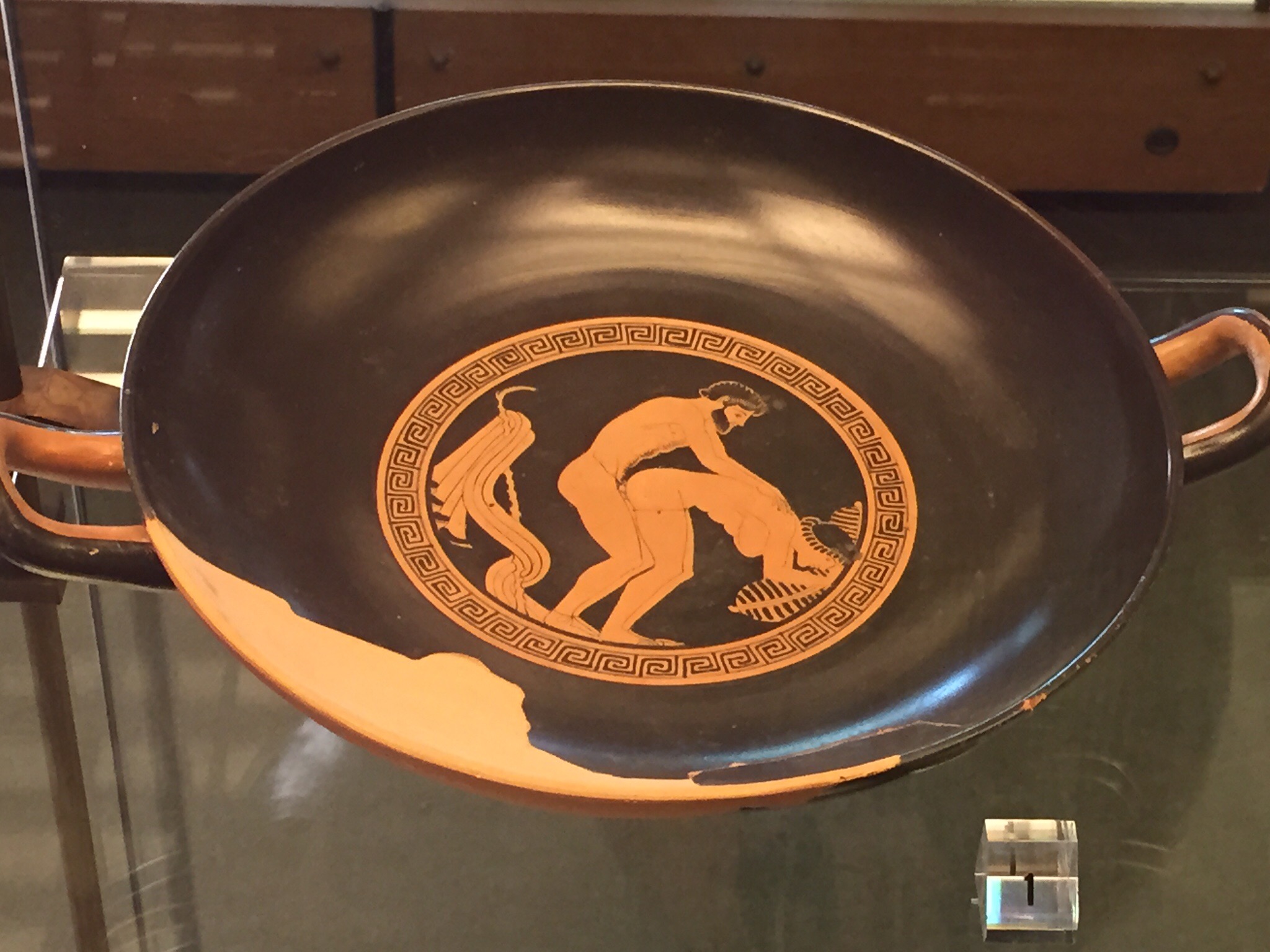
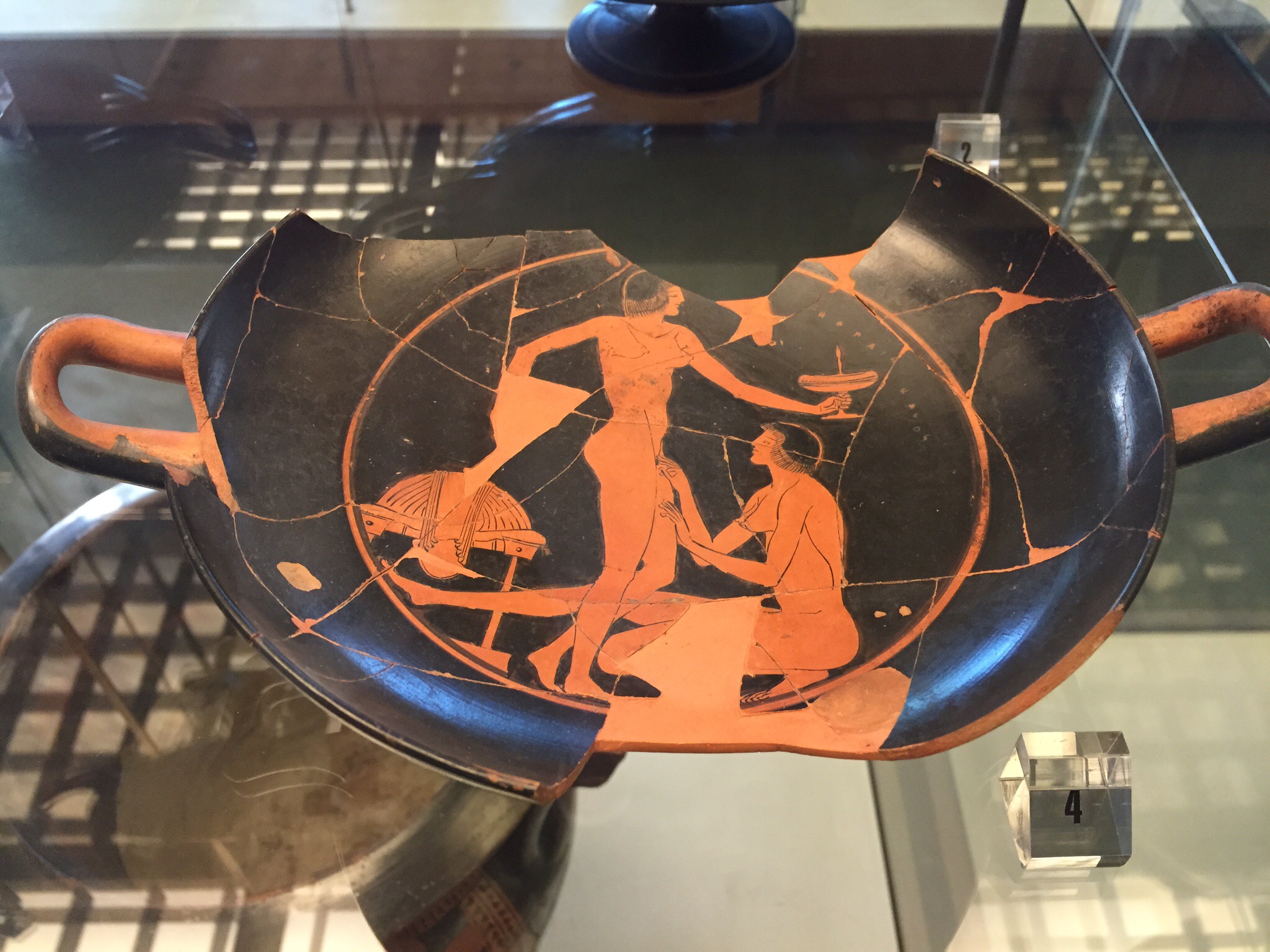
Saturday was a day and a night for inventive combinations of ancient and modern in Rome. Everyone had been telling me that I should go to Centrale Montemartini, so I did and was glad to have done so; the former power plant located in an older, more run-down section of Rome that is not especially easy to get to, but is worth it, housing a number of Roman statues from the Capitoline Museum. Let’s face it, the big museum on the Capitoline is enormous, the sort of thing nobody can see in a day. In an inspired move, the museum has sent some of its collection–statues from the Republican and early imperial periods–to the Centrale Montemartini, whose steampunk allure is very pleasing in their own right. 

   
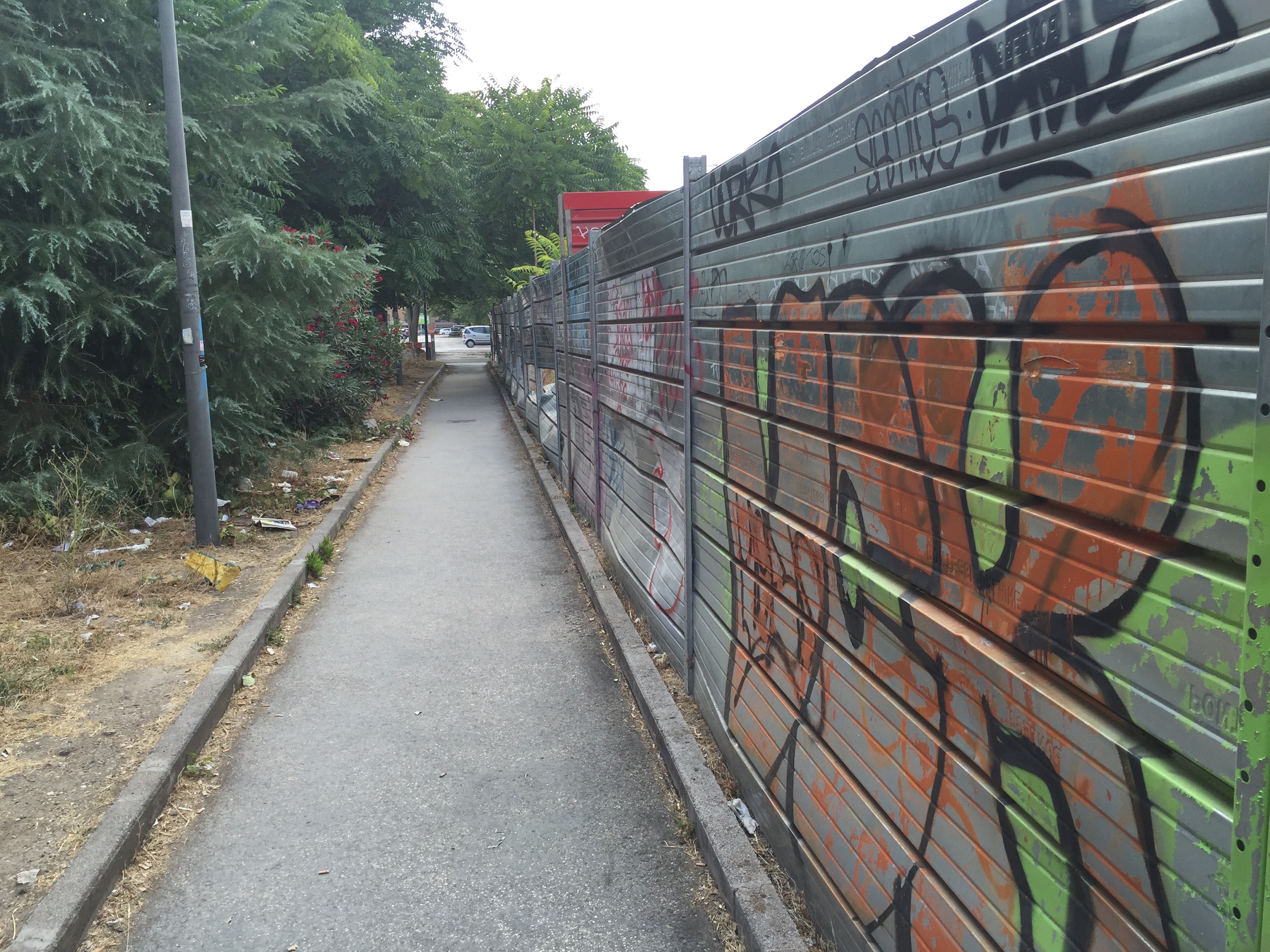
 Getting there, as I say, requires walking through a gritty, sort of hip urban area.  When you get there, it’s striking how beautiful the old power plant is, built in a day when people cared about such things. Inside, the juxtaposition of the classical and industrial is thought-provoking, and I found myself pondering the nature of power and its presentation. Before going, I had worried that there would be a sort of post-modern irony in putting gods alongside machines, that either ancient religious ideas would be subtly mocked or that contemporary dependence on technology would be chastised. I need not have feared–the aesthetics of the antique and of the factory speak to each other in a way that is not easy to put into words. 


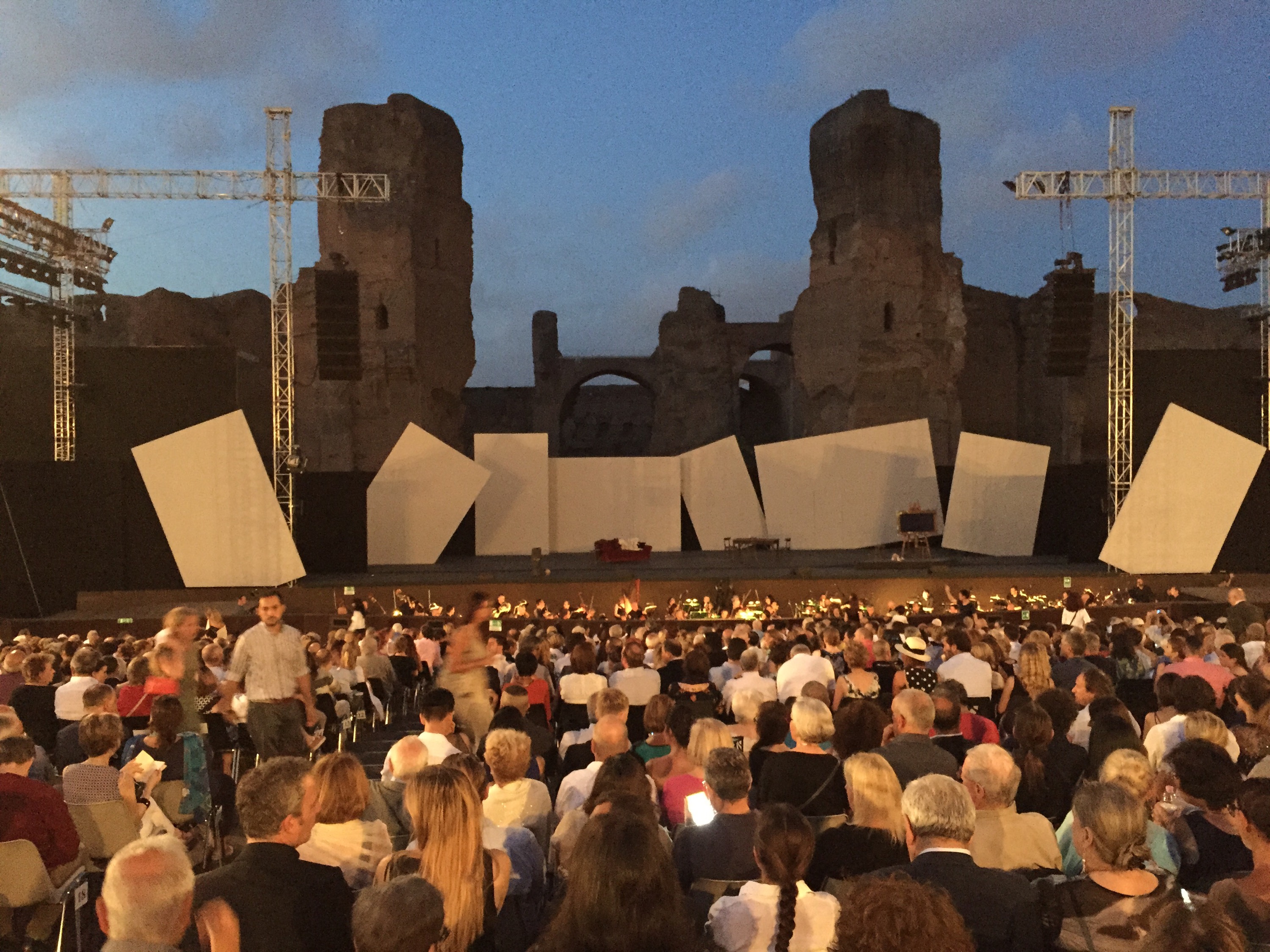
 That evening, I went to the Baths of Caracalla to see La Boheme. I had been wanting to come here for some time, and when I saw that Puccini’s masterpiece would be on in July, I had to buy a ticket. Early this month, as I posted about before, I went to see “Rent” at the theatre in Tullahoma–I figured, I’d see another bohemian rhapsody while I was at it.  As I’m thinking of bringing students nxt summer, I thought I should see what the dress code was. Some folks, particular the women, were dressed up beautifully. More were tourists like me without evening clothes in the back-packs. Taxis dropped off couple after couple to walk up the red carpet, past hawkers selling libretti. 


The baths are an enormous set of ruins, quite spectacular– when arranged as part of the set, it’s just a real pleasure to take in. Projected onto the ruins were images from fin-de-siecle French art–Toulose Lautrec, Monet, and Van Gogh.  The second act at Cafe Momus featured dozens and dozens of performers in colorful and elaborate costumes. Children chased the toy-maker, ballerinas pirouetted about, and a clown on stilts skilfully looked to be toppling every so often.  When Musetta sang her waltz, all the color went out but on her, and the whole troupe began to move in slow motion, even Mimi and Rodolfo who danced off to the side alone. Alas, no photogrpaphy we were told, and I did my best to obey.


Posted in Uncategorized | Leave a comment

Vases and Views in Tarquinia and Beyond

At a certain point in the day, although your feet and legs are sore from trolling around the tombs of the necropolis, you look into a room of a museum, “just to see.” Yes, you’re on your way to the exit and you have to drive along winding Italian roads to the B&B thirty miles away and you’d like to get there before sundown because there will be very few roadsigns. Indeed, it will be dark and predictably you will often get lost on the road to Ronciglione, but that is several hours from now. Right now, there is this  room full of vases in the Etruscan museum in Tarquinia’s Palazzo Vitelleschi. 


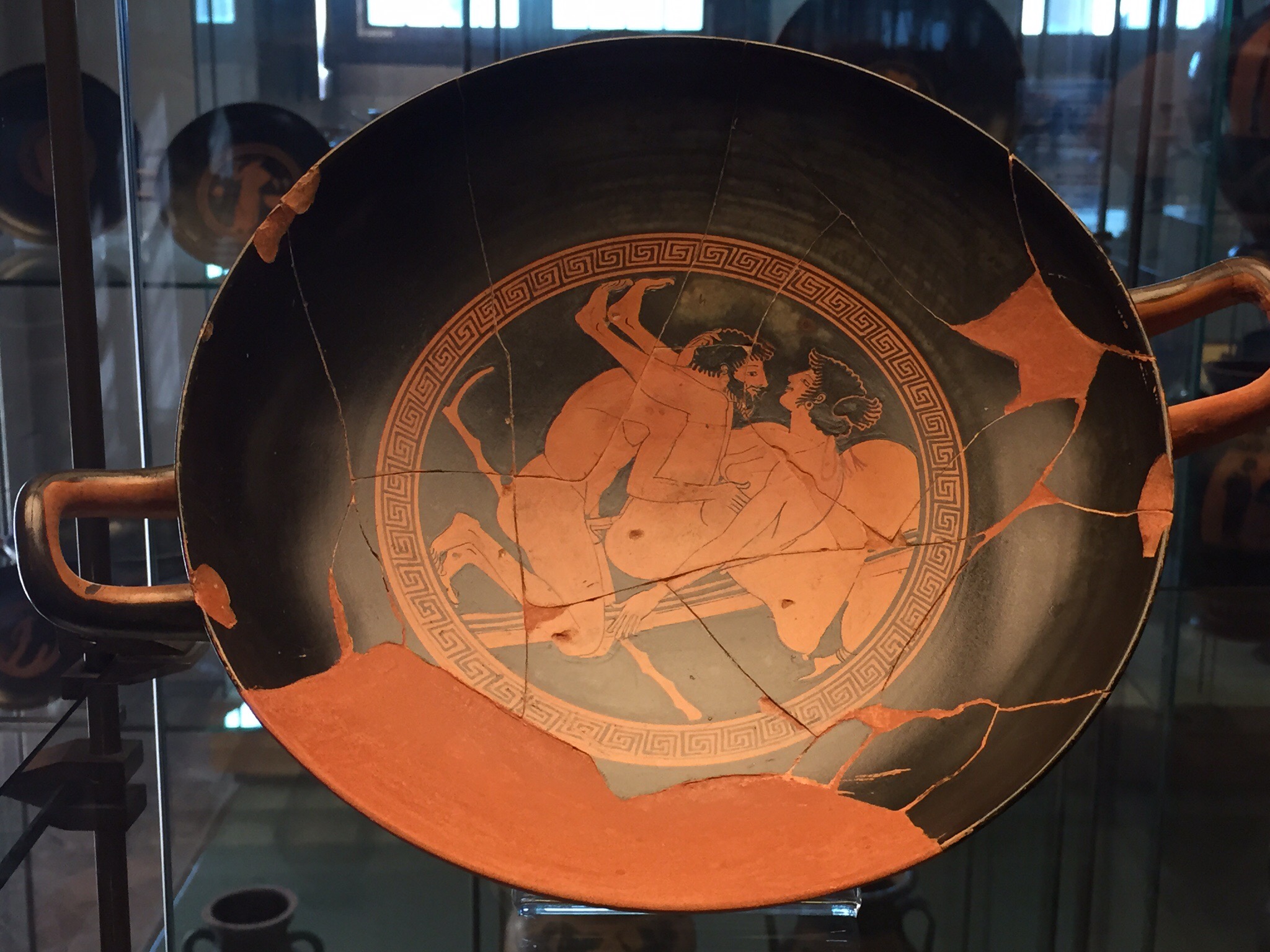
Wandering along, dutifully considering the red figure warriors killing each other, you notice a small note that says “Eros” in another case. Huh, what’s this?


Well, it looks like everyone is having fun! And it would be untoward of me to linger, even though the two guards are paying no attention to me, engrossed as they are in some lively conversation about a mutual friend. I interrupt to ask Dove e l’uscita?, and am about to leave, when I see there’s another room. My feet, the hour, the road ahead, etc., and yet I’m a sucker for big rooms like this, so in I go.


And SO glad I did!  Because there in the first case is the famous stamnos depicting Europa and the Bull, by the Berlin Painter. I said this in an earlier post, but to come across an unexpected masterpiece really is like seeing a movie star on the street.  Ah, so this is how you live!  How many times have I shown this very image to my students? I had no idea that Europa lived here in an Italian palace.

The thing about palaces is that they’re not designed to be museums in fact, and the rest of the collection is in the open-air courtyard and upstairs … many, many stairs.


 But at the very top, there is this splendid room with a view over the medieval walls of Tarquinia out toward the Mediterranean. The sun is still high enough, I think. There’s plenty of time to linger before I must get back on the hilly highway to Rociglione, where I will arrive just in time for the sunset.


Posted in Uncategorized | Leave a comment

Trasteveriana

Busy days in Trastevere! Arrived in time for the passagietta, and an open air screening of Grand Budapest Hotel in Piazza Cosimato, part of the local cinemal festival that’s been going on every night all summer. IN a few day’s time, I will see crowds of people watching an outdoor movie, none more lively than the screening of Disney’s Hercules.   


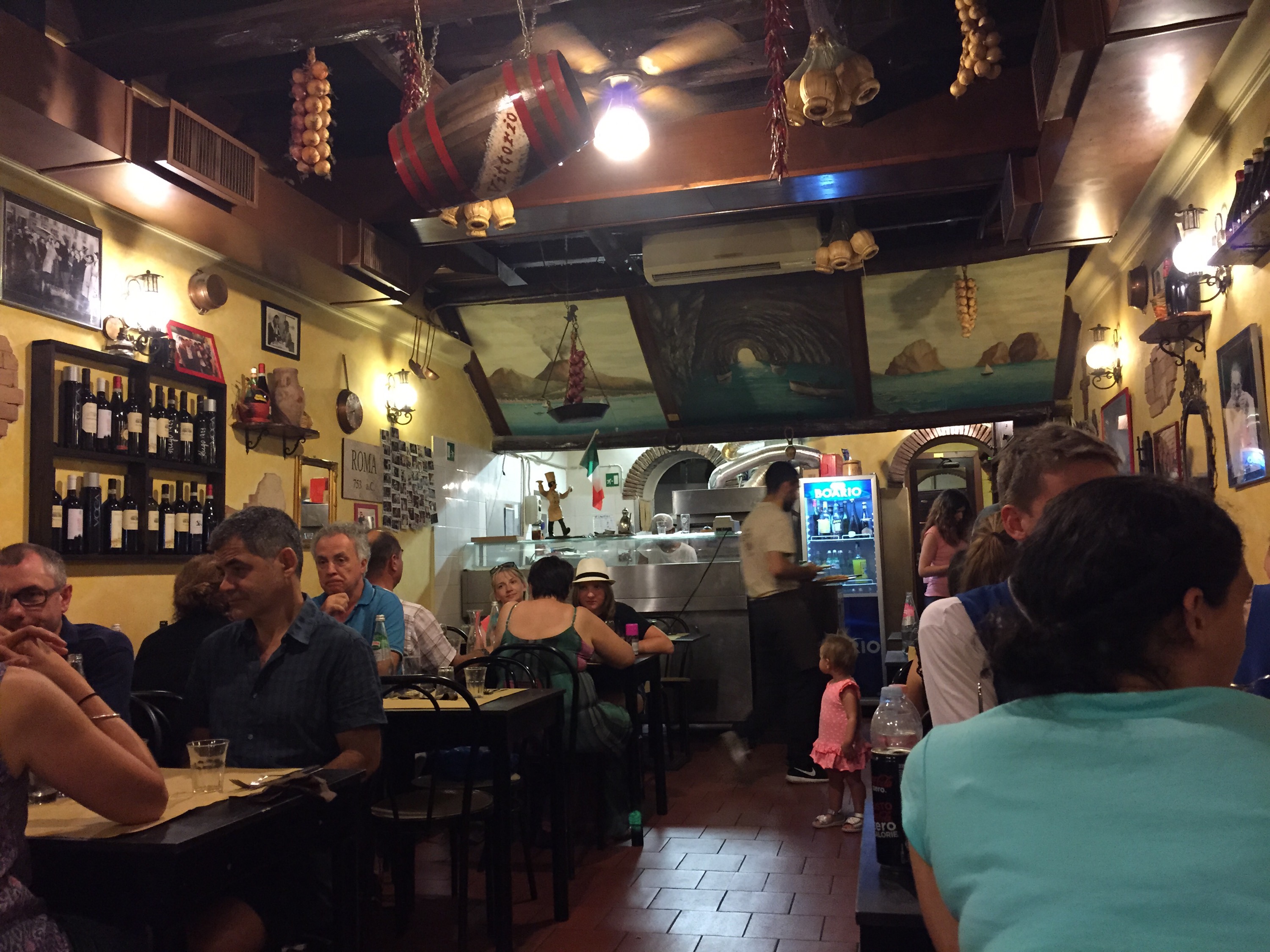
   The next day, there’s a protest in front of the Ministerio Della Istrizione Pubblica, offering as much of a theatrical performance as anything you might seen on stage. (I had a video of this, but alas, can’t find it!). Then dinner with my old student and now MBA Latin teacher extraordinaire, Sarah Ellery! News exchanged over Ossobucco at the Cafe Baylon, named for a saint who himself liked good food and juicy gossip, according to the menu. A former Centrista, she has many great ideas about what Sewanee students might want to see and do on a summer program.


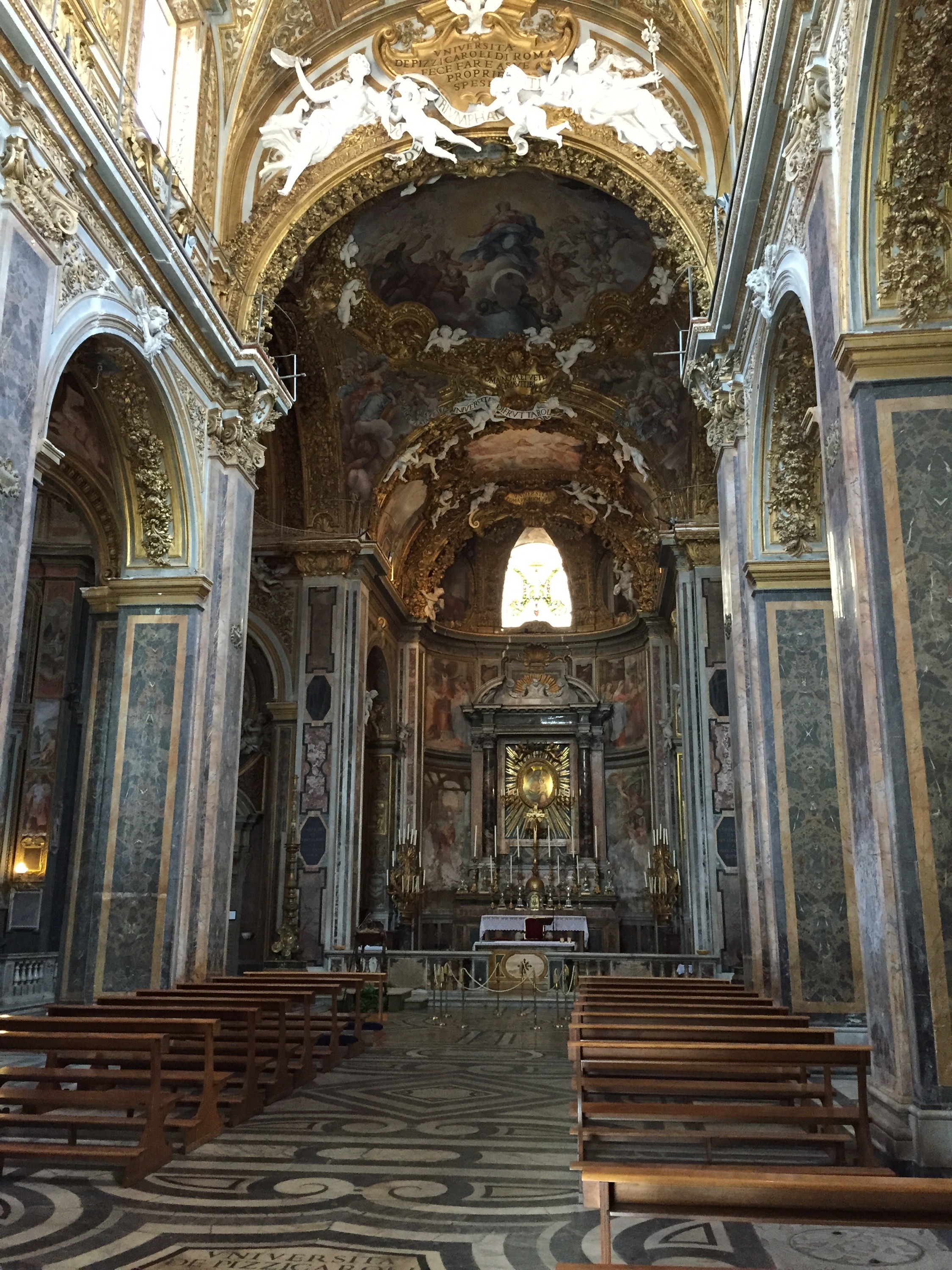
  In the day to come, I have will wander around the churches of the Rione, always finding curiosities; for instance, in S. Francesco da Ripa, the famous Bernini statue of Bl. Ludovica Albertoni in ecstasy, somewhat undercut by the winged putti heads hovering above her from the frame above. In Santa Maria dell’ Orto, a Renaissance church that is now home to Rome’s Japanese Catholics, there is an icon of Guiliano Nakaura, a Jesuit martyr. In earlier times, this church was supported by various guilds, particularly millers, butchers, and poulterers (who even donated a splendid wooden turkey, in commemoration of the New World bird’s arrival to Rome).

                  
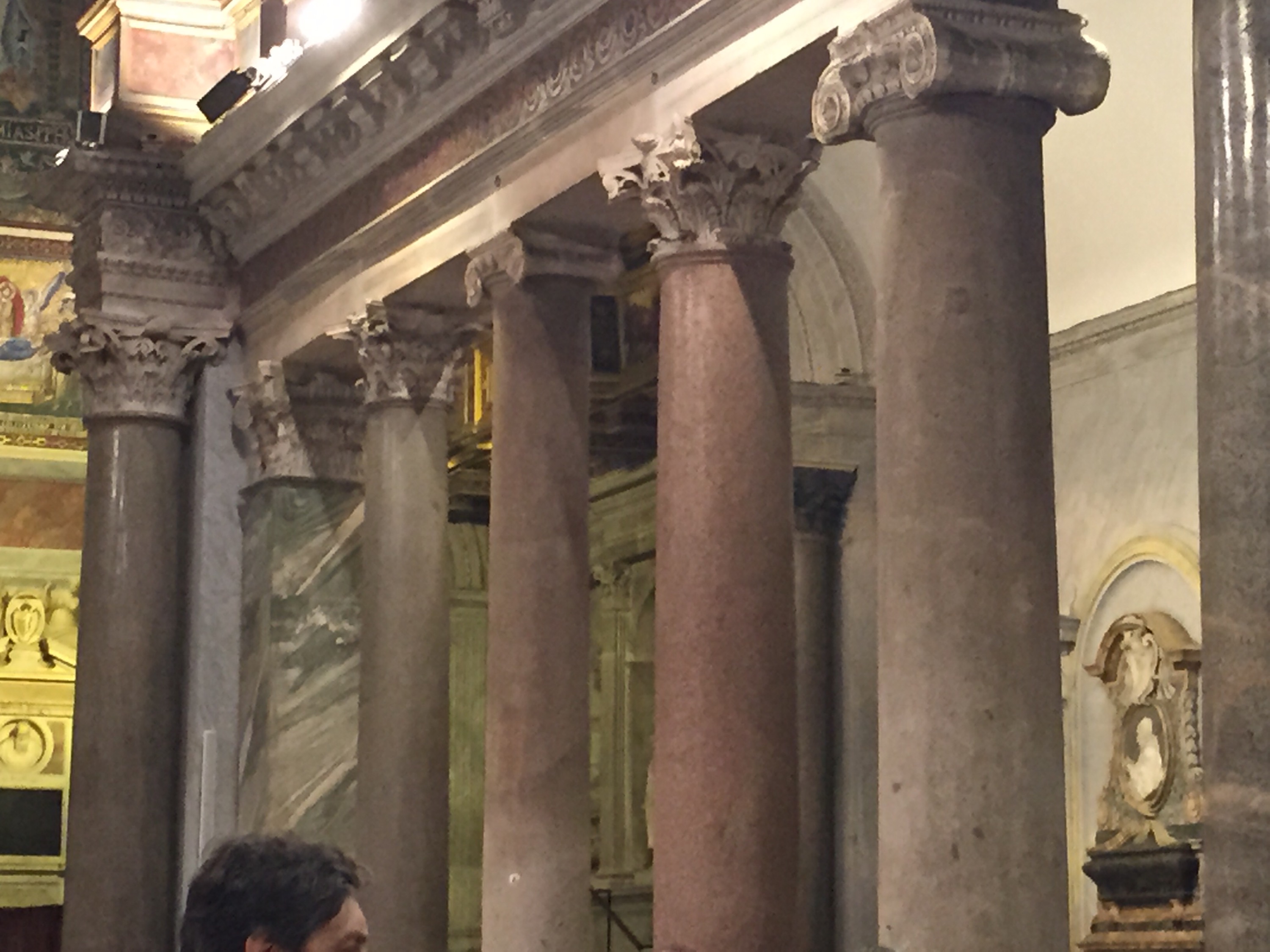
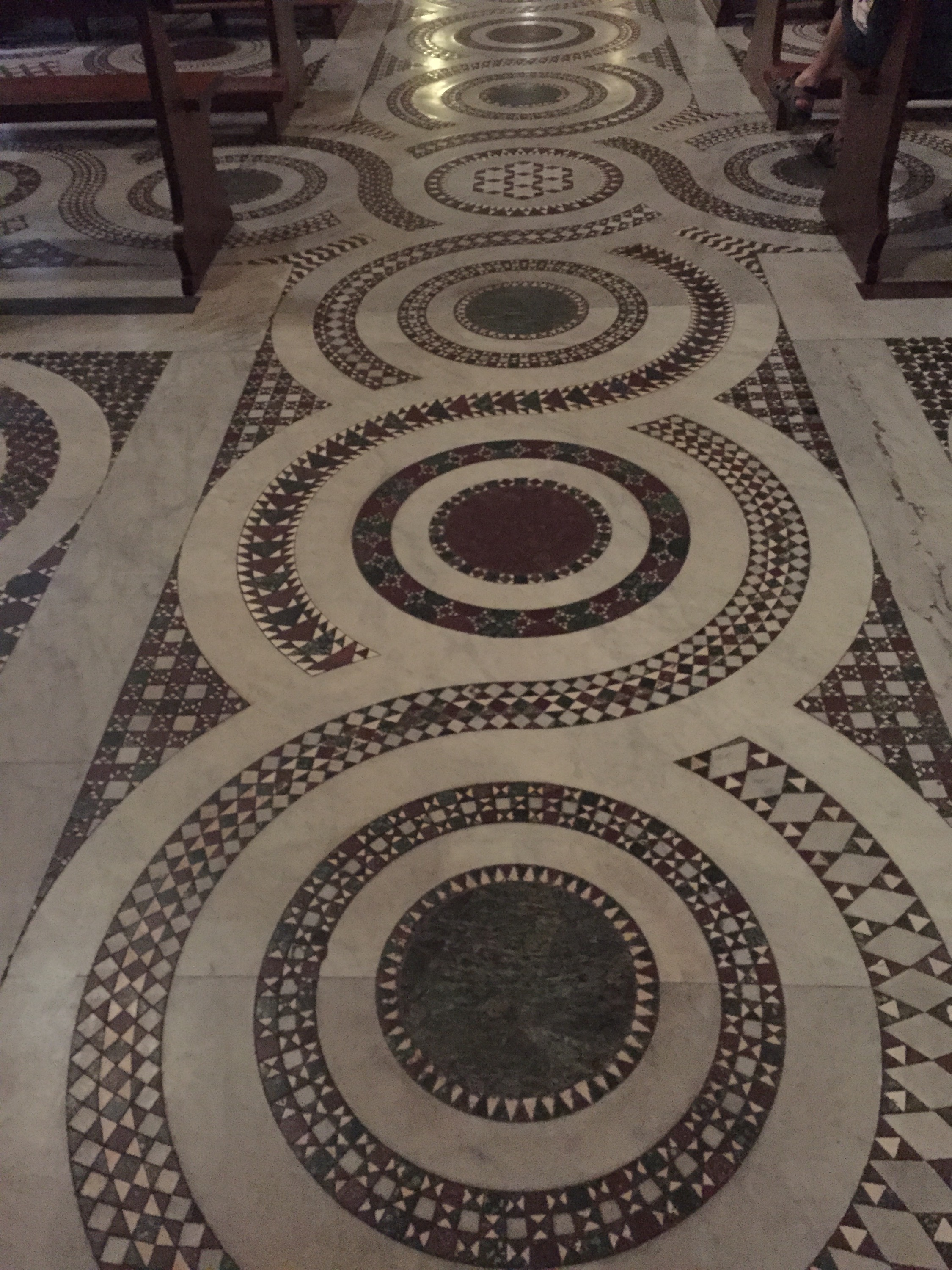
Of course, my favorite church is Santa Maria in Trastevere, wise origins lie in the third and fourth century. Outside, another festival is taking place.   Inside, you can see the splendid columns that come from the Baths of Caracalla, arranged a little inharmoniously, so as to point to their triumph over the pagan world. My friend Lora, who met me here, says that the round marbles pieces in the floor are slices of other pagan columns, according to one theory.  The images of the the saints have lots and lots of hand-written petitions at their feet, as does the picture of Pope John Paul II.

              
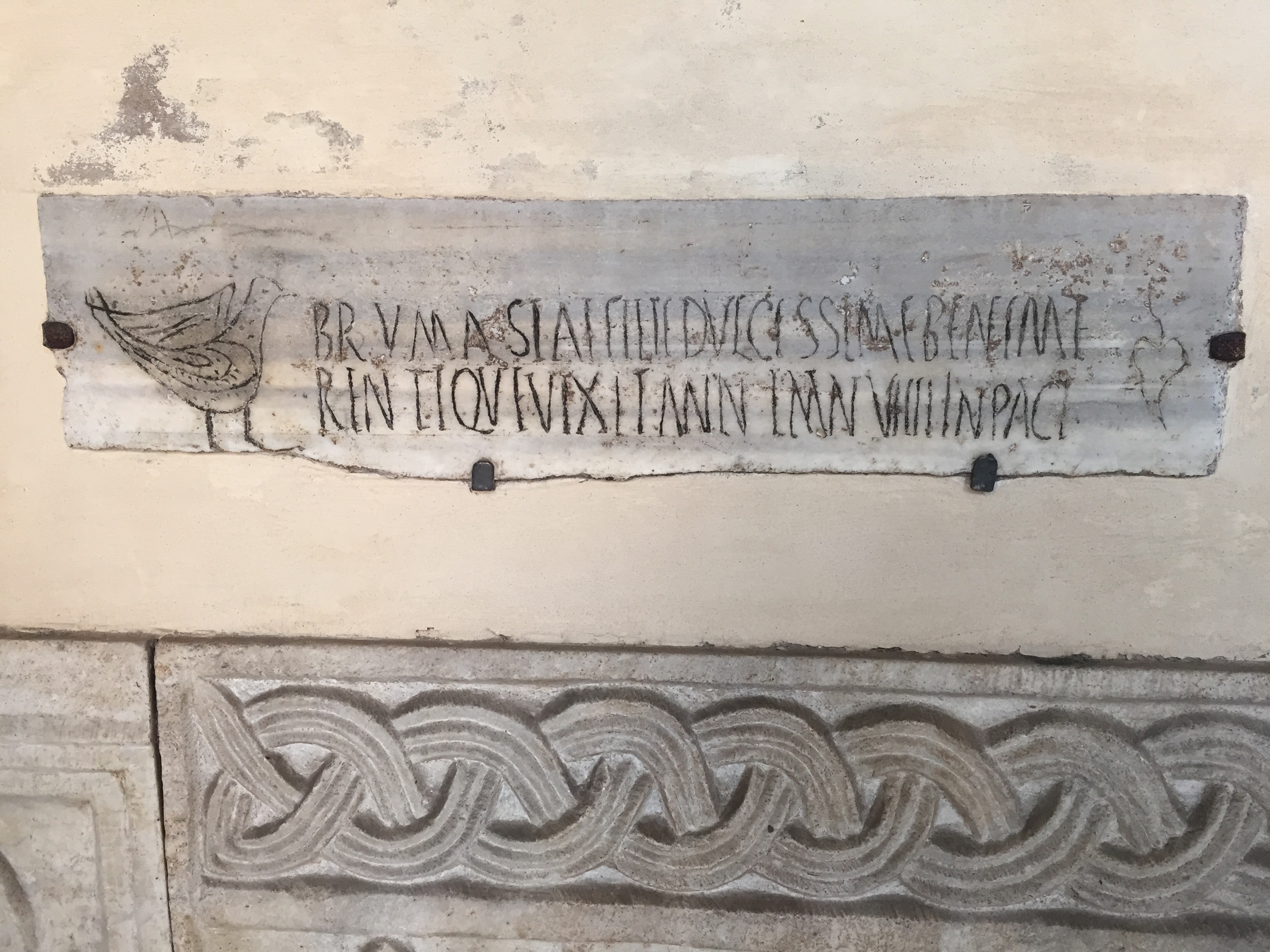
The portico of SM in Trastevere features a number of ancient inscriptions, pagan and palaeo-Christian from the region. Some favorites:

        
Lora and I went out for dinner to a nearby trattoria, the Cave Canem, where we talked about what she’s working on at the American Academy, the catalogue for the Cettamura exhibit next year in Siena, and of course the good old days in Chapel Hill.That night, the Trastevere Cinema Festival has a treat. “Cinema Paradiso,” with a talk beforehand by the director, Giuseppe Tornatore!       

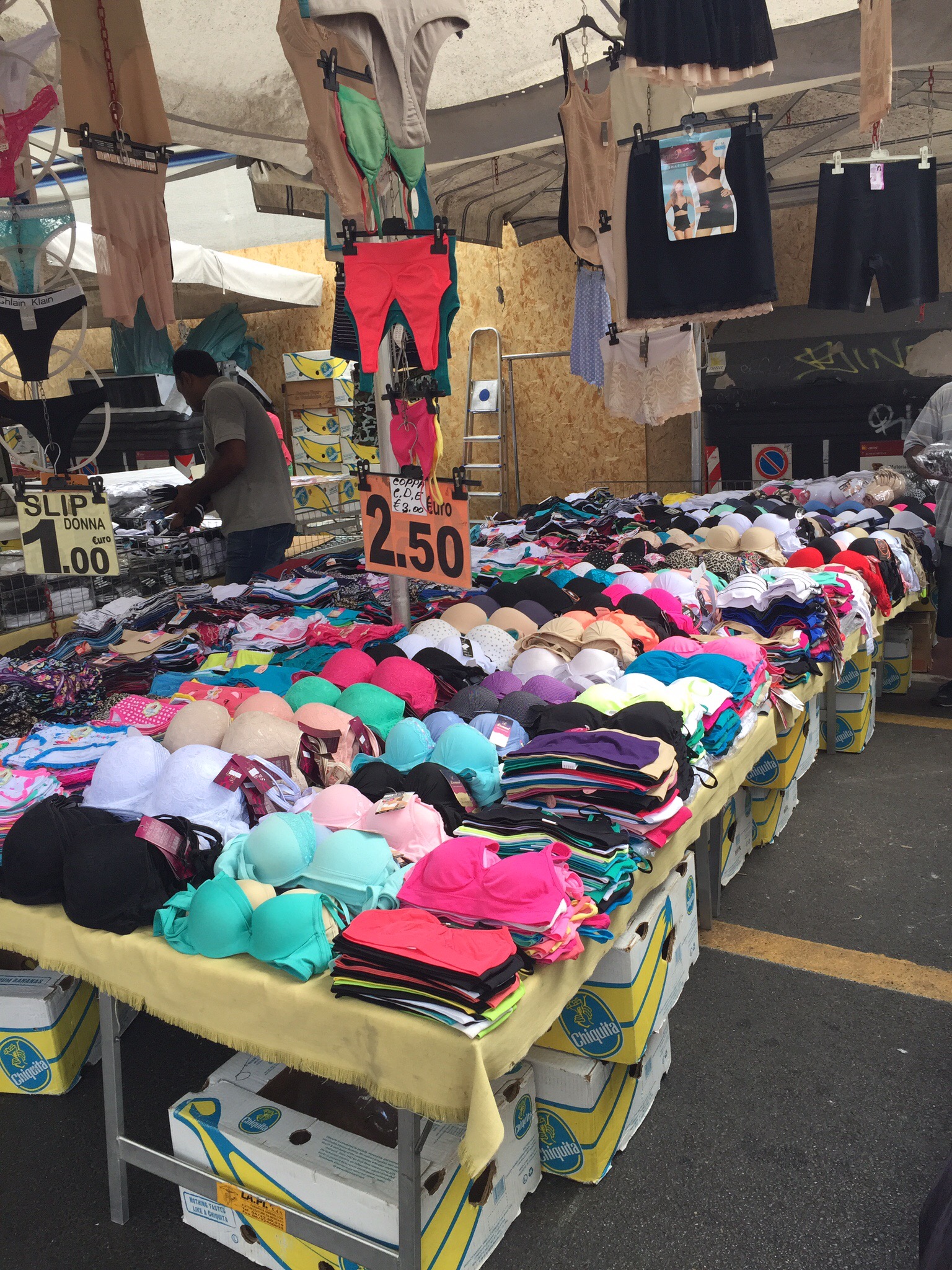
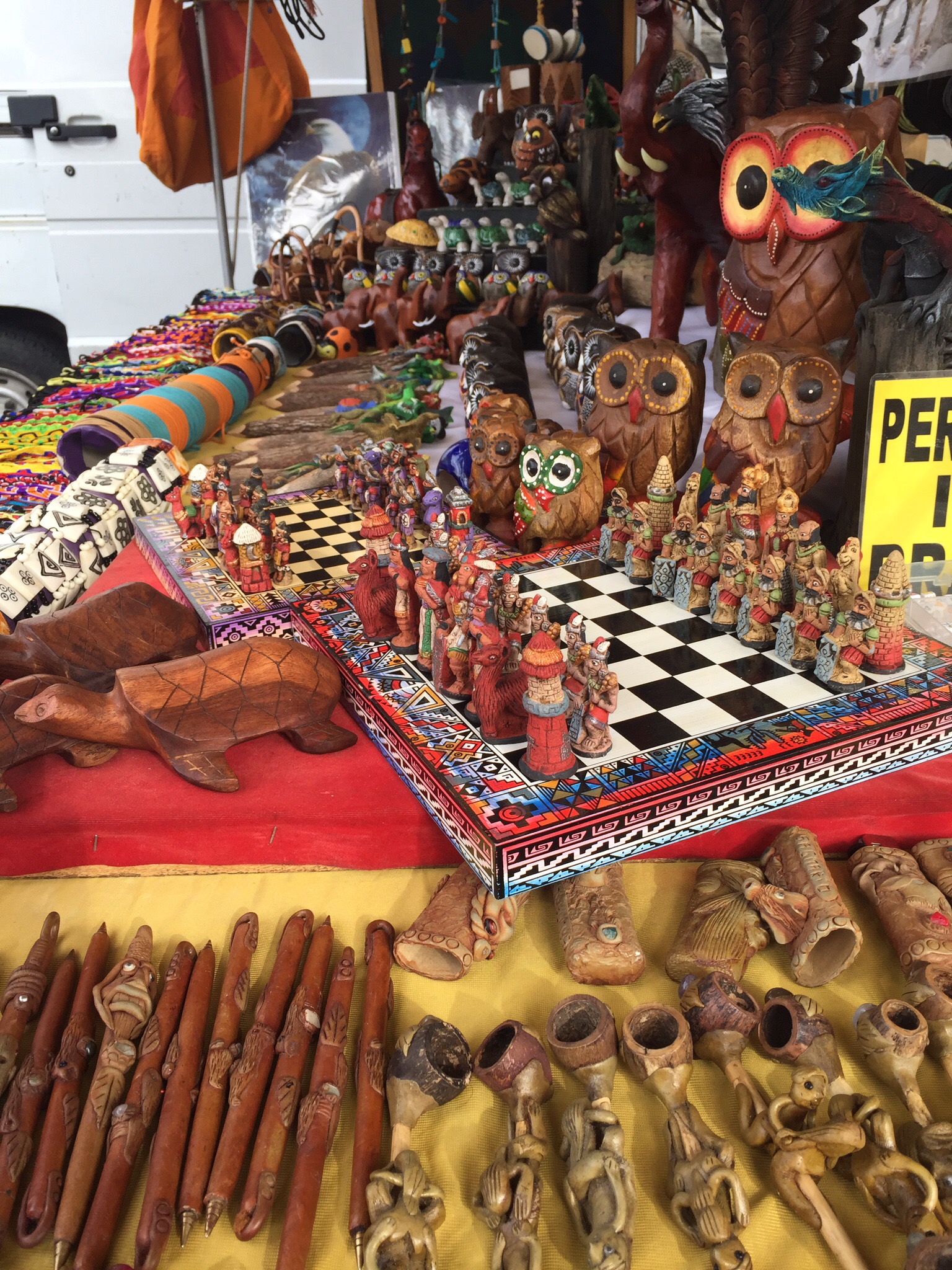
Sunday morning I must leave, but not before visiting the Porto Portese outdoor market, arranged for as far as the eye can see with tables full of clothing and bric-a-brac just beyond the old Roman archway. You see all sorts here—some nuns are haggling, expertly I might add, and there’s a woman who’s walking through with a bullhorn that she occasionally pulls out. I thought she might be part of a political protest, but no, she’s just denouncing some of the vendors whom she feels have ripped her off. The other sellers agree that, indeed, that guy is corrupt and very much unlike themsleves. The flea-market is the perfect ending to a perfect visit. Ciao Trastevere! 


Posted in Uncategorized | Leave a comment

Dura! Up and Around Vesuvio

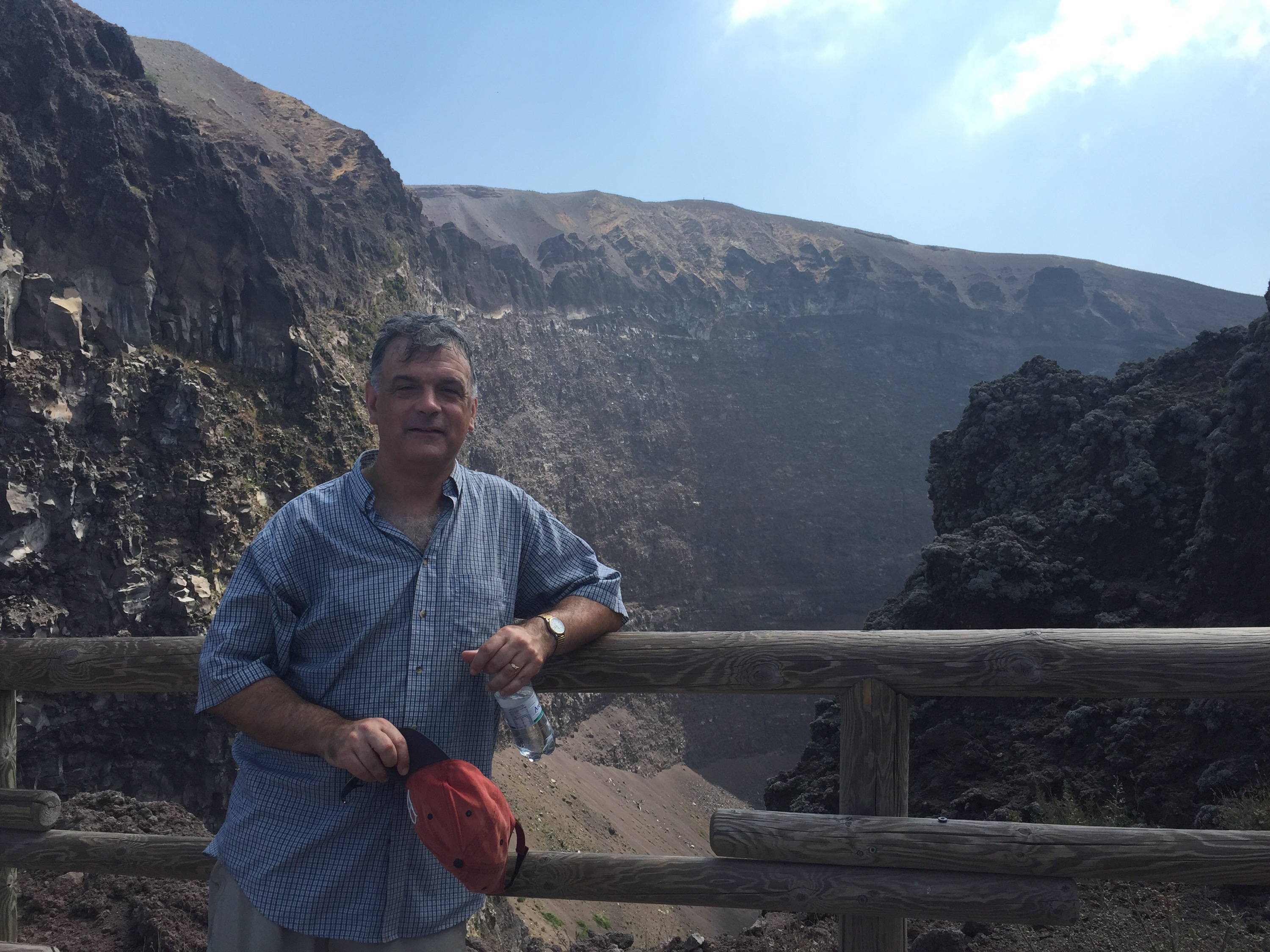
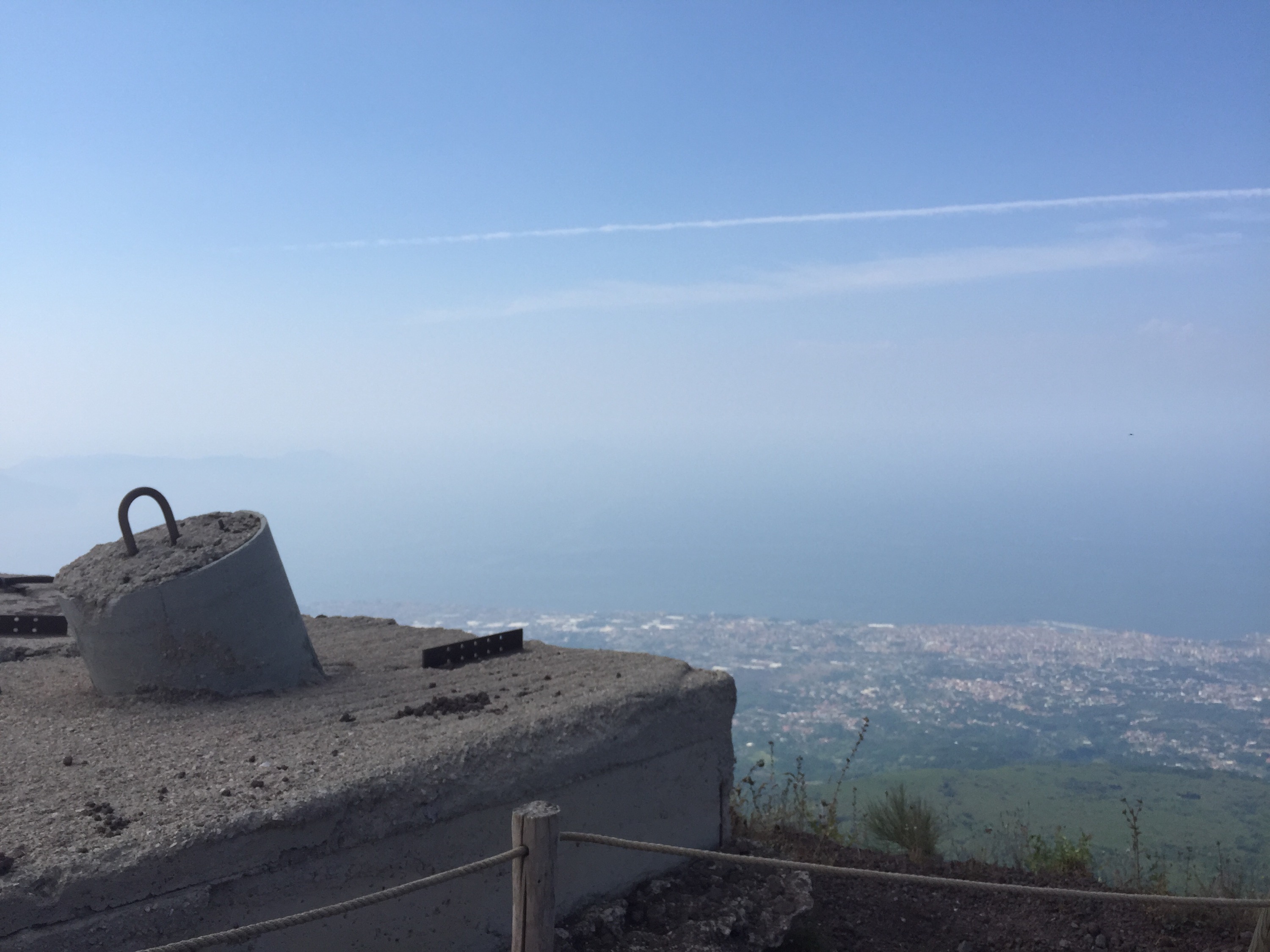
After some pointless rearranging of seats, the minibus left more or less promptly at 10 am from Pompei to Vesuvius. “In twenty minutes it ascends 1000 metres,” says the brochure, and I believe it. Up the tortous, narrow, and busy road we go, more like a rollercoaster than anything else, approaching each switchback with a perfunctory toot of the horn. If someone’s on the other side, good luck figuring it out. A few tense negotiations with large vehicles ensue, but I am looking out the window at the Bay of Naples with its tankers looking like toys far below. 
    
    
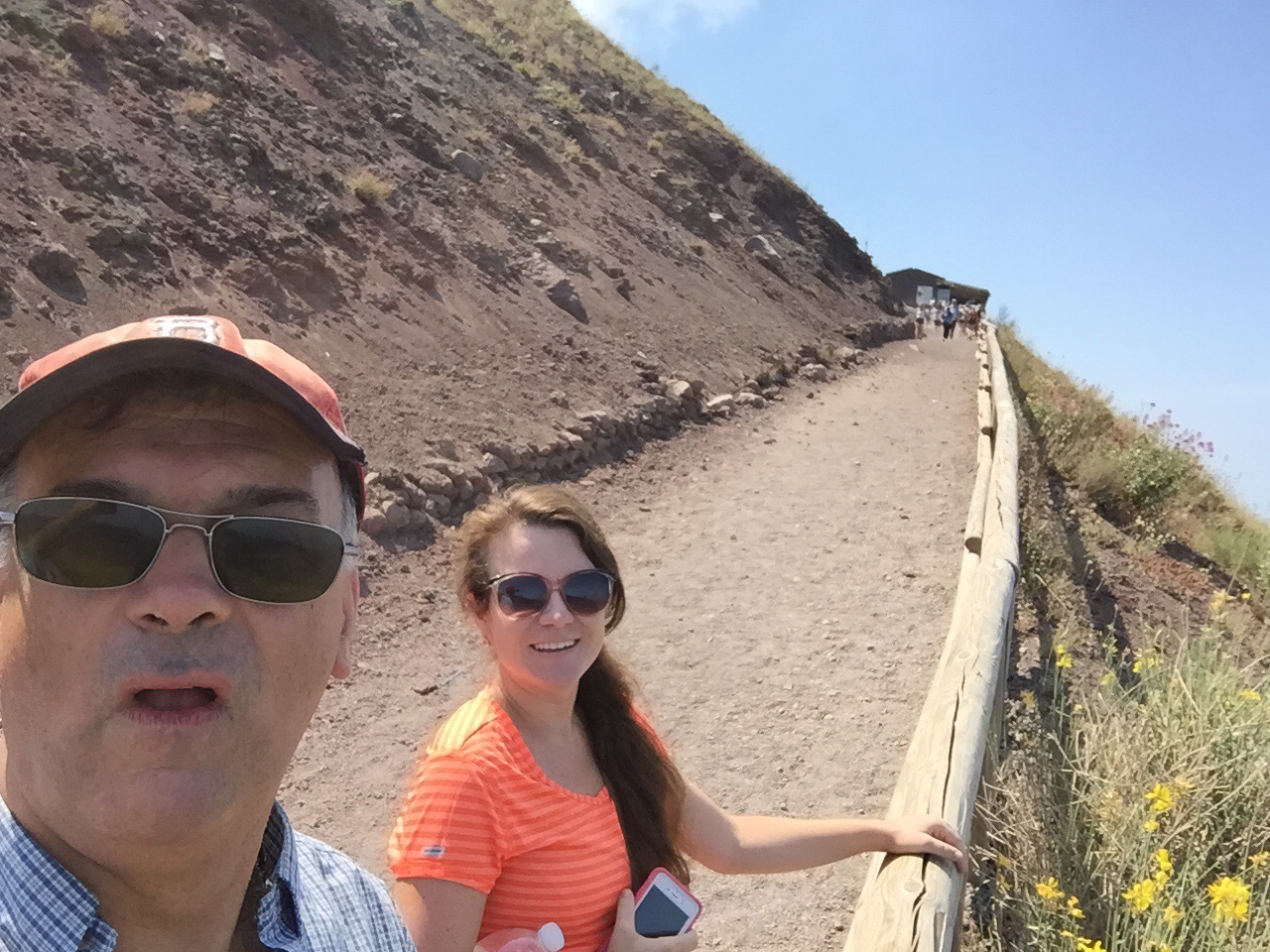
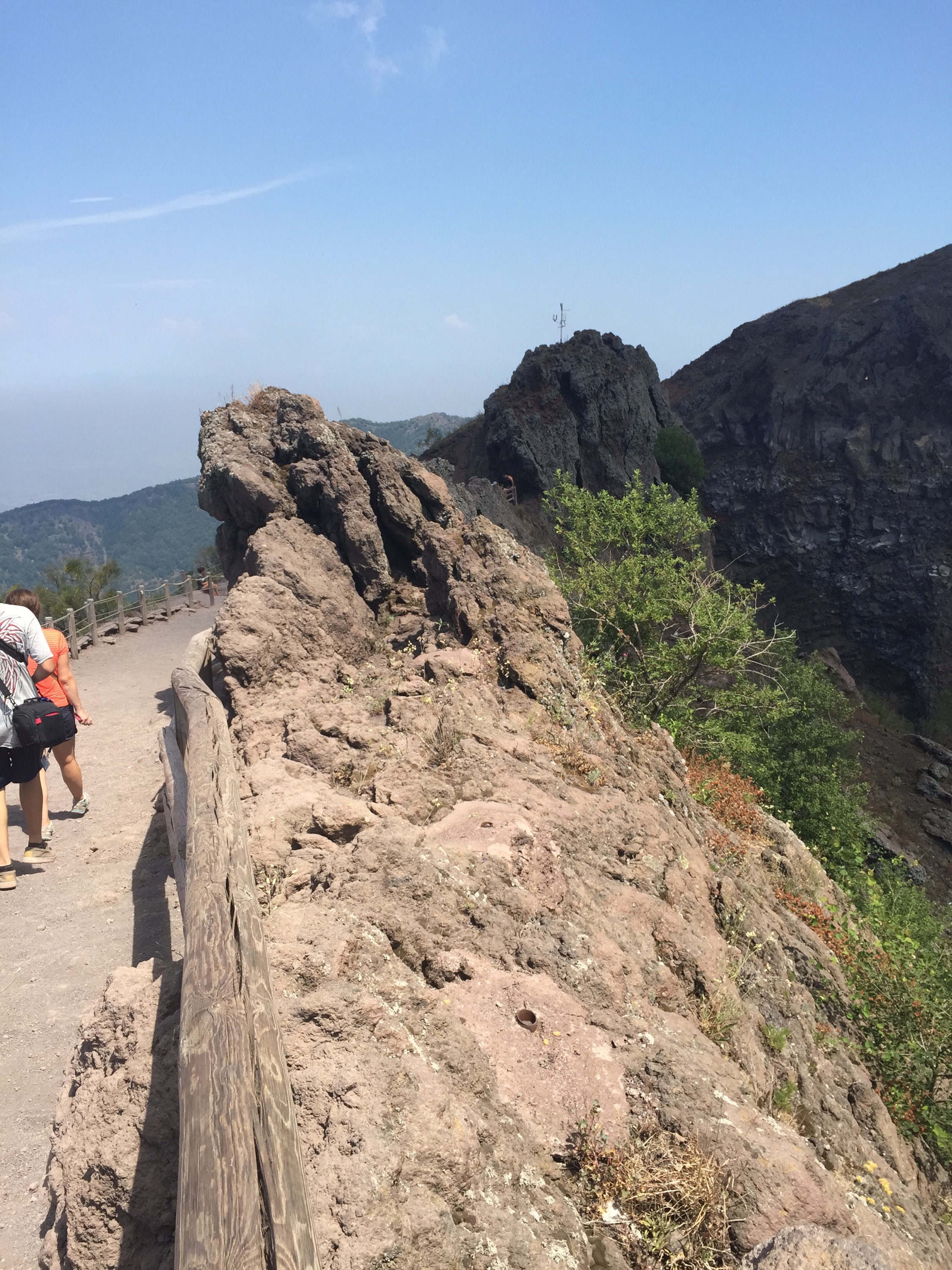
    The bus arrived, and out we get, withhastily written instructions to be back by 12:10. “Plenty of time,” I say to Jackie as we begin the climb over the sandy, stony path just as winding as the road. German grandparents lead grandchildren along in good Teutonic order. I fall behind quickly, and can feel the strain in the small of my back. “We should call this Sewanee program something like Fitness 101 in Itsly,” says Jackie. I suggest “Sweating to the Oldies–the Ancients!” A barrel-chested man with a yamulka on his way down looks at me on one of my frequent stops. “Dura!” He says. “It’s tough!”


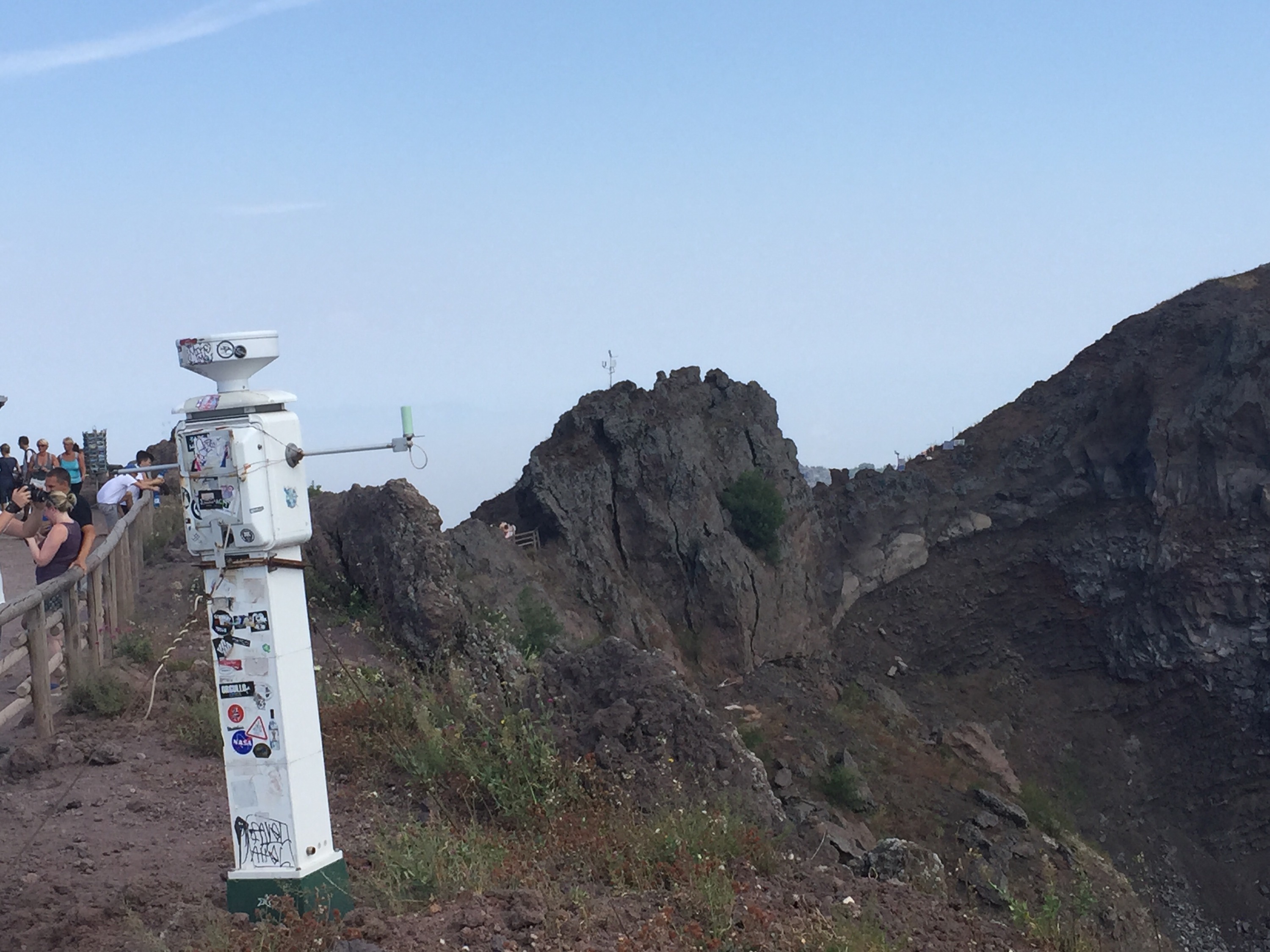
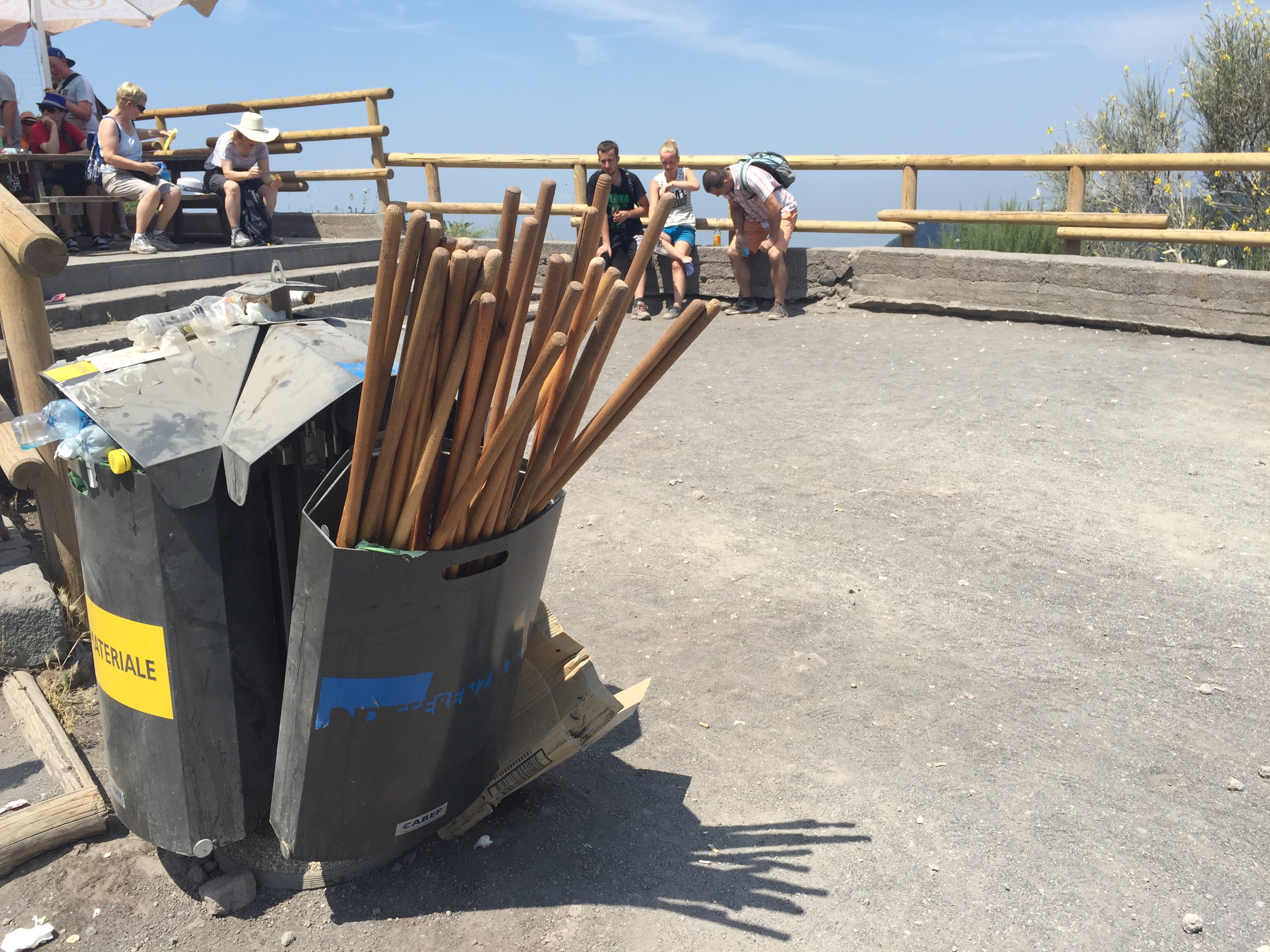
At long last, we reach the top and peer into the crater, 2100 feet in diameter and 800 feet deep. Now and again, the smell of sulfur wafts through. What appears to be a gas dispenser is set up–covered in graffiti, naturally–and far above, seismographs can be seen. The remains of the funicular are visible as well, dedtroyed in the eruption of 1943, a grim reminderthat Vesuvius is dormant not extinct, not dead but dozing. 
         
Along the top, people make their way around the perimeter. Two younger English guys are discussing how the place makes them think of Gothic novels and Burkean ideas of the sublime. Pretentious? Profound? One’s thoughts do tend toward the otherworldly here. Religious tokens, retablos, etc., to St.Mary and others, dot the trail, but Jackie and I hardly have time to look at them. Time is running short, and these selfies aren’t going to take themselves! We fairly skip down the hill to catch the bus almost on time. 


Jackie says the walk down is working out different muscles, and it’s true that I can feel pain in different parts of my body rather acutely. I’d do it again, but my legs might need a year to recover. “Dura,” says the man. “It’s tough.”


Posted in Uncategorized | Leave a comment

Around Napoli

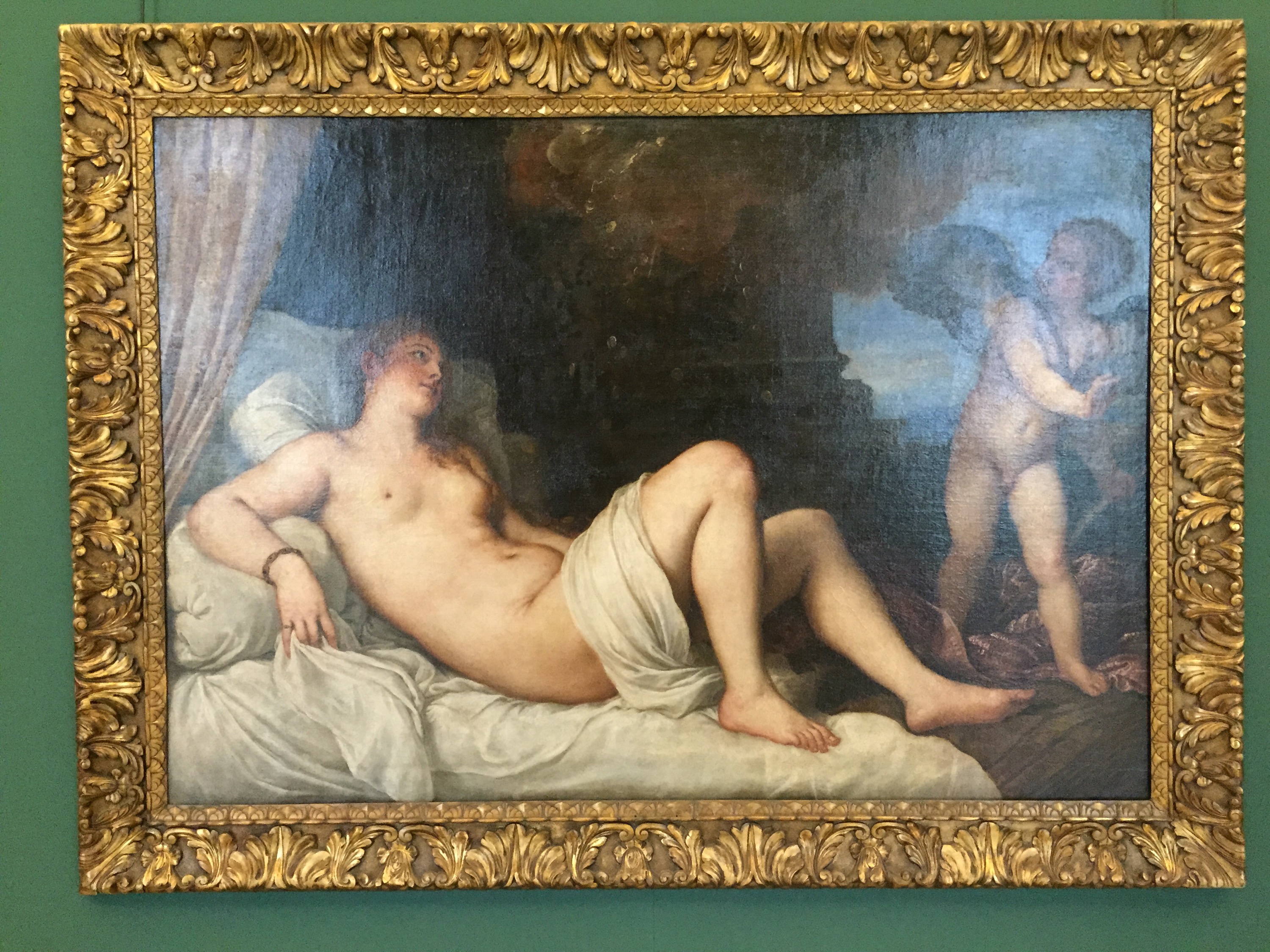
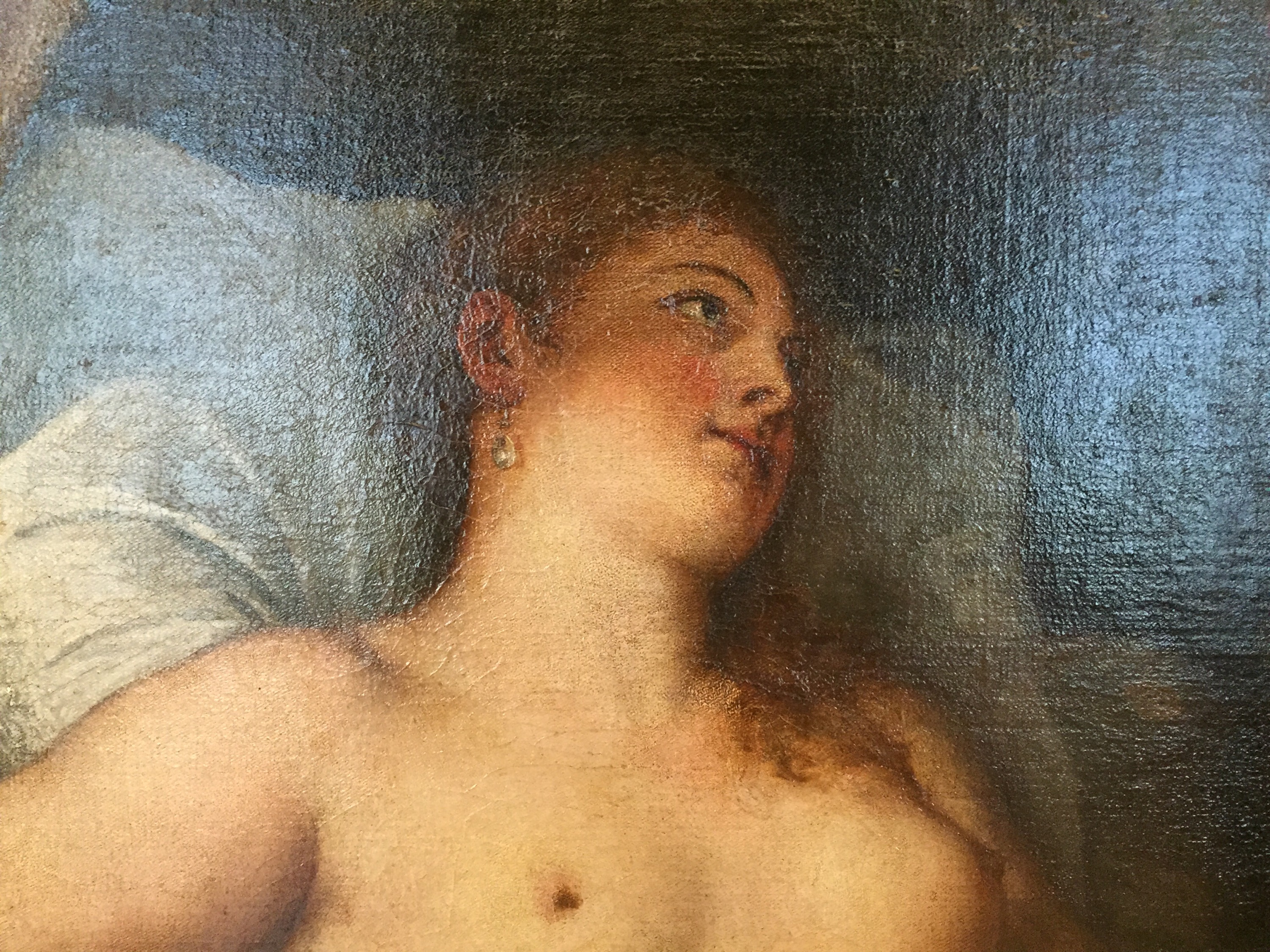
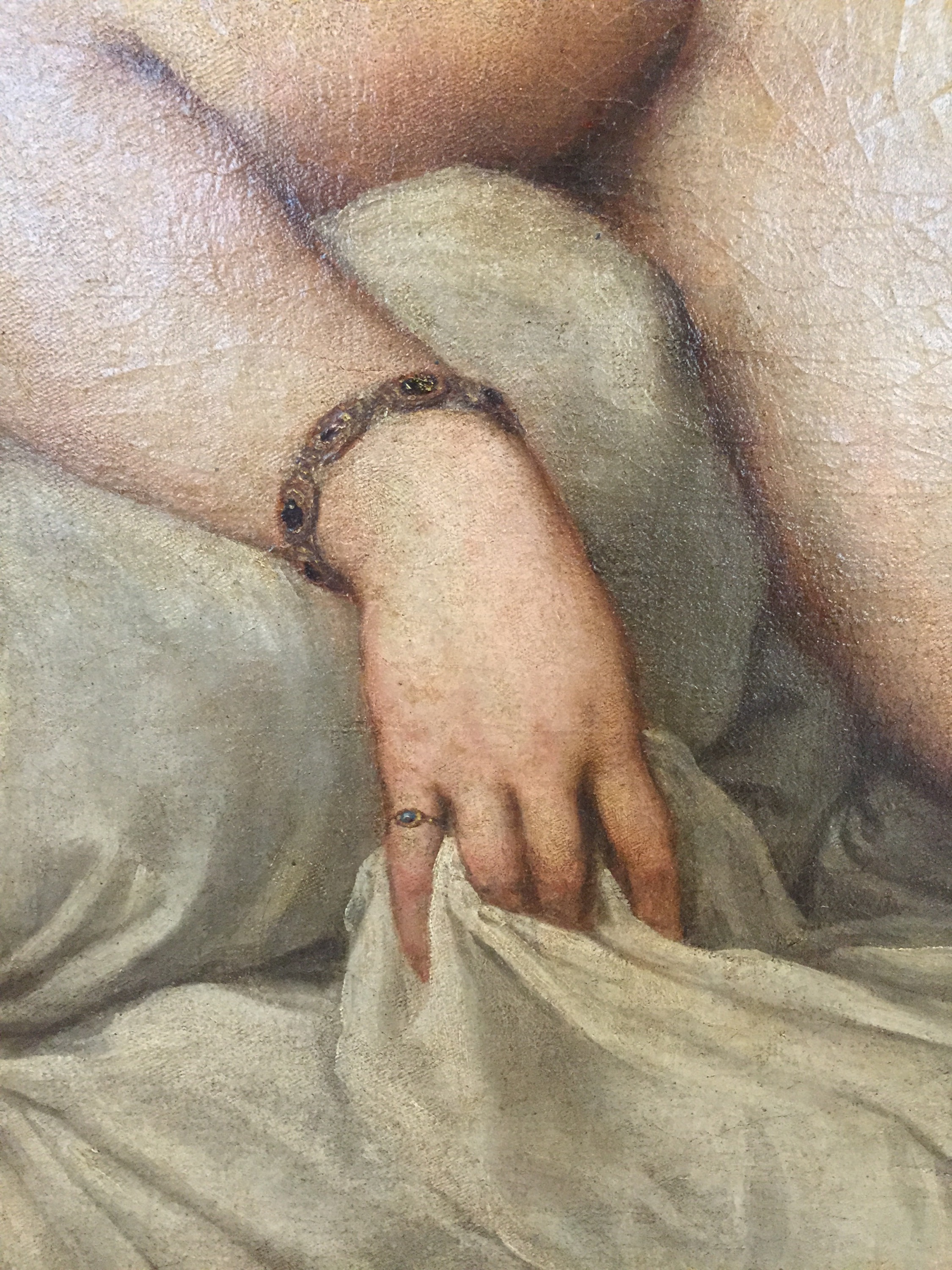
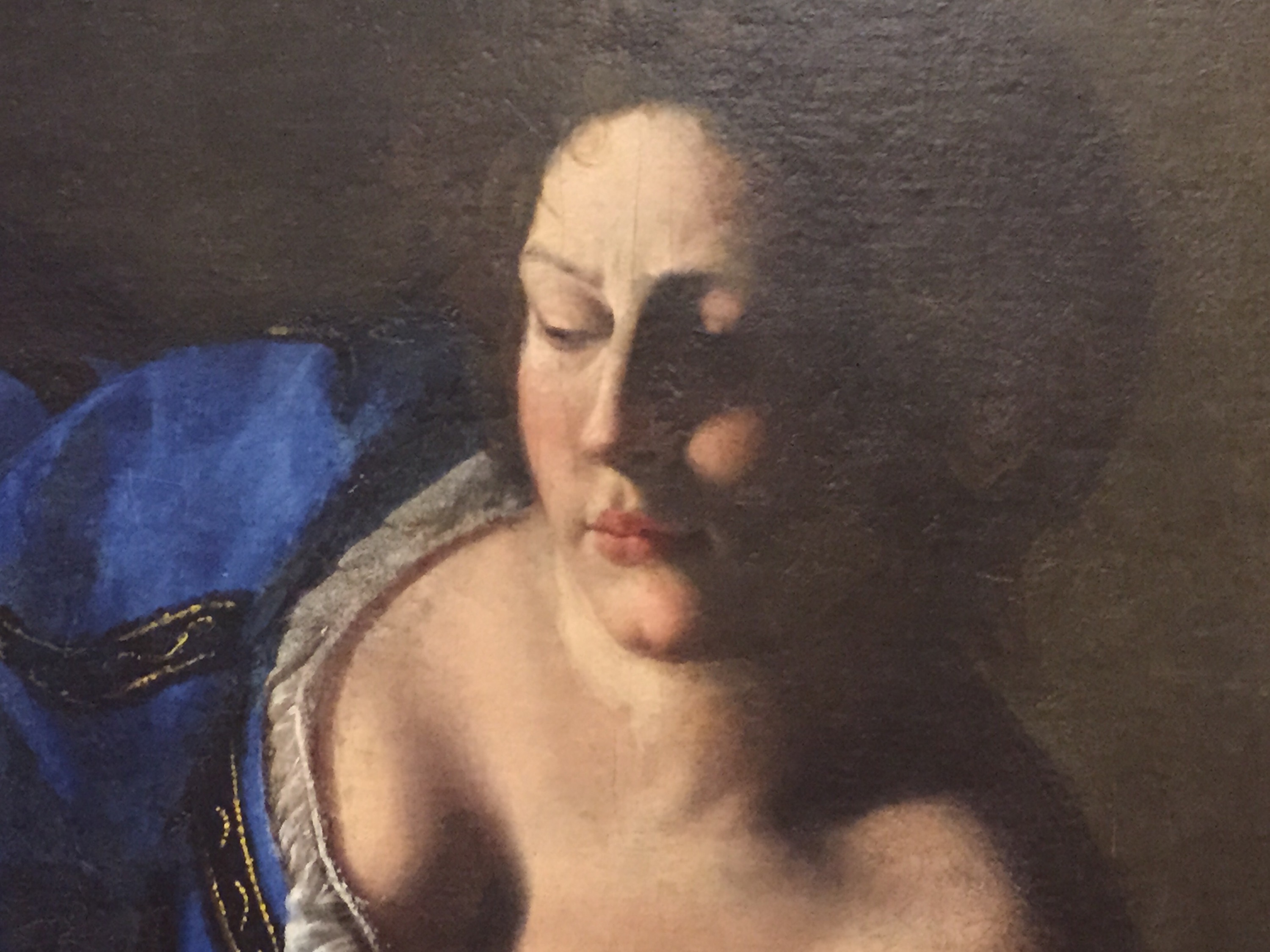
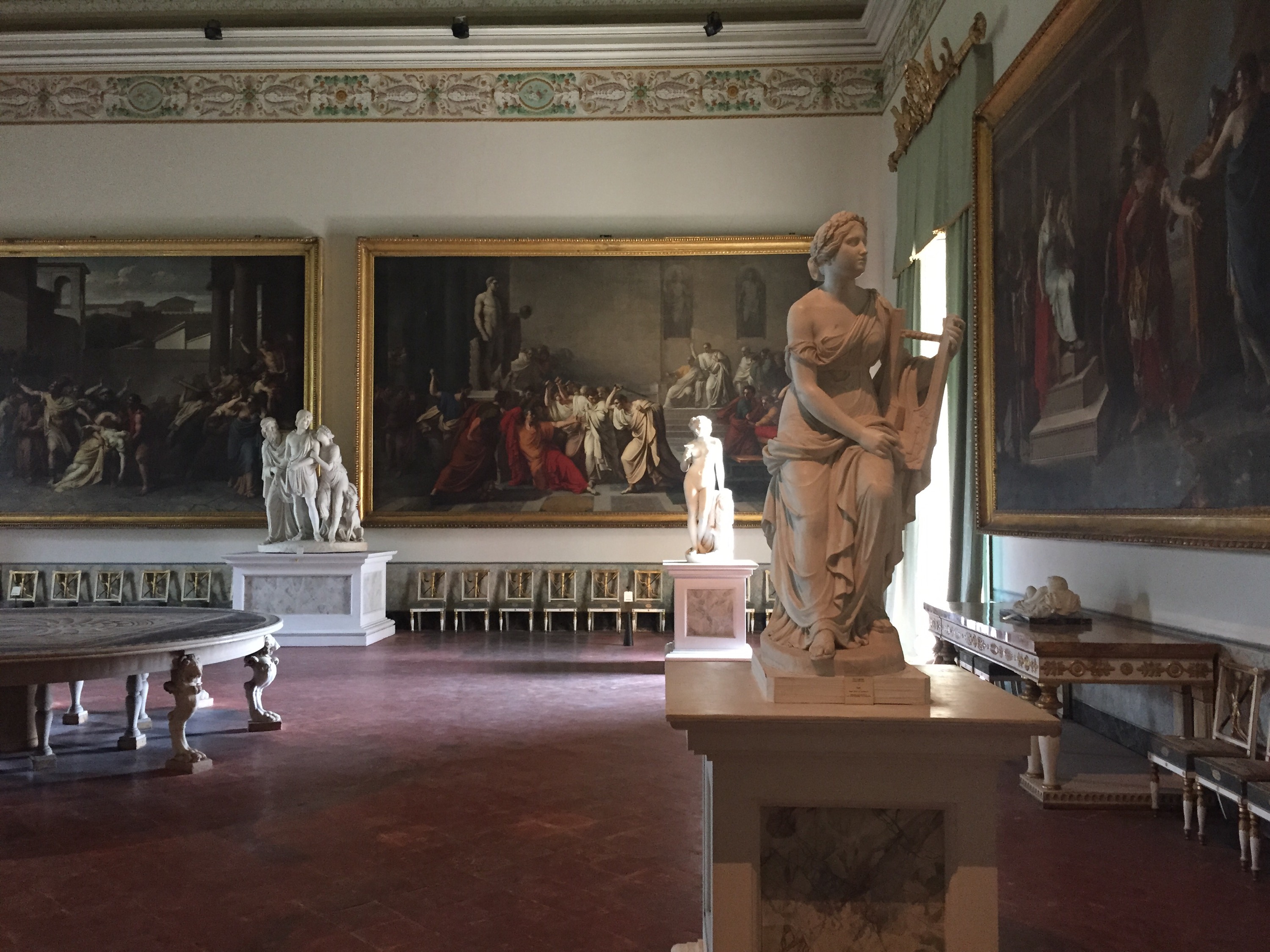
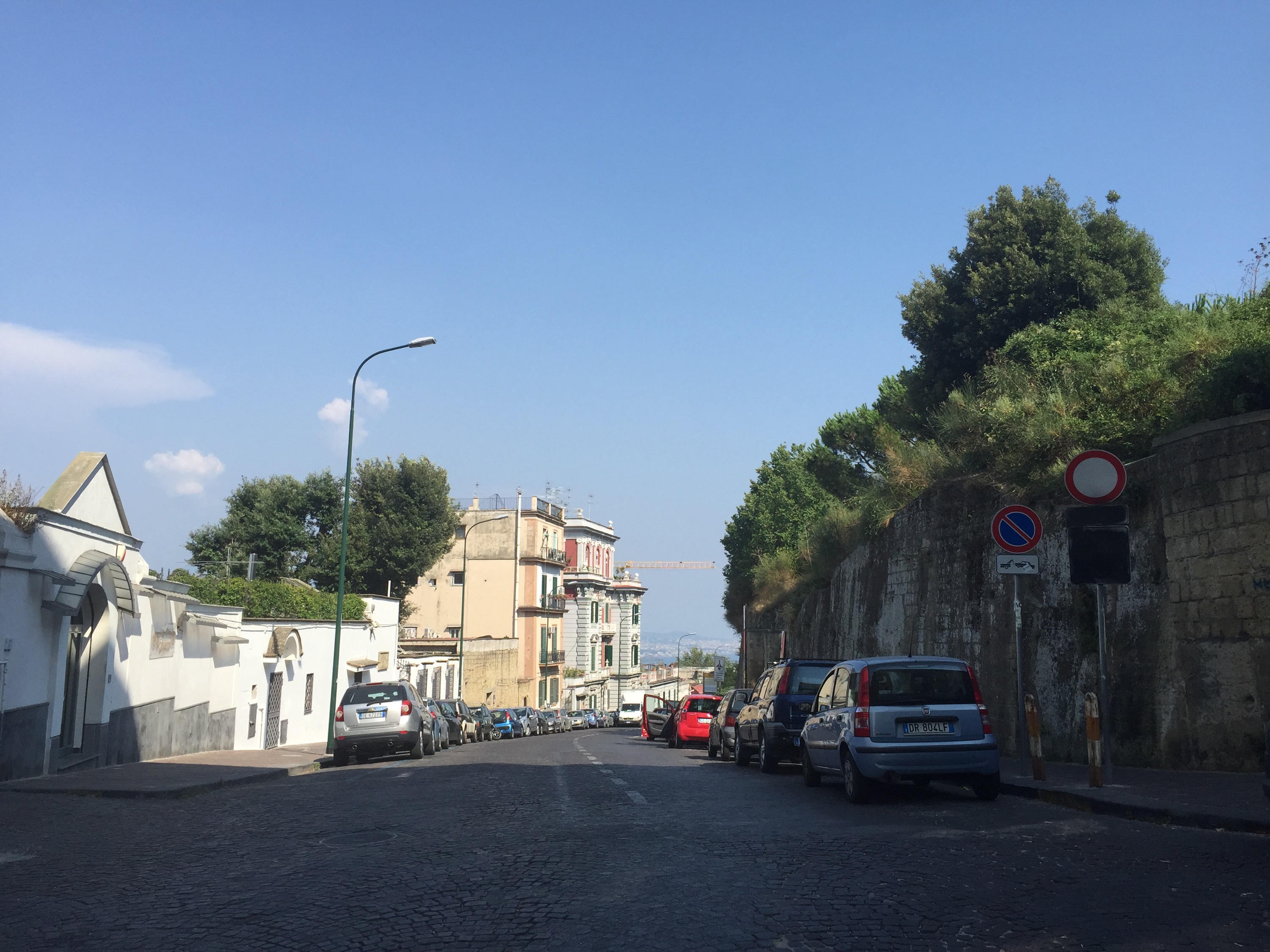
Its been a long day in Naples, up to the Capodimonte museum, to see some incredible works of art– although the air conditioning was out! So, a museum full of masterpieces in 90 degree heat. Some amazing pieces though, including Artemisia Gentileschi’s self portrait as Judith cutting off Holfernes’ head. Sometimes coming across a painting is like seeing a celebrity. It was thrilling. Titian’s Danae is here. Also, Camuccini’s Death of Julius Ceasar in situ is remarkable. We couldn’t go into the room, but the table actually has a mosaic from Herculaneum in corporated into its top! Lets not even talkbabout the room mafe entirely of porcelain.


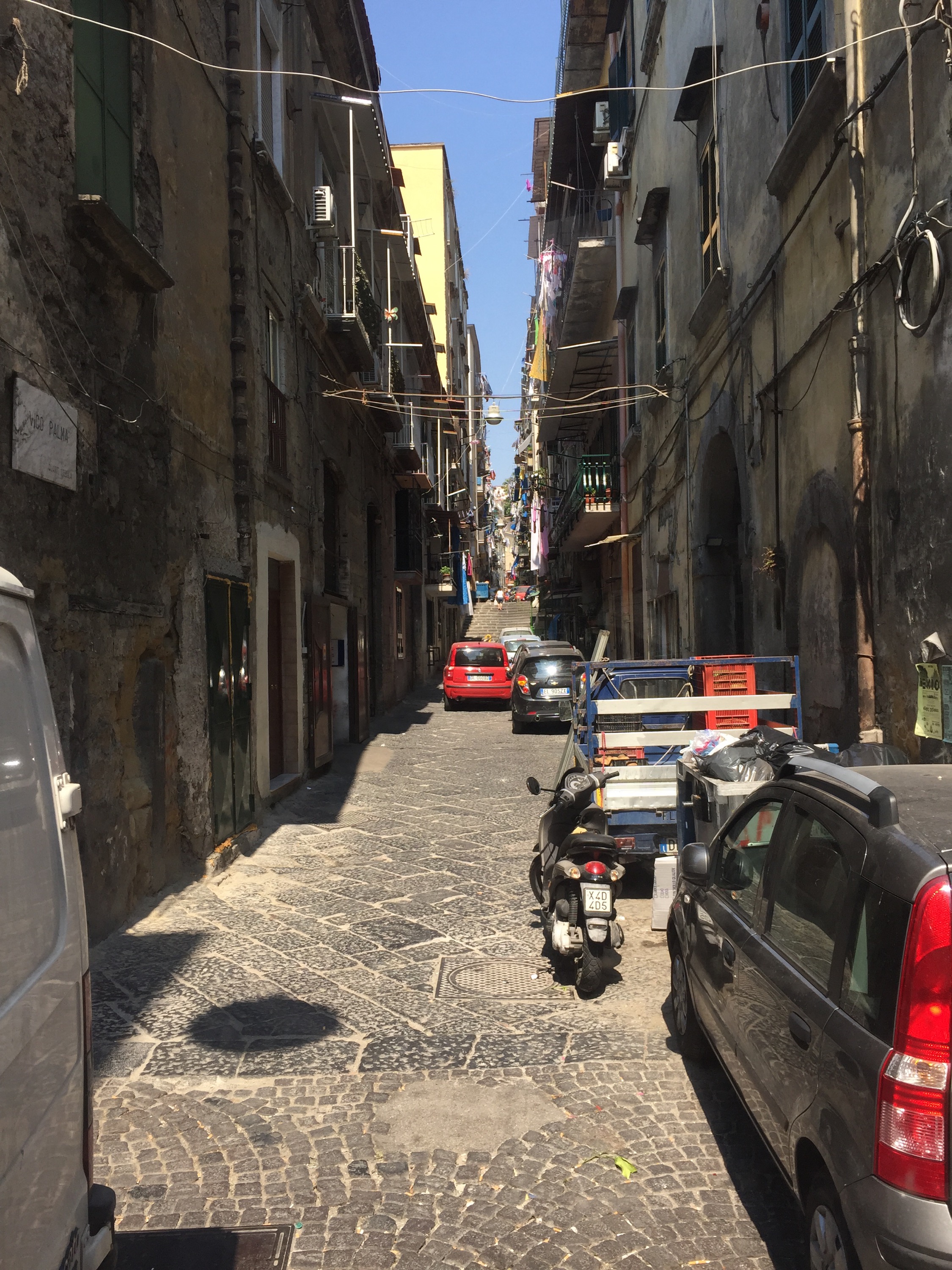
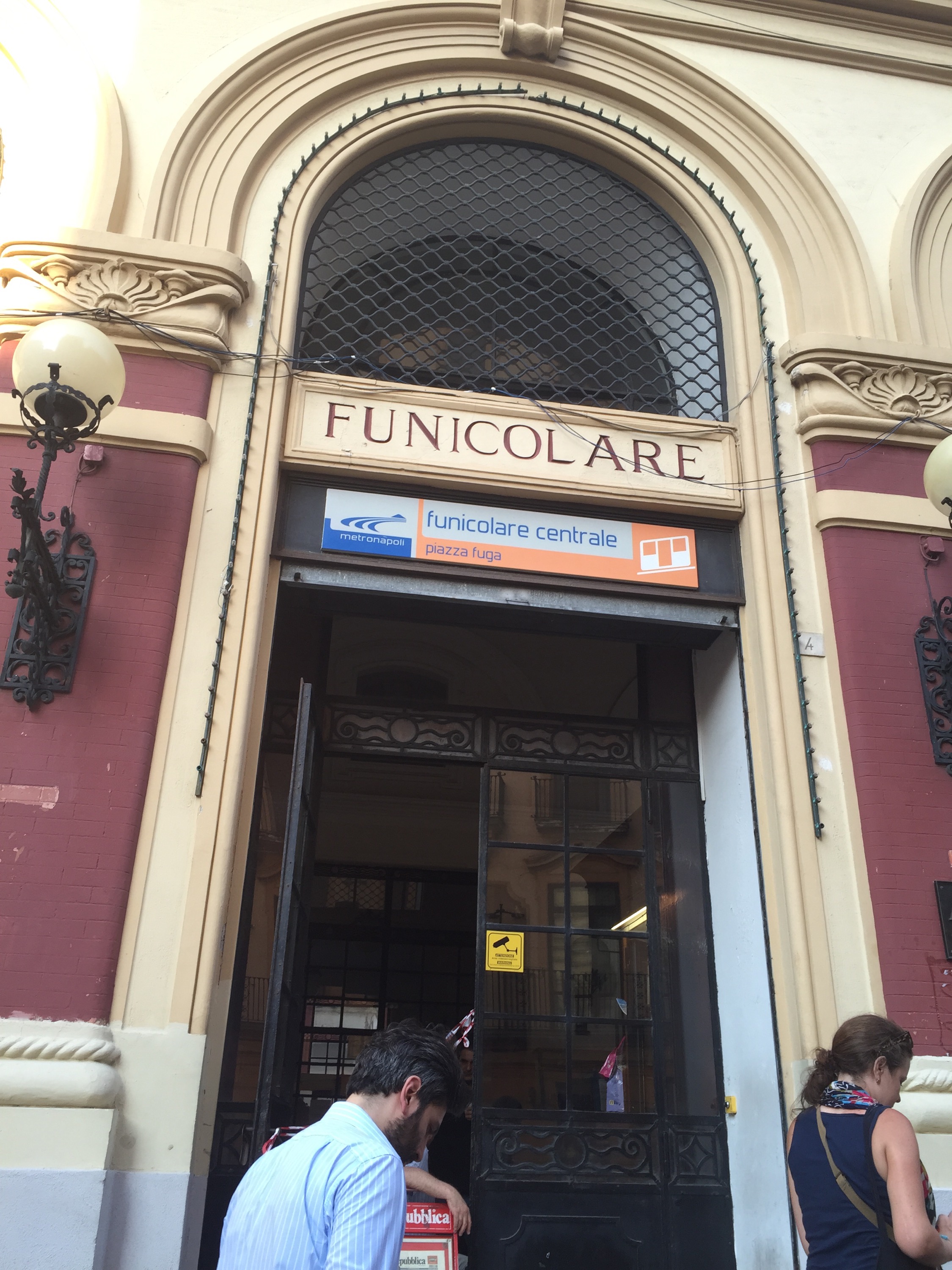
 We made our way down by foot through some very gritty narrow Neapolitan streets into the Rione Sanita, only to discover the church and catacombs were closed! We wandere around and miraculously came across a little bus that eas going to Piazza Cavour, where we took the train to Montesanto in order to get the funicular up to see the Certosa di San Martino, high above the city.


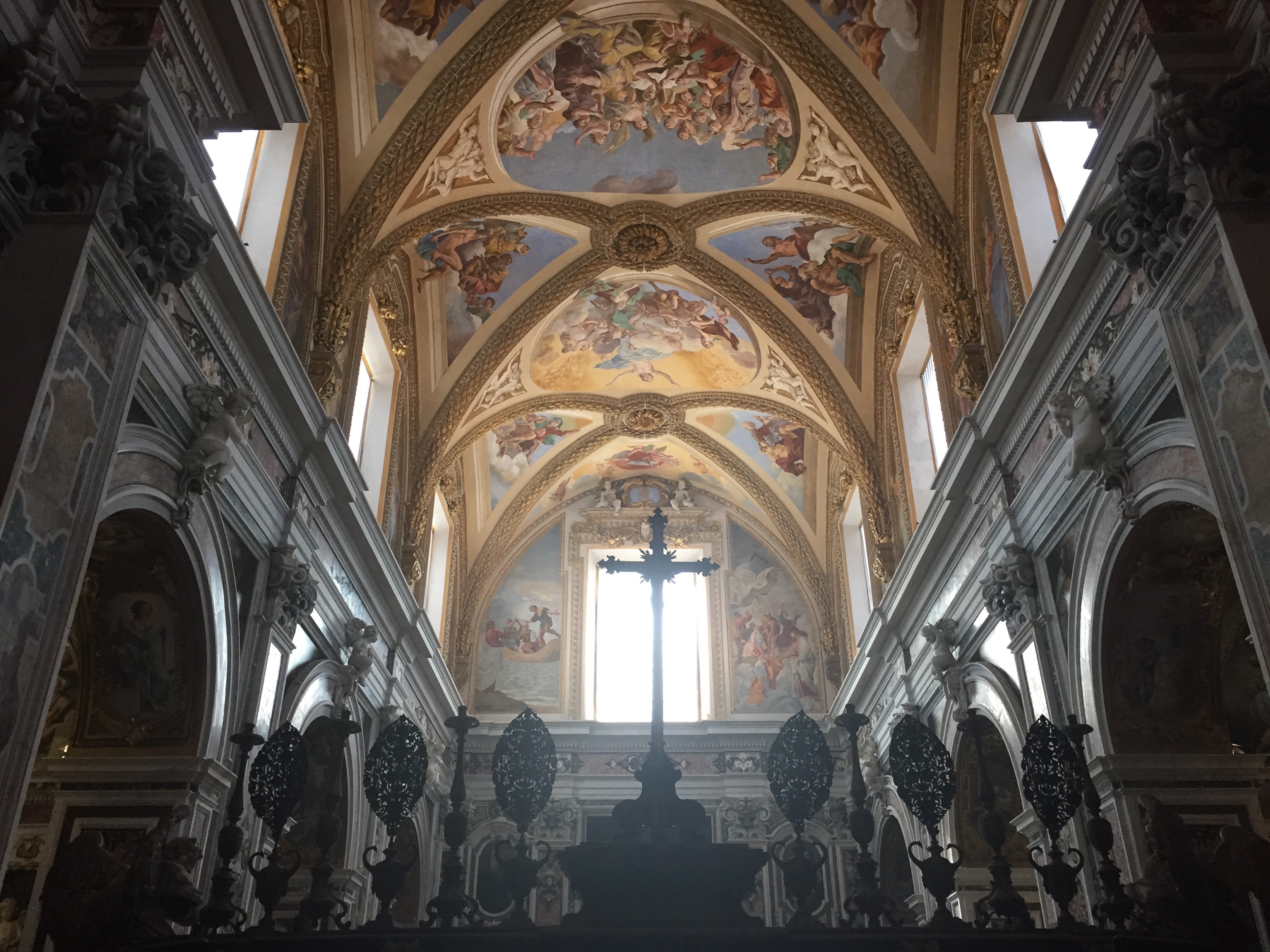
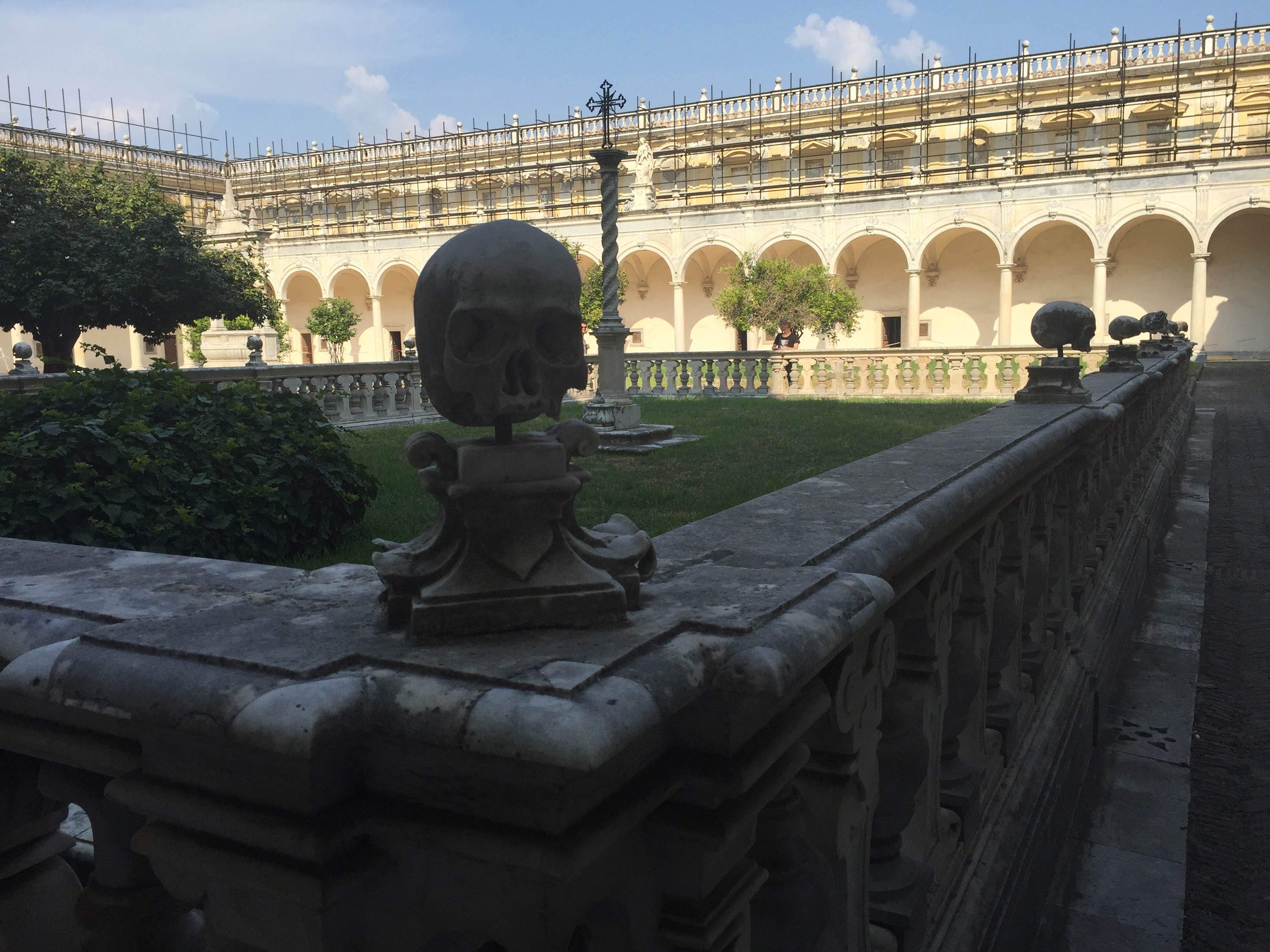
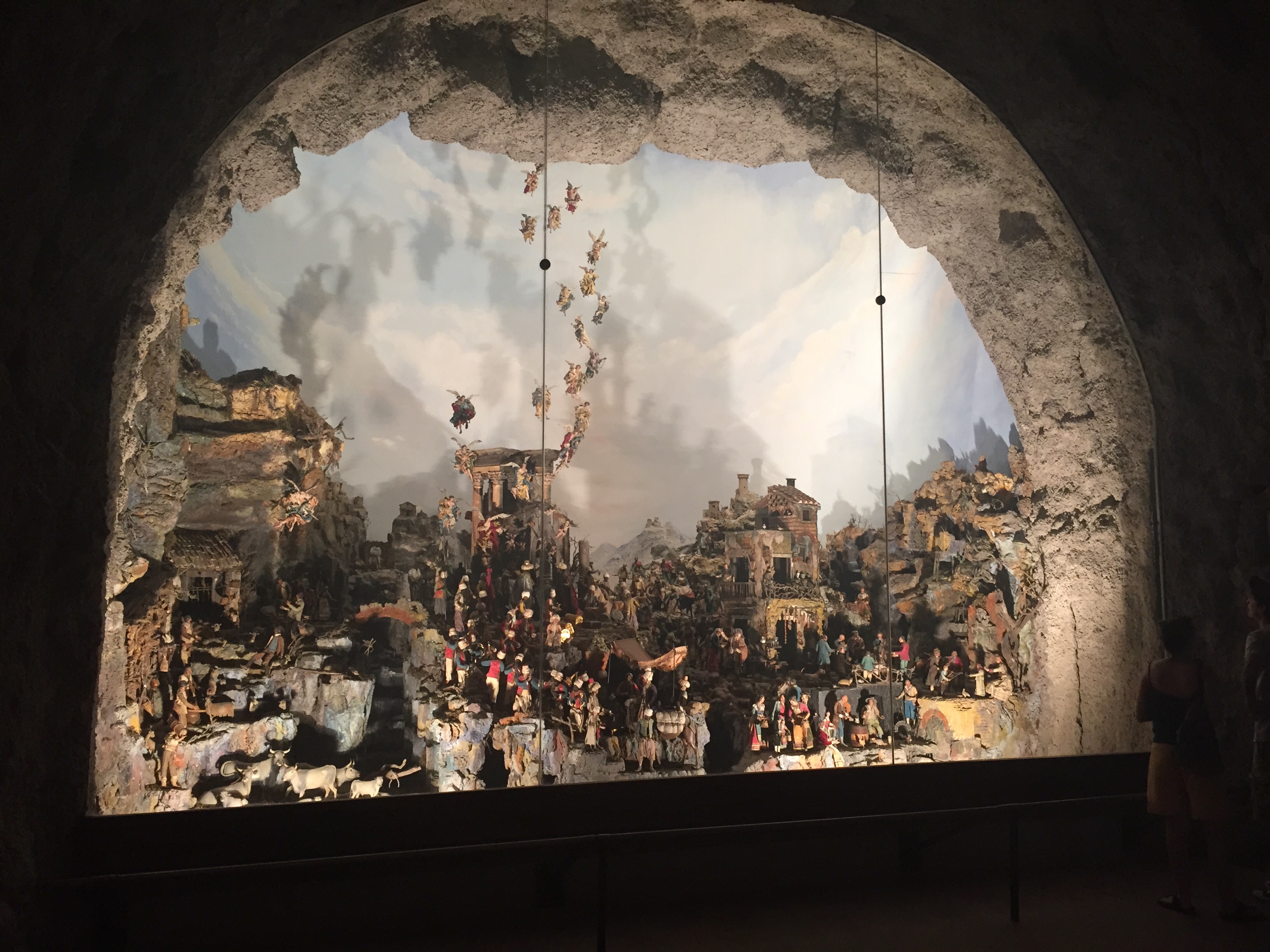
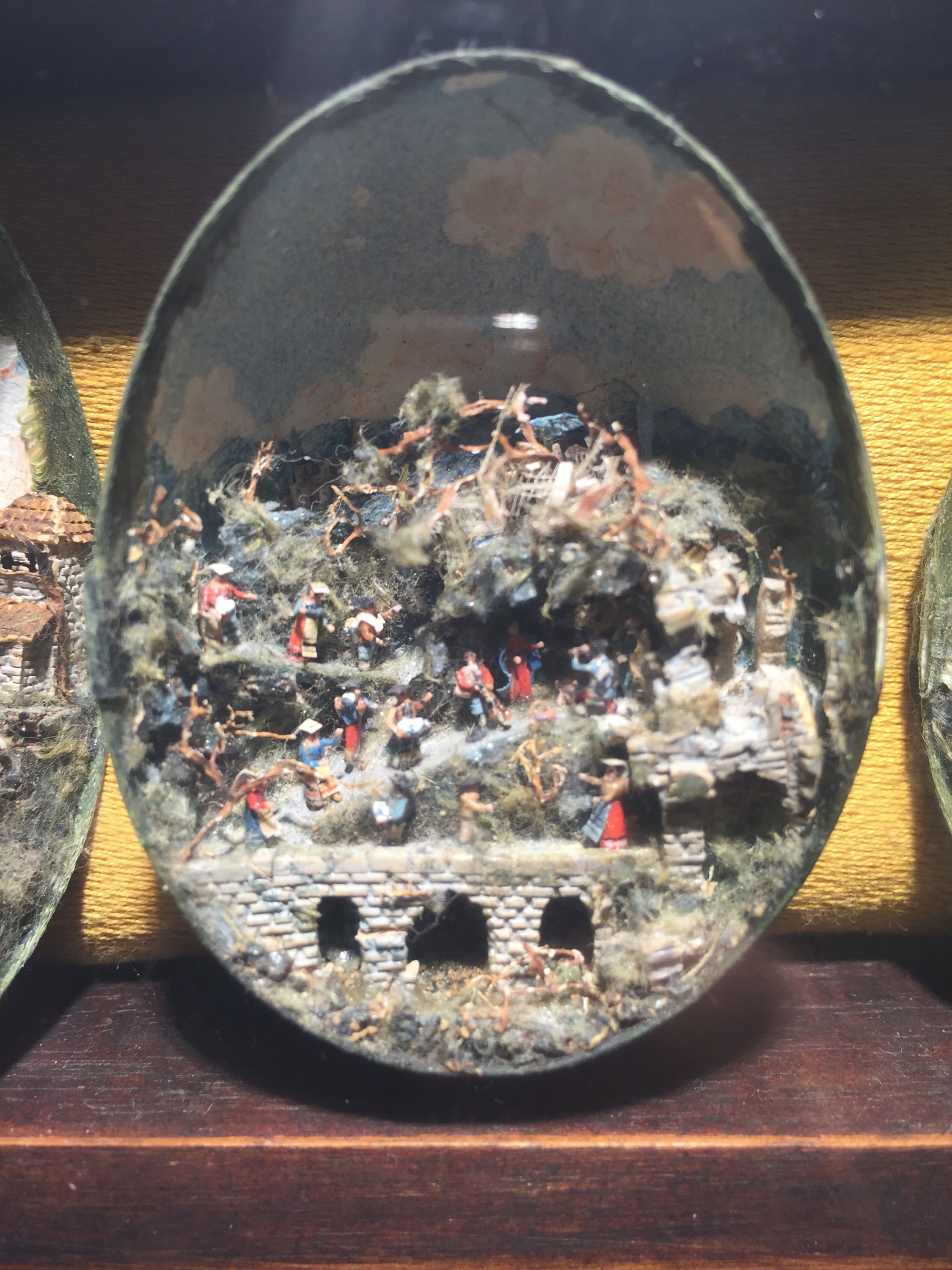
The Certosa was formally a Carthusian monastery, then a palace, and now a museum . “There’s something here for everyone, ” says my new Sewanee colleague, Jackie. She’s right– the orbste church, the largest collection of mangers in the world, art, a naval museum, and aview to die for, though the cats are bored with it. 


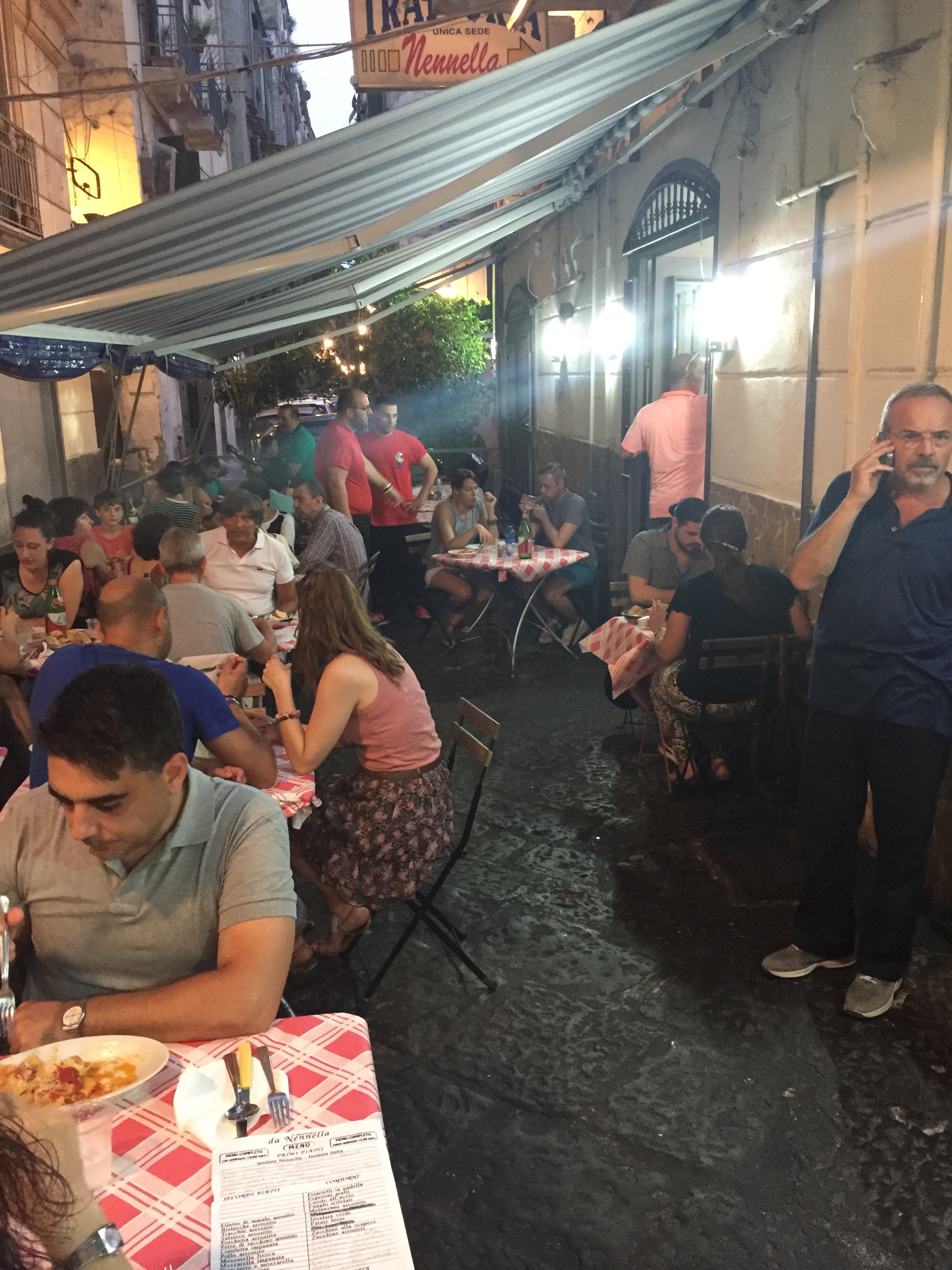
 The Trattoria da Nennella is where I am right now having dinner, a crowded street trattoria in the Spanish Quarter that happens to have  Wifi. A few minutes ago, someone set off fireworks a hundred feet away–everyone ducked or ran. Is it gunfire? The waiter laughed and continued to take our order, writing it out on the tablecloth. I’m thinking I need one of their shirts. The cernia Jacjie ordered was excellent, my breaded cutlet serviceable. By the way, “friarelli” apppears to be collard greens though less bitter. (Ah, checking later, I see it’s Neapolitan dialect for broccoli raab). Later in the evening, they all even started to sing– see video below. 


Posted in Uncategorized | Leave a comment

Photos of Oplontis    


Posted in Uncategorized | Leave a comment

Circumvesuviana: Garibaldi to Pompei Scavi

Mid-July in Naples is lush and beautiful and humid and brutal. Some scenes from the local train connecting the city to points south.


The female faces here are wonderful–the woman in pearls in back kept up a steady complaint about the heat, while the closer one (“Sweet Love”) suffered in Stoic silence.


Posted in Uncategorized | Leave a comment