Dido Nix et Trojanus

In an even more spectacular and embarrassing fiasco than the election, Nixon played Aeneas in a reenactment of Virgil’s Aeneid, which the school ambitiously staged on the two thousandth anniversary of the birth of Rome’s greatest poet. Nixon had an ill-fitting costume and was completely unrehearsed apart from his lines, and the love scene with Dido, involving an energetic and prolonged embrace, replete with passionate dialogue, brought down the house with brickbats and catcalls. It was a horrendous experience … (Conrad Black, Richard M. Nixon: A Life in Full [2008] 22-23)
I’m torn about this anecdote.Certainly the easiest reaction is to laugh snidely at Nixon failing miserably as the romantic lead. Har har, serves you right for your future invasion of Cambodia!
Another part of me feels, very deeply, the acute embarrassment of the scene.Being onstage spouting love poetry while your whole school laughs at you? Really, the whole thing’s a Fellini-esque nightmare.
To my mind, there’s something about the story that explains why it is that a man who would win the ’72 election by a 49-state landslide STILL felt the need to bug the Democratic headquarters, as though he felt the stinging derision of that high school play all those years later. Sunt lacrimae rerum et mentem mortalia tangunt.
Posted in Uncategorized | 2 Comments

Fulminating at Job

Class assignment for Book of Job: “On Friday, we will spend the class thinking about God’s response from the whirlwind. In fact, I am going to ask you to imagine yourself as God— the all-powerful and all-knowing creator of the heavens and earth—dealing with this whiny pipsqueak. You will bring to class a few verses written from the perspective of God in the style of the Book of Job, and will recite them in a loud and thundering voice.”

Example:

Where were you when I made the wolf, with its ravenous appetite, hunts the deer in packs, or chases down the rabbit to its hole? Where were you when I made the dog, with its abiding loyalty, who chases the squirrel without success and lies on the couch to watch TV with you, a faithful companion to people and fierce to thieves and the Fedex deliveryman?

Student examples:

Explain energy,

tell me how the bear knows to hibernate,

how the blind man can see?
How does your suffering surpass,

the birth of another human being?
Be grateful that I’ve chosen

to spare thee.

For death may have been,

a better choice for you.
Maybe your silence would,

let me re-think your punishment,

that your punishment has gone long enough.

Posted in Uncategorized | 1 Comment

Protected: Arabic letters as Rorschach test

This content is password-protected. To view it, please enter the password below.

Posted in Uncategorized | Enter your password to view comments.

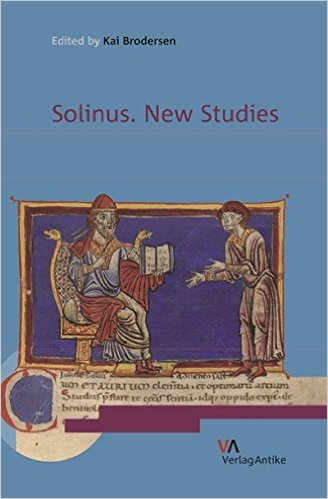
Solinus review

Bryn Mawr Classical Review published my review of Kai Brodersen’s edited collection, Solinus: New Studies. The editor and a few others have been in touch with kind remarks.

http://bmcr.brynmawr.edu/2015/2015-10-04.html

41H8ubjmxjL._SX326_BO1,204,203,200_

Posted in Uncategorized | Leave a comment

Dead Armadillo

It was easier to see in the morning than it had been last night, when I swerved a little to avoid hitting it, the face-up dead armadillo on the street. The dogs and I walked by early today, and it took all my strength to keep them from the intimate investigation they so badly wanted to do. Car after car drove by, as they do on Saturday mornings in the fall, rushing to get kids to the soccer fields, but each slowed down to go around the dead armadillo. Certainly he is evidence of the armadillo invasion of East Tennessee I’ve read about, and sure, I’m unnecessarily worried about leprosy like everybody else is. But soon the authorities will take his corpse away, and the cars will speed up again, and the dogs will calm down.


Posted in Animals, Dogs, Sewanee, Tennessee, Uncategorized | Leave a comment

Panel on the Destruction of the Ancient City of Palmyra

This past Tuesday, my friend Jeff Thompson in the Art History department put together a panel entitled “Sewanee Responds: A Panel Discussion on the Destruction of the Ancient City of Palmyra.” Panelists included Sara Nimis (Mellon Globalization Fund), Nick Roberts (History), Jacqueline DiBiasie Sammons (Classical Archaeology) and yours truly. I learned a lot from my colleagues about the situation in Palmyra–the sale of antiquities by ISIS, their ideological commitments, the lack of good options for the West, etc.–and was especially impressed by questions from students and others.

In my own remarks, I make reference to three articles:

  • Heather Pringle, “ISIS Cashing in on Looted Antiquities to Fuel Iraq Insurgency,” National Geographic, June 27, 2014, who notes: “Listed among ISIS’s key financial transactions were records of illicit antiquity trafficking. In one region of Syria alone, the group reportedly netted up to $36 million from activities that included the smuggling of plundered artifacts.”
  • Gary Vikan, “The Case For Buying Antiquities To Save ThemWall Street Journal, August 19, 2015, who says: “In times of extraordinary risk, we should be open to dealing with bad guys to create a safe harbor for works of art. This is an act of rescue and stewardship—and should be done with the explicit understanding that eventually, when the time is right, the objects will be repatriated to the country of their origin.”
  • Leon Wieseltier, “The Rubble of Palmyra,” The Atlantic, September 4, 2015, who writes: “But there are different reasons for admiring ruins. We need not dwell on them only to vindicate ourselves. We can dwell on them also to vindicate a notion of humanity. We preserve them to illustrate not divine purposes but human purposes. They are proof of the astonishing multiplicity of answers to life’s questions that have been created by our tirelessly self-interpreting kind. We restore them and we display them as a cosmopolitan way of regarding particularities, as an expression of our humane respect for the resourcefulness of the spirit over time. We imbue them with meanings that their makers could not have grasped, except perhaps in places such as Palmyra. Where others saw truth, we see beauty—but the beauty is not merely formal. What a spiritual accomplishment it is, to cherish—and in the case of Khaled al-Assad, to die for—the vestiges of a faith in which one does not believe.”

Postscript, September 27. The Sewanee Purple has a write-up and an editorial on the panel.

Posted in Classics, Sewanee | Leave a comment

Protected: Behold the (Other) Man! Looking for Pilate 2: Naples, Palazzo Pitti

This content is password-protected. To view it, please enter the password below.

Posted in Bible, Boston, Classics, Drama, Florence, Italy, Poetry, Scotland | Enter your password to view comments.

Protestants and Pyramid

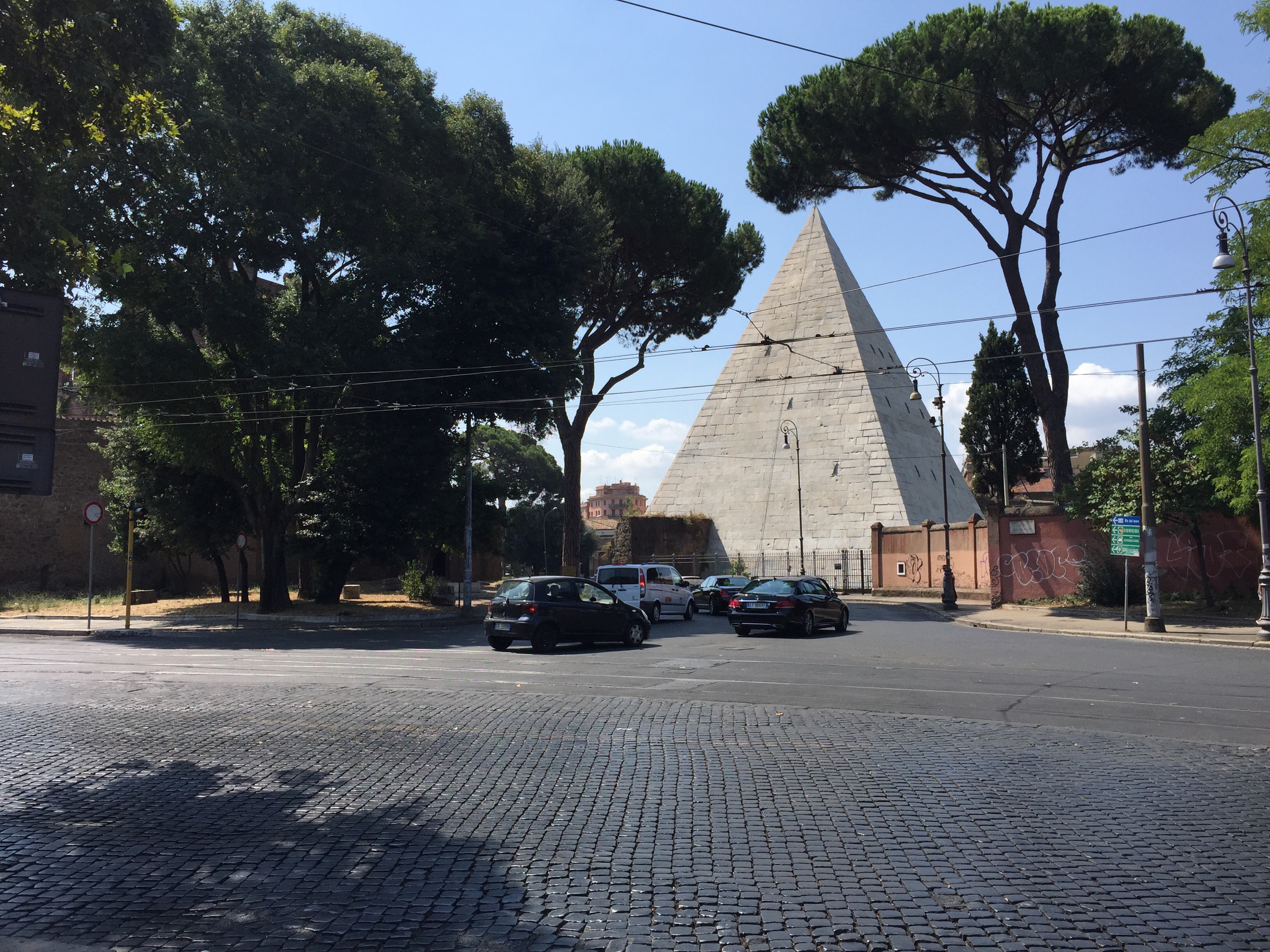
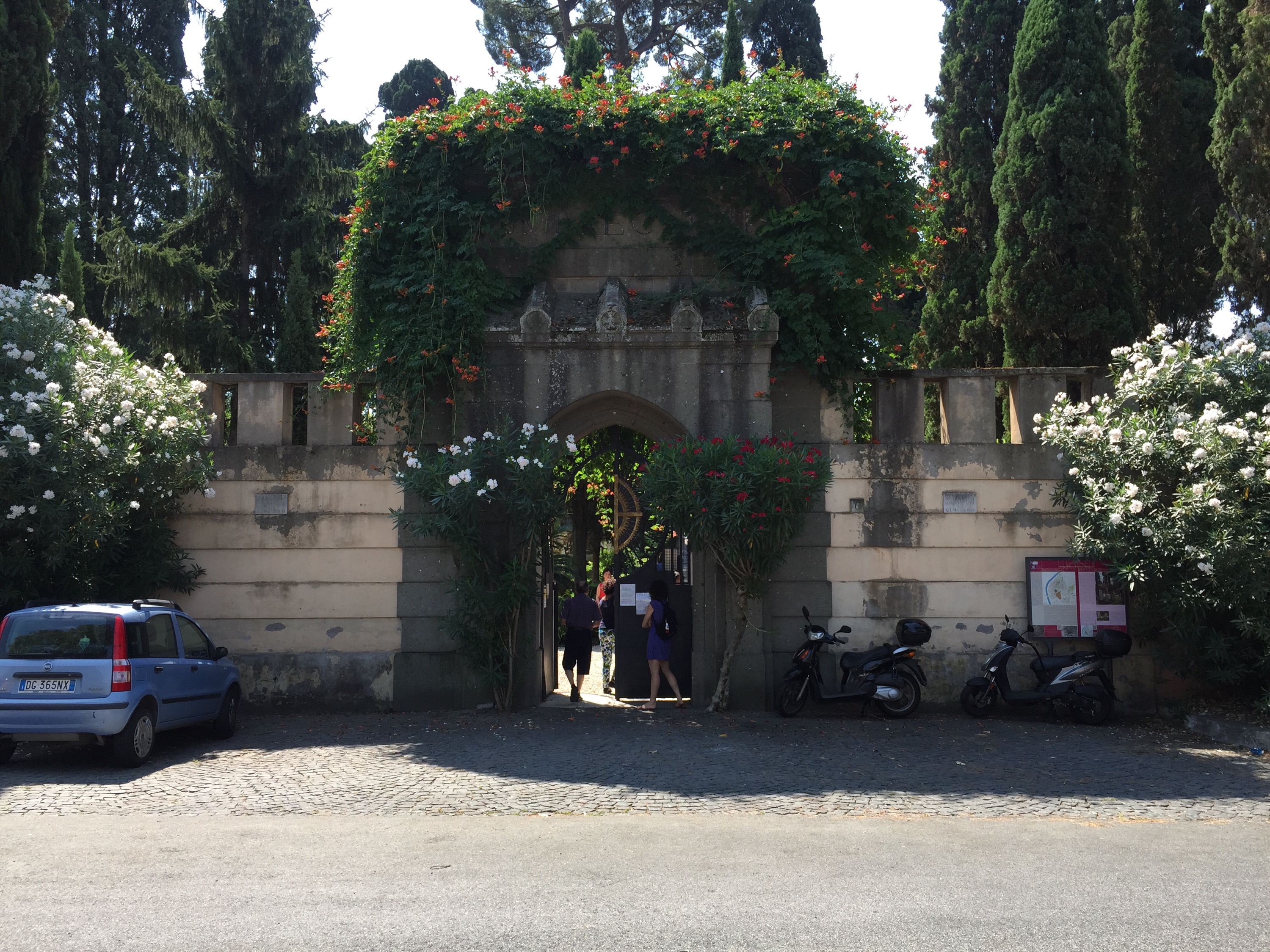
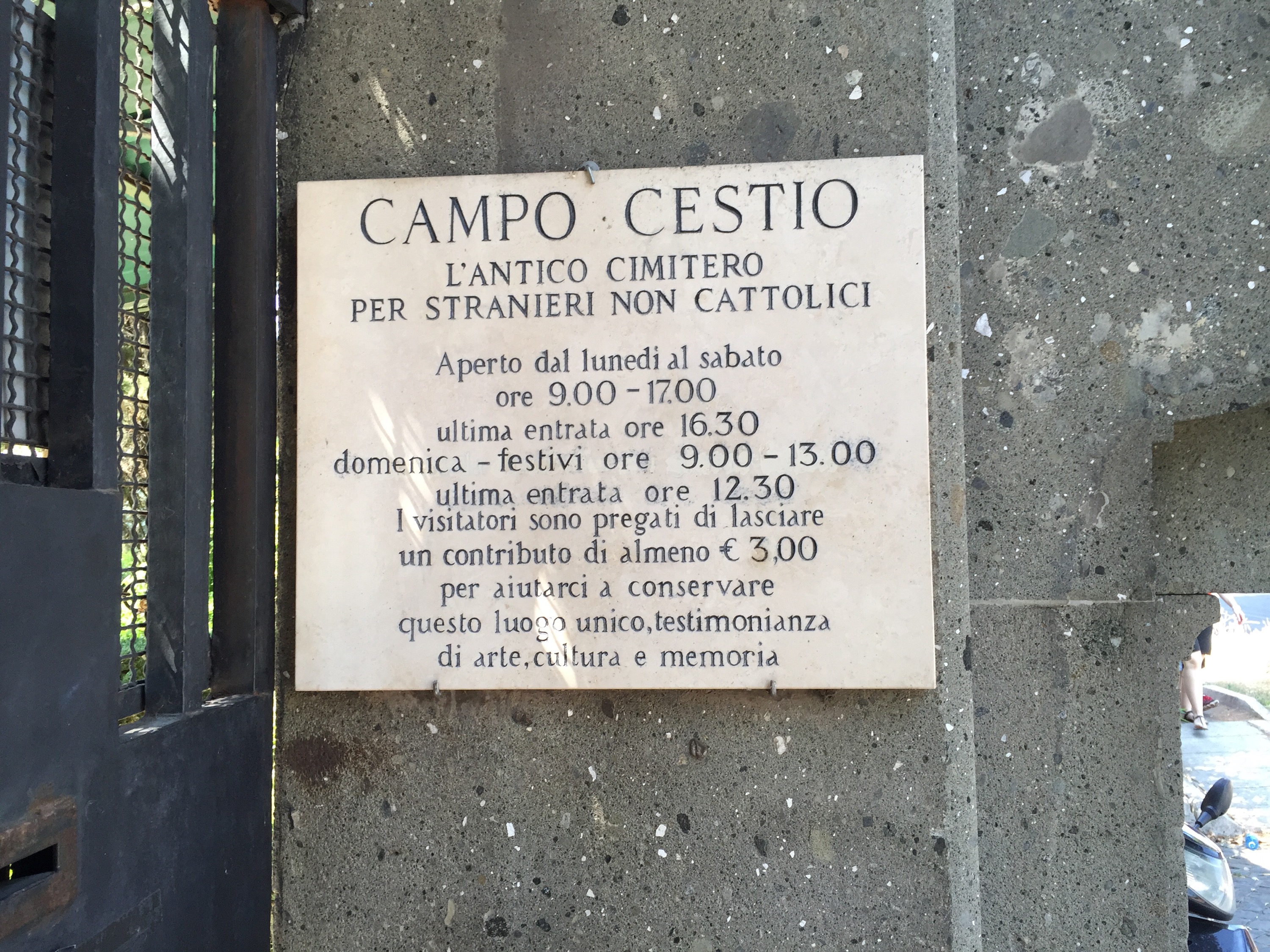
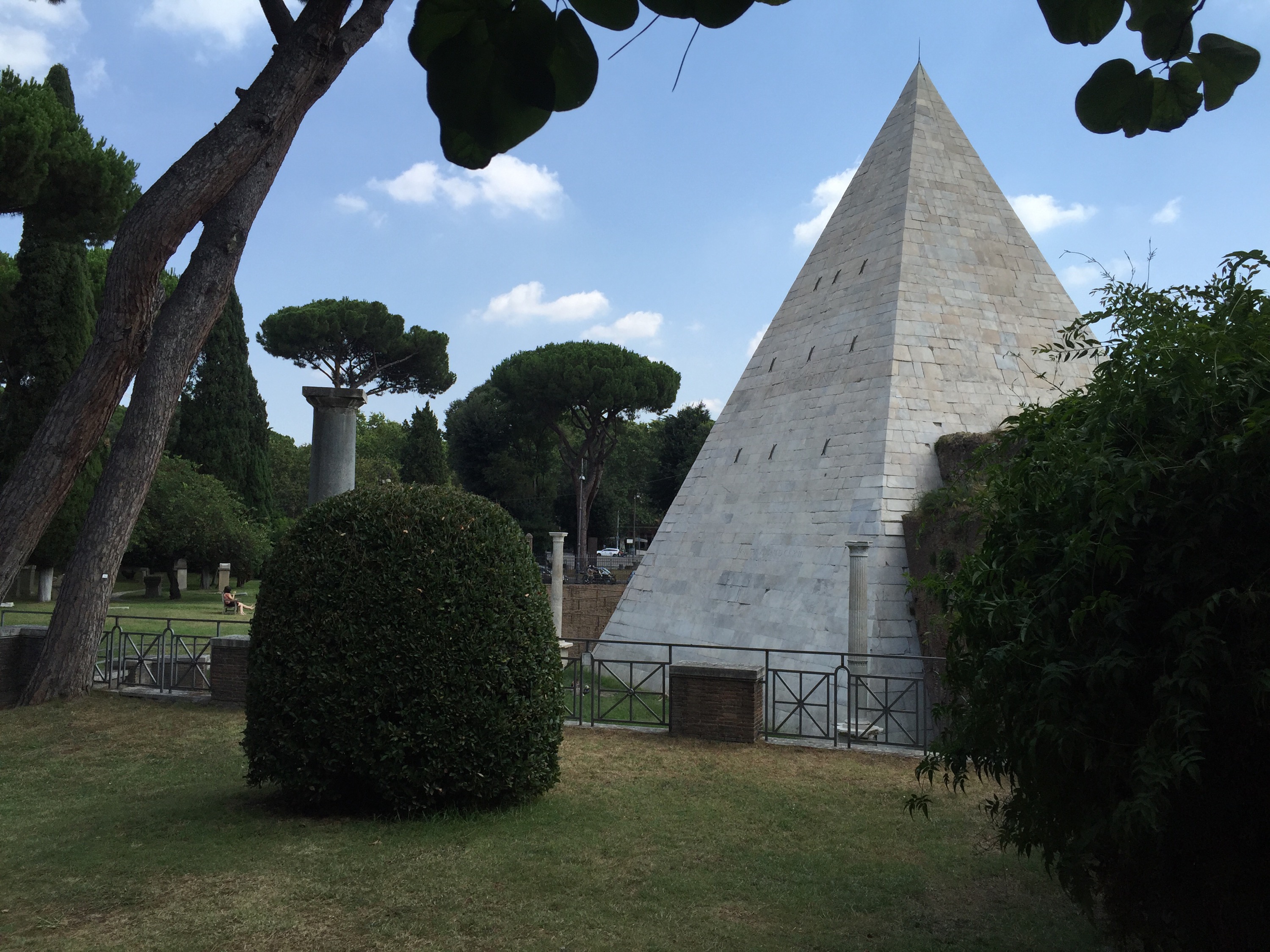
The pyramid of Cestius, built in the first century, is the first thing you see when you get off the bus at Porta San Paolo in Testaccio. Crossing the cobblestone street, you go down the road to the right to the entrance of Rome’s famous Protestant Cemetery, the final resting place since the early 19th century for much of the well-to-do Anglo-American ex-pat community

  
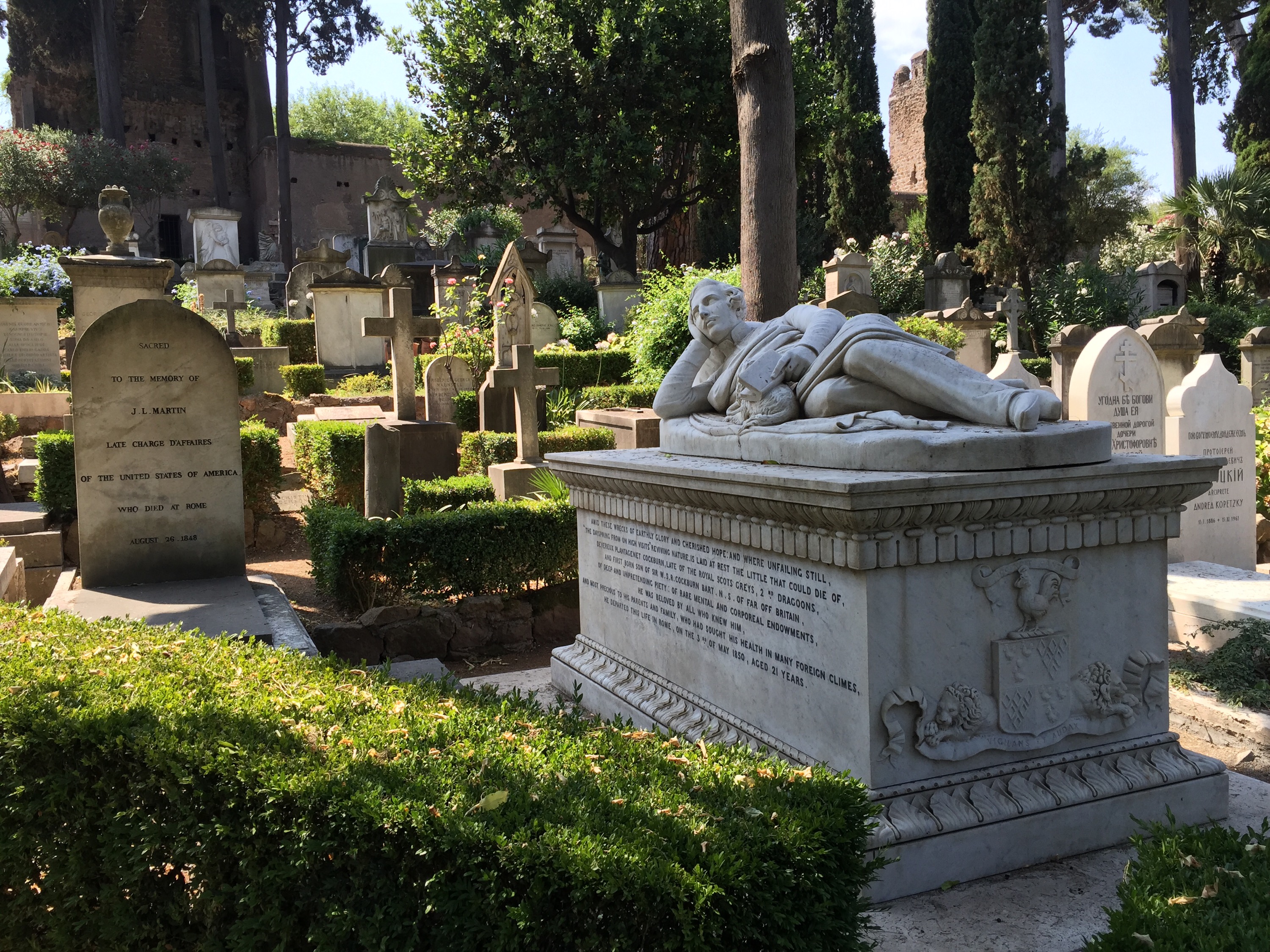
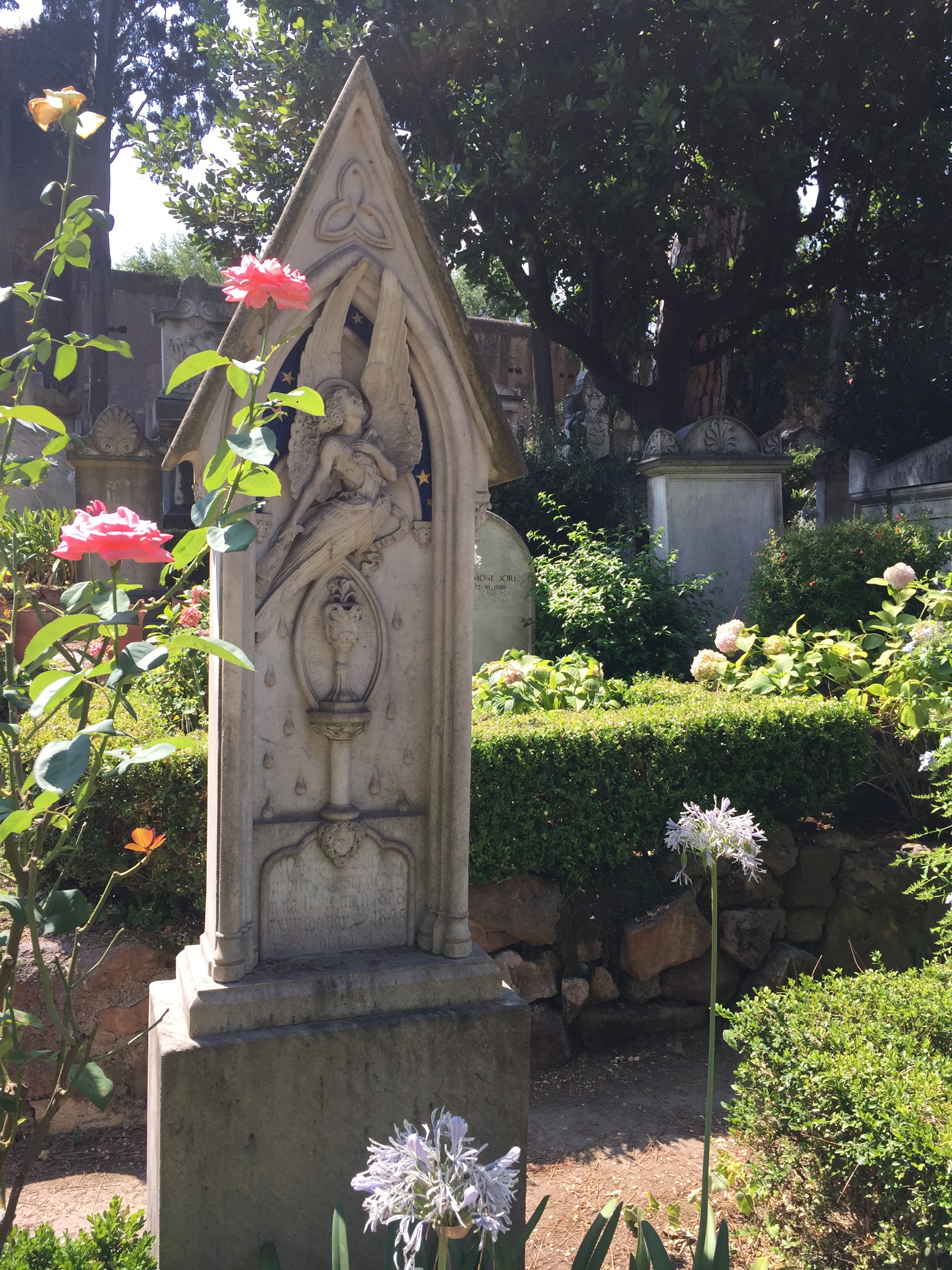
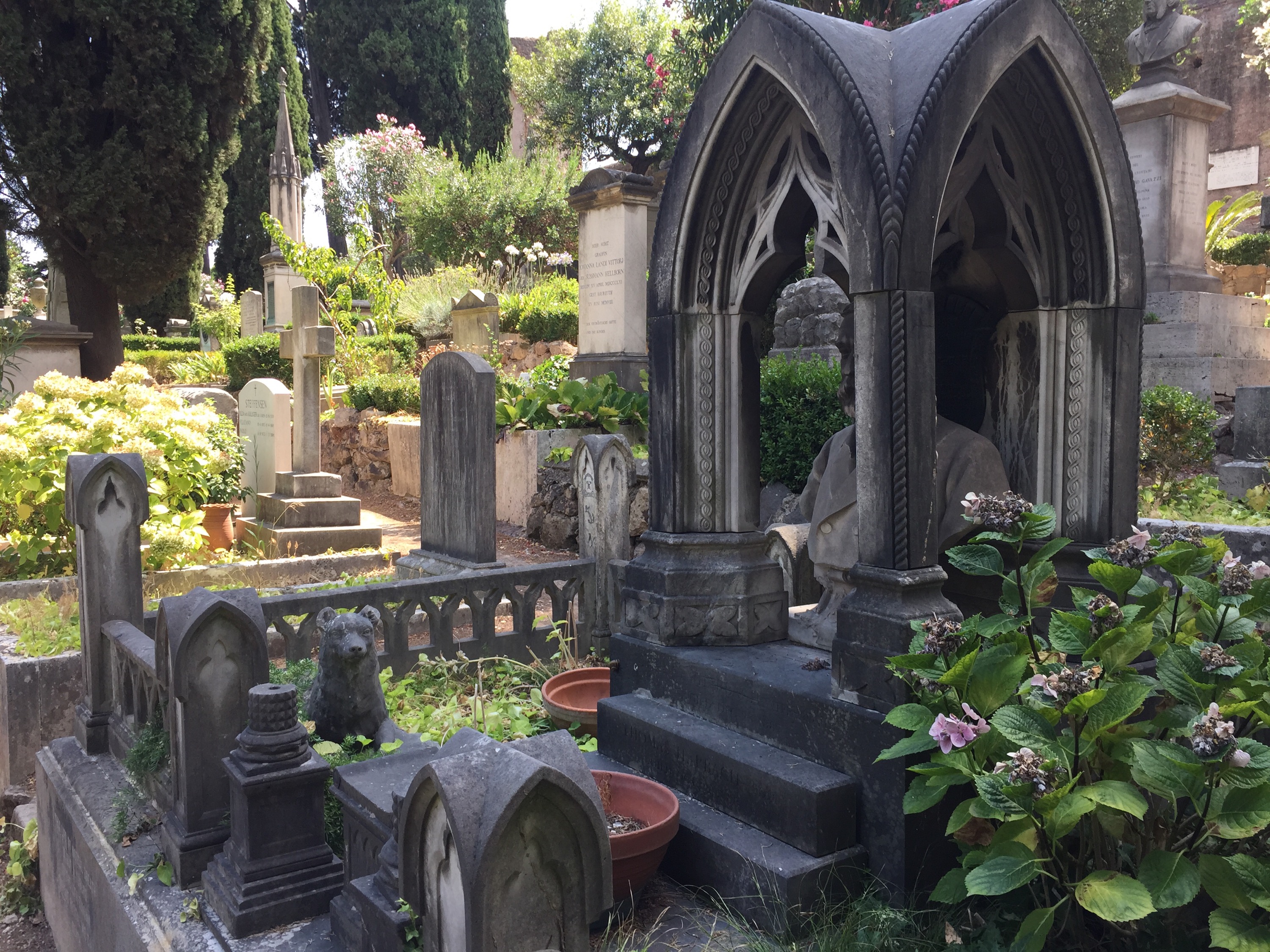
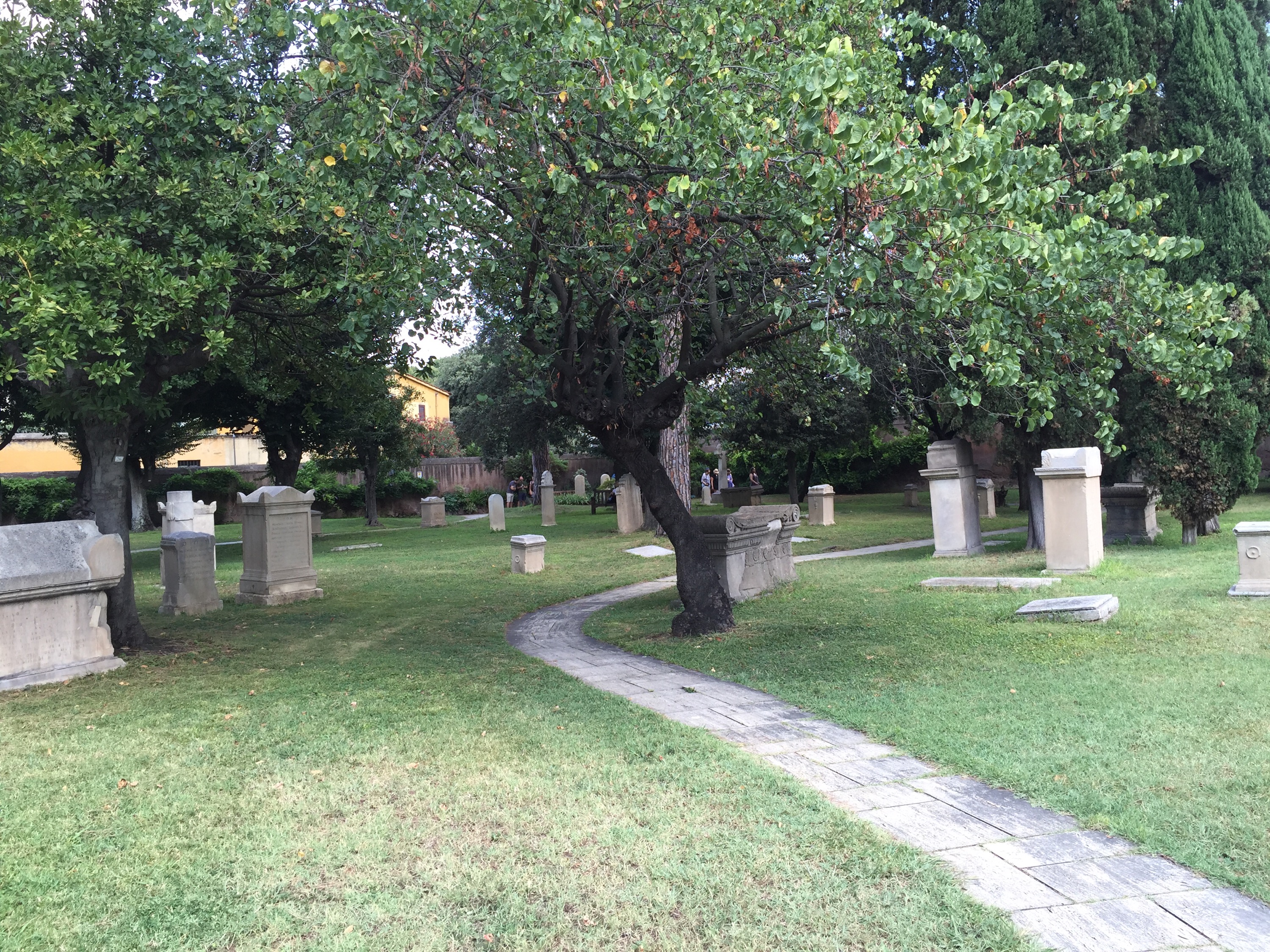
Entering the Campo Cestio is like stepping back in time, though not in the usual way you feel like you’ve stepped back in time in Rome. While it is true that there’s an ancient pyramid lurking to the left throughout your visit to the graveyard, the atmosphere is far more Romantic than Classical. Such a graveyard would not be out of place in England or older parts of the American East Coast–Mt. Auburn in Cambridge, perhaps, or Highgate in London. The sentimentality is thick on the ground here among the maudlin marbles.


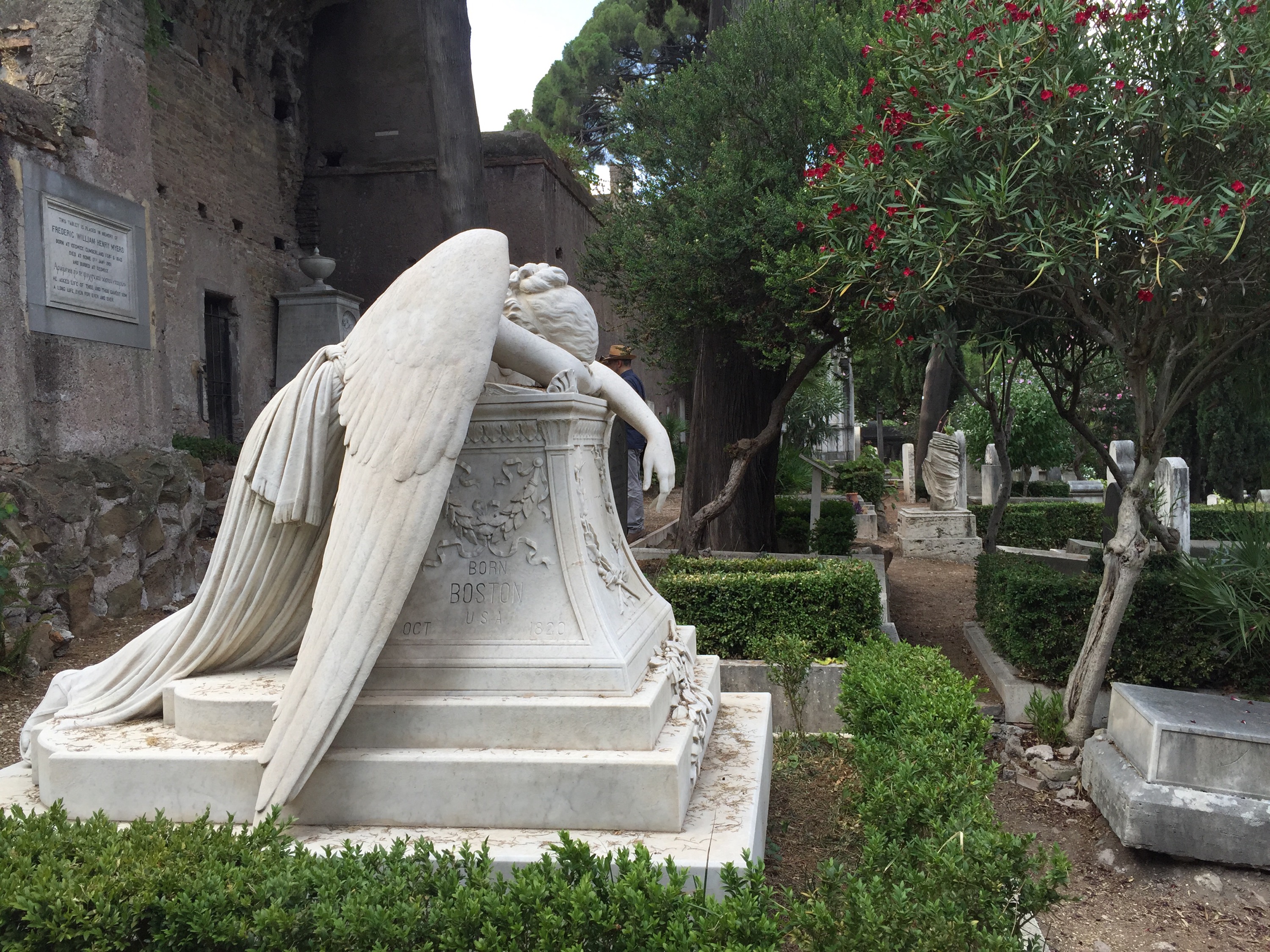
The most famous statue here is  Angel of Grief, which the sculptor William Wetmore Story made in 1894 for himself and his wife. It has been much copied in cemeteries since. 

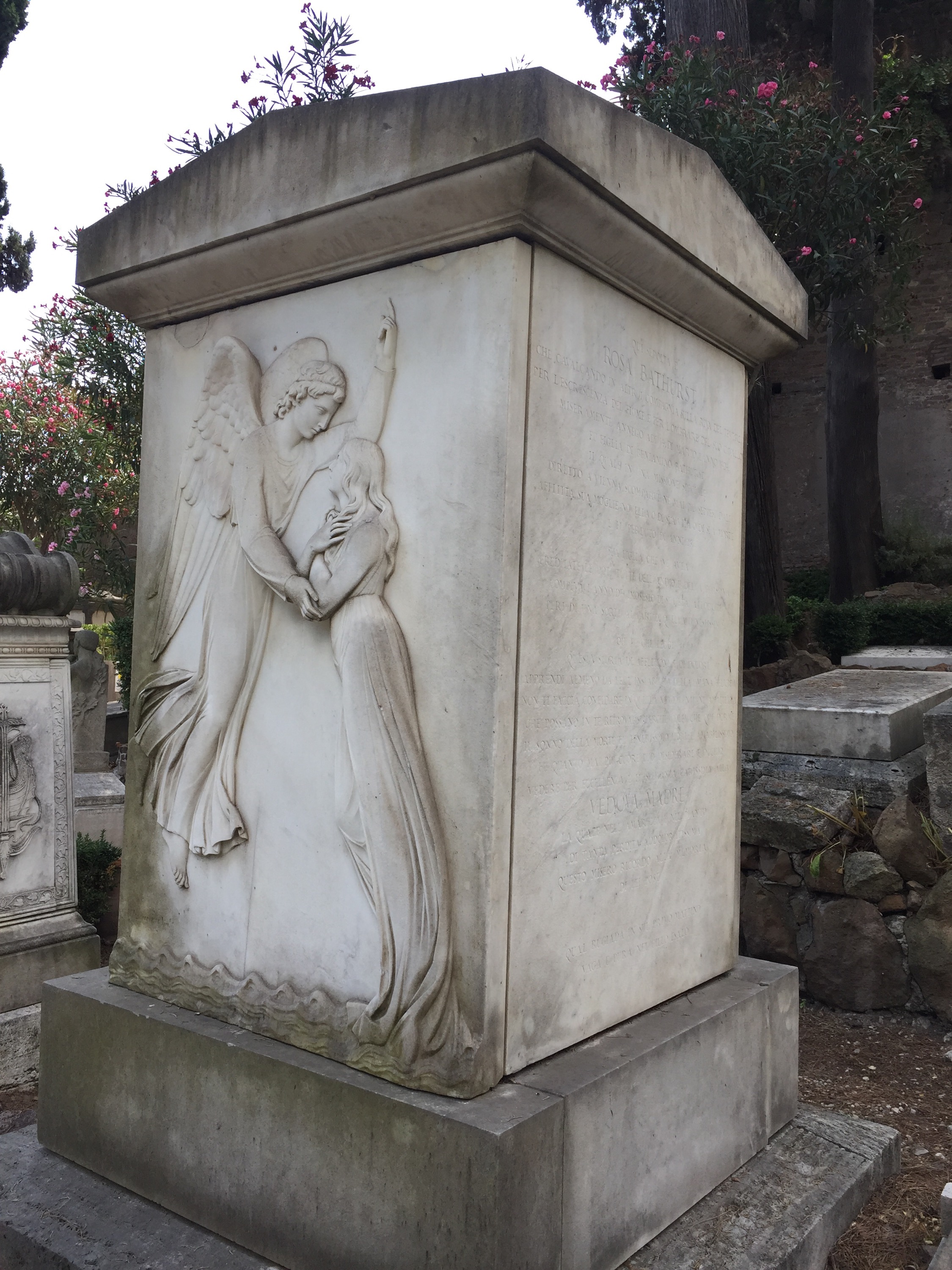
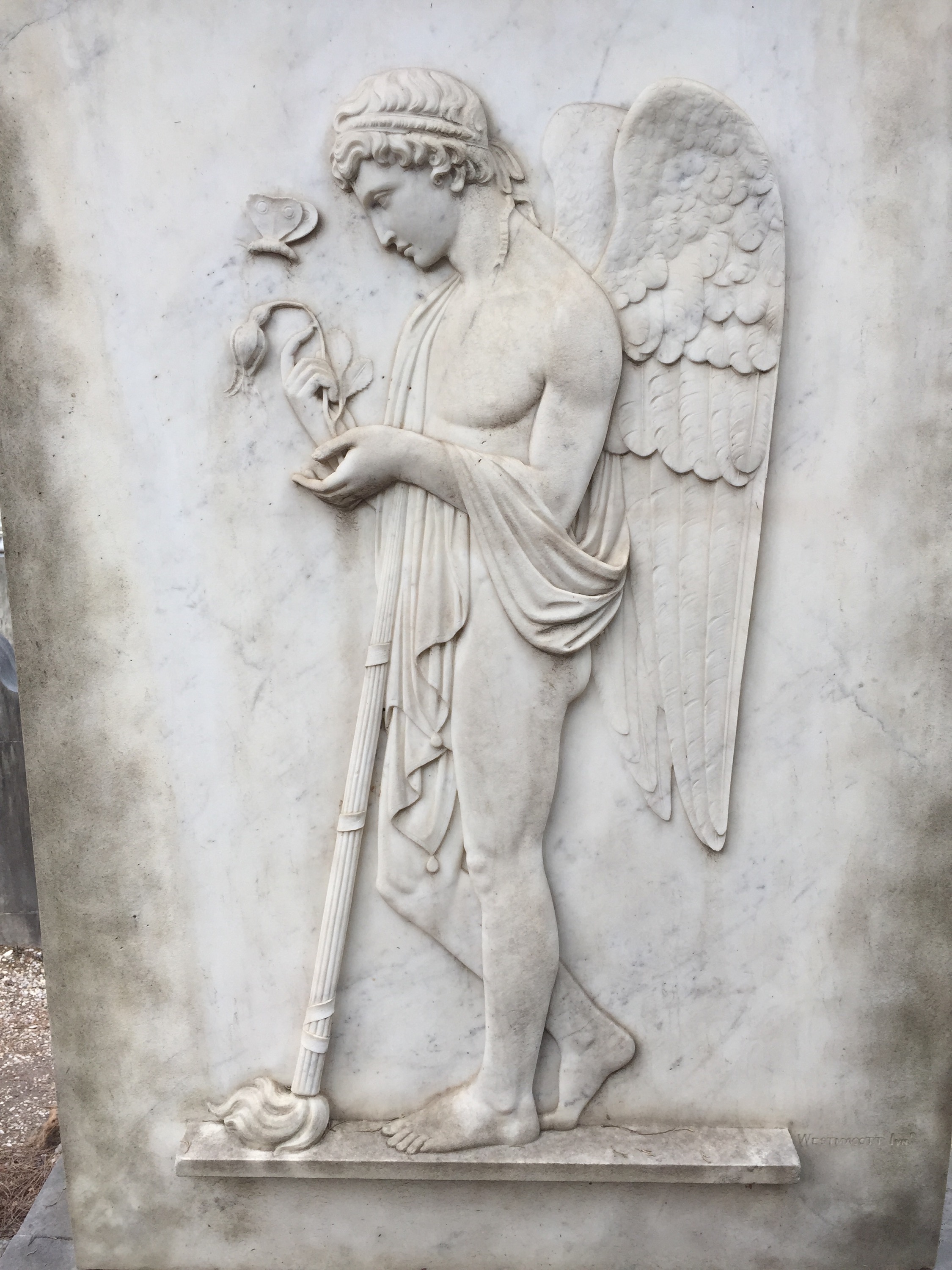
Nearby is the very moving memorial for Rosa Bathurst, who died tragically at the age of 16. She is depicted being received by an angel on one side of the tomb; on the other side, another angel holds an inverted torch and a drooping poppy from which emerges a butterfly, classical images of death and resurrection. 

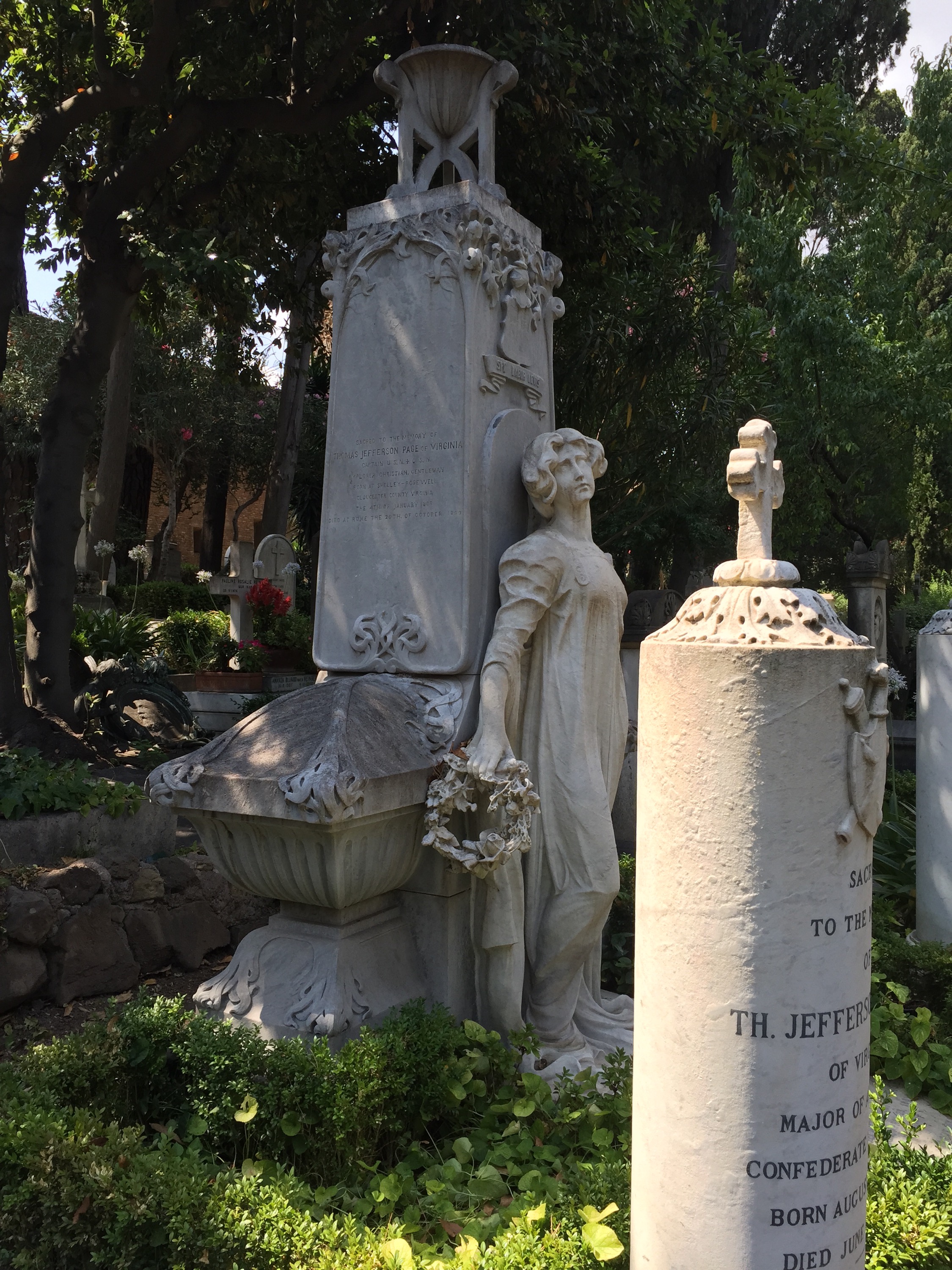
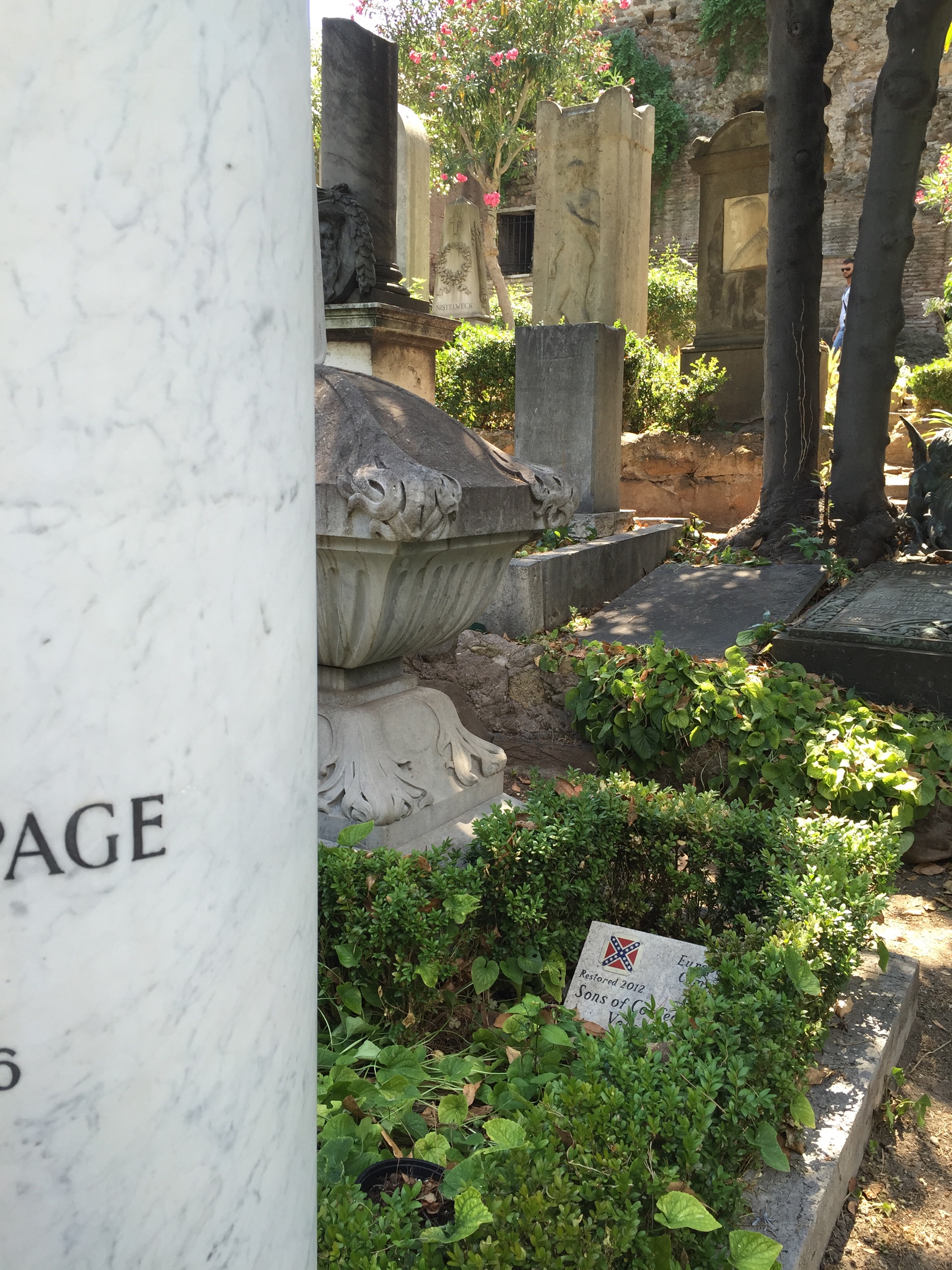
Close to this is the elaborate monument of Thomas Jefferson Page, a Virginian who was, according to his stone, “Captain, U.S.N. and C.S.N., Explorer, Christian Gentleman.” after the Civil War, Page emigrated to Argentina and then to Rome. The sons of Confederate Veterans restored his monument recently, and I sighed a little unhappily at the battle flag they just had to stick there.


Behind these, alongside the ancient Autelian Wall that Mark’s the Cemetery’s border, is the tomb of Shelley.


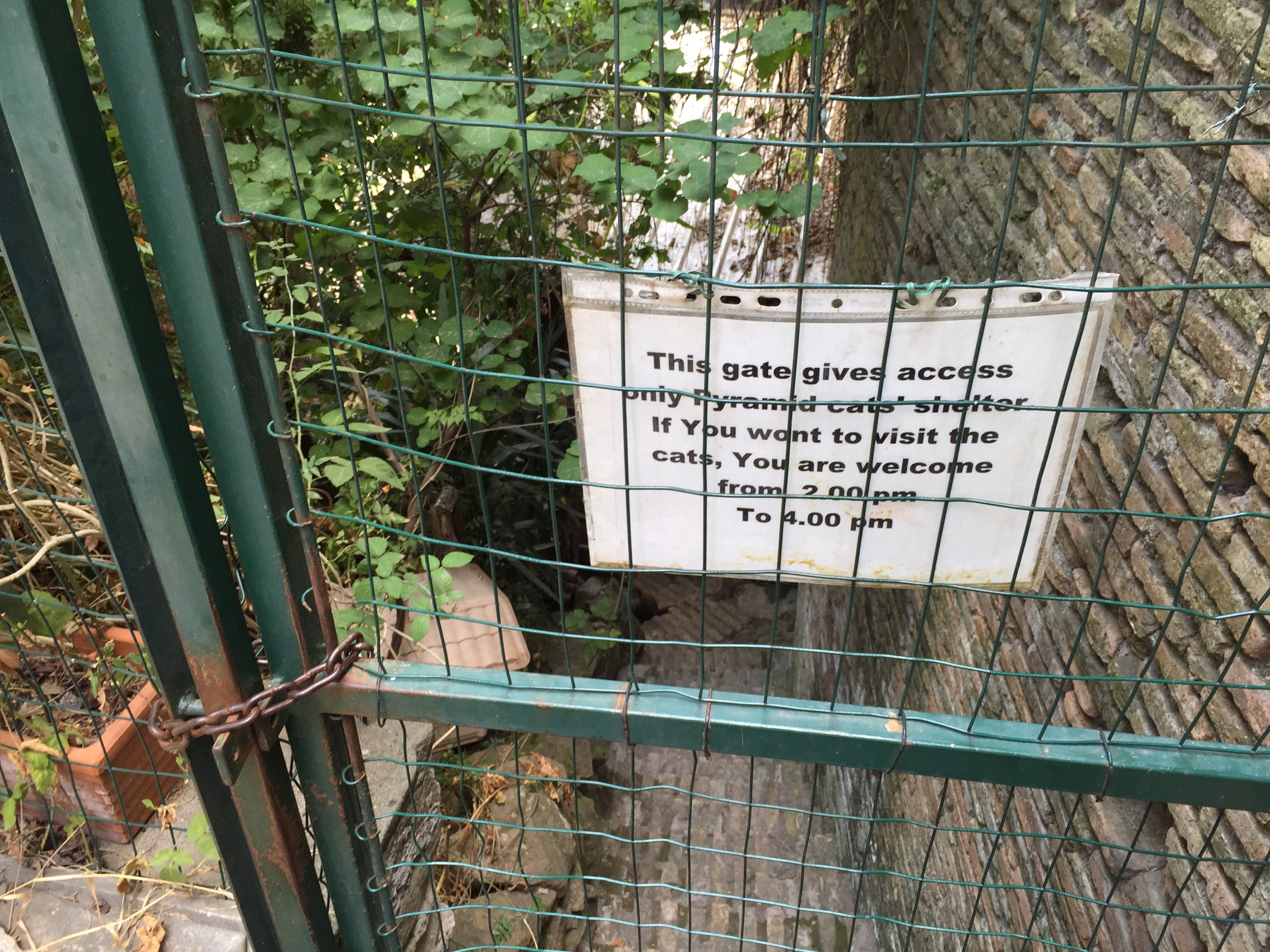
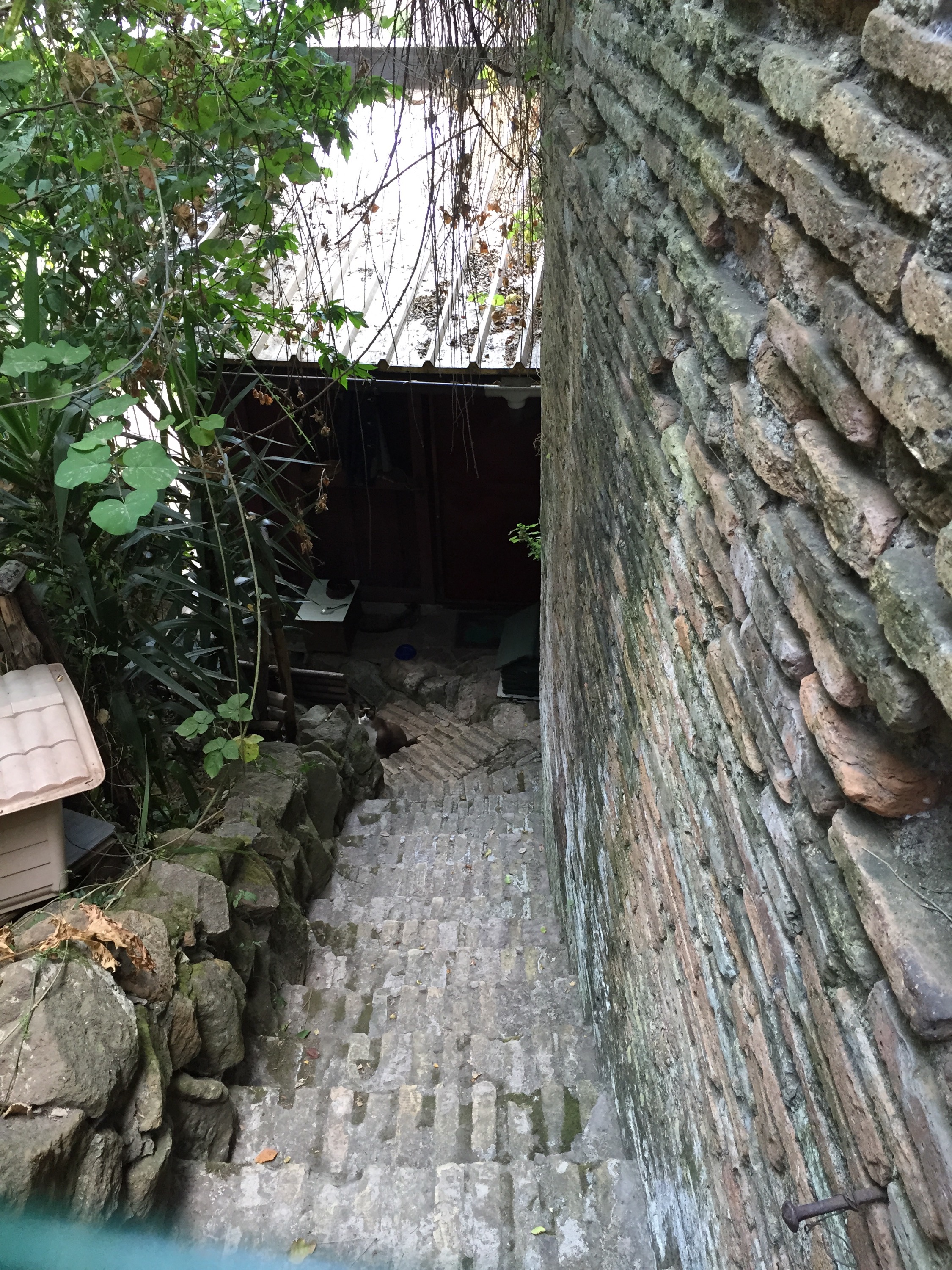
In another part of the graveyard Keats is buried–easy to pick out for all the tourists around it snapping selfies. On the way over, you pass by the famous cat sanctuary, I Gatti Della Piramide, whose website gives a good overview of the shelter’s activities. There’s something pleasing about seeing all these cats, little living images of Bast and Sekhmet roaming at will at the foot of the Pyramid and occasionally leaping up to lounge on the poets’ lugubrious gravestones. Hail to thee, blithe spirits.


Thomas Hardy, Rome at the Pyramid of Cestius Near the Graves of Shelley and Keats (1887)
Who, then, was Cestius,
And what is he to me? –
Amid thick thoughts and memories multitudinous
One thought alone brings he.

I can recall no word
Of anything he did;
For me he is a man who died and was interred
To leave a pyramid

Whose purpose was exprest
Not with its first design,
Nor till, far down in Time, beside it found their rest
Two countrymen of mine.

Cestius in life, maybe,
Slew, breathed out threatening;
I know not. This I know: in death all silently
He does a kindlier thing,

In beckoning pilgrim feet
With marble finger high
To where, by shadowy wall and history-haunted street,
Those matchless singers lie . . .

–Say, then, he lived and died
That stones which bear his name
Should mark, through Time, where two immortal Shades abide;
It is an ample fame.

Posted in Cemeteries & Funerals, Poetry, Rome, Uncategorized | 2 Comments

Behold the (Other) Man! Looking for Pilate 1: Rome, Scala Sancta

I have begun to work on a project about Pontius Pilate, that classical character plopped suddenly down into the Passion narrative, and the only human individual (besides Mary) singled out in the Creed. The scope of the project is still up in the air, but during my recent trip to Italy, I thought I would look for vestiges of the old Roman governor. You just never know what will turn up.  I had limited success with this half-hearted search, but still there was value to what I was able to see with my own eyes, and feel with my own knees.

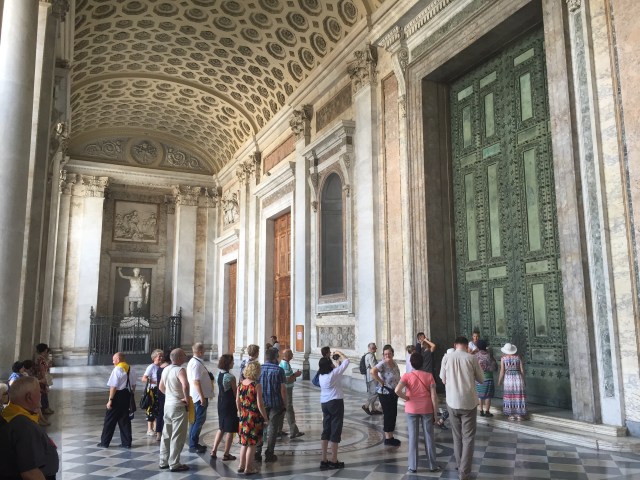
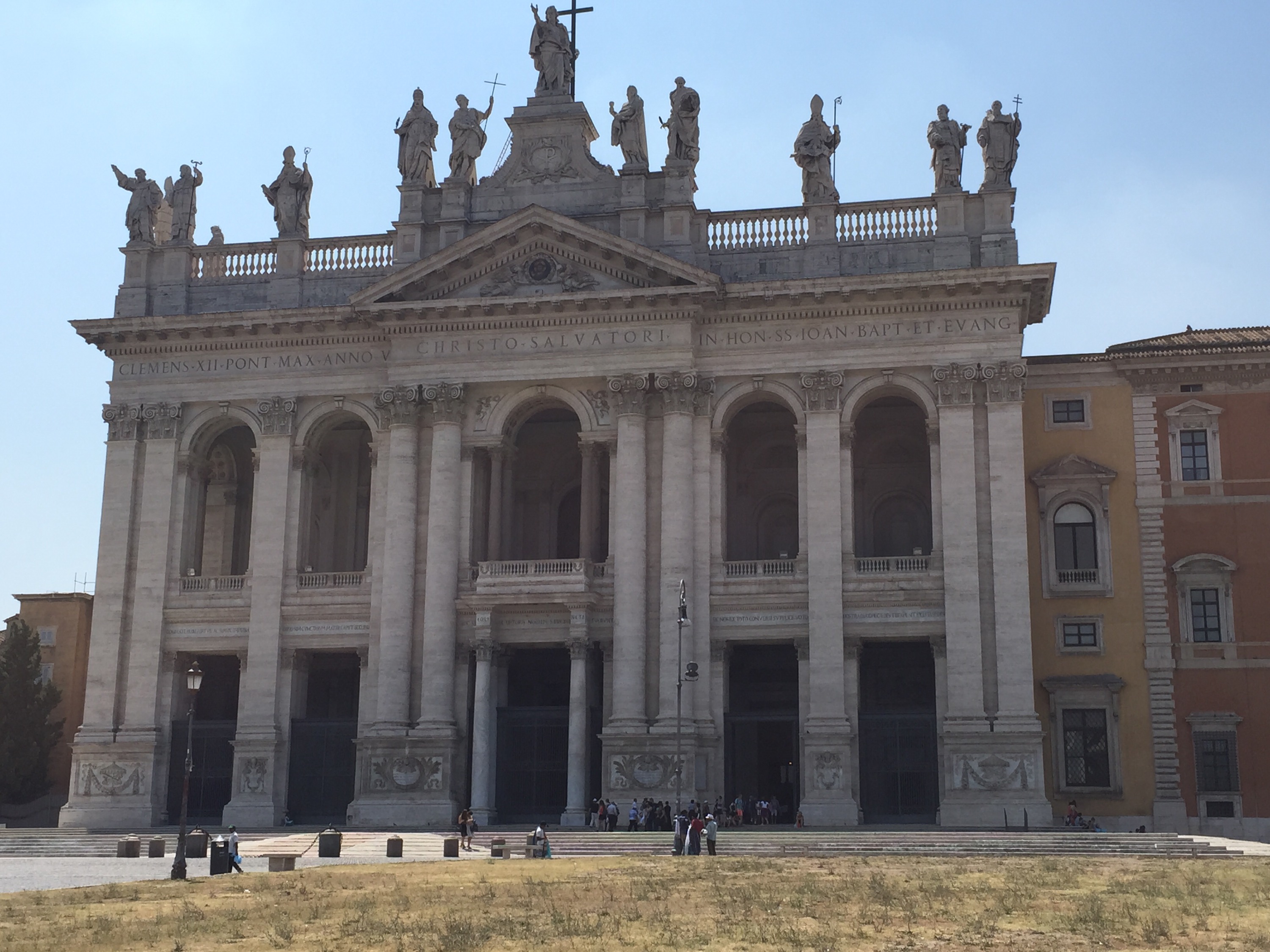
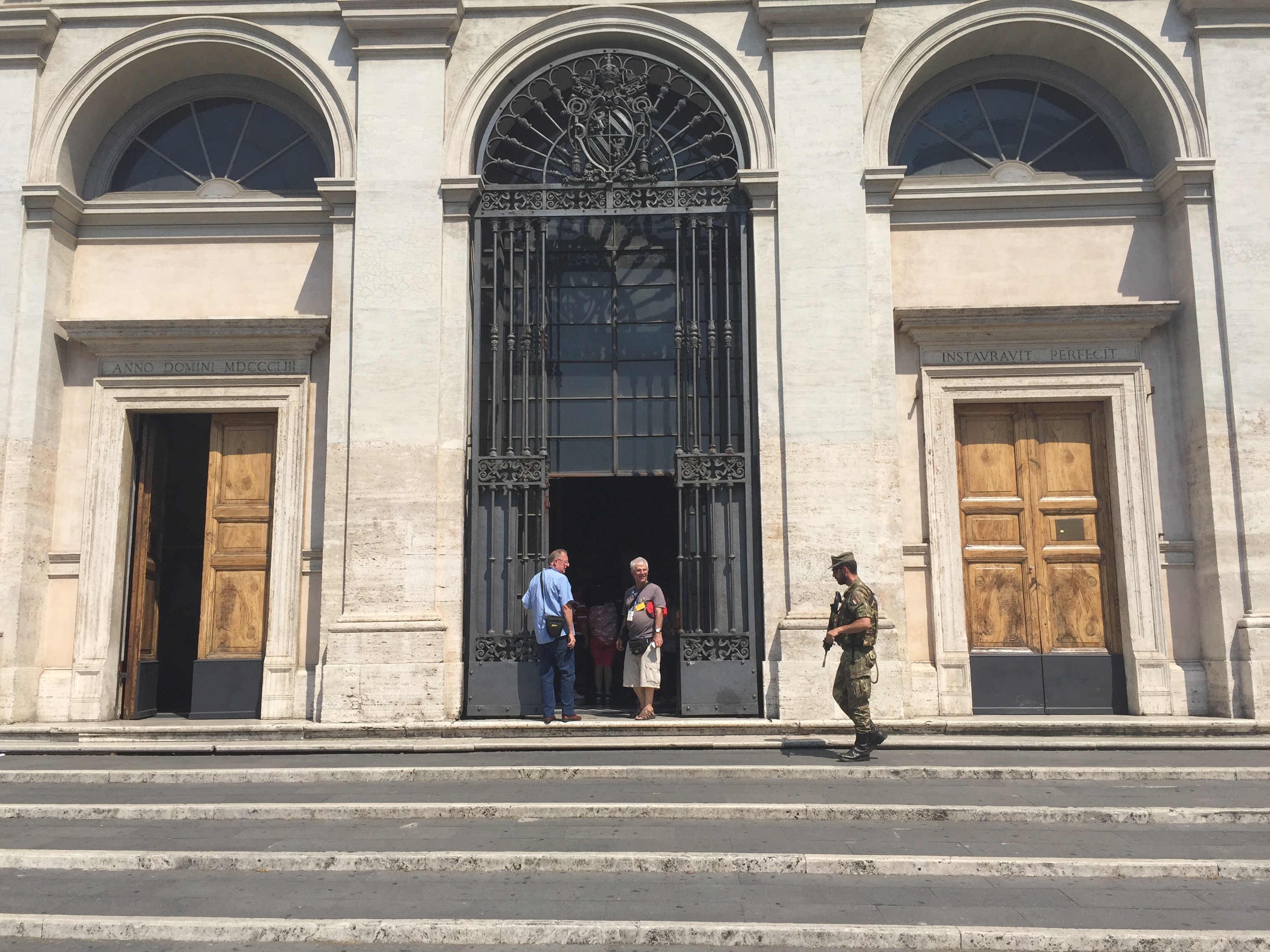
In Rome, I made my way out to the Latern, which I had never seen before– it’s a large, impressive baroque church, fitting for the genuine cathedral of Rome, but given the city’s other glories, something of an afterthought on the tourist itinerry.  To me, the classicist, the most important thing at the Lateran are the large bronze doors that once graced the entrance to the Curia.


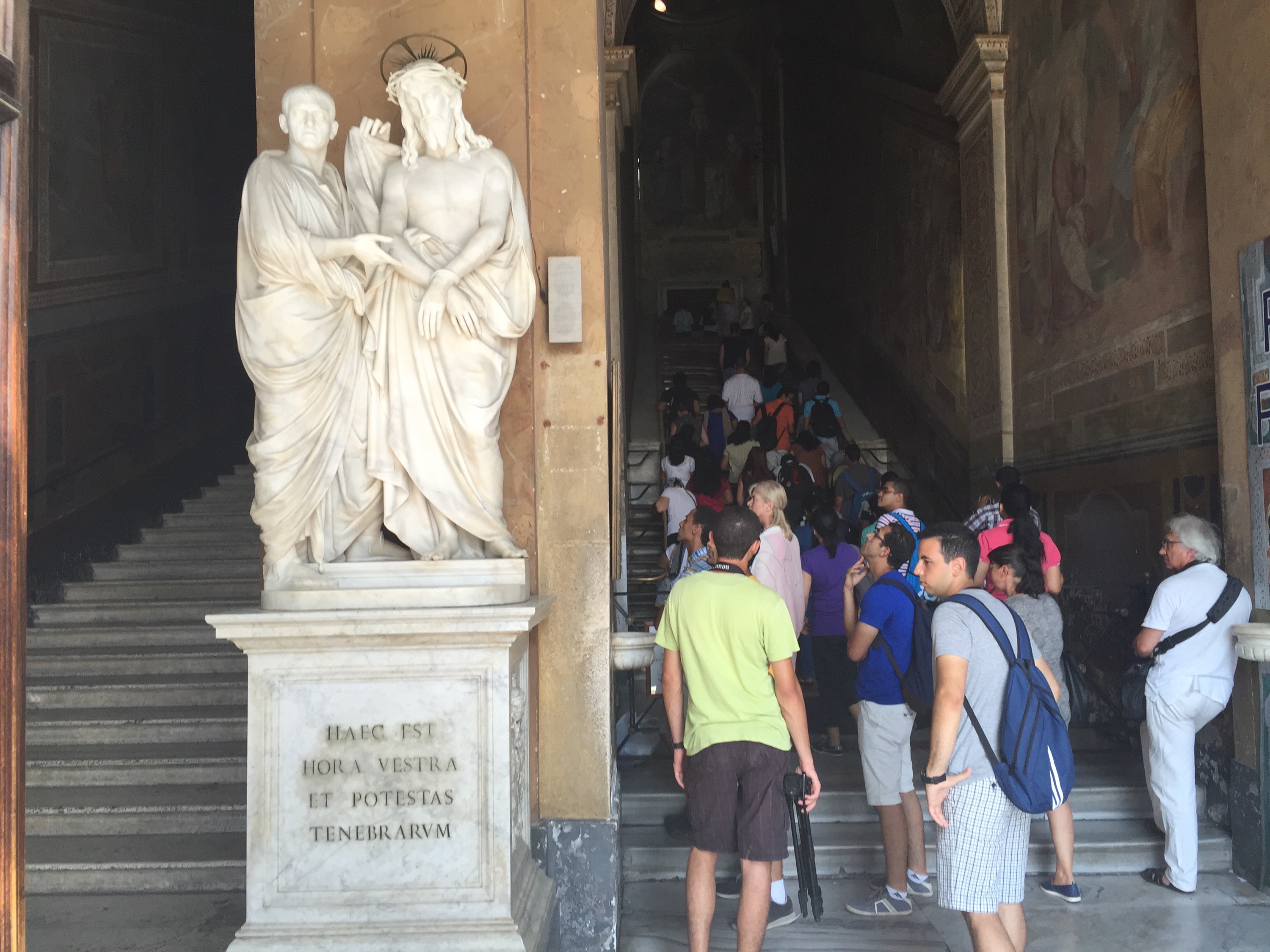
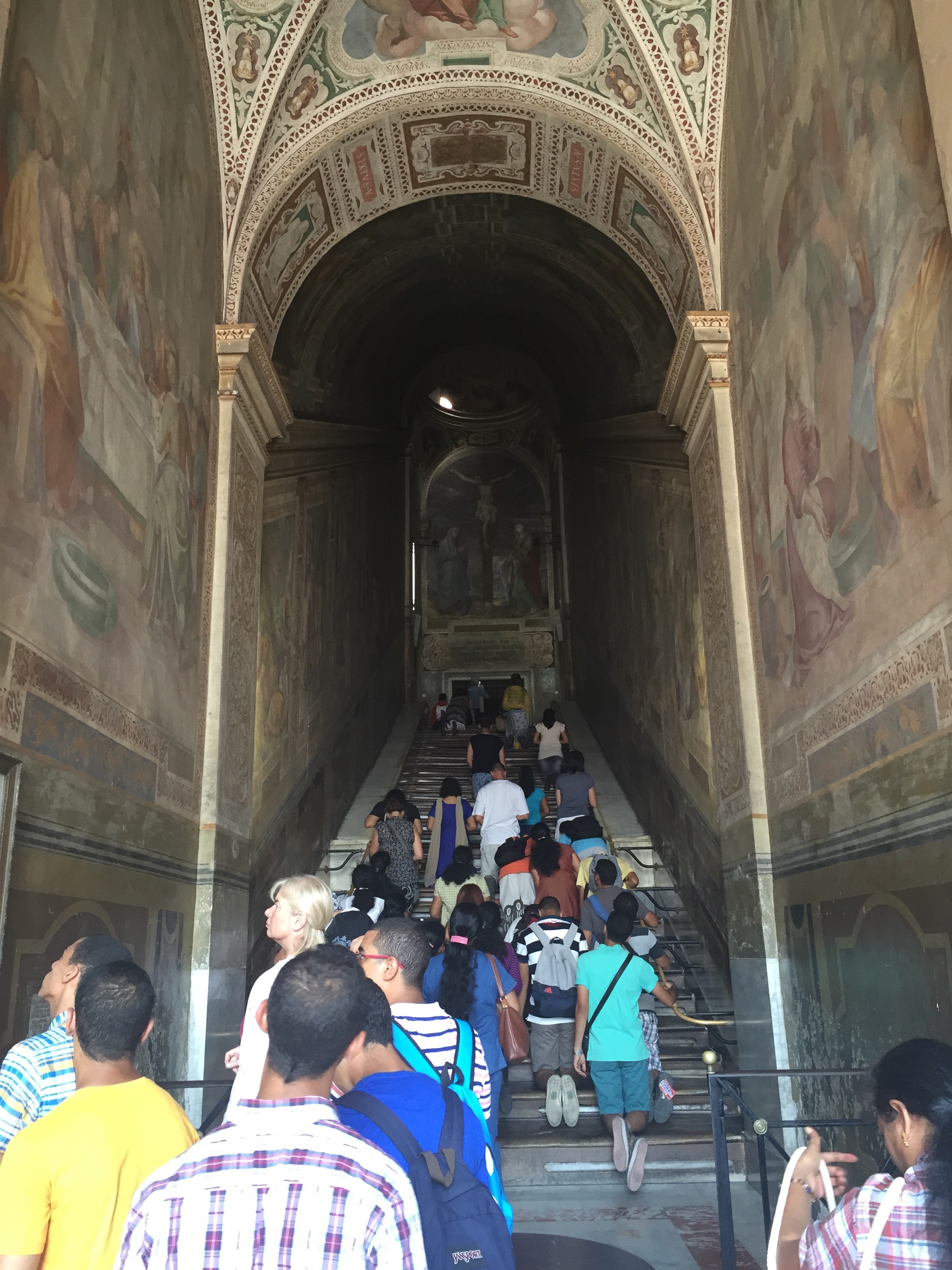
 Across the street, in a separate building that was once the old Lateran palace (San Lorenzo in Palatio), were the spolia I had in fact come to see, the Scala Sancta– the staircase of white marble from Lebanon that reputedly lead up to the praetorium in Jerusalem, and from the top of which Pilate would have addressed the crowds. Christ is said to have walked down this stairscase, dripping blood on the top step, the eleventh, and second.


Brought to Rome in the fourth century AD by St. Helena, when they were known as the Scala Pilati, the stairs have been the subject of devout veneration since. For centuries now, worshippers on their knees have ascended the 28 stairs, now covered in wood (what kind? I don’t know), and are granted a plenary indulgence for doing so. Even Luther climbed these tairs on his knees, as have countless others, past and present. Charles Dickens visited in the mid-nineteenth century, and condemned the practice in no uncertain terms: 

I never, in my life, saw anything at once so ridiculous, and so unpleasant, as this sight – ridiculous in the absurd incidents inseparable from it; and unpleasant in its senseless and unmeaning degradation. There are two steps to begin with, and then a rather broad landing. The more rigid climbers went along this landing on their knees, as well as up the stairs; and the figures they cut, in their shuffling progress over the level surface, no description can paint. Then, to see them watch their opportunity from the porch, and cut in where there was a place next the wall! And to see one man with an umbrella (brought on purpose, for it was a fine day) hoisting himself, unlawfully, from stair to stair! And to observe a demure lady of fifty-five or so, looking back, every now and then, to assure herself that her legs were properly disposed!

There were such odd differences in the speed of different people, too. Some got on as if they were doing a match against time; others stopped to say a prayer on every step. This man touched every stair with his forehead, and kissed it; that man scratched his head all the way. The boys got on brilliantly, and were up and down again before the old lady had accomplished her half-dozen stairs. But most of the penitents came down, very sprightly and fresh, as having done a real substantial deed which it would take a good deal of sin to counterbalance

This hot summer day, I stood before the holy stairs and watched thr throngs making their way up. Indeed, you have to pay to go in the building, and the young woman behind the counter looks alternately bored and annoyed with the crowds before her–occasionally she emits a loud SSHHH! 

Others like me are standing at the bottom of the stairs, wondering what to do. What does it mean if I get on my knees and start to go up? Will I be a believer at the end of it? A believer of what? The likelihood of these being the very stairs of Pilate is remote.  To kneel on them–is this not rank superstition, a willing suspension of reason for the sake of some hoped-for sweeping holy feeling? Or is this nothing more than a tourist activity, like kissing the Blarney Stone or taking a selfie in front of the Grand Canyon?

  
In the end, I climbed the stairs on my knees, and was surprised by the comfortable grooves in the wood. I listened to the murmering prayers of the others around me, most of them not speaking English. I tried not to race up, but to stay more or less on par with the nice Filipino man beside me–when he reached the top, there were tears in his eyes and, while I did not feel the need to weep myself, I was glad to witness the sincerity of his devotion. A Spanish family reached the top shortly afterward, and the mother whipped out her phone to take a picture of the four of them, all still on their knees. I got out of the way, not wanting to ruin their picture.

Posted in Uncategorized | Leave a comment

Notes on Hadrian’s Villa

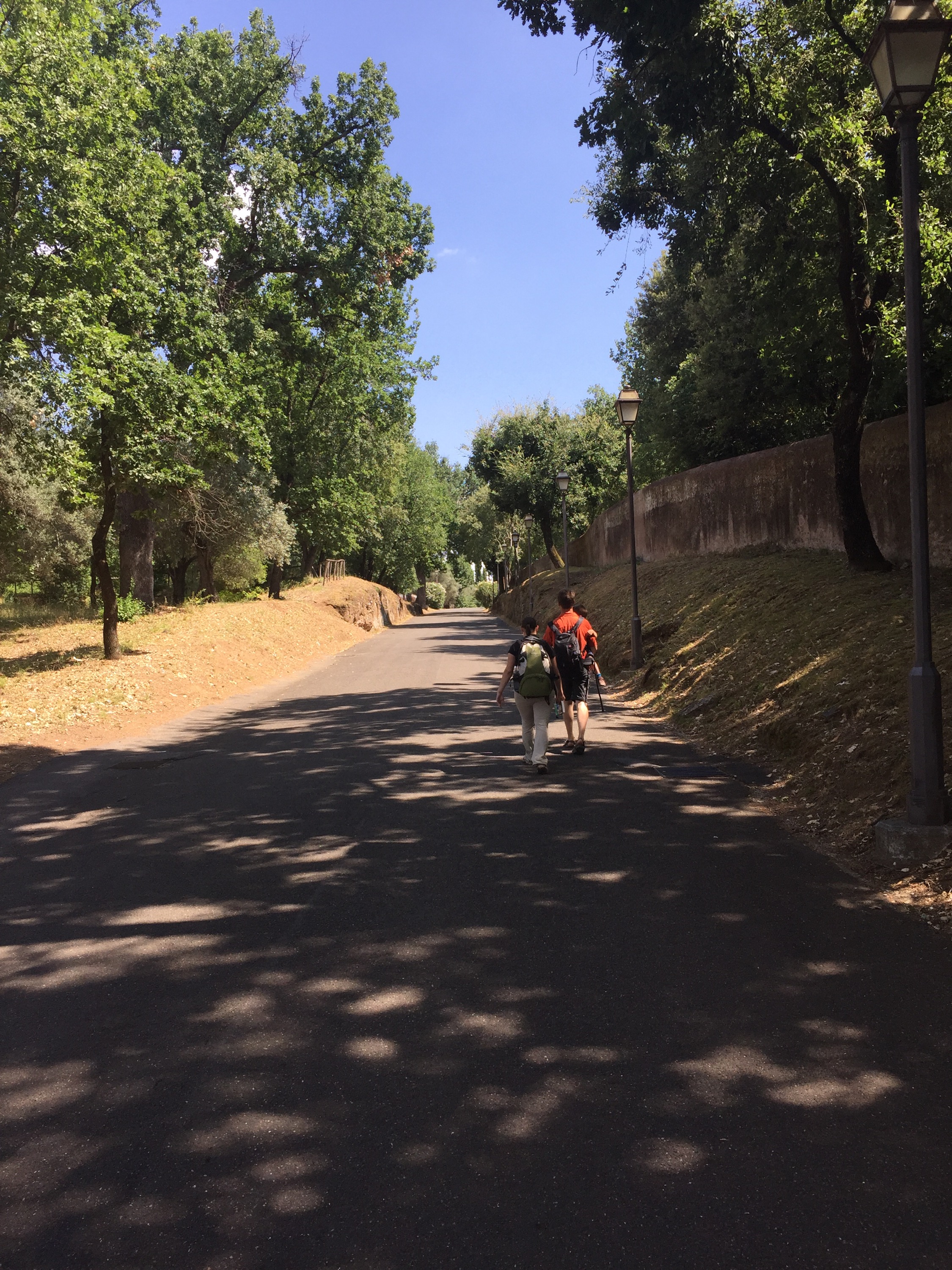
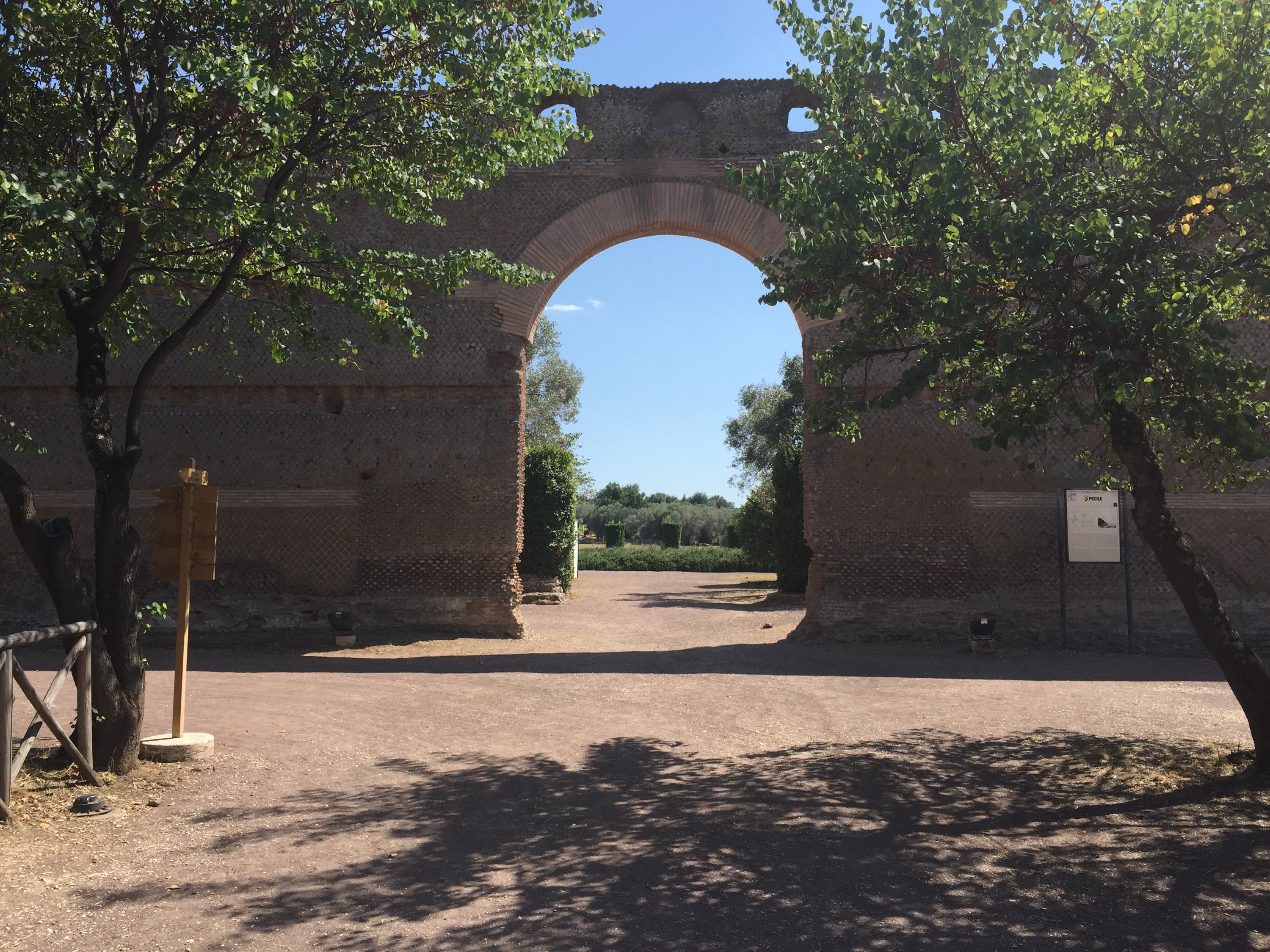
 From the parking lot and ticket office, it’s a long, gradual hike up into Hadrian’s Villa, which is not actually in Tivoli but just outside it. Driving is really the best way to get here, although I did see one of the public buses, nearly empty, pull up to the entrance. 

The young French child in front of me lets his parents know that he does not care for the walk, and throughout the day, I will come across his parents jollying him along with far greater success than I could imagine having. At one point, the father sneaks behind a column and makes ghost sounds that reverberate through the cavernous edifice. The little boy laughs and laughs, never more so than when Daddy emerges and pretends to be terrified.  

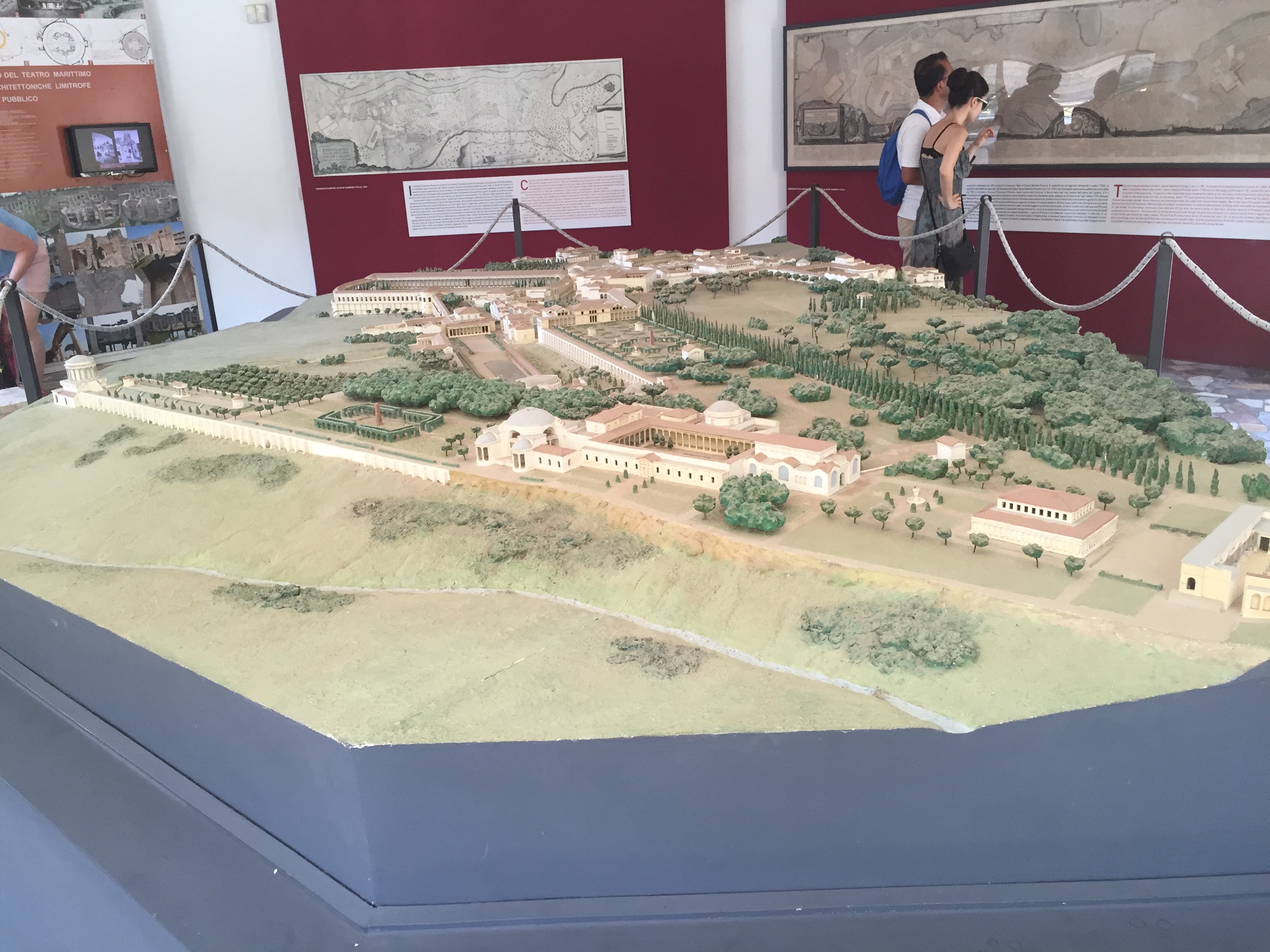
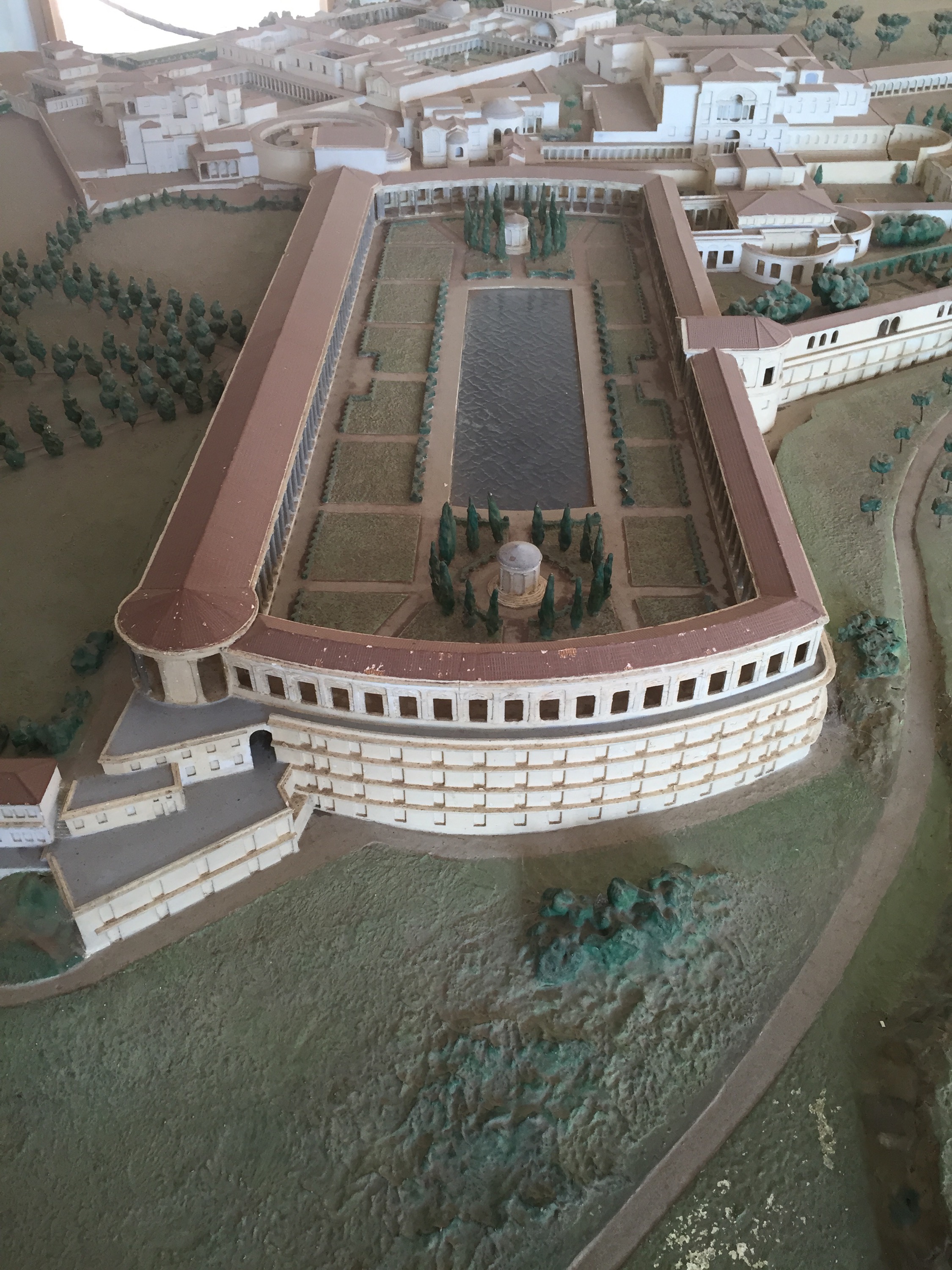
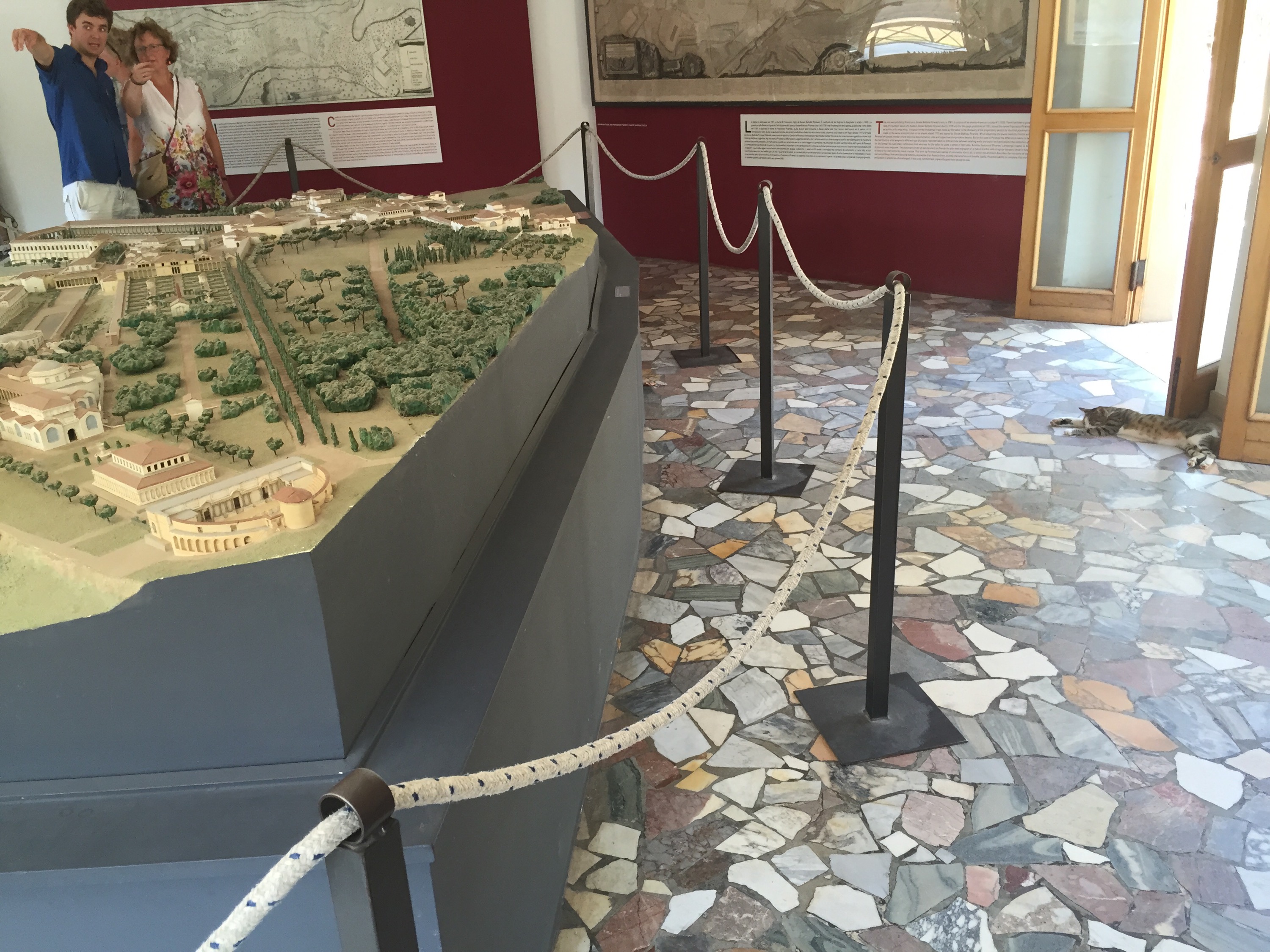
We arrive first to Plastico, the enormous plaster model of that the villa looked like in its prime. A sprawling complex of buildings, now all in ruins, it is hard to get your head around. It is also very, very hot, and the shade in the building together with the whirring fans are small comfort. By the door, a cat lounges. I ask the guard what is il nome del gatto? She doesn’t know, but it is a girl, she says. She thinks. “Sabina,” she decides, the name of Hadrian’s wife.


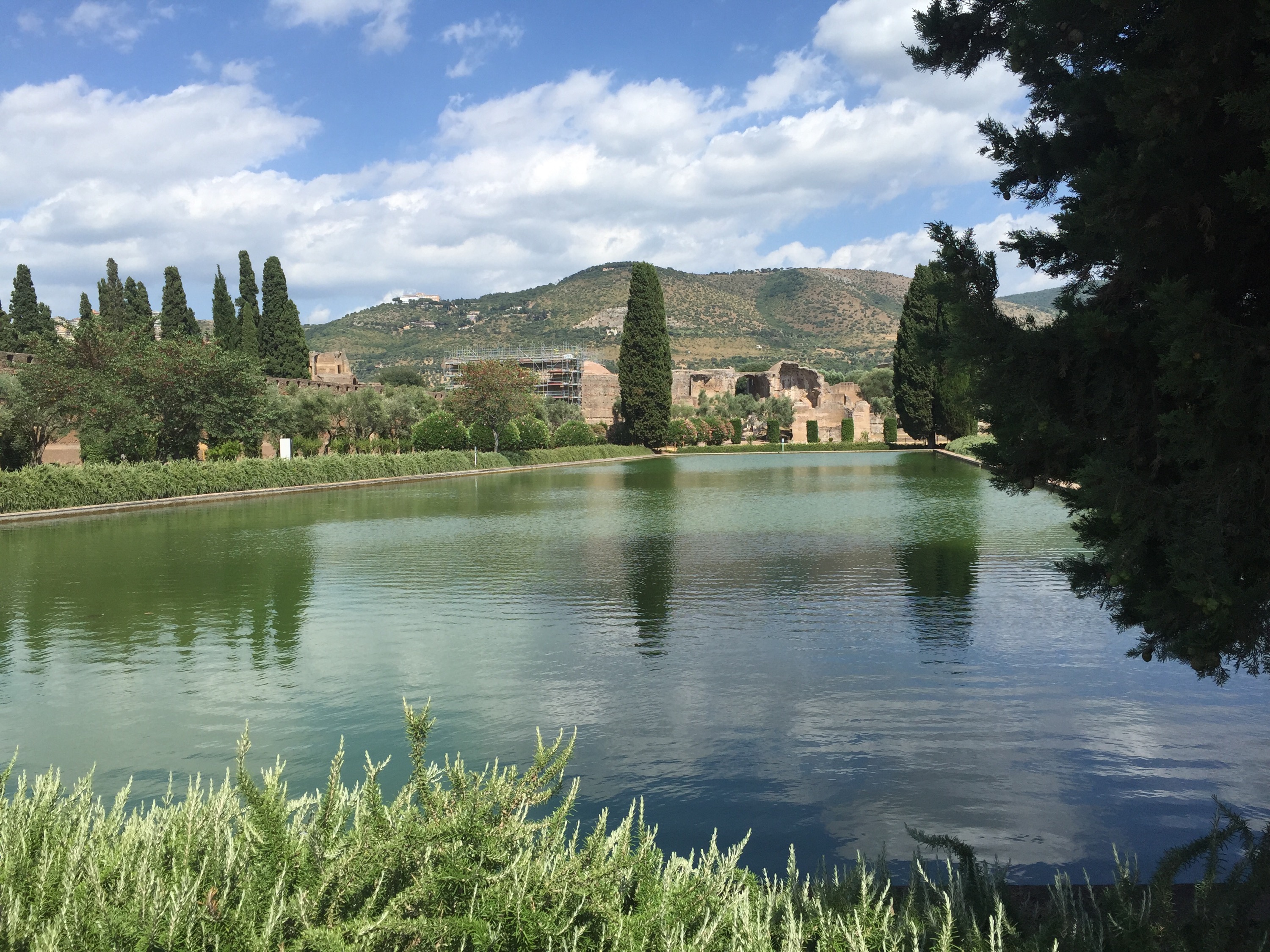
Leaving Plastico and the shade, into the site I go, struck by the scale of the place and simply unable to forget the goddamned heat, which the pools of inaccessible water does nothing to alleviate.


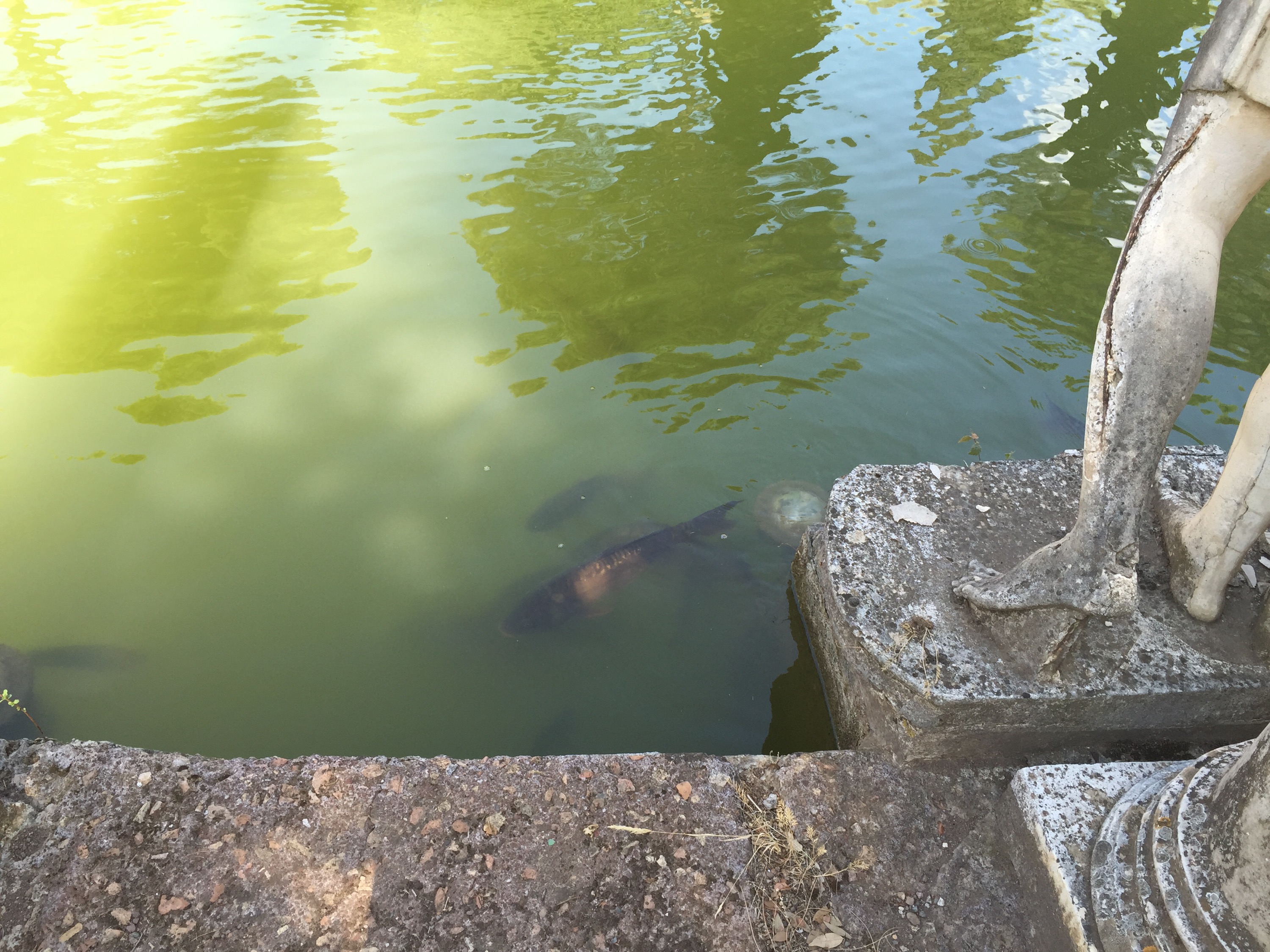
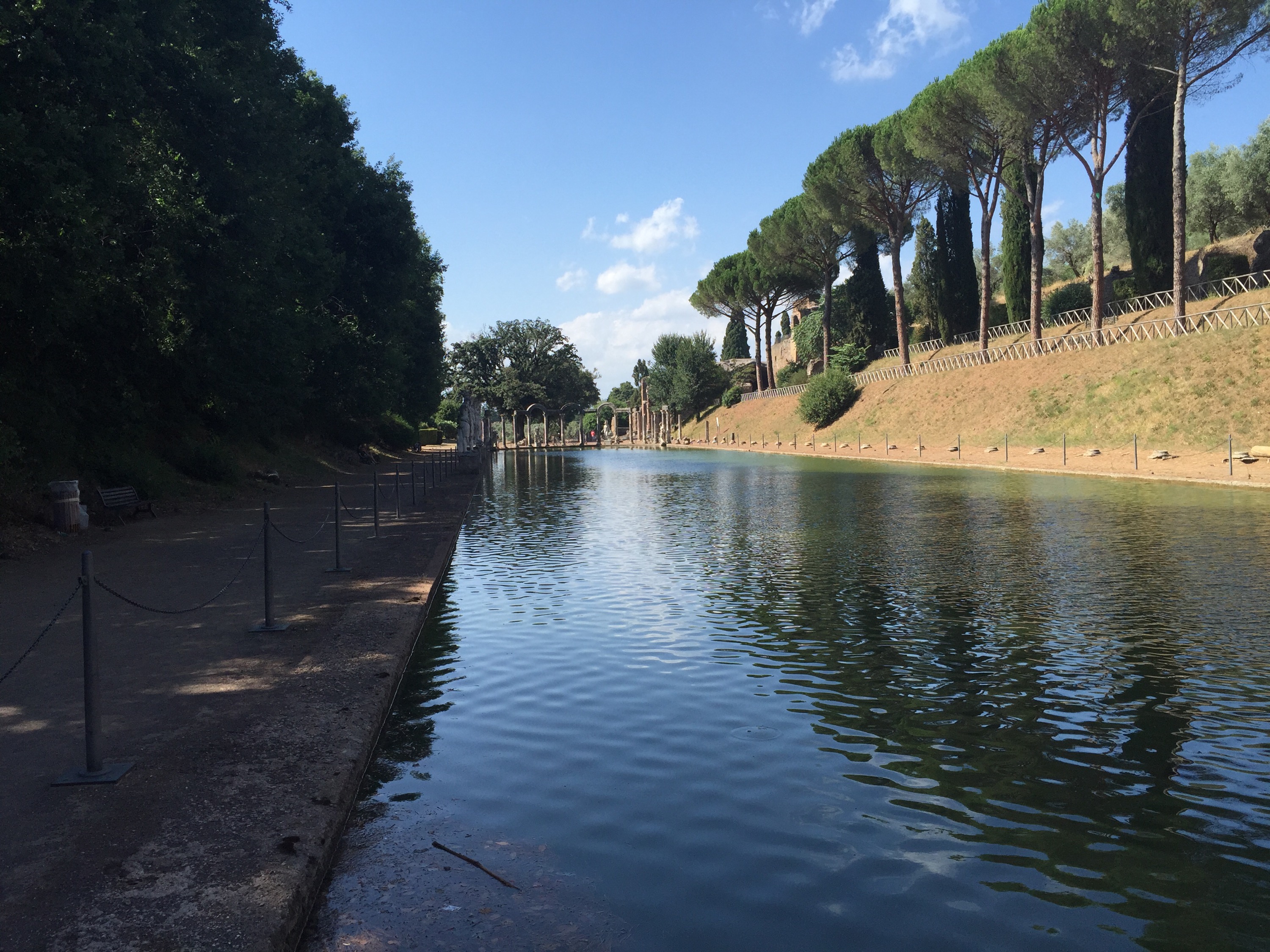
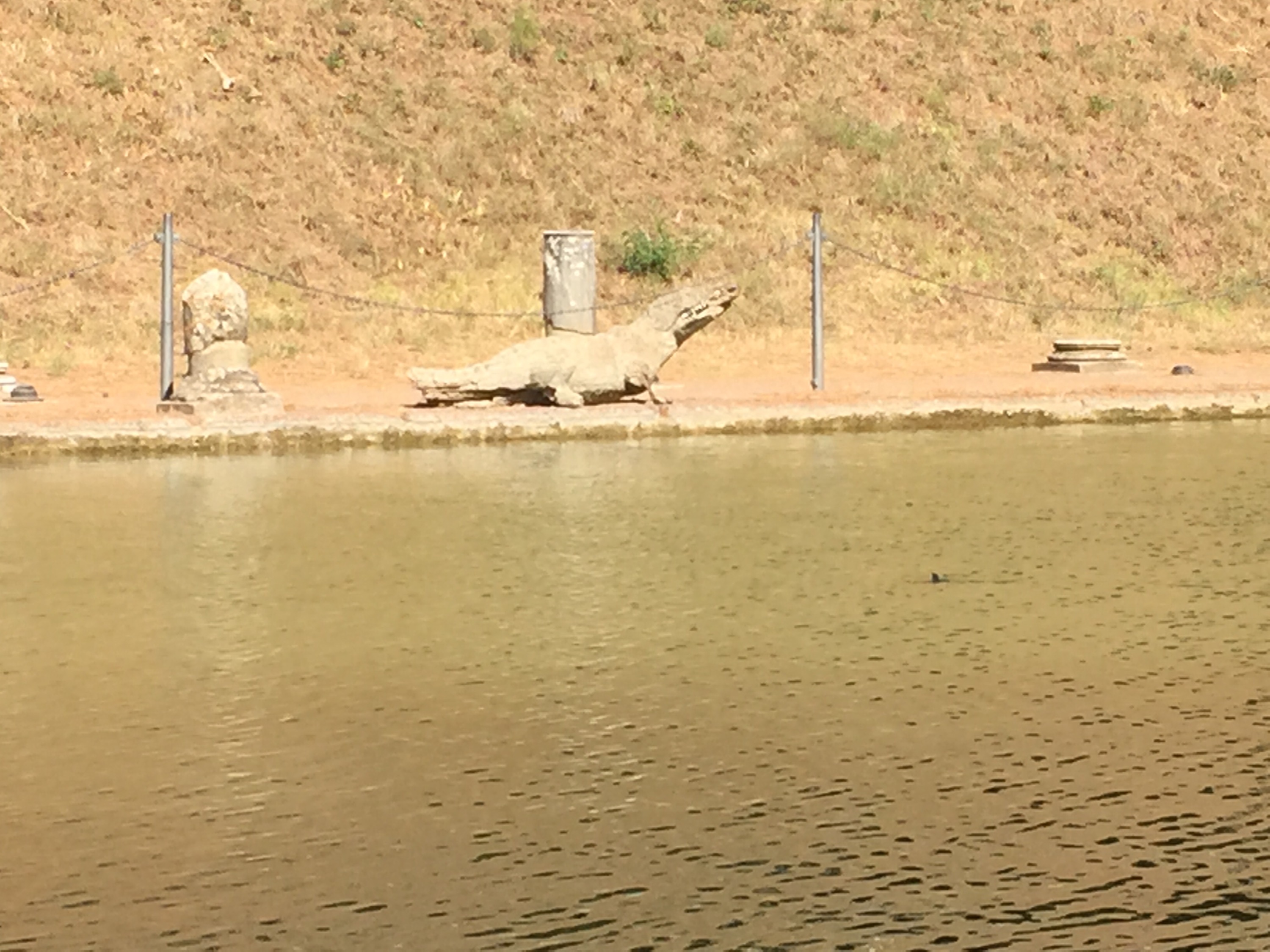
At the the Canopus, the long cylindrical pool surrounded by statues that was meant to conjure up a Roman version of the Nile, the shade and water bring relief. Unsurprisingly, many visitors are gathered here, not just to get their breath but also to feed the fish. A turtle’s head emerges now and again by the crocodile statue on the far side.


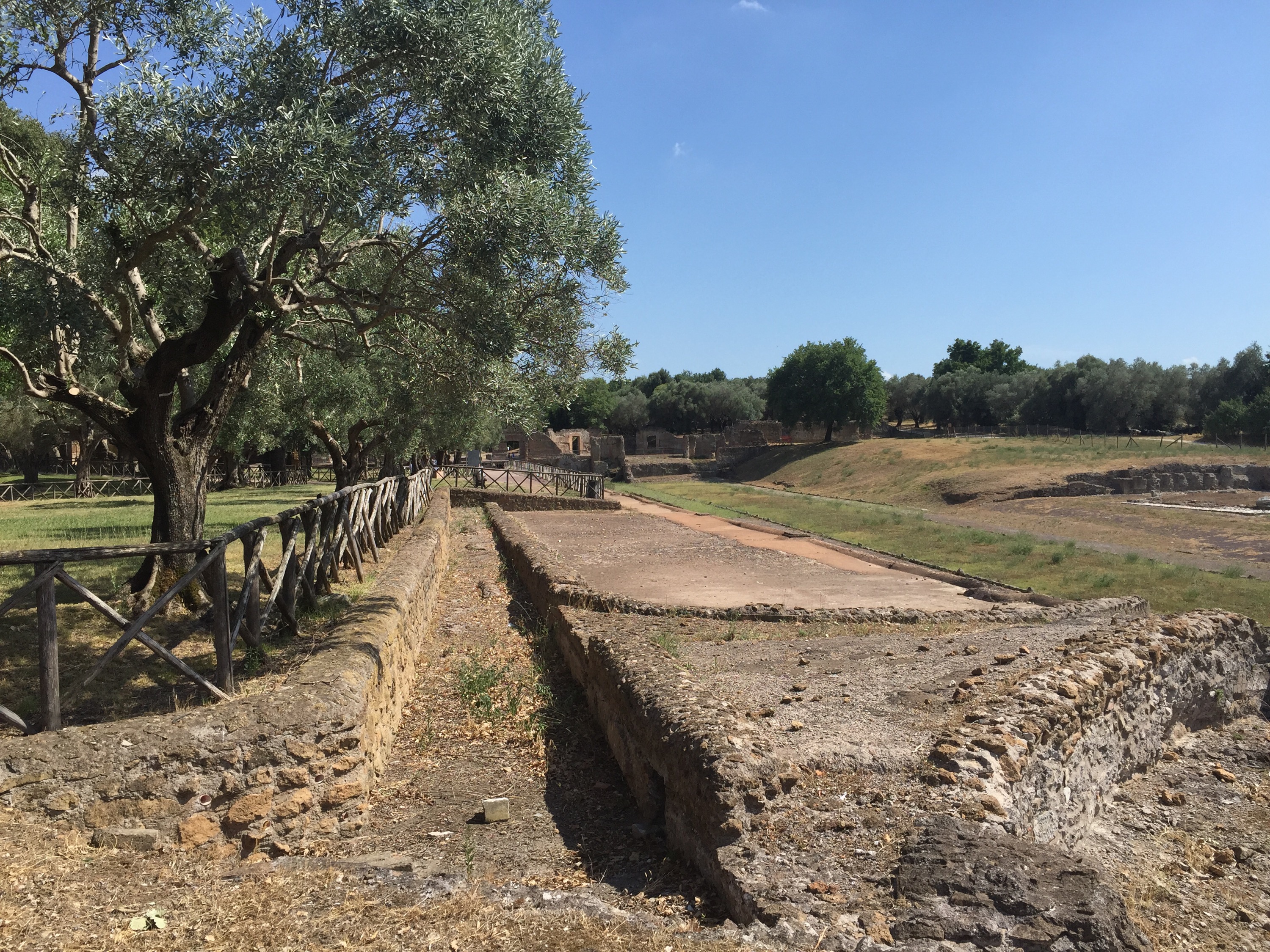
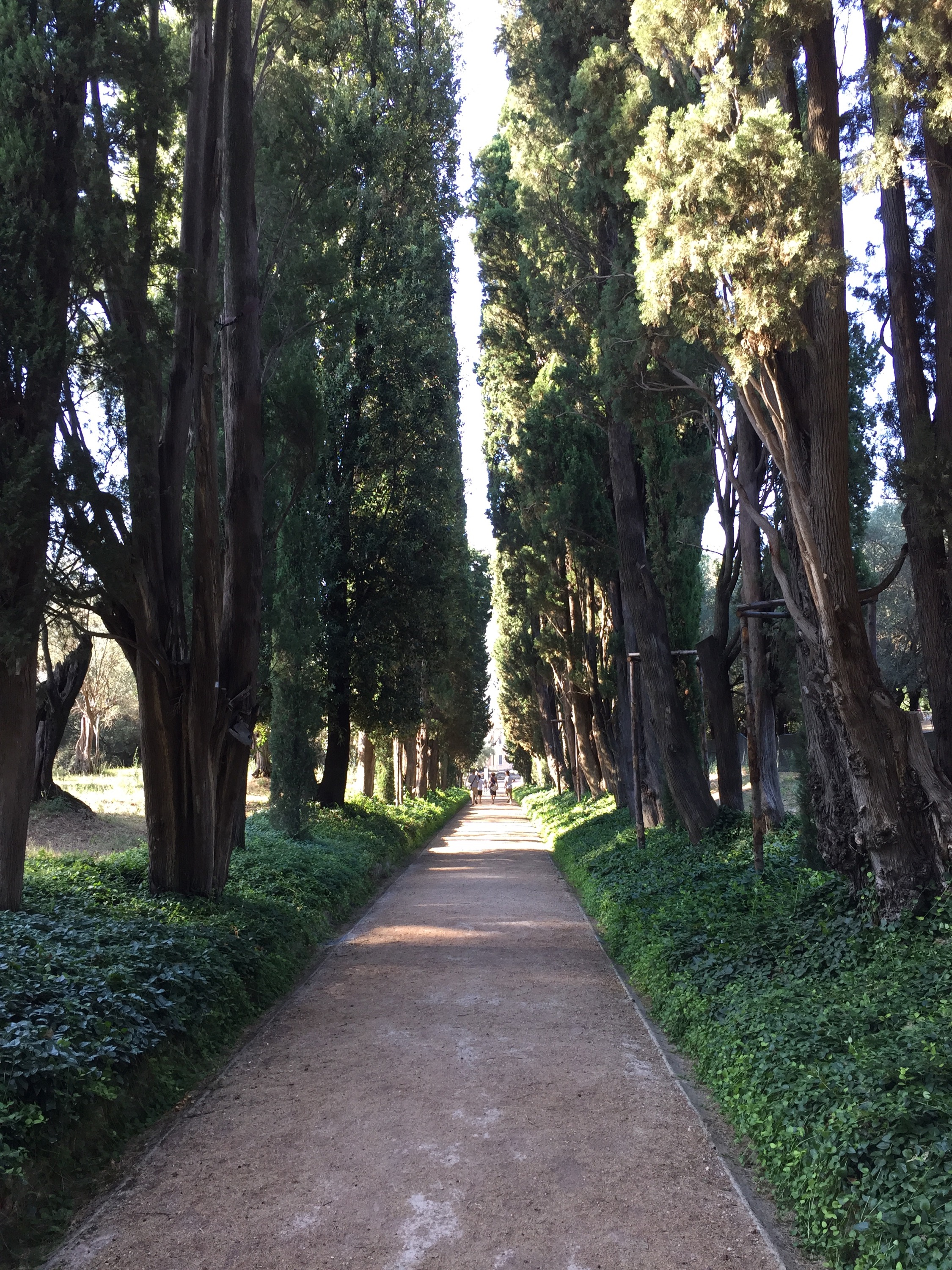
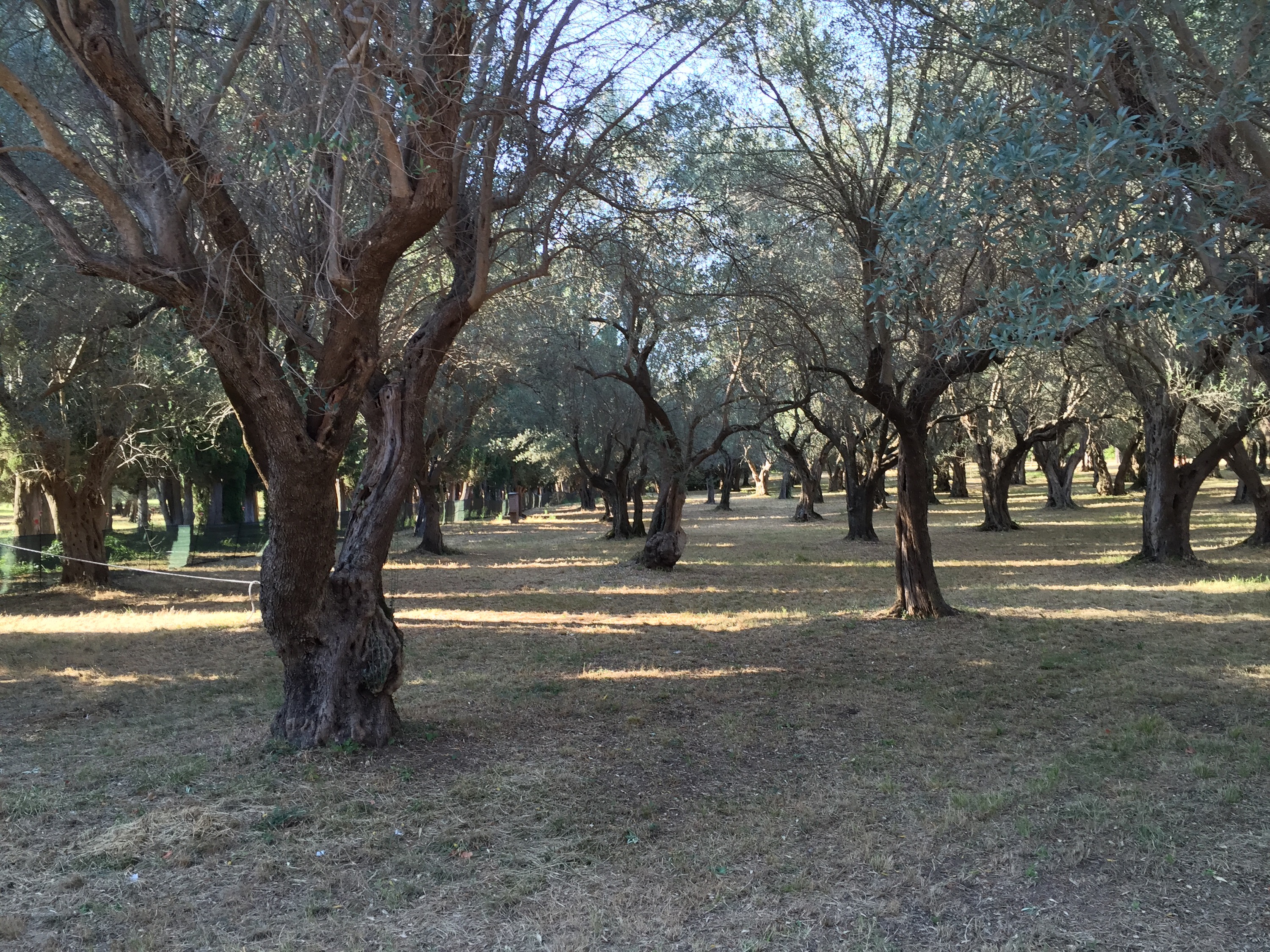
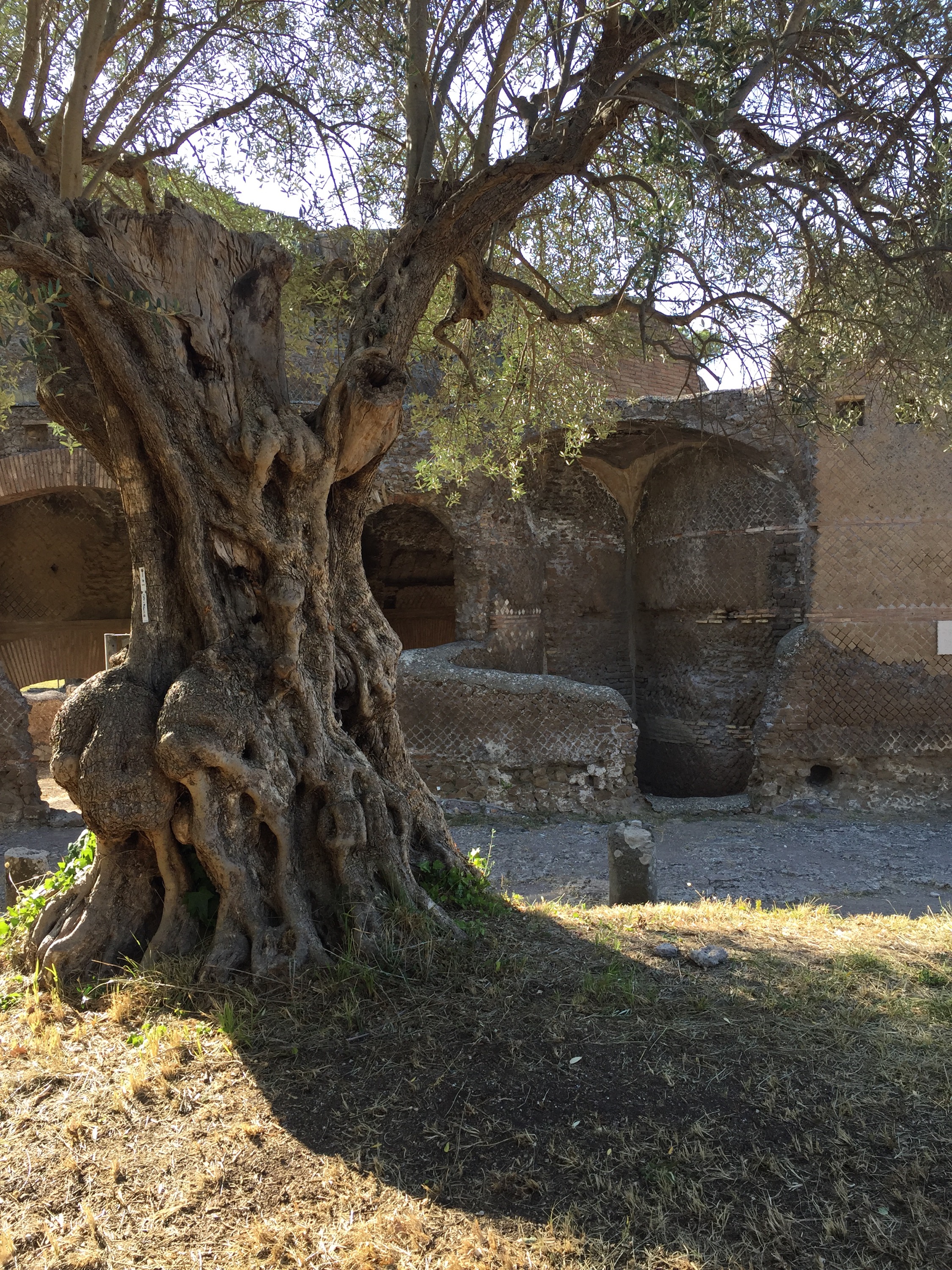
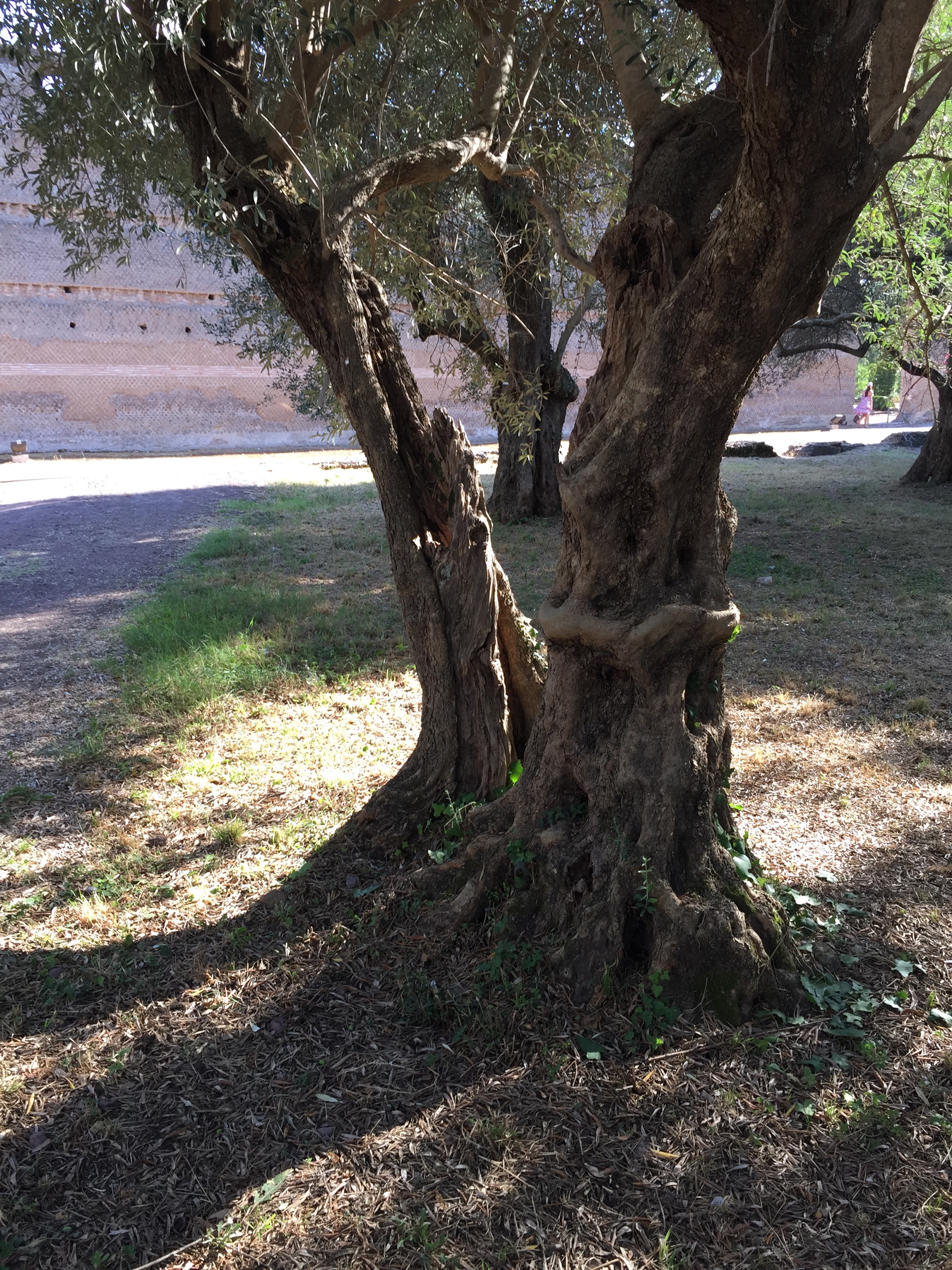
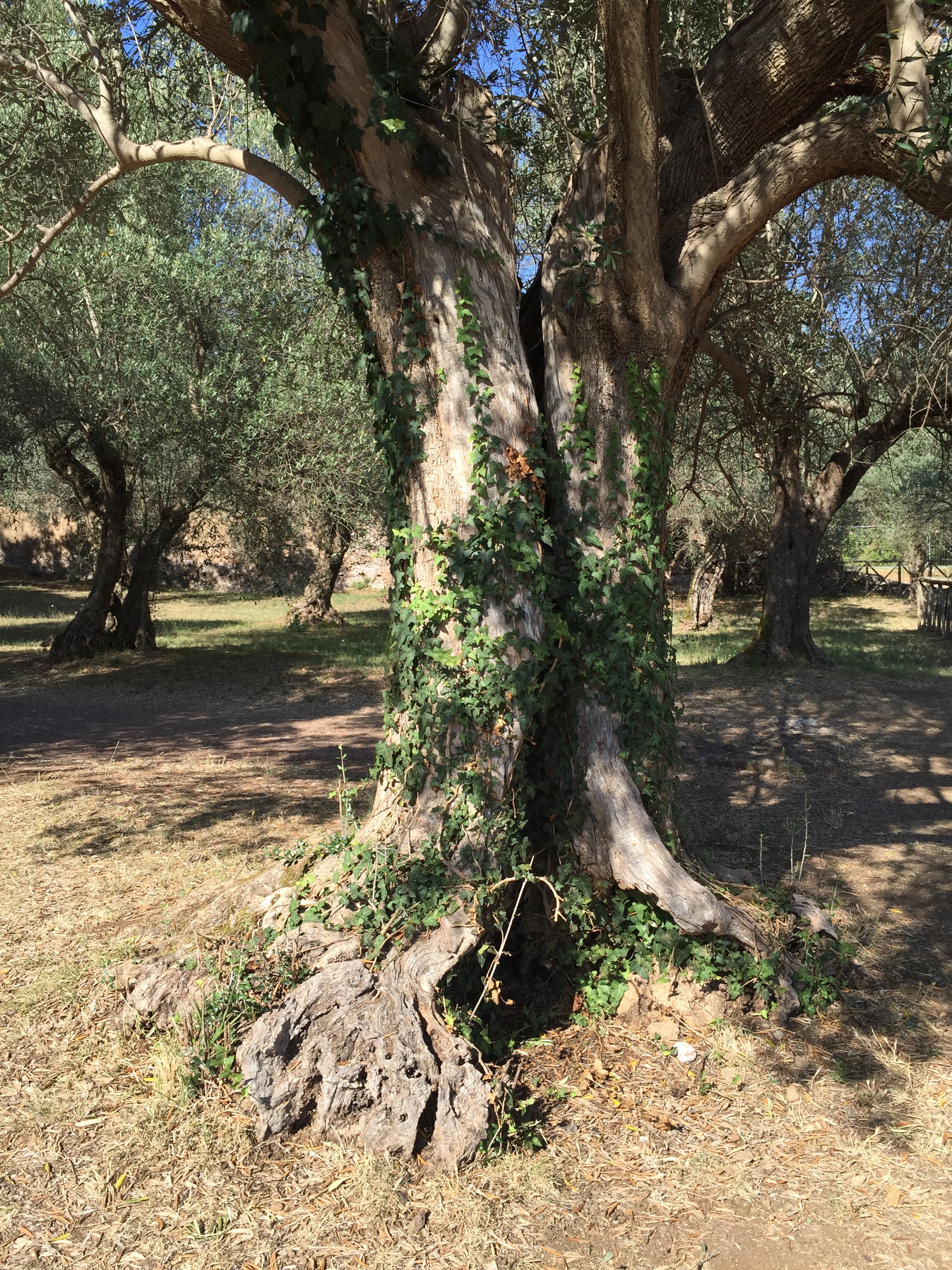
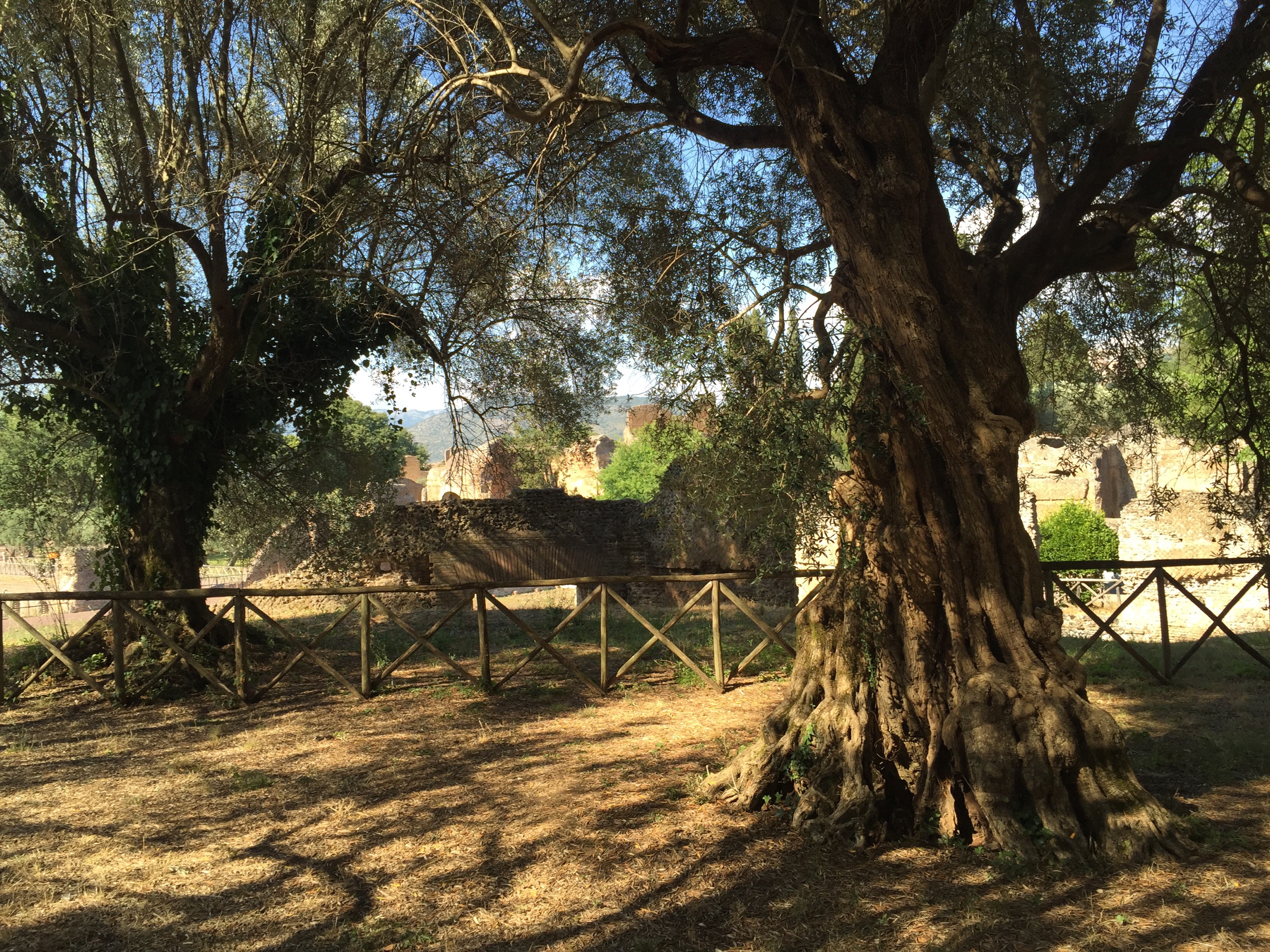
I’m sure it was just as hot in Hadrian’s day, and in my search for shade I begin to really look at the trees throughout the Villa– the umbrella pines, the long rows of cypresses, and most impressively, the twisted ancient olives, that have seen far worse weather and far more of it than I ever will. They say there’s an oliver here over a thousand years old, and I believe it. Some of them will be here a thousand years hence, as will be the carp, the cats, and the turtles, no doubt, and perhaps even the children led along by doting parents.


Posted in Uncategorized | 1 Comment