
-
Recent Posts
Recent Comments
Archives
- March 2026
- November 2025
- December 2024
- April 2024
- October 2021
- February 2021
- September 2020
- July 2020
- June 2020
- May 2020
- April 2020
- March 2020
- January 2020
- August 2019
- July 2019
- June 2019
- May 2019
- April 2019
- March 2019
- February 2019
- January 2019
- December 2018
- November 2018
- October 2018
- July 2018
- June 2018
- May 2018
- April 2018
- March 2018
- February 2018
- November 2017
- October 2017
- September 2017
- August 2017
- April 2017
- February 2017
- October 2016
- September 2016
- May 2016
- April 2016
- March 2016
- February 2016
- January 2016
- November 2015
- October 2015
- September 2015
- August 2015
- July 2015
- June 2015
- April 2015
- March 2015
- February 2015
- January 2015
- December 2014
- November 2014
- October 2014
- September 2014
- August 2014
- July 2014
- June 2014
- May 2014
- April 2014
- March 2014
- February 2014
- January 2014
- December 2013
- November 2013
- October 2013
- September 2013
- August 2013
- July 2013
- June 2013
- April 2013
- March 2013
- February 2013
- January 2013
- December 2012
- November 2012
- October 2012
- September 2012
- August 2012
- July 2012
- June 2012
- May 2012
- April 2012
- March 2012
- February 2012
- January 2012
Categories
- AI
- Animals
- Astronomical
- Bible
- Birds
- Books
- Boston
- Cartoons
- Cemeteries & Funerals
- Classics
- Coal
- Dogs
- Drama
- Education
- Emblems
- England
- Family
- Film
- Florence
- Ireland
- Italy
- Language & Etymology
- Military
- Music
- Mythology
- Nautical
- New England
- Numismatics
- Oxford
- Poetry
- Pontius Pilate
- Race
- Rivers
- Rome
- Saints
- Scotland
- Sewanee
- Slavery
- Sports & Games
- Statues & Monuments
- Tennessee
- The South
- Time
- Trees & Flowers
- Uncategorized
Meta
Protected: Guys as Grapes
Posted in Cartoons, Classics, Emblems, Mythology, Trees & Flowers
Enter your password to view comments.
Quamvis Se Tyrio Superbus Ostro
Another translation from the poetry of Boethius’ Consolation of Philosophy (3.4 metrum), on the worthlessness of worldly office, if it it bestowed by worthless people.
Quamvis se Tyrio superbus ostro
Comeret et niveis lapillis,
Invisus tamen omnibus vigebat
Luxuriae Nero saevientis;
Sed quondam dabat improbus verendis
Patribus indecores curules.
Quis illos igitur putet beatos
Quos miseri tribuunt honores?
Beyond his pearls and purples,
the excess Nero loved
the most was cruelty.
So consuls worthy of
esteem he never chose.
Such honors from above
no Nero could bestow, as
it was honor he’d none of.
Postscript. “Too many of’s,” I’m told by a critic I respect. Eh, oh well.
Posted in Classics, Poetry, Sewanee
Leave a comment
Guest Blog! M. K. Hammond, Turnings with Tennessee Williams
 A little over two years ago, I published an essay called “Property of Tennessee Williams” in Humanities, the journal of the National Endowment of the Humanities. My friend, the author M. K. Hammond, sent me her thoughts on the poem, which I append below. Her new book, The Rabbi of Worms, is available on Amazon; there are great interviews here and here. Her thoughts on Williams are well worth reading:
Turnings with Tennessee Williams:
An Analysis of the Poem “Testa dell’ Efebo”
M. K. Hammond
Testa dell’ Efebo
Of Flora did his luster spring
and gushing waters bathed him so
that trembling shells were struck and held
until his turning let them go.
Then gold he was when summer was,
unchangeable this turning seemed
and the repose of sculpture told
how thinly gold his shoulders gleamed.
A cloud of birds awoke in him
when Virgo murmured half awake.
Then higher lifted birds and clouds
to break in fire as glasses break.
A lunatic with tranquil eyes
he must have been when he had dimmed
and that town burned wherein was turned
this slender copper cast of him.
Twenty-seven years after the poem Testa dell’ Efebo was first published in Harper’s Bazaar, its author Tennessee Williams described it as his “only fully-realized work.”1 Why did he say this? What makes the poem “fully-realized”?
Williams presumably thought the work was complete in some sense, expressing an idea or depicting an image as accurately and artistically as he thought possible. Its completeness hinges on the multiple layers of meaning revealed in metaphors, allusions, and word-plays packed into the verses.
The most obvious reading of the poem emerges from references to the bronze figure that inspired it. The original statue of a young man had been found in the ruins of Pompeii and was subsequently displayed in a Naples museum. Many copies were made and sold to tourists. Williams bought one while visiting Naples in 1948 and thereafter kept it in his possession.2 The bronze youth stands in a relaxed pose, unclothed except for clusters of grapes around his head, a goatskin draped over his left shoulder, and an ornate pair of sandals tied onto his feet and lower legs. His left leg extends forward, his left hand rests on his hip, and his right forearm is raised. Perhaps he once held something (now lost) in his right hand, while his pointer finger extends off to the side. The most unusual feature is the head, tilted downward, facing slightly leftward, his intense eyes focused on some unknown object. There must be something about the youth’s head that provides a key to understanding the poem, since the title can be translated “Head of the Young Man.” Most noticeably, his head is turned, and the word “turning” or “turned” appears in three of the four stanzas. This significant word has multiple meanings that will perhaps elucidate the author’s intentions. What follows are several possible explications of the poem, all related to the concept of “turning.” Williams may not have thought through all of these interpretations; nevertheless, imaginative work can sometimes carry more meaning than the author intended.
In the most literal interpretation, the four stanzas of Testa dell’ Efebo give a poetic description of the sculptor’s art and the fate of this particular statue. Earthen elements used by an artist are formed over centuries from organic matter and minerals, washed over by rain and ocean water. The “trembling shells” refer to an ancient method of casting bronze statues, completed by removal of the outer molds.3 The sculptor “turns” the elements into a beautiful form by releasing extraneous matter and revealing the luster beneath. The statue appears golden at first. It gleams with seeming permanence. Yet as time passes a patina develops and the golden shine fades. The third stanza might depict the workings of nature as Vesuvius erupts around the silent, motionless figure. One could imagine his heart fluttering as the mountain rumbles and birds take flight. Clouds of ash are spewed heavenward and fire consumes all within its reach. After the eruption ceases, ash settles on the town and the statue’s luster is further dimmed. Illuminated at night only by the moon, he stands calmly surveying the harsh destruction of a place where delicate art work had once been turned, as on a potter’s wheel.
A second reading of the four stanzas makes a connection with the four seasons of the year, which turn one into another. In the first line the word “spring” appears, surrounded by references to plant life and fast-flowing water. Perhaps melting snows feed a rushing stream that picks up shell fossils and deposits them at turnings in the watercourse. The second stanza contains the words “summer” and “gold.” The verses suggest brightness and inactivity associated with hot weather. The zodiac sign Virgo, mentioned in the next stanza, falls mostly in September, when autumn begins. Also at this time large flocks of birds lift high for their annual migration to the south. The last stanza has a vague suggestion of winter in the dimness and tranquility of a desolate town.
On another level, the poem might represent the four stages in a man’s life. Gushing waters accompany the birth process. Trembling shells could refer to a family’s habits and values superimposed on a boy until he turns away and goes out on his own. Golden youth is the second stage, seeming solid and permanent at the height of a young person’s vigor, health, and beauty. Yet the gleam of youth derives from thin gold, and that turning is soon worn away. In manhood Virgo comes to life, perhaps indicating the development of sexuality or a sense of vocation. The man is lifted heavenward into the clouds of bliss or accomplishment until he flies too close to the sun, like Icarus, and comes crashing down. Finally as an old man he loses his inner fire, his mental sharpness, and perhaps his vision as well. He may be disillusioned by life and the world that promised so much when he was young.
A more obscure, and perhaps deeper, reading of the poem is related to a human being’s search for meaning in life, especially in a religious context. Williams left the entirety of his literary estate to University of the South, also called Sewanee, a school affiliated with the Episcopal Church. He apparently wanted people to be aware of the Christian context of his work.4 To follow this line it will be helpful to know the identity of the youth represented by the statue. The first two words of the poem give us a clue.
One of Tennessee Williams’ favorite poems was Keats’ Ode to a Nightingale. The second stanza of this work expresses desire for “a draught of vintage . . .Tasting of Flora” (emphasis added). The verses continue, “O for a beaker full of the warm South! . . .With beaded bubbles winking at the brim, And purple-stained mouth,” clear references to alcoholic drink. The poet thinks of strong drink as one way of escaping the world’s troubles. In the same stanza, multiple references to nature, dance, and song suggest an invocation of Bacchus, the god of wine. The connection is cemented in a later stanza when Keats mentions Bacchus by name (as an option not taken).
By quoting the words “Of Flora” at the very beginning of his poem, Williams establishes an immediate association with the “vintage” stanza of Ode to a Nightingale. The grape clusters around the youth’s head and the goatskin he carries also indicate that the statue portrays the figure of Bacchus.
In classical mythology, the god Bacchus is associated with revelry and ecstatic joy, and also with savage brutality, conditions which may be induced by consuming alcohol. Williams might have been thinking of something else, however. Bacchus is the only god born of a human mother and a divine father. As the god of wine, he is both outside and inside mortal beings, transforming in some way those who partake of his fruits (perhaps reminding us of the Eucharist). The vine representing Bacchus is severely pruned and appears dead in winter, only to come alive again in spring. He defies the power of death by rescuing his mother from the underworld and taking her to live on Mt. Olympus with the gods. The associations with Christianity are unmistakable.
If Williams was thinking in religious terms, the work “turn” would carry still more meaning. Old Testament poets and prophets exhorted their listeners over and over again to turn away from evil and turn back to the Lord. Williams had sometimes gone astray in life and may have wanted to turn back (in the biblical sense). He apparently found it difficult, though, to break away from self-destructive behaviors.
Considered from this standpoint, the first stanza of Testa dell’ Efebo might refer to the creation story. Flora, gushing waters, and trembling shells represent the gifts bestowed on mankind by the Creator. Almost immediately Adam, representing all men, turns to sin and is ejected from Eden. The second stanza depicts a golden age in history, when human accomplishments in art and science hold great promise for the future. Yet the passage of time reveals the deeply ingrained nature of sin. New hope comes in the third stanza when a virgin gives her assent and the Holy Spirit (often represented by a bird) lifts men and women to new heights. But these efforts, too, seem to bear little fruit, as the world embraces violence, culminating in the terrible destructiveness of twentieth century warfare. Despite this gloomy conclusion, the poem does not leave a reader in total despair. The young man, while disillusioned and driven half mad from what he sees, still has tranquil eyes. He looks back with humility at human frailty but also with respect for human accomplishments. His head might be turned in dejection or resignation, or simply in thoughtfulness. The statue survives destruction, as do the aspirations of mankind for a better “turning.”
Thus the poem elicits many possible interpretations of the word “turn.” Most of them have to do with transformation.5 The cyclical nature of the calendar year and of a human life, as well as a person’s ability to turn back and survey history, suggest completeness. These various turnings may have inspired Williams’ description of Testa dell’ Efebo as “fully realized.” Furthermore, the poem’s songlike meter and rhyme scheme and its internal rhyme, alliteration, imagery, and beautiful turn of phrase appeal to the ear. While Tennessee Williams may not have been able to turn his life around, his poem on turning succeeds magnificently as a work of art.
Notes
1 Williams is quoted in an article in People magazine (May 26, 1975) called “A Playwright Lives his Greatest Drama: The Resurrection of Tennessee Williams,” by Jed Horne, based on an interview conducted by Horne at Williams’ home.
2 The statue now resides in the archives of University of the South in Sewanee, Tennessee. It was among the items that came to Sewanee in connection with the bequest of Tennessee Williams’ literary estate to the university. Professor Christopher McDonough, chairman of the Classical Languages department, has written a fascinating article about the statue and what he has learned about it. See Humanities: The Magazine of the National Endowment for the Humanities, September/October 2011.
3 A more complete description of the process is given in McDonough’s article mentioned above.
4 Talk given by Christopher McDonough at Sewanee Summer Seminar, June 2013.
5 There may be further meanings as well, related to distinctive characteristics of the poet himself. Such a personal reading would depend on a more thorough knowledge than this reviewer has of Tennessee Williams’ life and writings.
Posted in Classics, Poetry, Sewanee, Statues & Monuments
Leave a comment
The King’s Whiskers at SAS
Has British royalty ever visited the Cumberland Plateau? Well, sort of …
“On the feast of Charles I of England 1924 Fr Orum [the prior at the time] thought it fitting that they should hold a special commemoration for his martyrdom on January 30. Bp. Maxon and other guests were invited formally to attend the occasion. Some one had given us a properly authenticated relic of the beheaded King, which unfortunately was a clipping from his beard. This was carried about in solemn procession with incense and torches and appropriate hymns. But some newspaper man from Nashville was there and he thought to give the school a boost by writing an illustrated story of the event which was published in due time. That raised a storm that spilled over the country, far beyond the confines of Tennessee. Fr. Orum was completely crushed, and he never really did recover from the shock. Fortunately our Bishop Gailor saw the humor of the situation, while not for a minute approving of the rather bizarre performance; and it was most kindly and charitable of him to say merely that Fr. Orum had used poor judgement. All the furor over ‘King Charles whiskers’ died down in due time, but, as mentioned above, Fr. Orum was so shaken he never recovered.”
Former St. Andrew’s-Sewanee headmaster, Fr. Bill Wade, pointed me to this story, which is found in the charming manuscript, A Résumé of the Story of Saint Andrew’s School, 1905 to 1945, by Rt. Rev. Robert Erskine Campbell, O.H.C. (1968) on page 76. My lazy on-line investigations have not turned up much confirmation of the “storm that spilled over the country,” although I did find a disdainful mention in The Lutheran Witness 43 (1924) 176 to an article entitled “Episcopalians Venerating King Charles’s Whiskers.”
You can see Charles’ distinctive beard in the famous triple portrait below, now in the Royal Collections, done by Anthony Van Dyck–it was after this painter that this sort of facial hair came to be called a “Van Dyke,”which is also sometimes called a “Charley” after His Majesty, according to the OED ( which gives a reference from 1834 reading, “With white pantaloons, watch chains and Wellingtons, and a charley at their under lip”). Other relics of the poor beheaded monarch are accounted for on the website of the Society of King Charles the Martyr. If mooning over old dead kings is your thing, this is the site for you–just don’t try it here in Tennessee or you might end up like Father Orum.
For God’s sake, let us sit upon the ground,
And tell sad stories of the death of kings:
How some have been depos’d, some slain in war,
Some haunted by the ghosts they have depos’d;
Some poison’d by their wives, some sleeping kill’d;
All murder’d — for within the hollow crown
That rounds the mortal temples of a king,
Keeps Death his court: and there the antic sits,
Scoffing his state, and grinning at his pomp;
Allowing him a breath, a little scene
To monarchize, be fear’d, and kill with looks;
Infusing him with self and vain conceit —
As if this flesh, which walls about our life,
Were brass impregnable — and, humour’d thus,
Comes at the last, and with a little pin
Bores through his castle wall, and — farewell king!
Shakespeare, Richard II, 3.3
Date on the Cornerstone of Walsh-Ellett, Sewanee
Perhaps the most charming spot on the Sewanee campus is Guerry Garth, the green space between Convocation Hall, Guerry Auditorium, and Walsh-Ellett Hall–I have often taught classes here, near the large gingko in the middle, while Breslin Tower chimed away the quarter-hours. Recently I noticed something in the Garth that has to do with another sort of time-reckoning, however.

It’s in the southeast corner of the Garth, in the upper right hand of the picture above but you can see better what I’m talking about below– by the drainpipe, halfway between the windows and the ground.

It’s the cornerstone for “Walsh Memorial Hall.” What struck me as odd about it was the rendering of the date. While Roman numerals are common enough, this inscription is given in a Roman calendrical form rarely seen outside of ancient monuments.
 It reads:
WALSH MEMORIAL HALL
AD DEI GLORIAM
A.D. XIV. KAL. OCT.
MDCCCXC
Ad Dei gloriam, “to the glory of God,” reads easily enough, as does the year, MDCCCXC, 1890. But the third line, A.D. XIV. KAL. OCT., requires some explanation. One thing, though–the A.D. does not mean Anno Domini.
The Romans had, more or less, the same month-names that we have, but their system of specifying days was different. This may or may not have had to do with phases of the moon, but no matter, it worked like so: the first day of the month was called the Kalends, the thirteenth day of the month was the Ides (except in July, October, March, and May, when it fell on the fifteenth), and the Nones fell eight days before the Ides.
The days of the month were reckoned backwards from the nearest of these marked days. Hence, what you and I would call February 1st was the Kalendis Februariis (Kal. Feb., in standard ancient abbreviation). Februay 13th would be the Idus Februarius (Id. Feb). February 12th was pridie Idus Februarius, i.e., the day before the Ides of February (pridie Id. Feb). February 11th was ante diem iii Idus Februarias, or three days before the Ides of February (a.d. iii Id. Feb.). See, a.d. = ante diem, “day before.”
Now I know you’re saying on that last one–hey, wait a minute, February 11th is only TWO days before February 13th! But you have to recall that Romans didn’t have a concept of zero, and so they counted inclusively, meaning they counted both the first and the last number in their reckoning. Imagine if you were to crucify a man on a Friday and he rose from the dead on a Sunday: the way you and I count, it’s only two days later, but according to the Romans, he rose again on the third day.
Anyway, back to the dedication of Walsh. According to the inscription, it reads A.D. XIV. KAL. OCT., that is, fourteen days before the Kalends of October. September 30 minus 14 days, counted inclusively. That would make it September 18th. If you don’t believe me, you can check this nifty Roman Date Calculator. If you have a degree from Sewanee, in fact, you might want to check it out, as all the dates on the sheepskin are rendered in this Roman style. But the inscription on Walsh, with the dating that includes Kalends, strikes me as being unusual for a cornerstone dedication.

Posted in Classics, Sewanee, Time, Trees & Flowers
4 Comments
Plant and Leafs from Green’s View

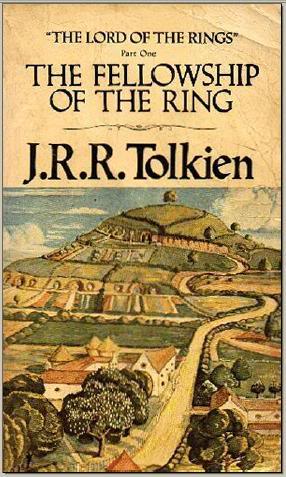 The first time my wife and I looked out from Green’s View in Sewanee, she said, “It looks like the original cover of The Fellowship of the Ring.” She was right, of course, in more ways than one. Sewanee has always had a feel of the Shire about it, a kind of remove from the workings of the rest of the world that we usually associate with the pastoral. As William Alexander Percy famously described Sewanee, It’s a long way away, even from Chattanooga, in the middle of woods, on top of a bastion of mountains crenellated with blue coves. It is so beautiful that people who have once been there always, one way or another, come back. For such as can detect apple green in an evening sky, it is Arcadia. The painting below of Green’s View was done last year by Dan Pate, whom I think of as Sewanee’s Cézanne– the dreaminess of the landscape done in abstract design capture much of what I see from this prospect.
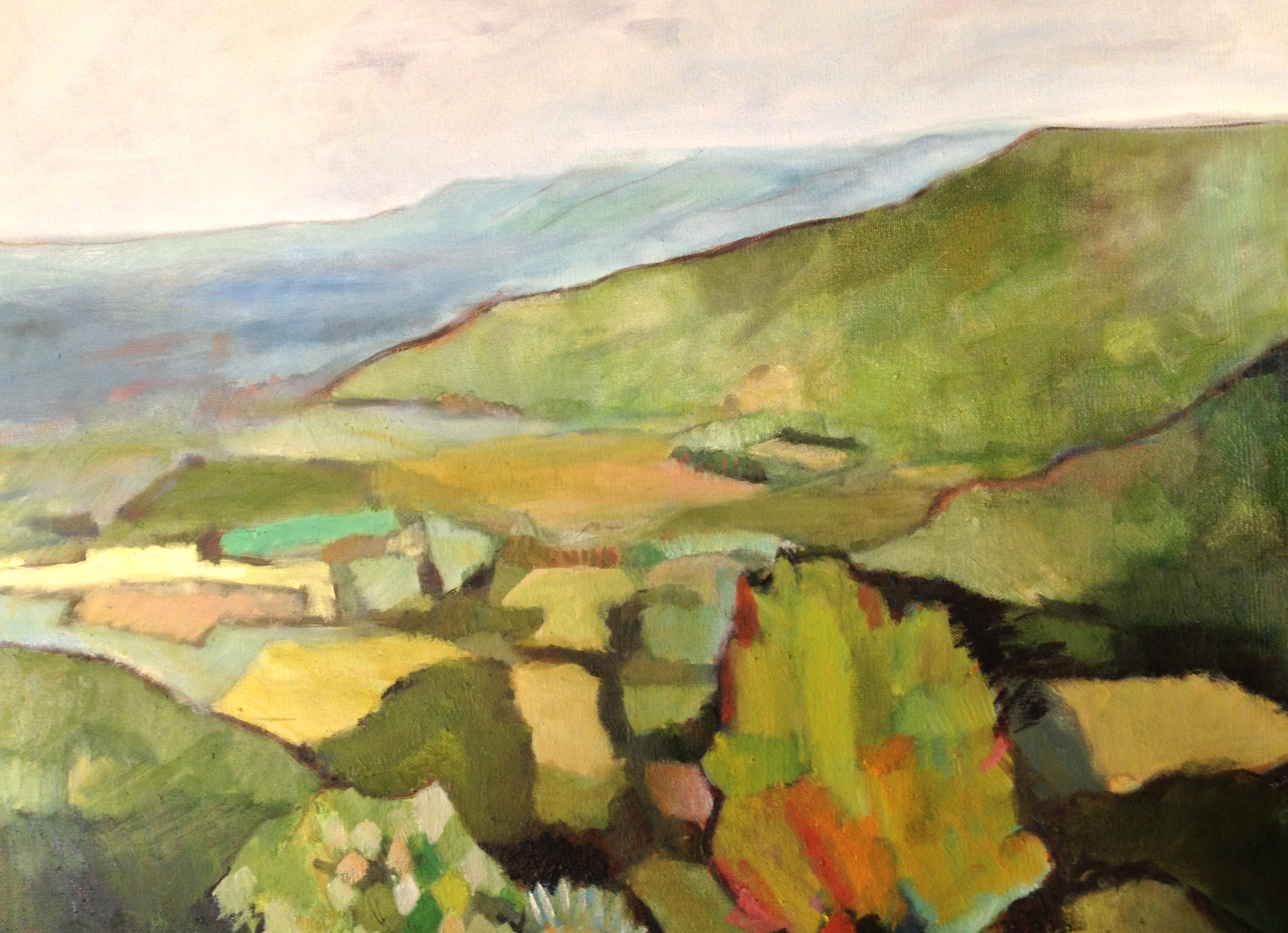
Green’s View, by Dan Pate (2013)
But the fact is, there’s a lot more to this view than simple pastoral romance. Now that the trees are bare, let’s take an even closer look at Green’s View. So, what are those structures, way out there to the left?

Yeah, those ones …
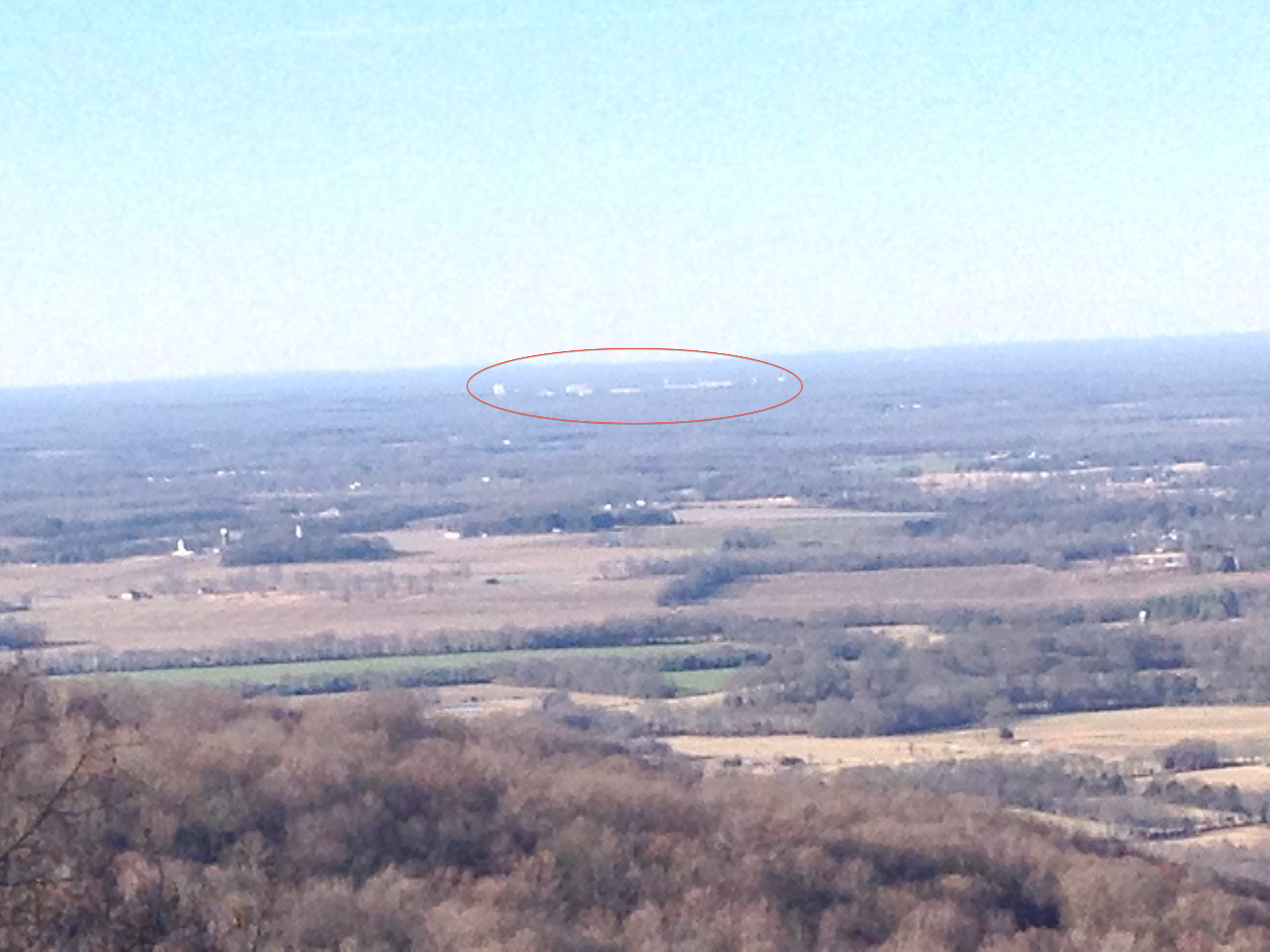
Well, those buildings are the Nissan Powertrain Assembly Plant, on Warren Chapel Road, in Decherd the U.S. Air Force’s Arnold Engineering Development Center. It is, according to the AEDC website, the most advanced and largest complex of flight simulation test facilities in the world. The complex operates 43 aerodynamic and propulsion wind tunnels, rocket and turbine engine test cells, space environmental chambers, arc heaters, ballistic ranges and other specialized units. It’s a big employer here in Franklin County, and alas, also a big polluter. As my friend David Haskell notes in a blog post, man-made Woods Reservoir near AEDC is contaminated with PCBs and the fish bioacummulate these toxins and pass them up the food chain to the birds.

From Inautonews.com
Further to the west, and not quite visible from Green’s View is another large industry, Nissan’s Powertrain Assembly plant (pictured to the right). Now, I know what you’re thinking, people. You’re saying, Hey, I’m trying to enjoy a pure and unlittered panorama up here from Green’s View, knock it off! Get your “dark Satanic mills” out of my “green and pleasant land”! Well, my friend, that it where you are wrong, at least about Nissan, a plant that may well be a greener shade than you think. According to a press release from Nissannews.com last month, the Decherd plant has become an instrumental point in the production of Nissan’s electric car, the Leaf:
 Nissan is finding more and more ways to localize its LEAF production in the U.S. When the vehicle first became available in December 2010, the car was manufactured in Japan. In January 2013, Nissan ramped up production of the car in Smyrna, Tenn. This was followed by production of the electric motor in Decherd, Tenn., in April. “Bringing that production here and those jobs here, it is better for everyone,” said Coral Kanies, Nissan Decherd Production Manager. As the press release further notes, Nissan added its electric motor facility in Decherd will use only locally sourced magnetic wire by the end of this year. (You can see the video version of this report below)
Admittedly, there’s a part of me that is pretty suspicious about electric cars, especially ones with names like “Leaf.” But the buzz on Leaf seems pretty good. There’s a blog from a Leaf owner called drivingelectric, who is pretty enthusiastic about this car, noting how little it costs to run: But if you are driving a standard car or truck that gets an average of 18 mpg and you drive it 15,000 miles a year, with gas costing $4/gallon, you are spending 22.2 cents per mile and $3,333 a year for fuel . If you were driving an electric car with electricity costing 10 cents per kWh, which is pretty close to average, you’d be spending 2.9 cents per mile and $435 a year for fuel . You’d be saving $2,898 a year on fuel costs.
For me, the downside is that a fully-charged battery will take a Leaf only 85 miles or so. That would only take me to Nashville from Sewanee–or back and forth to the Nissan Plant in Decherd twice (an 18 miles’ drive away). But in any event, it is interesting to think that looking out from Green’s View, one is gazing not just on a nostalgic past but also on competing visions of the future, one filled with PCBs and the other, not quite visible but much greener.
(Many thanks to David Haskell and Will Haight for gently pointing out my error about the buildings on the horizon above)
Posted in Poetry, Sewanee, Tennessee, Trees & Flowers
7 Comments
Bill Bonds’ “On Evaluation at the University of the South”
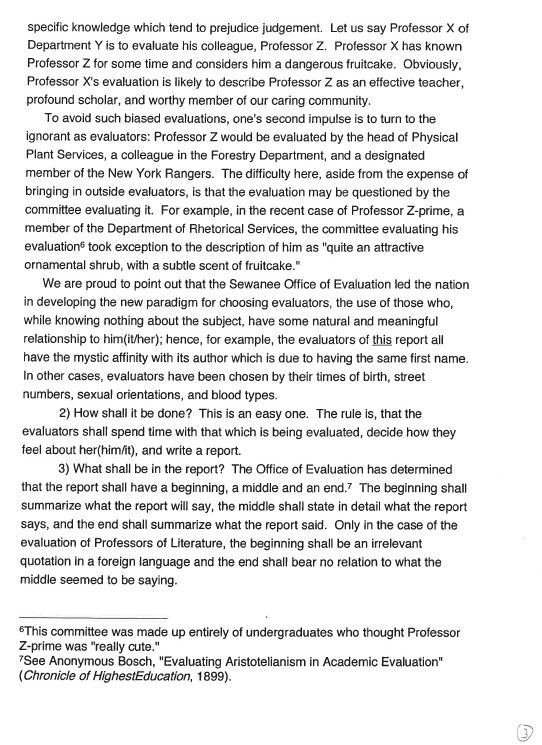
In honor of the return of SACS to Sewanee in 2015, please find below Bill Bonds’ notorious parody, “On Evaluation at the University of South” (available also as a PDF: Bill Bonds–On Evaluation at the University of the South.)



Posted in Uncategorized
2 Comments
Protected: Plumbing the Depths
Posted in Astronomical, Bible, Classics, Emblems, Language & Etymology, Nautical, Time
Enter your password to view comments.


 uncomelyandbroken