
In the town hall of Sutri, one sees many an ancient inscription cemented into the walls. Somewhere, sometime, somebody on the world-wide web will care about these, and so, my friend, this is for you.
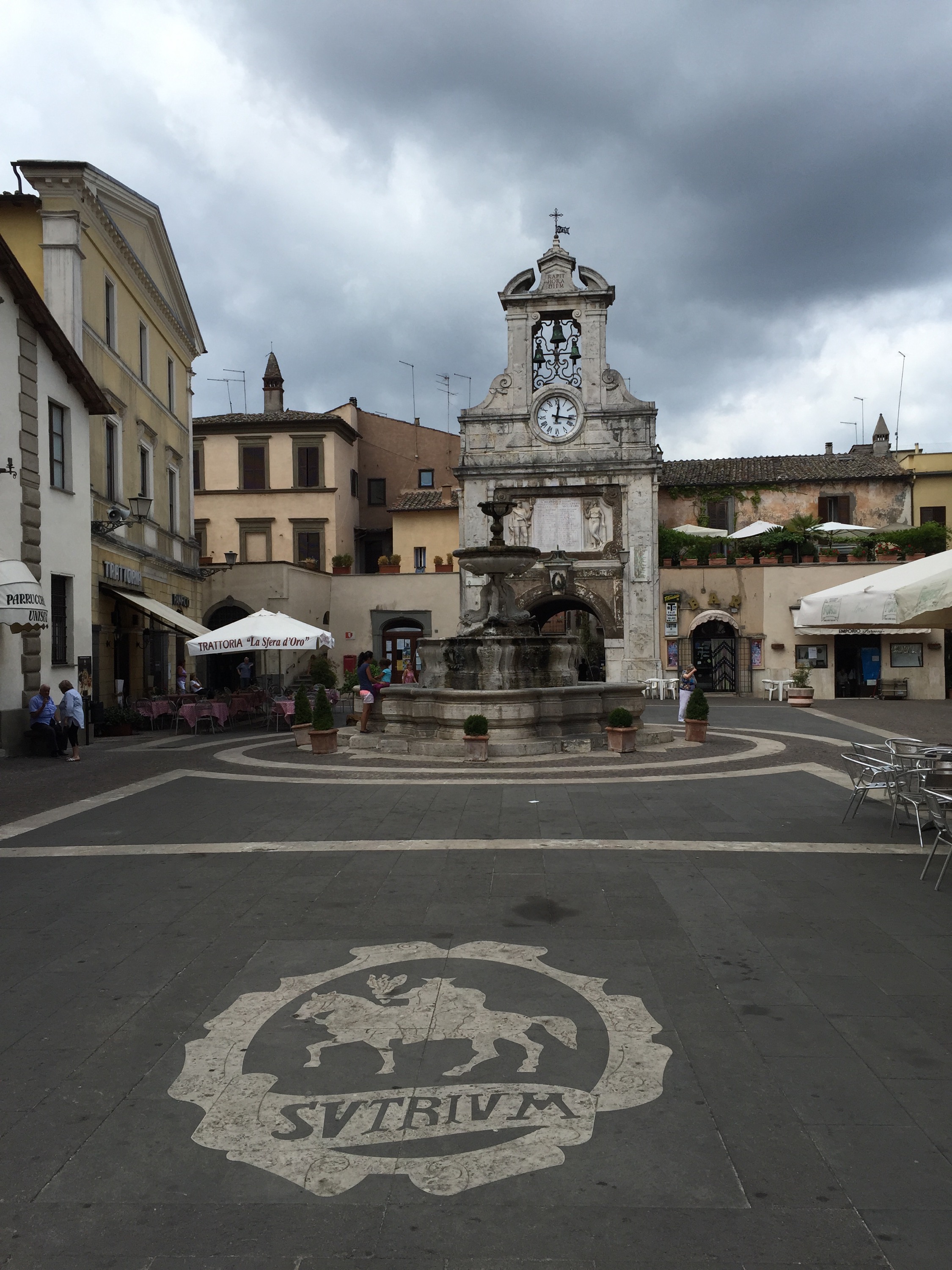
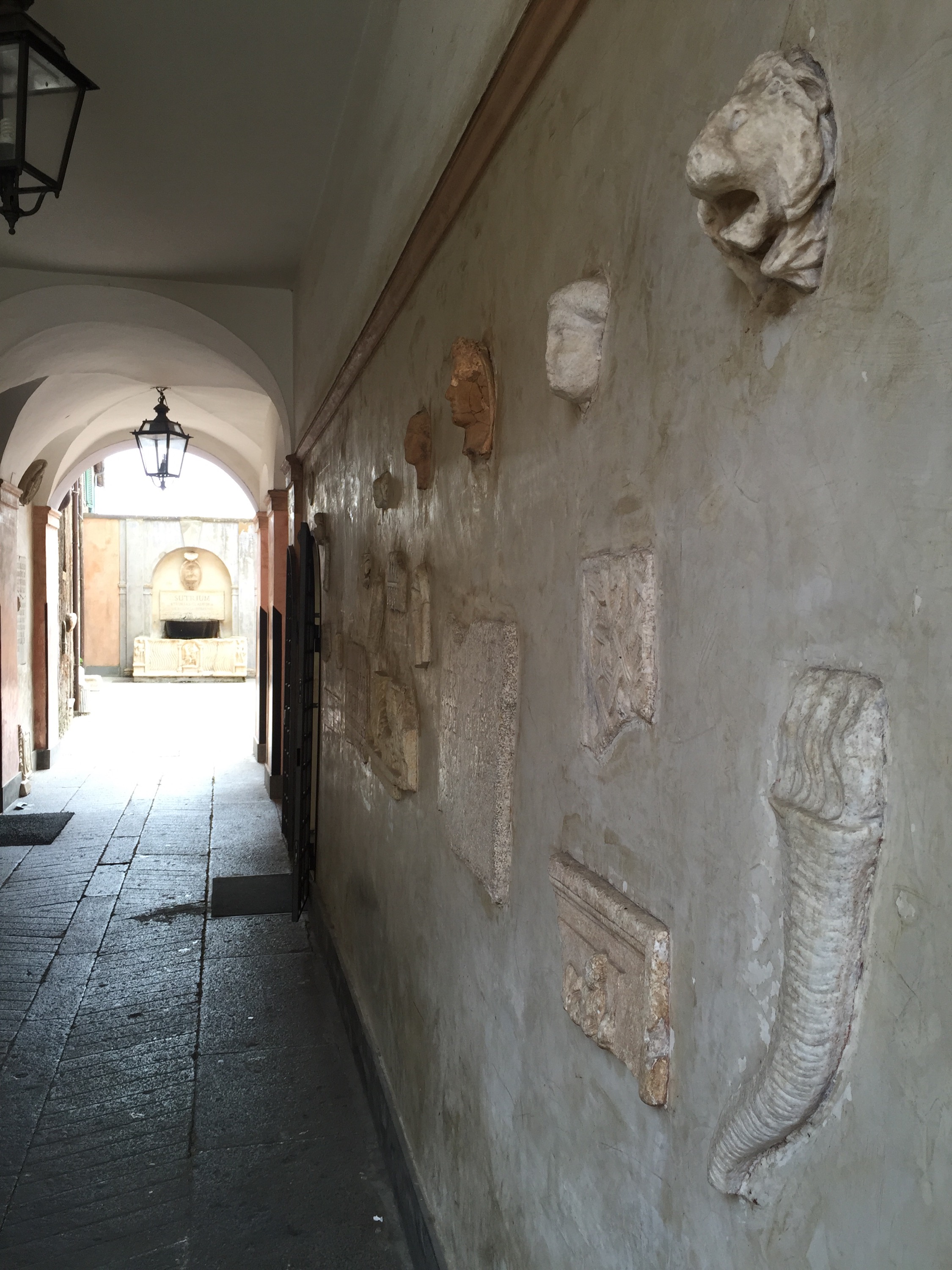
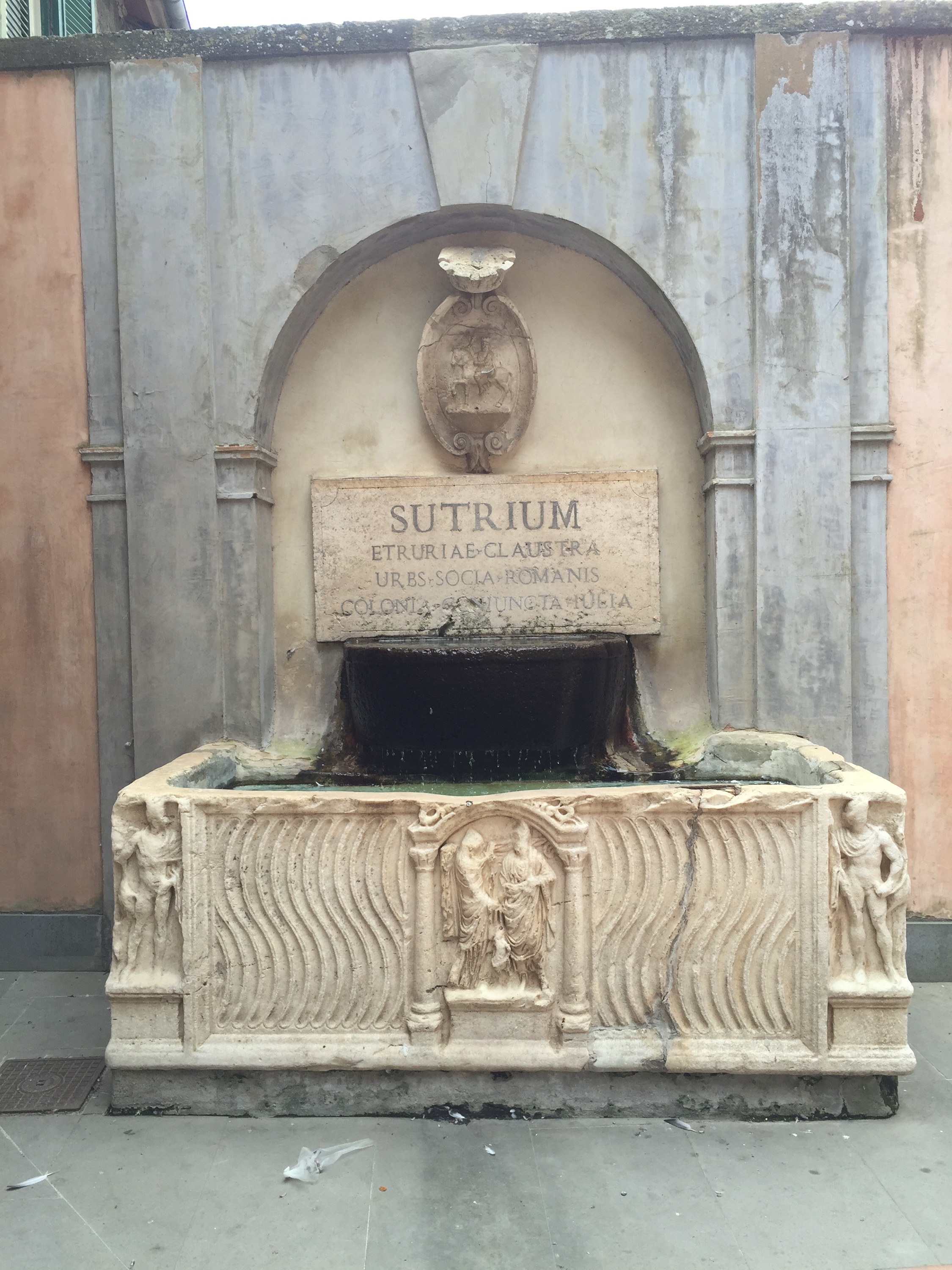
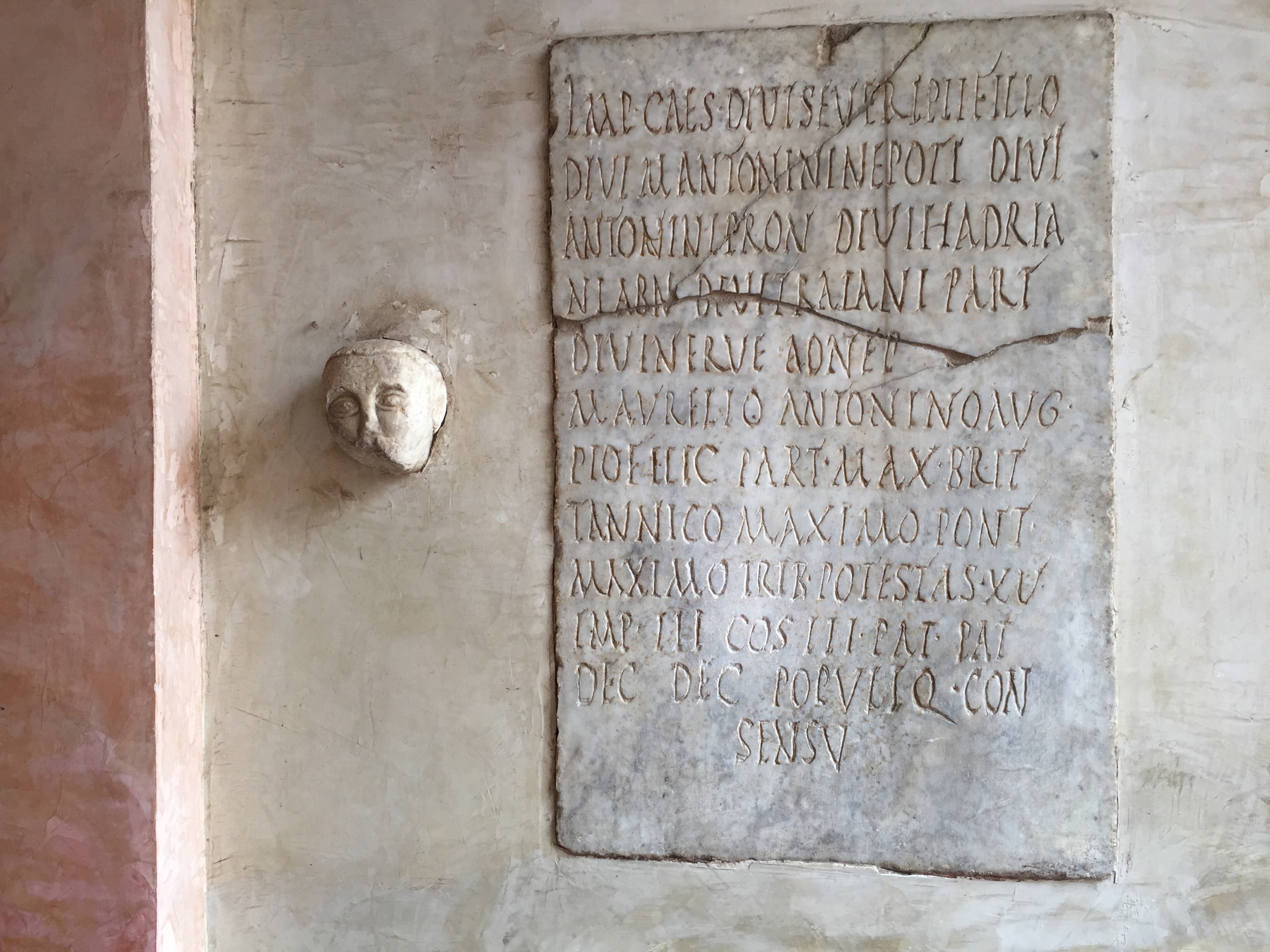
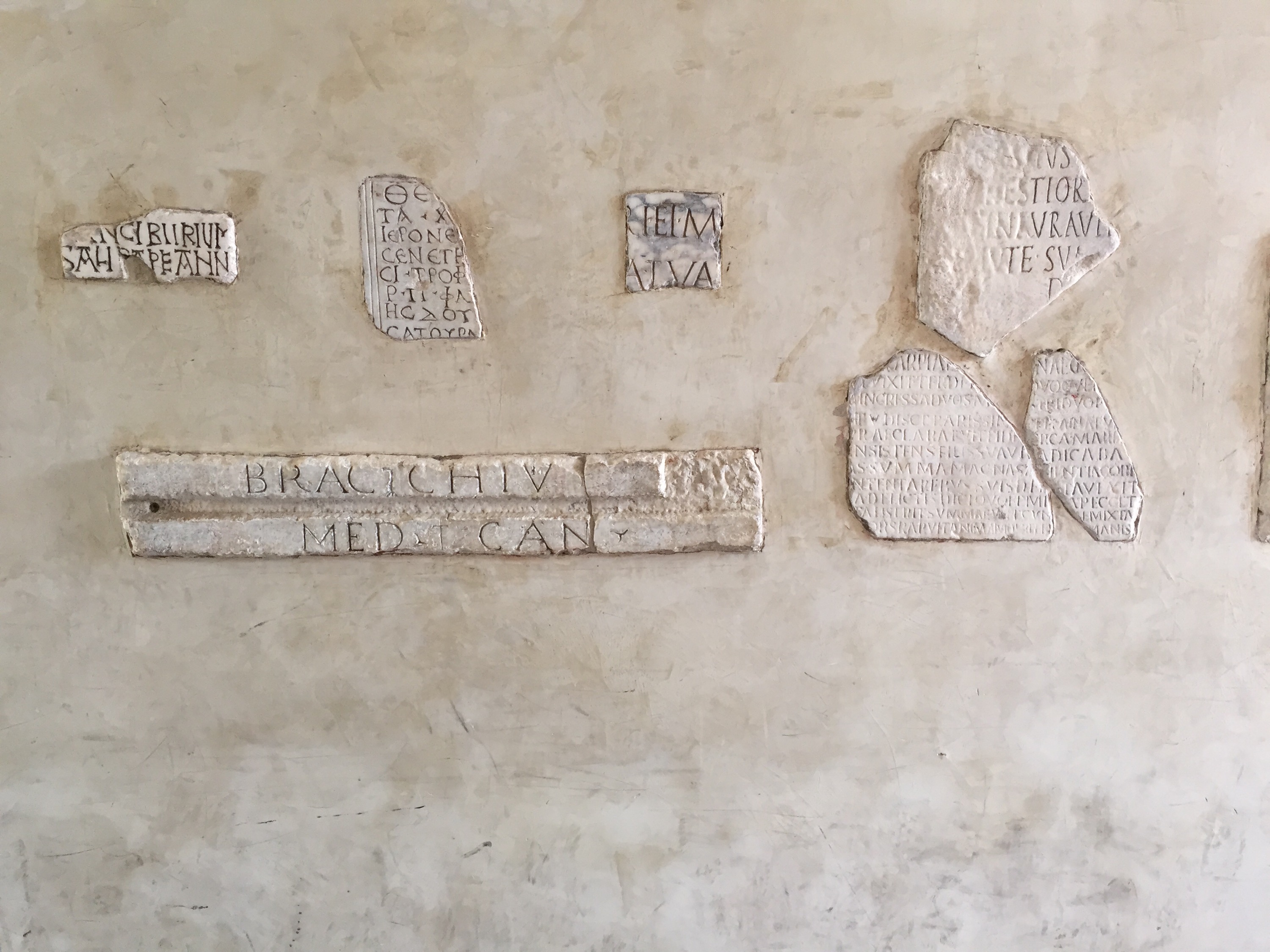
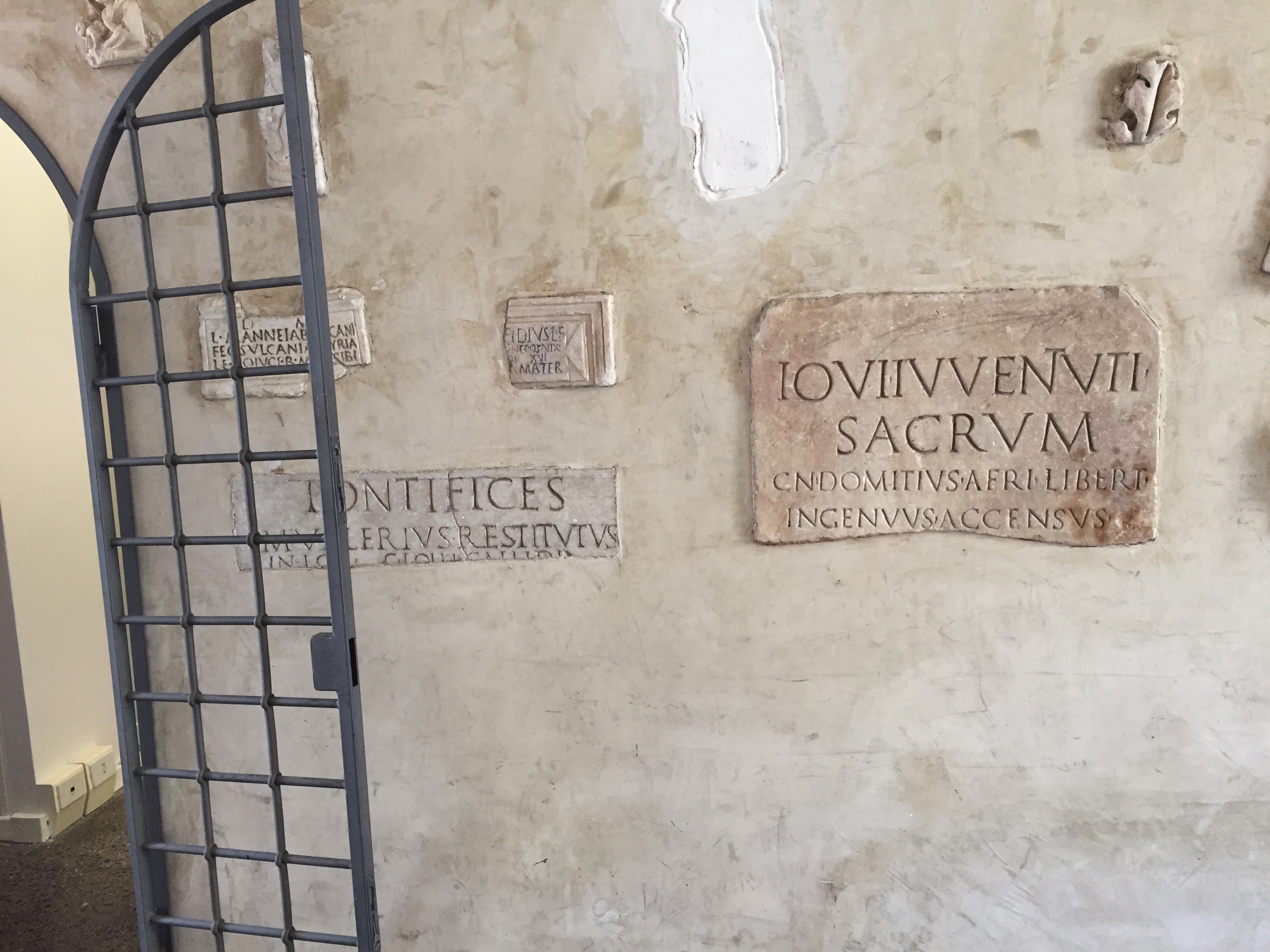
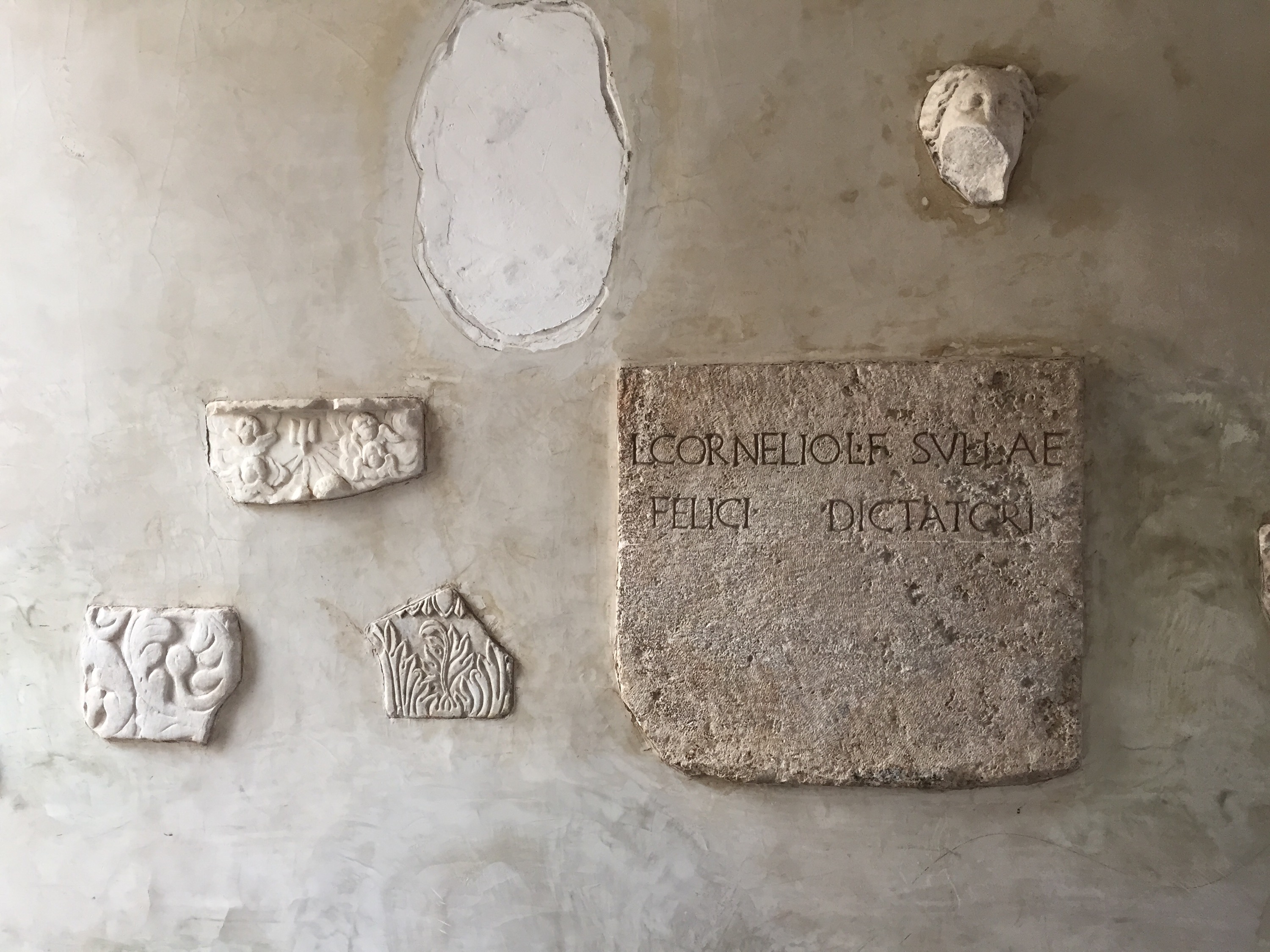
In the town hall of Sutri, one sees many an ancient inscription cemented into the walls. Somewhere, sometime, somebody on the world-wide web will care about these, and so, my friend, this is for you.
Out to Fiumcino airport I went, thinking it would be easier to deal with a car rental there and get on to the E80 to Cerveteri and Tarquinia to look at the Etruscan tombs. Alas, Avis at FCO was an infelix avis rather than a rara, a bad omen rather than a true friend, and the hassle and inefficiency of the autonoleggio process prefigured the next few hours on the roads around Rome. But truthfully, perhaps it was fault. What is it that Cavafy writes in “Ithaka“?
Laistrygonians and Cyclops,
wild Poseidon—you won’t encounter them
unless you bring them along inside your soul,
unless your soul sets them up in front of you.
The fact is I was carrying with me this fear of driving in Italy, why I can’t say. I kept thinking to myself, It can’t be any worse than the Mass Pike. And then I’d think that that was no comfort at all.
Thus it was that, even though I had a large road-map for Central Italy, and had downloaded and printed several on-line maps of the specific locations I was going, when the attendant asked if I wanted a Garvin Nuvi to help with the navigation, I jumped at it. “Yes! Si! Please! Grazie!” I yelped, and then thought to ask, “Does it speak English?” Of course, she indicated, and fiddled with the device until a British woman’s voice began to speak. Ah, thinks I. Just the person to get me through the muddle of the Roman urban sprawl to my safe and comfortable classical sites. An authoritative Oxbridge accent, with modern technology and a fleet of satellites at its back, was all very comforting in its own self-assurance. Sort of like Margaret Thatcher. What could go wrong?

But first to find the car which, as it happens, was in Group A of Garage E, not Group E of Garage A, a thing one finds out only after much wheeling of a heavy suitcase up staircases and sweating and swearing. But no amount of profanity and gesticulation can help you put the car, once found, into reverse– for that you must eventually dig out the driver’s manual and figure out what it means to levare the collare of the leva di cambio. Once you’ve done that, you plug in Maggie and let her gently guide you to the remote Etruscan past, a mere 19 kilometres away. How much is a kilometre, anyway? Who can say? Maggie knows. At this point, all I have to do is just sit back and obey.
I suppose when you’re on autopilot, as I was, there comes a time when you start to get suspicious. Are we going on the wrong road? Nah. These damned streets all have several names and numbers, it’s OK. But, um. Isn’t that town sort of south of the city, not north where Tuscany is? Maybe this is a faster route, even if it is more circuitous? And then the moment when it crashes in on you that, No, the machine is all screwed up and you are nowhere near where you want to be. This thing was more like Margaret Thatcher than I had originally thought. So over to the side of the highway I pulled, and unplugged the Iron Lady. She had plenty of battery power stored up and continued to tell me insistently how very wrong I was for the next hundred kilometres of sobut by now I was charting my own course with the road map and this crude but effective syllogism: A. Cerveteri was on the sea, B. The sea was to the West, and so C. I should just keep driving with the sun in my eyes.
All in good time, I found myself far north of Rome making a big left turn and realizing that, somehow, if I stayed on this very road, I would reach Tarquinia. And it was hilly and tortuous and unclearly-marked and exceptionally beautiful to drive along this road and eventually to see aqueduct ruins alongside the highway and signs that pointed to the Necropoli di Monterozzi. With a sense of great accomplishment, I pulled over to the side of the road to park and may or may not have almost knocked over a bunch of Vespas–there’s no saying.
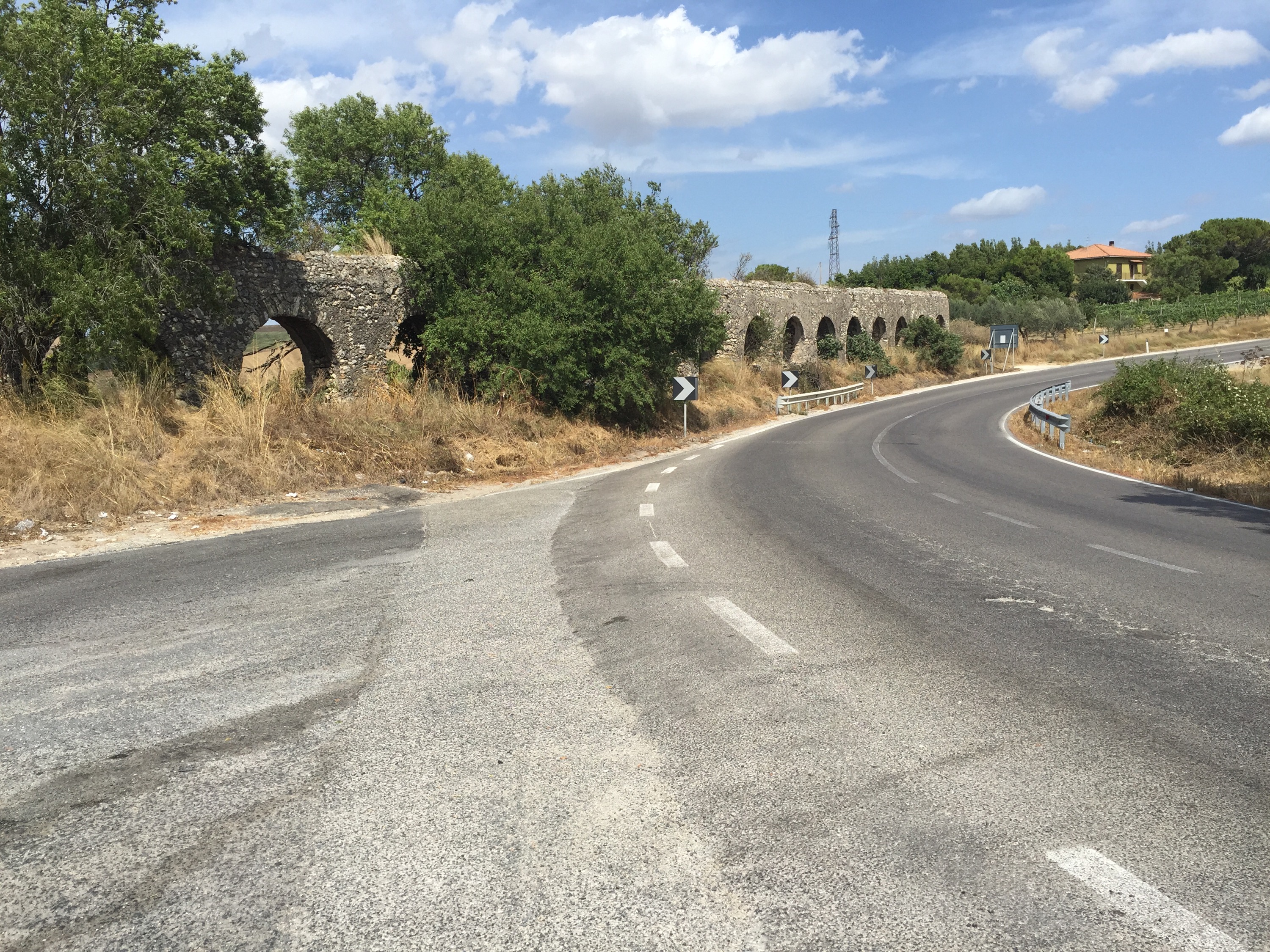

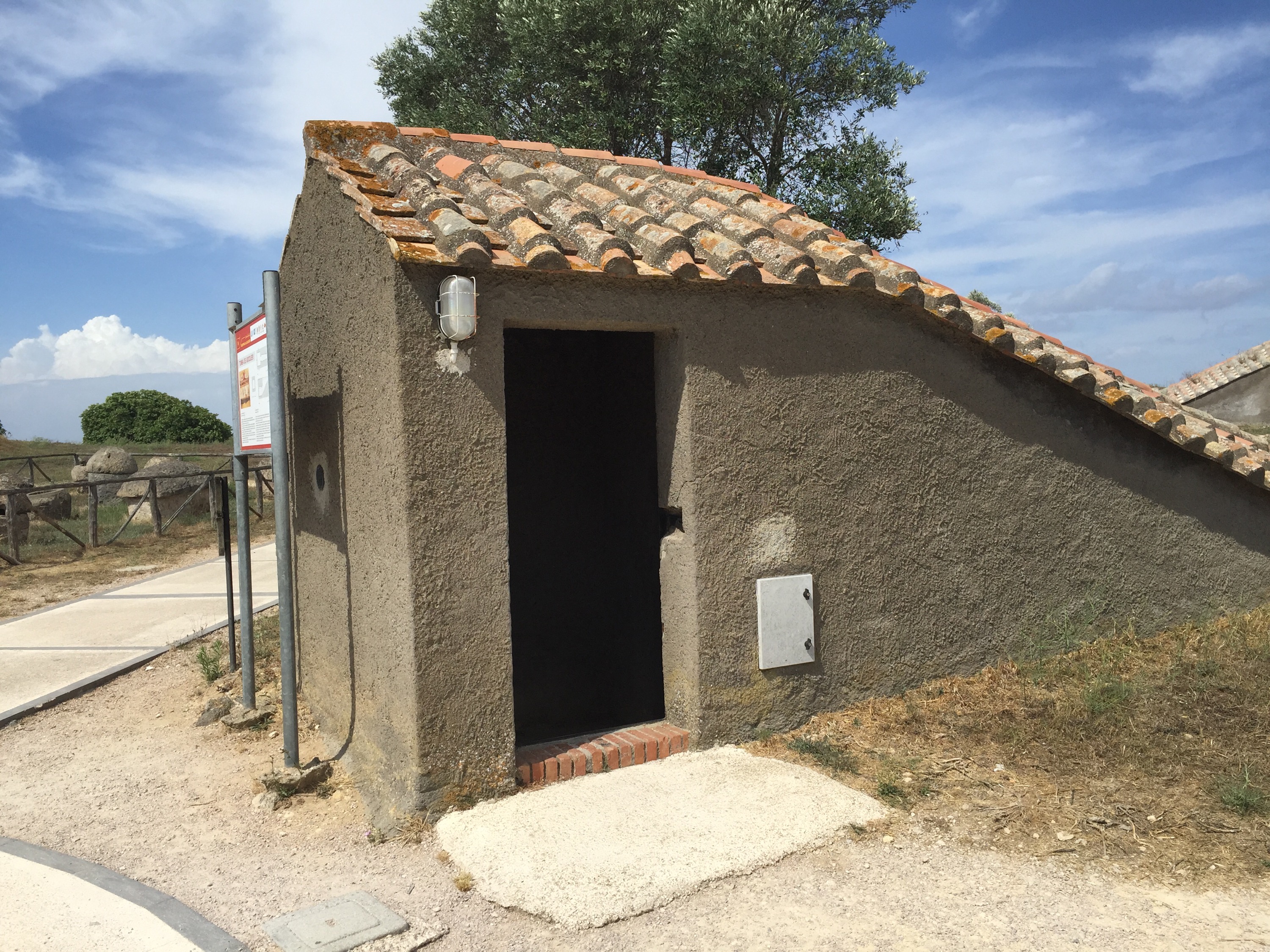
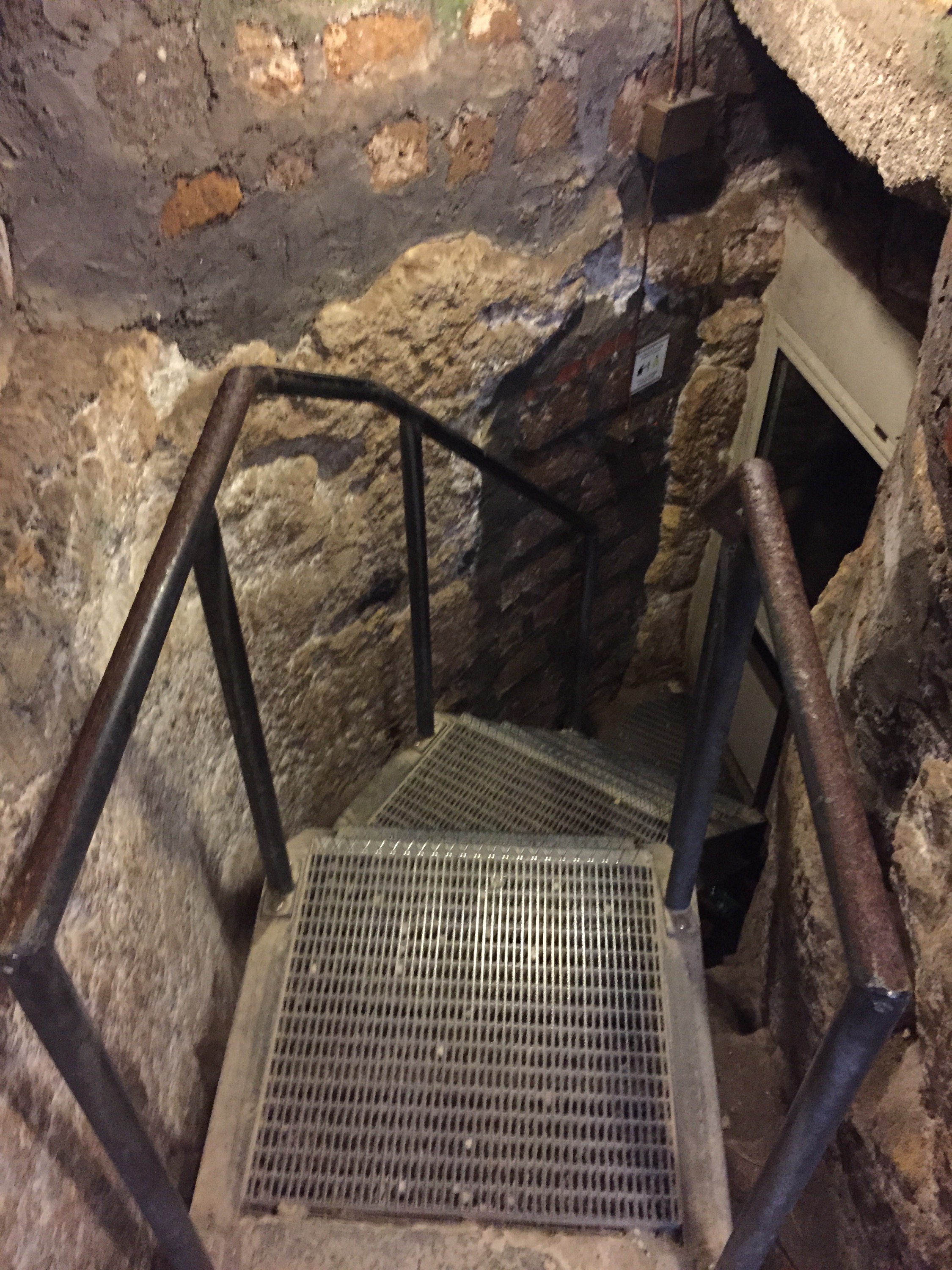
The necropolis is quite amazing, really. You pay a few euros for the ticket and a guidebook and off into the biggest, driest field you have ever seen you go. Here and there are doors into the tombs which, once you enter, are far cooler and damper than is comfortable. A steep staircase before you into a depth the sunlight has never seen. As Catullus writes in Poem 3,
Qui nunc it per iter tenebricosum
illuc, unde negant redire quemquam.
at vobis male sit, malae tenebrae
Orci, quae omnia bella devoratis:Now he goes along the shadowy road
there to the place from which they say nobody returns.
But a curse on you, evil shadows
of Orcus, who devour all beautiful things!
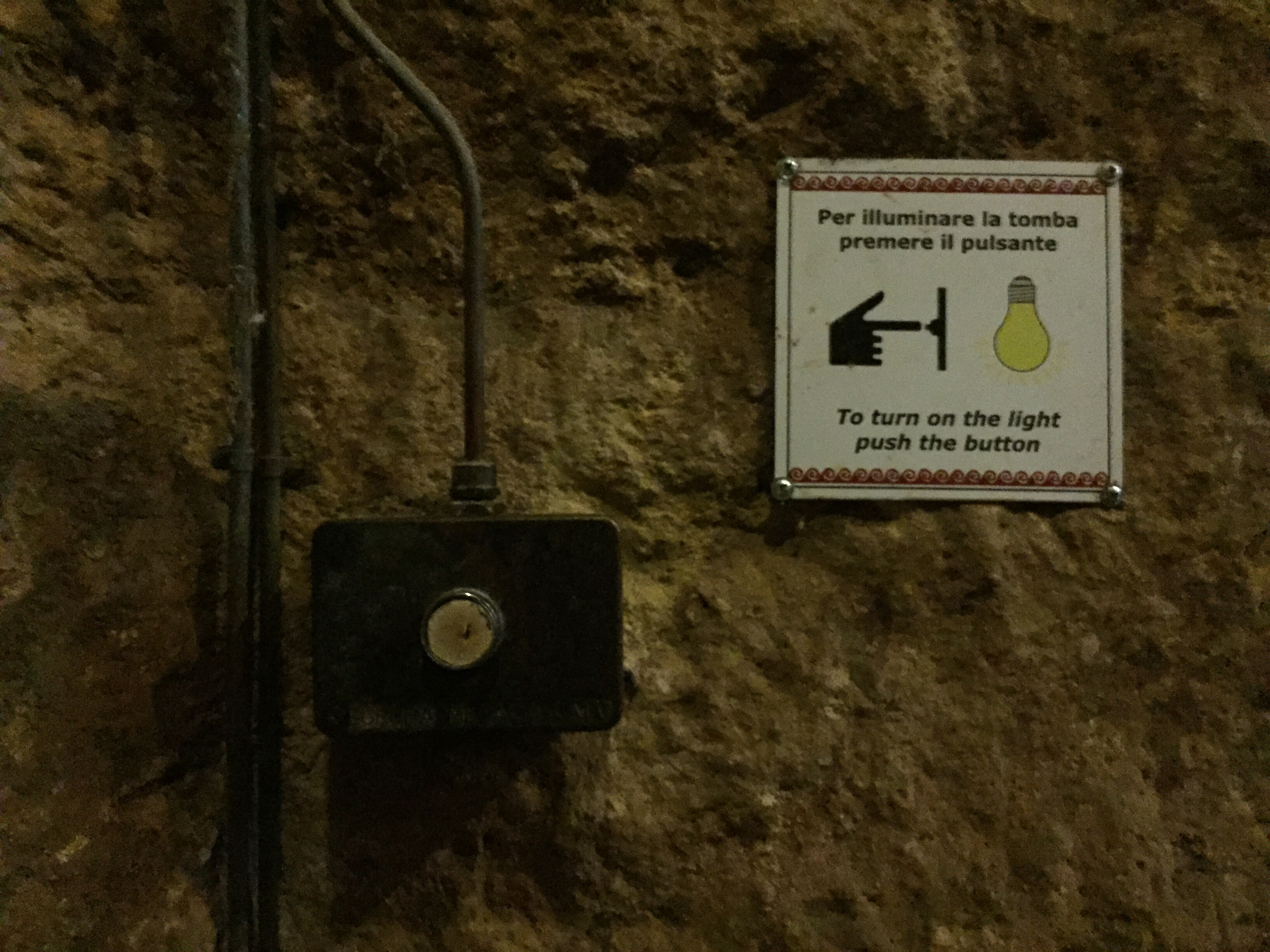
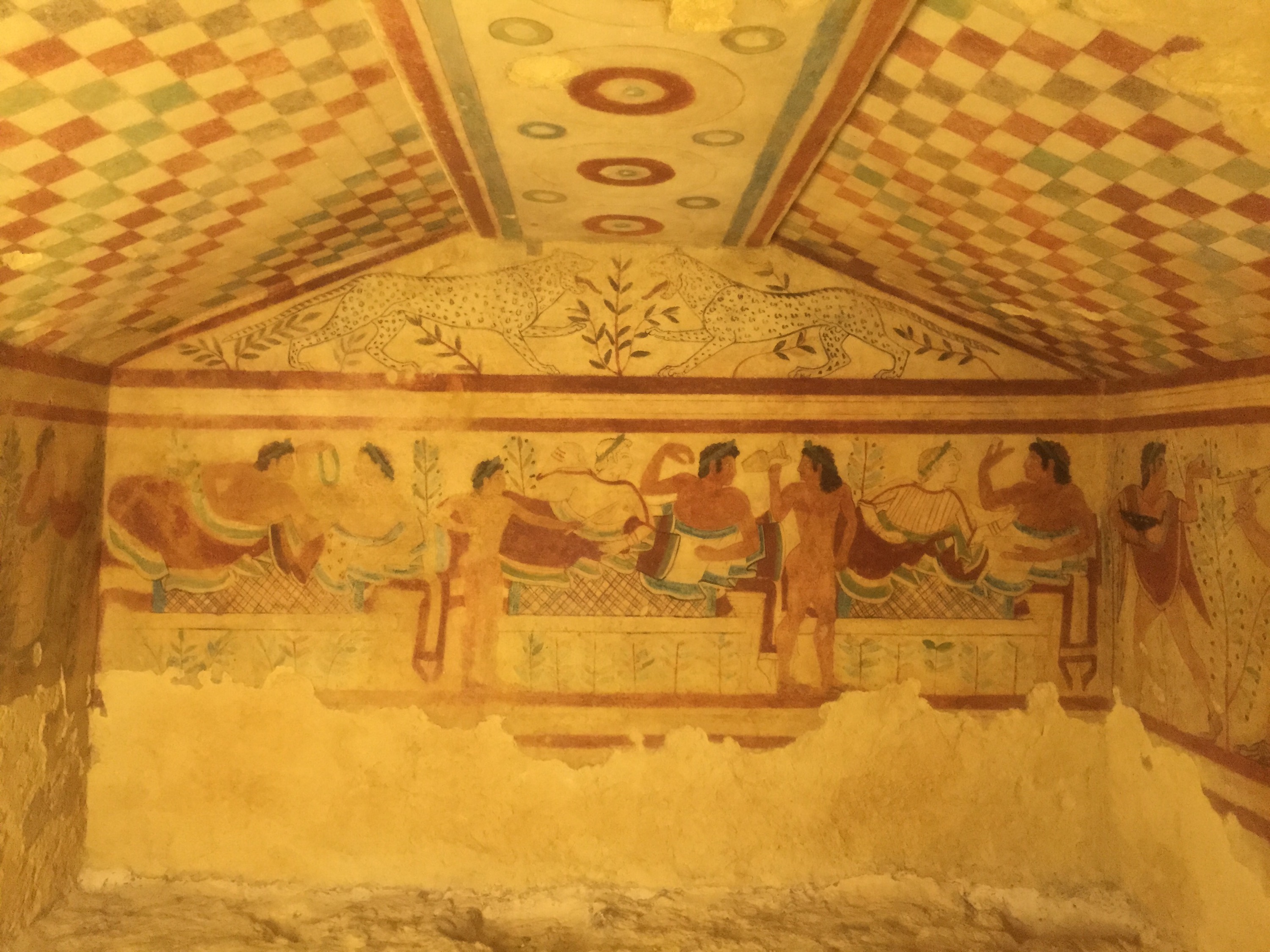
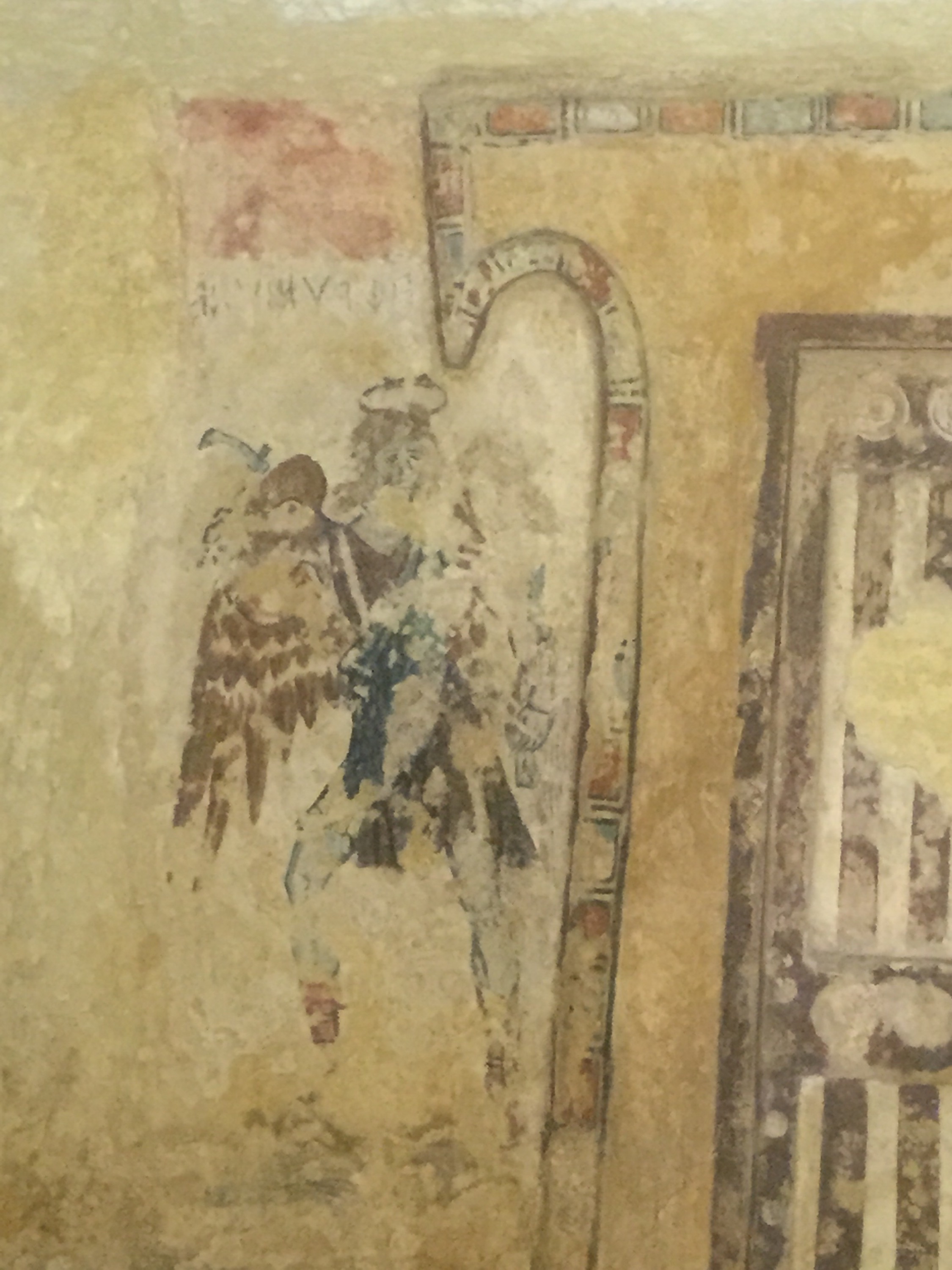
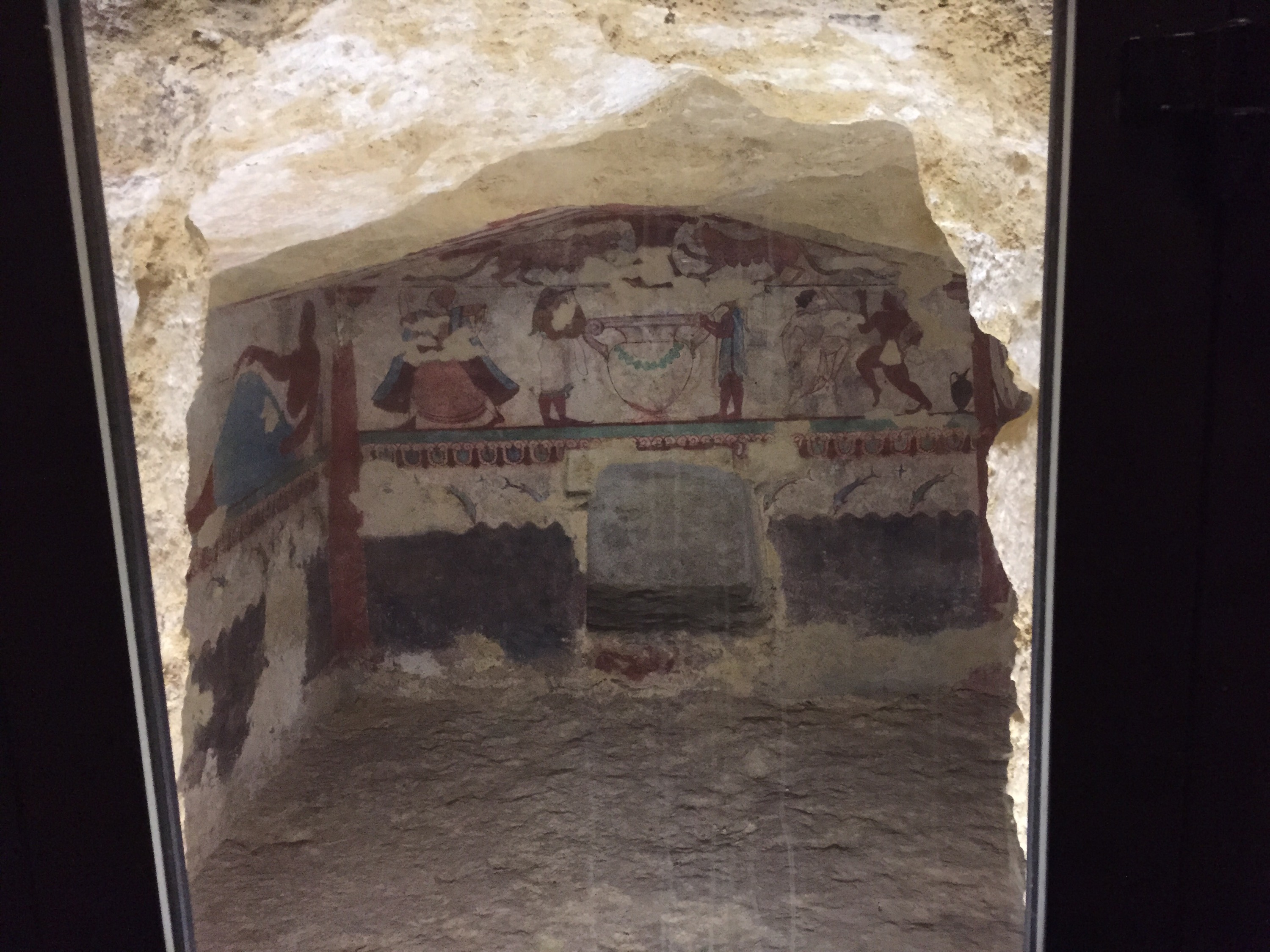
When you get to the bottom of the stairs, you press the button for the light and behold! the painted tombs appear, replete with Etruscan revelers, banqueting, dancing, playing music. Also we see death demons hovering about, with names like Orcus and Charun, who are joyful in their own way. 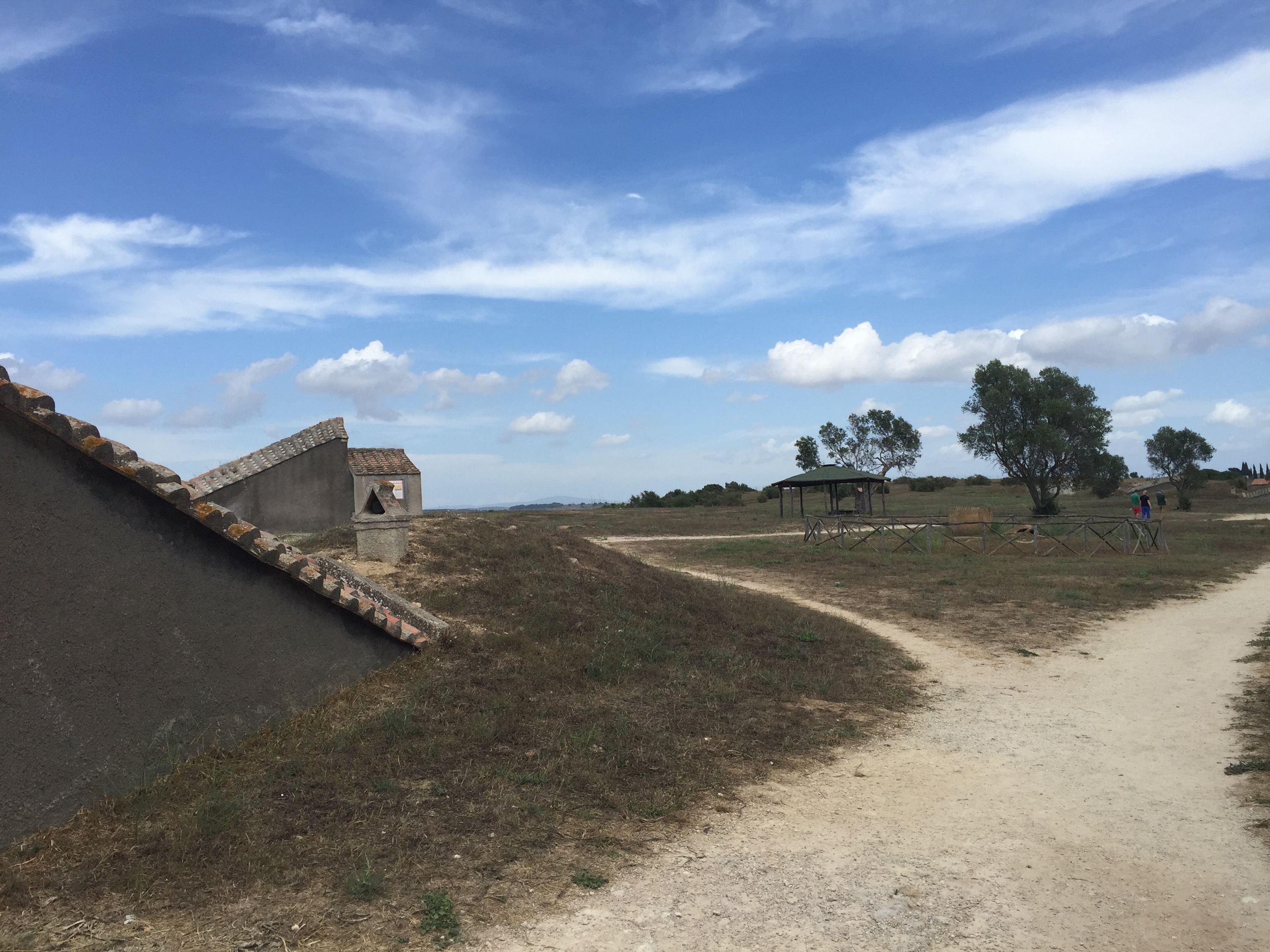
 Again and again I descend from the hot Tuscan sun into the cool Etruscan ground to see these murals of lives long ago lived and deaths long ago mourned. It was a circuitous route, to be sure, from Fiumcino to Monterozzi, but to see the colors at the end of the iter tenebricosum we must all travel was well worth the trip.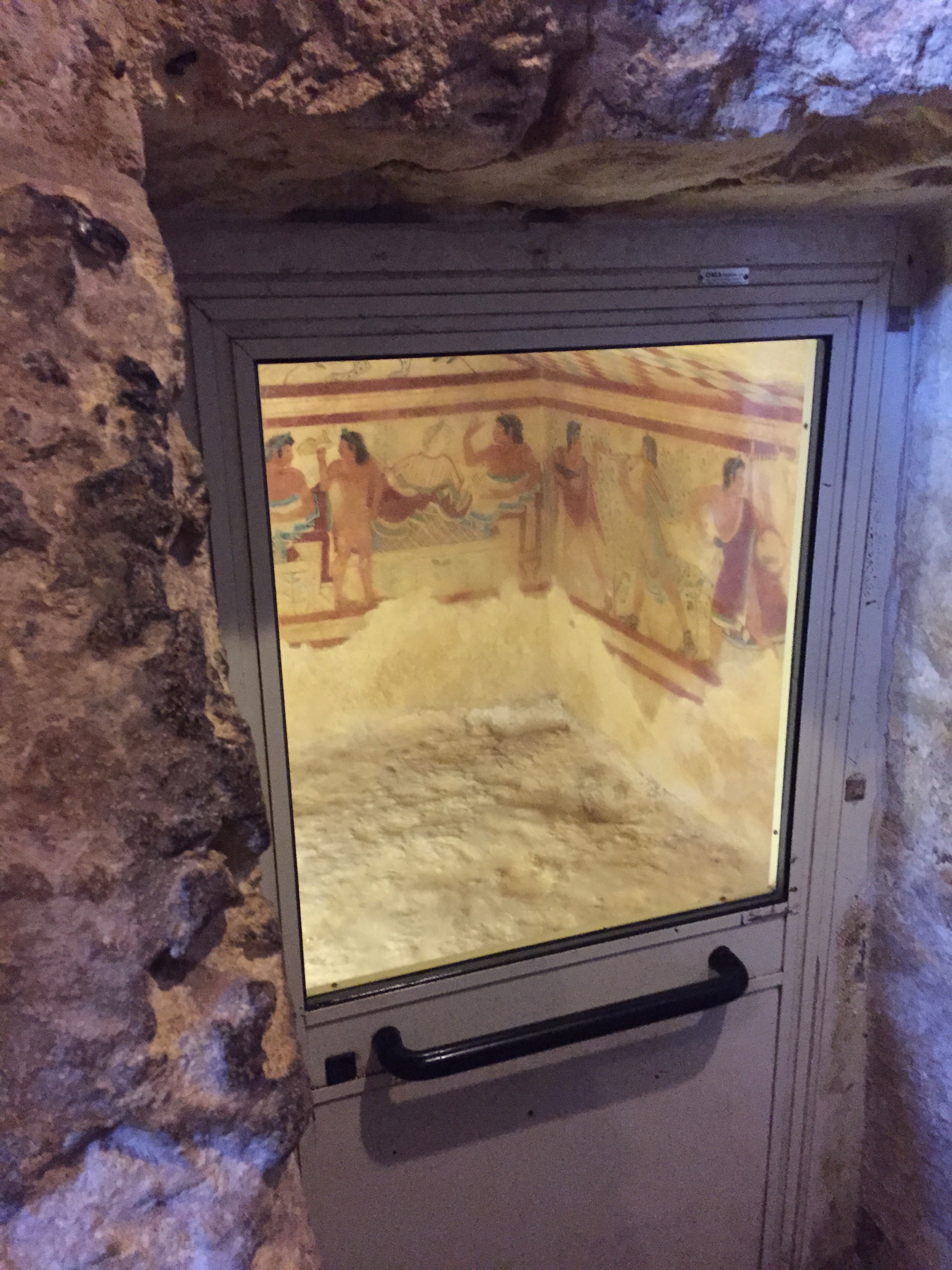






… was not Dante’s house, although I admired that it was on Via Dante Aligheri, and appreciated that the quotations from the Commedia carved in stone and set into the nearby buildings.
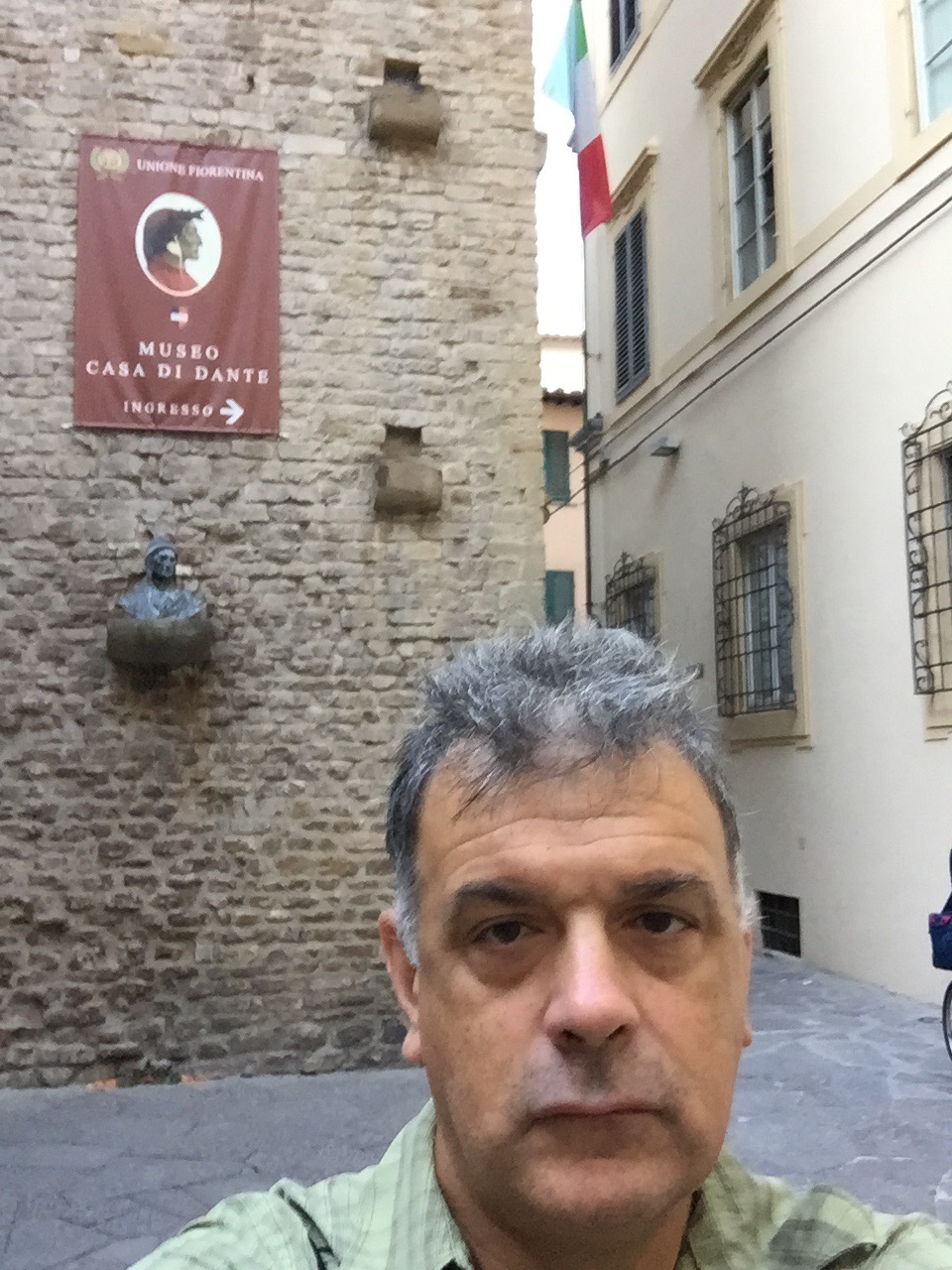
Inside the Casa is a Museo that, at 4 euros for entrance, cost 4 euros too much. Mostly posters with ots of text in Italian about obscure matters. Some reproduced florins spilling out of a “leather” purse.
Nor was the most Dantean thing the nearby church of Santa Margerita, “Dante’s Church,” where Dante married Gemma di Manetto Donati, and first saw Beatrice. Maybe. 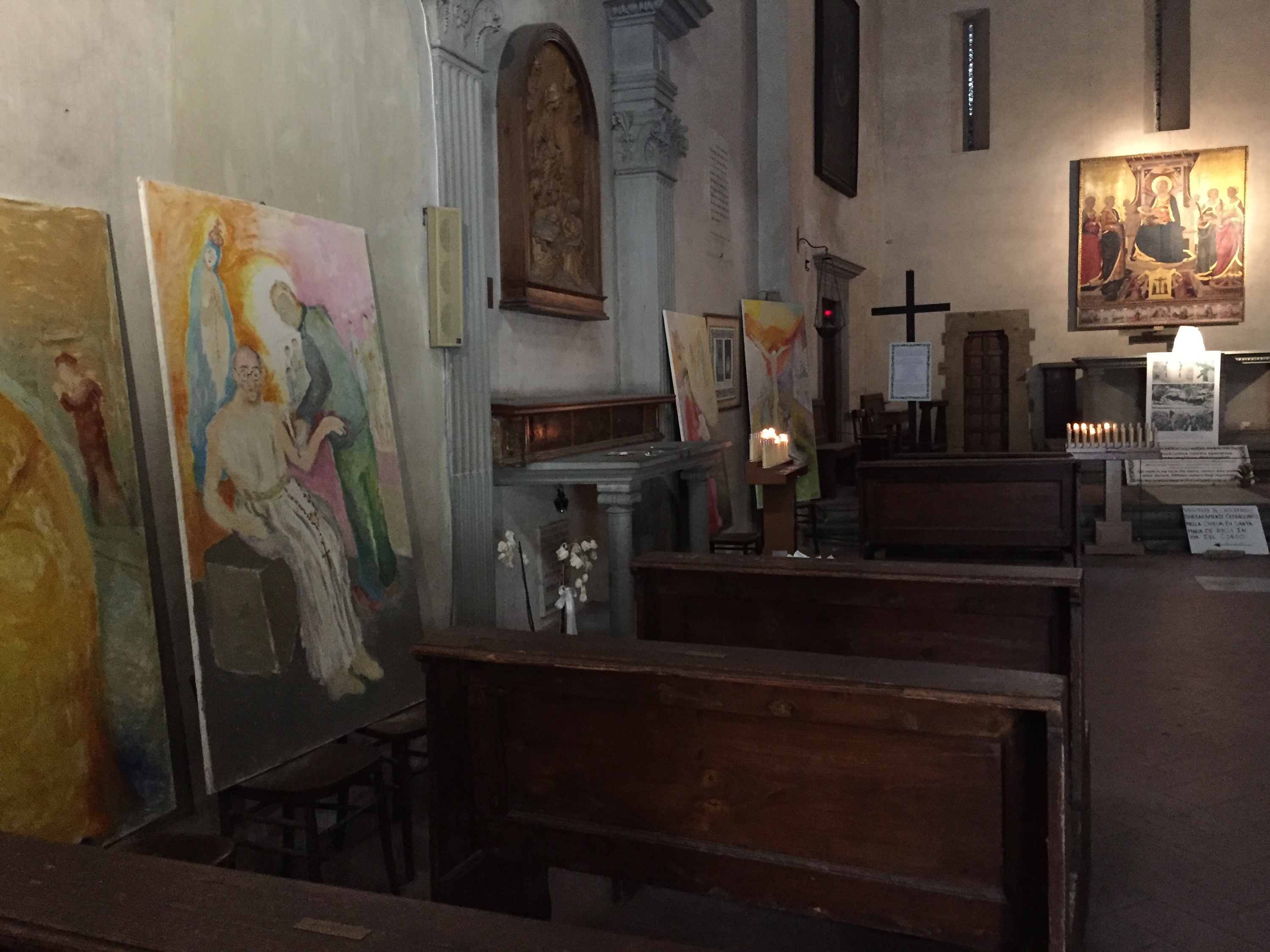
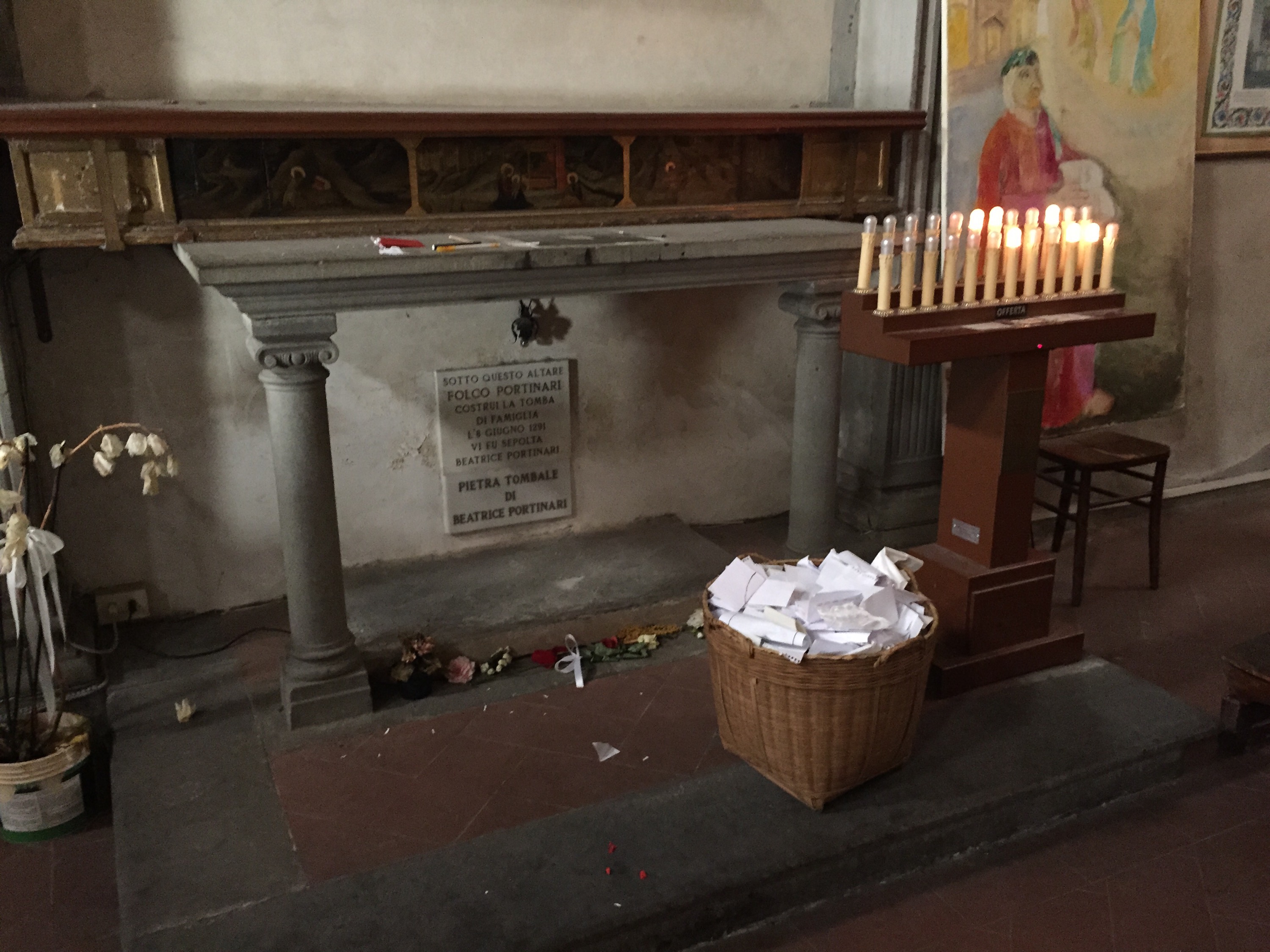
Inside, it’s probably the least church-like church in Florence: many contemporary paintings– bad ones– of Dante looking at Beatrice. Music was being piped in, and not historically appropriate music, such as Gregorian chant, or even particularly religious music, just some weird “beautiful” elevator music. 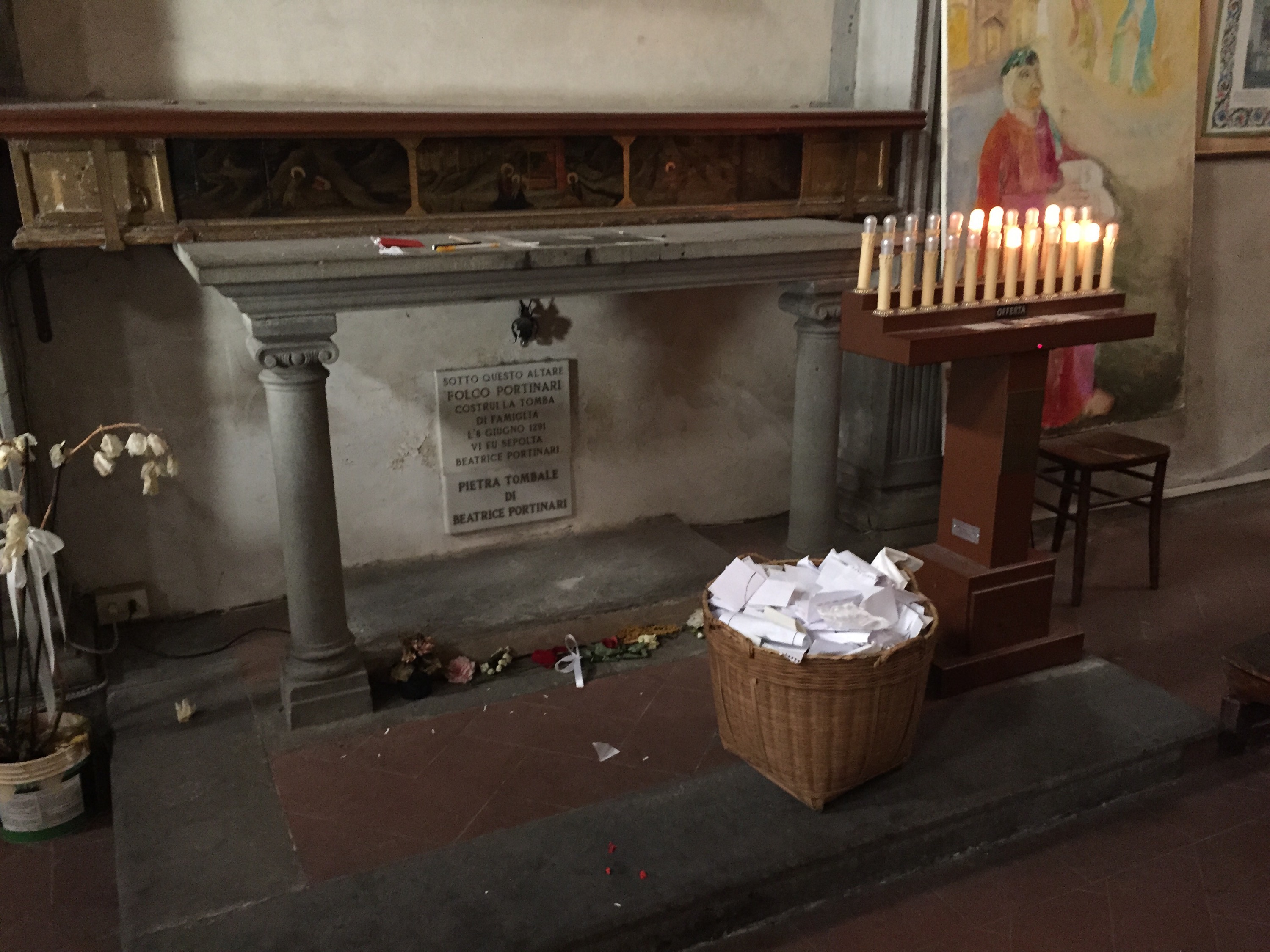
There was a crypt that may or may not have contained Beatrice’s mortal remains. Certainly it belonged to the Portinari family. Above is a shrine to Mary, and in front many hand-written supplications, though to which lafy it is not clear (I didn’t look at any).
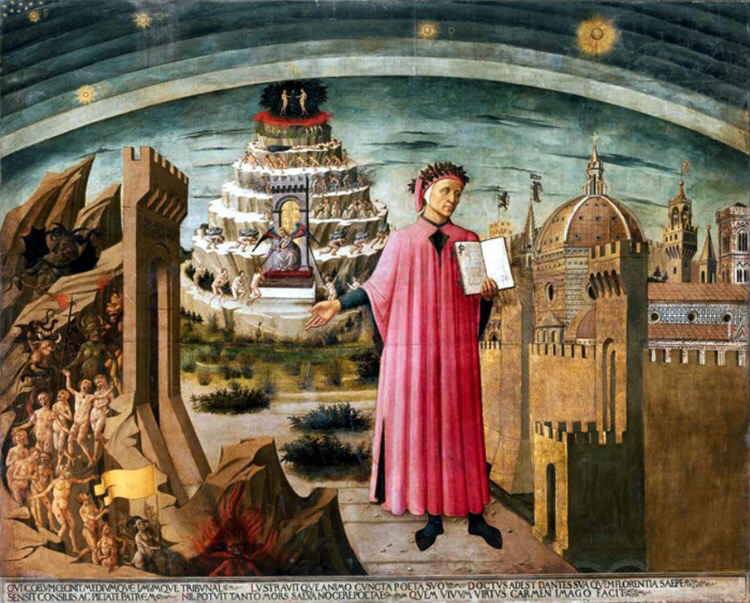
The most famous image of Dante in Florence is the painting by Domenico di Michelino (1417–1491) in the western wall of Florence’s Duomo of Dante holding the Comedy to instruct Florence with Hell, Paradise, and Heaven represented. Now the picture below is NOT mine, as i did not go into the Duomo on this trip, on account of the lines.
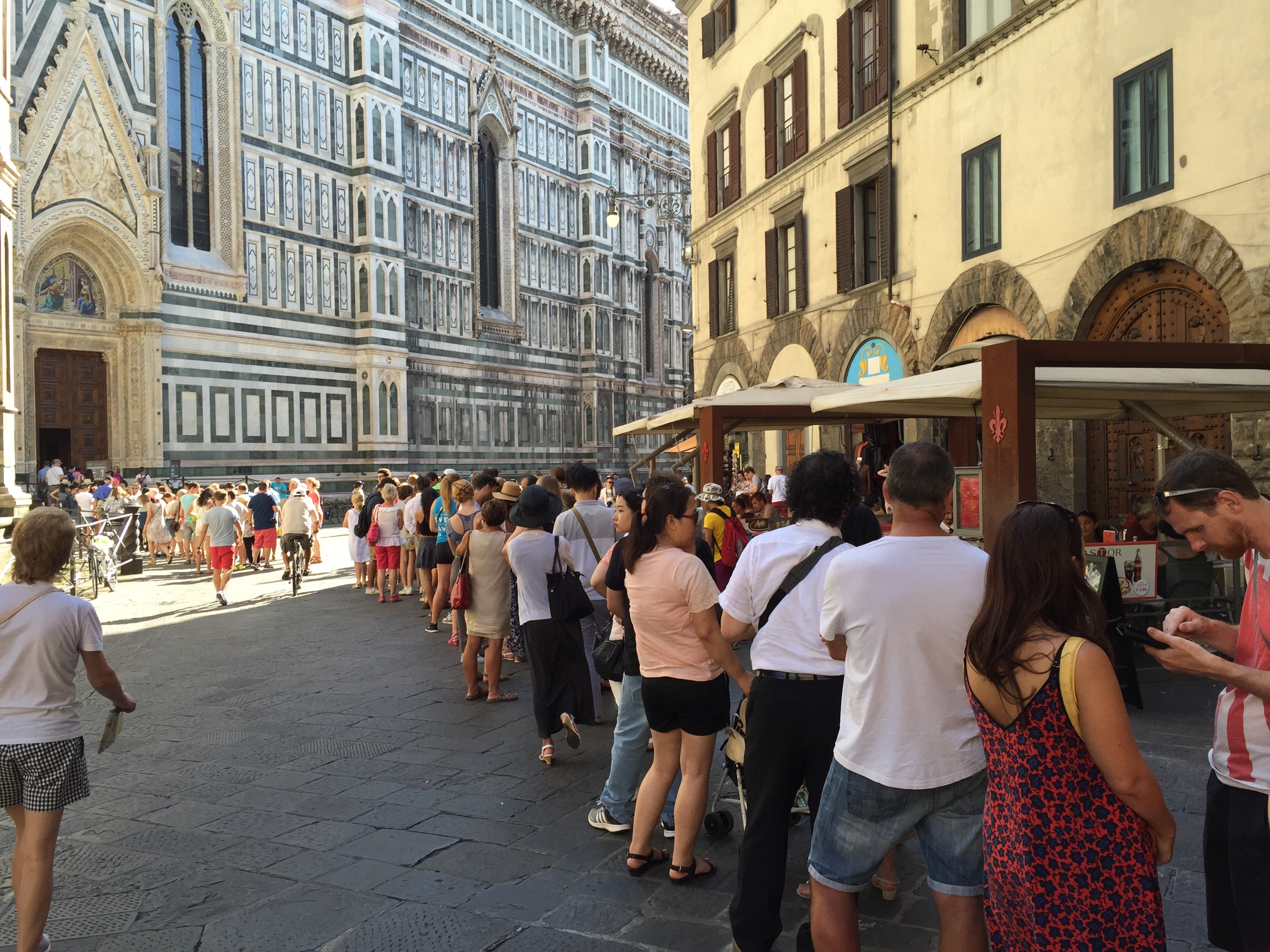
What I did do at the Duomo, and the Piazza dei Signoria, and San Lorenzo, and everywhere else the guidebooks recommend you should go, is watch vast hordes of tourists being rushed from site to site by group leaders with flags, like the souls before the Gates of Hell.
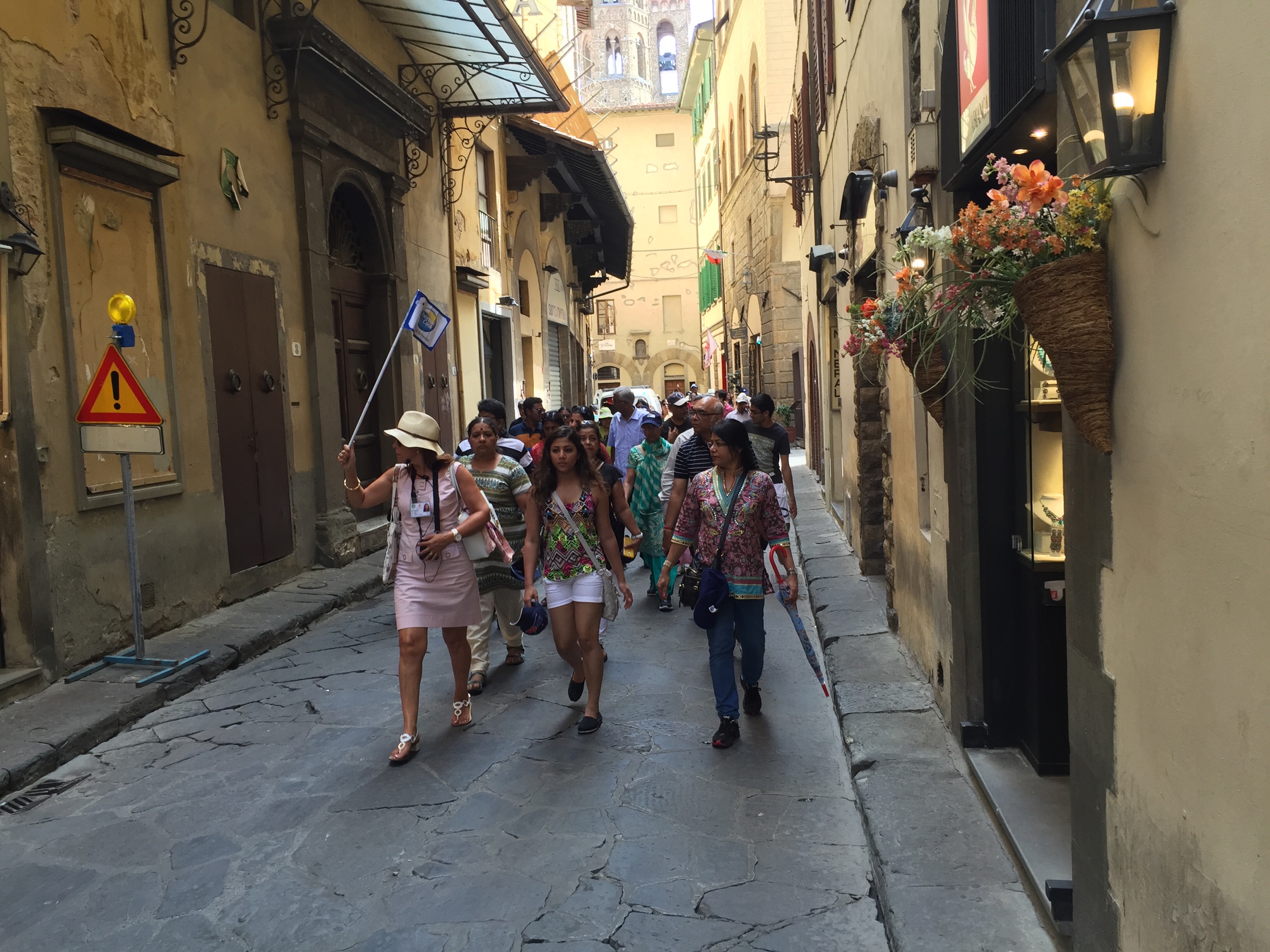
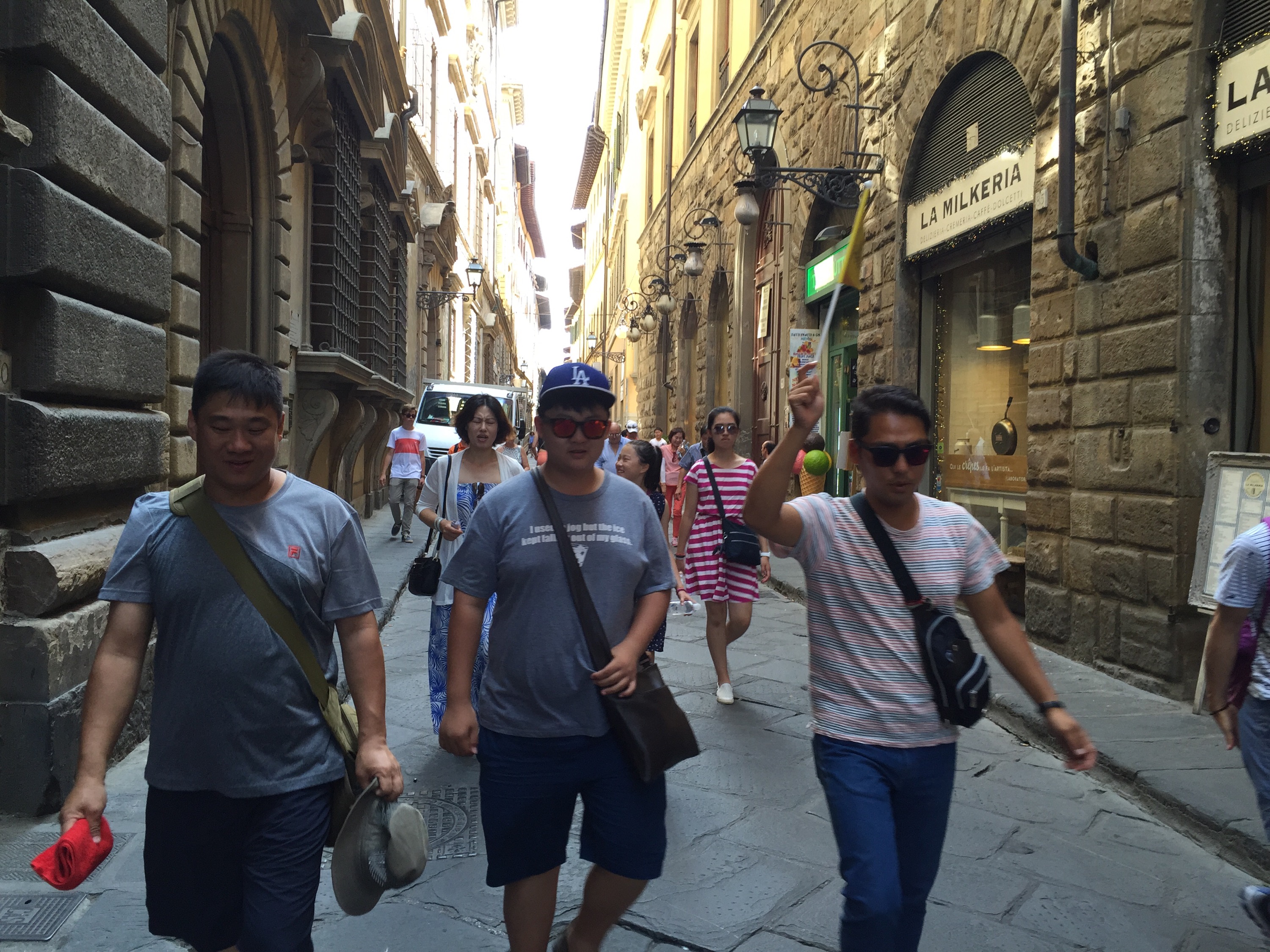
E io, che riguardai, vidi una ’nsegna
che girando correva tanto ratta,
che d’ogne posa mi parea indegna;e dietro le venìa sì lunga tratta
di gente, ch’i’ non averei creduto
che morte tanta n’avesse disfatta.And I, who looked again, beheld a banner,
Which, whirling round, ran on so rapidly,
That of all pause it seemed to me indignant;And after it there came so long a train
Of people, that I ne’er would have believed
That ever Death so many had undone.
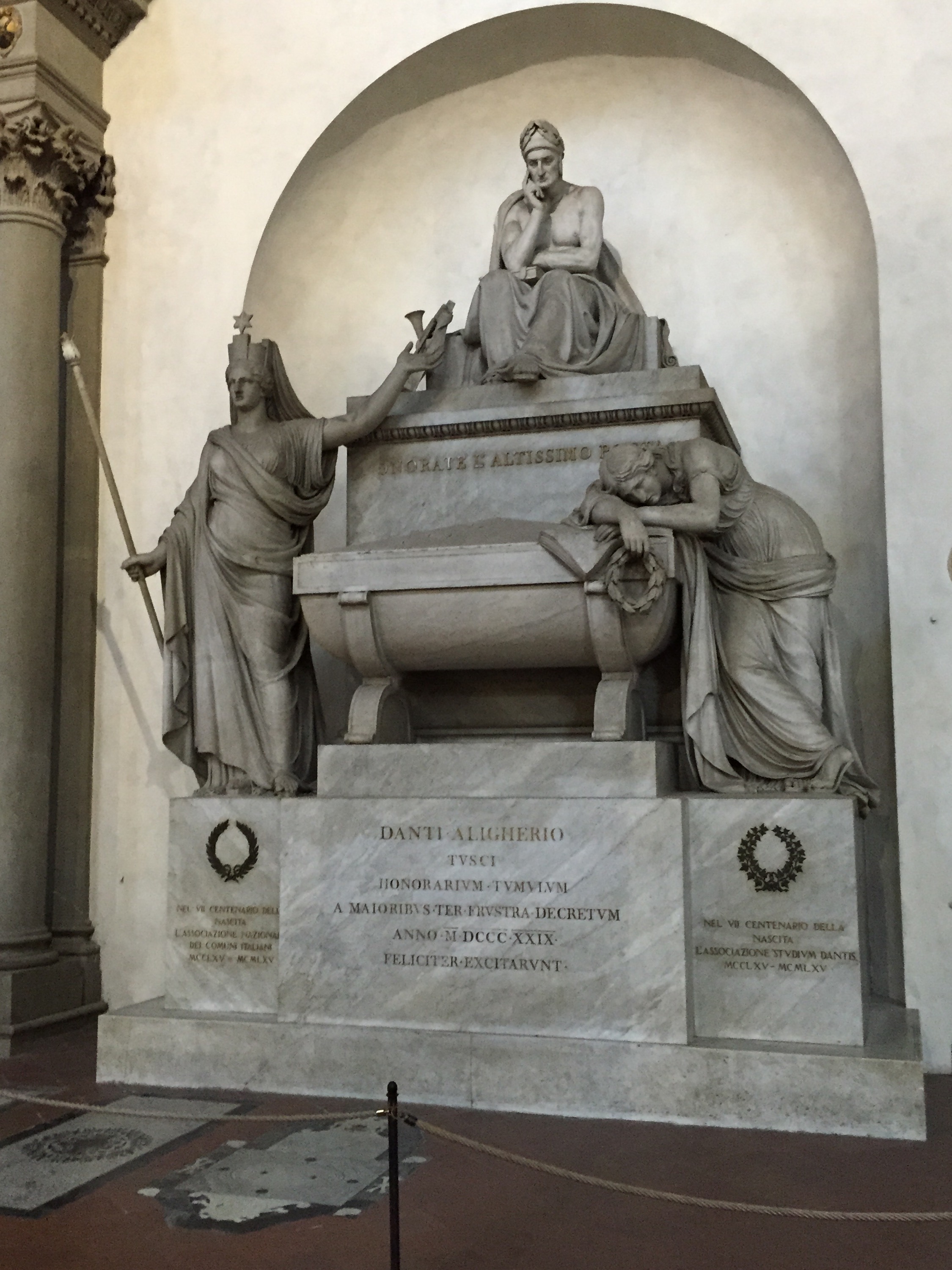
And that, even more than the cenotaph in Santa Croce below, was the most Dantean thing I saw in Florence.
I was on my way to Lausanne from Milan by train, and instead of reading the book I had with me, decided to look on the window instead. There’s not too much to see at first. The trainyard isn’t all that pretty though it does have an old-fashioned industrial charm–the large old arched switch station in the trainyard has a sort of classical feel about it, to my mind. But from here I am leaving the Romans behind and heading into Transpadene Gaul.
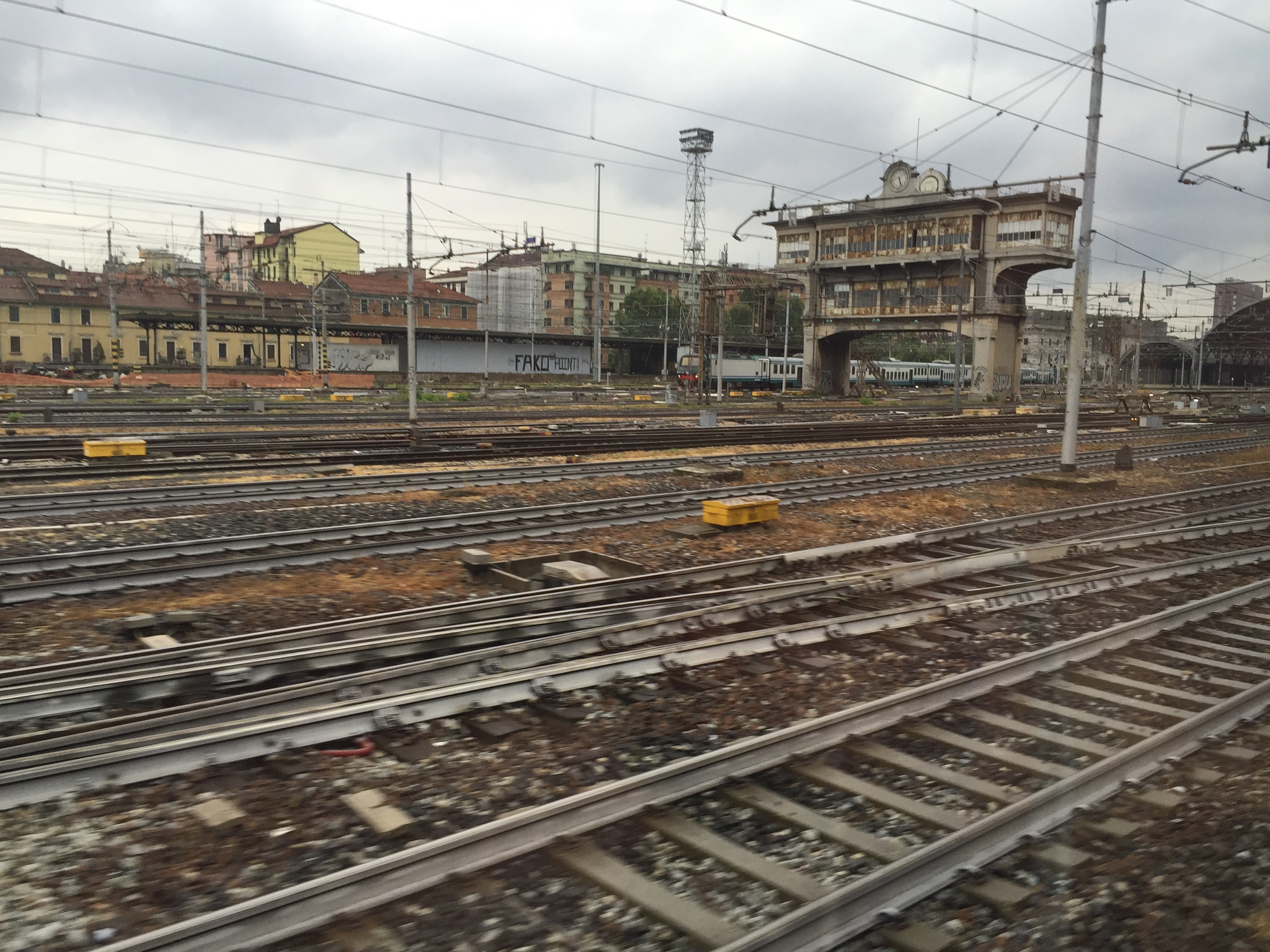
It was a gray day, and not so far out of Milan I promptly fell asleep. I woke up as we hurtled through a station, though I don’t know which one it was.
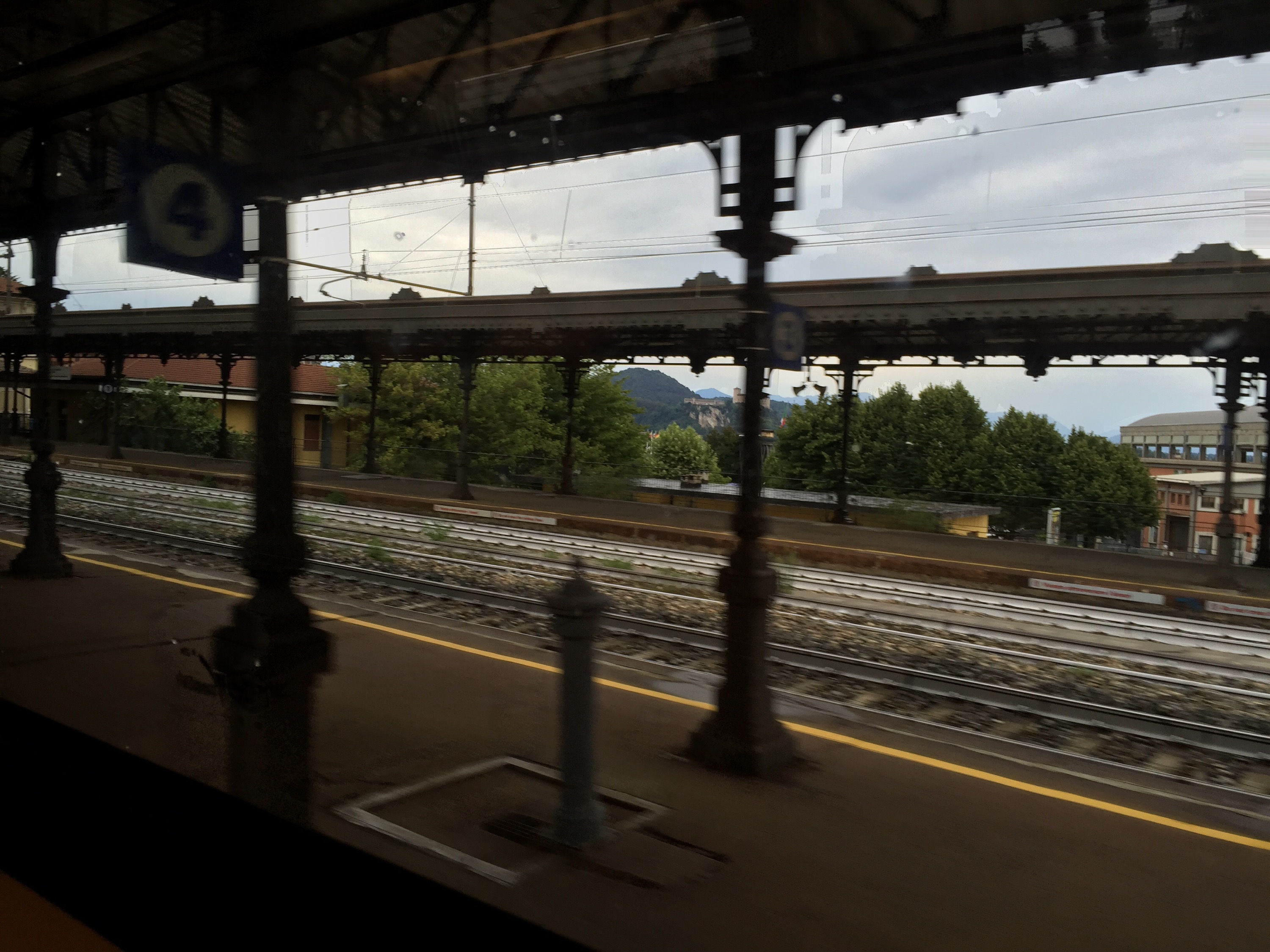
A hour or so later, we begin to see the Lago Maggiore, one of Italy’s great northern lakes.
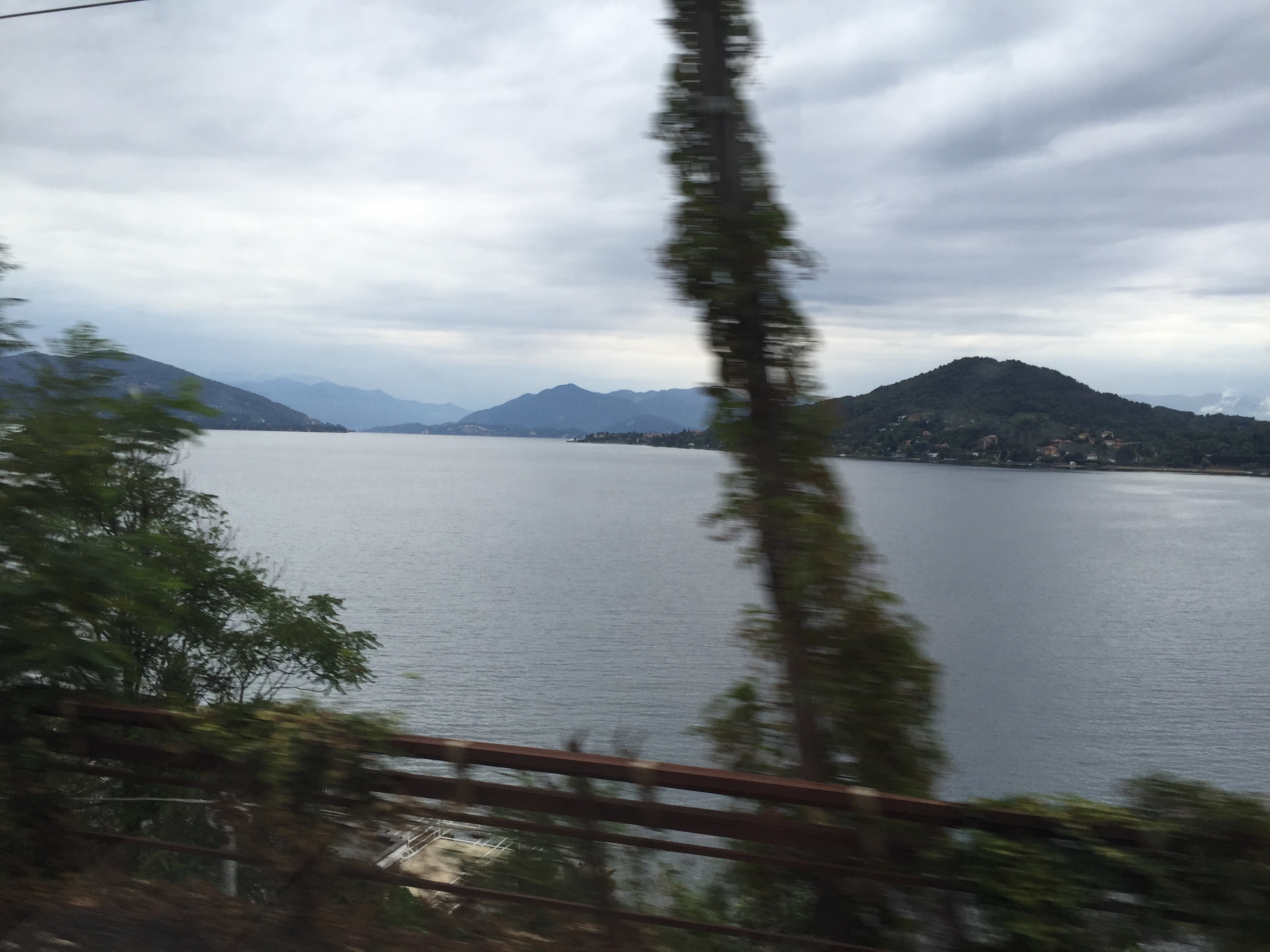
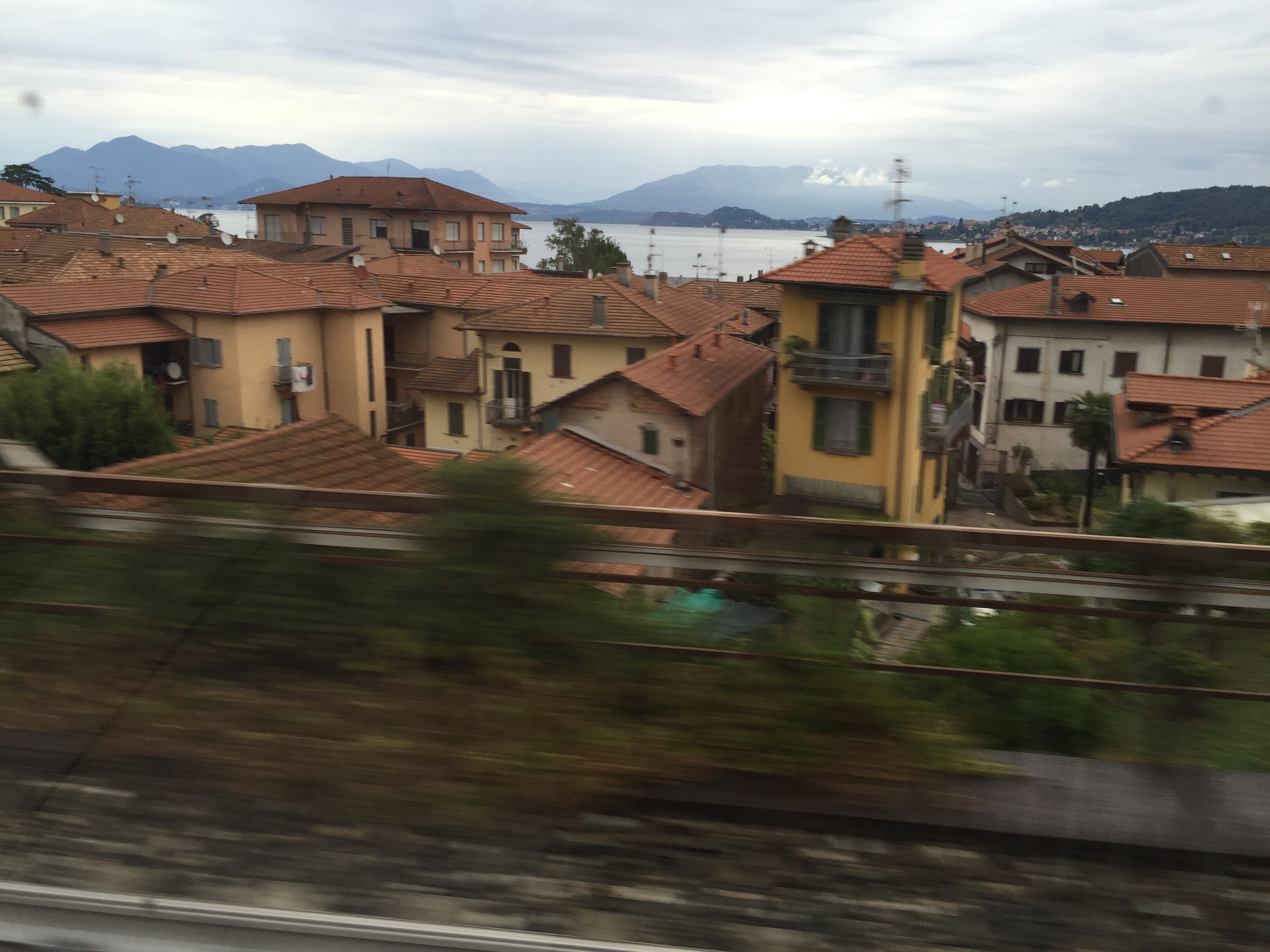
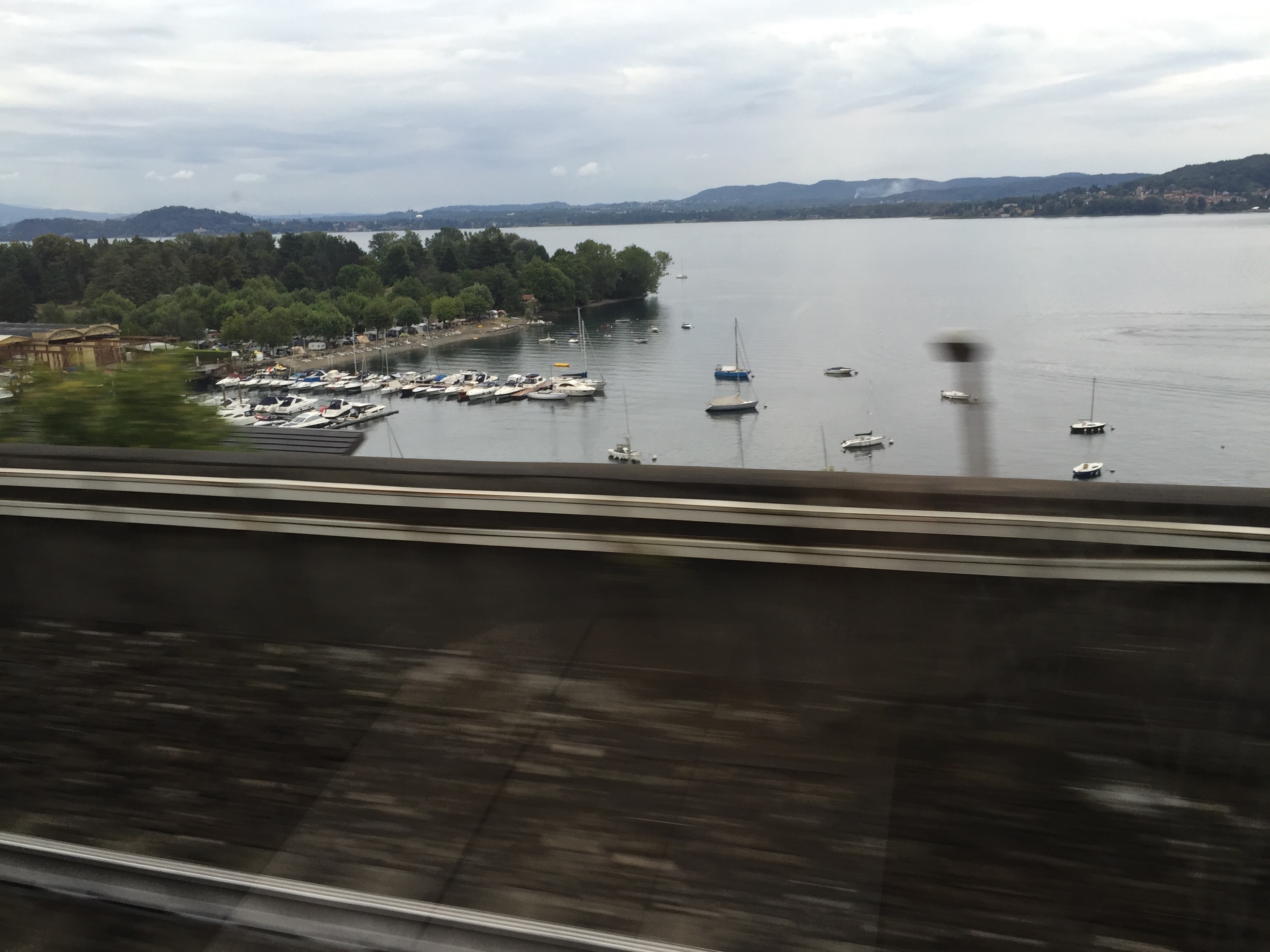
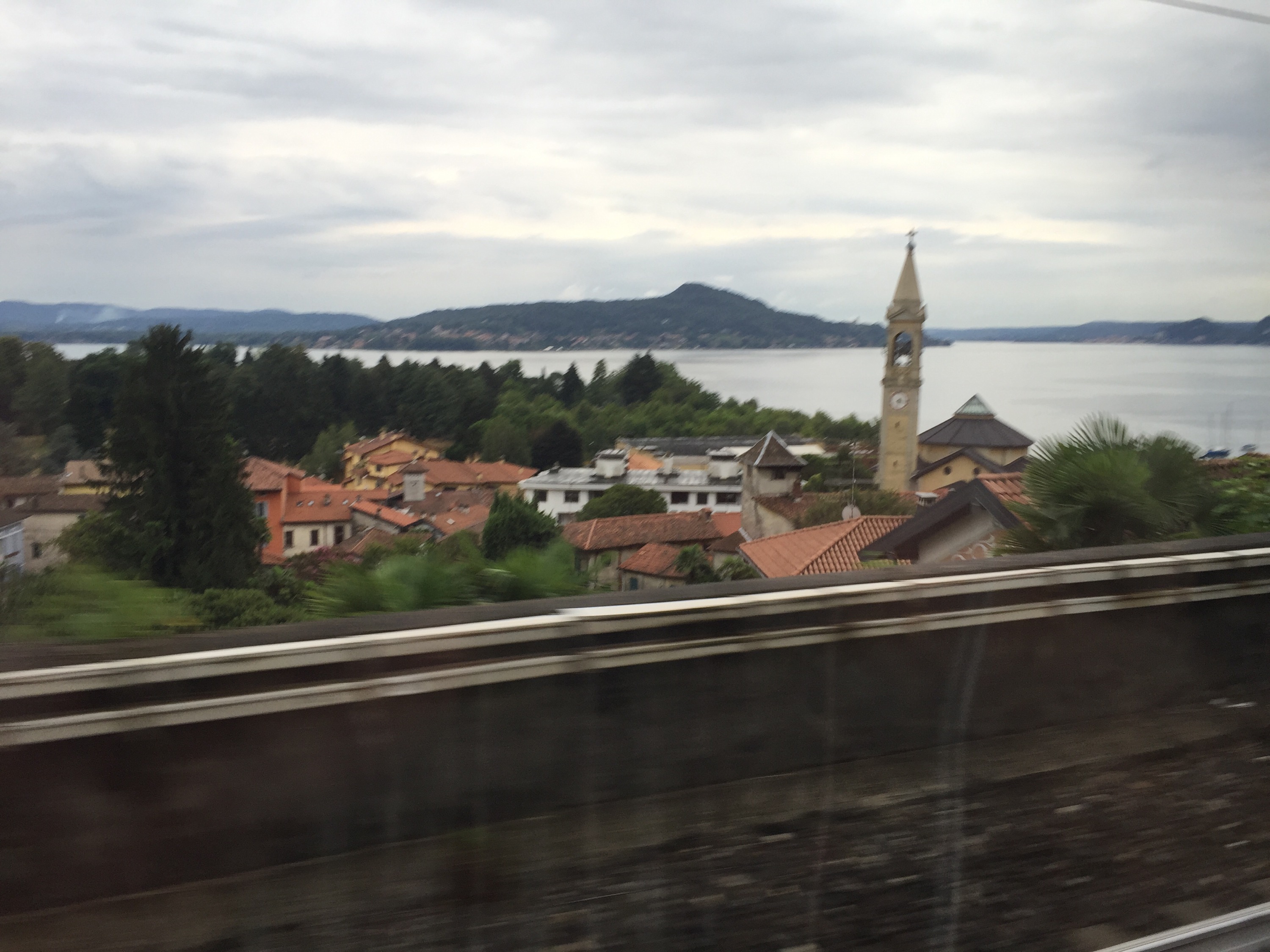
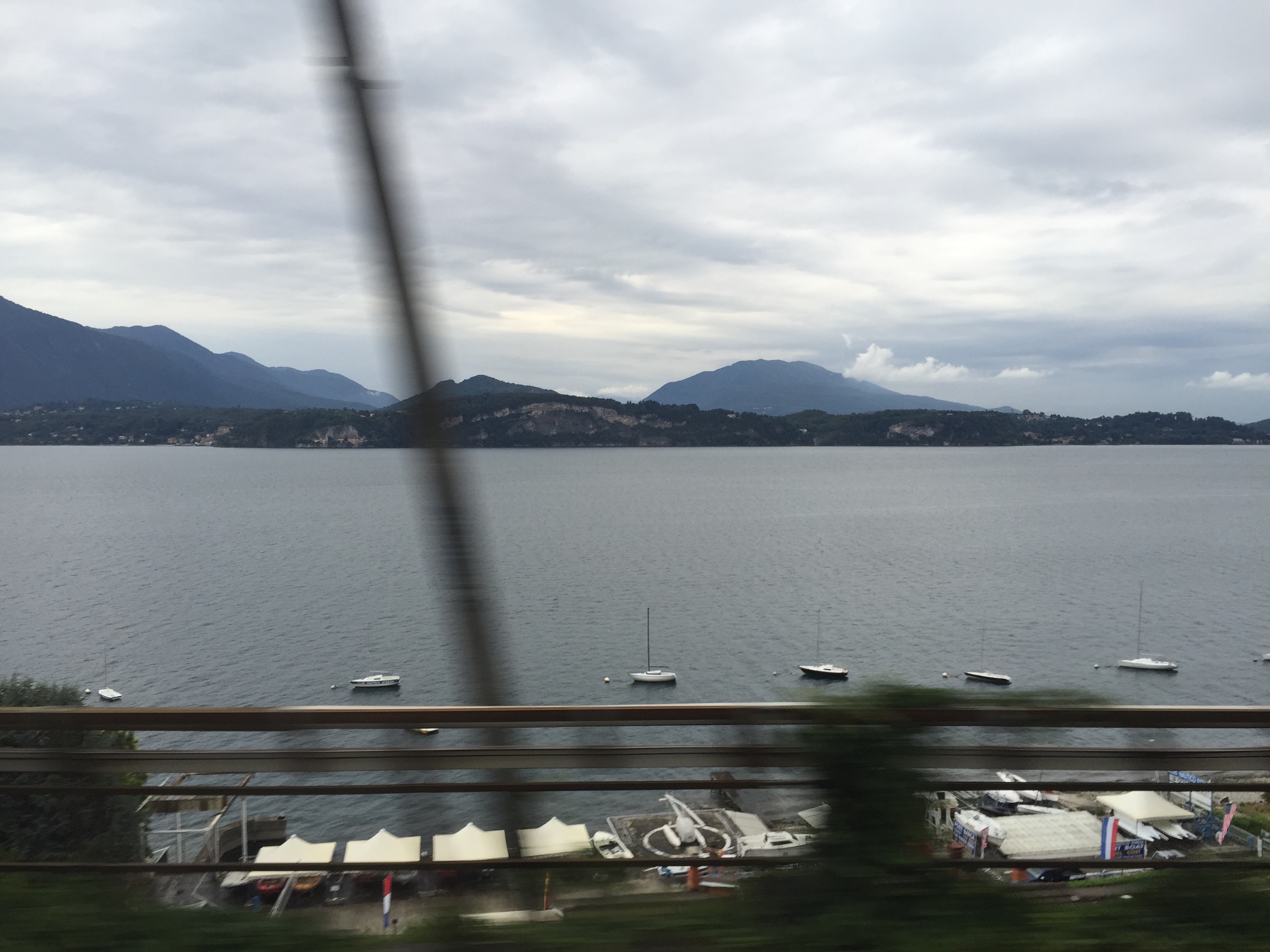
When I think about it, there are two pictures that I regret missing during this part of the journey. The first was the result of bad planning–I had hoped, in passing along Arona, I might catch a glimpse of the Colossus of San Carlo, the massive hollow bronze statue from the 1600’s that was the inspiration for the Statue of Liberty. For some reason, I thought it would be on the lake to my right, when in fact it was on a hill overlooking the lake to my left. He was a dour old moralist, but I would have liked to see the giant statue of St. Charles Borromeo. I’m sorrier, though, about the little girl, little more than a toddler, waving frantically to the train from the backporch of an apartment building along the tracks. Eventually the trains will be a routine matter for her, no doubt, but for now she was excited to see one rumble on by. That’s a picture I wish I had.
My regrets were more than made up as further north we got to Stresa and could see the Borromean islands just beyond.
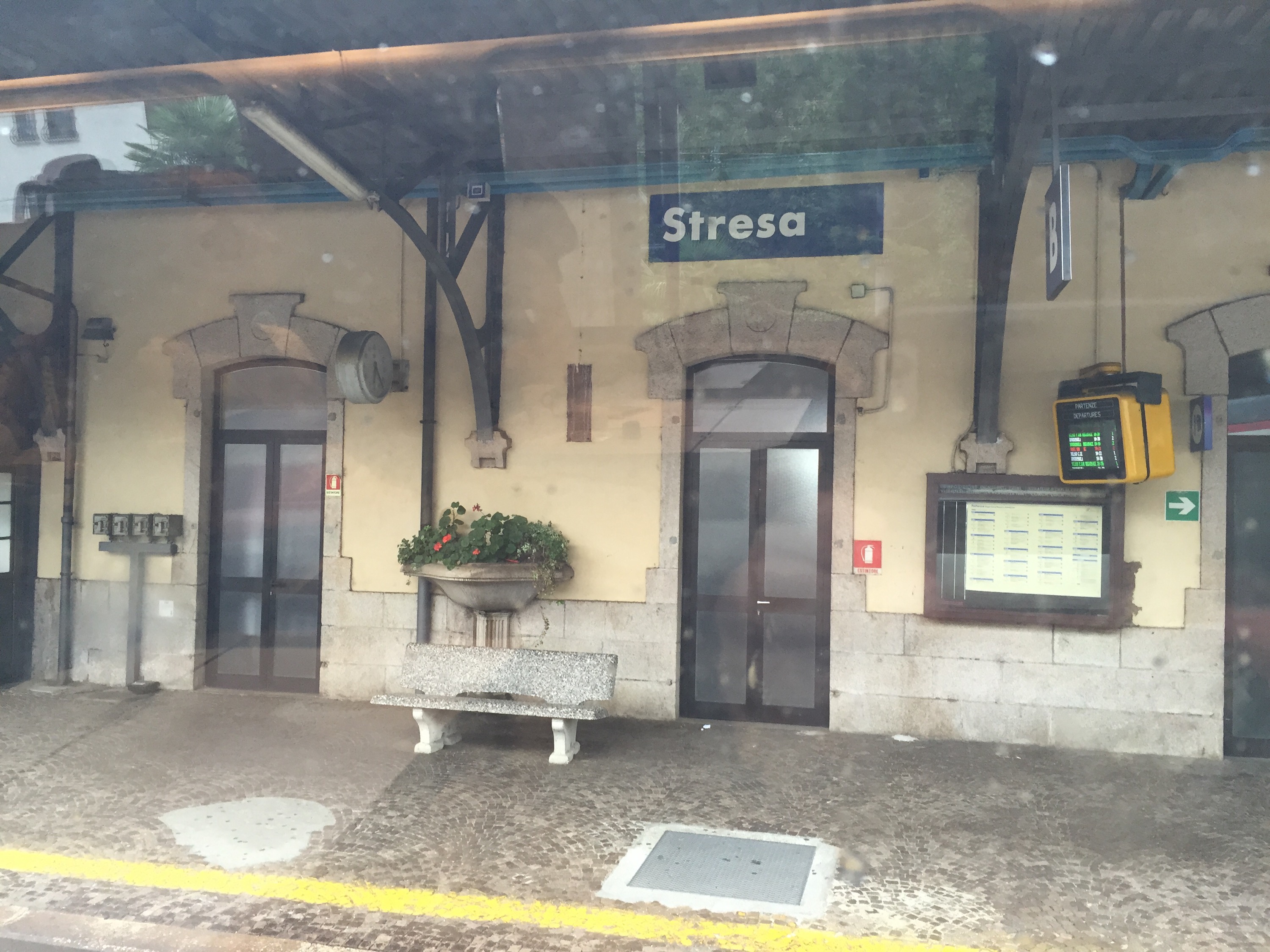
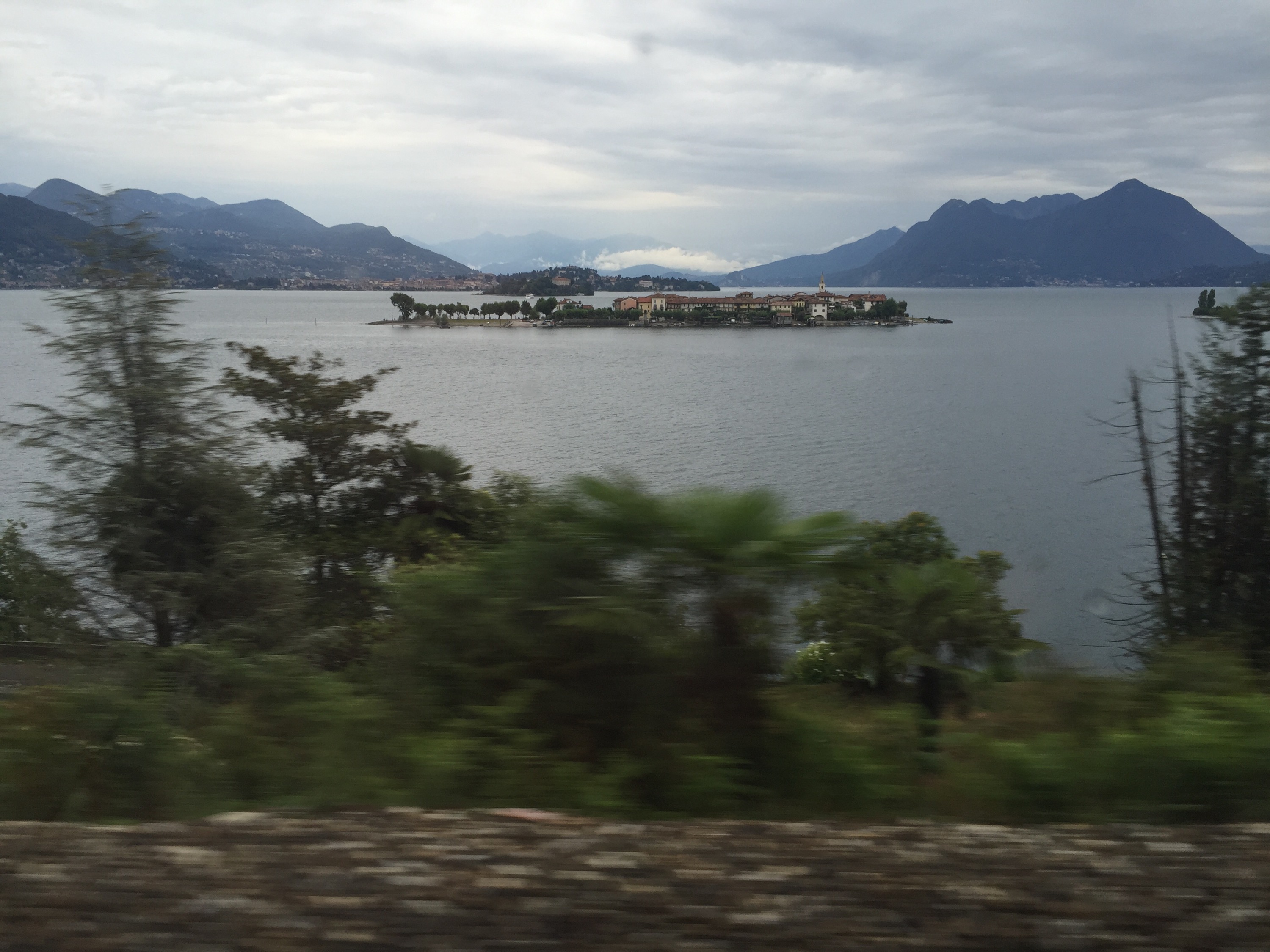
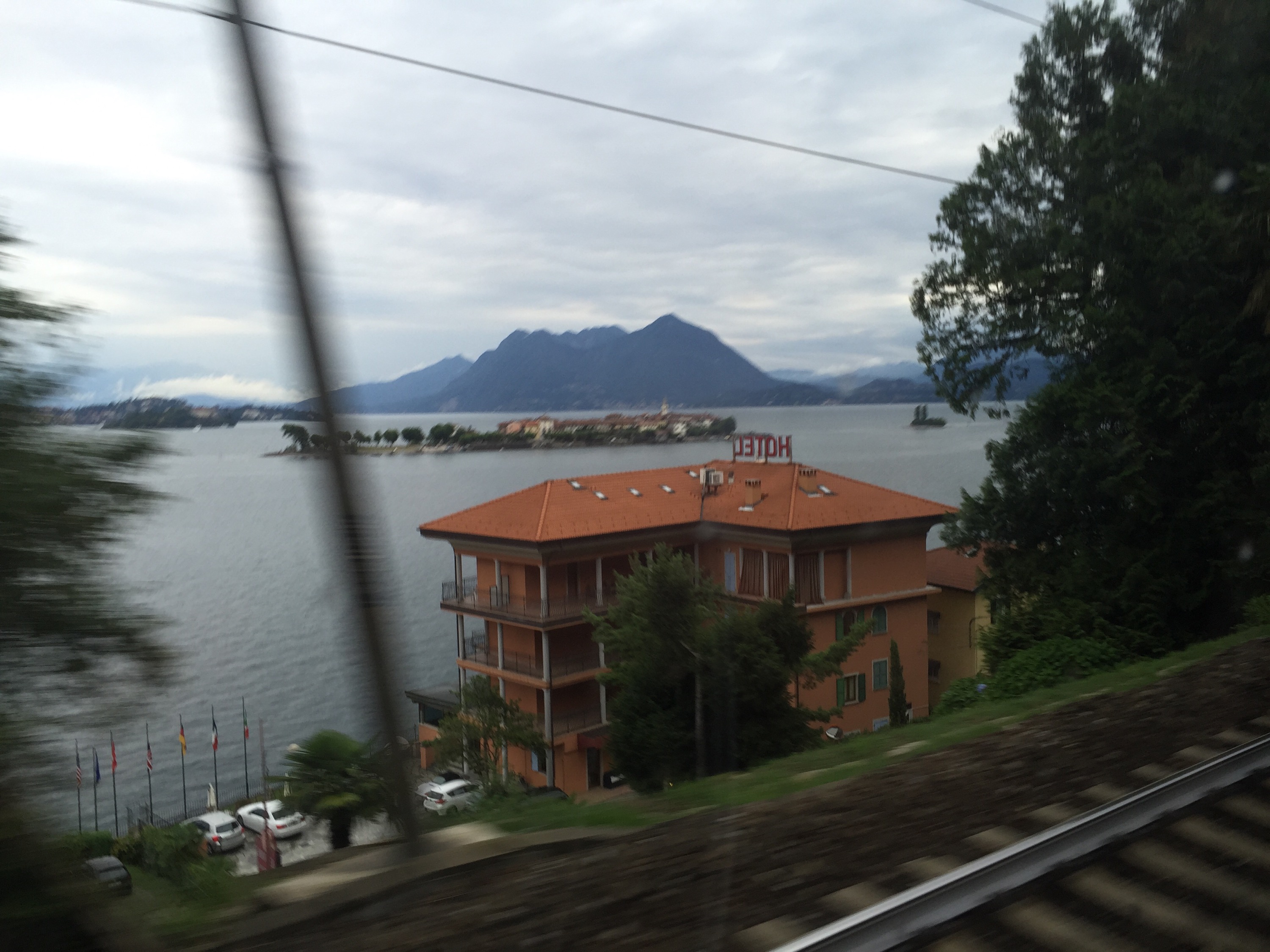 A good part of Hemingway’s A Farewell to Arms is set in a hotel here. After Frederic Henry escapes the carabinieri (spoiler alert!), he comes to Stresa to meet up with Catherine–it’s from here that, in a rowboat in the rain, they flee to Switzerland on the other side.
“You know where to go?”
“Up the lake.”
“You know how far?”
“Past Luino.”
“Past Luino, Cannero, Cannobio, Tranzano. You aren’t in Switzerland until you come to Brissago. You have to pass Monte Tamara.”
“What time is it?” Catherine asked.
“It’s only eleven o’clock,” I said.
“If you row all the time you ought to be there by seven o’clock in the morning.”
“Is it that far?”
“It’s thirty-five kilometres.”
“How should we go? In this rain we need a compass.”
“No. Row to Isola Bella. Then on the other side of Isola Madre go with the wind. The wind will take you to Pallanza. You will see the lights. Then go up the shore.”
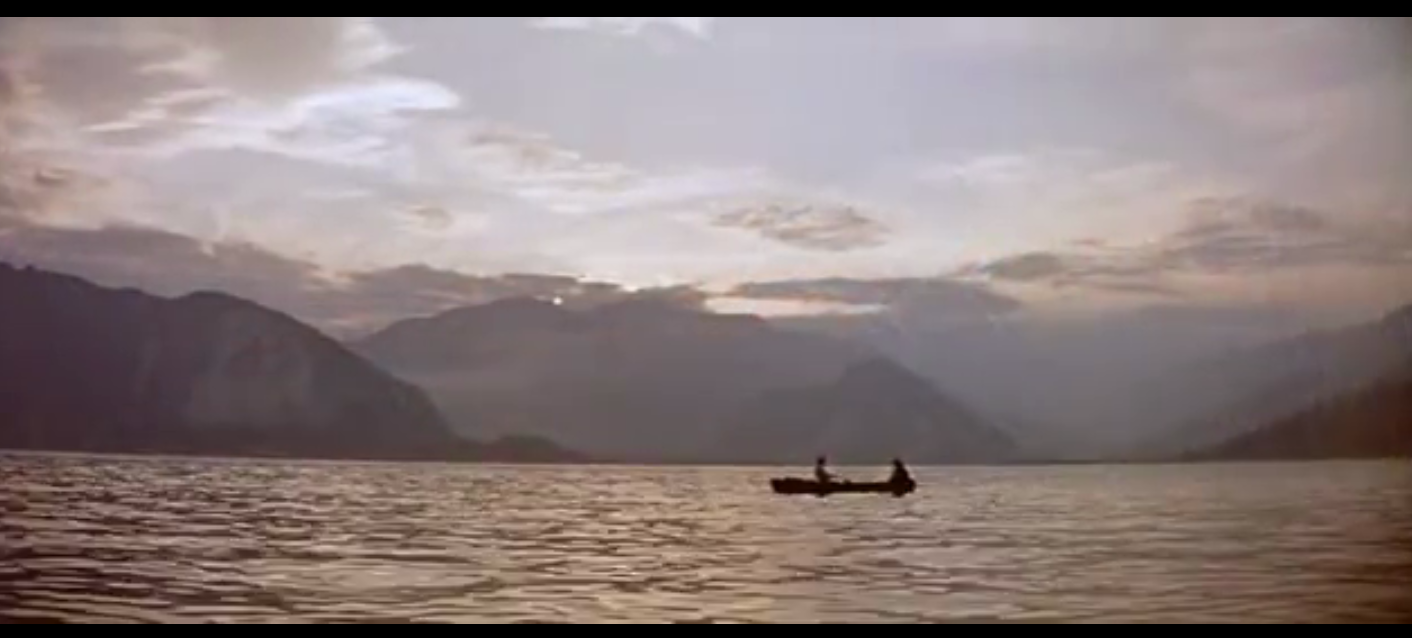
From the Rock Hudson-Jennifer Jones version of A Farewell to Arms, 1957
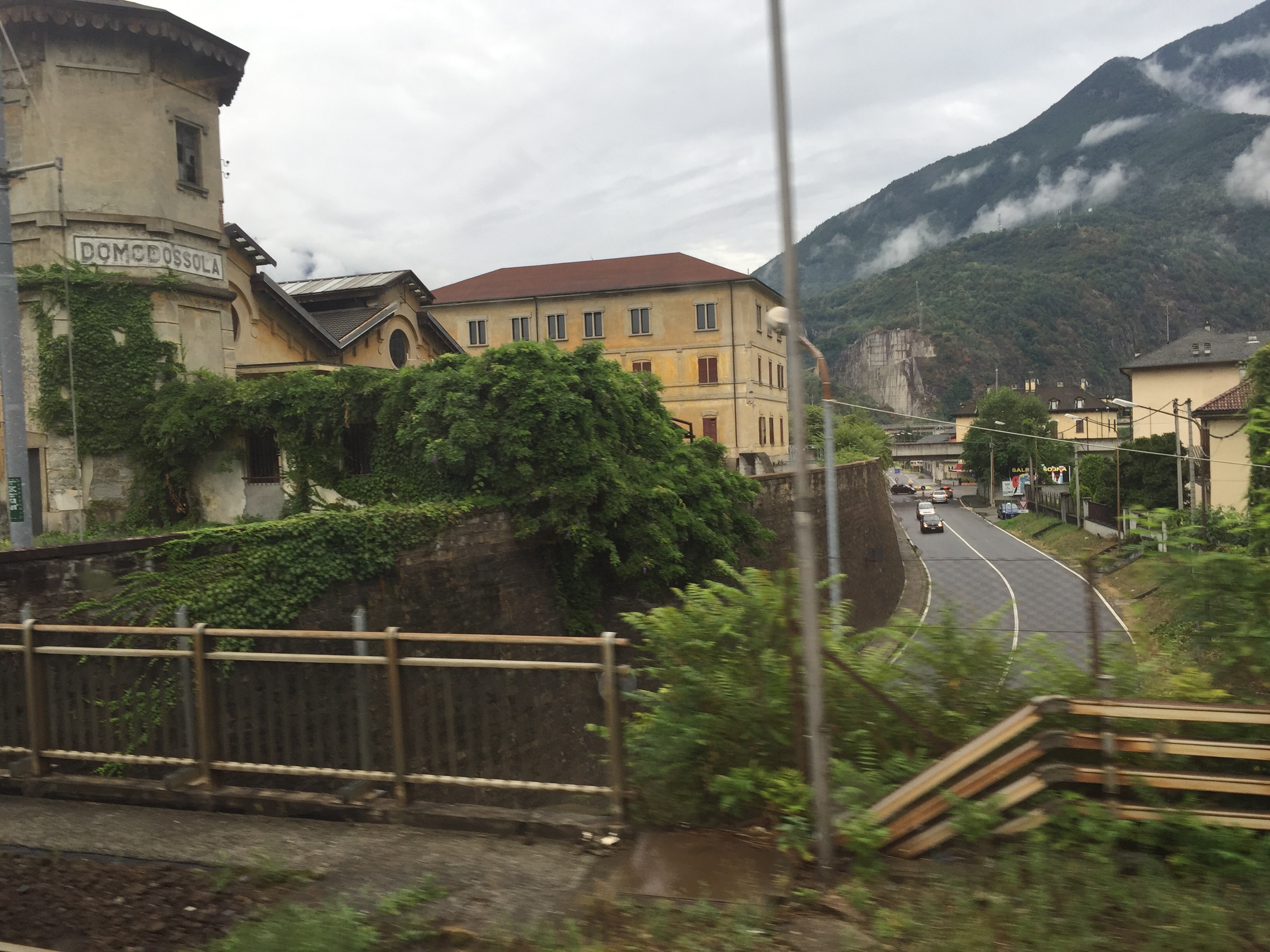
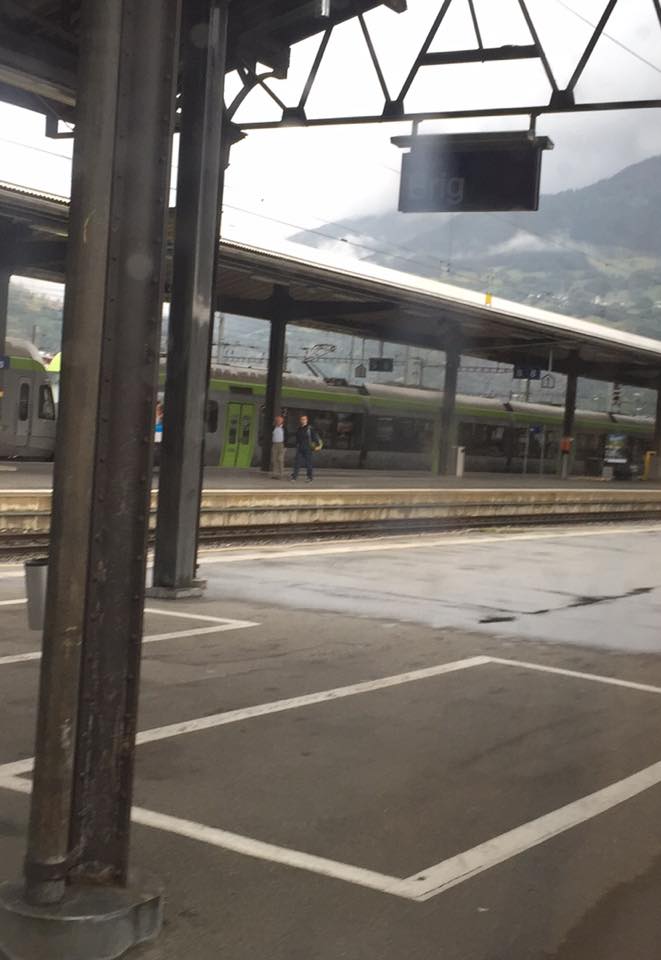
Eventually, the train leaves the lake behind, and through a narrow path makes its way though the mountainous terrain, more heavily covered with factories. We come to Domodossola, the furthest point north in this part of the country. In the olden days, you had to go over the Alps here via the Simplon Pass. Now you pass through the Simplon Tunnel beneath, with nothing to be seen from the window but the reflection of your trainmates across the aisle. Once through, you emerge in the Swiss town of Brig, where all the signs in the station are auf Deutsch. A new conductor comes aboard and asks for my ticket, first in German, then Italian, then English. I look again in my wallet for the ticket, where I have no more Euros, only francs now. Ciao, Italia! Guten Tag, Schweiz!

As everyone knows, Italians have a lively language of gesture. A few I observed, in context, during this recent trip:
1. Get Lost Hand Chop. I was on a train when a woman got on and systematically handed out pieces of paper to everyone except me. In Italian it said something slong the lines of I am poor, please give me money so i can feed my children, etc. After she covered a few train-cas, she came by to collect them and beg. One older guy let the piece of paper drop to the floor, and when he asked him for a contibution, he looked off into the middle distance, and did the “hand chop.” While articles on gestures describe this as an up-and-down motion of the right hand, his hand was cupped and it seemed more like he was rubbing a melon. She went away.
2. Eye Pull. I was in Milan buying a ticket to get into the Cathedral. When I got to the front of the line, inasked, “Do you take a card?” To which she replied, “Why wouldn’t we?” I told her I’d recently been in Naples, where plaves often didn’t take cards. “Ah, well they’re pooerer there–good people though, generous people. Still …” And she pulled down her lower right eyelid with her index finger to indicate, “but foxy, watch out for them.” I think she was ironically imitating a Southern mannerism with the gesture.
3. Chin Inquiry & Mezza Mezza. At a restaurant in Tivoli that specialized in grilling over a great big fire, the chef- owner had been sitting with some friends and letting the sous- chef do most of the work. Whenit came time to cook for this table, he went over to the grill himself, held up the steak with tongs for the male friend to see, and lifted his chin quickly. The friend made the mezza- mezza hand sign. I take it this exchange was, How do you want this cooked? With the reply, Medium.
4. Fist Push. On the train between Florence and Milan, I got into a conversation with a very nice guy and his Chinese wife and their adorable daughter. He’s from Milan, but works overseas, and was describing the work ethic of different countries. In the first class compartment, you’re supposed to get a free beverage, but the women pushing the cart breezed right past us. He looked at them leaving, then at me, and curled his hand into a fist which he then pushed away from his chest. “Fucking Italians, eh?” he said.
5. Patient Hand Clasp. I was at a trattoria in Rome and was asking the waitress to explain a few items. She leaned down slightly and clasped her hands in front of her, as if to say, You are vexatious with your many questions but I have infinite reserves of Stoic resolve.
Im sure others will occur to me.
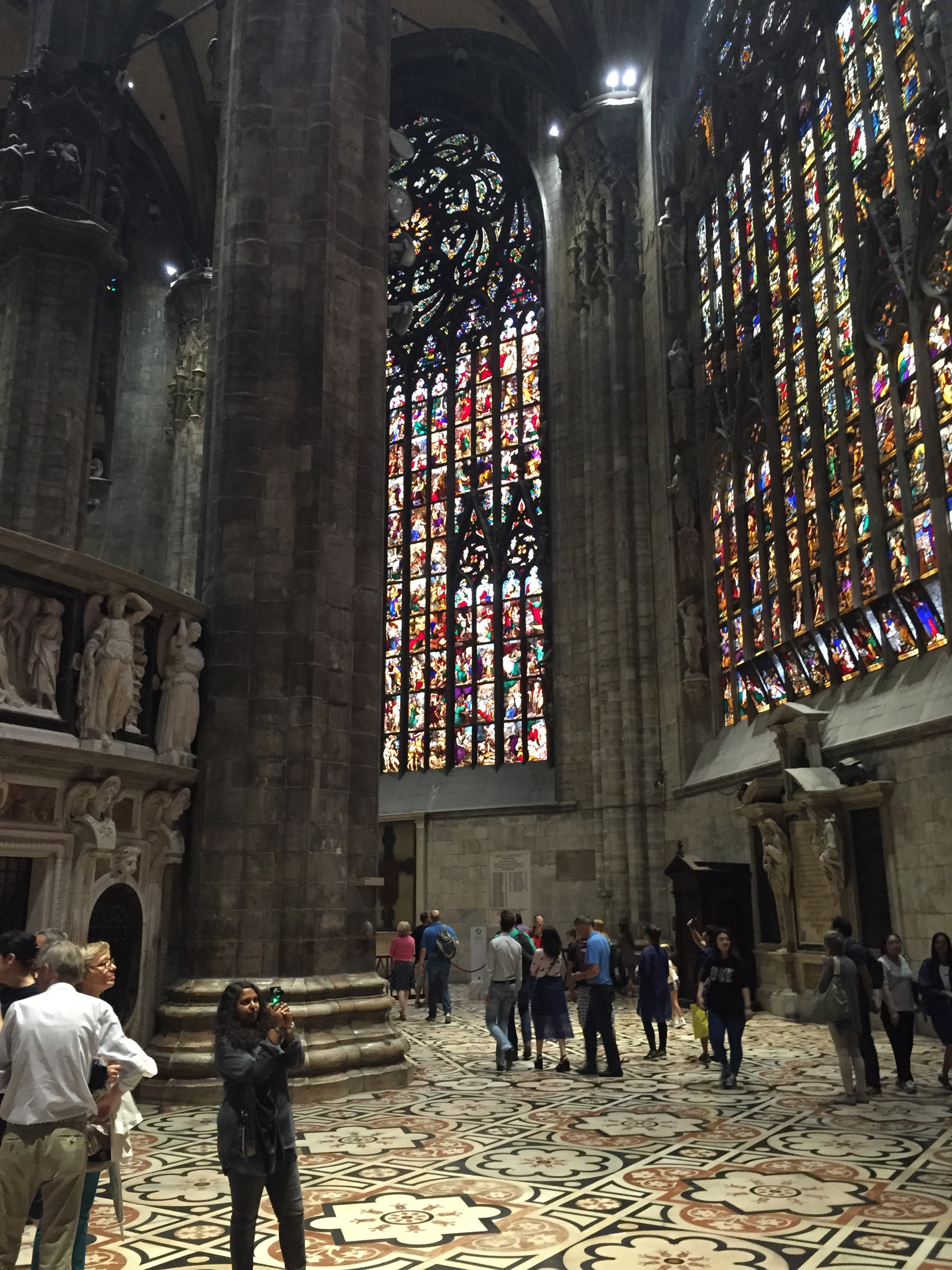
Finding myself with a few hours in Milan between trains, I made a bee-line for the famous cathedral. Out of the subway I came and… Ecce Duomo! 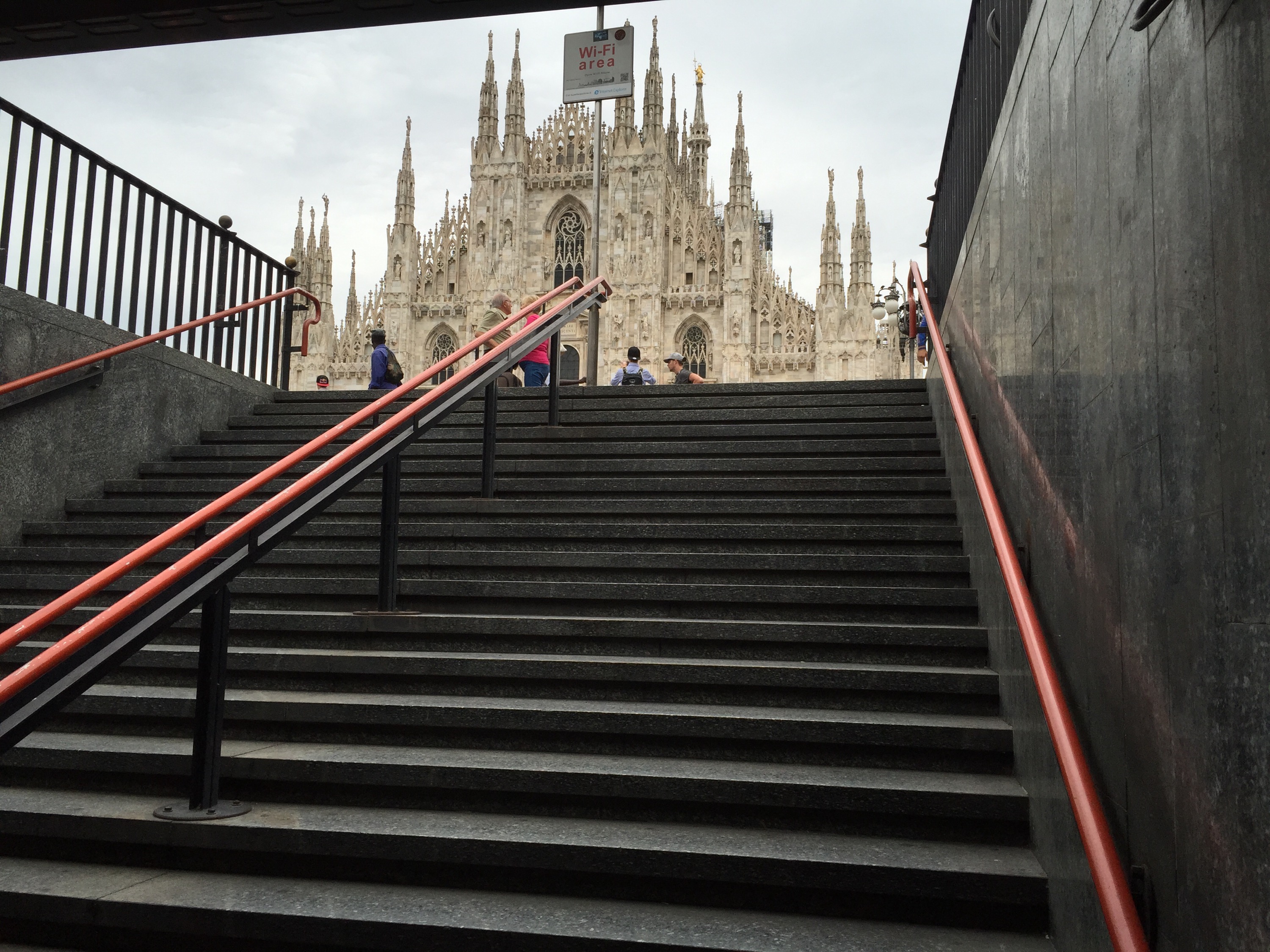
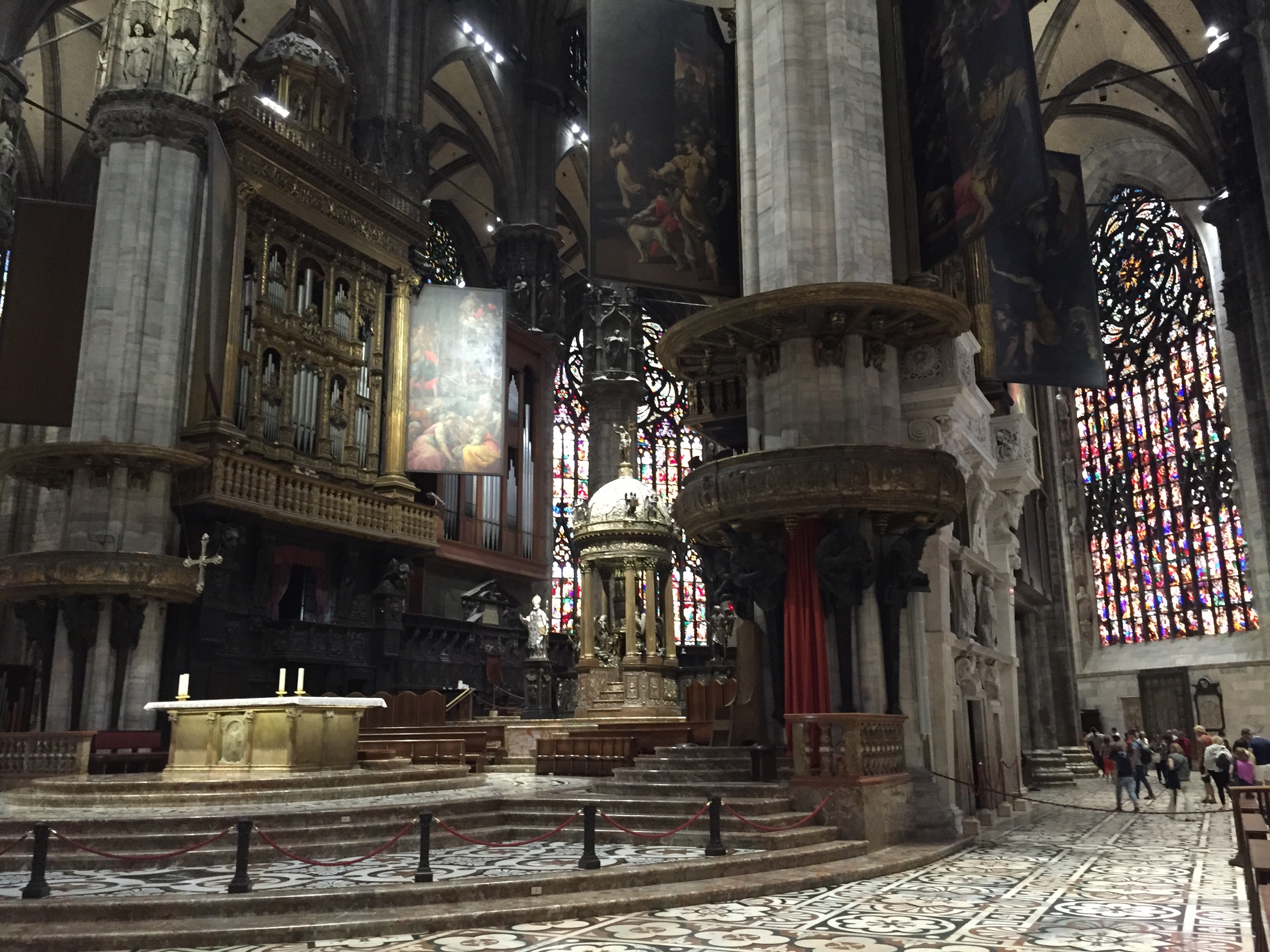
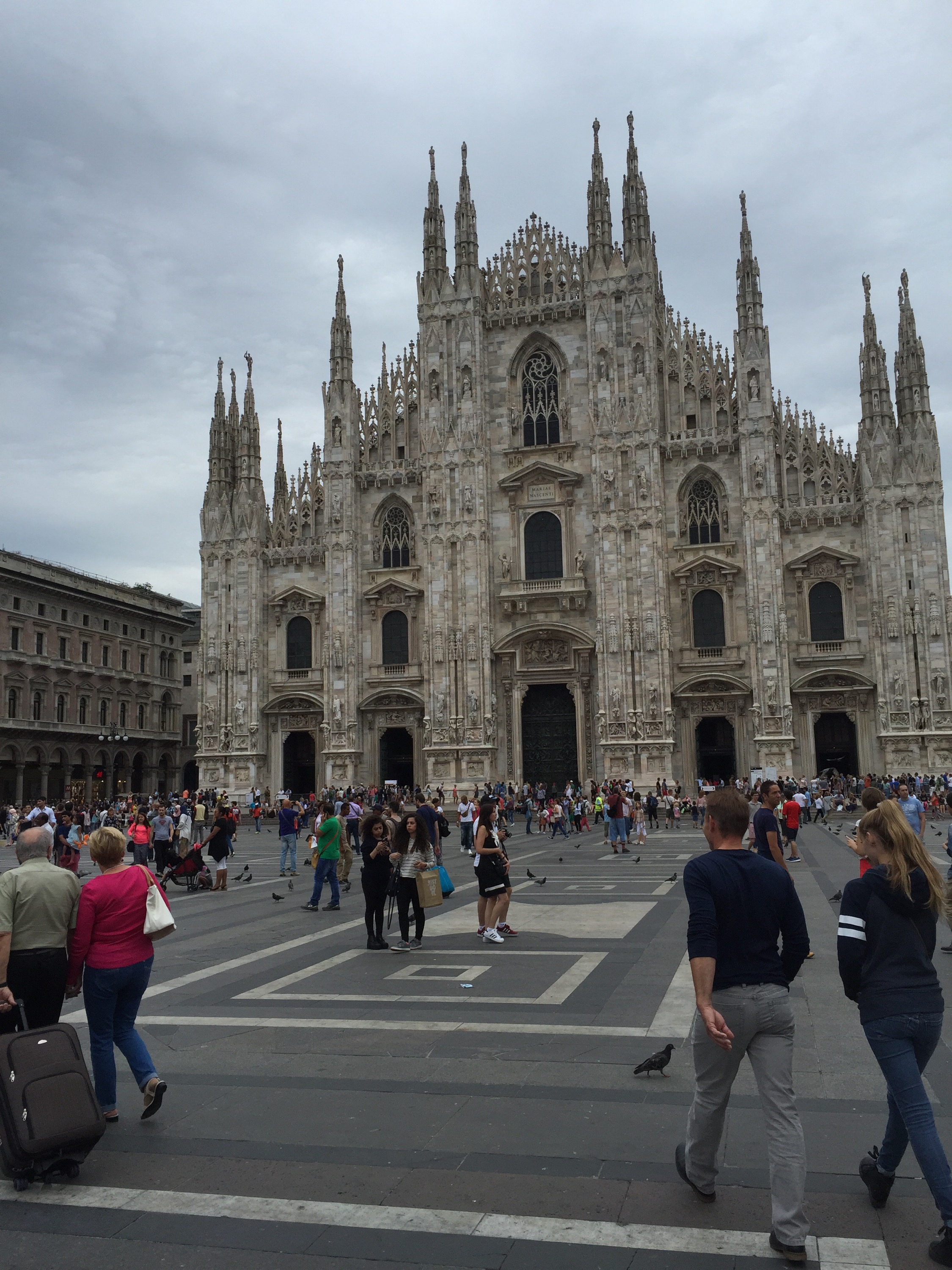 It’s an astounding place, it’s white marble exterior covered with sculpture, and its interior blazing with color from the enormous stained glass windows.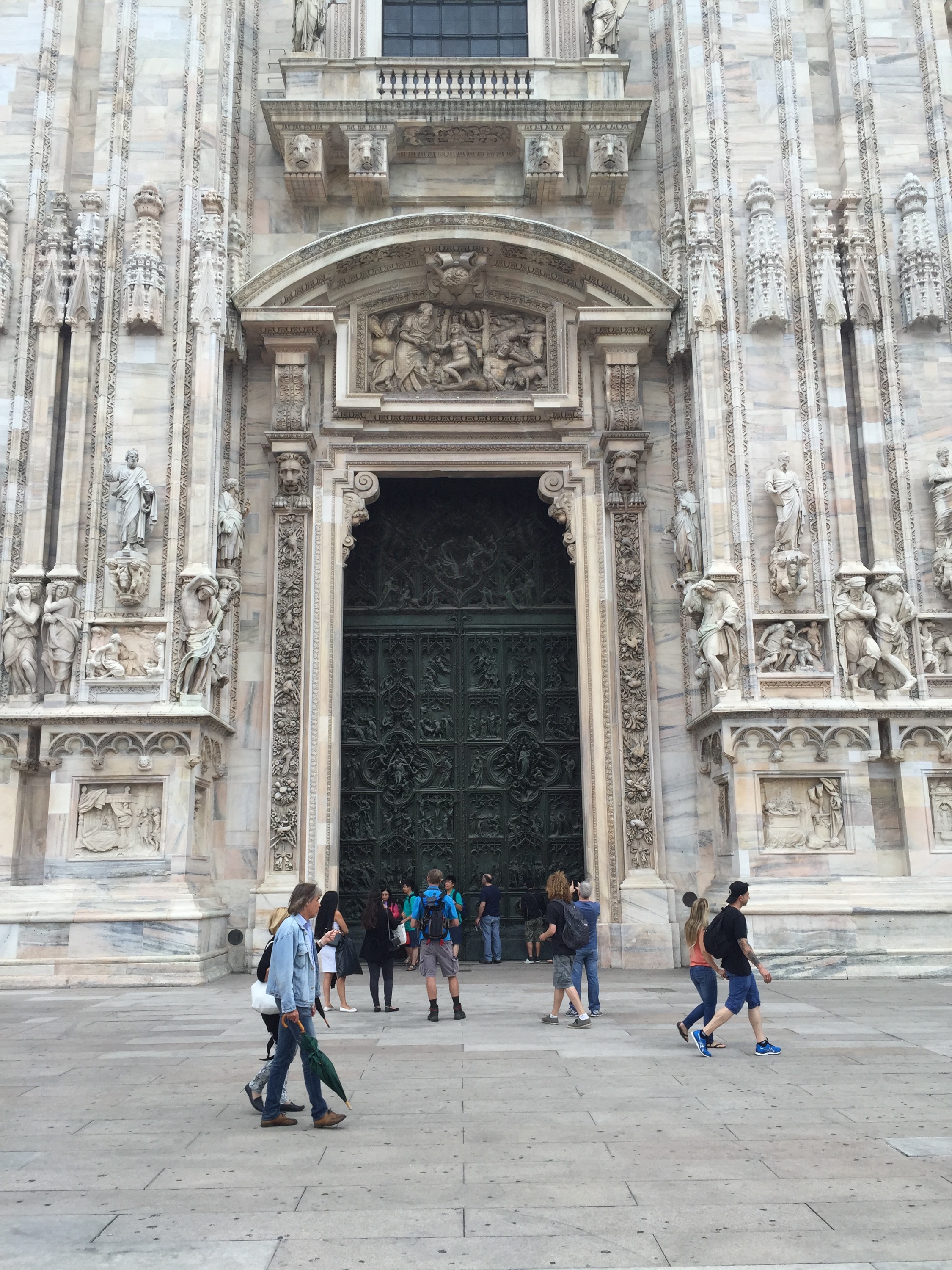
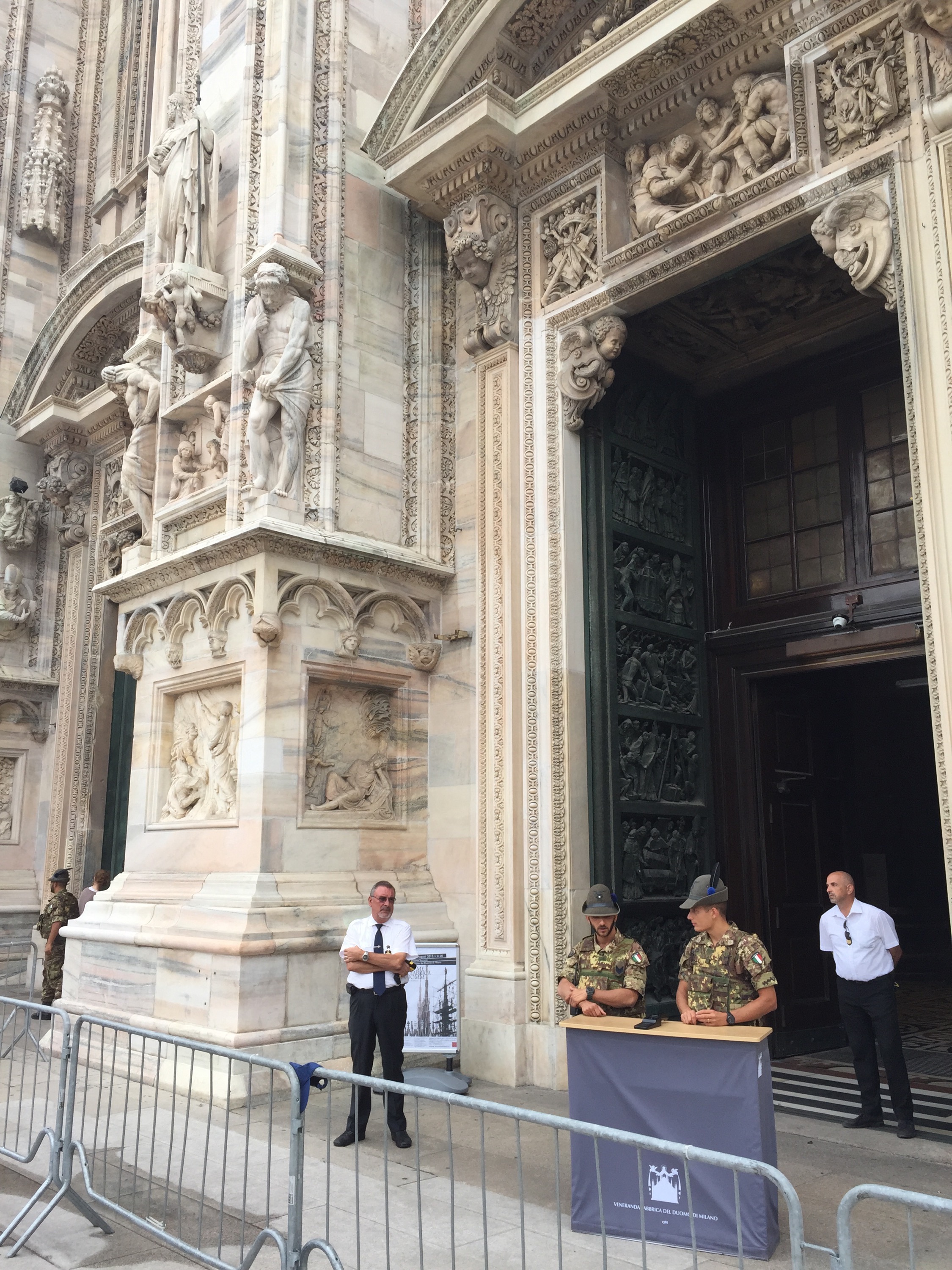 Love the guards’ cockaded hats, by the way.

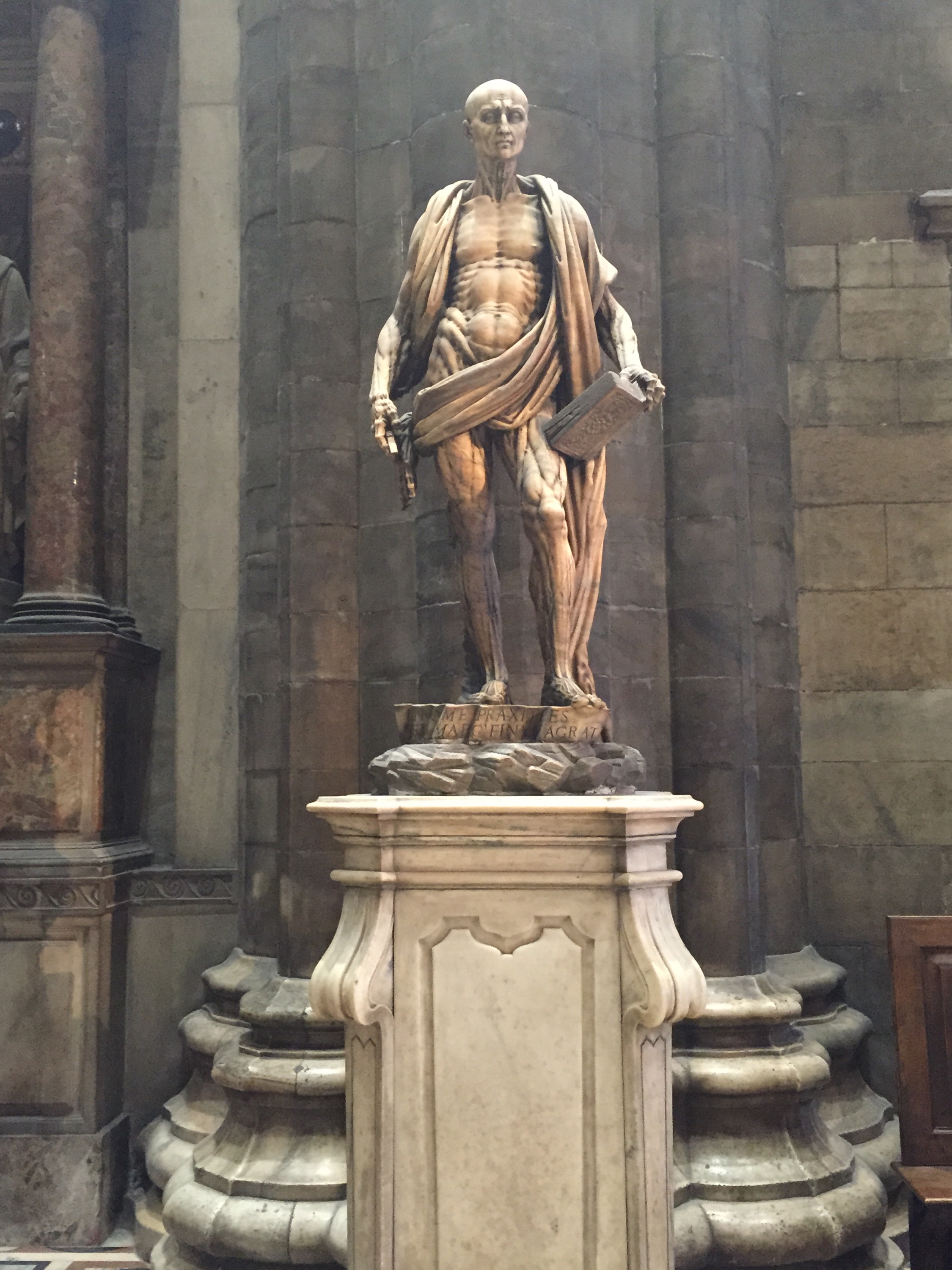
 One of the the main sights inside is Marco d’Agrate’s gruesome statue of St. Bartholomew, who was flayed in his martyrdom.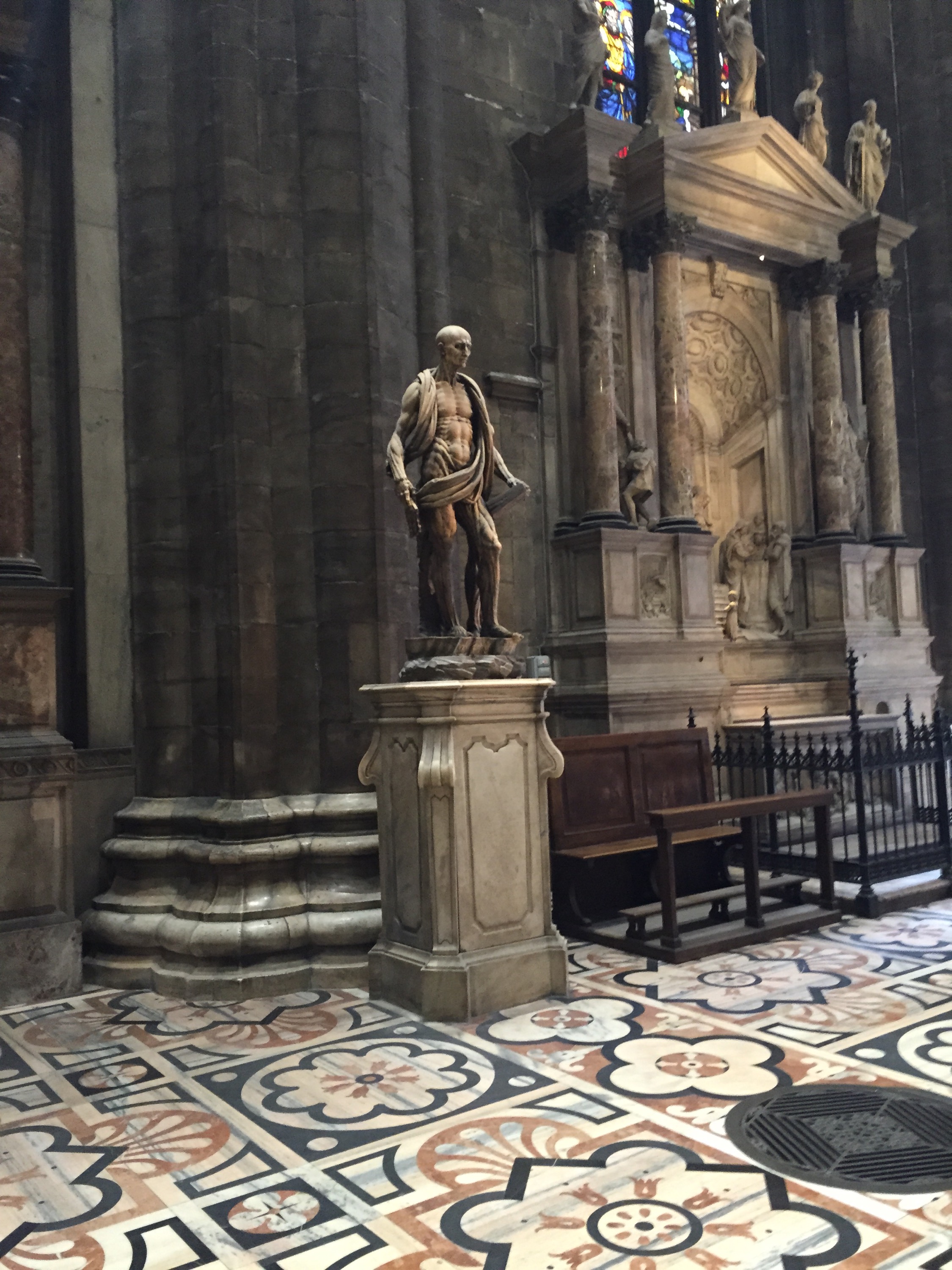
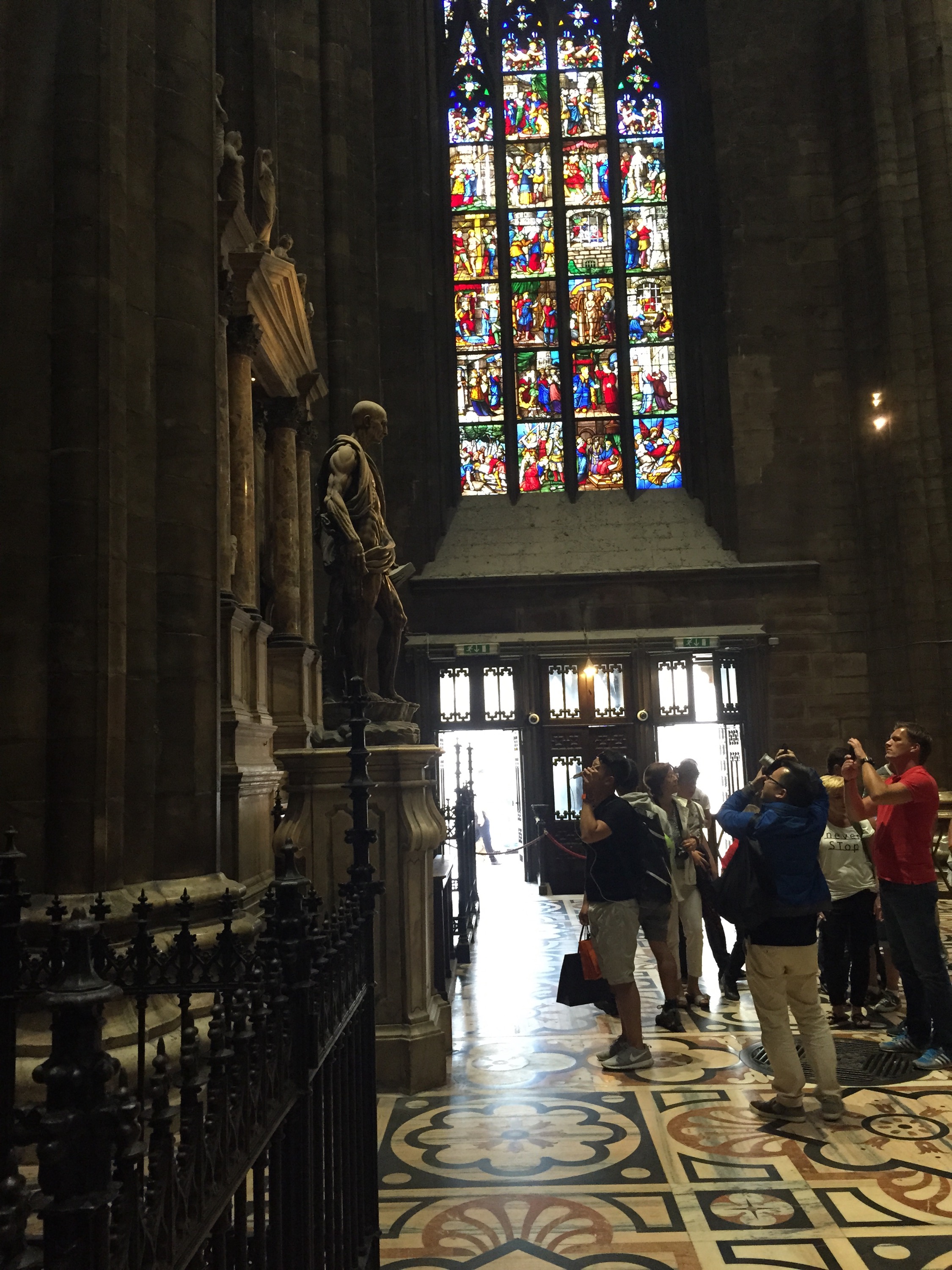
Mark Twain had seen this statue in Innocents Abroad, and wrote,
The guide showed us a coffee-colored piece of sculpture which he said was considered to have come from the hand of Phidias, since it was not possible that any other artist, of any epoch, could have copied nature with such faultless accuracy. The figure was that of a man without a skin; with every vein, artery, muscle, every fiber and tendon and tissue of the human frame represented in minute detail. It looked natural, because somehow it looked as if it were in pain. A skinned man would be likely to look that way unless his attention were occupied with some other matter. It was a hideous thing, and yet there was a fascination about it some where. I am very sorry I saw it, because I shall always see it now. I shall dream of it sometimes. I shall dream that it is resting its corded arms on the bed’s head and looking down on me with its dead eyes; I shall dream that it is stretched between the sheets with me and touching me with its exposed muscles and its stringy cold legs.
It is hard to forget repulsive things.
Twain is being a little over dramatic here, of course, for the real point of this St. Bartholomew is to call into question worldly things. Still, it is repulsive. The best I can do to express that is to show you his foot. 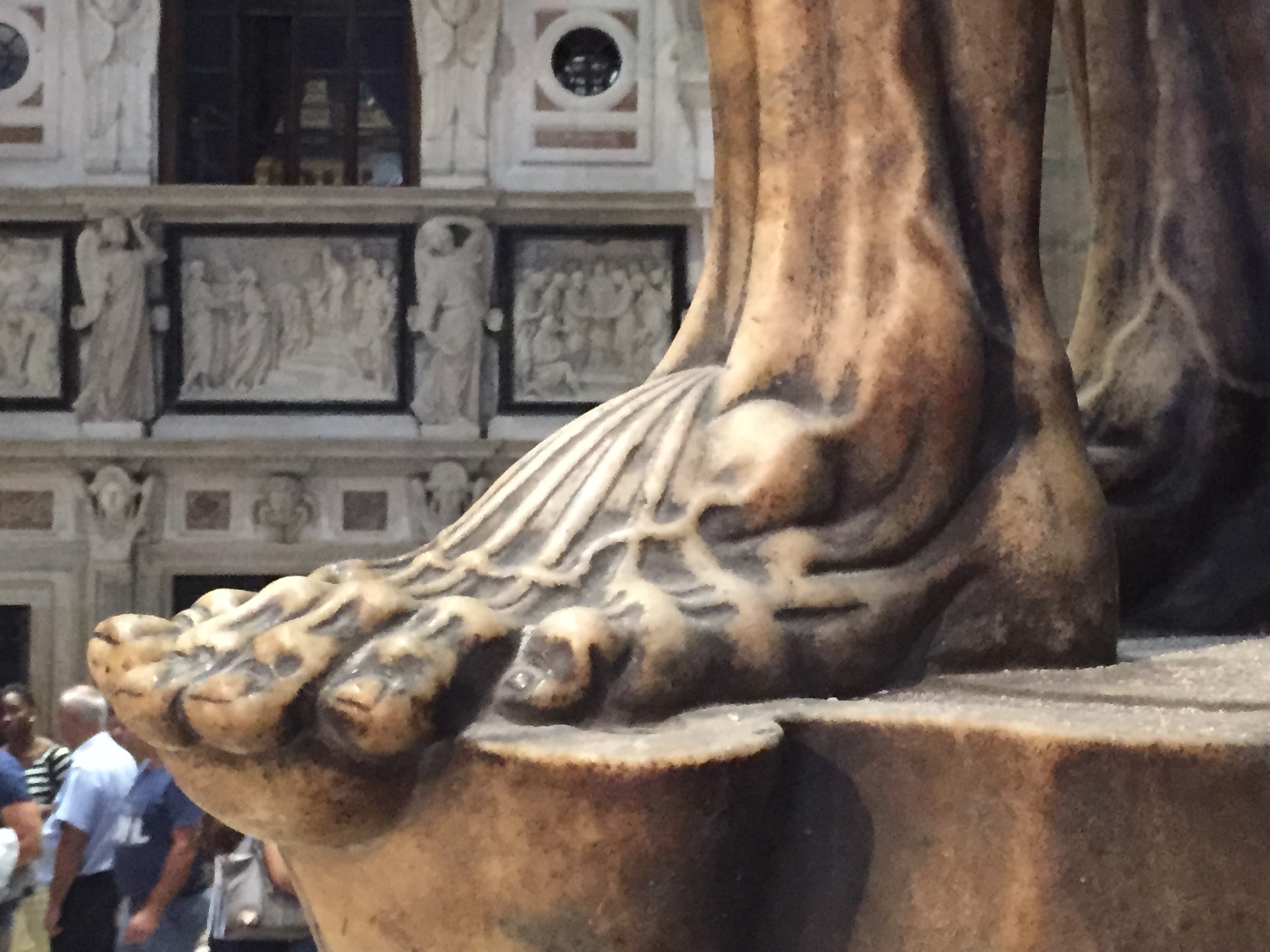
The Duomo used to be the tallest building in Milan until it was outdone by the Pirelli skyscraper in the 50s and more recently the Unicredit Tower. Banking, after Fashion, is Milan’s biggest business, and its home is the Borsa a few blocks away.
Having done due diligence in seeing the Dupmo, I rushed on over to the Borsa to see Maurizio Cattelan’s L.O.V.E. (Liberté, Ofio, Vendetta, Eternità).I had written a post on this before, but had not seen it in the flesh, so to speak. An enormous hand recalls Constantine’s hand in Rome, of course–so an indictment of power–but also Adam Smith’s invisible hand–an indictment of the free market. People complain about the difficulty of modern art, but as a commentary of la crise in 2008, it could not be more clear. In its own way, it’s a caution against the things of this world.
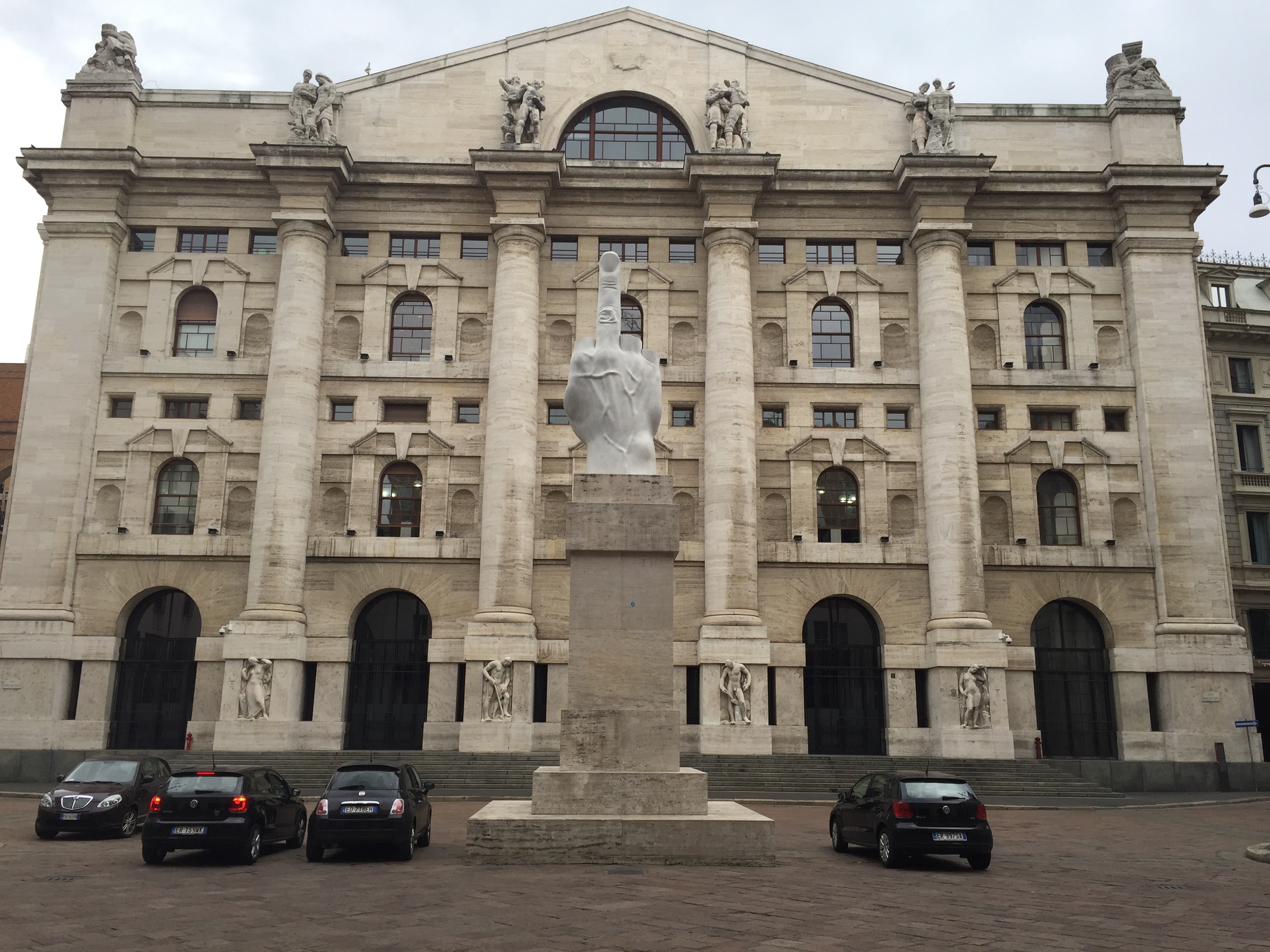

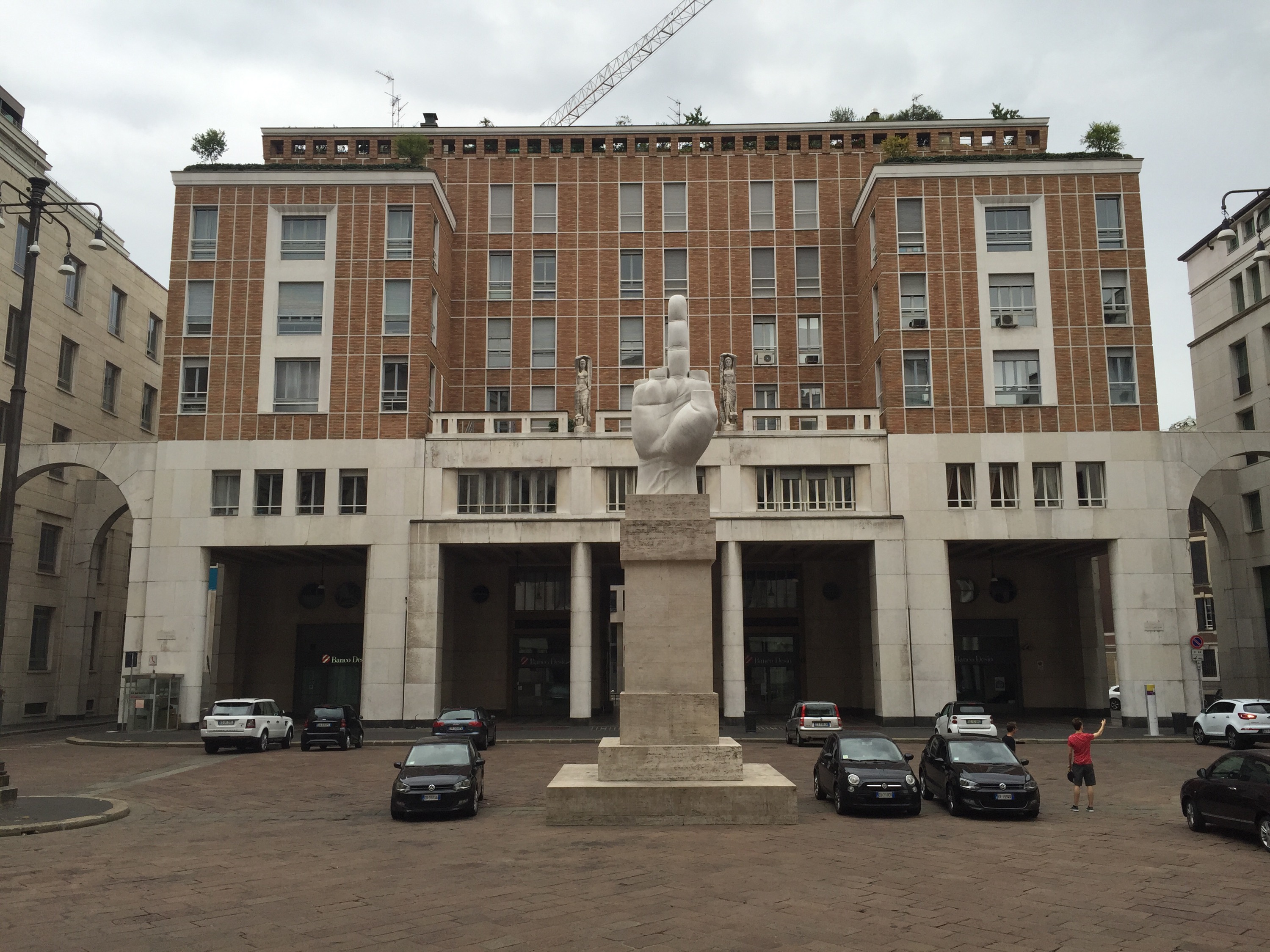
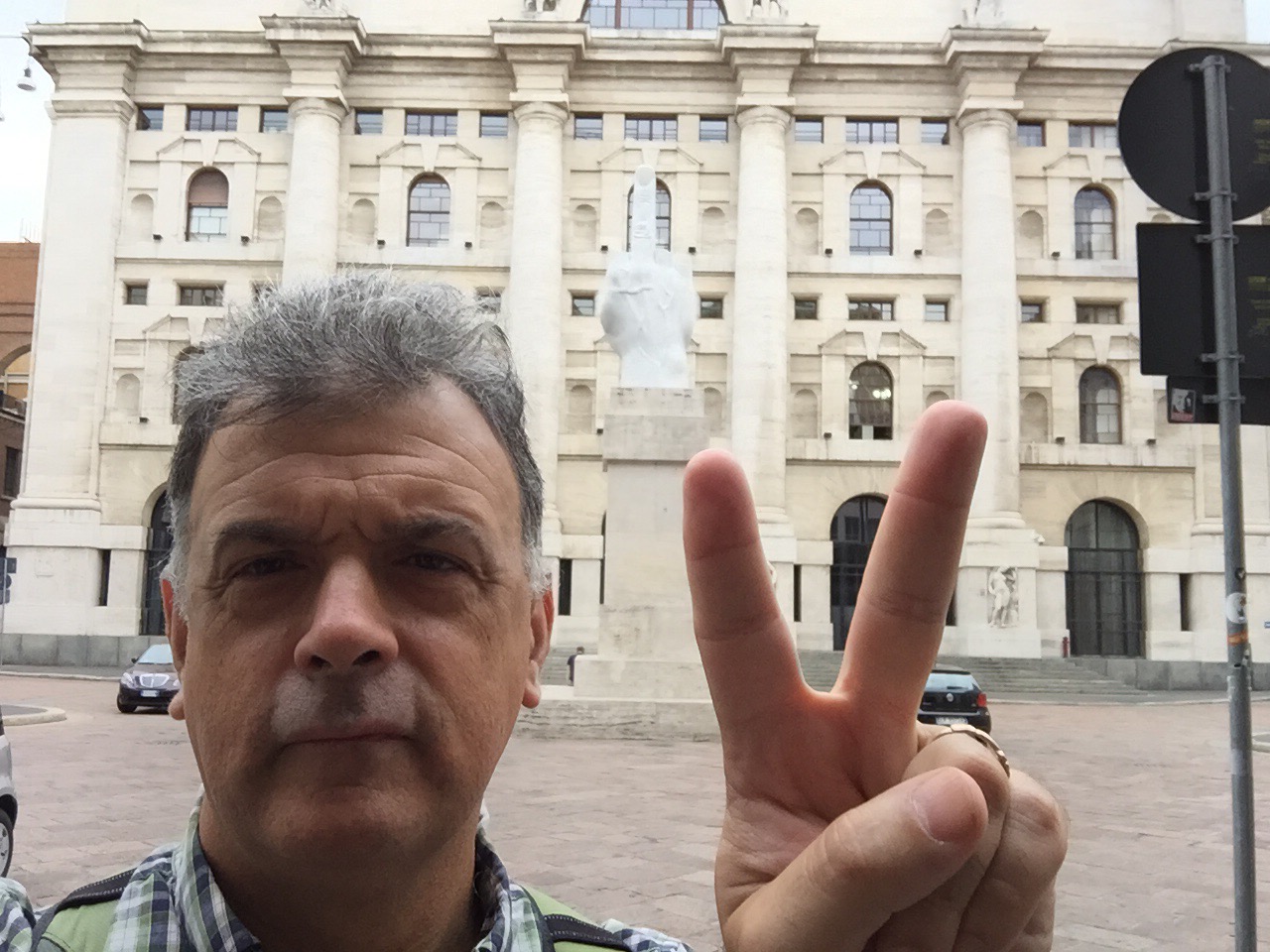
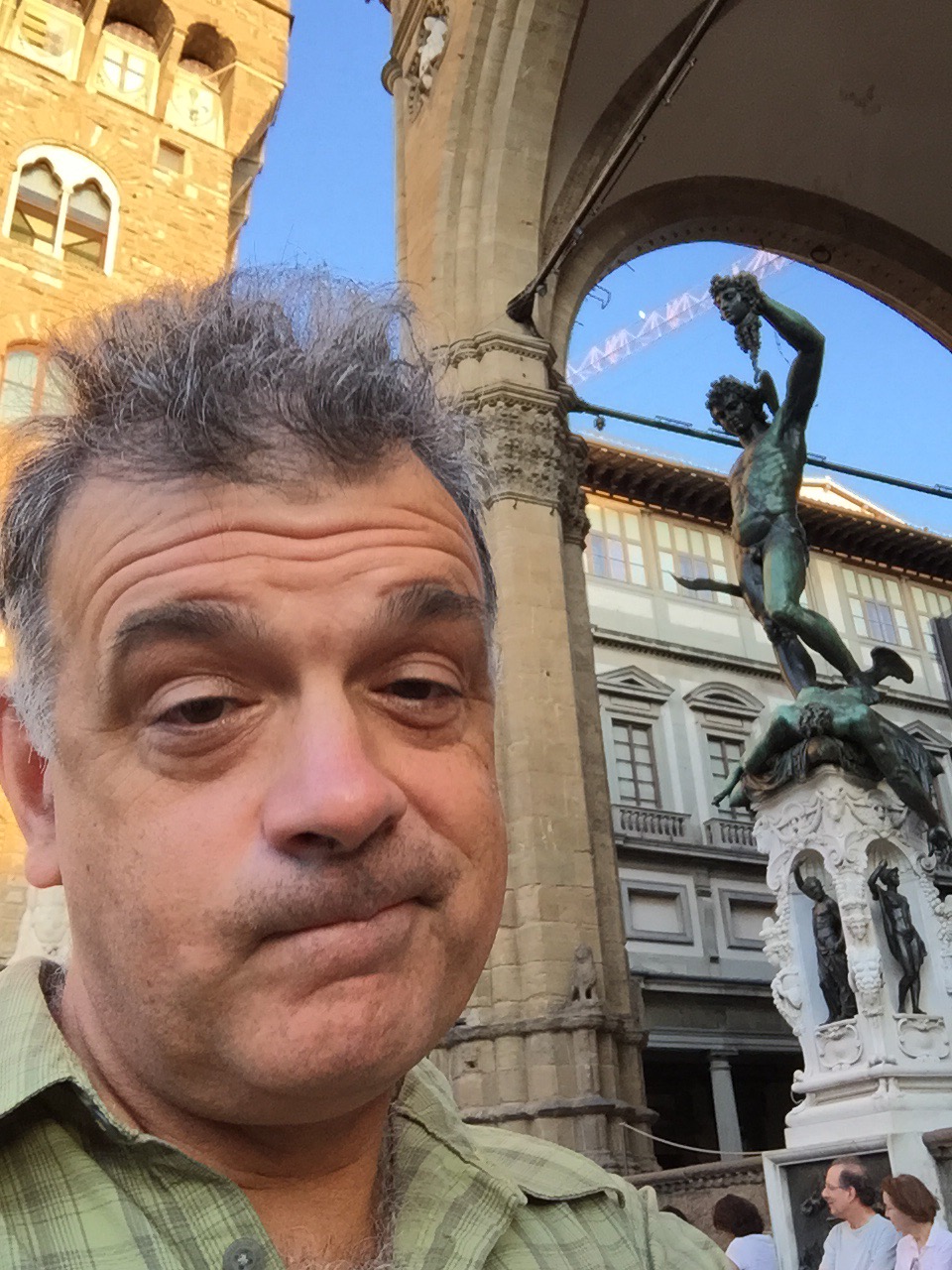
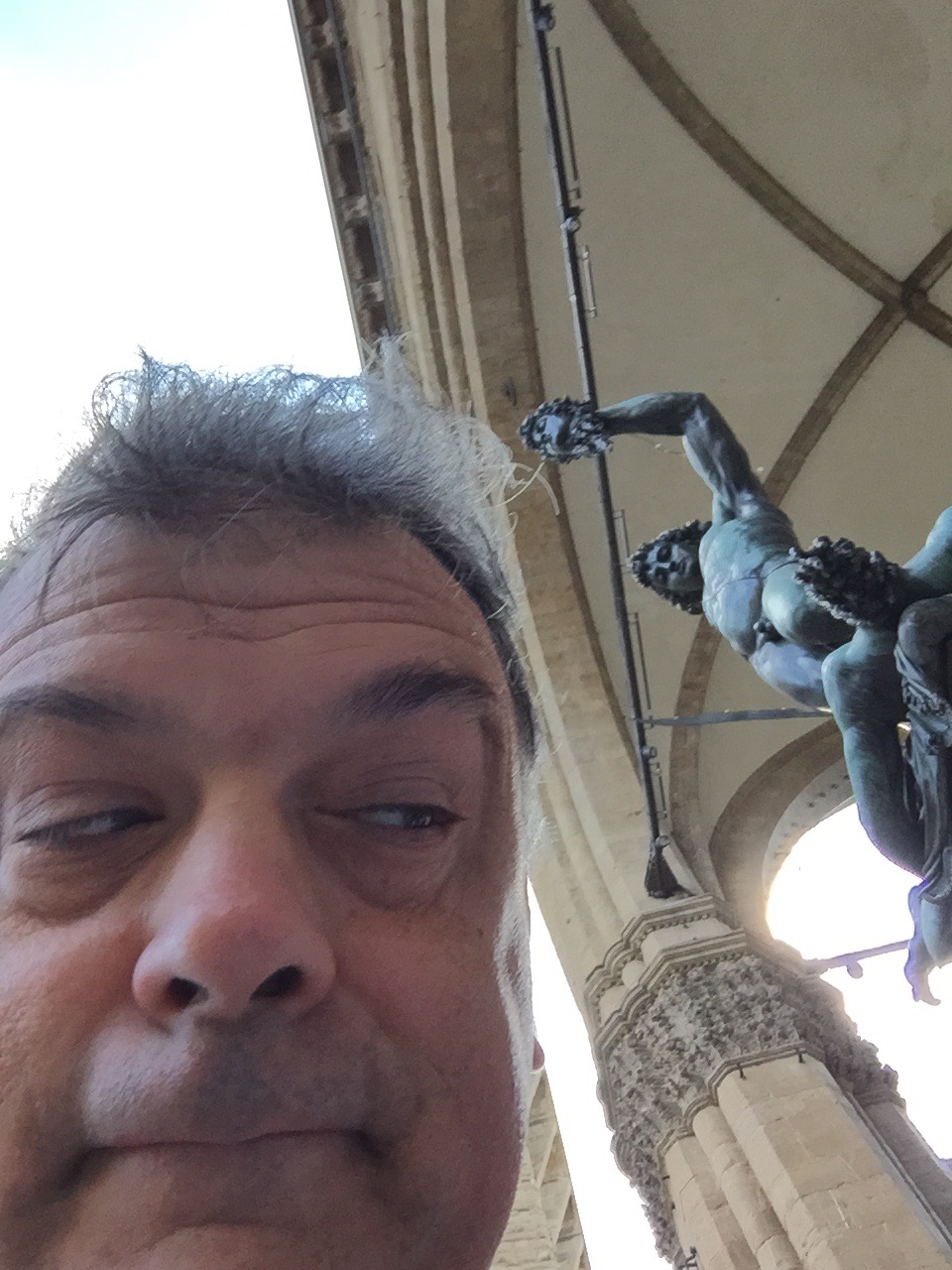
Me and Doctor Freud know what you’re up to with the position of that harpe, Benvenuto!
This sight of Medusa’s head makes the spectator stiff with terror, turns him to stone. Observe that we have here once again the same origin from the castration complex and the same transformation of affect! For becoming stiff means an erection. Thus in the original situation it offers consolation to the spectator: he is still in possession of a penis, and the stiffening reassures him of the fact.
And it doesn’t improve from different angles, you Mannerist old pervert.


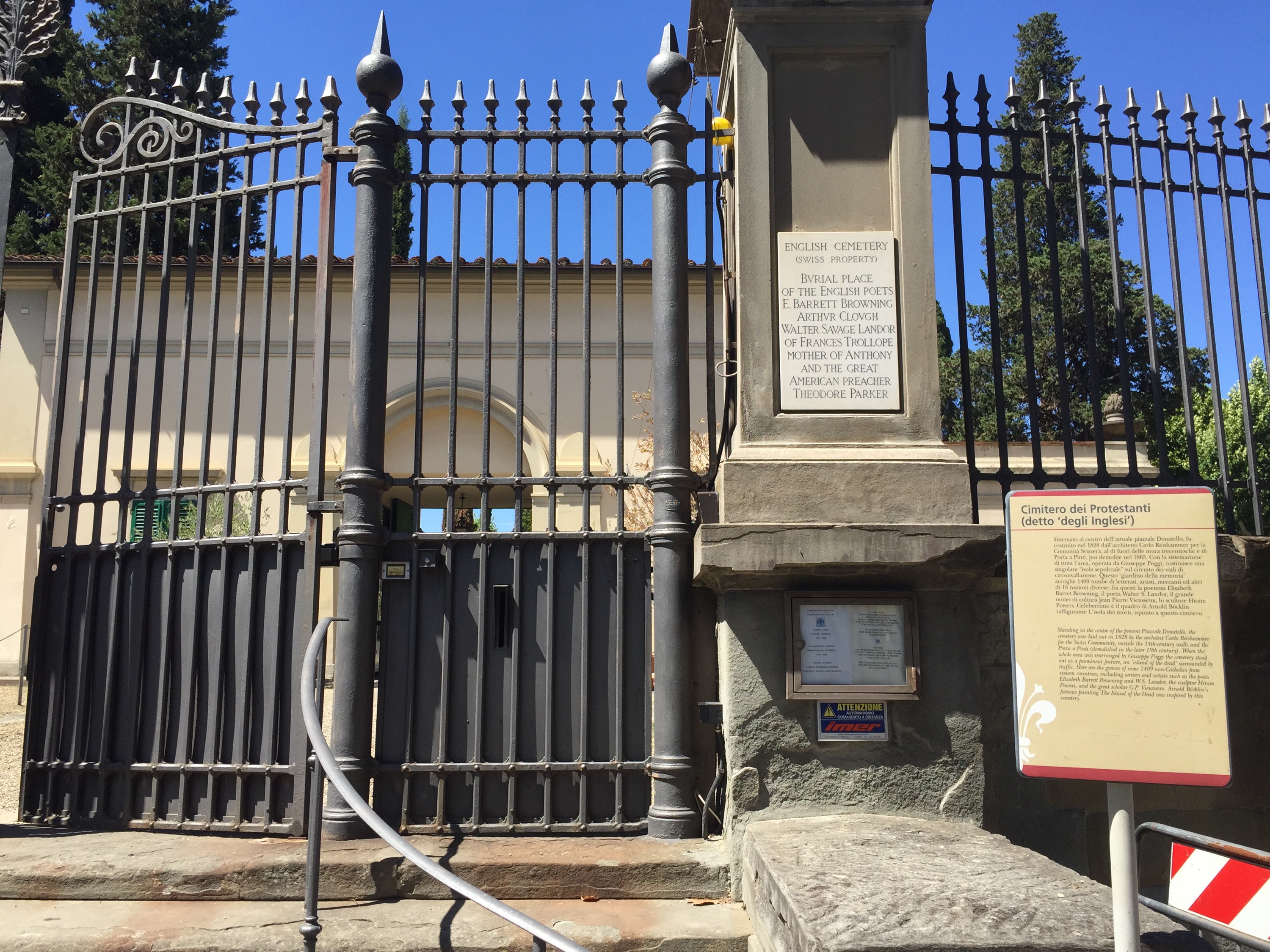
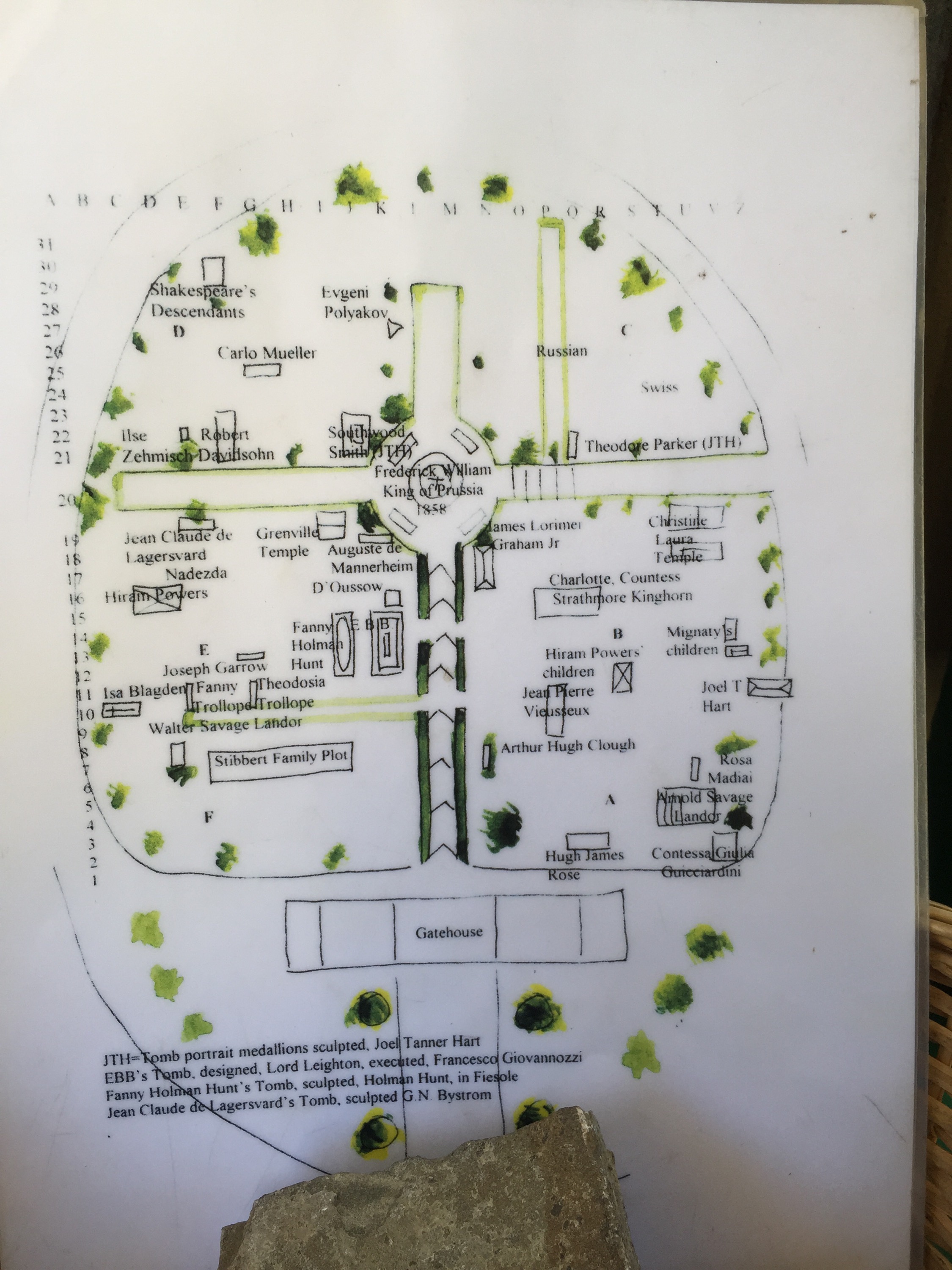
I went up to the English Cemetery on Piazzale Donatello this afternoon to look at the tombstone of Theodore Parker. It’s a bit of a misnomer, Cimitero Inglese, as it’s really a graveyard for Swiss Protestants. But it is the final resting place of numerous Anglo-American ex-pats, like Robert and Elizabeth Barrett Browning, Henry Adams, Margaret Fuller, and the person I was looking for, Theodore Parker.
Although I now live in the South, I grew up in Boston. In fact ,the neighborhood I come from was West Roxbury, where, right in the middle of town, is a statue of Theodore Parker, in front of the Unitarian Church where he preached for many years. He is seated, holding the Bible, and has been looking out on Centre Street since the statue’s erection in 1902. His visage was one I saw nearly every day for my whole youth. There was a bus-stop I got off at right in front of Parker, and my dentist’s office was across from the church. For most of my youth, the statue was covered in verdigris, but at a certain point it was cleaned up and made presentable.
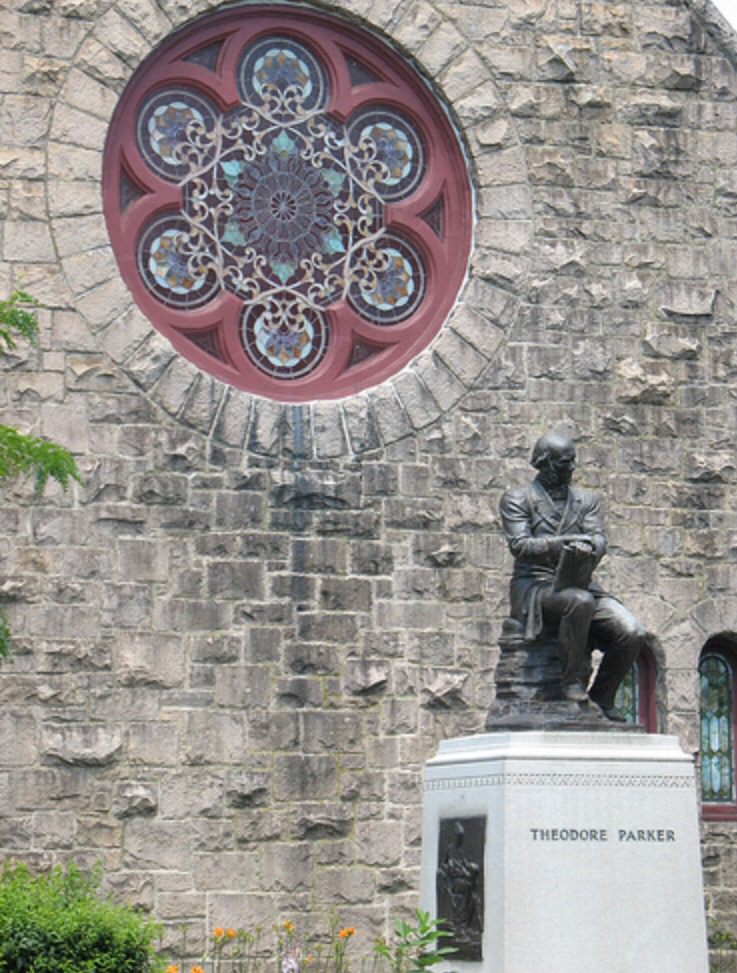 Among everyone I knew in West Roxbury, Parker was a great unknown. Tha tells you a lot about the characer of the neighborhood, which had become largely Catholic as the 20th century progressed–we knew nothing about the large stone Protestant churches in the vicinity. Still, Parker’s name is not so well known in our time, which is too bad because in his own day, he was a giant. A forceful opponent of slavery, he preached fiery sermons that electrified the abolitionist movement. Parker’s way with words influenced both the Gettysburg Address (it was Parker who has coined the phrase “of the people, by the people, and for the people”) as well as Martin Luther King, Jr. (again, Parker first said, “I do not pretend to understand the moral universe; the arc is a long one, … And from what I see I am sure it bends towards justice”).
Parker’s career was a rocky one, given his principles, and his family life was not so placid either. In 1859, he left for Italy to recuperate with his friends, the Brownings, but developed tuberculosis after a short time and died in Florence. Of his death and burial, New York Times (September 5, 1860) noted that a “simple, but tasteful monument had been put up at the grave,” which would later be replaced with a finer one by William Wetmore Story, one featuring Parker’s profile with a beard–very jarring to me, who knew his clean-shaven face from the West Roxbury statue.
“The first thing Mrs. Douglass and I did, on our arrival in Florence,” writes Frederick Douglasss in his Life and Times, “was to visit the grave of Theodore Parker … The brave stand taken by Theodore Parker during the anti-slavery conflict endeared him to my heart, and naturally enough the spot made sacred by his ashes was the first to draw me to its side. He had a voice for the slave when nearly all the pulpits of the land were dumb. Looking upon the little mound of earth that covered his dust, I felt the pathos of his simple grave. It did not seem well that the remains of the great American preacher should rest thus in foreign soil, far away from the hearts and hands which would gladly linger about it and keep it well adorned with flowers.”
I thought, while I was in Florence, I should go and have a look at his tomb, if only to pay homage to a great man who did so much to make our own age a little more just. So, earlier today, just after spending time at the Museo Archeologico, over to Piazzale Donatello I went. The main-door of the cemetery was slightly ajar, so I let myself in. In fact, there is a pretty good website kept for the Cimitero Inglese by another Anglo-American ex-pat, Julia Bolton Holloway, so Parker’s grave was not hard to find. What I found, however, was really quite shocking.

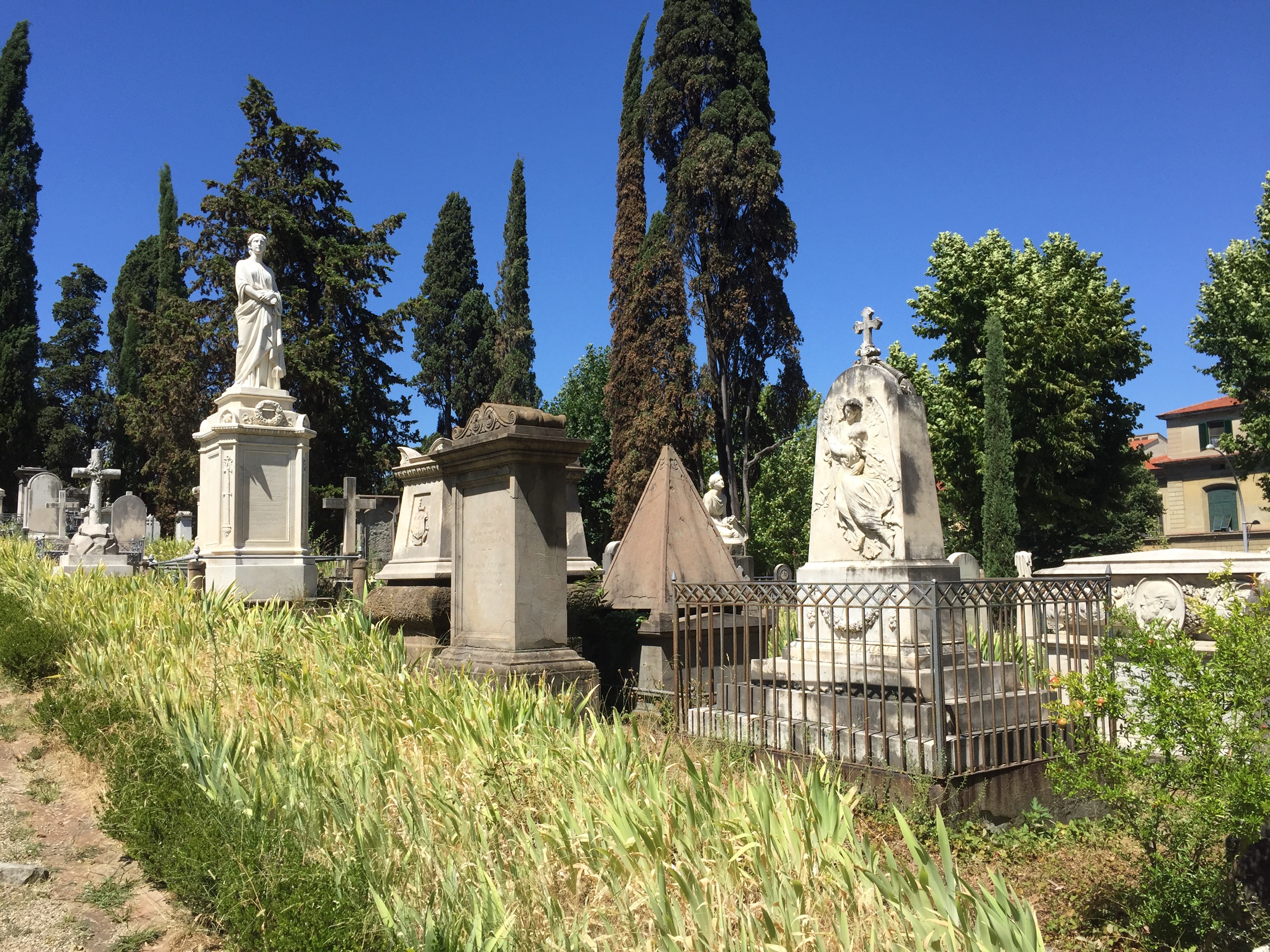
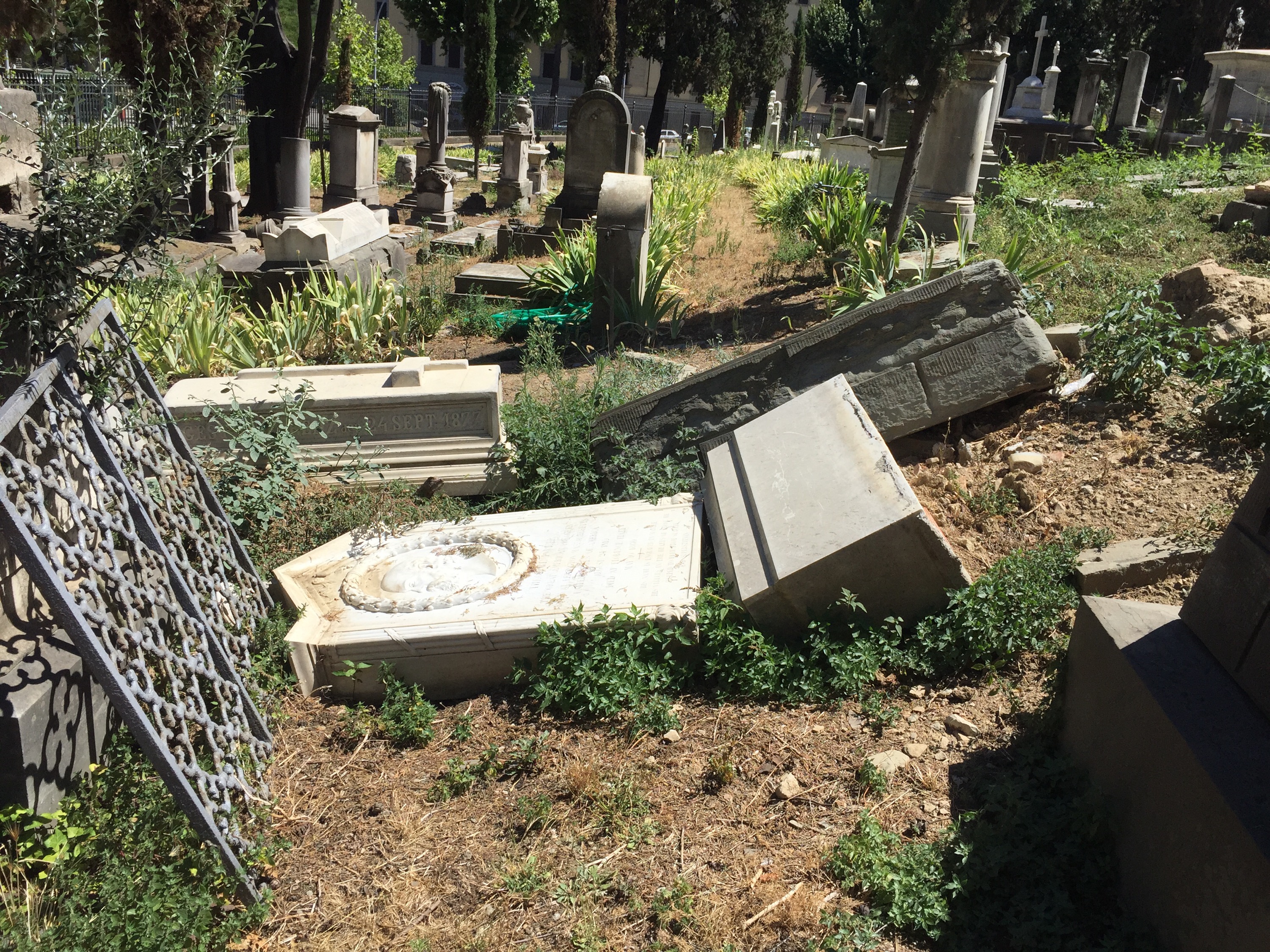
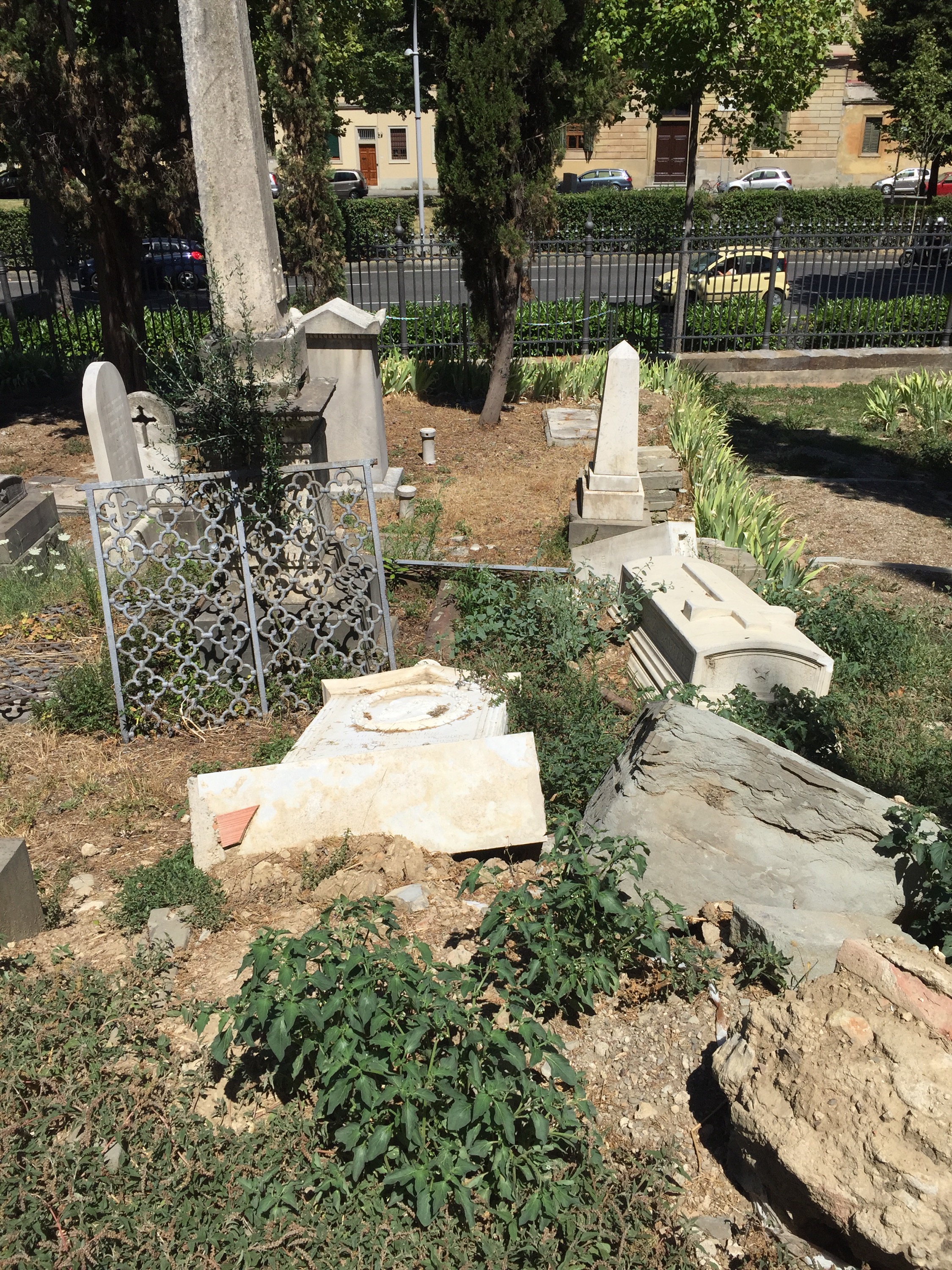

As you can see, Parker’s stone has fallen over and looks to have broken at the base. The area all around it is overgrown and disheveled. I suppose none of this should bother me– didn’t I spend the whole afternoon trolling around among Etruscan sepulchres and grave goods all displaced from their final resting places?– but somehow it does.
Parker was a great man, a true and unfaltering voice for human liberty. The cemetery is maintained privately, and clearly does not have the funds for maintenance of one of the most important monuments it houses. I have written to Dr. Holloway, and hope to hear back from her. Perhaps I should contact the Unitarian Church, or the West Roxbury Historical Society. People i know in Sewanee have restored stones in old graveyards before, and perhaps will have thoughts. I guess I’m just not ready for it to be a ruin.
A Room with a View … and Voices
I’ve arrived to the Istituto Gould, where I’m staying in Oltrarno. It is a Waldensian institution, that is, a pre-Reformation Protestant sect that was mercilessly treated by the Church, despite their piety and devotion to Scripture. Indeed, a New Testament is prominently displayed in the room. There’s a courtyard attached to the school, both of which are off-limits to those of us in the guesthouse. Children play in the area below my winodw, and its quite charming. While there are cheaper hostels in the neighborhood (Santa Monaca, for instance, where I am going to hear some opera later tonight), Istituto Gould is private and pretty affordable by American standards.
Next door, a young American woman is talking with her window open about her love life. Brayingly, she is saying things like, “I am sick of youre bullshit” and “Yeah, well, I slept with someone else too while you were away” and “”Fuck you, you’re not even a good friend” and “I *AM* sharing my feelings, you asshole.” Is Florence actually Spring Break in Tuscany? #eavesdropping
I could choose not to set up my blogging operation by the window, I suppose, but this is the view:

Postscript.

My immediate impression of Florence, to which I have not been since I was twenty, is that it’s much less filthy than Naples and Rome, and being smaller, far more crowded with tourists. The food is not as good but it is more expensive. But throughout the city there are these free Wifi points, which would just not be possible further south.
The bells ring at eight AM from a few area churches, a lovely way to start the morning.
A Chapel and a Museum without Pity
Bright and early, I set out for coffee and a croissant, and then to the number one thing on my list, the Brancacci Chapel. I’m first in line, and rush in to see Massacio’s frescoes, which are bit as wonderful as I thought they’d be. The Expulsion from Eden is powerful, and has done as much to form modern conceptions of the Fall as as any theological work– Genesis doesn’t say that Adam and Eve wept, but here their mourning, and their nakedness, is overwhelming. It is interesting to see it in context, for they are heading toward the altar. Beside the Expulsion is the famous Tribute Money scene, which I’ve posted on before. Its great tose the look of surprise on Peter’s face when he’s told to get the money from a fish. Hey, youre a fisherman, right. I love his groovy gray afro, too. His finger and Christ’s point to the lake, but also across to Adam and Eve, perhaps suggesting that the price for their sin will also be paid for.
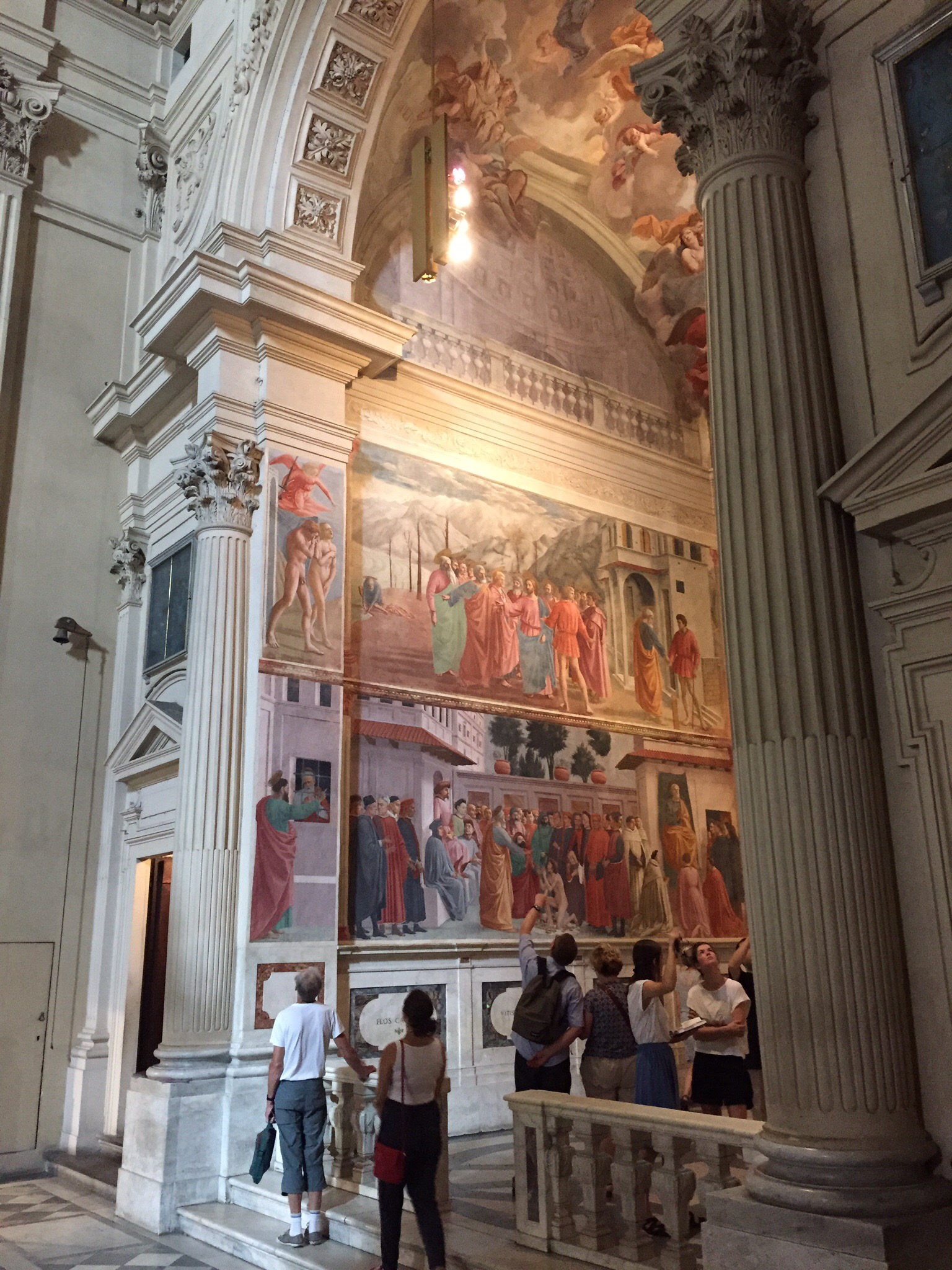

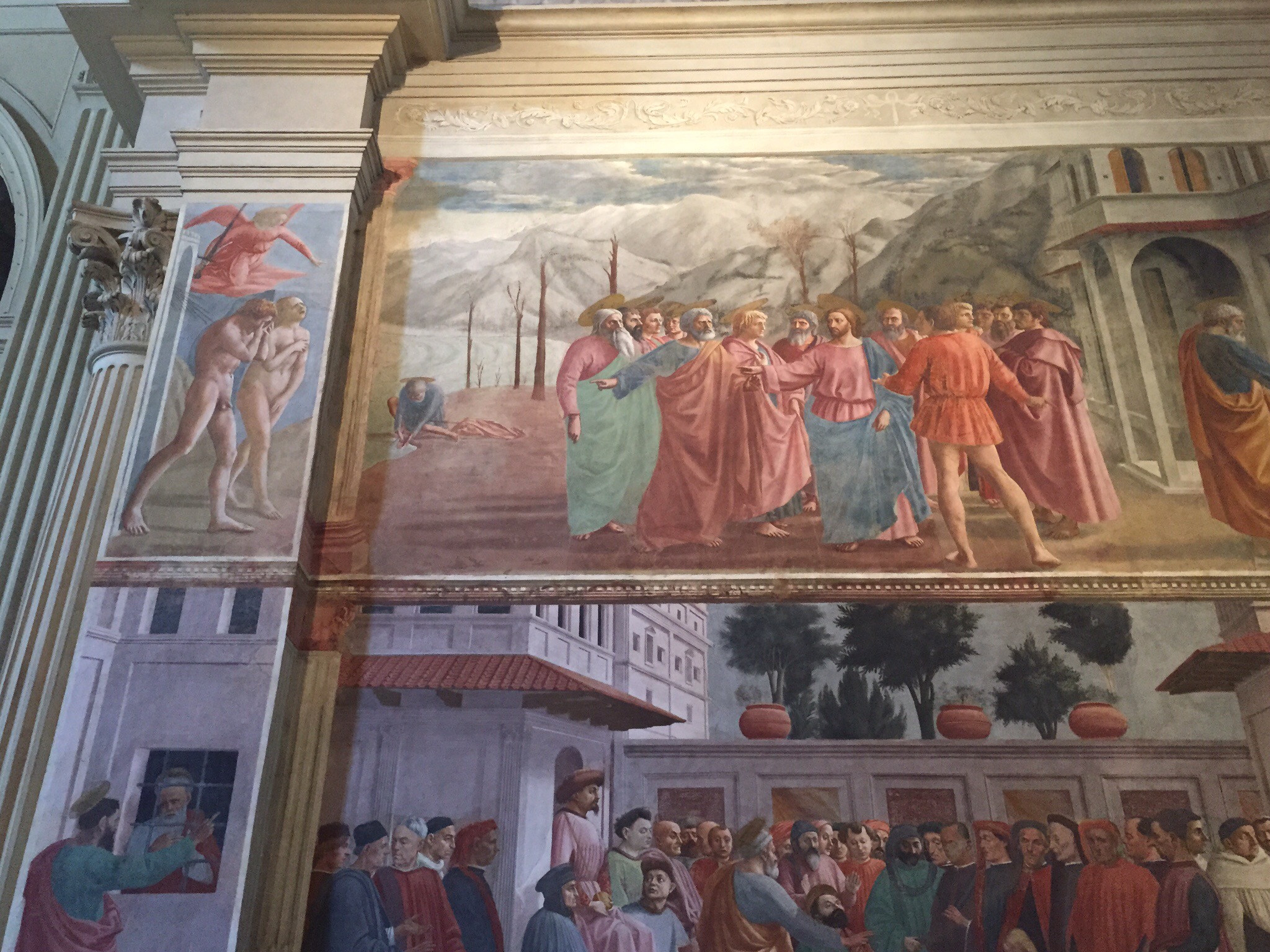
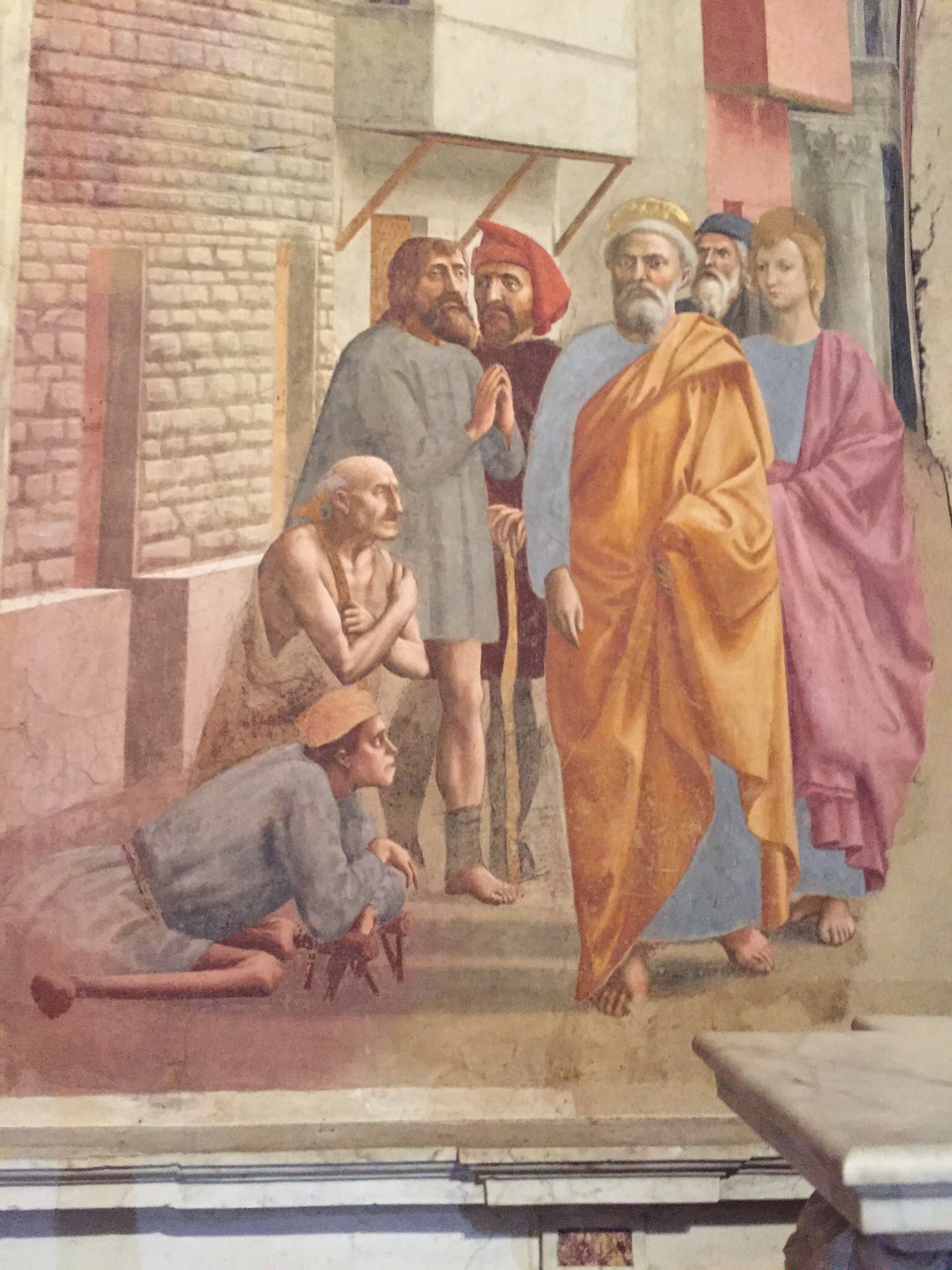
Also in the chapel are scenes of Peter curing a crippled man with his shadow, and healing the emperor’s son.

I make my way


 uncomelyandbroken