
-
Recent Posts
Recent Comments
Archives
- March 2026
- November 2025
- December 2024
- April 2024
- October 2021
- February 2021
- September 2020
- July 2020
- June 2020
- May 2020
- April 2020
- March 2020
- January 2020
- August 2019
- July 2019
- June 2019
- May 2019
- April 2019
- March 2019
- February 2019
- January 2019
- December 2018
- November 2018
- October 2018
- July 2018
- June 2018
- May 2018
- April 2018
- March 2018
- February 2018
- November 2017
- October 2017
- September 2017
- August 2017
- April 2017
- February 2017
- October 2016
- September 2016
- May 2016
- April 2016
- March 2016
- February 2016
- January 2016
- November 2015
- October 2015
- September 2015
- August 2015
- July 2015
- June 2015
- April 2015
- March 2015
- February 2015
- January 2015
- December 2014
- November 2014
- October 2014
- September 2014
- August 2014
- July 2014
- June 2014
- May 2014
- April 2014
- March 2014
- February 2014
- January 2014
- December 2013
- November 2013
- October 2013
- September 2013
- August 2013
- July 2013
- June 2013
- April 2013
- March 2013
- February 2013
- January 2013
- December 2012
- November 2012
- October 2012
- September 2012
- August 2012
- July 2012
- June 2012
- May 2012
- April 2012
- March 2012
- February 2012
- January 2012
Categories
- AI
- Animals
- Astronomical
- Bible
- Birds
- Books
- Boston
- Cartoons
- Cemeteries & Funerals
- Classics
- Coal
- Dogs
- Drama
- Education
- Emblems
- England
- Family
- Film
- Florence
- Ireland
- Italy
- Language & Etymology
- Military
- Music
- Mythology
- Nautical
- New England
- Numismatics
- Oxford
- Poetry
- Pontius Pilate
- Race
- Rivers
- Rome
- Saints
- Scotland
- Sewanee
- Slavery
- Sports & Games
- Statues & Monuments
- Tennessee
- The South
- Time
- Trees & Flowers
- Uncategorized
Meta
Protected: Liddell & Scott, A Little About Both
Posted in Classics, Emblems, Oxford, Statues & Monuments
Enter your password to view comments.
Like a Fawn

My son and I saw two deer on the Sewanee bike-path this morning, and it reminded me of a Horatian ode. We were barreling along when a doe crossed far ahead of us. As we got closer, a younger deer suddenly appeared and, seeing us, scrambled after its mother. We laughed and pedaled on, but a few Latin lines began to buzz around in my head.
Now I love Horace, as do most classicists, and one of my married colleagues has even referred to him as “the other man in her life.” As it happens, though, I don’t teach him all that often, and when I do, it’s usually the “greatest hits” in translation. But the poem that came to mind on the bike-path–Ode 1.23, Vitas Hinuleo– is an old friend, so to speak, one I recall studying in high school. In fact, my senior year, I won a medal for my translation of it.
I no longer have the medal, and I can barely remember my version of it. A few of my lines were coming back to me on the bike, though, and making me wince. At any rate, Horace’s poem is below, with a translation following, and after that, some cursory discussion.
Horace, Odes 1.23
Vitas hinuleo me similis, Chloe,
Quaerenti pavidam montibus aviis
Matrem non sine vano
Aurarum et silvae metu.
Nam seu mobilibus veris inhorruit
Adventus foliis, seu virides rubum
Dimovere lacertae,
Et corde et genibus tremit.
Atqui non ego te tigris ut aspera
Gaetulusve leo frangere persequor:
Tandem desine matrem
Tempestiva sequi viro.
Like a Fawn
Like a fawn you avoid me, shy Chloe, a young one
alongside her mother, astray in the hills,
whom the rustle of leaves or the sight of a lizard
in the first flush of spring is enough to give chills.
Both your knees and your heart are for some reason trembling.
You presume me a predator, falsely, and hide
as though from a lion, and run to your mother,
yet you’re ready for love and should come from her side.
One of the things I have always liked about Horace is the way he creates these interesting personae in even his shortest poems. The speaker here has his eye on Chloe and is filled with unconvincing reassurances about his intentions. He likens her to a young deer seeking a mother’s protection, and only half-heartedly denies his own comparison to a beast of prey. In the Latin, Atqui non ego te tigris ut aspera / Gaetulusve leo frangere persequor more literally means “And I, not like a tiger or Gaetulian lion, chase to break you.” Yikes. Even the simple natural images of the wind in the leaves and skinks in the shrubs are suspect. Springtime simply seems spooky in Chloe’s world.
I feel fairly certain that none of this was brought out in my high school Latin class, and if it had been, I am equally certain I was incapable of understanding it. But beneath Horace’s charming imagery, this courtship poem has an unmistakable predatory quality. I was glad to have a reason to re-visit the poem. “Animals are good to think with,” as Claude Lévi-Strauss once said.
Posted in Boston, Poetry, Sewanee
8 Comments
“Naked We Stand on the Naked Ground”
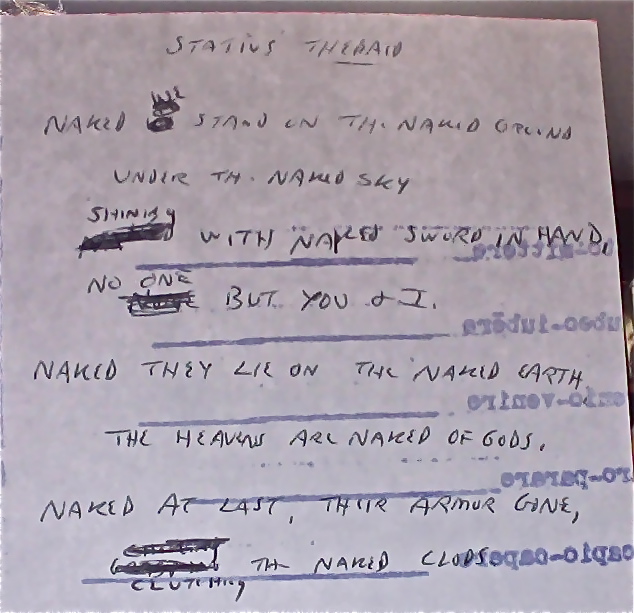
I have been cleaning out my office and found this item among some papers I had inherited when I became chair. It is poem about Statius’ Thebaid by my former colleague and well-loved Sewanee Classics professor, Bill Bonds. It is scrawled on the torn-off corner of an old mimeographed quiz.
Naked we stand on the naked ground
Under the naked sky.
Shining with naked sword in hand,
No one but you and I.Naked they lie on the naked earth;
The heavens are naked of gods.
Naked at last, their armor gone
Clutching the naked clods.
If you don’t know the Thebaid, let me just say it is a rhetorically sophisticated and completely bleak epic from the time of the tyrannical emperor Domitian. Bill spelled out his thoughts more fully in a scholarly article (“Two Combats in the Thebaid,” Transactions of the American Philological Association, Vol. 115 [1985], pp. 225-235). In fact, I found Bill’s poem among his notes for this article. If you knew Bill, you will understand why this brilliant and unsentimental work appealed to him.
Posted in Classics, Military, Poetry, Sewanee
6 Comments
Protected: Concerning Flowers and Soldiers
Posted in Classics, Emblems, Military, Mythology, Statues & Monuments, Trees & Flowers
Enter your password to view comments.
Leda in the News
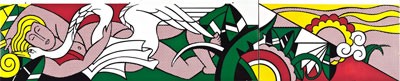
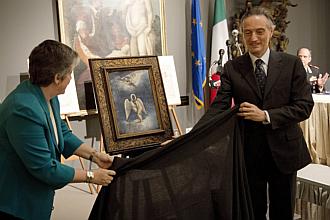
In connection with a recent auction at Sotheby’s, there’s a piece on the arte10 website today about the colored steel panels of Leda and the Swan that pop artist Roy Lichtenstein made for the bathroom in gazillionaire Gunter Sachs’s penthouse in 1968. It’s a lot more decorous than the depiction of the myth by Derrick Santini that London police took exception to last month, claiming it “condoned bestiality, which [is] an arrestable offence.” You can look it up and decide for yourself. Also in April, a stolen Renaissance oil painting of the same subject by Lelio Orsi was returned by U.S. Homeland Security to Italy. It had previously sold at auction for $1.6 million but I have to say that I like Lichtenstein’s Leda better than this one, too.
Posted in Classics, Mythology
Leave a comment
The Hills of Sewanee
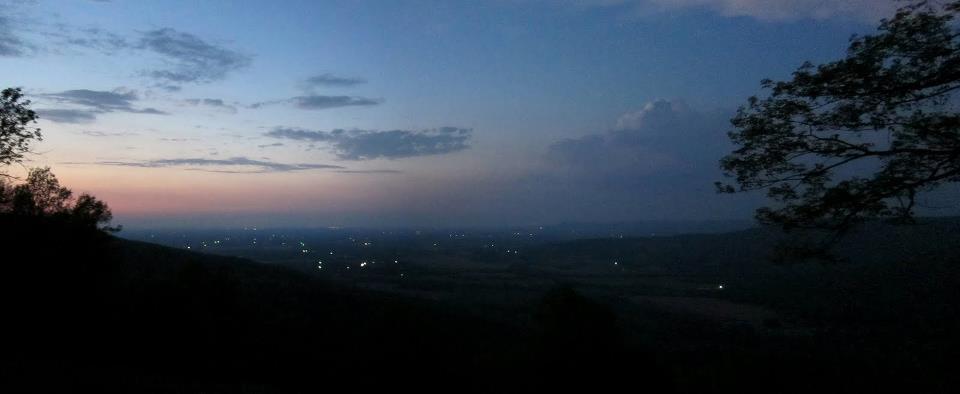
The Hills of Sewanee
Sewanee Hills of dear delight,
Prompting my dreams that used to be,
I know you are waiting me still to-night
By the Unika Range of Tennessee.
The blinking stars in endless space,
The broad moonlight and silvery gleams,
To-night caress your wind-swept face,
And fold you in a thousand dreams.
Your far outlines, less seen than felt,
Which wind with hill propensities,
In moonlight dreams I see you melt
Away in vague immensities.
And, far away, I still can feel
Your mystery that ever speaks
Of vanished things, as shadows steal
Across your breast and rugged peaks.
O, dear blue hills, that lie apart,
And wait so patiently down there,
Your peace takes hold upon my heart
And makes its burden less to bear.
— George Marion McClellan (1860-1934)
From The Path of Dreams, Louisville: John P. Morton Co., 1916
Reprinted in The Book of American Negro Poetry, ed. James Weldon Johnson. New York: Harcourt Brace, 1922.
I will admit that I have never heard of this poem before, much less read it. This astounds me. McClellan’s reference to “The blinking stars in endless space, / The broad moonlight and silvery gleams,” touches closely on an observation of my own made recently and yet, I swear, I only saw the poem two days ago.
Who was George Marion McClellan (pictured above)? Here’s what the Poetry Foundation website has to say about him:
Born in Belfast, Tennessee, the minister, teacher, writer, and poet George Marion McClellan received a BA and an MA from Fisk University and a bachelor of divinity from Hartford Theological Seminary. He married Mariah Augusta Rabb in 1888 and served as a minister in a Nashville, Tennessee, Congregational church from 1892 to 1894.
After his time as a minister, McClellan pursued a career as a teacher and principal at schools in Louisville and Los Angeles. A difficult period in his personal life followed the death of one of his sons and was further complicated by financial difficulty, marital conflict, and a sense of alienation fostered by a society divided sharply along racial lines.
McClellan’s poetry, composed from the 1880s onward, shows a sensitive ear to meter and rhyme and addresses religion, nature, and romantic love while only occasionally revealing an emotional struggle against racial discrimination. He is perhaps best remembered for his blank-verse epic, “The Legend of Tannhauser and Elizabeth.”
McClellan published two collections of poetry: Poems (1895), which was retitled Songs of a Southerner in 1896, and The Path of Dreams (1916). A favorable review of his work, comparing his skill to that of Paul Laurence Dunbar, appeared in the New York Times after his poetry was included in a 1901 exhibit at the Pan-American Exposition.
African-American poetry of this period is surely no forté of mine, but if anybody knows more about McClellan, I’d be interested to hear.
Postscript, September 2017. Still no real reaction to this post. A little further digging: At the end of the introduction of his first collection of privately-printed poems (a section called “Race Literature”), McClellan writes,
Aside from the history of our emancipation and the hardships of our enslavement, of what subjects have we to sing to make a literature peculiarly native to us? To produce a Negro literature, we must have time to produce song-material, as well as singers. In this little attempt of mine I have not tried to sing Negro songs purely, but songs of beautiful landscapes, wherever I have seen them, and felt song-inspired by them, or of touches of human loves and feelings, as I have felt them. McClellan, George Marion. Poems (Nashville: A.M.E. Church Sunday School Union, 1895) 10
The poem to the Hills of Sewanee is evidently among those he was song-inspired to write.


 uncomelyandbroken