
-
Recent Posts
Recent Comments
Archives
- March 2026
- November 2025
- December 2024
- April 2024
- October 2021
- February 2021
- September 2020
- July 2020
- June 2020
- May 2020
- April 2020
- March 2020
- January 2020
- August 2019
- July 2019
- June 2019
- May 2019
- April 2019
- March 2019
- February 2019
- January 2019
- December 2018
- November 2018
- October 2018
- July 2018
- June 2018
- May 2018
- April 2018
- March 2018
- February 2018
- November 2017
- October 2017
- September 2017
- August 2017
- April 2017
- February 2017
- October 2016
- September 2016
- May 2016
- April 2016
- March 2016
- February 2016
- January 2016
- November 2015
- October 2015
- September 2015
- August 2015
- July 2015
- June 2015
- April 2015
- March 2015
- February 2015
- January 2015
- December 2014
- November 2014
- October 2014
- September 2014
- August 2014
- July 2014
- June 2014
- May 2014
- April 2014
- March 2014
- February 2014
- January 2014
- December 2013
- November 2013
- October 2013
- September 2013
- August 2013
- July 2013
- June 2013
- April 2013
- March 2013
- February 2013
- January 2013
- December 2012
- November 2012
- October 2012
- September 2012
- August 2012
- July 2012
- June 2012
- May 2012
- April 2012
- March 2012
- February 2012
- January 2012
Categories
- AI
- Animals
- Astronomical
- Bible
- Birds
- Books
- Boston
- Cartoons
- Cemeteries & Funerals
- Classics
- Coal
- Dogs
- Drama
- Education
- Emblems
- England
- Family
- Film
- Florence
- Ireland
- Italy
- Language & Etymology
- Military
- Music
- Mythology
- Nautical
- New England
- Numismatics
- Oxford
- Poetry
- Pontius Pilate
- Race
- Rivers
- Rome
- Saints
- Scotland
- Sewanee
- Slavery
- Sports & Games
- Statues & Monuments
- Tennessee
- The South
- Time
- Trees & Flowers
- Uncategorized
Meta
Protected: Goodbye Little Yellow House
Posted in Dogs, Family, Sewanee, Trees & Flowers
Enter your password to view comments.
Rebel’s Rest: Com’era, Dov’era?
I wrote the following post on July 30, but decided not to post it publicly, as it seemed (for lack of a better word) incendiary. But as the two postscripts indicate, perhaps now is a good time to raise the issues.
When the four-hundred year-old bell-tower of St. Mark’s Basilica in Venice collapsed in 1902, the city council voted to restore the famous monument com’era, dov’era, “as it was, where it was.” It took some time, but a decade later, a replica tower rose on the very spot of the sixteenth-century original.
Last week, one of the oldest buildings on the Sewanee campus caught fire. Rebel’s Rest, built in 1866, had been the home of Major George Fairbanks, and stood on the site where the house had stood of University founder, Leonidas Polk, Bishop of Louisiana and Confederate Brigadier Lieutenant General. Its name, “Rebel’s Rest,” is a conscious, intentional allusion to the Civil War. The structure itself, a log cabin with a red roof that wisteria covered in front, had been used for some time as a guest-house. When it caught fire, it had been undergoing renovation.
Part of the first floor was salvaged, as was the charming porch, but the rest is a burnt and water-soaked wreck. Down the street stands the new and palatial Sewanee Inn, with views of the refurbished golf course. It is already, though only open a month or so, a successful going concern.
So, the question arises. What to do with Rebel’s Rest? The University has no need of more hotel space. Most of the original building is destroyed. And, to some, the name is an embarrassment. Located as Rebel’s Rest is at the center of campus, the real estate is the most valuable in all of Sewanee. The student body is growing, and dorm space is a desperately felt need. We have no adequate student union or performance space, and rental housing is at a premium.
Rebel’s Rest. Com’era, dov’era, or not?
Postscript 1, 8/15/14. I took my freshmen in the Finding Your Place program around campus this morning. We were welcomed by Rev. Tom Macfie at All Saints, climbed up Shapard Tower to enjoy the views and an up-close rendition of Jesu, Joy of Man’s Desire. Eventually we would make our way down to Abbo’s Alley, where Louis Rice would greet us warmly.
But between All Saints’ and Abbo’s Alley, we stopped off in front of Rebel’s Rest and sat on the lawn. The acrid smell of burnt wood still hung heavy in the air. I pointed out some of the issues above to them, and shared a few pictures. Then I asked these newly-enrolled first-year students what they thought ought to happen to this site.
Many of them were uncertain. “I stayed here once with my mother,” said one young man. “It was pretty charming. It would nice if they rebuilt it.” Another student pointed out that it would be a replica–it could look like the same buiding, but it would never be the same building. “I don’t like the idea of re-producing it,” one of my female students remarked. “This is the middle of campus. I think a student center should go here, not some outdated symbol of the past.” As we walked away, another student caught up to me to say that part of the reason he’d come to Sewanee had to do with the school’s “sense of tradition,” but he wasn’t sure if rebuilding Rebel’s Rest would be “real or kinda Disney.”
Postscript 2, 8/27/14. Vice-Chancellor McCardell addressed this issue in his remarks opening the new school year yesterday at All Saints. As he noted,
This is probably as good a place as any to provide an update on Rebel’s Rest. All of us were disheartened, to say the least, by the terrible fire that engulfed so much of this beloved, iconic building in late July. Though I know the wait is frustrating and the desire for more news understandable, we are still awaiting final reports from the several investigators engaged to determine cause and extent of damage. The preliminary reports, however, suggest that, while more of the old building has been saved than any of us might have expected – this thanks to the skill of the Sewanee Fire Department – the likelihood of our reconstructing Rebel’s Rest in its old form is becoming increasingly remote. For one thing, any new or renovated building on the site would need to comply with building code requirements. Thus, even if we desired to replicate the old building, we would be prohibited from doing so. For another, the fire appears to have rendered dangerously unstable much of the exterior walls, to the point where they would be unlikely to support, in their present condition, anything we might decide to build within them.
Yet there is likely to be much that is salvageable. And I have been overwhelmed by suggestions of what might be done on the Rebel’s Rest site. On the first point, we are likely to begin soon a very careful removal of what is still standing. We will mark it; we will store it safely; and we will incorporate it into whatever building may rise on that site. On the second point, I am persuaded that any decision about what might be done as a successor building should not be made in haste. This will surprise some and possibly disappoint many, even those of an otherwise conservative disposition whose inclination is more often to allow plenty of time to make careful decisions. And so we will take our time. We will welcome, and consider, many options. The process of sorting through those options and recommending next steps will be inclusive and transparent. No one of us, or group of us, has a premium on the wisdom required to make the right decision for the University. So I ask you to be patient, please, and I promise that we will communicate regularly as we learn more.
Sewanee Convenience Center Hours
According to the Franklin County (TN) Solid Waste website:
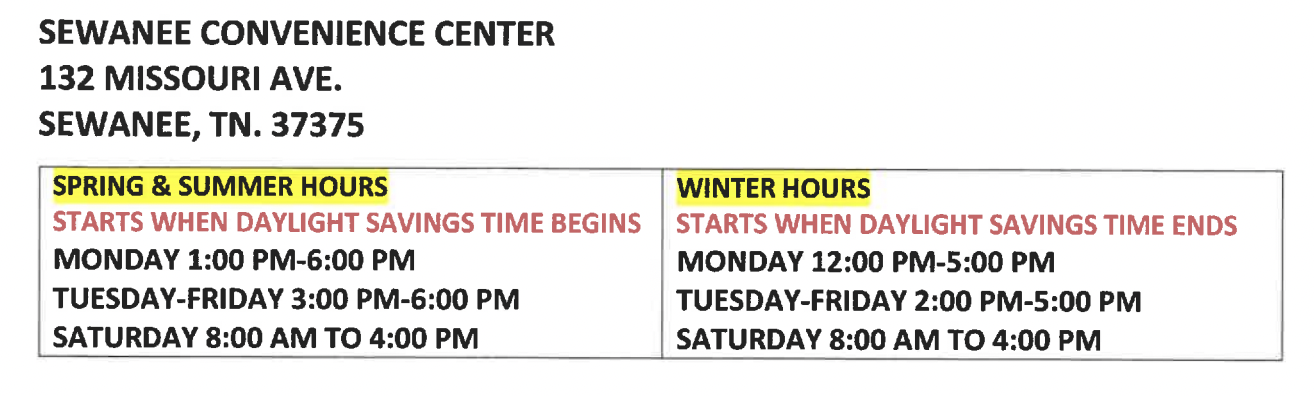
I guess the CST/CDT changes account for the tape on the sign.
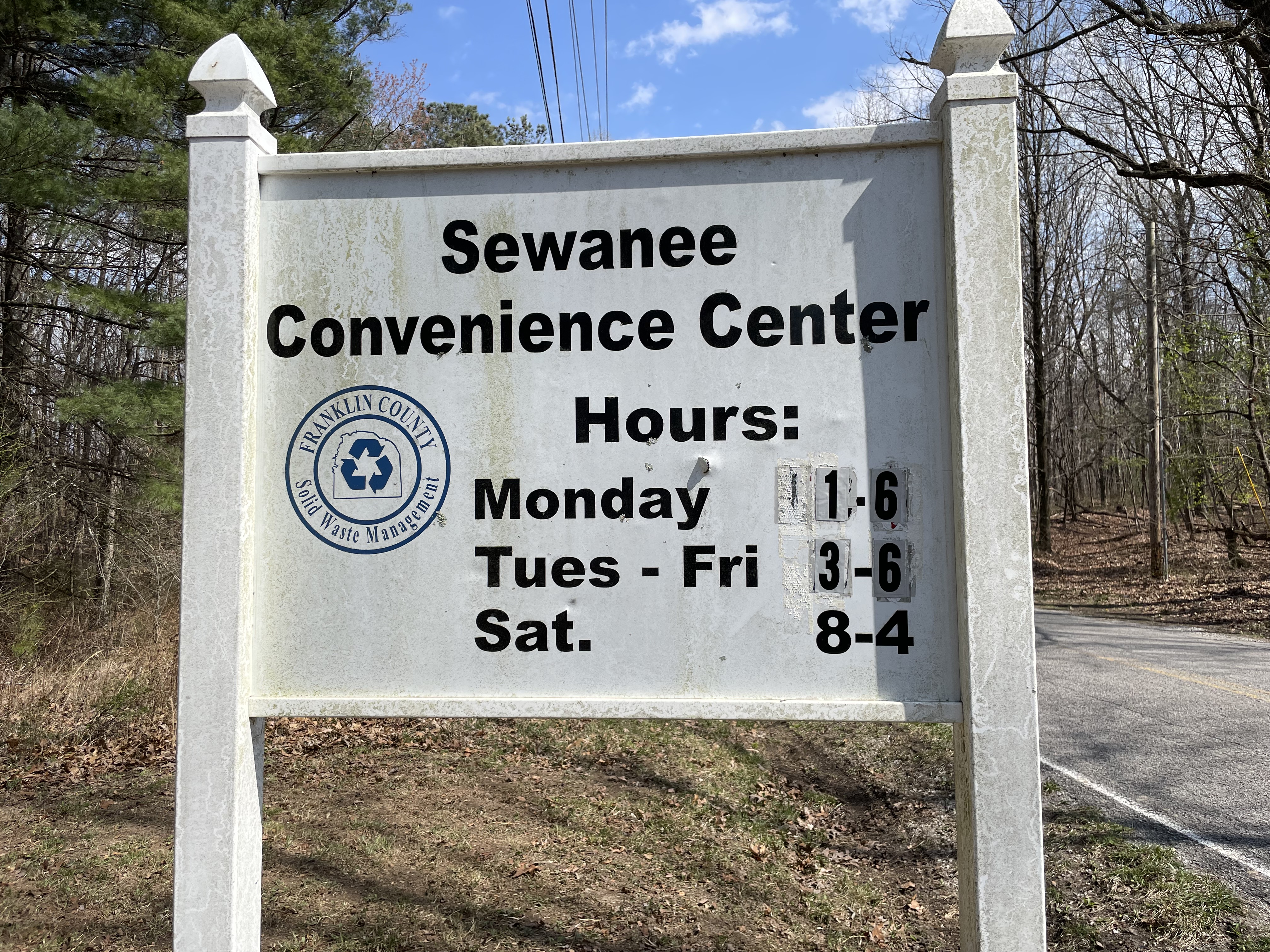
As the hours are hard to find online elsewhere, here you go.
(Current as of March 2023)
OK, the new hours, as far as I can decipher them are
Monday 1-6
Tues – Fri 3-6
Sat. 8-4
***
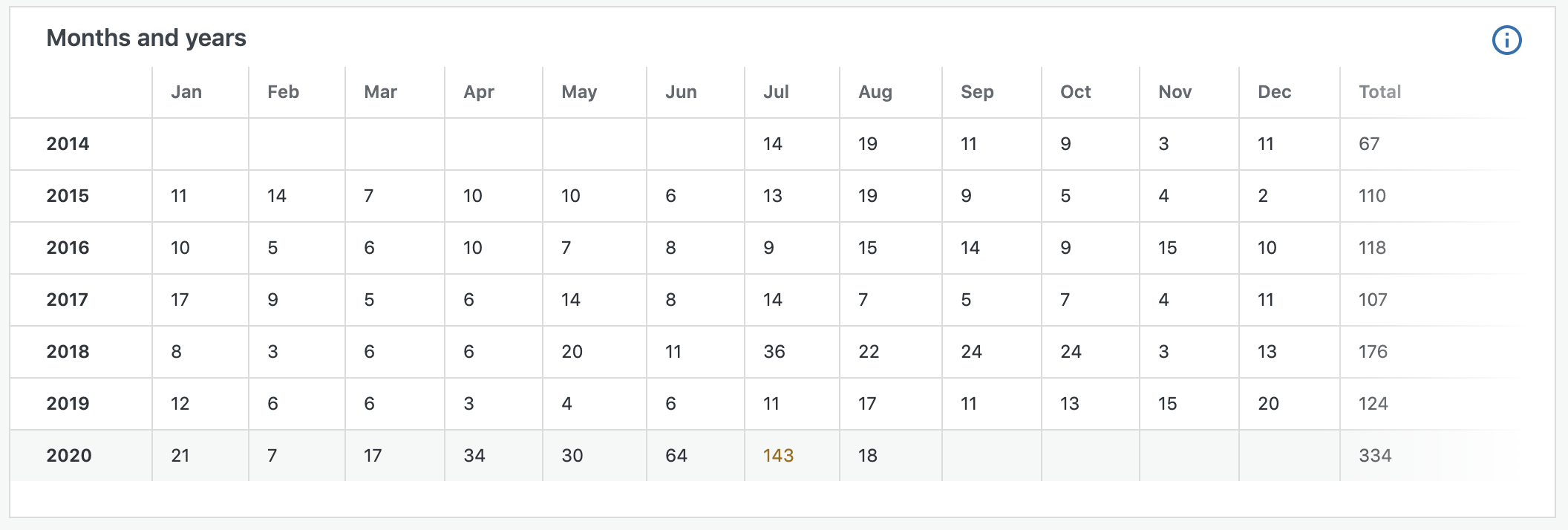
Alright, so I checked the stats on this particular post today, August 6, 2020. My conclusion? Y’all are doing a LOT more recycling during the COVID-19 quarantine.
Posted in Sewanee
Leave a comment
The Fire at Rebel’s Rest

A sore back woke me up in the middle of the night and, looking at my iPhone for the time (“1:39”), I saw a post on Facebook of a fire with the caption “rebels rest dammit.” It had been posted about 1 AM; shortly thereafter, another friend posted something similar. Now I was wide awake, and decided I would go up to University Ave to see what was going on.
The pungent odor of fire was faint in my neighborhood and covered by a far stronger smell of skunk which receded as a I got closer to the University. Mindful of my wife’s remark, You’ll just be in the way, I parked by the bookstore and walked up to Convocation Hall. The odor was stronger now. There were many flashing lights but, with all the sirens off, the scene was oddly quiet. Small groups of people were gathered on the sidewalk though few were talking. The fire was over, but the firefighters were still pouring on water. The worst had passed.
My friend and former student Ryan was there with some other people, alumni now back for the Writers’ Conference. Ryan works at the Inn and had just gotten off duty when he came up–he was still in his uniform. “If you had been here an hour ago,” he said, “you would have thought it was going down. They saved the first floor, and I guess some of the back.” Some had photos on their phones, which I’ve posted below.
I milled around a little more. The building had been undergoing renovation, and evidently the alarms were not on. Someone said that a man walking his dog down University Ave around 11:20 had seen the glow from inside the building. The sprinklers were working, my friend Parker said, and eventually the firefighters had to turn them off when they got in. Chief Marie was there, her efficient and competent self, consulting with them. I saw the VC looking tired and sad.
For many faculty, Rebel’s Rest was the first place they ever stayed at Sewanee. It had a grand old aura about it, a throwback in time. My friend Ted stayed there once and praised its antique feel “without any damn doilies.” Under the wisteria on the front porch, I had had many a lively conversation and good laugh. I remember talking with my friend Jim about Thomas Merton’s Seven Storey Mountain very well. On the back porch, my student Sarah and I were at the bar set up for a Medieval Colloquium reception and when I asked for Chardonnay, she said, “Not you too!” like I’d just contracted smallpox. I recall driving Stanley Crouch up to the front door and much as he wanted to dislike anything with the word rebel in it, the wisteria was just too charming. From this morning’s photos it looks like the wisteria might have survived.
I have myself given a talk or two in the living room, most recently on the emperor Nero, who knew something about fires himself, it occurred to me as I finally walked back to the car. My back was still sore, as was my heart. Some of Major Fairbanks’ old house has been saved, but it will not be the same. Goodbye, Rebel’s Rest, and may you rest in peace.

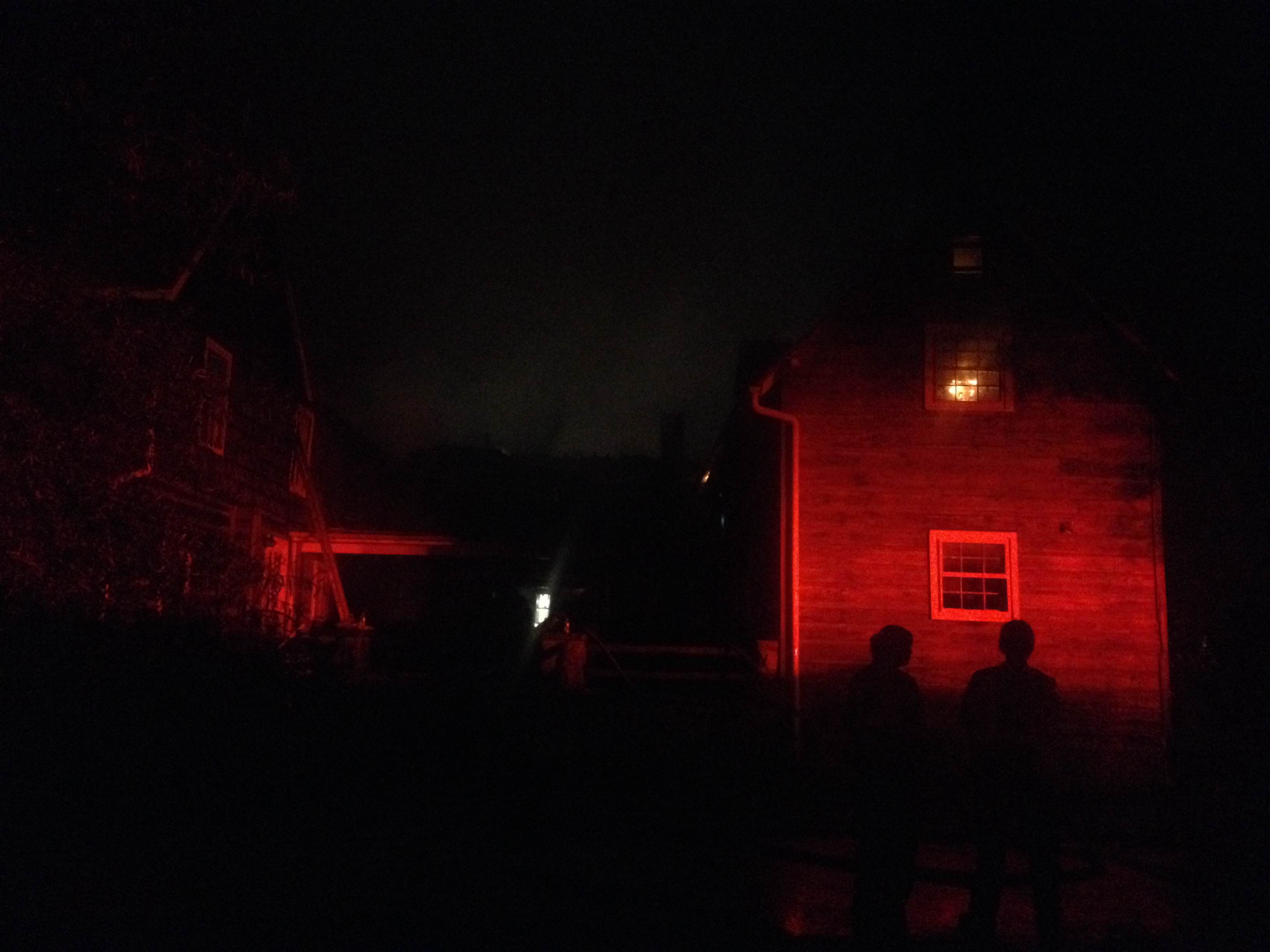
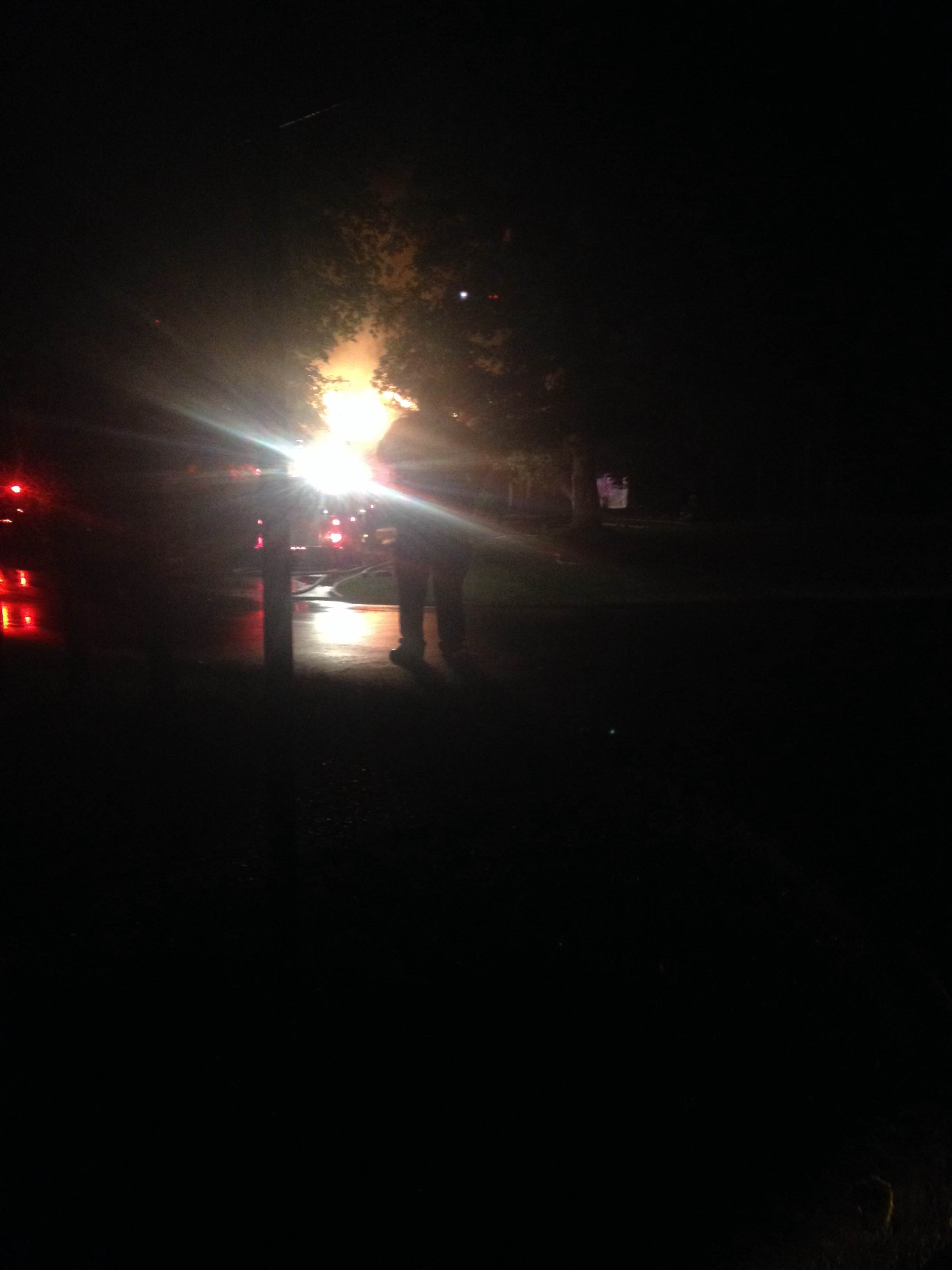
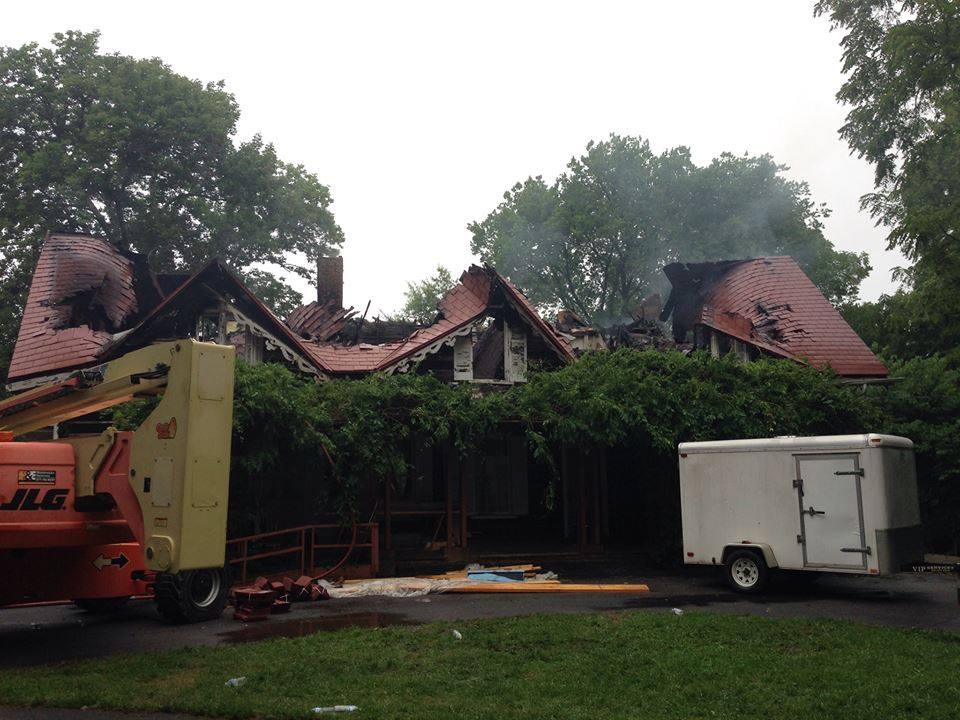
Postscript. The following is from the August 7, 2014 edition of the Sewanee Mountain Messenger: Members of the Sewanee Volunteer Fire Department respond to the blaze at Rebel’s Rest late on July 23. Photo by Buck Butler/University of the South

Posted in Sewanee
16 Comments
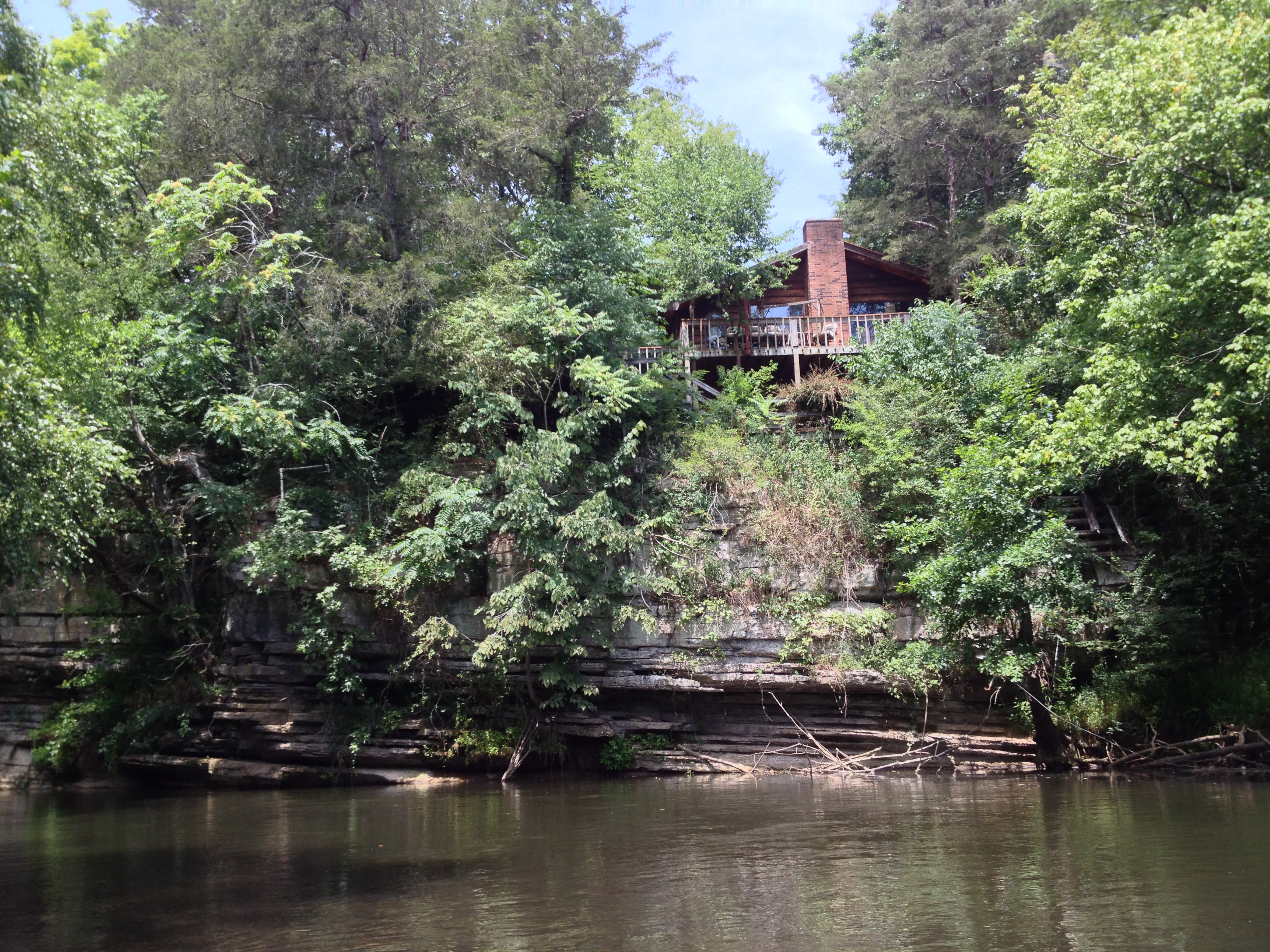
Along the Duck River

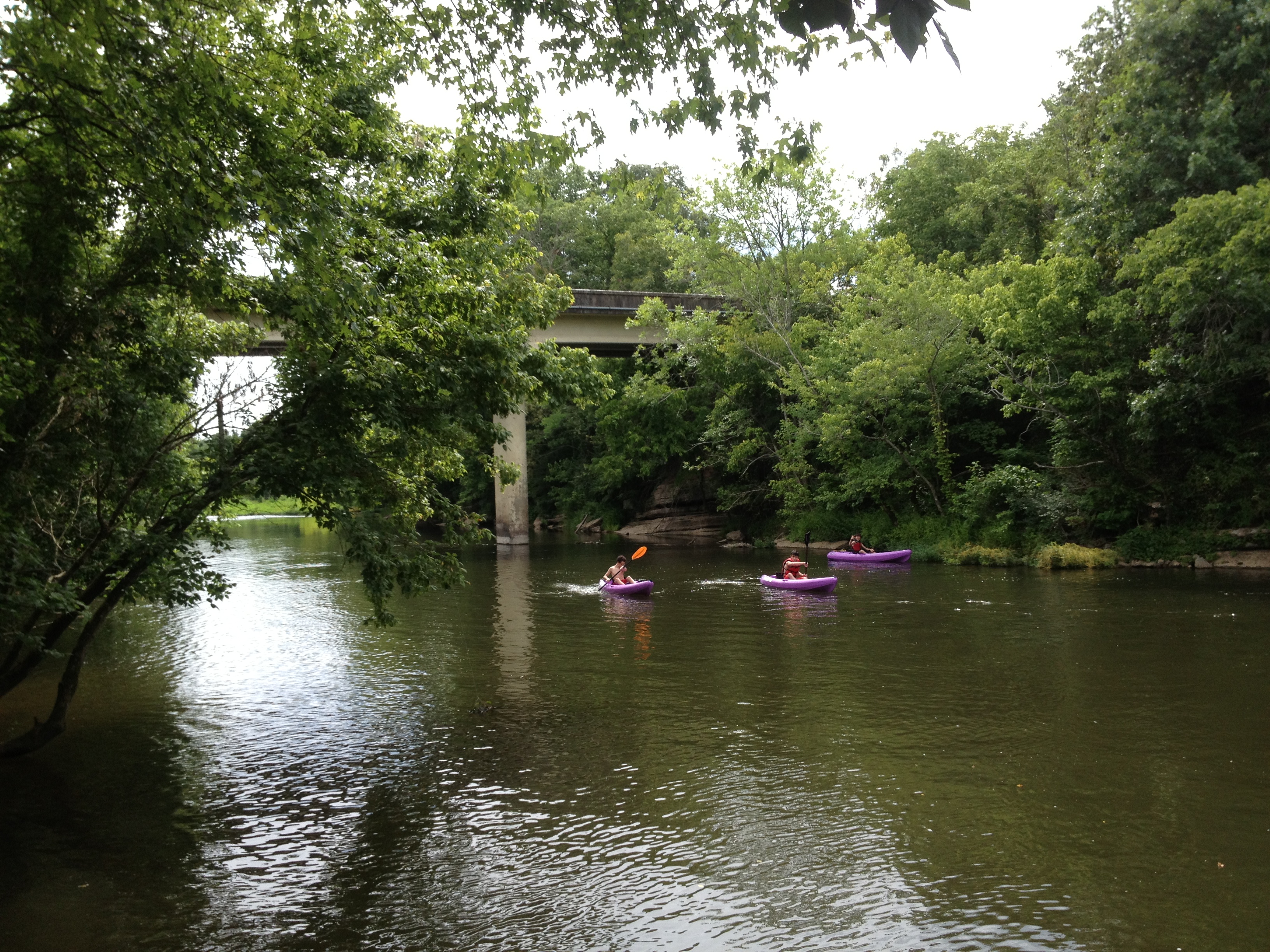


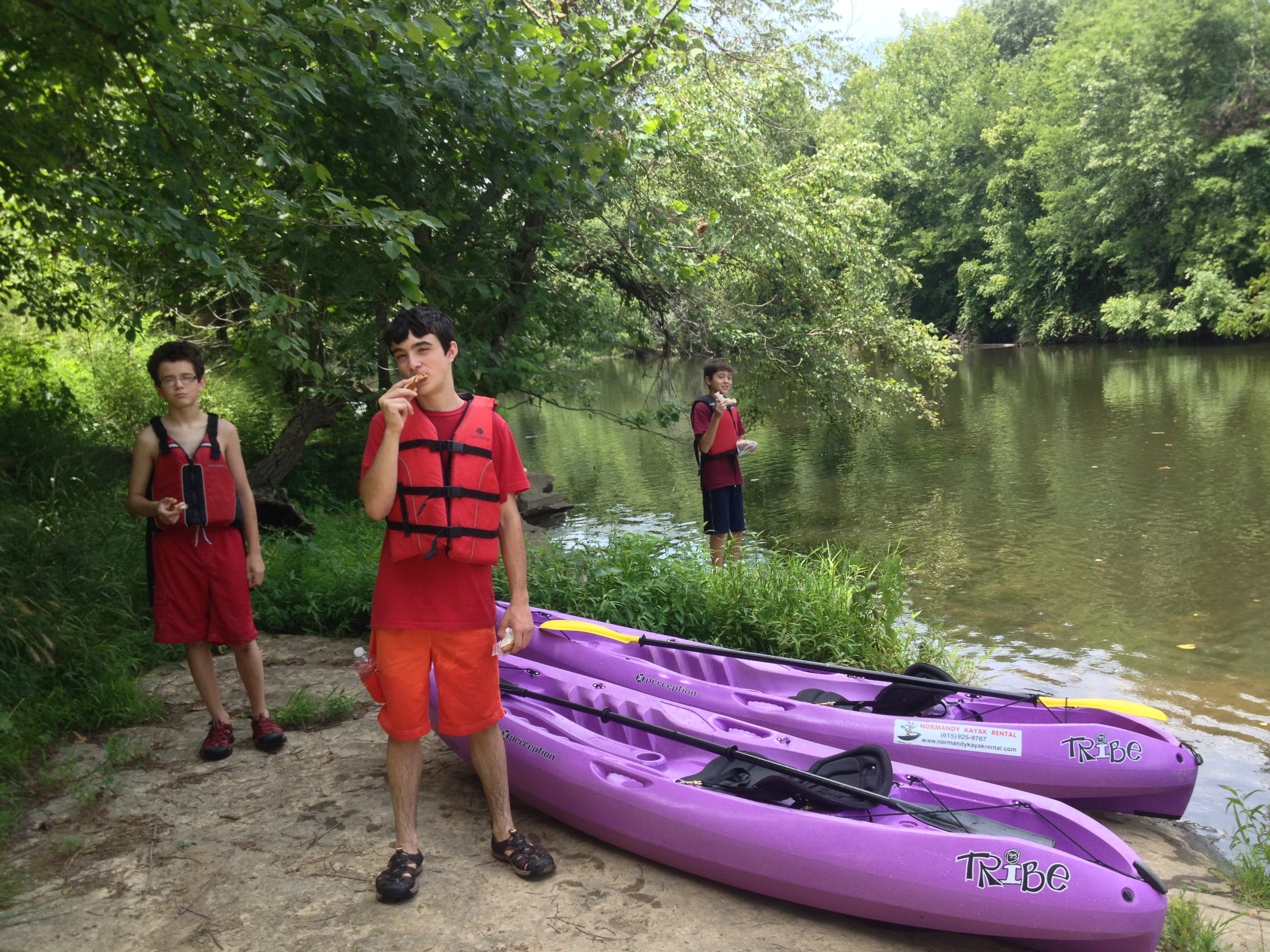

Posted in Animals, Family, Nautical, Sports & Games, Tennessee, Trees & Flowers
3 Comments
Words for Wines and Other Important Things
There’s a fine piece in this week’s New Yorker (July 12, 2014) by Maria Konnikova entitled “What We Really Taste When We Drink Wine” that I think has some bearing on what we do in the Humanities. I had begun reading the piece looking for some Emperor’s New Clothes-style skewering of pretension, and was not disappointed. Many factors go into an individual’s evaluation of a particular wine, not least of which is the desire to agree with what has already been determined to be good. As she writes, “More expensive wines are often rated higher on taste than cheaper ones—but only if tasters are told the price ahead of time.”
Aha! I thought. The charade exposed, and confirmed by this choice remark: “In one of the most prominent studies of how expectations can influence taste, Gil Morrot, a wine researcher at the National Institute for Agronomic Research in Montpellier, and his colleagues found that the simple act of adding an odorless red dye to a glass of white wine could fool a panel of tasters (fifty-four students in the University of Bordeaux’s Oenology program) into describing the wine as exhibiting the qualities associated with red wine.”
BUT THEN there is this: “Telling red wine from white is quite difficult for amateurs, it turns out. For experts, though, the story is different. In 1990, Gregg Solomon, a Harvard psychologist who wrote ‘Great Expectorations: The Psychology of Expert Wine Talk,’ found that amateurs can’t really distinguish different wines at all, but he also found that experts can indeed rank wines for sweetness, balance, and tannin at rates that far exceeded chance. Part of the reason isn’t just in the added experience. It’s in the ability to phrase and label that experience more precisely, a more developed sensory vocabulary that helps you to identify and remember what you experience. Indeed, when novices are trained, their discrimination ability improves.”
It’s that sentence I’ve highlighted–on giving novices a useful vocabulary with which to secure their experience–that made what I thought was going to be an exercise in low pleasure (“ha ha, wine snobs are phonies!”) into a far more profound one. This is fact what we do at a liberal arts college–give students the terminology for their experiences, both lived and literary, so that they can understand and make sense of them. Our job as educators is to provide novices in the field the language they need to come to terms as they will with what they encounter. What we have loved, Wordsworth writes in The Prelude (Book XIV), Others will love, and we will teach them how.
Postscript, July 18, 2014. I wrote to Maria Konnikova to tell her much of what I say above. Her gracious reply:
Dear Christopher, Many thanks for such a thoughtful note. I really appreciate hearing from readers, especially when the content is as insightful as yours. Thank you for reading and getting in touch. And what a wonderful Wordsworth quote. All the best, Maria
Posted in Education, Language & Etymology, Poetry
1 Comment
Exiting Buggy Top
We hiked to Buggy Top Cave yesterday, just south of Sewanee off the Sherwood Road. This is a phenomenal cave to visit, with an eighty foot mouth and a creek running through it. Buggy Top was closed for a while, due to white nose syndrome, but is apparently now open again. Even those in good physical shape–one of whom I am not–despair of the hike out, but it’s all worth it. “The world just seems so much brighter once you get out,” one of my sons said to me. “The greens just kinda glow.”
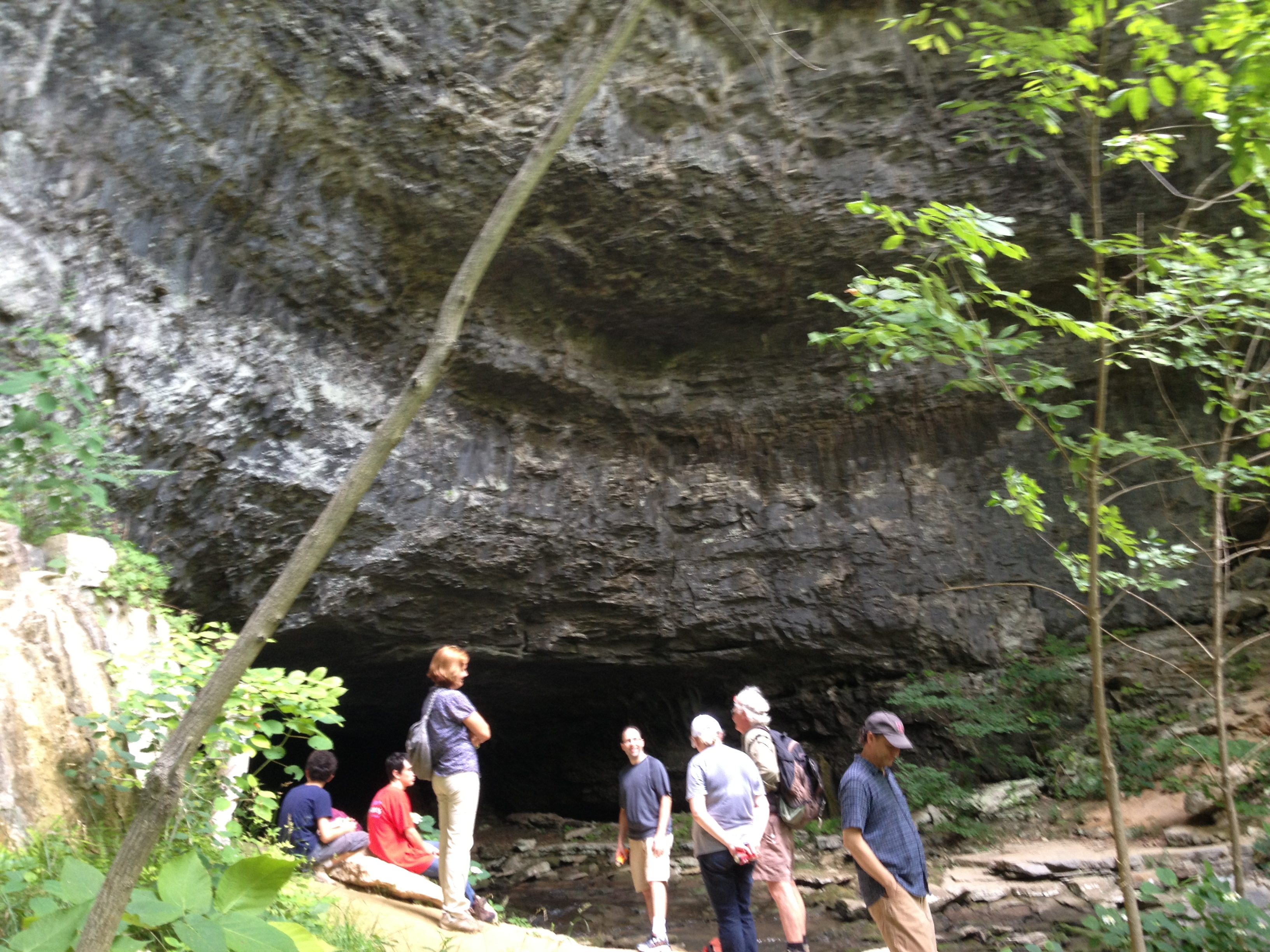
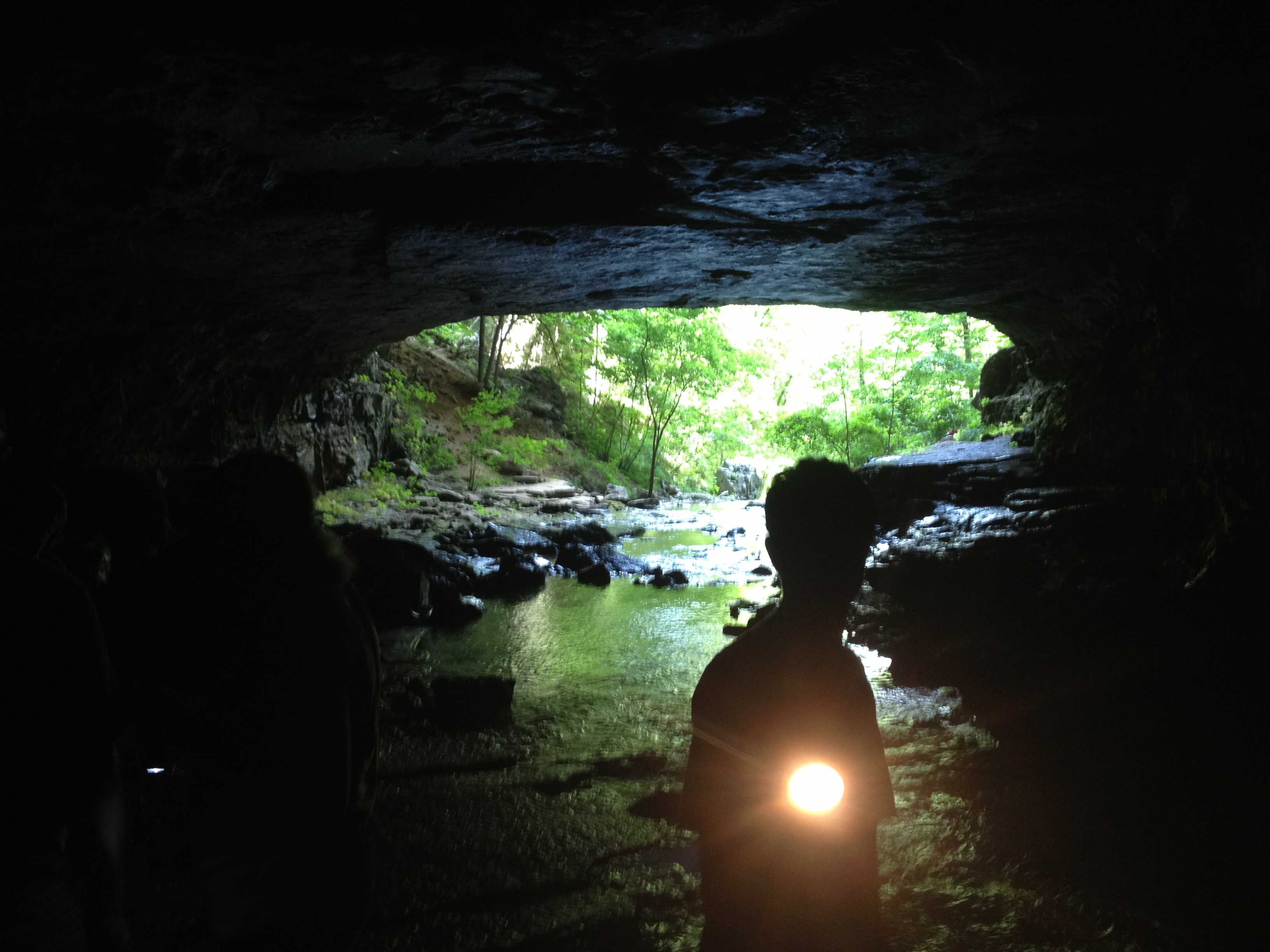
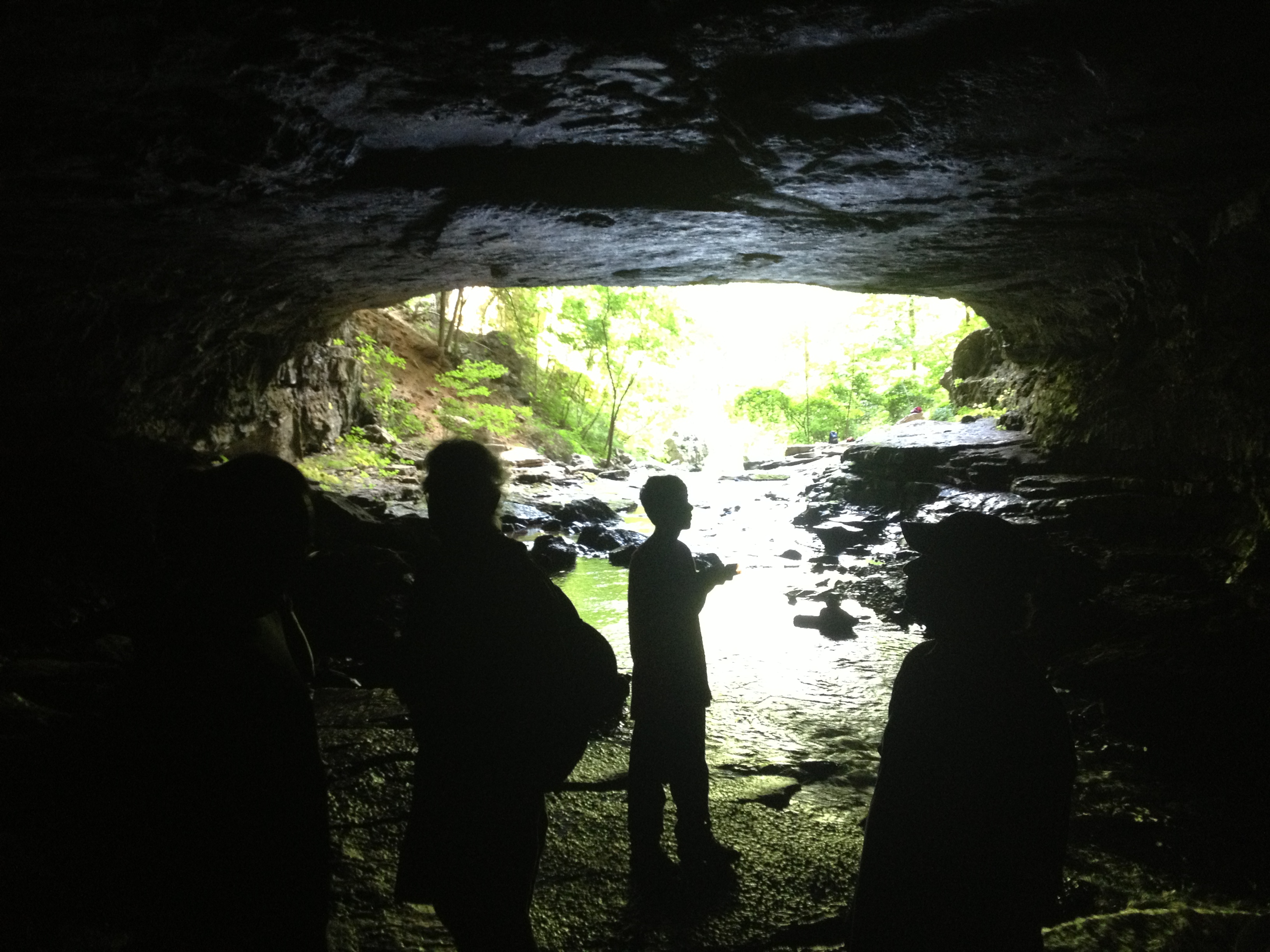
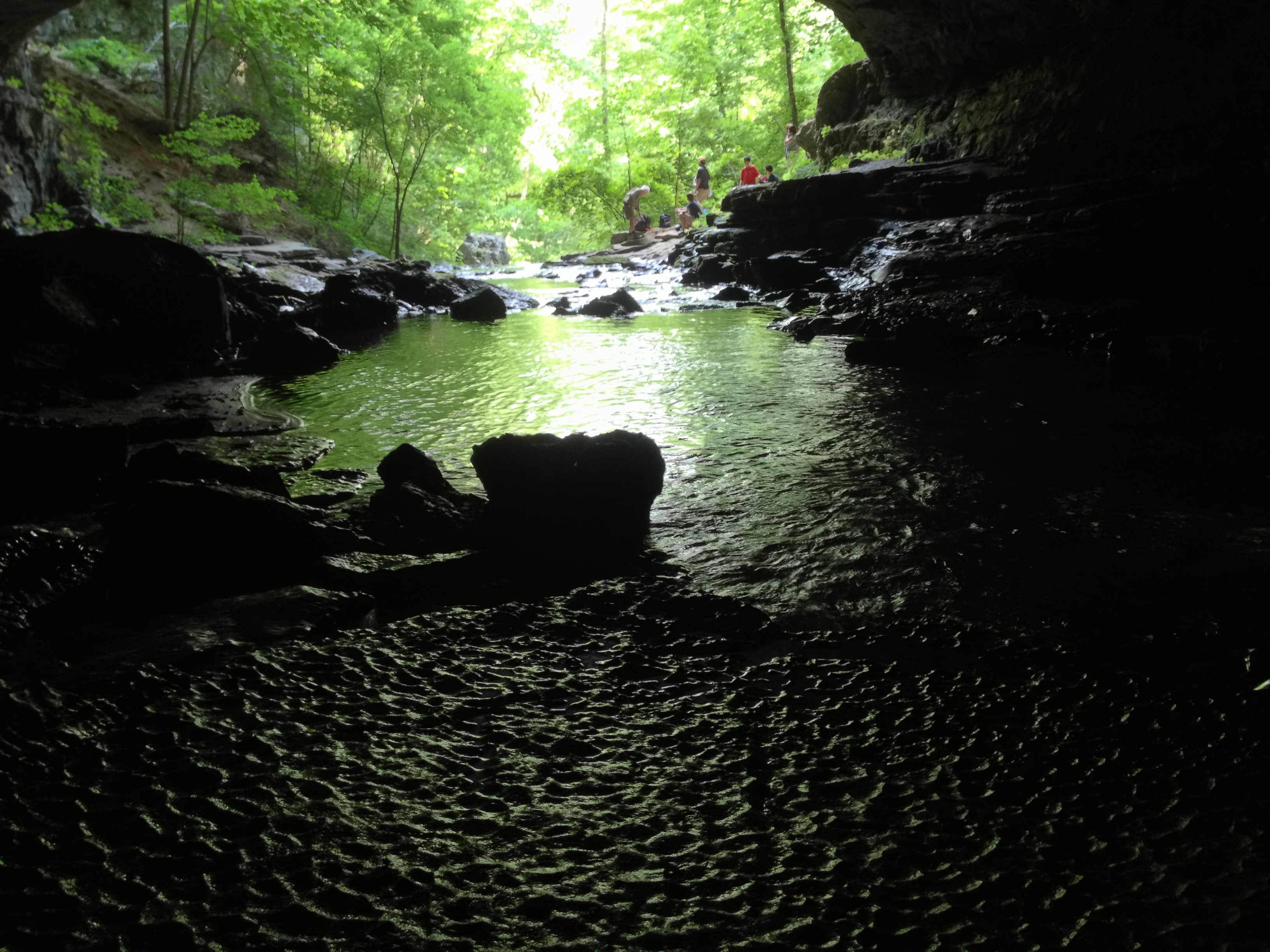
Many know the famous Allegory of the Cave, from Plato’s Republic Book 7 (Jowett translation): Behold! human beings living in a underground den, which has a mouth open towards the light and reaching all along the den; here they have been from their childhood, and have their legs and necks chained so that they cannot move, and can only see before them, being prevented by the chains from turning round their heads. Above and behind them a fire is blazing at a distance, and between the fire and the prisoners there is a raised way; and you will see, if you look, a low wall built along the way, like the screen which marionette players have in front of them, over which they show the puppets.
Of course, Socrates says, occasionally one of them will think to turn around, and seeing that all he has known is but a series of shadows, will try to make his way out– perhaps with some instructor’s help. The experience is an unpleasant one for him, at first: And suppose once more, that he is reluctantly dragged up a steep and rugged ascent, and held fast until he ‘s forced into the presence of the sun himself, is he not likely to be pained and irritated? When he approaches the light his eyes will be dazzled, and he will not be able to see anything at all of what are now called realities.
Posted in Animals, Classics, Family, Mythology, Sewanee, Sports & Games, Tennessee, The South
Leave a comment
Teeny Weeny Circus
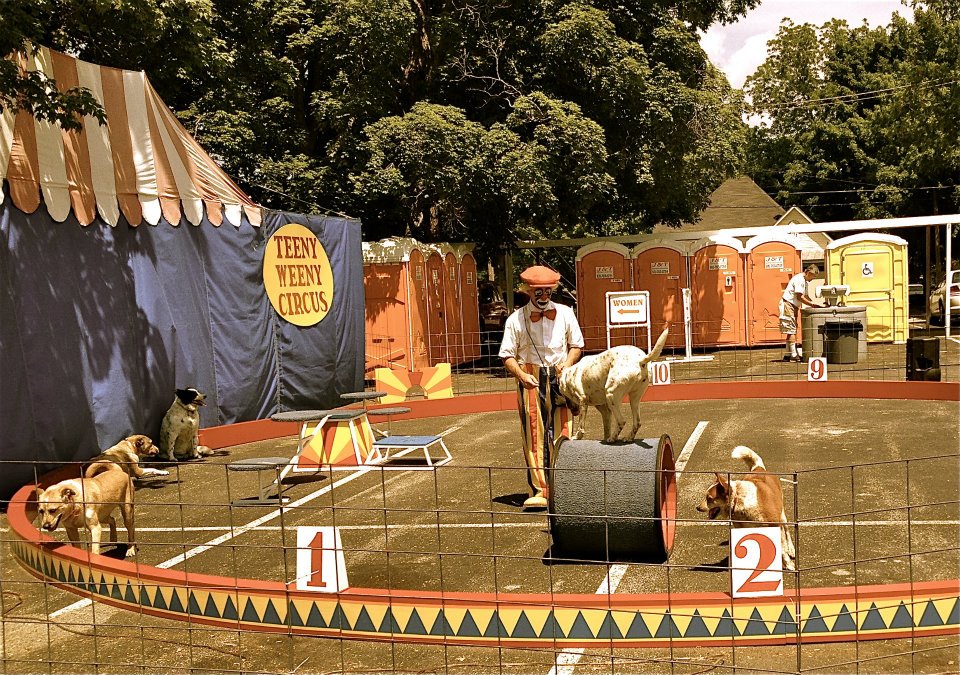
Dogwood Festival, Winchester (TN), 2012. Right after I took this picture, a woman walked by with a dog on a leash. Pandemonium ensued. The clown tried to get his dogs to stop barking, without success. It was so much more fun to watch than the tricks they were doing before, though those were pretty good, too.
Posted in Animals, Dogs, Sewanee, Sports & Games, Tennessee
Leave a comment
Protected: Shoes of the Fisherman
Posted in Bible, Cartoons, Emblems, Rome, Sports & Games
Enter your password to view comments.


 uncomelyandbroken