Protected: Radical Visions of Hector?

This content is password-protected. To view it, please enter the password below.

Posted in Classics, Military, Music, Mythology, Poetry | Enter your password to view comments.

Protected: Carolina On My Mind

This content is password-protected. To view it, please enter the password below.

Posted in Classics, Education, Emblems, Family, Language & Etymology, Music, Sports & Games, The South | Enter your password to view comments.

Twilight of the Demigods: Review of “Percy Jackson & the Olympians: The Lightning Thief”

This review originally appeared in the Classical Association of the Middle West and S oth (CAMWS) Newsletter, Spring 2010; I’m re-posting it in light of Rebecca Mead’s recent New Yorker article, “The Percy Jackson Problem,” of October 22, 2014

It was a blustery February day, but we were all a-buzz as we drove to theRegal Cinema 8 in Tullahoma (TN) to see the premiere of “Percy Jackson & the Olympians: The Lightning Thief.” My boys are huge fans of Rick Riordan’s Percy Jackson books and, judging from how full the theater was for an afternoon screening, so were many of the kids in the region. In fact, gradeschoolers all over the country love Percy Jackson, and the series has now been on the New York Times Bestseller List for Children’s Literature for 147 weeks.I had been reading the books aloud to my sons since Thanksgiving, and neverhad I come to the end of a chapter without their begging me to go on. So it was with high expectations that we made our way to the theater to see “The Lightning Thief,” the movie version of the first book of the series.

percy1The plot of “The Lightning Thief” begins with the premise that the Greek gods are real and still alive today, living in their headquarters, which has moved from Mt. Olympus to the 500th floor of the Empire State Building. The story does not center on the gods, though, but on their semi-divine children, of whom Percy, i.e., Perseus, Jackson is our unwitting protagonist. The series is not without its flaws, of course: perhaps most obviously, it’s pretty closely patterned after Harry Potter, complete with supernatural adventure, bosom buddies, budding romance, and of course the eponymous misfit messiah. “Percy Jackson” hovers somewhere between homage and rip-off, though this can hardly be a fatal criticism for classicists who remember Virgil’s statement, facilius esse Herculi clavam quam Homero versum subripere. And truthfully, there’s more of Homer and Hercules than of Harry in Riordan’s books.

Like other “half-bloods,” Percy is troubled. He has never met his divine parent and has been bounced from one school to another due to ADHD-related problems, although, as it’s explained to him later when he arrives to Camp Half-Blood, his impulsiveness is connected to “his battlefield reflexes,” and his dyslexia comes from the fact that his “mind is hard-wired for ancient Greek.” It’s eventually revealed to him that he is the child of Poseidon, that his friend Grover is a satyr and that another, Annabeth, is Athena’s daughter, that his teacher is none other than Chiron, that Zeus’ lightning bolt has been stolen, that Percy himself is the prime suspect, that the theft is in fact a cover-up for a much larger plot to unseat the gods and place Kronos in charge of the universe again, and that, of course, it’s all up to Percy to stop it. Along the way, Percy and his friends encounter the Minotaur, the Laestrygonians, Furies, Cerberus, etc., as well as three old ladies who (as one of the chapters is entitled) “knit the socks of death.”

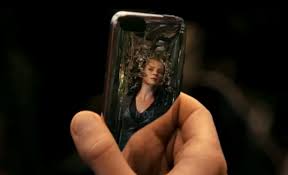
imagesMy bald summary hardly does justice to the genuinely engaging, witty, and even learned tone of the series, and alas, neither does Chris Columbus’ film. Not that “The Lightning Thief” is without its charms. For those of us in middle Tennessee, there was the frisson of local interest in seeing the Nashville Parthenon used as set (a few cheers went up in the Tullahoma Regal), although the decision to replace Alan Lequire’s enormous painted Athena Parthenos with a more “traditional” white statue rankled at least one classicist in the audience. To my mind, however, the movie’s true highlight was seeing Uma Thurman as the Medusa. (And why not Uma? Hadn’t Ovid praised Medusa’s clarissima forma, Met. 4.794?) As I watched Uma as Medusa (Umedusa?) I couldn’t help thinking of her in Terry Gilliam’s “The Adventures of Baron Munchausen,” where she played Venus to Oliver Reed’s Vulcan; her dea ex machina arrival, via an enormous ascending clamshell, still strikes me as one of the finest entrances in film. In this update of the legend, Umedusa runs a garden gnome emporium that sells amazingly life-like yard statuary, and she is undone in a suitably 21st century manner, with Percy looking not into a mirrored shield but rather the silvery flipside of his Ipod.

But, all in all, the movie was a disappointment, and my 7-year old son Daniel grumbled throughout it. “Her hair’s supposed to be blonde,” he complained of Annabeth. “Where’s his scar?” he objected of another character, not so sotto voce. And with deep frustration he groaned when Percy’s mother instead of his best friend Grover was left behind in the Underworld. “That’s not what happened in the book,” he kept saying. Yeah, I wanted to reply, now you know how I felt when Briseis killed Agamemnon in Wolfgang Pedersen’s “Troy.” But I held my tongue. It’s a wearisome fact of life that even good movies stray from the books on which they’re based, and the frustration is worst when it happens with books we love.

What’s frustrating about this movie is that, where it follows the book, it’s very good. So, for instance, the movie’s depiction of the Lotus Casino (a clever adaptation of the Homeric way-station) is deftly handled: Percy is deep into an absorbing video game when he realizes that the hippie-ish guy beside him is at a very retro-looking pinball machine. “What year is it?” he asks him, and the response–“1974”–jolts Percy out of his stupor. It’s a pleasing visual sequence, as is the sight of Grover, Percy’s satyr friend, stomping away on the dance-floor to Lady Gaga’s “Poker Face.” So, so far so good. But where in the book Annabeth had spent her time at the Lotus engrossed in “this huge 3-D sim game where you build your own city and you could actually see the holographic buildings rise on the display board,” in the movie she is simply playing the same old video game everybody else is, hardly a fitting activity for the daughter of Athena.

It’s this flattening of the characters, ultimately, that is what’s wrong with “The Lightning Thief.” To begin with, the actors are all just a little too old for the parts, and they seem to have been cast less for how they might portray Riordan’s characters than how they might look in Tiger Beat magazine. Again and again, the tendency is to pitch the film not to the books’ grade-school fans, who want swashbuckling heroes, but rather to a teen and ‘tween’ audience, who seem to prefer emo vampires. As a friend joked on the drive home from Tullahoma, “Lightning Thief” perhaps should have been called “Twilight of the Gods.” But still more fundamentally, the movie utterly fails with Percy. Riordan’s books, it must be pointed out, are all told in the first person, by Percy. He is not just a hero, but also a twelve-year old boy, one who has grown up without a father, who is just coming to some self-awareness and finds himself giving voice to complicated interests that he barely understands, especially when he is the object of them. It is not too much to say that the demons he is fighting throughout the books are not those just drawn from Greek mythology, but none of this is really captured in the film.

So, the summer is now upon us, and if you are looking for some beach reading, you could do worse than to pick up a few of the Percy Jackson books. Better still, read them aloud to your kids, grandkids, nieces, nephews, or neighbors of elementary school age. They will have many questions about the mythology which readers of the CAMWS newsletter are uniquely qualified to answer. You may find yourself breaking out images of monsters and heroes from classical vases, and working through the complexities of mythological genealogies. But be forewarned: if you later decide to show these kids the movie (the DVD will be released June 29th [2010]), be prepared for the muttering.

Posted in Classics, Family, Mythology, Statues & Monuments, Tennessee | 2 Comments

A few Hrothgar stories

My brother posted this about your blog post: When I sang in the choir at Sewanee the procession — even on weekdays — went like this: Hrothgar; the Crucifer; the Choir; the Clergy; the Other Sewanee Dogs. I promise. When Hrothgar had waddled to the chancel steps and labored to the top, he would collapse. The Crucifer stepped around him and continued. The choir bowed (to the altar? to already-sleeping Hrothgar? It was hard to tell.), parted, and went into the stalls. On Sundays Hrothgar had more time to settle into a really deep sleep and his snoring, as Bulldogs cannot help doing, sometimes made it difficult to hear the sermon. The snoring was often more interesting than the sermon.

Here’s my brother’s telling of the dogs in the chapel: There’s another Hrothgar story that has a chance of being apocryphal or at least a little embroidered, but there’s no reason to doubt that the kernel of this story is true. Once upon a time the Bishop of Somewhere-or-Other was preaching a Sunday sermon in All Saints Chapel. That morning Hrothgar had decided to have his long nap using the altar as a backrest, far out of sight of the pulpit but not, of course, of the congregation. As the bishop was preaching and Hrothgar was snoozing, a bitch in heat happened to wake from her own nap, stretched, and then strolled across the chancel floor directly in front of the altar and hence of Hrothgar. The beguiling scent of this lovely piece of canine flesh not only roused Hrothgar, it pitched him into a state of frenzy that he didn’t ordinarily experience. The young lady in question was ready to have babies, and Hrothgar was ready to be their father. And so it happened, right there on the epistle side of the altar. Hundreds of college boys, as well as adult members of the congregation, collapsed in hysterical laughter to the confusion and annoyance of the Right Reverend Preacher.

Posted in Dogs, Sewanee, Uncategorized | Leave a comment

Hunters, 5 a.m.

For no good reason, I’m up before dawn and go into the living room to look out the window. Through the clouds the stars can be made out here and there. My dogs stir but I don’t let them out. In the sky, Sirius is visible and, a second later, most of Canis Major. Orion higher up is brandishing a weapon that fades into the night. In the woods, meanwhile, hunters are making their way with small flashlights that twinkle in the dark.

Posted in Animals, Astronomical, Dogs, Mythology, Sewanee, Sports & Games, Tennessee, Trees & Flowers | Leave a comment

Hrothgar’s Grave

Go behind Bairnwick, toward a small stand of oaks and the swamp leading to Stirling’s, and you will see the gravestone of Hrothgar.

IMG_7410 IMG_7411 IMG_7412 IMG_7413 IMG_7414 IMG_7417IMG_7415

Who was Hrothgar, you ask?  He was an English bulldog, much beloved in Sewanee over half a century ago, named for the Danish king in Beowulf.  That Hrothgar–the builder of the great mead-hall, Heorot–was described by the poet as sé þe his wordes geweald      wíde hæfde / hé béot ne áléh      béagas daélde / sinc æt symle, “he whose words had weight everywhere, who did not lie when he boasted, who dealt out rings, and treasures at banquet.”  In Boston I had a neighbor with a bulldog named Beowulf, and a cat named Grendel, but neither was commemorated with a monument.  I have seen Hrothgar’s picture–and collar–in the archives, and perhaps will post them sometime soon.  A fine piece in the Sewanee Purple (March 2, 1960) about Hrothgar’s funeral is posted below.

Screen Shot 2014-10-01 at 4.20.36 PM

Hrothgar Park Is Site Of Hrothgar Funeral By ALEX SHIPLEY

Funeral services for Hrothgar were held Monday, February 22. Hrothgar, the big English bulldog, had been an adopted member of the Dr. George B. Myers family for eight years. Every student at Sewanee dur-ing that period grew to know the “King of the Mountain.”

Hrothgar majored in DOGmatic the-ology under Dr. Myers and Dr. Robert Petry gave him “A’s” in physics be-cause “. . . he never gave a stupid an- swer.”

Clad in his own cap and gown (made for him by Mrs. Myers) Hrothgar marched in academic processions. He faithfully attended chapel services and his snores, which habitually ended in a low moan, were very disconcerting to the clergy.

At All Saints’ Chapel, where Hrothgar preferred the chancel steps, the procession would part and walk around him. In hot weather the marble step in front of the lectern seemed a cool resting place. Rather than ask the English gentleman to move, Chaplain Collins straddled him on occasions in order to read the lessons.

A Dog of Dogs
Hrothgar was wonderful with chil-dren and with people in general, but he demanded respect from other dogs. In his younger days he fought many a bloody battle to prove his point. The funeral held in Hrothgar Park at Bairnwick, the home of Dr. and Mrs. Myers, was attended by approximately thirty students, matrons, and faculty members.

Dr. Myers, presiding at the service, paid the following tribute to Hroth-gar: “He had a pedigree longer than mine. He was gentle and friendly, particularly with children, and nobody loved this Mountain more than he. We shall miss him, and commend him to
a faithful Creator.”

The Interment
After this eulogy the “Benedicite, omnia opera Domini” (“. . . O all ye Beasts and Cattle, bless ye the Lord, . . .”) and the Prayer for Animals (”. . . help us to find in caring for them [animals] a deeper understanding of thy love for all creation. . . .”) were read. The service was ended with the Grace.

Hrothgar’s casket was draped with a pall of Sewanee purple. Death notices of Hrothgar appeared in several Southern newspapers. Mr. Myers said that she and her husband had received letters of sympathy from all over the South. Mrs. Jo Conn Guild of Lookout Mt. Tennessee, the owner of the kennels in which Hrothgar was born, wrote a letter to Mrs. Myers expressing her sympathy.

“Beloved Dog”
“The loss of a beloved dog leaves such a vacancy in one’s life and heart. Mr. Guild and I have followed Hroth-gar’s academic career with interest and delight . . . Indeed his life must have been a glorious one. . . .

“Bulldogs are an amazing combina-tion of dignity and clownishness. I think their physical build is so typical of their nature—that great great clumsy front and frisky debonair rear.”
Dr. Myers has announced plans to erect a headstone bearing the inscription:“HROTHGAR MYERS, NOBLE ANIMAL, KING OF THE MOUNTAIN.” Hrothgar’s collar is to be framed and, with a picture of the animal, hung in the Thompson Union beside other mementos of notable Sewaneeans.

Posted on October 4th, Feast Day of Saint Francis.
Laudato sie, mi Signore, cum tucte le Tue creature

Posted in Animals, Boston, Dogs, England, Mythology, Poetry, Sewanee, Trees & Flowers | 3 Comments

In the Form of a Question

Below is the text of some remarks I was supposed to give to the Senior Class at Sewanee this spring but never did–when I arrived to Cravens Hall, the banquet had been called off because of a tornado warning!  How lucky they all were to be spared this torrent of words!

In the Form of a Question: Senior Banquet Remarks

Monday, April 14, 2014

Good evening. I see so many friends here from the senior class, some of whom have written to me even today looking for extensions on their papers. Not to worry! In just a few days none of it will matter very much. While it may be a bit premature, let me offer an anticipatory congratulations to the Class of 2014. Well-done, my friends, well and truly done! I speak for all faculty when I say how proud we are of you. And let me offer my thanks to you, too, for the invitation to be with you here, and the honor of addressing you tonight as we recognize those who have shown such leadership on behalf of the Senior Class Gift Campaign. Let me especially thank the nice young man from the Development office who invited me, the one who was recently on Jeopardy, what is his name … (Matt Farr!) Uh uh uh, “Who is Matt Farr?” Please remember to phrase your answer in the form of a question.

The form of my own remarks here tonight has been much on my mind. After all, a talk like the one I am in the process of giving ought to be amusing, poignant, thought-provoking, and brief. I thought to myself, where could I find inspiration for a talk of this sort? I wracked my brain, I ransacked my book-case, and then turned, as we all seem to do these days, to the Internet, and put “amusing, poignant, thought-provoking, and brief” into the Google search bar. You will probably not be surprised to learn that that search string retrieved close to 9 million hits. Hmm, I reflected. What a world this must be, this world-wide web, so overflowing with amusement and poignancy, that it can generate so many instances of it in the blink of an eye. So filled with thoughts of a thought-provoking nature, 9 million of them! And so brief! So much brevity it would several lifetimes to sort through it all.

Most of you are 21, and so you are just a few years older than Google itself, which was established in the mid-90s at Stanford, and yet I daresay, it is the world—or at least, a world—in which you have all grown up. I’m an old fart, and yet it is also the world I inhabit as a matter of daily life. It is sometimes theorized that, given enough time, a roomful of monkeys with typewriters would eventually produce the complete works of William Shakespeare. I will admit that, as an undergraduate, I put great hope into the infinite monkey theorem—after all, there I was typing away in my room late at night just trying to eke out a passable paper on The Tempest. I wonder sometimes whether my own myriad entries into search engines over the years isn’t something like the work of the infinite monkeys, and couldn’t also be arranged into at least a Bad Quarto.

Now and then, it occurs to me to look, to really look, at the pages of results I have produced with the searches I have input. At times this can be a real revelation. On a single page last week, one of my searches turned up quotations from Tom Waits, Aristotle, and Charlie Chaplin. I was surprised by the Charlie Chaplin quote, because I always think of him in silent movies, but whatever—if a celebrity is on the Internet in any form, there’s a meme with inspirational quote attached to his or her face. There were images, too—there was a map of Milwaukee, there was a Rodin statue, there was a middle finger, there was a multi-colored graph, there was an anti-Obama political cartoon, and inevitably–as every internet search is required to produce by law I think, there was a picture of Scarlett Johansson.

You have probably produced similar pages yourself. Some of you might be doing it right now on your phones. Perhaps you too have wondered, as I have, What do any of these things on this page have to do with one another? The answer is, nothing really. Yet there it is, this incoherent jumble, the work of my own two hands. It is I that have summoned this meaningless world into being. At times like that, I wonder if you feel as I sometimes do, like a god— not a kind and caring one, though, but a crazy and arbitrary god with a seemingly bottomless taste for videos about kittens.

In looking at this hodge-podge of hits, this mélange of words and images, I wonder about the world you are all about to enter. If this mess were a meal, it would be a really terrible, incongrous meal, the sort of thing you might put on your plate at an all-you-can-eat buffet if you were very, very drunk—maybe a plateful of sushi with macaroni and cheese on the side, lightly covered in Pep-o-mint Lifesavers. (Aren’t you glad you invited me to speak over dinner?)

And if I may continue this meal-related metaphor and introduce an idea drawn from service as a county school board representative, there was a time in our country, once, when our schools had programs of free and reduced meals that were predicated on the idea of hunger. Children couldn’t get enough to eat. In the past few years, that program has had to be re-structured to account for a different sort of problem. It is not that children cannot get enough food to eat, but rather that they cannot get enough nutritious food to eat.

We are no longer dealing with want, in other words, but with obesity. And in a similar fashion, those of us in education are learning likewise to provide an education that does not presuppose a lack of access to information but rather too much. We are needing to think about an education, in other words, that confronts mental obesity. All of which is to say that you who are about to graduate have grown up amidst tremendous technological sophistication, yet what has ultimately been rendered is a universe of information absurdly arranged, a sumptuous banquet of mentally empty carbohydrates.

It is hard not to find all this a little dispiriting, at least at first glance. I was recently reading an editorial in the New York Times by a junior from NYU named Zachary Fine about how immobilizing it can be to live in this age of info-glut. He writes,

While trying to form our fundamental convictions in this dizzying digital and intellectual global landscape, some of us are finding it increasingly difficult to embrace qualitative judgments. … We millennials often seek refuge from the pluralist storm in that crawlspace provided by the expression “I don’t know.” It shelters the speaking-subject, whose utterances are magically made protean and porous. But this fancy footwork will buy us only so much time.

It’s hard to say whether Mr. Fine should be considered the voice of his generation. I sympathize, certainly, with the anxiety he feels in the face of so many competing sources of authority. And yet, I have to say, the way out of his dilemma is right before him, I think—he just doesn’t know it.

Because it is those very words, “I don’t know,” that he will find the answer he has been looking for all along. Some of you will know that I teach Classics; one of the heroes of the Greco-Roman tradition is Socrates, who famously said, “I know that I know nothing.” It is a frustrating statement, and he was put to death ultimately for it. But this statement is the beginning of the Western tradition of wisdom, not because it is frustrating but because it is brave and true. What you are willing to say you don’t know anything about is what you’re willing to ask and learn about.

In a few weeks you will leave us. You will enter into that crazy and incongruous world, and we will be sad to see you go. That too is a true statement. Promise us you will come back, as often as you can. We want to hear your stories of life out there in the wider world. We hope we have prepared you to live good and happy lives out in it, at least a little bit. But please don’t mistake the education we have offered you here as some form of the mish-mash you might have found otherwise on-line. You know a lot more than you did when you came, for sure, but I hope above all, you will know how much more there is worth knowing—and how much, too, is not worth knowing. Come back and share it all with us, because we’re eager to hear what you’ve found. Tell us what you’ve found that is amusing, poignant, and thought-provoking. Don’t let your visits be brief. And what else can I say?  When you’re out there, please try to remember to always phrase—or seek—your answers in the form of a question.

Sewanee seniors jammed into the basement of Cravens, April 14, 2014


Sewanee seniors jammed into the basement of Cravens, April 14, 2014

Posted in Classics, Education, Sewanee, Sports & Games | 5 Comments

Protected: Bye Bye Burdies?

This content is password-protected. To view it, please enter the password below.

Posted in Birds, Classics, England, Language & Etymology, Military, Oxford, Poetry, The South | Enter your password to view comments.

Protected: Goodbye Little Yellow House

This content is password-protected. To view it, please enter the password below.

Posted in Dogs, Family, Sewanee, Trees & Flowers | Enter your password to view comments.

Protected: Hogs and Cucumbers

This content is password-protected. To view it, please enter the password below.

Posted in Animals, Bible, Boston, Education, Family, Music, Sewanee | Enter your password to view comments.