
-
Recent Posts
Recent Comments
Archives
- March 2026
- November 2025
- December 2024
- April 2024
- October 2021
- February 2021
- September 2020
- July 2020
- June 2020
- May 2020
- April 2020
- March 2020
- January 2020
- August 2019
- July 2019
- June 2019
- May 2019
- April 2019
- March 2019
- February 2019
- January 2019
- December 2018
- November 2018
- October 2018
- July 2018
- June 2018
- May 2018
- April 2018
- March 2018
- February 2018
- November 2017
- October 2017
- September 2017
- August 2017
- April 2017
- February 2017
- October 2016
- September 2016
- May 2016
- April 2016
- March 2016
- February 2016
- January 2016
- November 2015
- October 2015
- September 2015
- August 2015
- July 2015
- June 2015
- April 2015
- March 2015
- February 2015
- January 2015
- December 2014
- November 2014
- October 2014
- September 2014
- August 2014
- July 2014
- June 2014
- May 2014
- April 2014
- March 2014
- February 2014
- January 2014
- December 2013
- November 2013
- October 2013
- September 2013
- August 2013
- July 2013
- June 2013
- April 2013
- March 2013
- February 2013
- January 2013
- December 2012
- November 2012
- October 2012
- September 2012
- August 2012
- July 2012
- June 2012
- May 2012
- April 2012
- March 2012
- February 2012
- January 2012
Categories
- AI
- Animals
- Astronomical
- Bible
- Birds
- Books
- Boston
- Cartoons
- Cemeteries & Funerals
- Classics
- Coal
- Dogs
- Drama
- Education
- Emblems
- England
- Family
- Film
- Florence
- Ireland
- Italy
- Language & Etymology
- Military
- Music
- Mythology
- Nautical
- New England
- Numismatics
- Oxford
- Poetry
- Pontius Pilate
- Race
- Rivers
- Rome
- Saints
- Scotland
- Sewanee
- Slavery
- Sports & Games
- Statues & Monuments
- Tennessee
- The South
- Time
- Trees & Flowers
- Uncategorized
Meta
Protected: Trump an ironic Perseus
Posted in Cartoons, Mythology, Statues & Monuments, Uncategorized
Enter your password to view comments.
Head-copping
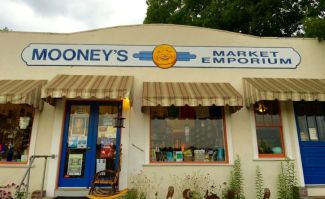 An evening or two ago, I stopped into Mooney’s, the great little local market just on the border between Sewanee and Monteagle, to pick up some garlic powder. I had paid for it, when it occurred to me that I should grab one of those delicious chocolate bars they sell as well–grabbing one, I laid it on the counter though the garlic powder had already been rung up.
Oops. A minor inconvenience. “Oh, sorry,” I said. “I should have …” and I paused there. “You know, there are so many things I could say after those three words.”
“Now you’re just head copping yourself,” said Joan, the owner, and we both cracked up laughing. “Hey, what do you expect? It’s a hippie place.” So I left with the garlic powder, the chocolate bar, and a new expression.
To head cop is not a phrase I’d ever heard before, though its meaning is instantly understandable as something like “to subject one’s conscience to an external source of perceived authority” (my stab at a definition). In his New Introductory Lectures on Psychoanalysis, Freud had called the super-ego as “the vehicle of tradition and of all the time-resisting judgements of value which have propagated themselves in this manner from generation to generation” (1933, 105). The expression head copping, however, is not simply descriptive as Freud is here, but dismissive. In the same way cop is a pejorative term for police, so head-cop is a pejorative way to refer to the super-ego– both point to a figure with power tending toward abuse.
As it turns out, the phrase head cop was coined by Stephen Gaskin,”an often tie-dye-clad hippie philosopher, a proud ‘freethinker’ and iconic founder of The Farm,” as he was described in his 2014 obituary in the Tennesseean. I know Joan spent quite a few years living on The Farm, the utopian collective founded in 1971 in Summertown, Tennessee, and so she probably heard the term from Gaskin himself at some point. I haven’t looked up the phrase in Gaskin’s own work, but in a chapter called “The Formation of Hippie Spirituality” (from Seeking the Sacred with Psychoactive Substances), he is quoted on the topic.
As a synonym for mind control, Gaskin is clearly using the term here in a more serious way than Joan had been. And it can be a serious matter to let allegiance to an authority devolve into mindless obedience. But it seems the phrase head cop can also be employed in a more light-hearted way to dismiss the bossy “shoulda-woulda-coulda” voices of the super ego. You don’t just have to have garlic powder; go ahead and have a candy bar.
Posted in Language & Etymology, Sewanee, Tennessee, Uncategorized
6 Comments
The Graveyard on Devil Step Island
 My friend Adam and I had been planning to take his boat out on to Tims Ford Lake, and this Sunday seemed like the last possible day to do it until springtime. It was an unseasonably warm November day. Why not, we thought, and out we went for some “messing about in boats,” as Rat puts it to Mole in The Wind in the Willows.
This was no idle trip, though–far from it. Adam wanted to scout out some island campsites. Myself, I was interested to see another island feature–the Shasteen Cemetery on Devil Step Island.

Tims Ford is a man-made lake, and not an especially old one. The TVA began flooding it in the 1960s, and by 1971 is as you see it, about 34 miles long and as much as 175 feet deep. The town of Awalt–or Mashbread, as some locals had called it–was abandoned and flooded, along with many other properties. Not everybody was happy about losing their homes, of course. An older friend of mine once told me, “Chris, you haven’t lived till you have stood at public auction to buy back property from the government that was in your family for generations.” As a girl, she had played on the hilltop which is now a headland on the lake, a point she was lucky enough to buy and build a home on.
The TVA made a point of relocating old cemeteries that the flood would cover. The Shasteen cemetery, however, was on top of a high hill, and so was left in place. So while some of the people buried there were carried up by carriage, now you have to get there by canoe.
Why is Devil Step–the island, and the hill which it used to be–named for the Devil? I haven’t found the reason for the place-name, but there are various possibilities. The hill might have been difficult to climb, giving early settlers a devil of a time to get up. Perhaps there was a folktale of the Devil’s occupying the place: some sulfurous caves are named for the Devil, given the smell. Or maybe the nearby Boiling Fork creek, now submerged, suggested demonic activity. A political reason may also be in the background: some Native American sacred places were associated with Satanic worship and witchcraft by European settlers and thus connected with the Devil.
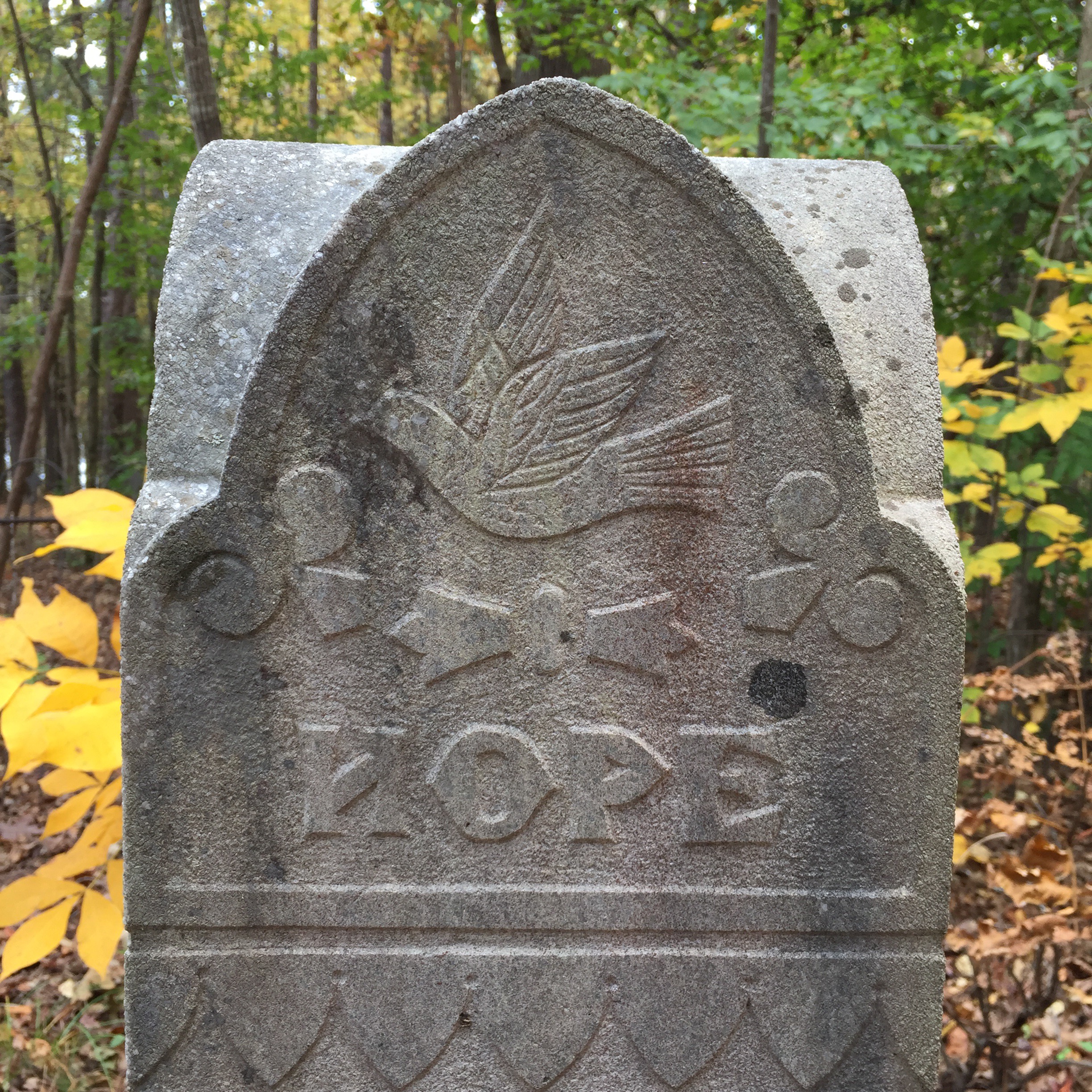
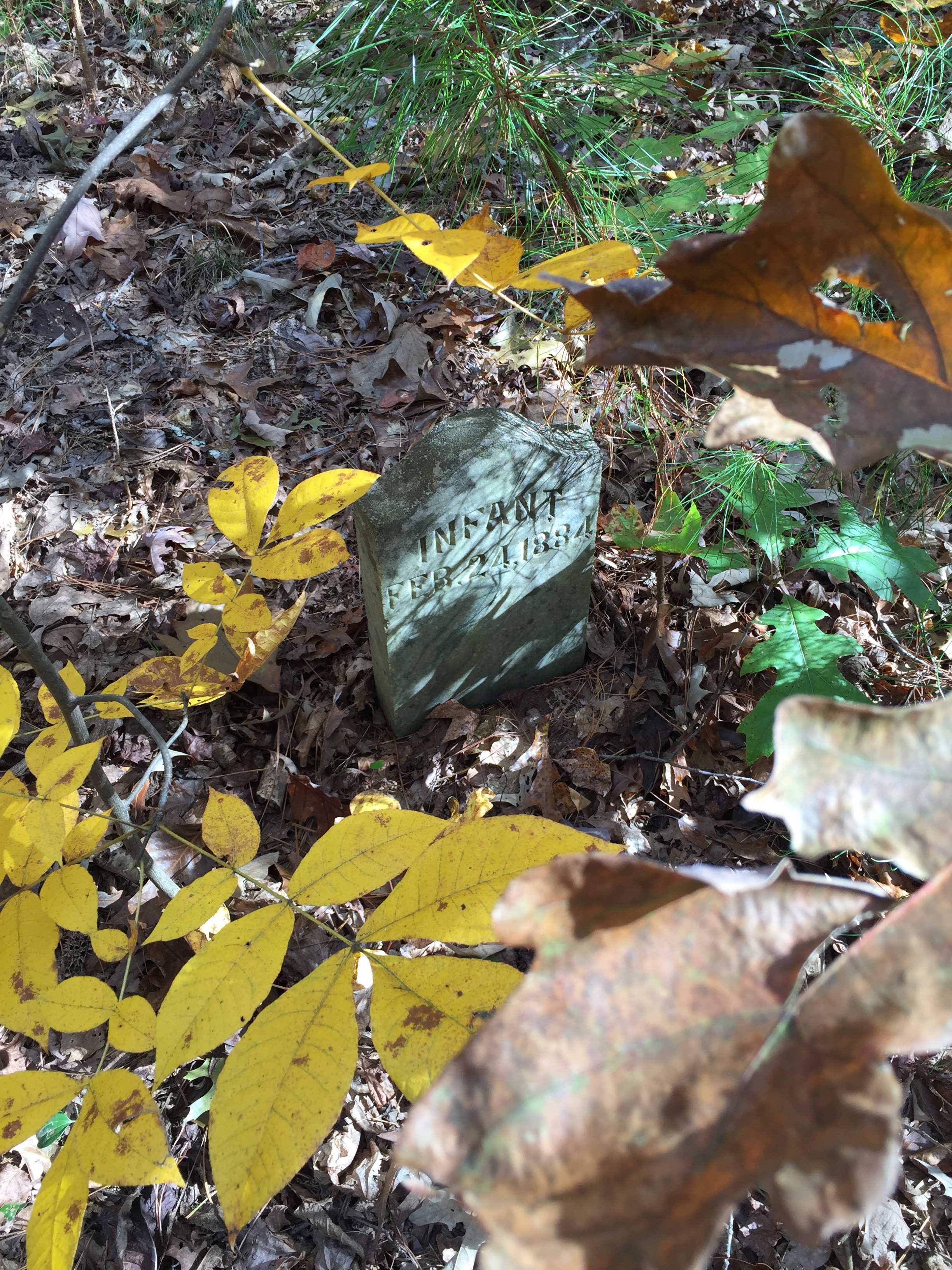
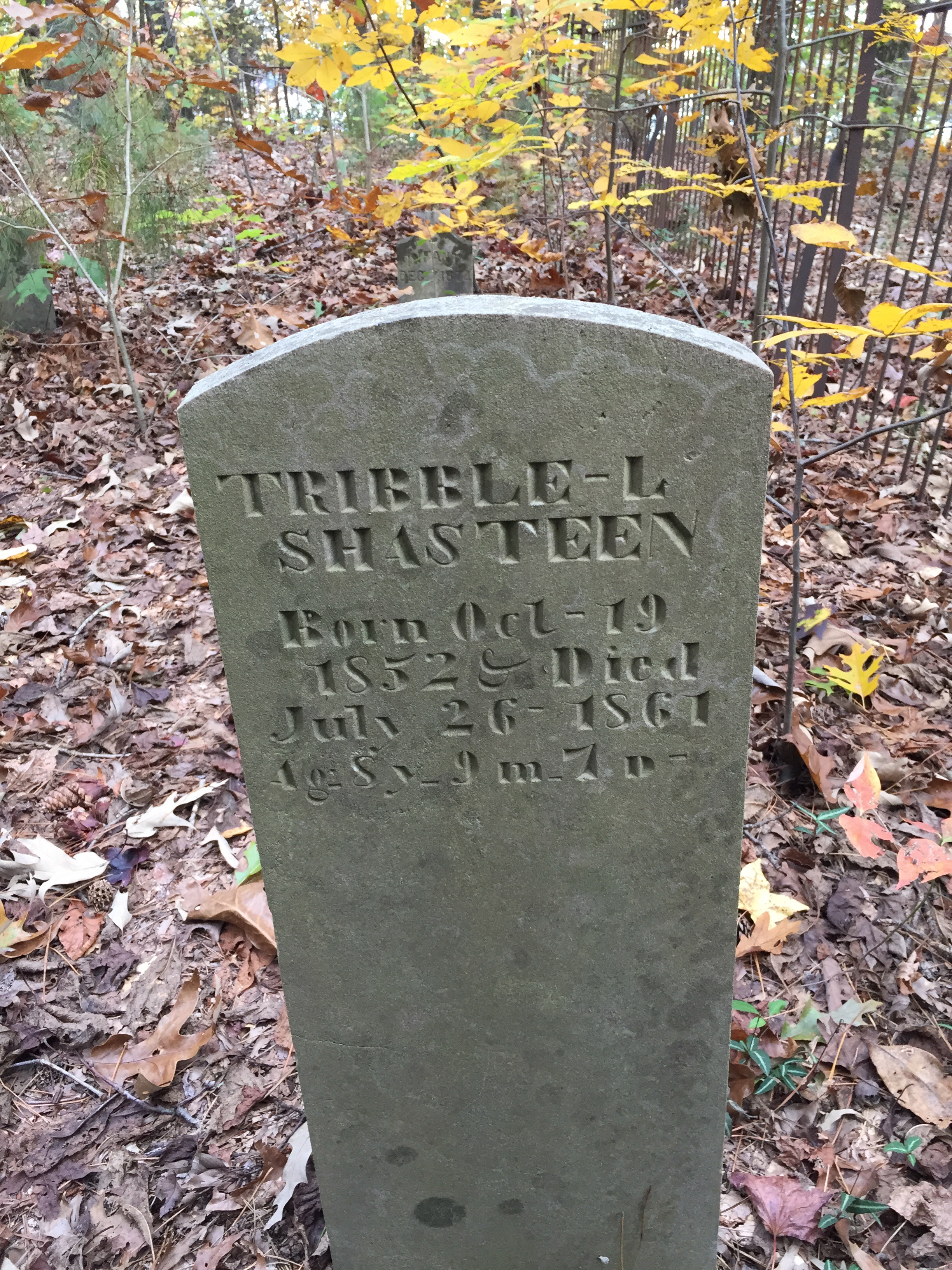
In any event, nothing demonic is suggested by Devil Step Island today. It’s a peaceful place with a pleasant little campsite that is, perhaps, a little too close to the graveyard. Below are some pictures from our outing, my favorite of which is the detail up above from the gravestone of Mary E. McCoy, wife of R.S. Shasteen, who died in 1910. It features a pretty dove in flight over the word HOPE. Doves are usually associated with Peace, of course, but perhaps this is the one released by Noah, who “could find nowhere to perch because there was water over all the surface of the earth” (Genesis 8:8), thus anticipating the flooding of area by the TVA? No place to perch, that is, but Devil Step.




Posted in Bible, Birds, Cemeteries & Funerals, Emblems, Nautical, Race, Tennessee, Uncategorized
3 Comments
Post in which social media doesn’t suck
So, I’m in Milwaukee for the Film & History conference where I gave a talk on Nina Paley’s film, Sita Sings the Blues and her ongoing Seder-Masochism project. Vince Tomasso, one of the other attendees, has been tweeting the conference, and there was a nice response from Paley herself! Woot!
As a classicist, it is so rare to hear back from an artist you’re writing about …

Postscript. So I ended up sending Nina Paley my paper, which she seems to have read right away. The last part of what I had written reads,
If her work seems blasphemous, though, I will tell that of the many, many people whom I have forced to watch clips like “This Land is Mine” or “Tabernaculous!,” most have ended up at some point putting their hands to their mouth to say, “Oh my God!”
Her response, edited:
“Oh my god!” I love it. It is amazing and flattering and encouraging to see my work written about like that. Thanks! {there follow a few corrections, and additions} Thank you again, my cockles are warmed for the week.–Nina
So how cool is that!? I’m not sure that I will do much more with this paper, at least not until all of Seder-Masochism is out and until I’ve made substantial progress on my Pilate book. But it is nice to know that I’m not dead wrong in my initial read of these two fine cartoons.
Posted in Bible, Cartoons, Mythology, Uncategorized
Leave a comment
Protected: You have heard of Gettysburg, but does it haunt you?
Posted in Cemeteries & Funerals, Family, Ireland, Military, Sewanee, Slavery, The South, Uncategorized
Enter your password to view comments.
Damnatio Memoriae Sevaniae

A year or so ago, I had an exchange with the United Daughter of the Confederacy about the monument to CSA General Edmund Kirby-Smith on the campus of the University of the South in Sewanee, TN, where I teach. My proposal was to hire an artist to make an installation to sit in front of the monument to draw attention and enter into a sort of artistic dialogue with it. The UDC didn’t like my idea but, as I never formally suggested it to the administration, nothing came of it. Frankly, it seemed like a pipe-dream that anything could happen with the monument.
Since that time, a lot has happened. Trump has become President and extreme right-wing movements have been emboldened. During the summer, a large protest of Neo-Nazis marching together with the KKK took place in Charlottesville, Virginia, and a protester was killed by them. The rallying point for the alt-right demonstrators was a statue of Robert E. Lee. In the wake of Heather Hayer’s death, communities across the nation began to reconsider the purpose of their monuments honoring of the Confederate cause. The mayor of Baltimore ordered all Confederate statues taken down in single night. Protesters in Durham, NC, took matters into their own hands and, like people in Eastern Europe after the fall of Stalin, pulled another such statue down from its pedestal themselves.
Locally, interest was renewed in our own Confederate memorial in light of these events. The Sewanee Slavery Project, headed up Woody Register and Tanner Potts, held a forum to discuss the monument, and all such signs of the Lost Cause dotting the campus. The day before, the Vice Chancellor sent out an e-mail indicating that, at the request of one of the Kirby-Smith family, the monument was to be relocated to the University Cemetery, presumably by the general’s grave.
As it happened, I had wanted to get the feeling of some of the Kirby-Smith family living in town, and was talking with one of them when the e-mail came out. I know he felt left out of the conversation–the cousin who had made the request lives in another state–but acknowledged that, had he or any of his local relatives been consulted, they would probably have agreed to the moving of the monument to their great grandfather. Not that their feelings about the matter were determinative, but still it might have made sense to have consulted them. For the sake of the family, some of whom I consider close friends, I am happy to see the monument removed and to see this particular burden lifted from them.
In any event, the Vice Chancellor made his decision a month or so ago, and time has marched on. The leaves have changed, the weather has gotten cold, and soon we will turn back the clocks. It was only a matter of time, I knew, before I would walk by the monument and see–or rather, not see–the General’s visage in bas-relief on its plinth there on University Avenue. The sandstone all around has grown dark and discolored, but the spot where the medallion was affixed is still the bright yellowish-brown it was back in the 1940s when the monument was dedicated. The letters of the general’s name have not been removed, or at least not yet. Soon, I suspect they and the plinth itself will be gone as well.
Speaking for myself, I wish it would remain in the very place where it is right now, and in the very condition of my photo up above. The Romans had a term for this (or rather, they had the concept, to which classicists have given the term), damnatio memoriae, “the condemnation of memory.” The process did not involve the removing of all traces of a disgraced public figure, but rather removing the name and image in such a way that they could still be made out. The point was not to consign the figures in question to oblivion once and for all, but rather to consign them to oblivion every single time one came across their oddly missing presence.
And I wish the same would happen to the general, to the cause he fought for, and to the organization that put up this memorial. I would like it if, every time we walked down University Avenue, we saw his ghostly absence on the street, and remembered that once, on this spot, it was OK to honor those who fought a brutal war to keep others enslaved. It’s all too easy to decide the past is past, that it has nothing to do with us, and to let it all go down the memory hole. And then, one pleasant summer day, there’s a neo-fascist torchlight parade in a university town and somebody gets mowed down by a car. Evidently, amnesia isn’t a viable solution to our national ills concerning racism. To forget the disgraceful reasons the Civil War took place, and the disgraceful people who fought for it, is not enough. We must always remember to forget them, and to remember why we are doing so.
* Quite a few people, some of whom I admire, have taken issue with my line “and the disgraceful people who fought for it,” so I’ve decided to give it a little damnatio memoriae of its own. I’m still torn on this, to be honest. Disgraceful causes don’t do the fighting for themselves, after all. But then I think of the even-handedness with which Homer treats both the Greeks and the Trojans, perhaps possible only because it is a fictional war without real-world consequences.
This summer I read Plato’s Laches and parts of the Protagoras on courage–I was especially interested to know whether it is possible to be noble in the service of ignoble causes? Could we honor Confederates for their gallantry, even if we had to condemn their ideology? I don’t think Socrates ever really sorts the issue out, but if all virtues are part of one great Truth, he thinks it’s not possible for any of them to ultimately be at odds with one another.
In the end, I suspect that name-calling is not especially virtuous itself. There’s something about motes and beams in another ancient text that I recall.
Posted in Cemeteries & Funerals, Classics, Emblems, Military, Race, Sewanee, Slavery, Statues & Monuments, The South, Time, Uncategorized
6 Comments
Regnet Pax Omnem Per Terram
This morning’s Sewanee Elementary School assembly was a real treat–this year’s petition for peace for the Peace Pole was in Latin: “Regnet Pax Omnem Per Terram.” To prepare, Kathryn Gotko Bruce had the 4th grade students do some study on ancient Rome. You can see some of the posters of their work lining the hallway (ancient gender relations seem to have especially surprised the kids–about Roman men, one student wrote “They’re Evil!”). After the petition was read, 5th graders performed “Dona Nobis Pacem.” Jim Turrell and I had discussed whether they would use classical or church pronunciation, and in an ecumenical spirit, they used both!


Posted in Classics, Education, Emblems, Language & Etymology, Music, Sewanee, Uncategorized
1 Comment
Capone among us
This morning in McClurg, Jack Nance just told me a great story. Back in the 30s, he says, when Al Capone was being sent on his heavily-guarded way to the Atlanta Penitentiary for tax evasion, he went by way of the Dixie Flyer. “That train had to stop in Sherwood to make a connection, and so they let all the kids off of school that day so they could go down to the station and look at Al Capone.” Jack says he’s heard that from old-timers in Sherwood, and claims to have seen it in some magazine as well (perhaps this one?). Jack’s a great story-teller and singer too, as you can see in the video clip some of my students made below.
Capone, of course, is also said to have been a frequent guest at RyeMabee, the stone building that’s now High Point restaurant in Monteagle (check out this NPS document, p. 16) ; some even say he built it. High Point doesn’t discourage the stories, as you can see, nor do I suppose would I if I ran the place. A brutal gangster, Capone was a colorful character nonetheless and the desire to connect local history with a larger-than-life figure is understandable. But what’s the shelf-life of a criminal reputation, anyway? It’s Halloween next week and I remember one of my sons asking me about costumes a long time ago. Pirates were bad people, he said, but now it’s OK to dress up as them. So will kids be trick-or-treating as al-Qaeda terrorists in a hundred years?
Posted in Education, Family, Music, Sewanee, Tennessee, Uncategorized
Leave a comment
Protected: What’s in a Place-name?
Posted in Drama, England, Ireland, Language & Etymology, Military, Sewanee, Slavery, The South, Uncategorized
Enter your password to view comments.


 uncomelyandbroken