-
Recent Posts
Recent Comments
Archives
- November 2025
- December 2024
- April 2024
- October 2021
- February 2021
- September 2020
- July 2020
- June 2020
- May 2020
- April 2020
- March 2020
- January 2020
- August 2019
- July 2019
- June 2019
- May 2019
- April 2019
- March 2019
- February 2019
- January 2019
- December 2018
- November 2018
- October 2018
- July 2018
- June 2018
- May 2018
- April 2018
- March 2018
- February 2018
- November 2017
- October 2017
- September 2017
- August 2017
- April 2017
- February 2017
- October 2016
- September 2016
- May 2016
- April 2016
- March 2016
- February 2016
- January 2016
- November 2015
- October 2015
- September 2015
- August 2015
- July 2015
- June 2015
- April 2015
- March 2015
- February 2015
- January 2015
- December 2014
- November 2014
- October 2014
- September 2014
- August 2014
- July 2014
- June 2014
- May 2014
- April 2014
- March 2014
- February 2014
- January 2014
- December 2013
- November 2013
- October 2013
- September 2013
- August 2013
- July 2013
- June 2013
- April 2013
- March 2013
- February 2013
- January 2013
- December 2012
- November 2012
- October 2012
- September 2012
- August 2012
- July 2012
- June 2012
- May 2012
- April 2012
- March 2012
- February 2012
- January 2012
Categories
- Animals
- Astronomical
- Bible
- Birds
- Books
- Boston
- Cartoons
- Cemeteries & Funerals
- Classics
- Coal
- Dogs
- Drama
- Education
- Emblems
- England
- Family
- Film
- Florence
- Ireland
- Italy
- Language & Etymology
- Military
- Music
- Mythology
- Nautical
- New England
- Numismatics
- Oxford
- Poetry
- Pontius Pilate
- Race
- Rivers
- Rome
- Saints
- Scotland
- Sewanee
- Slavery
- Sports & Games
- Statues & Monuments
- Tennessee
- The South
- Time
- Trees & Flowers
- Uncategorized
Meta
Protected: To Spiral (transitive)
Posted in England, Language & Etymology, Sewanee, Sports & Games
Enter your password to view comments.
Protected: Regarding “Our F***ing City”
Posted in Boston, Language & Etymology, Sports & Games
Enter your password to view comments.
Protected: Penny with Counterstamp
Posted in Classics, Emblems, England, Numismatics
Tagged Canadian penny, Mason
Enter your password to view comments.
My First and Only Bowtie
A few months into my freshman year, I decided to conduct some sartorial experiments, hoping against hope I might discover a sense of style. One day I saw a checked bowtie in a store downtown and bought it with the thought of wearing it to school the next day.
There was a only silence during my morning classes, a fact I attributed tothe seething envy of my fellow students, and afterward, I proudly strolled off to the cafeteria for lunch. Checked bowtie, I thought to myself, you are very cool.
A few minutes later, I passed by a table where some friends of mine were sitting. One of them raised his finger and shouted, “Waiter!”
What?! Making fun of my bowtie?! Angrily, I sputtered, “Fuck you, asshole,” at which my nemesis looked genuinely shocked.
“What did you say?” he asked.
“You heard me,” I said, gathering my indignation. “FUCK YOU.” His eyes grew wide.
“I can’t believe you would say that,” he replied, and pounded the table. “That’s it. Let me speak to your manager.”
My bowtie was checked, but that was checkmate. Except with a tux, I have never worn a bowtie again.
Posted in Uncategorized
4 Comments
Last Night’s Fireball
I was outside talking to my friend Elizabeth yesterday evening, about 6:45 Central, when, all of a sudden, an enormous fireball appeared in the sky behind her. “Whoa! Is that a comet?!” I asked. “I hope it’s not a burning airplane,” she replied. Although I had my phone with me, I did not have the presence of mind to take a picture.
Evidently what Elizabeth and I saw was a fireball, a meteor “brighter than the planet Venus,” according to the American Meteor Society website, who listed the object as event #2158 for 2013. It was seen by people not just in Sewanee, but all across the South and Midwest.
It was beautiful. Life affirming. I feel very small, wrote someone from Birmingham, Alabama on the AMS page, while another person from Glasgow, Kentucky thought it was scary and beautiful, lasted longer than i thought it would. A witness from Duluth, Georgia, claimed, Most impressive meteor I’ve seen in my 36 years.
But there were others who were unsettled by the fireball. According to the blog End Times Headlines (whose mission “is to inform our readers and viewers of Prophetic Events and how they are unfolding before our very eyes thru News and Headlines presented from a Prophetic Prospective in light of the Holy Bible”), the fireball represented a “sign in the heavens,” and at least one person commenting on their Facebook page claimed, “he worald will be destored by fire and i beleive this is just a warning to alll to repent and fall face down and pray.”
Personally, I did not feel especially small, nor was I inclined to fall forward and pray. It was an astounding event, however, and I made my way home with a genuine sense of wonder.
Postscript. Here’s a video from Alabama on Youtube of the fireball:
Posted in Astronomical, Tennessee
Leave a comment
The Core, and the Core, and the Core
This is the text of a talk I gave last year at the faculty retreat. It seems like ancient history now! (The title is a pun on General MacArthur’s final remarks at Westpoint in 1962)
“The Core, and The Core, and The Core,” or
Remarks on the Learning Objectives
of the Proposed New General Education Curriculum
University of the South Faculty Retreat
Dubose Conference Center
Monteagle, Tennessee
August 24, 2012
Good morning. In the next fifteen minutes or so, I want to go over the first part of our committee’s proposal to you about the new general education curriculum, in particular the learning objectives that are numbered 1 through 6 on the sheets I hope you all have there, and to give a few examples of how we see currently-offered courses fitting into those objectives.
Before I get to that, however, let me say just a little about how we have arrived to the proposal that we have before you. Many of you will remember the Convocation in the fall of 2010, when the Vice-Chancellor gave us the charge to revise the core curriculum. As a committee, we were encouraged to think broadly about general education, not to tweak here and there, but rather to start from scratch. The appearance shortly thereafter of Brown Patterson’s book, The Liberal Arts at Sewanee: A History of Teaching and Learning at the University of the South was fortuitous for us. Brown’s meticulous account details how the curriculum has always, every twenty years or so, been re-thought and re-deployed. The Sewanee faculty have, since the college’s inception, approached matters of curriculum in a dynamic spirit, giving students what they have needed for the world they were entering.
So, our committee got to work, and the first thing we did, quite rightly, was to ask you, the faculty, what principles ought to guide us in thinking about building a gen ed curriculum from the ground up. We met with you in small groups in Gailor Hall in the spring of 2011, benefited from further conversations with you over lunches in McClurg in the fall of 2011, brought a number of possible models to you for discussion in Convocation Hall in the spring of 2012, and now, as the fall of 2012 is about to begin, have brought you our proposal.
You were participants in the discussions, and so will not be surprised to discover that there are no sweeping proposals for reform here, no call for a raft of new classes or programs, no demands for re-structuring of academic units. The Sewanee general education curriculum is a strong one and our proposal builds on those strengths, while also introducing those elements we kept hearing from you would be desirable, in particular, a better articulation of the core curriculum’s coherence, and an increased flexibility in gen ed offerings as a whole.
So what was the right way to do that? Please believe me, when I say that we had many difficult and frustrating meetings over the last two years, and it is a testament to Bran Potter’s perseverance and boundless patience that we have all come through in one piece. The question before us was a simple one—“what does the generally well-educated person need to know in the twenty-first century?”—but not simple one to answer. In the end, we gave real thought to what is distinctive about an education dedicated to the liberal arts, as opposed to what a student might receive at a research or technical institution. In thinking through that fundamental difference, we were led to think about the differences between general education and the more focused, major field of study. We concluded that, while our majors are mostly housed in individual departments, that wasn’t true of general education, which instead belongs to the college overall. Our proposal reflects that idea, and as a consequence, faculty will find in our proposal that the courses they offer for general education might sensibly fit in to a number of different objectives. In doing this, we are acknowledging another fact, that disciplines are more permeable than they were when the core curriculum was last framed.
With that as prologue, then, let me turn to the learning objectives outlined in Section I (leaving the competencies in Roman numeral II for Scott Wilson to discuss presently). Again, we were guided by our sense that we could not imagine a person with a Sewanee education not having some acquaintance with these areas. To begin with, the generally well-educated person should be capable of thes things:
- Reading Closely: Interpreting the Literary Arts
- Making Something New: Invention, Analysis, and the Creative Process
- Seeking Answers and Living the Questions: Morality, Ethics, and Citizenship
- Developing Perspectives: Societies and Cultures, Past and Present
- Observing and Experimenting: Quantitative and Scientific Thinking
- Comprehending Cross-Culturally: Language and Global Studies
Now, as I said, there are a number of core courses that we currently offer that could reasonably be thought to fulfill more than one of these objectives, and because of this, we envision many courses having two designations (or “double-dipping,” as we have been calling it in the committee). In this, the nature of much of general education, its broadness and inherent interconnectedness, is something we are simply recognizing.
Let me note in passing that, as we want to encourage breadth, “triple-dipping” will not be recommended.
Okay, so we have these designations, you say. Can you put some flesh on these bones? Let me offer a few examples.
1. Reading Closely: Interpreting the Literary Arts. In this category, we of course will find English 101, as well as any other courses the English department chooses to designate. A literature course taught in English offered by another department would also make sense here, as for instance, an already well-established course like German fairytales or a course on Dostoevsky taught by the Russian department.
2. Under the rubric of Making Something New: Invention, Analysis, and the Creative Process, certainly classes offered in the visual and performing arts ought to be counted, as well as courses in the study of art or music history as in the old Fine Arts category. But in addition, we envision courses in Creative Writing or Computer Modeling also fulfilling this objective, and other places where creativity and imagination are at the heart of the course. Many of the courses here will pair readily with other learning objectives, we imagine. Documentary film-making in Haiti, for instance, would certainly seems to create a bridge between this category and “developing perspectives.”
3. Seeking Answers and Living the Questions: Morality, Ethics, and Citizenship. I have no doubt that there will be many Philosophy or Religion courses currently offered that will fall under this rubric, but I have to imagine that some classes in Environmental Studies or Anthropology will also fit here, or a course that I might want to develop about Socrates. As citizenship is component of this objective, many courses from Poli Sci are appropriate here, naturally.
4. Developing Perspectives: Societies and Cultures, Past and Present. There are a vast array of course in History and the Social Sciences that seem at home in this objective, as might some courses offered now by, say, Religion or Art History. The broad purpose of this category is to introduce students to the study of societies and cultures, although the interaction of individuals within societies or cultures seems to offer room for the the possibility of double-dipping with Seeking Answers or Making Something New.
5. Observing and Experimenting: Quantitative and Scientific Thinking. In this proposal, Quantitative will not be synonymous with something offered by Math, but could also encompass Statistics, some courses in Political Science as well as Economics. In the Sciences, we envision a continuing of the shift toward experiential learning; and we were heartened to hear some of our colleagues considering the idea of developing an interdepartmental sequence akin in structure to that of the Humanities program.
6. Comprehending Cross-Culturally: Language and Global Studies. Sewanee has always held language study and cross-cultural comprehension in high regard, and as you might expect, this area is already rich with possibility. It is easy to see, too, how courses now offered in foreign language departments might be paired with some of the other learning objectives, particularly Close Reading. But for students who choose to forego the 300-level language course, some offerings already offered in History or IGS, for instance, can help students fulfill this objective.
Now this final example brings us to a point that we will admit not to having a full-formed answer for. In short, who makes the call about which learning objective or objectives a course satisfies? Who is the decider? That is probably something we need to figure out together. One the one hand, we could expand the Curriculum and Academic Policy’s charge, or have a group of six sub-committees for each objective. That would be one way. Another idea is to simply let the professors of record determine this for themselves for their own courses. Or perhaps the professors make this determination in consultation with their departments, thus allowing the departments to keep some hand in the process. There are advantages and disadvantages to each of these methods, and, as I say, we can work together to figure it out.
I think it’s easy to see, in what I have just outlined, how the matter of flexibility is achieved here. In addition, our proposal also allows students who have achieved a 5 on the Advanced Placement Exam or done IB coursework to exempt out of some of these categories, thus giving students credit for their successful work in high school. But to focus on the work of our own faculty: if a German or Classics professor can be contributing in Close Reading objective, or a Computer Scientist is helping students to make something new, you can see how choices open up for students in a way that our present curriculum does not allow.
We sometimes hear about “the empowering nature of choice,” and while it is a truism, there is still a certain amount of truth to it. Given greater choice, one of the things we imagine to be lost will be that uncooperative frame of mind that students occasionally exhibit in core classes. As one who has dragged students through four semesters of Latin, I will not miss that. The phrase “I’m doing this because I have to” is, by its nature, antithetical to the spirit of a liberal arts education, through which we hope to be training people to make their own choices.
Let me conclude by addressing briefly one last point, the one I am most happy with. In our conversations with faculty, we heard time and again that you wanted to see some more deliberate sense of coherence in our core. That’s a tall order, but it becomes less so when you think about how that idea of coherence has ever really been achieved. It comes about in conversation, of course. Sewanee can rightly pride itself on its close student-faculty relationships, and it makes all the sense in the world that our core curriculum needs to cease being a checklist to be gotten through and to start being a springboard for genuine dialogue about intellectual formation, so that as advisors, we can move away from being “registration buddies” (to use a phrase I recently heard from a colleague) to instead become faculty mentors as early as the August of the freshman year, when we first meet our advisees, as many of us will do tomorrow afternoon. Speaking for myself, I think that instead of talking to students about which History 100 section best fits their schedules, there will be far more productive conversations to arise from asking them things like, What perspectives would you like to develop? What answers are you seeking? Is there something new you would like to make? And how do you see it all fitting together?
And on that note of making new things and seeing how it all fits together, let me bring my remarks to an end.
Posted in Classics, Education, Military, Sewanee
2 Comments
Gipson’s Switch to Midway Road (almost)
Such a pretty day for a bike ride today, so I decided to head down the Mountain Goat Trail beyond St. Andrew’s down into Monteagle. This part of the MGT will be paved in the next few months, I’m told, but I wanted to see it while it was still sort of rough.
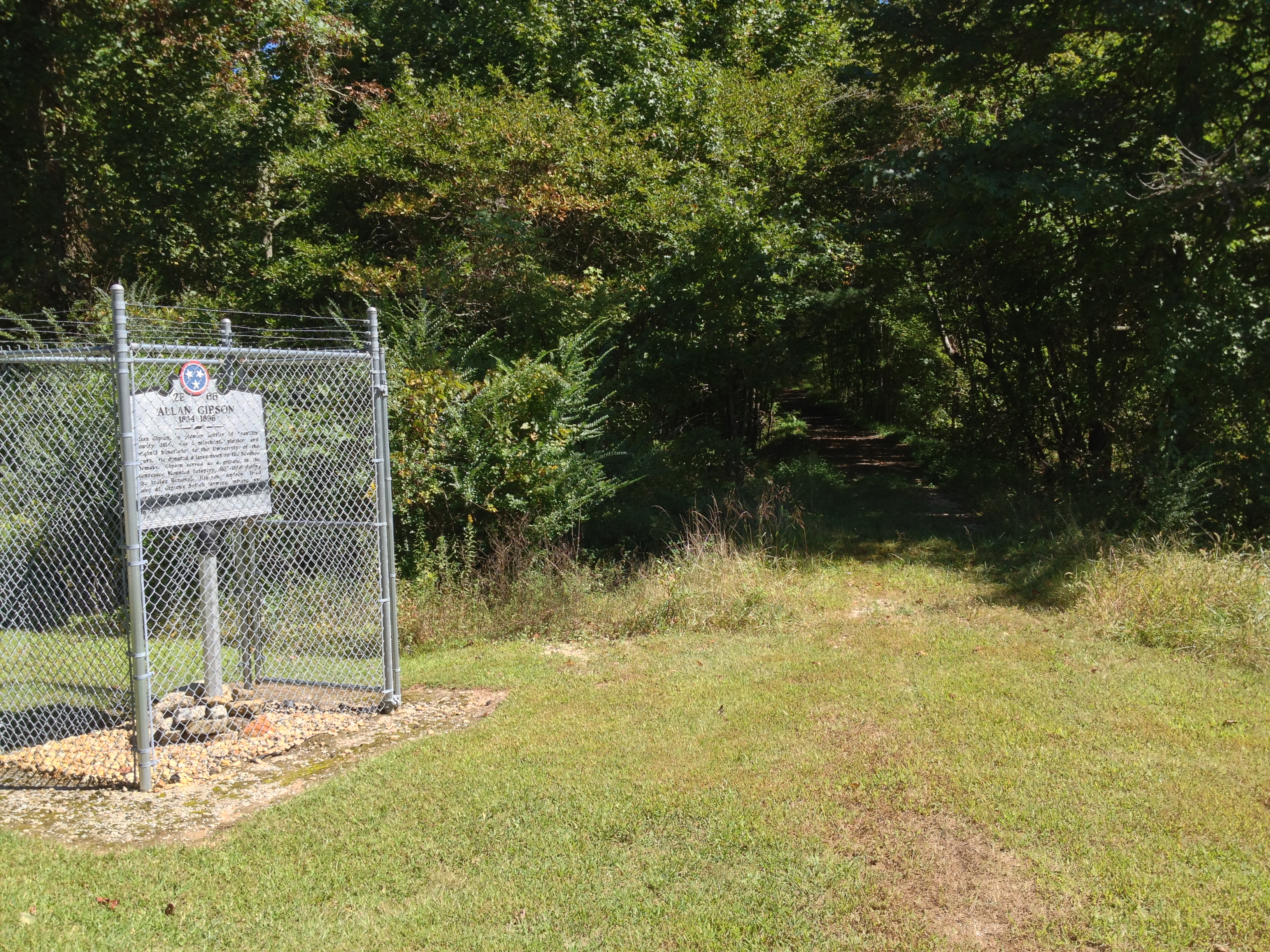
Back when the train still ran, this spot was called Gipson’s Switch, as the (heavily-fortified) historical marker by the trailhead indicates.
You see the backs of houses as you ride along …
… as well as a basketball hoop set up at the end of a cul-de-sac.
There are some houses you peddle by a little faster. NO TRESPASSING, says the sign. Not to worry, I won’t!

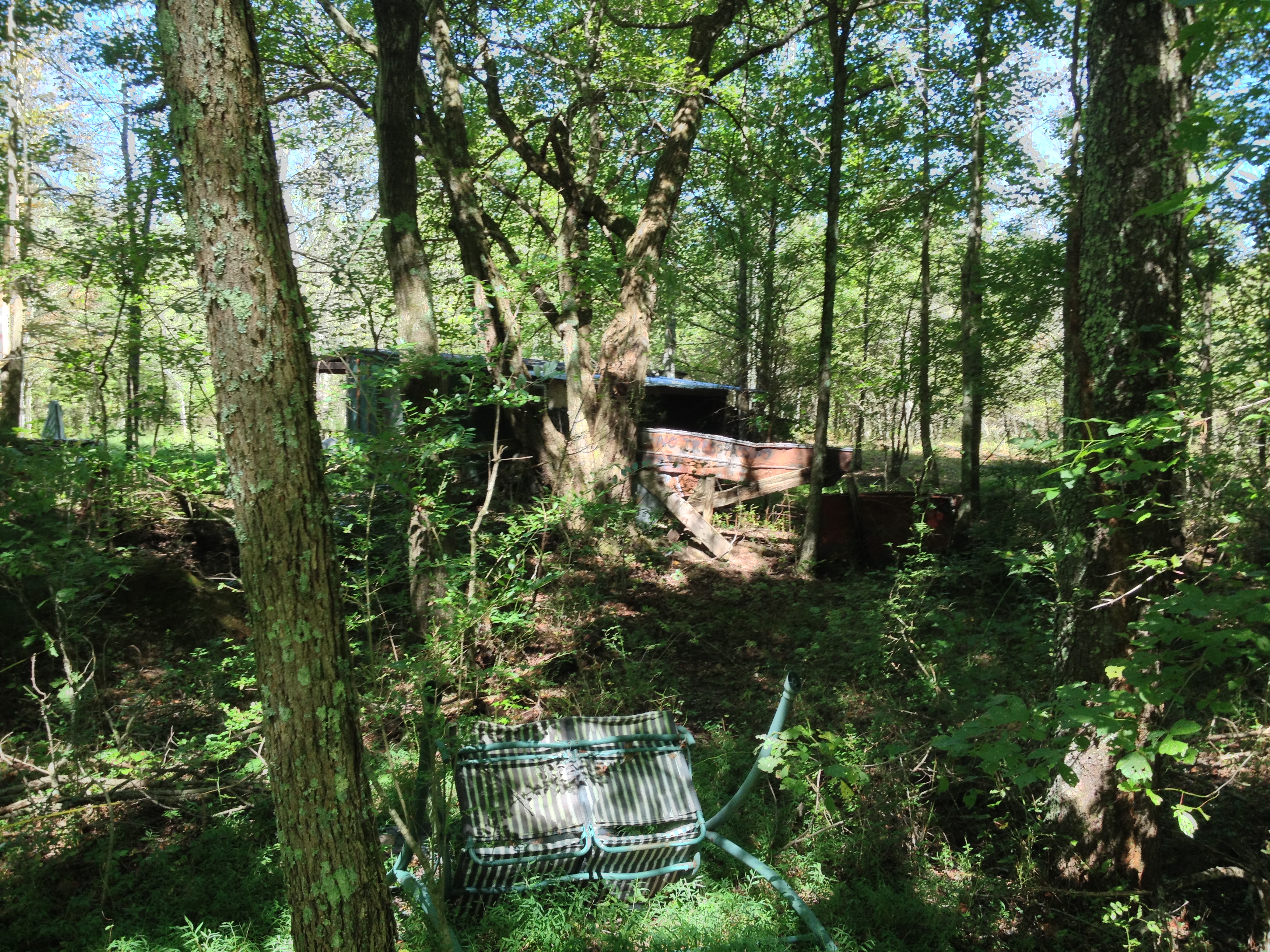
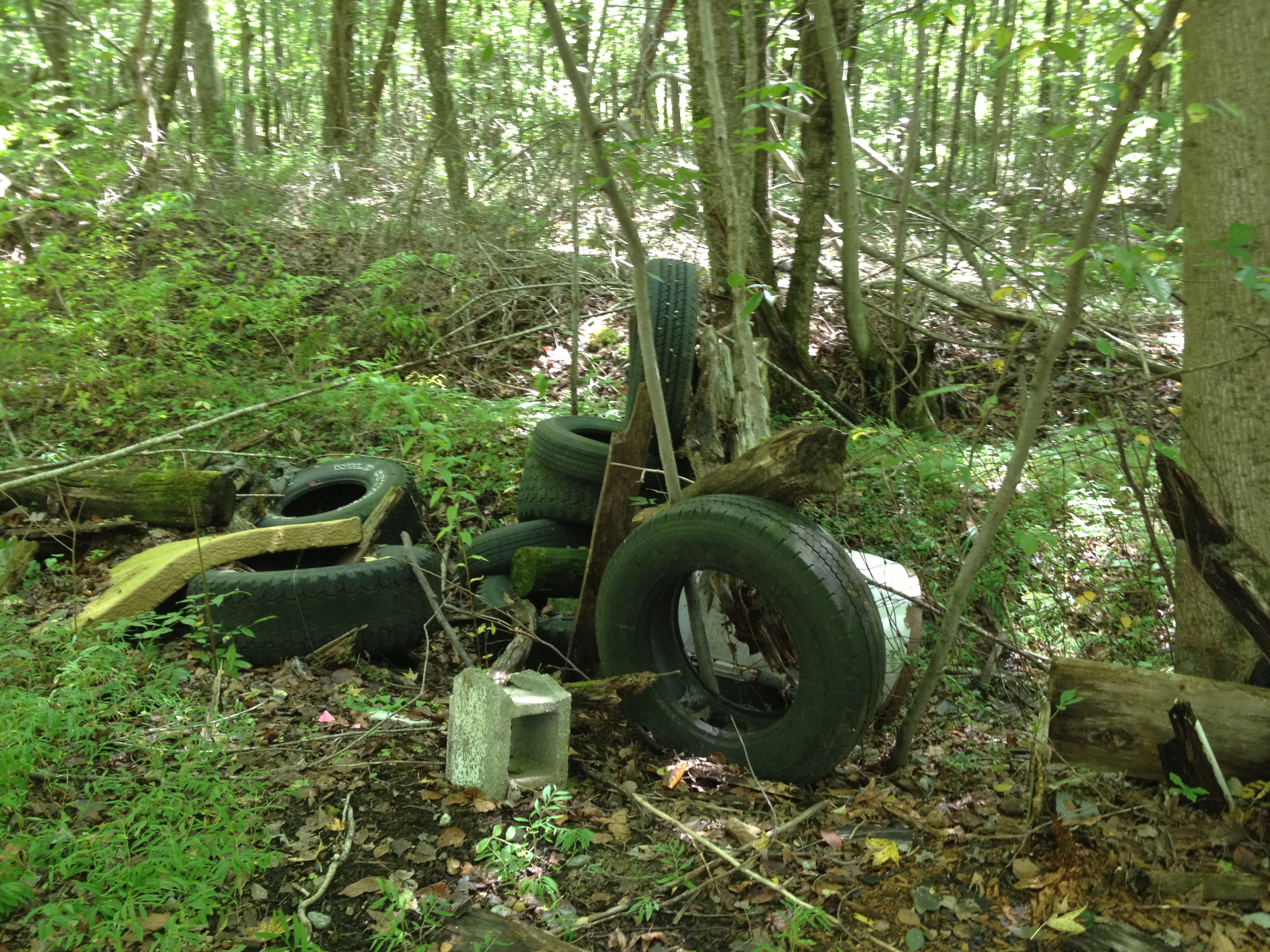
Further down is a pile of junk, festooned with a DANGER KEEP OUT sign. It looks like some kind of post-modern art installation. Maybe it’s called “Danger/Keep/Out”? Is it meant to provoke questions about our relationship to the discarded past? Is the “danger ” in what we “keep,” or in what is “out”?

Other sights further along, however, are less intellectually challenging and more simply charming.

This gate leads to a pretty field, but I think I’ll just look into it from here.
I hadn’t realized that. on this path, I would arrive to the back entrance of Pearl’s. I’m tempted but decide not to stop in for some crème brûlée.
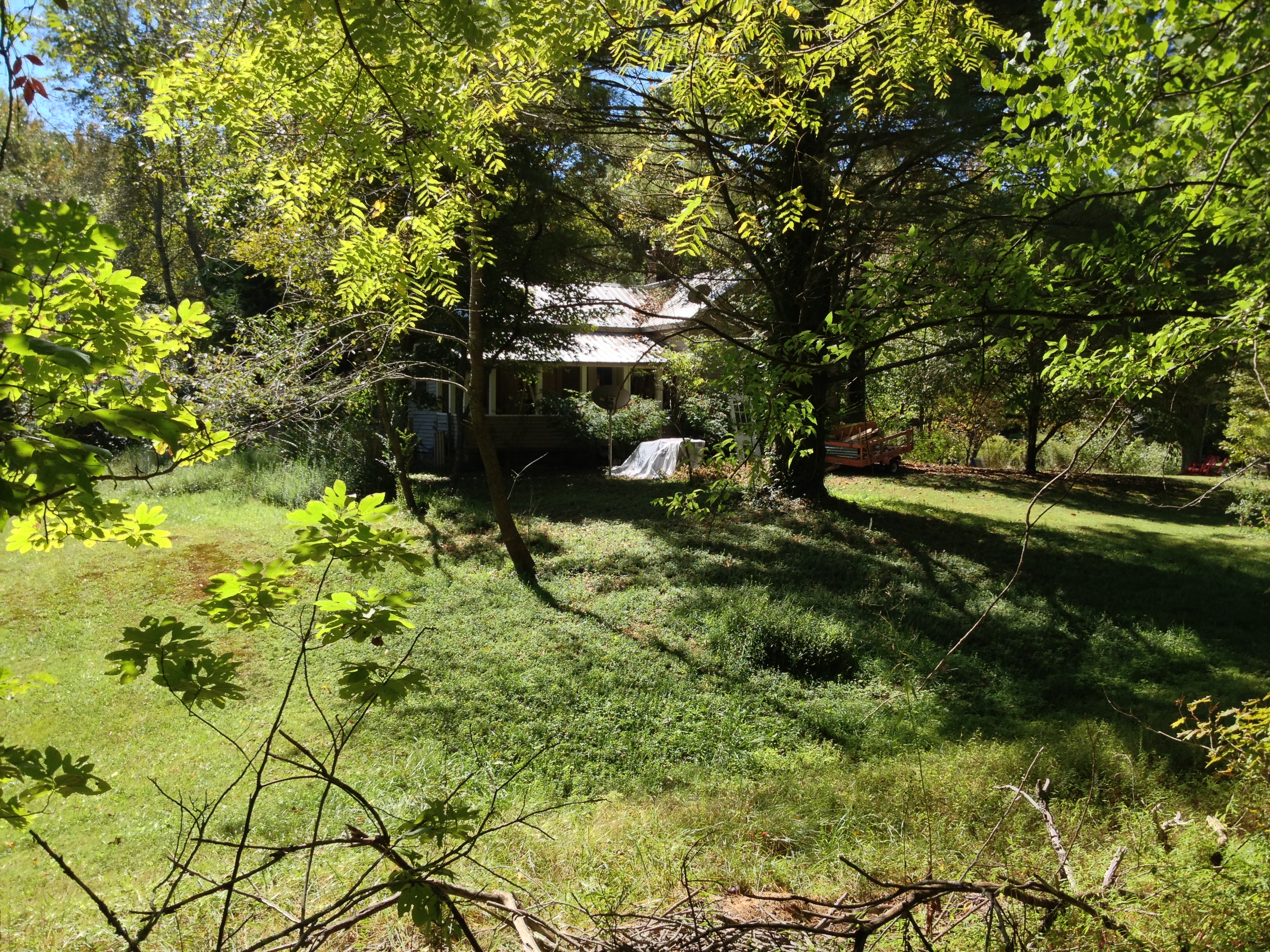
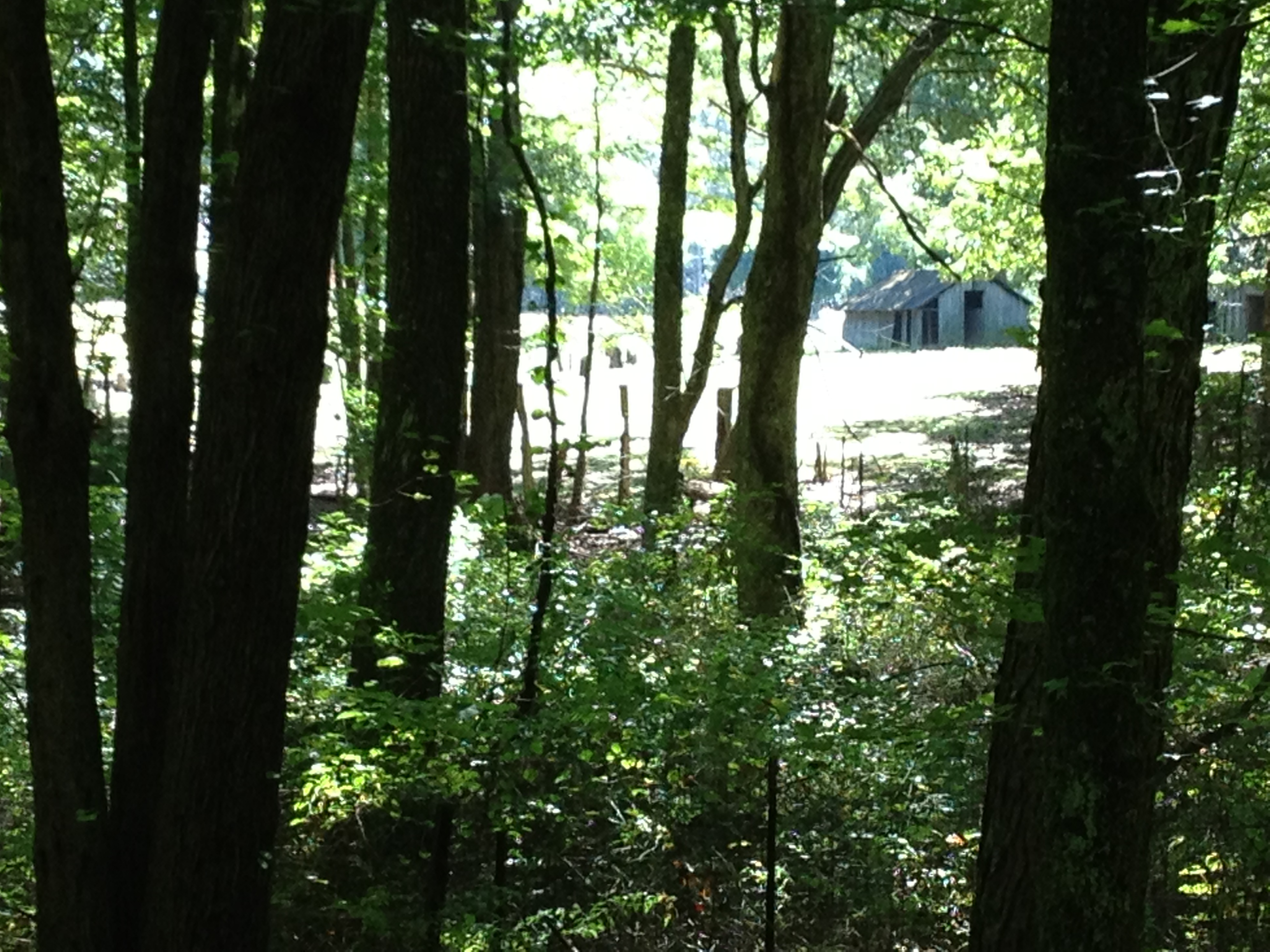
Another lovely farmhouse seen through the woods, and a reminder that this was in fact an old railroad bed.
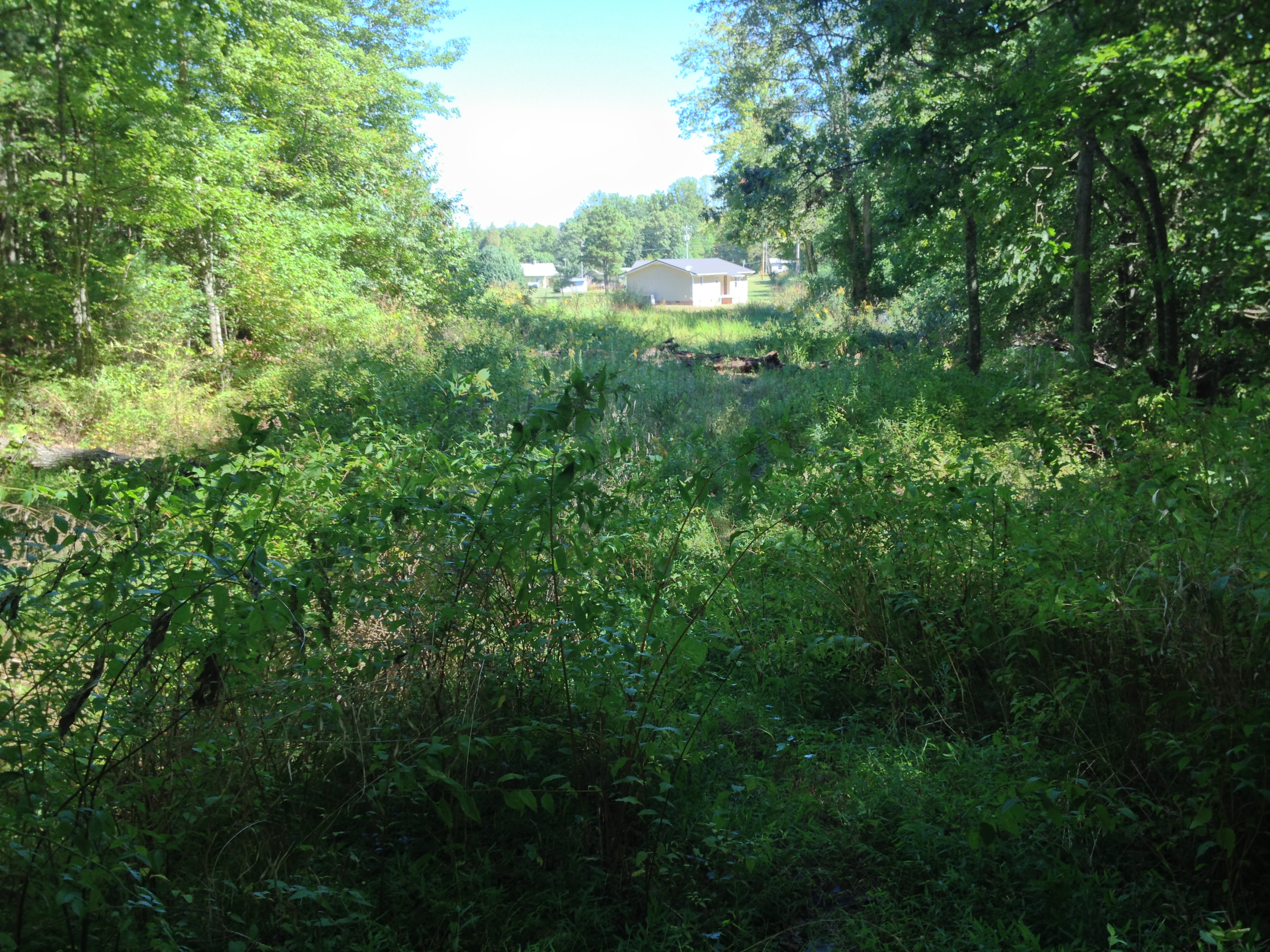
This is the end of the Mountain Goat Trail, at least for now. Ahead you can see houses that are at the corner of 41A and Midway Road. I’m not going to try to go through the chiggery high grass, or over that fallen tree ahead. But in the coming months, it will be fun to see what comes of the rest of the trail.
Postscript, March 22, 2015. So, this part of the Mountain Goat Trail has been paved now and, though it is not officially open, I can tell you that it is a very pleasant ride. The “No Trespassing” shack is gone, as is the pile of junk. It was not possible for the trail to continue into Midway, so the very charming bridge below was built up around the Pearl’s parking-lot.
Postscript, June 28, 2015. Took a nice ride today along this part of the trail and, as always, enjoyed the view of the backs of the farmhouses along the way. Later in the afternoon, came across this passage from Hawthorne’s Blithedale Romance (chap. 17):
… as a general rule, that there is far more of the picturesque, more truth to native and characteristic tendencies, and vastly greater suggestiveness in the back view of a residence, whether in town or country, than in its front. The latter is always artificial; “it is meant for the world’s eye, and is therefore a veil and a concealment. Realities keep in the rear, and put forward an advance guard of show and humbug. The posterior aspect of any old farmhouse, behind which a railroad has unexpectedly been opened, is so different from that looking upon the immemorial highway, that the spectator gets new ideas of rural life and individuality in the puff or two of steam-breath which shoots him past the premises.
Posted in Sewanee, Sports & Games, Trees & Flowers
Leave a comment
The Way We Used to Roll
The Glidden Auto Tour was coming through town this week, I learned, “the largest premier antique automobile touring event in the world,” according to the press release which I forwarded to the principal of the local school, a friend of mine. He wasn’t sure what to do with it, exactly. Given the pressure of standardized tests and obligatory instruction, there was not much room for any unprescribed activities. “We’ve even had to cut out one recess and scale back on Art and Music,” he told me. What harm could it do, I asked, to go outside for half an hour and watch a motorcade of antique cars go by, right in front of the school? He said he’d think about it.
When the day came, I went out to see what was happening. The cars were due to pass through town, at 10 a.m. The weather was lovely. At the bookstore near my office I sipped on a cup of coffee, checked my phone, looked at a magazine, waited, and then becoming impatient, walked back to my office. Perhaps I had the day wrong? But then it occurred to me that the old cars were probably just running behind schedule, so I decided to give it one more try. I hopped into my Honda for an early lunch and took a back-road downtown.
When I got there, near the elementary school, sure enough, there they all were, car after classic car coming up the street–Model T’s, Packards, Model A’s, you name it, all in perfect condition, coming up the main street. And there sitting on the curb in the front of the school were the schoolkids with their teachers behind them. I parked and crossed the street to join them.
As each auto come up, the children would cheer, and the drivers would sound their horns in response. Some of the teachers were taking pictures of the cars, and some of the drivers were taking pictures of the kids. “Look, that car has a GPS,” someone pointed out, and we all laughed at the incongruity. One teacher was explaining to her young charges that this was what cars used to look like. What differences could they see between these and modern cars?
My friend, the principal, walked over. “I’m almost choking up,” he said. “Look at all of this. The kids, the teachers, everybody’s happy. I almost didn’t do this, but I looked out the window at this beautiful day, and just decided everybody should go outside.” He stopped and looked around. At one point, the fifth graders tried to start the wave, but by the time it got to the third graders, it petered out. Teachers were trying to explain to them what the wave was but they were too excited to listen.
“Pretty soon,” he continued, “we’ll have to go back in. Back to the mandatory curriculum. Back to teaching to the test.” We watched a red Bentley putter on by, in all its antique charm. “School used to be like this, full of spontaneous moments.” A few more minutes passed, and a few more vintage cars. “Things are different now.”
The old-fashioned parade began to subside, as did the beeps and cheers. “Well, I guess it’s all over,” the principal said. One more Model A passed by, but in silence. By that time, the teachers had gotten the children up from the curb and led them, single-file, back into the school.
Posted in Education, Music, Tennessee, Time
2 Comments
The Daisy Hereabouts
A bit of floral folklore, previously unknown to me, has to do with the spread of daisies in the area during the Civil War. Perhaps some of my friends in the sciences could add some useful remarks on the matter? In any event, according to the remarks of a certain “C.G.”–whom I take to be Charlotte Gailor (a friend notes that she taught botany at Sewanee, in fact, during WWII)–recorded in the old book, Purple Sewanee,
The Northern troops, on one of their visits, must have come up the old Cowan Road, which used to branch off the Natural Bridge Road, as they camped at the Hayes Farm, later known as “The Sisters'”, until ut burned in 1912. Proof of this is the fact that it has always been the only place on the mountain where daisies grow wild and it is known the where ever there were Northern camps daisy field were left; since the war we had not daisy fields, and they say, Sherman’s march can be traced through Georgia, by the daisies. (Lily Baker, et al., eds, Purple Sewanee [Sewanee, TN: 1932, rep. 1961] p. 28)
“The Sisters” is, of course, the school and cloisters of the Sisters of St. Mary, who moved to the homestead formerly owned by the prominent sawmill owner, Jabez Hayes, off of what is now called Sherwood Road (TN State Route 56). There are wide, flower-filled meadows there still that no doubt include daisies, though I can’t recall precisely seeing them. I’ve certainly seen daisies in my own yard, only a few miles from St. Mary’s, which may or may not have a Yankee pedigree.
I’m not sure when C.G. made these remarks–Purple Sewanee is vague, as usual–but it must have been after 1912. In addition, I’m not sure what connection there is to the poem cited below, “The Daisy in the South,” written by either Andrew Downing or Frederick Niles (I’ve seen it attributed on-line to both; frankly it’s not a good enough poem to spend much time trying to track it down), dating maybe to the late 19th century. Still, as folklore, it’s quite touching, this tale of nature’s beautiful persistence in the wake of human misery.
There is a story told in Georgia, ’tis in everybody’s mouth,
That was old Tecumseh Sherman brought the daisy to the South;
Ne’er the little blossomed stranger in that land was known to be
‘Till he marched his blue coat columns from Atlanta to the sea.
Everywhere in field and valley and the murm’ring pines among
Where a gallant Union soldier pressed his foot, a daisy sprung,
And its coming seemed to many like a promise from on high,
Given there in benediction where Old Glory floated by.
Where the troopers fed their horses, where the bummers bivouacked,
Now with each recurring summer all that highway may be tracked
By the glory of the presence — so the stars the sky illume —
Of a million northern daisies in the beauty of their bloom.
Thus the kindly hand of nature hides the scars that war has made;
Vines have twined the grounded musket, blossoms wreathe the broken blade;
Tiny timid birds have nested safely in the cannons’ mouth
Ever since Tecumseh Sherman gave the daisy to the South.
Post-script, Sept. 21, 2013. On this topic of the daisy’s spread, I have heard back from folks far more knowledgeable on botanical matters than myself. David Haskell writes,
I assume that the poem and stories are referring to oxeye daisy, Leucanthemum vulgare. This is an invasive species, originally from Europe. It comes in after disturbance and does well in pasture and roadsides, so I can easily imagine that it would do quite well in the churned up fields and road edges that soldier encampments would leave. It might also have been tracked into new territory by the hay and other feed that the armies would have brought with them.
A quick text search through William Bartram’s travels (http://docsouth.unc.edu/nc/bartram/bartram.html) yielded no daisies, perhaps further evidence of their absence in the south pre-civil war?? His father, John Bartram, named it on his list of troublesome plants in PA in 1759 (see http://eattheinvaders.org/we-came-over-on-the-mayflower-too/).On the other hand, the idea of the northerners leaving a nasty weed behind in their footsteps seems just a little too striking and poetically convenient, so I’m suspicious. There were plenty of other opportunities for the plant to spread before that. More data from early writings would be interesting.
Todd Crabtree, the Tennessee state botanist, had this to say:
This species has certainly seduced numerous generations of humans. John Bartram was a keen observer and his comments carry a lot of weight with me. If it was a problem in Philadelphia during the mid 1700’s I’m sure it quickly followed colonists to the west and south. One pretty necklace of daisies cast aside after it faded could start an invasion many miles from where it was gathered. As David said, the hay for animals is the most likely vector as well as what the hay becomes after it passes through the livestock. Livestock will avoid the living plants in a pasture thus aiding its spread. It was also planted in many gardens. The thousands of seeds produced per plant and the long viability of the seeds make it an elite and swift invader. I am sure that there have been multiple waves of invasion since Europeans arrived in North America.
Sometimes we botanists only mention the noteworthy plants. William Bartram may have seen it in his travels and relegated it to a kind of background noise in the flora. If he saw something continually from Philadelphia and at every populated area along the way I wouldn’t blame him for not mentioning it. Belamcanda chinensis (blackberry lily) is mentioned by Gattinger (1825-1901) as being present around Nashville in the cedar glades and he assumed it was native. The only invasive tendencies of that plant are that people and birds like it. If people like a plant then it can travel just as fast and far as they can.
In commenting on this post, Mary Priestley notes,
I had heard that Charlotte Gailor was quoted as saying that for decades after the Civil War you could see the route that Sherman’s army took through the South by following the daisies. She said they had grown from seeds that had hitched a ride in the hay or with grain that they transported for their horses. But I hadn’t seen that explicit reference or the poem!
I love daisies — enjoy picking those fresh-looking blossoms on roadsides in the summertime. They’re native to Europe, brought to North America purposefully as ornamentals and accidentally as contaminants with other seed and plants. Cattle won’t eat them, so a field full of daisies is not a pretty sight to a cattle or dairy farmer. And because the animals avoid them, they multiply. The same is true of Queen Anne’s lace, another pretty import. Daisies don’t have much of a way to distribute their seeds on their own — no way to fly or catch in animals’ fur or anything. So people, including the Union Army apparently, really have been the main instrument of their dispersal to and throughout North America.
So, can the spread of the oxeye daisy in the South be securely linked to Union troop movements in the Civil War? It’s hard to say yes or no. Do you love the story, or love it not?
Posted in Military, Poetry, Sewanee, The South, Trees & Flowers, Uncategorized
4 Comments