

It is not a particularly unique opinion to think poorly of the statue of Sir John Templeton at the Templeton Library at the far edge of Sewanee, Tennessee. Atlas Obscura calls it “eerily lifelike.” I suspect you could find people who would call it weird, creepy, or bizarre– opinions I myself hold, although, in recent years, I’ve (sort of) revised my opinion. The fact that classical statues were polychrome, originally difficult to accept, has grown more familiar with each passing year, and the informative on-line exhibition, The Gods in Color, has made it easier to see how the ancients intended their sculpture to look.
In addition, the fully-painted statuary of Elizabethan times has to be kept in mind as we reflect on how much of an Anglophile Templeton was. It strikes us as wrong now that Shakespeare’s colored funerary statue in Avon, for instance, “was painted entirely white in 1793” to look more “classical” to the 18th century eye.
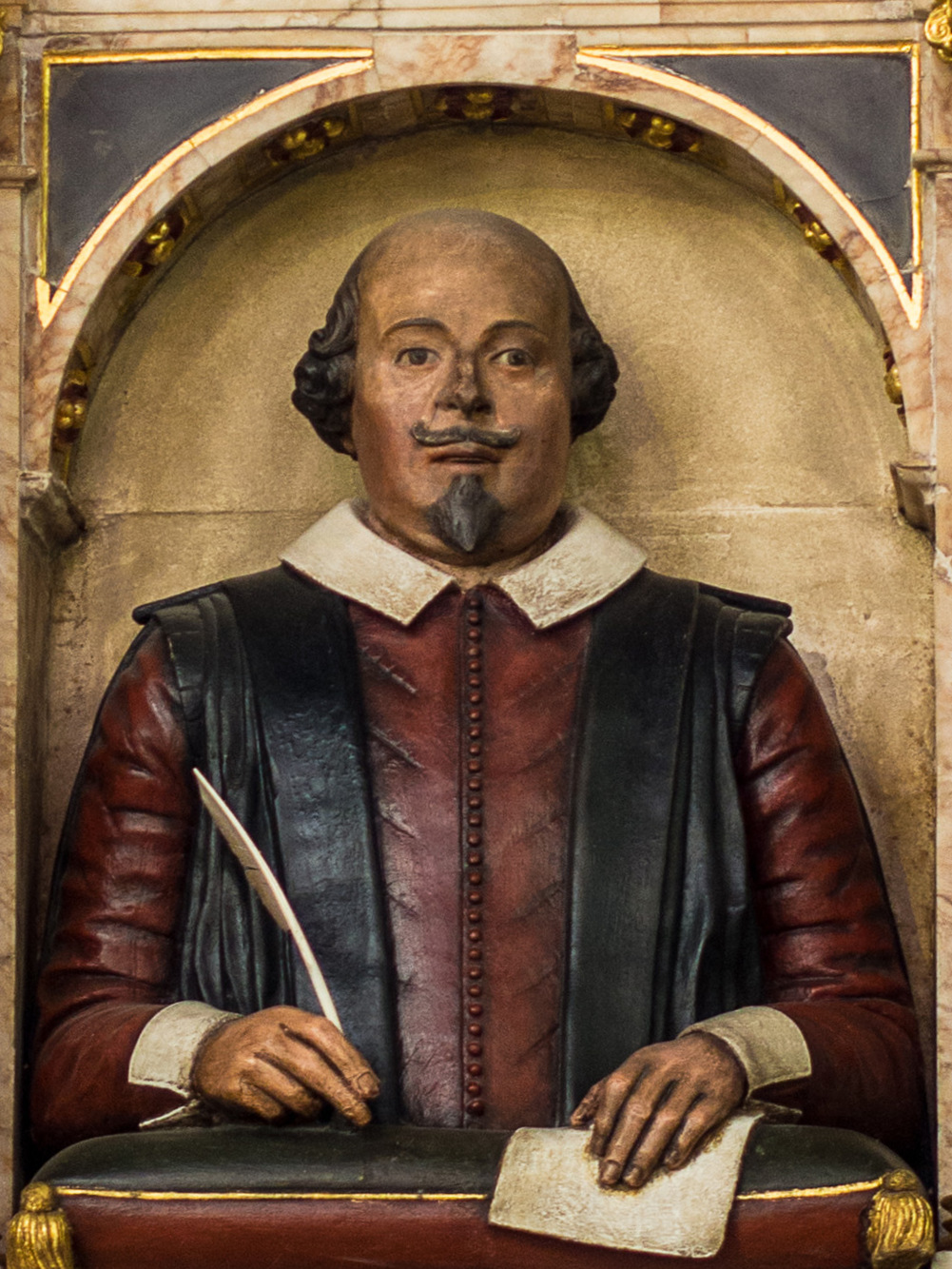
Templeton himself paid for a goodly amount of the restoration of Henry VII’s Lady Chapel at Westminster Abbey, which would have included the painted effigy of Elizabeth I inside it. The stuning west window of the chapel duly bears his name as benefactor. One appreciates the philanthropy behind the preservation, of course, although I have opined before about Sir John and the tax savings he enjoyed as a result of his renunciation of US citizenship.
Anyway, it only recently occurred to me to ask, Who made this statue? As it happens, the answer was easily found.
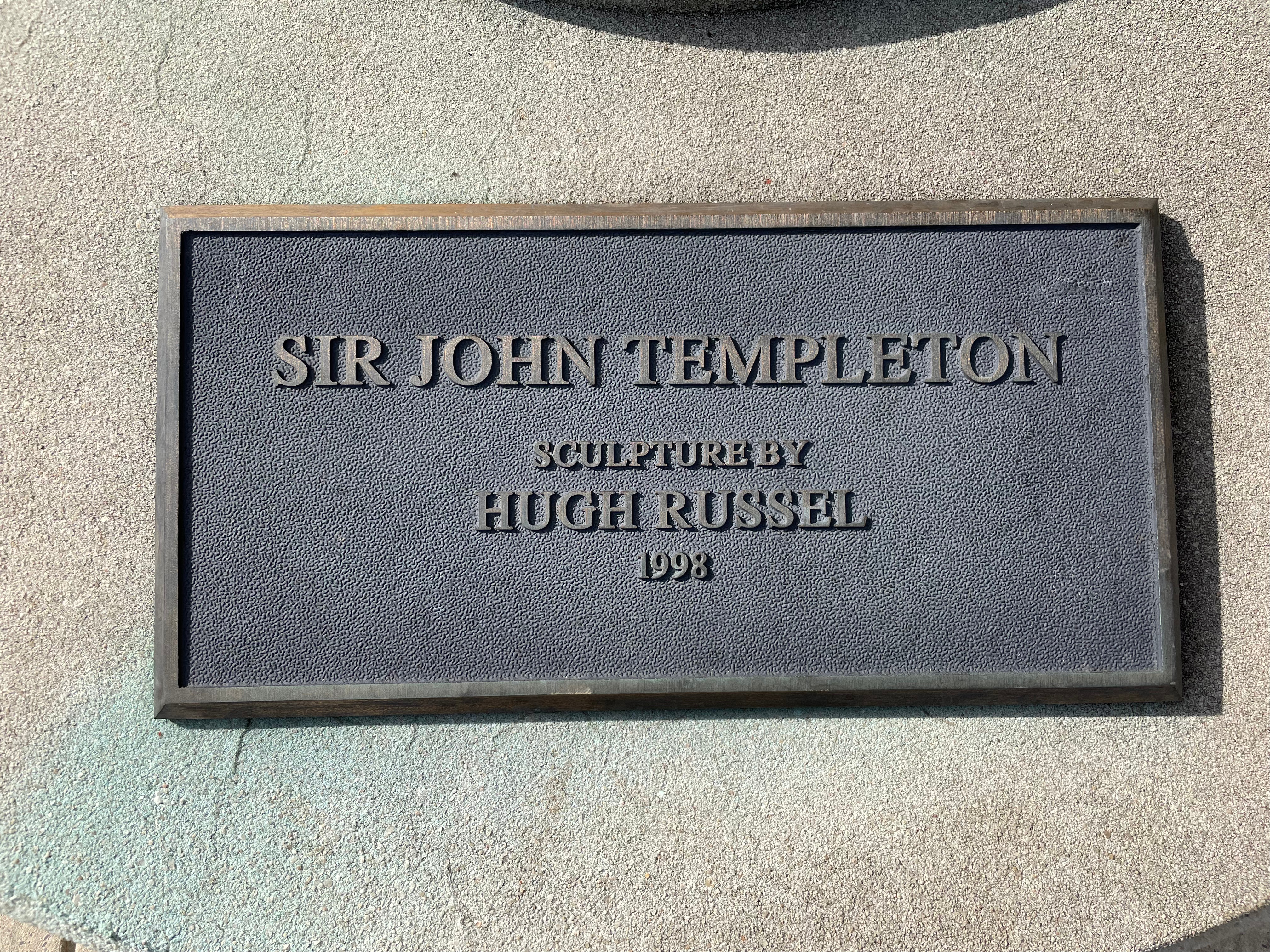
After a little Googling, I found Hugh Russel’s website and wrote him a carefully-worded email to see if I could find out more. His delightful reply came back about an hour later (Nov 22, 2025):
Dear Christopher,
When Sir John called me at 7:30 am to commission this sculpture, he awoke me from a deep sleep. In my delirium I agreed with everything he asked. He did not agree to the toupeeI suggested. I thought it would look so natural. HAD I REALISED, THAT HE WASN’T KIDDING I TRIED TO BACK OUT OF THE COLOUR. He wouldn’t budge. The architect asked him to rethink the colour, and his son also pleaded with him to reconsider, but he was adamant, it had to be in colour (color). I had hoped that in time the paint would fade and a natural patina would emerge. I have no idea if that has happened yet. I am an old man now, and the thought of revisiting this commission does not interest me in the slightest.
I wanted to do something more expressive, something with a sense of drama and emotion. He wanted what he got, and truthfully I was not happy with it at all. It comes up every so often when I recall some of the silly, embarrassing and tragically funny things I’ve done.
If there is someone down there who wants to sand blast the colour from the surface and let nature take its course, then more power to him. If someone decides to blow it up, remind him that Sir John had nothing to do with anything that might cause the nation any ahamed (sic). He just made a lot of money and wanted to show off. I have no problem with that.
I smile in your general direction.
Sincerely,
The writer Hugh Russel , formerly known as the sculptor Hugh Russel
Russel, who lives in Ontario, still sculpts. Another 1990s’ piece called by “The Column of Brotherhood” was commissioned by the Sikh Community of Canada and is in the Vatican, while his limited edition bronzework is available online on the Silver Creek Calcedon website. But mostly Russel is an author of espionage novels these days, as well of memorable replies to email inquiries.


 uncomelyandbroken
